







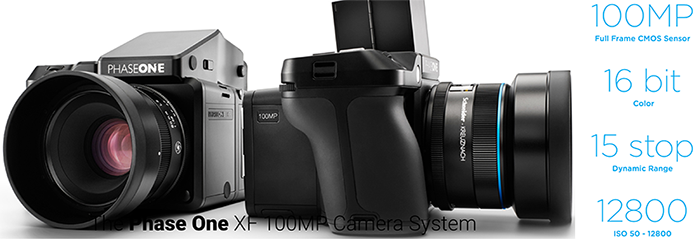
Phase One just announced the world’s first 100+ Megapixel medium format camera! And the sensor is made by Sony! The camera costs $48,999 and those are the key features described by Phase One (website here):
Joint sensor development and optimization
Phase One and Sony have been development partners for years, the 50MP sensor being the first milestone of our cooperation, now found in the XF IQ3 50MP. Creating the full frame sibling to the 50MP CMOS system has been a top priority of Phase One for years. We’re proud to now deliver a solution that achieves the image quality requirements Phase One customers expect, all while providing the performance advantages inherent to 100MP CMOS sensor technology. Phase One sensor experts have been working hard to optimize the complete use of the 100MP sensor for the worlds most demanding photographers.100MP Full Frame Medium Format CMOS Perfection
We’ve always strived to offer our customers the ultimate photographic flexibility. We were the first to offer Full Frame Medium Format CCD systems and now we’re proud to be the first to offer a Full Frame Medium Format CMOS solution. The Phase One XF 100MP Camera System offers the same great advantages of full frame usability with the added benefits of CMOS. No lens crop factors, no focus screen masks, just uncompromised image quality from edge to edge.16 bit analogue feel
For quite some time Digital Photography has surpassed analogue films in terms of resolution, ISO and Dynamic Range, but often at the sacrifice of one feature for another. Manufactures and engineers continue to strive towards reproducing the textures and tonal feel inherent to analogue photography while maintaining all possible benefits of digital photography. At Phase One this pursuit has always been central to what defines ultimate image quality. With the introduction of 16-bit Color Depth, coupled with CMOS ISO flexibility, the XF 100MP delivers a natural texture and tonal feel never before seen in digital camera system. For photographers striving for perfection, 16-bit Color is an essential addition to the versatility and resolution of the XF 100MP Camera System.15 stops of dynamic range
The Phase One XF 100MP Camera System delivers an unparalleled 15 stops of dynamic range, retaining unmatched detail in both highlights and shadows. This is the highest performing system in terms of dynamic range that the Medium Format world has to offer. The Phase One XF 100MP Camera System is engineered to provide the detail and unmatched quality,demanded by the worlds leading photographers.Clean ISO from 50 – 12800
By combining new sensor technology and years of experience in noise suppression through Capture One software, the Phase One XF 100MP ISO range delivers unparalleled creative freedom and performance in all shooting conditions. With a previously unthinkable base ISO of 50, the Phase One XF 100MP delivers the flexibility of longer exposures and unrestricted use of fast lenses, all while providing the cleanest possible results. Expanding on CMOS technology, the XF 100MP can offer higher ISO versatility and, with Capture One software, retain excellent noise suppression and file render.
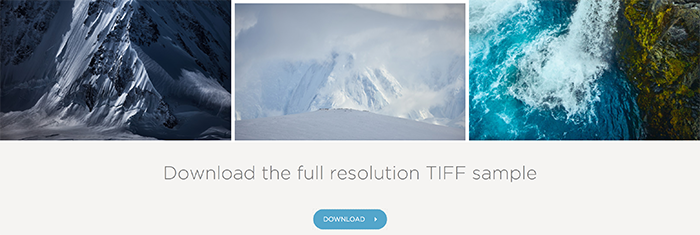
And the image quality is astonishing! Just click here to download 800MB of images…actually only two images (Thanks Ori Cohen for finding this):
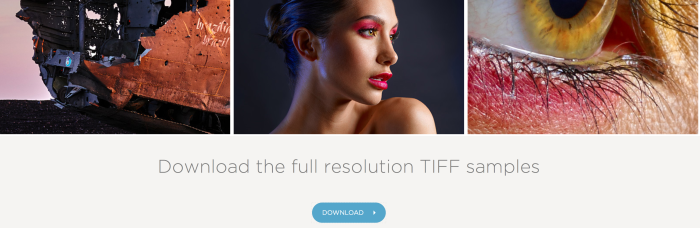
Two more images here:
And here you have the two Phase One XF100MP presentation videos:
Now who want Sony to make a medium format RX camera with that very same sensor? 🙂
137 Responses
Game changer.
Indeed. Now Phase just need a decent fast portrait lens like the old Zeiss 110/2.
Well, that Zeiss/Hasselblad 110/2 was a barrel lens that can only be used on focal plane Hasselblad bodies which are fairly uncommon. When you’re dealing with leaf shutter lenses, there are limitations.
Go read the XF specs on PhaseOne’s site:
>The Phase One Focal plane lens range is designed to deliver clean optical performance together with fast apertures, at the lowest possible weight. For photographers needing outstanding image quality, easy portability, rugged design and fastest capture response of all available the lenses, the focal plane range is an ideal choice<
no, there is the rollei version of this lenses that also has a leaf shutter (up to 1/1000th).
The phase camera uses the same mount as the mamiya and already has a focal plane shutter (as well as can use leaf shutter lenses) , so with an adaptor you can use the hassy 110 f2 lens as a manual focus lens. I use this lenses with my focal plane contax 645.
This will drive the “that’s too many pixels” crowd crazy.
Not at all. This is a specialty item, not a general purpose camera. There’re certainly people who need that.
No, it will not. Here extra pixels didn’t come in cost of any other IQ components such as DR or ISO Noise.
Like I said. 🙂
Full frame right, not medium?
Medium format, Phase One doesn’t do full-frame.
They do. Full frame doesn’t mean 36×24, it means the sensor fills the frame of a nominal image format. Phase do both full frame and cropped 645 backs.
and what we call ‘full frame’ these days used to be called half frame 😉
Specs:
Comparison chart:
Ah nice, not the 44×33.
Okay… they kept talking about “full frame” in the video. I guess full frame can mean different things.
From the specs: Sensor Size 53.7 x 40.4 [mm]
Fill 645 frame.
I agree. It would make more sense if sensors simply had a number size, such as 3624 for ‘full frame’, 2215 for APS-C, and so on. Then comparison would be relatively easy, all the way from smartphones to this Phase 1.
You could even add the MP count. This would then be 5440.101 and the A7Rii would be 3624.42
Too easy, or too clunky?
Excellent idea.
I’d add some base like mm, MB, etc., for varying dimensions, etc.
Perhaps too logical, like the metric system 🙂
Now we know what Sony has in mind for the a99 replacement!
(Just kidding . . . no need to flame me.)
3 Tiff saples on their site, 1gb download.
😀 We are almost back to film age, no longer 1000s of pics for a shooting 😀 unless they carry a 8 bay NAS storage drive 😀 to save all.
I hate this “happy background music” like in insurance or food commercials.
From one of the largest USA sellers of this system:
“This is not an announcement-of-an-announcement. This is not a preview or a prototype. The IQ3 100mp is shipping. In fact we have appointments available…. I’d expect this back to be quite popular and go into back-order within days”
And from their blog:
https://digitaltransitions.com/the-phase-one-iq3-100mp-9-surprises/
That’s quite exciting. Can we have a mirrorless camera with that sensor please Sony? A bit like a modern Mamiya or Plaubel rangefinder.
Will this camera now need new higher resolving (aka bigger, heavier and more expensive) lenses?
Some of the older Phase One focal plane shutter lenses that are rebranded Mamiya lenses (like the 35mm, 45mm) are already struggling at the 80mp level but most of the Schneider Kreuznach Leaf Shutter lenses should be fine and some have already been updated for higher resolution over the last year.
On this link, the ones with blue rings have been updated or introduced recently:
https://www.phaseone.com/en/Products/Camera-Systems/Lenses.aspx
They have a whole range of them in-place already, unlike Pentax.
The most exciting thing to me is the possibility of price drops for other products. I would like to see a Mamiya 7 style camera with the 50mp sensor not the 100. The issue with more pixels is diffraction. It’s difficult to go beyond f8 on the 80mp without losing IQ and this is an issue since larger sensors have more significant DOF. You can get around this with a tilt/shift but that’s not feasible with a Mamiya 7. Additionally they mention “16 bit opticolor” which signifies an algorithm not actually 16 bit like a CCD. I have not seen that engineers can get around the 14bit CMOS limit. Yes it’s exciting to see this new advance but who is really going to afford the 50k price tag? What’s exciting is the trickle down technologies and potential price drops of more feasible cameras.
There’s no “14-bit” CMOS limit, the bit depth is determined by the ADC and has nothing to do with the sensor technology, be it CMOS or CCD.
The reason we haven’t seen any other 16-bit CMOS sensors it because it’s highly questionable whether the two LSBs will contain any useful information as opposed to just noise. Consider this: 16 bits gives you more levels than there are photons hitting each pixel…
Hmmm, obviously that depends on the pixel size doesn’t it.
To an extent yes. And the XF 100 has smaller pixels than for example the D800. I’d wager the information content of the 14th bit of a D800 RAW file is pretty low. Now maybe they’ve increased the well depth of the pixels in the new sensor to more than the 65536 levels you get with 16 bits, but you’d only benefit from 16-bit ADC if there was zero noise…
I’m sure you know the engineering better than I do but none the less we have not produced a CMOS camera that produces 16-bit raw images. Phase One has continuously tried to sneak the the superiority of their CMOS system versus comparing the pros and cons of CCD and CMOS. I have both CMOS and a Leaf CCD and I definitely notice the color depth in processing images and how hard I can push them. Thank you for clarifying the engineering dynamics.
A 16-bit ADC is slower than a 14-bit ADC (which is slower than a 12-bit ADC). That’s why you haven’t seen them in 35mm cameras, it would just slow them down for a negligible benefit. Slowness is more or less expected in MF backs…
I agree, I use my Sony to speed my working process along but the images from my leaf are significantly better. Given that I worked with LF for my larger prints the MF was increase in speed. So do you believe the new back really is a 16 bit CMOS sensor? because 16 bit opticolor+ does not say to me true 16 bit processing.
Wow…they didn’t have to make the pentaprism so ugly.
————
Sorry, it’s just generally ugly. I saw the photo of it from the front and it somehow reminds me of the Pentax K-01 type of ugly.
You need to hold it in your hand to appreciate it. Like some cars, it looks better in real life then it does on a 2 dimensional page. This is the same XF body introduced earlier in 2015 so this is not new, it’s just the 100mp back that is new.
Hmmm…I guess.
So is it full frame or medium format? Do Phase One know what “full frame” means? It doesn’t inspire much confidence in their technical expertise…
Full frame does not mean 24×36. Full frame is a term that is relative to the format. For 35mm that means 24×36, for 645 means it something different. They use the term full frame medium format to differentiate it from their 50 megapixel medium format which is a crop relative to full frame medium format.
That’s an assumption you’ve made based on the context of how their marketing blurb went, which is stupid because they’d be the only ones using the term that way. The definition everyone else in the world uses is precisely “full frame = 24x36mm”.
What on earth is “cropped” medium format, when medium format (according to basically the whole of the English speaking world) means anything that’s more than full frame and less than 4×5?
Are you sure you aren’t just making stuff up?
Actually E.J. is right.
Only since the advent of digital cameras (at the beginning of the 21st century, and specially those with 24x36mm the term “full frame” has been used for 35mm format. But before 2003 or so (when Canon released the 1ds) the pros used larger formats like 645, 6×7 and large format. What in 24x36mm is so “full” if there are formats 3 or 5 times larger?
The internet is dominated by consumer photographers, and they generally are interested in cameras that cost less than MF backs do.
So what you’re saying is that he’s wrong. Because last I checked, it hasn’t been 2003 for a while now.
I’m not arguing whether “full frame” sounds better or makes more logical sense or anything. I’m just stating its current, objective, commonly accepted and understood meaning of the term, which is all anyone actually cares about.
Do you know what “full frame” means?
Yes. It means 24x36mm. I’m going to guess you didn’t until just now?
Except it doesn’t mean that at all. It means the sensor is the same size as the nominal film format….
Care to show the source for your definition? Because everywhere I’ve seen that isn’t Phase One, and every competent photographer I know, says my definition is correct and you just don’t know what full frame means: http://bfy.tw/3YOX
Care to show the source for your definition? Sorry, people you know don’t count as sources. As for the lmgtfy you posted, the very first link states:
“Full Frame is used by D-SLR users as a short-hand for an image sensor which is the same size as 35mm format”.
That doesn’t mean that is only interpretation of the term! Guess what, ‘full frame’ is used by medium format photographers to refers to an image sensor the same size as 645 format! Here:
The clue is right there in the name. “Full frame”, the entire frame. Doesn’t specify what size frame.
I agree most people use the term full frame to mean 36×24 and only 36×24, but even more people use the term HD to mean 1920×1080 and only 1920×1080 when in fact the term also covers 720p (1280×720). Does that make a manufacturer wrong for calling a 720p TV “HD”? Of course is doesn’t! You’re “haha PhaseOne doesn’t know what full frame means and I do” post is the most asinine thing I’ve read in a long time (and it seems I’m not the only one who thinks that!)
Well, it seems you don’t know a lot of what kind of sensors the public has been getting lately in digital medium format cameras…
Until yesterday, people were getting ”cropped” medium format CMOS sensors… now, PHase One is offering a full frame medium format CMOS sensor.
Care to define what “cropped” medium format and “full frame” medium format are, without referring to Phase One’s marketing nonsense? Before you start your furious backpedaling, I refer you to the following: https://goo.gl/fYfCnk
Full frame 645 not full frame 135
it’s kind of…. sexy 🙂
To be honest, I’m not sure why there should be much discussion about this.
At $50,000 each, there won’t be too many buyers at all, let alone amongst us…I suspect the vast majority here won’t even see any shots from it in the flesh, let alone handle the camera (we can but wish, though)!
Most of these cameras are sold to rentals shops.
Disqus commenters are vastly wealthy dude. That’s why we can dedicate 24×7 of our time to commenting.
Nice one! It’s good to make people smile, so a very welcome start to the year.
I saw an article a couple years ago (Luminous Landscape I think) comparing the resolution of the IQ80 back to 8×10 film, and the film won. Perhaps this will be closer for resolution. This new sensor will be supreme in other categories of performance, but it’ll be fun to see the comparison again.
Sorry, I meant IQ 180. Here’s a link: http://forum.luminous-landscape.com/index.php?topic=60589.0 Looks like 8×10 film was a clear winner. This new back will make it closer, but my bet would be on 8×10 at this point.
The 8×10 is the clear winner , really ? For who ? An 8×10 would be a joke in 2016 for a working pro.
https://www.youtube.com/watch?v=yRwuD68NHoI
If you took the time to read my comment to see that I was talking about resolution only. Also, note that I was responding to Jared Ba above, who was also talking about resolution. Please learn to read, and learn some damn manners. Idiot.
https://uploads.disquscdn.com/images/bf3d9ced7a56bb97793c2ad2638dae45533dab5664a103b9be9dbbdebb15fe9e.jpg
Ugh… first of all, the most tiresome form of cowardice is wrapping a hacky argument in “well, as a pro” or “to be a pro”. Pro doesn’t equal quality and amateur doesn’t equal incompetent. Second, no legitimate photographers 8×10? Tell that to Alec Soth.
But you know, the times when professionals seriously used 8×10 on paid assignments and laughed about tiny 4×5 toy cameras, are 100 years ago.
Does anyone have an educated guess how 100mp compares to the resolution of a large format film camera?
That is hard to answer. Film grain depends on a lot of things developer concentration, temperature, development time…
That is ignoring lens quality and if everything in the body was properly aligned.
If you weren’t using gear priced the same as a large house and spending about as much on developing the film, digital has long surpassed film
Years ago, I saw a comparision between the (then) latest MF back from Phase with 41MP or so, against drum scanned 4×5 film. The digital was as good or slightly better already.
If one could take away the gran structure from film, a lot of the (false) detail would be gone as well. Grain and noise if of fine structure always creates the impression of detail and texture.
Sold! Now all I have to do is win the lottery.
what’s the sensor size? – ah seen it below. very nice, would like to know if hassy will get this sensor too and crate cfv-100 😉
53.7×40.4
Oh, still small. Why they call it FF?
Probably because that is the dimension that was originally established as the medium format digital sensor size by Kodak – it’s actually a bit bigger than the kodak sensors were.
Because it’s extremely close to true 645, which is 56×41.5.
Yep, 645, which is basically croped MF. ROLLEYES
didn’t like cropped sensors on V body, my aptus is 48×36 so a bit better, but still a crop
that would be nice Phase One shares their lossless compression algorithm with Sony to use it on their camera
True dat! 🙂
Most RAW formats are based on the TIFF specification, and they use standard compression algorithms such as LZW. That’s not rocket science. I have no idea why Sony hasn’t implemented lossless compression, though.
Maybe because Sony R&D department is still at Firecracker Age in term of compression algorithm 😉
LOL. If I look at the UI design and menu structure of Sony camera software, the whole software development team is still at Firecracker Age.
whilst at it, why not make it square, not phase, they haven’t got square format cameras, but sony and offer it as sony branded digital back
Very nice.
No, I wouldn’t want a MF RX, unless lens was manual focus, seeing that the RX1R II has just matured.
A manual focus RX would appeal greatly because MF does not need the AF speed or same modus operandi as the smaller cameras. Depth of field is also very thin once you climb up to MF so manual focus is a must.
At least, if they make it AF (knowing Sony’s daring record) that a manual focus implementation ala Leica Q would be necessary.
For those complaining about lossless compression vs Sony’s uncompressed approach, think of this: My Nikon Coolscan 645 scans, 16 bit RGB TIFFs, took a cool 420-450mb per frame of disk space. Sony’s uncompressed 100mp sensor would give ~200mb file sizes that are far more malleable than a film scan and likely will render similar if not more detail than iso 400 portra grain allows on a 645 frame.
My RX1 at 24mp already has more details than portra o astia from 135mm scans.
Maybe Fuji will be allowed to buy this sensor for their MF…
I can only dream with a Sony RX645 with the size of the Mamiya 6 and Bronica RF645. That would really change the game for Sony.
Hot rumor:
Sony RX1R-100 stated to be released this week at ces!
Wow, THIS is a sensor!
Finally, twice the resolution of 24MP. Took forever!
Ah, finally, but the impact on my wallet would be more than 20 times bigger …
Finally, we reached 24MP true color information. 😉
I’m aroused ….
4K UHD screenshot:
https://c2.staticflickr.com/6/5741/23525248254_91def9ecf5_o.png
Viewing this (technically perfect) picture by pixel peeping at 100% does not add anything to the viewing experience in my book. Would you see the difference in detail, say, if you look at the whole image on a huge (theroretical) 11608 x 8708 pixel display or a huge print that represents the full resolution? I’m not so sure.
Come test it in Los Angeles and more info here https://digitaltransitions.com/xf-100mp-camera-system/
By Full Frame MF, do they mean 60 x 45mm? Meaning it is double of the 50mpix sensor, more likely 60 x 44?
Sorry, already saw it is 53×40.
645 wasn’t actually 60×45. It was more like 56×42.
The sensor is 53.7mm x 40.4mm which is close enough to the standard 56 x 41.5 dimensions of film 645 cameras to justify the term “full frame” but for long time medium format shooters 645 has always been the smallest format. So to be a stickler I would say they need to call it “full frame 645” rather than “full frame medium format”. 645 is to medium format what the old half frame (Olympus Pen etc.) was to 35mm. Nevertheless, the ability to use existing 645 lenses without a crop factor is nice and I think Pentax should go that direction with their next 645 digital body.
I wonder if their lenses for the Pentax 645 system cover the whole image circle for that!?
The old pentax 645 lenses will. I am not sure about the new ones (the 55mm f2.8, 90mm and the wide angle zoom).
*update* according to bhphotovideo, it seems like the three lenses will cover 645 format….
Thanks 🙂
“Cover” is a very liberal word.
It’s a separate question to ask if they can handle 100mp (or even 50mp).
I’m a medium format shooter (have been since 1972) and to me ‘FULL Frame’ is 2.25″ x 3.25″. Everything else is a ‘crop’ sensor. Heck, I’m still waiting for a full frame sensor for my 6×6 Hasselblads. I’d much rather have a 50MP sensor that covers the full 6×6 frame than the 100mp that covers 645.
This is absolutely mandatory for wedding and sports photography.
No way, it can’t shoot 15 FPS and maintain focus.
Yeah, but the shots you missed, have still that amazing resolution.
And to take pictures of cats, of course
;o)
And spider webs. 😀
I shoot weddings with Phase One and if you’ve never had the chance to do so it would be hard to understand just how much of a game changer it is. Leaf shutter lenses sync at any speed, color (especially skin tone) just comes out right without fuss or filters, every lens is an A+ and renders beautifully, composing through a big bright viewfinder is nice as heck, and tonality is held in bright white dresses in harsh sunlight and dark tux in deep shadow, and it’s clear to all the guests that your not shooting with the same camera as Uncle Bob. [full disclosure: I work at Digital Transitions, the Phase One dealer]
It’s never enough ! As with the 36mp a6000 news
Pretty impressive. However (there is always an however, right?), do the additional $45,000, compared to a 5DSR or A7Rii, even make the slightest sense from a business standpoint?
I know, some pros will buy it, because they can. Or they just want one for fun. But from a purely pragmatic view, it’s hard to justify such a investment in this day and age.
(Of course that doesn’t apply to the dentists and lawyers who will buy it for sure.)
I won’t buy it unless it has multi-shot mode for crazy 300MP images. More more more!!!!!
Pentax will probably launch a camera with the same sensor for a fraction of the price.
Easy now. Pentax is already having a hard time launching the Full Frame camera. Depending on what kind of agreements are between Sony and Phase One, it might no be so simple for Pentax.
Also its doubtful that all but the most premium of lenses will be able to deliver 16-bits and 100mp of resolution. I love that Pentax brought the entry price point down but those lenses are not going to cut it. Think Otus level glass with 1.5x the image circle.
if i am not mistaken, the lenses of pentax do not cover the (REAL)MF image circle to cover the whole sensor of the iq3 100
but please correct me if am wrong
It’s pretty amazing that MF is not only alive and well, but pushing the limits.
If I could have any camera, this would be it. Ungortunately, the $50 upgrade to CaptueOne for Sony is more in my price range 😉
If you work in advertising or do landscaoe photography, this makes a lot of sense. Most other people would gain more from improving their shooting and editing skills.
I also used to shoot the grandparent to PhaseOne, Mamiya 645, which is my favourite camera ever. But that’s probably as close to PhaseOne as I’ll ever get.
I’m not sure you understand me right. My question was if it makes sense business wise TODAY, not yesterday. Do your assignments gain thousands of $ more profit, compared to a situation where you have “only” a 5DS or A7Rii? Or would you not get any assignment, if you have only 50MP and 14 stops DR? Remember, this is not a Sinar, aside from the sensor, it’s just a DSLR.
I only see two factors here.
The first is industry standard. To shoot fashion or advertising the client expects certain specs on the file.
The second is what camera you feel comfortable with. If you do your best work when you hold a PhaseOne XF than that will probably translate into more money down the line.
You still seem to state, that this camera makes sense technically. I fully agree! No doubt about that. It totally makes sense, technically. If the artist, the hobbyist or the geek in you wants this camera (regardless if you are pro or not), then it make a lot of sense.
Again, my question was, will any customer pay substantially more, just because you offering 100 instead of 50 MP, in order to justify an additional $45k investment? Again, TODAY, not yesterday or tomorrow.
I have photographers who earn more money for the mere fact that they’re holding a medium format camera in their hands rather than a DSLR. It’s about ‘image’, not the photo, but the photographer’s personal identity
Yeah, it may depend on the field where you work. Where I come from, the only thing the customer cared about, was, that we got the job done in time and in the necessary quality (content wise). The things we cared the most, was profitability and reputation toward the customers.
I’ll give you an example. There is a very successful celebrity photographer who uses a PhaseOne XF. I wouldn’t call him a technically accomplished photographer. But with the XF he looks the part and his photoshoppers can fix the files. If he used a A6000, he’d probably be out of work.
It’s not unique. During the film days, celebrity photographers did little but push the shutter button on their Hasselblad. Then their darkroom staff would fix it.
Nevertheless, I am very excited about medium format, Sony sensors and PhaseOne. So this is like a perfect storm for me.
To answer your question, though it’s just an educated guess, I’d say no – it’s not very compelling business-wise. 50MP already gives a lot of room to work with (and also plenty of constraints), and 99% of clients won’t even request that much of a resolution.
It wouldn’t be worth upgrading today. But a few years down the line, probably.
Thats more or less my educated guess too.
A few years down the road, you wouldn’t have to invest an extra of $45k. So, different story.
I worked many years in a big studio. Mostly big stills, furniture, machines, complete interiors, some people stuff. It was back in the film days. We did almost everything on 4x5in. We constantly lusted after a 8x10in camera for our own stuff, art, landscape etc.. But we never bought it because it was totally overkill from a business point.
In the first days of digital, we also lusted after the latest and greatest digital backs. But did not buy it, because it was a huge waste of money back then. Totally stupid from a business perspective.
We bought a drum scanner in the $150k range (!). It absolutely made sense from a technical standpoint. But it ruined the company from business standpoint. Stupidest decision in an otherwise healthy company.
Fun fact: We did people stuff on 6×7 MF just for convenience and production speed, but we were never satisfied with the “mediocre” IQ, compared to 4x5in, which we were used to.
Oh boy, the old days…
I guess you really had to have demanding (and rich) customers to justify that drum scanner. Seems like you couldn’t or didn’t know how to amortise your investment, sadly.
Accordingly to DSLR people you MUST impress your clients with your gear…
Says who?
Purely pragmatic: the SK-Lenses this camera takes save me from dragging on average 200lbs of additional gear to the location. Of course air fares are reduced as well. The back is just icing on the cake, or can save you from shooting pickups for different layouts – just crop according to the actual use.
The client pays the same – but my costs go down. So in the final tally the Phase One makes economic sense.
MORE MORE MORE!!!!!!!!!!! HAHAHAHAHAHA!!!! GIVE ME MOOORRREE!!!!!!
Where is Barry today?
If this is not his ‘Barry cam’ I don’t know what else will please him.
:p
The barrycam uses an exotic non-bayer sensor design and comes with a 327-842mm f/4.325-5.8871 lens 😉
I am simply wondering when such image quality will be at A6000 succesor ?
5-10-15 years ? maybe later ?
Technology progress will accelerate ?
BTW. This is simply two A7RII sensors – quite same pixel density;)
But sensor price is many many time higher not just twice just guesing.
Probadly only studios and marketing companys will buy it.
“But sensor price is many many time higher not just twice”
For sure. Production of smaller sensors on a wafer has less consequence during an error than larger sensor.
One small sensor being ruined due to small error won’t cost so much. But one larger sensor being ruined due to the same error is definitely costly for the production.
I hope Pentax releases a camera with this sensor, cause i’d probably be a fifth of the price. I’m a huge medium format fan but, I’m still using film because of the high cost to acquire.
Their new lenses doesn’t cover that sensor, they crippled their own system again.
“Their new lenses doesn’t cover that sensor” Well, they do. Pentax’ 645 lenses cover the traditional 645 film negative format of nominally 6 x 4.5 cm or 56 mm x 41.5 mm to be exact. That is stil larger than this MF sensor (53.7 x 40.4 mm). This also goes for all the new lenses from the digital era (Pentax 645 D-FA), though the hood of the DA 645 25 wide-angle lens my vignette on film/a sensor of this size. The lenses are not “crippled”.