







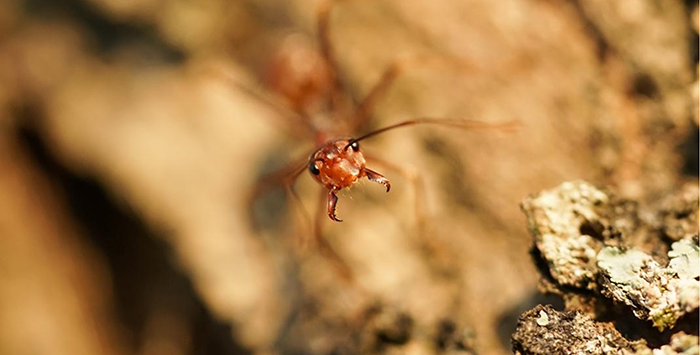
SAR reader Albert tested the new Sony 90mm FE macro lens autofocus performance and posted the results on SonyAlphaForum (Click here). He noticed the autofocus is fast even at full aperture and so reliable that it can focus on the ant eyes! Check all the autotofocus macro pictures on SonyAlphaForum! P.S.: And be sure to join our new forum 🙂
This is really a great lens and cause of sleepless nights because I don’t know if I should get that one or the new 85mm Batis 🙁
90mm links:
In USA at Amazon, Adorama, BHphoto, [shoplink 37938 ebay]eBay US (Click here)[/shoplink].
In Europe at [shoplink 37991 ebay]Fotomundus[/shoplink], Amazon Germany, Sony Germany, Sony UK, Sony FR, Sony IT, Sony ES, Sony NL, Sony BE, Sony AT, Sony CH, Sony SE, Sony FI, Sony NO, Sony PT.
In Asia at Digitalrev, Sony Australia.
Batis links:
Zeiss Batis 85mm f/1.8 lens in US at Adorama, Bhphoto. In Eu at Amazon DE, WexUK. In Asia at Digitalrev.
Zeiss Batis 25mm f/2.0 lens at Adorama, Bhphoto. In EU at Amazon DE, WexUK. In Asia at Digitalrev.
39 Responses
Is it normal that the autofocus is slow (2-3 second hunt time) when used with a a6000, or do I have a defective lens?
Looks like the eyes aren’t in focus but the claws and rock are.
Isn’t the ability to have pinpoint focus a function of the camera & not the lens?
Largely, although I’ve not doubt that for the best results a lens will have to be engineered with minutely accurate focusing mechanisms, especially for macros. So for the best results it could be both are essential.
Depends on the light. On both the A7II and the a6000 I found the lens to focus very fast and accurately in good light, and was terrible in lower light. Much slower and often misses focus entirely, failing to lock.
I had the same experience. It’s pretty terrible in low light, at least in the macro range. For objects that are farther away it’s okish. In daylight it works fine.
Ah I see, thanks. I have a weird problem that when the distance is set to close (0.5 to 0.28m) it can’t focus up close on macro subjects, but setting it to Full allows it to find focus on those same subjects (and measured they are the proper distance away for that range).
Hello Admin, why not using one feature of your site to help you to decide between both? Let’s make a poll with 2-3 main reasons for each lens to choose it and let the SAR readers suggest and maybe convince you to buy one….;)
Does the eye autofocus on the a7rii recognize animal eyes ?
Like when you choose the correct focal length to get the correct stabilization for IBIS, then you have to choose in the menu the correct animal species to make the eye autofocus recognize the animal eyes ;).. (SR1) Sony R&D department worked a year on that feature …
Animal eye recognition would be very usefull considering that almost every piece of new equipment sold sees its first use on the family cat
Eyes typically have common chatecteristics that we recognize as this is an eye, even if we have never seen the animal before.
Cameras could be programmed to recognize those common charecteristics.
A single animal eye setting should therefore be sufficient.
That’s actually a rather deep question as humans, uniquely, have, have a very high contrast between the sclera (that is the white of the eye) and the iris. Combined with our forward facing vision (an adaptation for hunting – prey animals tend to have side vision) , this means it’s very obvious when somebody is looking at us. For hunting purposes, this is a bad thing as it is more easily detected by prey animals. Animals generally have very low contrast between the sclera and the iris (or have a very large iris so the sclera is largely hidden. Also, among social animals, being stared at by another (especially male) is often very confrontational. The beta male wolf does not want to be caught staring at the alpha.
However, it appears with humans the advantage of better communication through reading of expressions, including the eyes, is greater than the disadvantages in hunting. However, there is still a hint of that old evolutionary hang-over in some of our ancient social customs. For example, in many societies, it was the norm for “social inferiors” not to look directly at their superiors. The subject introduced to his monarch was mean to keep their head bowed and look at the floor. That is still a sign of submission to this day.
The upshot of all this for camera manufacturers is that the algorithms for eye detection may not work too well, especially for species without forward-facing vision. In contrast, human beings seem to have no problem identifying eyes whatever the species. I suspect that AI techniques are a long way off that.
We are able to instantly recognize eyes in most animals.
In fact generally if the eye is sharp the photo is usually considered to be in sharp focus even if the rest of the photo is not.
Conversely if the eye is not sharp the entire photo is generally considered to be out of focus.
If we can so easily recognize eyes it makes sense that the processor can be programmed to recognize eyes by duplicating the decision process we use.
Some animals will be mor difficult of course since camouflage paterns often make eyes difficult to recognize, but the eyes of most animals share certain charecteristics despite the great variation in thier appearence.
Another common animal charecteristic are eye spots….desighned to fool preditors into thinking the eyes are somewhere different from where they actually are, or to startle a preditor by the sudden unexpected appearence of large eyes.
We can detect animal eyes at a distance, but what we can’t easily detect is whether they are looking at us at a distance as we rely on that very high contrast ratio in human eyes. Animals have evolved so that the white is hidden (or a muddy brown). It’s probably not a desirable thing on the prairie to be seen to be staring.
This is something that’s very well documented. It’s also very different to sexual attraction displays.
Even our closest relatives don’t seem to use eye contact in the same way, and it’s less obvious if you are being stared at. Not that, due to human eye colouration, we can even tell when somebody is staring at us from a side view as we not only detect head movement, but eye movement more readily due to this high contrast element of the human eye.
http://www.livescience.com/4299-eyes-alluring.html
Then wouldn’t the picture be more beautiful if the eyespots are in focus?
Personally I like the entire subject on focis .
On addotion to shooting the entire subject I typically…when the subject allows it…take close ups of every portion of my subject and stitcj tjem…often ip to 30 pictures on a stiching…
Then I make large print…36×48 is typical but some are larger….as well as 11×17 prints of many of the details and display them all as I paint.
I have the luxury of not worrying abought distracting stuff in my photos because I choose what I want to use, leave out, add in or change when I paint, as well as adding detail and enhancing features that I consider important.
As for choosing to focus on eyes or eyespots…that is ypur choice as a photographer, but generally the viewer will almost always find it disturbing if the real eyes are not sharp.
In general the #1 rule for photographing animals is aleays make sure the eyes are in focus and sharp.
If you violate that rule you do so at your own risk.
Then… I assume you like shooting with small aperture? Or do you just force it through with skill?
Typically f8 for long lenses and macro of small subjects
Latger apertures like 6.3 or 5.6 for large animals.
About my Avatar
I often change my Avatar and they are always details of my paintings.
Yesterday it was the first sketch of a Blue Jay in flight painting, and I will change it to later steps as this painting progresses.
I hope you will enjoy seeing a painting in progress.
Here is a little more detail of the first stagees
You paint AND photo? Dang…
My photography is refferrence materiel for my paintings.
I paint in a hyperealistic style. My finished paintings have lots of detail and are more realistic than photos.
I am constantly seeking more resolution in my photo equipment because I need to see the stricture of every element of my subject which I then recreate on my paintings.
Who are you, Chuck Close?
I do not imitate anypnes style and I know of no artist with a style similar to mine.
Because you asked I just looked at some of his work.
His work is of a style thay is totally alien to me and I would never have any desire to produce work similar to it.
That is no a critisizm of his or anyones work but I personally have no appreciation of abstract or non realistic art.
I am quite capable of producing it, and have done so just to prove I can, but I am unwilling to produce or be associated with it. My current avatar is an early stage of a painting that will be highly realistic when complete, so do not be fooled by the crude current appearence…..over the next few weeks, as I work on it I will change my avatar to later stages and eventually the fonished painting…
Please enjoy seeing it in progress.
The FE90mm macro is the sharpest tool in the shed! Great lens. I’ve used extensively on the A6000 and the A7r with the latest firmware for both cameras. In very good light the AF performs well on both cameras. However, in lower light conditions and compared to all the other FE lenses on the same two cameras the AF falls apart very fast and hunts. If caught unaware and you are relying upon AF you can lose your shot as the lens will go into hunt mode. From what I read the same effect occurs when using this lens on the A7II. Something to be aware of when AF is needed. Otherwise it’s a quick, one step process to slip the lens into manual mode and off you go.
How is the lens AF responsible for focusing in the eye?
Isn’t AF determined by the camera body algorithms?
Sensational statement.
Are you running the latest firmware? The last firmware made a good speed improvement in low light.
I am running Version 2.00 on the a6000.
Yeah, when it comes to macro AF, it’s totally a mirrorless thing.
I was in B&H few days ago to try the baits 85mm and the 90mm macro.
I was using the A7r to do some test shoots, the sharpness and resolution was very close, both lenses have nice details.
The Batis had trouble focusing in some areas, there the subject was a grig of lenses and filters.
the 90 macro was fast and spot on.
batis Pros:
smaller size, easier to pack
Brighter lens
90 Macro Pros:
Fast AF, Eye AF and face detection work great.
I did a few shoots with it on a7II, and shooting Eye true hair is harder to focus, i thing a challenge for every lens, but… i love the manual lend push option, and get critical focus.
I would love for every sony lens to have this option, good for photos, and fantastic for video.
You probably guessed that i am keeping the 90mm from sony by now.
It is sad how Zeiss was be able to make only a few lenses in the first run anyway..
It all really depends whether you want to take 11+7 bit portraits of ants or 11+7 bit portraits of people.
Why? If the background is arranged well, you can create sick DoF tricks with both ants AND humans.
I took a selfie with 11+7 and could definitely see the difference. The need for uncompressed selfies is real.
Were u able to clean off the jizz?
Love my 90mm, it’s a large lens. I almost mistook it for my flesh light fleshlight. Note to self, keep them in different bags.
Cool shot.
The eyes actually aren’t very sharp, or it can be just the picture. Is there any way to see a 100% crop?
I pulled the trigger and got the 90mm. It arrives today. I struggled with this decision for months and for most of that time the Zeiss was leading. In the end what decided it for me was the question of what I do with my camera.
I own a Minolta 100mm f4 Macro with the extension tube. I also have an Olympus 100mm f2. Both are pretty remarkable lenses. I also have a, Olympus 15mm tube. The Olympus is a gem. I love the results with that lens. It produces lovely bokeh, and feels amazing to use.
After I got the Minolta I found that it became one of my 4 Primes: 1. Minolta Rokkor 28mm f2.8, 2. Pentax 35mm f2 Super Takumar, 3. Konica Hexanon 57mm f1.4, 4. Olympus 100mm or Minolta 100mm. I have found myself using the Minolta 100mm more than the Olympus.
With the purchase of the 28mm and the .75 convertor I sold the 16-35mm to pay for the 90mm. I am now going to sell a few of my MF lenses. I will follow up to let you know how it goes.