







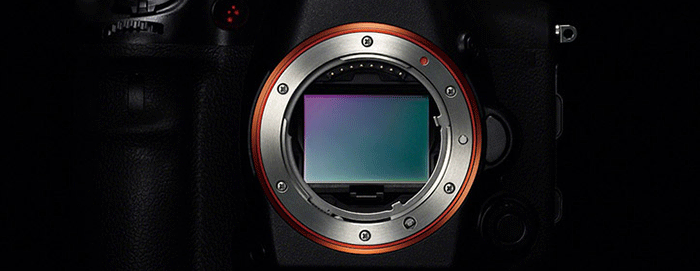
Canon confirmed they are working on High Megapixel camera sensors and my trusted sources Sony is working on such cameras too. Sounds almost like both companies are working on it “on sync” because both companies are rumored to deliver around 50 Megapixels cameras within a close 3-6 months timeframe from now.
I am yet not sure about the rumor about Canon but it’s said that Canon could launch a 50MP Full Frame camera in mid October. Sony will “counterattack” beginning of 2015 (likely in January?). And as for now I heard about a 46 Megapixel FF sensor and a 54 Megapixel FF sensor. Maybe the first is coming…first. And the second sensor on a later camera. The specs I got about the 54 Megapixel sensor are:
54 Megapixel sensor
2460 focusing points
focusing area covers 78% of the entire sensor
Of course the info I got as about a sensor prototype and they may slightly differ from the final production version.
P.S.: Quite strange to notice the time after Photokina will be more interesting than the time before Photokina 🙂
0 Responses
Is there a 8Core I7 Extreme inside that camera?
The processor inside theose cameras have to be extraordinary!
I am sure they will find a way to cramp 4 bit data output from those sensors. 😉
There is ARM CPU with multiple cores inside. It is easy to add more cores but main problem is power consumption and heat dissipation.
Which is potentially a big issue, given how toasty the a77ii gets if you leave vf-ibis enabled
If current tech can handle 24MP@12fps, then it should atleast handle 50MP@6fps.
(When pushing to 50 MP, it will be interesting to see how lenses perform.)
My a77II does 12 fps but I keep mine set at 3 fps.
To me really high fps is not important however the high resolution of coarse is.
I would be interested in hearing what people actually use 12 fps for that 6 or 3 fps is too slow for.
Hi barry
Two successive shots on my Nex-6, look for the woman in the tan yellow dress:
https://dl.dropboxusercontent.com/u/80519209/DSC00679.jpg
https://dl.dropboxusercontent.com/u/80519209/DSC00680.jpg
They were out of frame in the next shot.
In that situation, I’d have liked 12fps, and four times as many shots to choose from. I might well have got one with better focus, or looking at the camera, or whatever.
When I do general animal photos I try to always do at least a 3 shot burst …but at 12fps I end up with a lot more pix than I need to edit.
For birds in flight and running animals I might try pushing up the frame rate and see if it proves to be usefull.
I will have to practice though to get just 3 shots in my bursts.
Joel, there is no way they are consecutive shots.
They have covered about 5m there, in 1/3rd of a second they would have to be moving about 30 miles per hour to achieve that!
Very casual looking speed skaters…
Sports of aviation come to mind.
It was meant as a comment to the technical capabilities, not the actual need.
Many of the comments here are from people that say …wont buy it because frame rate is too low…or dont make more megapixels because it will shoot fewer fps…
I am not very concerned if it shoots 6fps or 12 fps bit based on the comments I read some people are really bent out of shape over it…therefore I an interested in hearing what people are doing that makes that feature so important.
This is a ridiculous question, even for a so-called “wildlife photographer”.
Know how fast an insect’s wings move, even a butterfly just sitting on a flower? Know how fast bird’s wings move when in flight? Know how fast a mink moves along the shoreline?
WTF, I can’t believe you asked this question. Do you think everybody in the world is exactly like you, or what?
Samsung NX1 is 28M with 15 fps, and the cpu is based on current arm tech (whats inside your smartphone).
fact is canon´s digic/cpu tech is years behind current samsung/sony offerings.
Maybe not – see what’s inside the new 7D Mark II.
The main processing power in cameras is not provided by a general purpose cpu like an x86 or ARM chip. Yes, they have such processors, but they don’t do the majority of the image processing work. That’s done by specialist hardware assistance just as the work of rendering video on a mobile phone is done by add-ons.
It would be computationally infeasible to produce JPEGs at (say) 12FPS using a general purpose CPU, not to mention the enormous amount of electrical power and heat that would be used.
Here’s an ARM chip with extra optimisations for handling video and image processing. Notice the important bit on the accelerators and DSP (digital signal processor). ARM cores are very often found integrated with specialist processors (like GPUs) and assists.
http://www.fujitsu.com/global/products/devices/semiconductor/assp/milbeaut/
I had been guessing that this new generation would be mirrorless…but Canon filed a new patent for a new cooling system specifically for dslr.
I would imagine the new higher mp sensor will require better cooling…
This probably means Canon will continue to build slr and therefore also that Sony will contue to build slt.
I still expect we will eventually see all mirrorless but not too soon.
I am hoping for 54 mp instead of 46 because that would be more equivelent to the pixel density of C sensor.
Admin has recently indicated that this new technology is substantially higher iso than the previos tech.
Also anxios to know what kind of new tech…
Are we talking about BSI such as in the cybershot sensors..
3 layers such as in foveon…Ok r 2 layers of R B / G G ?
“This probably means Canon will continue to build slr…”
No sh*t, Sherlock!
“and therefore also that Sony will contue to build slt.”
Far from certain, I think most will agree.
I’d like to see them continue to build SLT, but Sony seems so unenthusiastic about anything a-mount related these days…
The info that Canon will launch a 46MP FF camera using a Canon sensor and Nikon and Sony 54MP cameras using a Sony sensor has been kicked around on pretty much all rumors sites for more than 2 years. There’s absolutely nothing new here.
The general opinion is that Canon will make a development announcement toward the end of October, and the camera may not be available until Spring 2015. Alternatively If a camera is going to be available shortly something should leak over the next couple of weeks.
And in all likelihood with Canon will be an very high tier camera, like a 1D series, whereas the Sony will likely be quite mid level, so ~$6000+ vs ~$3000.
“54 Megapixel sensor
2460 focusing points
focusing area covers 78% of the entire sensor”
Interesting. E-mount only?
That’s definitely for E-mount!
Wha? Why only Elpha? This sounds like another big Alpha let down. Why not put into a pro body?
Interesting… Is this going to replace the a7r, or sit above it? If it’s a replacement, any news on a lower end version (say 24 or 36mp)?
I think it will sit above and that the Alpha 7r will remain in the market. In the DP review the exec from Sony said he was pleased with the RX 100 policy (last year flagship becoming this year entry level) and that it benefit the customers, retailers and Sony so why not spreading it to the entire range of camera.
I suspect larger form factor E-mount, DSLR-esque in design.
They will need to bring out larger E-mount cameras to support the larger lenses. I’m not saying larger lenses can’t be used on A7 BTW (I would happily use the 90mm Macro, 35/1.4, 70-200 on the A7).
Makes sense – though I’ll likewise end up with the 90mm and an a7 come March…
Did you not read the news? There is only one Alpha mount. 😉
I’d rather have faster autofocus, quieter shutter and more native lenses (and faster ones) than more megapixels.
Just sayin’.
All of those focus points imply speed. But how fast can these files write to card(s)? And is this A mount or E mount?
1001 stupid questions…………
More MP mean less speed, more ‘heavy’ files that fill up the buffer, a computer upgrade may be necessary for RAW processing. They need to release a 12Mp camera alongside it.
“2460 focusing points” sounds like an E-Mount camera. Anyway, until Sony sorts out their A/E controversy, there’s no reason to buy anything from them, be it 54Mp or 100500Mp.
+1.. It also means that the total workflow will be slower and awkward due to very huge file size.
Not relevant to us who don’t shoot a thousand photos at a time.
“workflow” relates to production, not artistry.
I’m afraid you don’t get his point. A number of shots do not matter. What matter is the period of time from stating to finishing the process. Even one shot can cause a lot of delay if the workflow relates production that requires a Photoshop or Lightroom project that contain multiple layers. Just try it yourself and you will understand.
Sony will likely sort out their two mount “controversy” sooner than Canon (http://photorumors.com/2014/09/20/canon-is-considering-a-new-mount-system/). The “less speed” issue will be offset somewhat by camera hardware improvements and if your computer is really slow perhaps it’s time for an upgrade, dumbing down your camera system choice because you have an old computer seems stupid.
Your link is broken
My monitor is 1920×1080, that’s 3Mp, let’s say 12Mp for heavy cropping (which I almost never do), so 54Mp… I’d feel I have a dumbed down camera due to slower speed with all those unnecessary Mp. 24Mp seems like an overkill already, you cannot crop this much because of the noise, unless you’re shooting at ISO100
1920×1080 – It’s actually more like 2MP.
I take it you don’t print then? Ever.
If nobody ever printed, I could see your point. But people do.
I’m not saying it’s for everyone.
Besides, isn’t 24Mp sufficient for quality prints? Would you actually see an improvement at 54Mp? (I never print… so don’t know)
You do.
Using that flawed logic, you should have stopped at 3 megapixels.
What new Canon system has to do with A/E?
Nah, 3Mp would be too low, 2560×1440 monitors are coming and there’s use for cropping sometimes. But 12Mp is enough for me.
Different people have different needs.
2560×1440 monitors are already there. Actually UHD monitors (3840×2160) are catching up in price very fast, they will probably be the new stantdard by the end of 2015.
You can actually buy the LG 34″ 21/9 QHD (3440x 1440) monitors for 800€.
It’s not simply about the availibility of monitors, it’s about processing power as well. Imagine what configuration you’d need to play Metro Last Light at 3840×2160 🙂 That’s why most monitors are still FullHD, I think
I will replace my computer by the end of the year, and I’m seriously considering an UHD monitor (actually I’ve already make my mind for the real estate you gain) although I don’t play so I don’t need those monster configuration.
I use 3D drawing+render software, and so far the configuration I need doesn’t seem monstruously expensive (800/1000€ without screen) for a powerful machine.
The image was to dispute the statement: ” Anyway, until Sony sorts out their A/E controversy, there’s no reason to buy anything from them, be it 54Mp or 100500Mp.” What exactly it is the controversy? Two different mounts to support two different camera technologies, how is that controversial. Should Canon users freeze any plans to upgrade until Canon sorts out the mount “controversy”, see how ridicules that sounds.
Totally disagree there. Even the a77’s iq was perfectly acceptable if heavily cropping at iso 400. The a77ii lets you push things much further…
as there are less bayer artifacts with smaller pixels, you might setup your workflow to use faster demosaic methods and still have improvements in quality.
I do not know what lens will work with 50 megapixel ? Сanon and Sony have no such lenses.
Sony Zeiss are good enough for it.
I don’t know if it’s true but it seem there is a test somewhere in the limb of internet that show that the Otuses lenses can resolve 100mpx.
Maybe these new high count Mpx Alpha cameras will convince Zeiss to add an A or E-mount (depending on what mount will receive those new sensors) on the Otus line.
It’s just a case of investing in the right kit. If you buy a 48mp a99ii to use with a Sony 20/2.8 or 50/1.4 , you’re going to struggle. For a-mount that means you’re choosing Zeiss or the newer Sigmas.
I think a lot of Canon lenses already very old….
Sony lens, not all are able to qualitatively resolve 36 mp.
And what about zoom lenses on 56 mp ? =)
New Sony lense EF 55 1.8 only looks good on a7r 36 mp
who told you the 55 1.8 only looks good on a a7r ?????????
How will the current lenses not work with a higher resolution sensor? Do you mean the higher resolution sensors make lens aberrations more obvious when pixel peeping, because that is not the same as not working.
Min 100/2.8 macro
My favorite lens
I have no reason to doubt this particularly, but it would be a very strange thing given the price that is likely these things will cost and that they will cater for a very small market when one considers all the more important things Sony should be addresing first!
I also concur with the comment about the workflow slowing to a crawl…
Definitely share the pain there. My desktop is more than capable of handling it, but my laptop struggles with my A77ii raws…
I would really need that resolution for my projects. Right now I am on a mkIII but hold off until Canony present their products. I did not buy the a7r because of the shutter vibration issue. The higher the detail, quality and resolution of the final image file is the better for me. I do not even care too much if it is a DSLR or a mirrorless, although I`d prefer the later. Neither do I care if it shoots 3 fps or 10 fps (7d mkIII).
The assumed specs look awesome! 2460 focus points!
Focus point amount and coverage sounds nice.
However I agree on the processing (in-body and post- )difficulties that will come alongside.
I am already getting mad with the total file sizes from my A7R.
just give me A99S with 12mp 4k internal, i dont neeeed this 54mp with max iso of 1600
Give me a A7R mk II that don´t have the shutter problem. Better autofokus, and better battery . Then i am sold. Don´t need more than 36 MP
“2460 focusing points” this sounds like e-mount camera, what about january a-mount release?
Admin – will they be bringing out a a99II or a88? Or is it now going to be high megapixel, more expensive, increased time for workflow cameras only?
No 100% reliable info yet. And I will be “conservative” from now on about A-mount rumors. But I have some bits of rumors about the Jan-Feb event I hope to post soon.
Hybrid A/E mount?
E-Mount plus Adapters are already a Hybrid A/E Mount system. With the translucent mirror adapters even with full “real” PDAF capabilities.
The other way around (a A-Mount camera with mirror box) it is impossible to make it E-Mount compatible.
So, I totally don’t understand what that Hybrid A/E mount guessing game is all about?
@SAR_Admin it pains me to see you are now saying Jan-Feb. Looks like Sony are pushing dates back again. Next it will be May next year then pushed further to Photokina. Disappointing.
Can i dream of a A8R. One without the problem the current A7R has
Are there any RX-related rumors associated with that event?
I’m inclined to believe that Sony will provide the sensor to Canon! Therefore, as already happens with Nikon, Canon may have the Sony sensor first and some months later Sony will put it in their camera(s) with some slight exclusive features.
Not going to happen.
Well …. Remembrt Apple that only used Power processors and never Intel!!! Suddenly every Mac had Intel. Thst’s a bigger surprise than Canon with Sony sensors??
Their loss!
Canon is too proud. They will only use their own sensors.
Hmmm… It seems that the new Canon G7X may have ( believet it or not! ) a Sony sensor – Check DPReview “First Impessions” !
well, than i’ll wait for the A7EUSHR (Extended Ultra Super High Resolution) model with 256+++ MP and 6 MFP (Million Focus Points), covering 100% of the sensor area, in September 2016. 😉
What did Canon confirm?
Maeda: Yes. We know that many of our customers need more resolution
and this is under consideration. In the very near future you can expect
us to show something in terms of mirrorless and also a higher resolution
sensor.
Yes, they confirmed they “consider” “more resolution”. But they can just as easily shop for some more sensors from Sony or now maybe Samsung.
more pixel are useless without adequate lenses
Well there are already some adequate lenses.
True, but it’s going rule out a lot of mainstream lenses like the old 50/1.4…
I should have emphasised the word “some”.
That lens is essentially an old Minolta design from the film days, so it doesn’t really stand a chance, even on current 24mp bodies.
The truth is that Sony would need to update a lot of their old designs. Are they going to bother doing that for A-mount, or will they just put new design effort into E-mount only?
My 50mm 1.4 certainly stands a chance on 24mp sensor? not wide open of course but I’d say 2.2 we are at sensor resolve. Maybe you have a poor copy? Not saying it’s the best 50mm out there but it’s fairly decent for the price.
Well according to DXO it resolves to 16mp on the A900, so that’s quite a way off resolving a 24mp sensor.
I always liked mine – it was at max sharpness between f/4 and f/5.6 – but it was way behind modern lenses like the FE 55mm.
hmm yes but one can’t really take dxo lens score as gospel. From their website about how they score sharpness: …”For each focal length and each f-number, we first compute sharpness and then weight it throughout the field, tolerating less sharpness in the corners than in the center. This gives one number for each focal and aperture combination.”
so they are averaging from each f stop. I understand their approach but that really skews the results considering fast primes are usually not very good a lower f-stops, certainly not the 50mm 1.4
You’re right, the 50/1.4 isn’t good wide open, and that’s it’s problem.
Newer designs such as the A-mount ZA 50/1.4, FE 55/1.8, and even the cheap Sony “easy choice” primes perform well wide open. Modern primes ARE good at lower f-stops. The FE 55mm even performs well at the corners wide open.
You might just find the 50/1.4 resolves the full resolution of a 24mp sensor in the center when stopped down, but that doesn’t really cut it.
That’s the $1,000,000 question, isn’t it… I’d put money on them saying
Zeiss has a-mount covered, especially if we’re talking a like for like
replacement for the a99. The current mid range hasn’t got a chance of
competing against Tamron and Sigma, so they’d have to redesign it from
scratch (which isn’t going to be cheap). My guess is they’ll prioritise
the Sony branded FE line instead (which arguably has more potential).
It doesn’t. Look at the price points. A-Mount glass costs more, has a larger user base, and most of its users, are willing to pay larger sums of money for lenses.
The A-Mount still generates more revenue.
They’ll upgrade them cause there are plenty of Alpha (A-Mount) users who can afford the new lenses, and are willing to pay the premium. Dropping 1K or 2K is nothing when you already have 10 to 20K invested in a system.
I agree, but it sells and I’ve seen some impressive images captured with a D810 and Sigma ART 35mm 1.4. That is to say, there are decent priced lenses out there that could squeeze more out of the 35mm format as it stands- not just the Otus line up.
Comments like that are useless without any logical reasoning.
Best lenses on DxO achieve 36MP in the centre at perfect ISO and aperture. The same on Photozone.de: Almost no lens manages to actually use the line density of the sensors, although mostly, not even a high-end sensor is used.
Yet every lens scores higher using the 36MP sensor compared to lower resolution sensors even when the lens resolves less megapixels than the sensor.
Yup. Something people don’t tend to appreciate is that lenses don’t need to match the sensor resolution in order to see the benefit as the latter increases. A couple of reasons. Firstly a lenses resolution doesn’t drop of a cliff at a certain point. What happens is that contrast gradually drops off and, to some extent, the point at which a lens reaches
Secondly, people shouldn’t forget the bayer matrix pitch. The R & B filter values are sampled at twice the pitch of the sensor, whilst the G filter is only sampled twice in each 2×2 cell. The values for the primary colours are interpolated between these points.
So a higher spatial frequency of sampling gives improvements due to the more accurate colour sampling.
One could compare images of the Leica monochrome vs the bayer one to see how much of a difference the bayer matrix causes.
Not only can one do it, but it has been done. The differences are obvious. However, before going down the monochrome route, it does means sacrificing a lot of flexibility in PP. Using a colour matrix allows for things like colour filtering and applying differential primary tone curves to produce a monochrome image. To do the former with a monochrome sensor (ironically) requires colour filters whilst the latter is essentially infeasible. There’s a lot more artistic control with the bayer pattern filter, even if the monochrome sensor provides for more sensitivity (and higher DR other than at the respective bases ISOs).
http://www.reddotforum.com/content/2012/05/iso-test-leica-m-monochrom-vs-leica-m9/
so according to your logic, if a lens renders 5% at the edges blurry, we should throw out any resolution improvements in the center?
As long as DxO measures with a 36 MP sensor only, no lens will achieve higher measurements.
More lenses benefit every customer. How many customers need more than 24 or 36 megapixels?
sony has plenty of many adequate lenses
I hope that these sensors will have BSI technology. Their pixel sizes are so small as to warrant it.
Lol… the discussed pixels are larger than those in m43 sensors, which works well enough without BSI.
exactly.
I hope the have BSI technology. But, you never know- we could end up with BS technology.
If ever there was a time for Sony to finally put A mount ahead of the competition- it’s NOW. After shooting the A77II this weekend I have to say- Sony really is doing a marvelous job with their SLT technology. They also have the lead in sensor technology. Now, put it all together in your alpha mount, release some much needed lenses and start to capture the competition.
It’s truly perplexing how they really put the effort into A77-II, and then A-Mount news dry up.
Would make more sense if they either never released this camera or did a proper follow-up at Photokina.
It actually makes perfect sense. They knew the Canon 7Dii was coming, and the A6000 isn’t really a competitor for that, certainly not in terms of lens availability. So they decided to pump out an A77ii to at least say they have something to compete with, and possibly to stem the tide of the (relatively few) a-mount sports shooters who would leave for Canon if they didn’t see anything comparable.
But every camera line has an ending, even if it ends on a high note. By the time the 7Diii comes out — however long that takes — Sony will certainly have enough lenses, good enough AF, and maybe even dual card slots in the future A6000 equivalent to not need to make another a-mount to compete with Canon.
And — rumors of some high MP beast aside — since Canon’s FF cycle is not due for a couple of years, I wouldn’t count on an A99ii. Sony will have the kinks worked out on their e-mount FF cams by then and will market those as the competitor to any 5Div or 6Dii. They would only come out with an A99ii if they felt an imminent threat from Canon in the next few months. If that happens to be a 50MP FF camera with fast AF and high fps, then *maybe* you’ll see another a-mount FF. But if it’s a slow studio/landscape beast, Sony would be just as well off making an e-mount competitor for it (A9?).
So basically you’re once again repeating all this “Sony is going to replace A-Mount with E-Mount” trolling BS.
Once again, the situation is the same: Sony need to reaffirm customers that A-Mount SLT is the future, not some ‘transitional technology’, by releasing A99-II and roadmap of new A-Mount lenses; or, if they made some technological leap forward (no, not A6000) and think that they can replace PDAF with mirrorless AF – they need to release f/2.8 zooms for FE, to make FE system viable for pros.
Until either of this happens, both systems are in a kind of suspended condition, along with all the customers.
And basically all you’re saying over and over is you’re in limbo and you don’t like it. Well, guess what? Get used to it. This is the way it’s going to be moving forward. e-mount cameras only, but no lenses that already exist for a-mount. Want a 2.8 zoom? Buy the a-mount version with an adapter. Want an f4 zoom? Buy the native e-mount version. The e-mount is the most flexible system with the most strings attached. a-mount users can use their lenses with compromises. e-mount users get only half the native lenses they want, and the rest they have to use with inefficient adapters. That’s just the way it’s going to be. Not sure why you and so many others just can’t get that through your thick heads. I swear, are you really that dense, or do you actually recognize that this is the future and just like stamping your feet and pouting?
No one gets a complete system with Sony. No one. Accept it or switch.
So, are you saying that Sony management have been kidnapped by aliens and replaced with monkeys or what? What’s the business logic in the market plan you’re describing?
“Sony is just going to kill both its photo systems and that’s the way it’s going to be” o_0
And yet plenty of people are buying these e-mount cameras to mount their lenses on, with compromises. Some buy them as second cameras, some as their primary if they can live with the trade-offs. Sony seems perfectly content with the market share they’re getting from the A7 line. It’s added a lot to their bottom line. So it seems you are the one failing to see the business logic in it.
From a business perspective, who cares if they have a single complete system or not, as long as the gadgets keep selling? And if they stay on the forefront of innovation, they WILL keep selling. When ones stop being good sellers, drop them and move on. That’s the Sony way. They are struggling in too many other areas to allow any of their camera line to become loss leaders or unprestigious niche products. To them, a niche product is okay if it adds prestige. The a-mount doesn’t, and never will. It’s a camera line that has other photographers scratching their heads and asking “Why do they bother?” So when e-mount eclipses it in sales and technology, expect it to be dropped.
Sure, some people buy A7x as a second camera to use with Canon lenses. But that’s the “niche product that doesn’t add prestige”. Some people buy them to use with 3rd party manual focus glass or something, the “compromise” use case you’ve mentioned. This is niche too and won’t bring much money for Sony (most $$$ is in lenses). Others, however, buy A7x on a promise of a complete system, because they believe that FF mirorrless is the future, A6000-type AF will soon catch up to DLSR and all this stuff.
A-Mount is a somewhat complete system already, it’s profitable for Sony (about 30% of their imaging profit), it brings prestige (without a “big black DSLR” Sony will be relegated to the Samsung / Olympus league in the eyes of amateurs) and is attractive to new customers with the advantages of SLT (yes it is, get over yourself. A77 sold very well). But you say they’ll drop it too.
Both systems are systems and not gadgets. RX series is a gadget line. Neither E nor A will do well without a system approach, and I do believe that Sony management understand that.
The only advantages of SLT are about to be eclipsed by innovations in mirrorless design, without the use of the compromising mirror. If you really feel like SLT is more than a temporary solution, you’re kidding yourself. It may have been Sony’s mainstream for a while, but it is soon to be obviated.
I’ve owned A57, A77, and A99 cameras. All felt like more than the cameras that came before, but less than the cameras they could be. That’s not a good position to be in, and regardless of their strengths the writing was on the wall: reviewers lamented the light loss and the video quality and AF were not good enough to justify the technology’s benefits.
Right now the only two things the mirror provide as a technical advantage over mirrorless are the ability to use existing a-mount lenses natively and faster PDAF. But the latter is catching up fast, and the former is of absolutely no concern to anyone who is not already an a-mount shooter. So really, how long do you think Sony will sink costs into developing this technology that you are deluding yourself into thinking is the future?
Also, you are speculating that there is a lot more money to be gained by selling lenses and therefore it’s in Sony’s best interests to create a complete system. But I’ve yet to see any data to support that. Most users buy a camera with a kit lens and maybe one more cheap lens. So does it make sense from Sony’s standpoint to sink a lot of money into developing a huge lens range, especially considering their share of the market is small and their target consumer is more interested in gadgets? How many can they honestly expect to sell? Remember, they can pump cameras out on a 6 month cycle, but lenses take years to design and tool for. That investment has to be amortized over years of sales, and quite frankly Sony’s financials are not going to allow for waiting years for ROI.
Sony needs to dig out of a hole from many of their failing divisions. That means selling a lot more gadgets that they can pump out quickly. Not building your niche lens system over years, with possibly little ROI. You really need to get past yourself.
Obviously, if PDAF ever catches up to DSLR, A-Mount will be dead, along with all SLR mounts by all manufacturers. There will be no reason to produce DSLR anymore. This topic has been beaten to death, and nobody in their right mind argues with that.
However, this is a big “IF” that the E-Mount crowd seems to jump over as if it was nothing. As of today, OSPDAF is developing and PDAF is developing, A6000 vs. A77-II and so on. It may very well be that OSDPAF will never catch up with PDAF due to its nature, made up of many tiny sensors. It’s physics. Same as the noise and sensor size… APS-C keeps getting better, but it will never be as good at high ISO as same-gen FF… due to the smaller size.
If this is the case, DSLR cameras will retain their place, and SLT will be part of the future.
(I agree that A-Mount/Minolta legacy doesn’t matter).
“A camera with one lens” is usually an entry-level camera for a person upgrading from a compact P&S. Like those 550D kits everybody uses to buy en masse sometime ago. Now this segment has shrunk due to smartphones, high-value compacts etc.
Sony has been doing great with its RX gadget line here.
A7x is not like that. It’s expensive Full Frame cameras marketed to enthusiasts and professionals. Both of those groups do expect fast lenses, even if they can make do with mirrorless AF (as evident from discussions on this forum). And in FF system camera market producers do get most income from high-margin lenses (G / Zeiss). So, A7x can’t survive with gadget approach,
Yes, OSPDAF may be never catch up with PDAF due to its nature,
However, at curtain point, the OSPDAF(hybrid) will be so fast that no one will notice the difference.
OSPDAF can easily have lots of AF points and almost 100% sensor coverage. It makes spec. look better which is important for marketing.
Don’t forget the NX1’s hardware object recognition system can track a 160km/h base ball, using its 28mp sensor full pixel readout at 240fps.
The A-Mount is just awesome. When you pull it out on a shoot, Canon, and Nikon types are amazed with its ability to blend the best features, of DSLR, and mirror-less in a highly usage package.
They’re usually floored when you start pulling out your Auto Focusing Zeiss ZA, and large white G-Series Lenses.
They are especially impressed with the end result. A99 users alway seem to finish up faster, and push out better photos than the those using optical systems or slow mirror-less cameras.
Just came back from multiple shoots with the A99, and it drew more positive attention than the models.
Some of the industries most important players like “Frank Doorhof” are new converted die hard Alpha users.
Don’t buy into the mirror-less hype. They’re a niche camera for mostly large group of amateurs, and a very small group “semi-pros”.
The only innovation mirror-less brings to the table is size. It’s on sensor PDAF is a joke. They can’t shoot anywhere near 12fps like an A77II.
DSLRs are for those of us unwilling to trade performance for a one inch difference in flange distance. Mirror-less will never catch up to the performance levels of SLR, DSLR or SLT.
Just not going to happen, we’ll still be using our SLR, DSLR, and SLT cameras long after the supposed “mirror-less revolution has come and gone”.
The DSLR is an iconic symbol of western culture, and it will remain the professional photographers choice long after mirror-less has faded into obscurity.
Plus DSLR users are driving sports and wildlife photography technology, not weirdoes using Dinky cameras.
So it’s not going to happen CSC/Mirror-less will remain a niche camera for either amateurs or eccentric pros, because neither Sports, nor Wild Life photographers are willing to accept them.
Since Sony lately developed the new “one body – different sensors” concept, there maybe 12, 24, 36, 46 and 54 Megapixel Versions….you never know. 😉
LOL
i hope the A99II has the same variations as the A7… i need a neww FF A-mount body, but i dont need or want that high MP count…
I have a feeling that Sony will announce high MP a-mount cameras (with added “Wow”) next year. However I am interested in the a88 or a99II (if they even exist) cameras. Which means that these cameras will only be announced possibly later on next year – so that Sony can focus on the high MP ones – the “WOW”, first.
So I think the lower MP cameras will come later on in the year – possibly announced in Jan/Feb but not generally available until the end of the year. A long wait.
I’ll keep taking more MP’s until we get to 8×10 film resolution standards. I don’t see much of a difference though between 4×5 and 120. It’s there but the D800 comes pretty dang close and not having to drum scan is a serious win. Digital 35mm has definetly eclipsed 35mm film and I’m fairly certain we’re there at Medium Format- next year should seal the deal. After- say 46MP- I can’t see any reason to continue using FF. I wonder if medium format could become the new FF?
Agreed. I love having the ability to crop a 24MP horizontal into, say, a vertical composition when it makes for a stronger image, and with higher MP cameras that just opens up more options.
digital 35mm has already eclipsed 120 film. Comparing the results of a A7R to 4×5 drum scans, I’m not sure which is better. (Of course you can do totally different jobs with a view camera.)
However, if you cant see the difference between 120 and 4×5 film, you should seriously try to find your reading glasses.
Hmm…I think you missed something. What you stated is my point of view- no different.
I thought the high ISO war replaced the megapixel race, guess I was wrong. But I’m still hoping Sony puts the 12 MP A7s sensor in something with better AF.
I have an A7S and totally agree about the AF. However the rest of the performance of the camera is just amazing. Really glad I sold the canon gear as its kinda looking rather vintage now. My wish for the A7s mk2 would be 4k internal recoding, bit better DR and better AF, otherwise its perfect. 12mp & the small form factor is just perfect for me. I dont need any more.
Who’s going to buy this thing? there’s like 10 lens out there that resolve at ~30MP. And as we see with the D800 the noise level is up to par with the D600 & 6D if you scale down the images (which makes sense because they’re the same generation sensor)… but leaving as is, the noise level is at minimum a stop or 2 worst.
at the same time, are you guys having fun processing 36MP raw files yet? wait till you get 50MP, I’m on a 3rd gen i7 with 16GB of ram and running on SSD… 24MP files still takes some times, i can’t imagine anyone wanting to process 50MP files, and effectively not getting anything out of it, because the sensor is still the same size, and the lens can’t resolve more than 30MP (and by lens i mean like 2 of them).
These same flawed arguments were used repeatedly over the years as sensors grew from 3MP to 5MP, then 5MP to 8MP, 8M to 10MP etc. etc. Five years from now when you look back on your statements you will wonder why you made such a stupid comment.
Anyone who wants better pictures.
Better pictures or highly defined detail of the flaws.
Flaws are actually harder to deal with (read: to correct) when covered by less pixels. That goes for CA correction, distortion correction, noise, etc.
Yes thank you!!! Many medium format shooters only have about 2-3 lenses and they get on just fine. I shoot 85mm for about %95 of my work. Even if an odd rarely used lens doesn’t fully resolve, not a big deal as long as the bulk of my line up can resolve.
Even if the claims that some lenses can’t resolve, well lets just wait and see. I think a lot more primes will be resolving 50mp than people are claiming. I bet the nifty 50mm, canon $120 prime will be able to resolve the sensor they are talking about, when stopped down to 2.8.
If it’s not the camera for you (can’t afford, can’t upgrade computer, daunted by slightly slower computer tasks), move on there are plenty more lower mega pixel offerings to choose from. Let the big boys play with the big boy toys.
To date I’ve never seen empirical evidence to back your assertion. It’s all theory albeit based on sound arguments. But again, has anyone done a side by side with a single lens, multiple cameras with varying megapixels, that clearly show the lens losing its effectiveness as the megapixels increase? What about multiple lenses across different generations of production? I have never found one and no arguments for this “out resolve” theory has been made referencing any tests.
Even if a lens can’t match the resolution of the sensor, there are still advantages. Among other things, the pitch of the bayer filter is twice the photosensor size. Secondly, with higher resolution sensors AA filters can be removed with less danger of moire as the lens effectively provides some of the lowpass filtering.
My 60MB DP1 Merrill Raw + jpeg files are coming along quite successfully, if not really fast, with Iridient, then Lightroom, on an older Mac Mini. It tends to cut out the machine-gun approach to shooting: less to edit, more thinking in advance!
Somebody didn’t setup your computer properly.
Only 10 lenses in the world that can resolve 30MP? Nonsense. I bought an Olympus 50 f/1.8 from the 70s for £20 that is razor sharp at f/2.8 on a 36MP sensor. There are quite literally hundreds of lenses if not thousands, that would benefit from a 54+MP when used correctly.
2460 focusing points
So clearly it’s an E-mount camera.
I too used to worry about the workflow getting too slow, and how higher MP cameras becoming commonplace was going to mean that I’d have to upgrade my workstation computers, which these days might mean moving from Macintosh computers to hackintosh custom builds. But since Lightroom has introduced “smart previews” my workflow is now almost exactly the same speed with my 24MP files as it is when I’m working on my second shooters’ stuff which is sometimes shot with D4S cameras, D800 cameras, and 5D Mk II & III cameras… All the image culling and the global colour correction and even the local brush editing gets done on the reduced size 4.3MP DNG “smart preview” and I only connect to the external drive containing the original RAW files at the beginning of my workflow when I import them and I need Lightroom to render 1:1 JPEG previews so I can check focus, and then again when I’m exporting the job for delivery to the client — but those parts have always been “walk away and grab a coffee kind of a tasks anyways”.
surely at this high resolution (read small pixel), we should have an option which allow us to shoot at 16MP without the crappy colour filter array…. abit like feveon but on the same layer….. come on sony!!!
I’m completely flummoxed by this. What are you proposing? The photosensors are laid out in a square pattern. Even if you could remove the colour filter, all you’d get is 48MP monochrome sensor. If you want a sensor without a colour filter, buy a camera with a Foveon sensor.
The only other way to get colour sensing without filtering is to use a triple sensor system using a beam splitter. Whilst those are used on some video cameras, this is fast reducing (in favour of Bayer pattern sensors with colour filters) and I’m not aware of any such which are fitted to still cameras.
There have been rumours (and even patents) for other forms of 3D colour sensor, but nothing concrete.
ok, let me explain abit further. so imagine your standard bayer array/ or even x-trans for a 16 MP sensor. so you have all the red, green, blue sites. but because now the pixels are getting smaller and smaller as technology push forward. your pixels are now so small, you can fit 4 or even 9 squares within the same site. so in the past, where one pixel can only get you , say, one green site. now you can fit all colours pixels into the same green site. so no “guessing” is required after exposure. abit like feveon sensor, except because all sites are on the same level, some of your colour won’t suffer loss of luminous level.
the beauty of this design is that no real physical change is required to current design. you can still have your colour array if you want full resolution. it’s just software development to allow for such binning/refining process.
obviously, this means you are “inefficient” because you are using 4 or even 9 sites to capture just one pixel in the final image. but most of us are happy with 16 or even 24 MP.
the idea is also abit like nokia 1020 where you can cherry-pick your pixels to output in your final image and bin the noisy/low quality pixel because you have so much raw data to play with.
PS: i do own sigma DP2m and DP3m.
What you seems to be describing is just what happens when you downsize an image. The data from the sensels is just combined algorithmically to produce a smaller image. On a typical still camera, this is only done when producing JPEGs at lower than native resolution. I suppose it might be feasible to produce a sort of pseudo-raw that represented the combined outputs, but I see no point unless it’s to produce smaller files (although they won’t be much smaller – you’d get 1/4 of the pixels, but three times as much data for each). What was done in the camera can be done just as easily in PP from the native RAW file and in a more flexible manner. (It’s not so true for video of course, as RAW video capability is rare and the size of such files would be enormous, although the principle is the same).
Incidentally, when talking about “binning”, it’s important to be a bit careful with definitions. What “binning” originally referred to was combining the output of photosites electronically. This was done before the digitisation process. That way the charge of (say) a 2×2 matrix was combined before going through the charge-to-voltage and then the analogue-to-digital conversion. To a large extent this meant the 2×2 matrix had most of the signal and noise characteristics of a larger pixel covering the same area. Of course this simple scheme only works with monochrome and is typically used on some video cameras (especially surveillance cameras) in low light conditions to give a lower resolution, but less noisy output. I have seen claims of “binning” on colour sensors, but it’s difficult to see how this is actually working if it’s “true” binning as you clearly can’t combine the charge outputs of differently filtered sensels.
Nowadays “binning” is often used, rather loosely, to describe the algorithmic combining of multiple sensels, as might happen if a still camera outputs a JPEG at less than native resolution. It’s no different, in principle, to what happens by processing a RAW to produce a lower resolution output save that the latter allows for more flexibility and sophistication as there’s lots more time available.
I’d certainly welcome the current A99 sensor with sufficient number of focusing points which covers 78% of the sensor along with a more translucent mirror that does not kill ISO performance. If someone is shooting mostly landscape, 54mpix can be something good but this guy surely wouldn’t need that many focus points. On the other hand, if someone is shooting mostly action, 2460 focus points is something good but this guy surely wouldn’t need that many pixels.
Sigma and others are more and more reluctant to make higher end lenses in A mount for fear that sony is not supporting it.
I for example want the new Sigma 150-600 sport lens but it will not be made in A mount.
Of Sony truly wants to promote E mount finding a way to utilize the full high speed focus capabilities on Canon an Nikon lenses is extremely important.
If I could buy the Sigma lens in Canikon mount and use it with fast AF on the newest E mount camera then I would be able to buy the new camera.
If Canikon users had a way to fast focus….even if it meant an LAEA4 type adapter for Canikon lenses they would also be much more likely to buy.
The biggest problem with purchasing anything Sony is incompatabilty…finding compatable components is an extremely difficult process…this is by far the biggest roadblock to increased Sony marketshare.
Sony has no roadmap but lots of roadblocks
A myth we have heard so many times. Even in the past, not all Sigma lenses were brought out for the A mount and if they did, it often took a little longer.
Sigma states on their website that the regular 150-600 will come out for the Sony (A) mount still:
http://www.sigma-photo.co.jp/english/new/new_topic.php?id=453
Yes but not the Sport version, only the lower Quality / Priced Contemporary version.
You missread…the contemporsry…cheaper…version will come out for A mount…the sport version….the good one…will not.
As to the ..myth about sigma..read Florents comment…admin of sigma rumors..to me in yesterdays 150-600 sport video post.
I have also gotton simmilar feedback from sigma people I have spoken with..
” if sony will release a new A mount camera it might speed thinds up”
That is why second body was a canon. I wanted sigmas new 120-300/2.8 HSM. Not available in A-mount
The lack of confidence by lensmakers has forced a lot of people who actually want to continue to buy Sony to buy Canon instead…most of those who switch for that reason go to Canon but a few go to Nikon.
Making E mount fully Canikon compatable would help that situation a lot
Do we need to use maximum number of pixels all the time?
Depends. If your shooting pictures of your cat in ultra low light- then yes.
Many pixels is great for digital zoom. With 54M you can get decent digital zoom up to 3x with a high quality prime. This can introduce a new way of taking pictures indeed, especially for those who like travelling light.
No, but options are good for different people, different usages.
I don’t see 36MP as that much of an increase over 24MP. It actually works out to about 20% increase, not 50%. Then you have the whole “perceptual megapixel” in terms of what you actually get when you consider sensor and lens defects. My point is, I think there is still quite a bit that can be squeezed out of the 35mm format before we’ve hit the limit both optically and overall sensor design. What I’d like to really see though is something other than CMOS technology in the future high end Sony sensors- non-bayer for sure.
22% per axis but since our pictures tend to be 2 dimensional, it’s still a 50% larger area with the same dpi.
Wrong Post
To the extent that photo site density affects image resolution, the lower factor is the correct one to use. In other words your “50% larger area with the same DPI” means that you could make a print 20% wider at the same native resolution — e.g. a photograph from the lower photo site density sensor at 36″ width would have the same sensor resolution as a 43″ wide print from the 36MP system.
Again, I care little about single axis numbers when my picture can be 50% larger. Practical use vs semantics.
It’s hard arguing with mathematics when it comes to area calculations. It’s like saying a wall is only twice as large when it’s twice the size in both horizontal and vertical directions. No, it’s already twice the size when just one axis doubles, or for example just 41% larger in both directions.
“The mathematics” tell us two things. The math tells us that the area increases by a particular percentage and that the height or the width increase by a smaller percentage.
Speaking of “practical use versus semantics,” I can tell you with certainty that if a client is looking at a 12 x 16 print and they ask for one that is “twice as big” that they will think you are cheating them if you then sell them a print in which the area rather than the width doubles — in other words, they want a print that is 24″ wide. (Clients will likely accuse you of cheating them if you instead sell them a print that increases the square inches from 192 to 384.)
Whichever percentage you want to use for your own calculations, it is important for those hearing these percentages to understand what each does or does not mean in the context of the print they will produce.
My rule of thumb is that, in general, an approximate doubling of photo sites on a given sensor size is likely to produce a significant increase in print size, to the extent that photo site density is the current limiting factor for a photographer pushing the upper boundaries of print size.
The Sony/Nikon 36MP sensor is a fine piece of technology, and for those using low 20MP sensors, that level of increased photo site density is close to the “doubling” boundary.
I can’t speak for your clients, but I’d call my clients pretty daft if they claim a 24″ wide print is twice the size of a 12″ print with a similar aspect ratio. Must be a local thing there.
For example, the whole concept behind the Ax print size standard, is that every size up, is double the size (total area, say A2 is double the size of A3), not a single axis.
As I wrote, there are two “mathematically correct” ways of describing print size — the area of the print and the height/width of the print. Actually, there is a third — the length of a diagonal line between two opposite corners.
While there are three ways to mathematically describe the “size” of an image, I can’t think of a situation in the real world where the “area” method is the one that is commonly used. The very fact that almost every time when one uses that interpretation it must be followed by an explanation of what it really means in terms of one of the other two methods should be a pretty strong indicator that this is the case.
(To be completely clear, I’m not making a foolish and obviously wrong case that a print whose area is twice that of another print doesn’t have an area that is twice as large! I’m pointing out that most people who hear that “the print is twice as large” are thinking of this relationship in ways other than area.)
But, whatever. We could debate whether the “right” way to describe print size is area, length/width, or diagonal until we are blue in the fact — though that would be a pretty big waste of time I think. In the end, the point that I was making is still exactly correct, namely that a large -sounding area increase corresponds to a much smaller increase by either of the other two measurement methods.
In my experience, which is not limited to my “local” area, few clients and surprisingly few people owning cameras understand this, and they virtually always are surprised to find that the actual effect of a given area increase on the potential size of a print at a given native resolution is much smaller than they think.
So, what I wrote originally about the actual increase in print width/height at a given native resolution is precisely correct and, I believe, stated in a way that needs to be understood by those who are trying to understand what increased photo site density might mean in the real world.
Take care,
Dan
Again, we’re talking about two dimensions, so size of a two dimensional object (in this context at least, depth isn’t of any relevance here), should always describe an area without the need for an explanation. That was taught in mathematics too.
In fact, if someone used a single axis size description of a two dimensional object, I’d demand an explanation.
Thus in the real world, for a given DPI, twice the megapixels can be printed twice the size. No further explanation needed.
I understand the math of “twice the area.” I’m telling you that _in photography_ (and especially when dealing with clients), you’d better clarify your assumptions when you you produce and market prints in one size as being “twice as large” as another.
Using the math that accurately describes the relationship in area, if you client sees a 12″ x 16″ print and asks for one that is “twice as big” (as opposed to “a bit larger” or “the next size larger”), you’ll want to be careful to describe the resulting print size as being 16″ x 24″ in order to make sure that they understand what they are getting.
The potential for misunderstanding (given that there are three ways of describing print sizes that make sense) is perhaps one reason that photographers virtually never describe images as being “twice as large” or “50% larger” or similar, but virtually always describe print size in vertical-by-horizontal lengths or in pixels/resolution terms.
No one is disagreeing with your assertion that area is one method of describing relative image size. I am pointing out that — people like you who understand this aside — there are good reasons to recognize that the multiple ways in which image size can be described make it important to clarify what you mean when you describe things in terms such as “twice as large” and so forth.
I don’t understand what is so difficult about this.
Your assertion was that:
” large -sounding area increase corresponds to a much smaller increase by either of the other two measurement methods.”
Which is nonsense. In the context of a two dimensional object, the increase is exactly as expected. Because of the simple area math involved.
Whatever your clients think, I find completely irrelevant for reasons already mentioned. You could write 15 pages on the subject, no doubt, but nothing will change the summary of facts I just gave.
“… nothing will change the summary of facts I just gave.”
I could write the same thing. But I’m happy to simply let unbiased and intelligent readers take a look at what appears in this discussion and judge for themselves.
But do feel free to carry on… 😉
I’m not surprised you again conveniently ignored the obvious example for an actual print standard, disproving your assertion (posted for the second time).
Ignorance is often confused with intelligence. It’ll be interesting to see which one will prevail.
Relying on ad hominem is the sign of a person with nothing else to use as an argument. Rather than addressing issues, such people resort to insults, hoping to bully the other party and/or make that party look foolish in from of others.
Acting out your anger in the online world is a sad thing.
Bye.
Exactly, or make this MP monster for real pros. 46 or 54 is completely useless even for ethusiasts (just my opinion)
I was taking a gander at some 85mm 1.4 Otus pics and a D810- really cool RAW files. You can go in 3:1 and it’s like you never cropped. But I’m suprised how well my other gear holds up when compared- although toward the edges the Otus really kills it- it really performs astonishingly in this respect. That’s where the magic happens.
As far as landscapes go though, 36MP doesn’t do it for me. It’s like people talk about it as if it’s the defacto go to for landscapes- hogwash. It’s not that much of an increase. They label it for landscapes because it’s the highest digital option we have at the moment that is affordable. I want 150MP’s- then we can talk. Until then, it’s all minor increases at major prices. I want to be able to crop into a forest a mile away and see the dirt under a squirrels nails. Why? Because and for no other reason other than to say I can do it. Is it vain? Yep, sure is.
150mp on FF is useless because diffraction.
Yes, I’m aware. That’s why I assume Sony will introduce their own Medium Format system in the future. You can only do so much with FF. I’m not even sure MF could handle that much, but then again, if we saw the gains in optical quality we’re seeing in FF then who knows. The cost I’m assuming would be pretty ridiculous though.
150mp is still sharper than 36mp regardless of diffraction – quite a bit sharper
sure, but the gain in sharpness is not as much as the numbers would suggest, as such a high pixel density means diffraction starts kicking in at around f/4, hardly the optimal aperture for any lens.
other than diffraction there are other factors such as focus accuracy, shutter vibrations, minimum shutter speed, that negatively influence the likelihood of getting a perfectly in focus, optimally sharp image.
so yeah, theoretically any increase in pixel density improves sharpness, but in practice it also greatly reduces the likelihood of getting sharp images when viewed at 100%.
I think 24mp on apsc is already quite dense, so I would guess 60mp on a full frame would be feasible. beyond that, you would need a fully electonic shutter (no vibrations), a steady hand, great autofocus, and astonishingly good lenses….
Surely what most people need / want is that the new technology should go towards providing ‘just’ a 24MP FF with the clarity and quality of the A7S, enjoying maybe only a couple of stops better low-light performance than, say, the A7. If they can do 46 MP now, how much better could they make 24? Then remove the AA filter (finally) — Ricoh and others can do so without problems – and include the essential Totally Silent shutter, leaf (as with Merrill) or electronic, as appropriate. Already with less vibration, but then add IBIS to win over legions with Canonikon and long lenses! A little more weight for sure, but what a gain!
I think to really squeeze a full 24MP’s out of a FF sensor it would involve a fixed lens design. The imperfections are in the lens and sensor. That’s why I wonder what a curved sensor RX2 could produce with a better optic. Maybe we could get much closer to 24 perceived megapixels.
@Admin is Sony going to consider one tipe of mount camera superior to the other one?
I mean, for example, a new A99 A Mount with 46MP and a “superior” A7X with 54MP
i got 2 A7R with my workmate and we’d love to join the best resolution possible with E Mount cameras
PS is there any rumor about a IBIS on the next E Mount “A7X”?
Thank you
Let us assume that Sony unleashes this 46MP camera in an FE mount come January. Let’s also assume we don’t get an A99II. How many A mount users here will sell off their gear?
4379.5 last count
The .5 was my dog who insists on ditching the Amount bodies but keeping the lenses just in case
Well, the ZA 50 f1,4, 70-200 II, 300 and 500 are all fairly new, so I’m ‘guessing’ it’s an A-Mount in the wings’.
Hard to say… Part of me says get rid of the stuff while it’s still worth something so I don’t totally lose my shirt (vs. selling later), but the other part says, “hey, they’re still great lenses, and my bodies have plenty of life left in ’em. Keep shooting and be happy, and when the bodies are done, just adapt to e-mount.” I hate that my A-mount zooms wouldn’t be stabilized on e-mount, though…
Probably it for me. I think Sony will pull through for A mount fans for at least another go around. After the A99II who knows. I figure what they do with that camera should give us a heads up anyhow.
Should be interesting to see how many lenses hold up to the higher resolution. Lenses that are released 2014+ seem to be designed for higher mp sensors but I have a feeling a lot of our favorite lenses are going to start showing their age.
Good tactic to get the punters to buy newer versions of their lenses and for an more expensive price tag 2.
Probably see it in a Sony A7R Upgrade, maybe in A99II update as well and probably license out to Nikon to sell it in a D4x for £5000+ like what happened with the D3x. One thing is for sure a 4TB is not going to last long when filling this up with 50mp raw images…
A lot of comments here about resoltion beint too high for lenses.
If this is 3 layers than the pixels of a 54mp sensor would be the same size as an 18mp bayer.
Sony also has new tech…introduced in the a77II that reduces diffraction therefore effectively greatly increasing res.
Actually only makes sense for me if 50 MP in MF mirrorless, RX2, perhaps.
So far the 36 MP sensor are only shooting at 4 FPS.. Any camera with this sized sensor needs so many advances in the entire camera it will be expensive. For 99% of photographers there is no need for this kind of resolution.. the lenses can’t even resolve it well I many cases. This would be marketing trumps function IMHO
And 4 fps is not even with continuous AF.
Most lenses would be able to resolve 54MP though, especially in the centre, which opens up possibilities for cropping.
Well, this is pretty good news and it’s going to be very interesting.
I’m buying one as soon as its launched. Its nice to know the Flag Ship is going to be replaced with something that deserves the title.
A lens at f/8 (the peak or past the peak in resolution of most good lenses, the diffraction limit is 187.5 line pairs per mm, it takes about 325 pixels per mm to fully resolve these lines, that works out to a 91 MP FF sensor. 54 MP is not too many.
I hope they keep the a7 series body like they have been so far. Its just perfect and will help with people getting 2nd bodies.
RX2: Curved sensor, perfect Zeiss 35mm 1.4 optic, 96MP, high quality build. DONE.
fajnie , ale może sony skupi się na rozwojem matrycy na przykład 20 mpix na pełną klatkę która dorówna tej z canon 6d . Tak na iso 100-400 jest naprawdę super , i z jakością odwzorowania szczegółów i rozpiętością totalną .Ale już od 1600 do 12800 to już przegrywa z canonem i to bardzo . tak samo jest z RX100 mark III . Niby matryca taka udana ale Nikon w 1 V3 wyciągnął dużo więcej lepszym oprogramowaniem. A77 mark II też nie jest lepszy od Nikona 7100 ani Canonem 70d pod względem jakości obrazu a te aparaty mają już dwa lata . Lubię sony ale zaczyna mnie irytować to że dla nich najważniejszy jest wyścig na M pix . A jakość obrazu poszła na drugie miejsce . Czekam kiedy usłyszę w testach że aparat sony nie tylko daję lepsza rozpiętość totalną , ale też na ISO 6400 ma mniejsze szumy od Pentaxa ,Nikona i Canona . Ale na razie sony nie umie tego zrobić
All valid points indeed, and I agree with you in that Sony is in a fierce marketing race.
I’ve considered that same thing – selling all my DSLR gear and just going for that Pentax. I had an opportunity to shoot with the old D model, and it produced stellar images. The new sensor in the Z looks really enticing!
Sadly, I could sell my mint A900 with ZA 135, 50 and 24 with all the expensive extras and still not likely get enough for the 645Z alone. It’s just the nature of the camera/lens used market.
Wake me up next year. I’m still in the absent Alpha nightmare of Photokina. Don’t believe a single thing that Sony promises or rumors.
Won’t buy anything Elpha. Done playing with toys. Put that sensor in an Alpha proper, provide multiple RAW resolutions, multiple formats, including square, and then you might have a deal if they fix the flash system. I’ve spent too much on disappointing E-Mount. Never again.
While the elite lenses will always do best , the fact is that every single lens does better on high MP bodies even the most humble.
Below are the results of the Nikon 50mm F1.8g {one of Nikons cheapest lenses} on a 12mp, 24mp and 36mp camera as can be clearly shown even though it does not achieve the theoretical maximum results of higher MP sensors. None the less it gives a very significant jump in resolution as MP count increases.
Look at the low ISO results from the Sony 20mp 1″ sensor cameras which would have the same pixel density as a 148mp FF camera !
That’s true up to a point. I think many lenses can still outresolve a 50MP sensor *in the central region* at optimal apertures. Mine certainly do outresolve the 36MP A7R sensor. For some this may make the 50MP sensor worth the trouble and resources.
You’re right. They’ve been screaming about too much resolution since the Minolta Maxxum 7D was released, and I’m pretty sure they said the same thing about the 36mp.
I’m going to buy the A-Mount version, and I’m pretty sure plenty of E-Mount users are going to buy cameras with these high resolution sensors for their diminutive sized cameras.
I’m pretty sure the end result (printed photos) will be visibly sharper on a 54mp sensor than a 24mp sensor.
I’m buy the next Alpha FlagShip, as soon as it releases. I’m hoping it has a built in battery grip.
Reward is won from a900 with compact Maxxum glass and stitching software.
Don’t be Sony… Be Happy!
IMHO, 54Mpix only make sense if it is a 3-layer design. (3×18 = 54)
But I wonder can Sony solve the high ISO problem from the 3 layer design sensor.
The 24MP APS-C doesn’t make sense either. It’s the same density.
You mustn’t be afraid to dream a little bigger….
150 mp 3 layer (50xRGB) with a curved option and standard 🙂
The biggest improvement to IQ any manufacturer can do now is produce 3-layer design image sensors.
I want 150MP’s. Were is my 150MP camera??? How much longer do I have to wait!
Barry?!?
http://digital-cameras.toptenreviews.com/professional-dslr/sony/sony-alpha-review.html
The A99 trounced the 5D MK III in another review. The successor is going to seriously make Canon, and Nikon look silly.
If I was buying another FF DSLR (cause I own two) I’d buy it from the dudes that make the best sensors (Sony).
And I certainly wouldn’t buy a compact, and compromised squeakier tow. When I’m dropping 4K I expect to have Ferrari like performance (SLR), not Fiat (CSC).
http://www.photographyproductreview.com/?tag=sony-alpha-a99
And it won the best movie capture DSLR award here
http://dslrvideoshooter.com/shooting-a-documentary-with-the-sony-a99/
is an awesome video review for the A99II
I meant the A99
http://www.cnet.com/products/sony-alpha-slt-a99-body-only/
CNET posted this a while back. It should drive the point home to those with limited knowledge about Sony’s “Flag Ship”.
http://campbellcameras.blogspot.ca/2014/07/in-depth-video-review-of-sony-a99.html
This is another A99 video review.
I have it on good authority that this high megapixel camera will ONLY be offered in E-mount. All those who dont believe me, just wait until November 18th. You shall sEE Sony’s futurE thEn. 🙂
I have it on good authority that big Sony promises fail professionals. But I hear they get fanboy panties wet… for a minute.
You probably can’t even tell us what YOU’RE going to be doing Nov 18th. How do you know what Sony will be doing?
He’s living in la la land/parents basement masturbating to DxO.
I will be on the 23rd floor of a shiny building in Minato, Japan eating some donuts and drinking tea.
http://www.engadget.com/products/sony/alpha/a99/reviews/13ks/
look at this glowing A99 review. Pretty nifty.
http://visualsciencelab.blogspot.ca/2014/03/my-long-overdue-review-of-sony-a99.html
Short and sweet A99 review from a real world pro.
http://cornpedia.net/sony-alpha-slt-a99-in-depth-review/
Corny review.
http://www.trustedreviews.com/sony-alpha-a99-photos
Trusted reviews did a piece on the best DSLR camera you can buy for under $2500.00
http://top10inaction.com/sony-alpha-99-review/
Another actionable review.
http://getsonya99.wordpress.com/2013/12/16/sony-a99-evaluation-one-remarkable-camera/
A little old, but you’ll get the point.
doesn’t matter…. professionals don’t use Sony… remember…
they don’t use digital either… remember…
heh… still packin’ up the mule with a tent darkroom. Weez only gots twinty miles ta kech that sunset.
I’m no professional, I only earned 100k USD last year from drooling on my A99s / F5s not using them.
Not like some of the “SAR TROLLFESSIONALS” who must of made millions from the sounds of it.
100K USD- Ultra Sweet Donuts?
ROTFL……..SAR-TROLLFESSIONALS.
Most of us who use alphas for a living don’t engage with the TROLLFESSIONALS (LMAO still), here cause their weath of knowledge attained by posting BS makes our degrees look obsolete.
Caused what do we know.
Andrea certainly knows how to drum up clicks and comments. “I am yet not sure about the rumor about Canon but it’s said that Canon could launch a 50MP Full Frame camera in mid October” [emphasis added]. So true since Canon Rumors rates it a pathetic CR1: http://www.canonrumors.com/2014/09/more-talk-of-an-october-announcement-of-a-dslr-cr1/. I don’t see an SR rating on a Sony 50MP sensor with 2,460 AF point but it smells like an SR1 to me as well.
Nikon typically picks up Sony’s latest high-MP sensors. It’s interesting they’d release a 24MP D750 now and announce within 6 months one roughly double it in MP. Not saying it couldn’t happen but seems a bit strange. The 36MP in the D8xx series will become the new entry-level FF.
Certainly makes for fun discussion, though. ;^)
Regardless of who does it how many 50 MP lenses will we have? Don’t we need new lenses to match the new resolutions that appear to be coming?
Wouldn’t make any sense.
I’m not updating any of my glass unless I absoluely need to. I’ve used the Minolta Maxxum 17-35, 28-70, 80-200, with my Maxuum 9000, Maxxum 9, A900, and A99.
It’s only recently that I’ve begun to upgrading the lenses. Some of those lenses will probably be used on the new camera almost 20 years after I bought them.
You should be able to squeeze 20 years out of a professional lens, and if you treat them right should be able to recover most of your money when you fleabay them.
“P.S.: Quite strange to notice the time after Photokina will be more interesting than the time before Photokina :)”
Sort of like…last year?
This year PhotoPlus in New York City the only possible location Sony would even consider launching a DSLR. It’s a massive DSLR stronghold.
As Barry said, “In NYC there are only two types of cameras, Nikon DSLRs, and Canon DSLRs”. Everything else is for “bums”.
I live and work in NYC and attend photo plus every year. I use and own an a99 personally and occasionally professionally. The majority of press photographers shoot canon and Nikon it’s true, however I have seen a7r and a7s bodies in use by press guys as an additional body. Personally I’m going to add an a7s as a second body soon – lightweight, discreet and adaptable. It’s the perfect second body to compliment not replace.
That’s great to hear. Would you be able to post photos on the SAR facebook page should something outstanding from Sony be launched?
Well, I doubt they will announce anymore lenses, though in the unlikely event that they do odds favor a-mount. Realistically, an a99 successor seems to be the next camera release but I’d wager it comes around early spring of next year. If Sony is changing the form factor we could see a body prototype (as they did for the a900). Ultimately I suspect Sony will use photo plus to show off the new lenses and existing cameras but yes I can post to SAR if anything shows up.
Canon would have to do a mirrorless high megapixel camera for me to be interested. Once I went a7r mirrorless FF is the only thing I’ll do from now on, light & portable.
Ditto.
Im getting tired of the metal pixel wars. The current numbers are high enough for most practical needs. How about focusing on color science and dynamic range.
What wars? I mean, we’ve been leveling off now for about 5 years. 24MP’s have been pretty much the threshold for over 5 easy and the D810 and A7R are sporting a sensor that has been around for a few years also. Canon-crap has been stuffing 16MP sensor’s in their wonder boxes of garbage for like ever! If they ever cross 24 I’d have to put a diaper on since I’d probably shiiiit my pants. This is the first time in awhile I think we could claim any type of resolution war.
I’m getting tired of hearing the same thing every time there is an increase in megapixels. It wasn’t long ago that people were moaning about going from 6 to 10. You lot are like a broken record!
4mp was high enough for “most practical needs”, but what does that have to do with those of us who would like to print fine art prints a good bit larger than 30 x40in without having to rent, lease or borrow larger format cameras and digital backs, or have to shoot and go through the pain in the rear of shooting, and developing sheets of film?
There isn’t a megapixel war. What does exist however is the need for many people to have a camera that can do many tasks; shoot sports at 8fps or faster and crank out a high resolution file for fine art portraiture or art work.
Keep in mind that just because you don’t have a need for something, does not mean that other don’t have a need for, or cannot make great use of, 50mp or higher in their professional work.
We must evolve, and thus more MP’s is inevitable. This would be rooted in my firm belief in evolution. I believe digital cameras evolved from a soup of analogue film emulsifiers that were given millions of years to pro-create. Over time they became intelligent and grew their own bionz processors with dual card slots to feed their continued need to grow. Eventually their eye sight became so good they could manually see in the dark and developed peaking features. Next, they will take over the world and utilize mind control to affect the images in our heads. The only ones that may die off are Sony A mount cameras. This would be due to de-evolving and dropping features like GPS. Since they won’t be able to track our whereabouts they’ll die alone, left scavenging off the carcass’s of dead canon bodies. Class adjourned.
I’m fine as long as Sony offer less MP options like 24MP. People who want highest resolution can go to 50MP if they want. For me who mainly shot journalism, 24MP is perfect enough, make my workflow fast and deliver to production on time.
PhotoPlus 2014 is the last possible photography trade show of the year. It starts on the 31st of October. Every major player in photography for North America will be in attendance. It may actually eclipse PK14 is both scale in scope.
If Sony intends on launching a new A-Mount this year, PhotoPlus will be their last opportunity to do it. If they decide to launch a A99II, this would be the ideal venue, and it’d be in ideal location to receive the right amount of media attention to ensure a successful launch.
Cause it’s in New York City, which is the largest and most important trade centre in the world.
Barry you need to go. Sony will be in attendance according to the site. They’re even holding multiple seminars.
I think it’s safe to say that expectations from Sony are low ATM. After the Photokina fiasco, there’s a distance possibility of a vague January (now February?) announcements, and that’s about it.
It is obvious to me now that Sony will NEVER make a proper Alpha beyond 24mp as long as they sell sensors to Nikon with a back door secret non compete contract. The a99 is simply too good of a camera, and would have rocked the entire industry had it been mated with the original 36mp sensor. Nikon protects themselves with exclusive Sony deal.
And no, they’re not scared of losing DSLR customers to the toy camera Elpha’s. That’s Sony’s only available workaround for using their own sensor.
All this, for an a7X series that was NEVER designed to be full frame in the first place. Designed from the ground up to NEVER be what it can’t. Sony narcissistic logic, and the fools who fall for it.
” The a99 is simply too good of a camera, and would have rocked the
entire industry had it been mated with the original 36mp sensor.”
No it wouldn’t, just like the A900 didn’t. Most Canon and Nikon full frame users never look outside of the CaNikon bubble and couldn’t care less about what Sony does, they haven’t even seen a Sony full frame let alone used one.
So? There’re new users coming in every day.
+1
The biggest gain for Sony are the brand new users, that are just starting up. I started with A55 a few years ago, because the Alpha’s interface is more intuitive, the lenses zoom and focus in “correct” direction {staring at Nikon}, camera bodies are more egronomically designed and I was hooked on EVF from the start.
The biggest problem for Sony is that there are usually insufficient number of bodies on display. E-Mount has improved dramatically though. We actually have an A7 on display at a local Best Buy and Fry’s Electronics.
Now if we could just get the A-Mount to be displayed as well, that would do a lot of good for Sony.
“narcissistic logic” Never heard that one before. LMFAO.
Here is my guess: The A99 wouldn’t have done any better with a 36 MP sensor. A-Mount is a niche system for a reason. However, It is not because of the missing 36 MP sensor and it is definitely not because of foolish Canon/Nikon users.
Lol.. how do you know if A7x was designed FF in the first place or not?
great!!!
now, FF will had the same pixel size than APSC and 4/3 sensors
i cant wait to reach the same pixel size that those tiny 1″ sensor had
wait… even better, make it the same pixel size that all new smartphone cameras had
give me my 1 gigapixel full frame camera now!!!
to the infiniti and beyond!!!
lol
The pixel size matters, but not as much as the entire sensor area. Don’t expect a 56mp FF sensor to perform the same way as a 24mp APSc
How do you know that? Do you have any technical knowledge to back this up?
Its been proven time and time again by the recent generation of sensors. Look at D800 vs D7000 as an example. FF vs APSC. D800 has clean ISO @ 2.9k, while D7000 @ 1.2k. The pixel size of 36mp FF sensor is exactly the same as a pixel size in 16mp APSC, yet somehow D800 is worlds better.
Now look at A7r vs A7s. Both are FF cameras, A7r @ 36mp has clean ISO at 2.9k, while A7s has clean ISO at 3.8k. That is about 1/3 of a stop advantage for 3x loss in resolution. You don’t need any specific technical knowledge to be able to use basic math.
What many people mention, is that all the extra circuitry to account for more MP will obstruct the light, and they are right, but what they fail to remember is that microlenses fix obstruction issues.
Even in cell phone sensors, somehow Sony’s 8mp and 13mp sensor, performs waaaay better than HTCs “Ultrapixel” 4mp sensor. I had the original HTC One and now I have Galaxy Note 3.
As you can see, sensor tech and design plays much larger role than pixel size(within the same sensor size format).
I can continue with more sensors if you’d like, but i’m sure you can find more yourself…
You are an imbecile. The Sony FF 36mp sensor has a higher mega pixel count, improved dynamic range, and better ISO performance (+33%) than its current FF 24mp sensor.
If Sony is launching a new 54mp sensor it will likely outperform the 4 year old 36mp sensor by a wide margin. Its probable that the sensor will outperform the D800, even with the penalty imposed by the semi-translucent mirror.
Sony’s sensors are leading edge, and it’s likely that this new camera will outperform its competition.
However only 7-11% of us using DSLR will ever know about it. We’re very much like Mac users, having the superior hardware platform but a very small user base.
Maybe Alpha (A-Mount) users should set up user groups across the country. To enable photographers using the best overall SLR system (mirror-less users need not apply).
Too bad Macs aren’t superior in anyway…With the new X99 mother boards and all the things they support on PC, apple is going to have to step it up. As far as image quality goes mirrorless are getting better but the AF is still lacking, I do believe mirrorless cameras are the future though, I will stick with my a7 and hopefully upgrade depending on the prices of new releases.
Shutter shock on a 46mp camera will bring this Sony right back down to 2012 NEX7 results.
Should be fine in an a mount camera with EFCS.
I “shutter” at the thought of it.
I’d rather buy something A7S-like in A-mount body…
Yes, completely agree, but there is also room for high MP count camera as well.
A99II, A99IIs and A99IIr would have been awesome, with 12, 24/36 and 54mp.
Wishful thinking aside, I’d love to get my hands on any A99II, but I’m a bit sceptical as to the mentioned direction of A-Mount. I’m in a “wait and see” mode at this point. A new A99II with a newly designed SAL35F14G would prove to me that Sony is still serious about A-Mount.
Photography is a hobby for me, so i’m not about to shell out a few thousand dollars for something that doesn’t pay for itself and at this point has a bit of a foggy future.
Can’t disagree with ya there!