







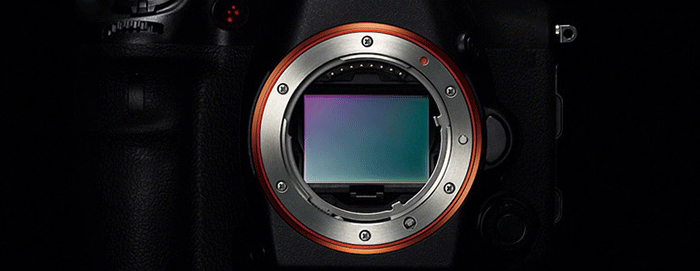
The next generation A-mount and E-mount Full Frame cameras will feature a newly designed Sony Full Frame sensor. There are three different versions that have been developed: 24, 32 and 36 megapixel sensors. It’s still hard to say which camera will use which sensor…
The first camera suing the new sensor shoudl be the NEX-FF!
—
Message to sources: You can send me more info anonymously by using the contact form you see on the very right of your browser. You can also contact me directly at sonyalpharumors@gmail.com.
For readers: Subscribe the RSS feed (Click here) and Twitter (Click here) stream and the Facebook fan page (Click here) in order to not miss any news!
—
Reminder (SR = Sonyrumor):
SR1=probably fake rumor
SR2=rumor from unknown sources
SR3=50% chance it is correct
SR4=rumor from known sources
SR5=almost certainly correct!
174 Responses
Any info when these cameras might be available?
SONY will announce these early to claim innovations for overpricing then
Sony will ship these right around the same time Competitors
Deliver their FF – 50+ and 72+ megapixel offerings for
Pricing of 80% of Sony’s costs
^ This is true. I know because I read it on the internet. They cant put anything on the internet that isnt true.
By the way, I’m dating a french model.
Any info when these cameras might be available?
May be the sensor definition choice is due to processor ability, and then battery power ?
ehm… what are all those pixels for, when there are no lenses able to provide such resolution. people, be real. have a look at DXOmark and tell me, how much lenses providing more than 20MP resolution you will find.
24 is enough for FF. If you want more, just use ICE or get a MF camera which will be able to give real resolution. not fake, interpolated and smeared pixels.
More pixels will decrease the visible moire and artifacts, which is important now that AA-less cameras are showing up. Granted, there likely isn’t much difference between these resolutions. We need 50+ megapixels.
Anyone who has seen perfect fullsize images from a Nikon D800/D800E knows that DxO has no clue.
But the effective resolution of a Bayer-interpolated image will always be slightly less than the actual pixel count of the sensor – remember, each one of those pixels records only one of the RGB colors.
And then the 36 MP D800/D800E delivers only 15 MP in APS-C crop mode. While there already are 24 MP APS-C sensors which still don’t outresolve a really good lens. So there are still good reasons for wanting even higher full frame resolutions, I’d say up to 50 MP.
Here’s an image (not mine) from the D800 – right click for the full size. You tell me how many megapixels you see, lol.
http://www.flickr.com/photos/nikonrumors/7020078867/in/set-72157629289734604/
Every time more mpix is mentioned people like you say the same thing. They continue to be wrong and so are you.
looks like Pablo is another person who spends more time reading DXOmark rather than using his camera
if i get one are you going to pay for the difference between the MF camera and FF NEX? are you doing to carry it around for me? its always good to have the ability to shoot more megapixel than you need, you can always choose in camera to shoot less. just because you don’t need more megapixels it doesn’t other people don’t prefer it. having 24mpx i’ve found to be so much more flexible than 16mpx of my other NEX cameras
Could this has to do with the new triangle and hexagon pixels that Sony is developing? That would mean more detail but not necessary hugh, I would think, maybe?
Cmos only til 2015.
Disappointing. We have seen a 24 MP FF-Sensor 5 years ago and a 36 MP FF-sensor 1 year ago. Where is the progress?
Agree – but for real, useful difference we talk about double the number to 72 mpix. There are rumors about a Canon with 75+ mpix. This will require a lot of processing power and a bigger camera, maybe with cooling needed 🙂
I’ve given up reading Canon rumors, they’ve been predicting the 70d for 2-3 years until it has come out now, and the rumored Canon 3d high megapixel camera for like 5-6 years… i’ve given up believing and reading them now
Im not sure about this, but DXOmark lens tests show that the best lens for full frame dont resolve more then 15mpix, think that its one of those things when its the the quantity but quality that matters
i’m sorry to tell you this, i know it may be hard to believe…. but DXOmark scores isn’t everything…
Yes but you’ll notice the better Nikon lenses score higher on DxO when they are tested on the D800 than they do when tested on the D600 – so you are getting an improvement with more megapixels.
The D600 and D800 were released about the same time and both use Sony sensors – so the same generation of sensor technology and same kind of sensor architecture. The major difference is one sensor has 33% more MP than the other.
They can’t put too much effort into improving sensor options because they’re too busy fixing the flash problems and addressing repair service complaints.
Oh wait… not even an SR1 on that front. Well maybe they’re all out to lunch approving HaSony wood grain selections, negotiating plastic lens mount and flash feet production, and finalizing real estate sell offs? I’m sure whatever they’re doing is very important, like figuring out how to use a flash alongside optional EVF. Oh, I know… they’re converting remaining ZA screw drive to SSM. Yep, I’m sure that’s what it is. Who has time to build a camera that we’ve been asking for?
You just described the progress – we went from 24 to 36mp in 4 years. Next, you need some patience.
I dont need more patience i need a longer lifespan.
I would like a high resolution camera while im still around to use it!
Right, a 12MP camera would be nice now.
What about the fact that if there’s less megapixels for the same area, each pixel receives more light? Some people do need more megapixels, it makes perfect sense. But it also makes sense that some other people would like a bigger area of the sensor for every pixel.
It’s about sensor area, not pixel size, once you output photos and compare them at the same size. That’s why the old “more megapixels are bad” argument from the mid-2000s has more or less gone away. Plus, downsampling high megapixel images to smaller sizes improves quality, too, as compared to a sensor with less megapixels.
Good to know! It’s true that the article I red about that was indeed a few years old, and that it might not be true. I’m looking forward to see what Sony will come up with anyway! 🙂
yep, downsampling, so you people who don’t need as many megapixels just shoot in small or medium then 🙂
Then build both!!!!
You are worrying about IQ, right? In this case, with modern NR technics, the more megapixels on the same technology, the better: NR algorithms reconstructs fine details and with downsampling to smaller size of lower MP image we will have higher IQ.
What about APSC sensor cameras?
zillions of them available on the market.
NEX7 is already 24! (though despite some color casting issues with some wide angle lenses, but nevertheless its already 24mpx)
Why 32mpix? While it would be possible to, in real world see, the difference in resolution between 24 and 32, difference between 32 and 36 is in reality not possible to see.
In real world 24 and 36 are relevant.
Could it be because special requirements concerning corner performance with the NEX version? This should be a crucial area for the Sony engineers to solve.
What do you mean by “it’s not possible to see”? And what issues with corner performance?
Oh, looks like Nikon will issue three new FF cameras then.
D600-II with 24 mp Sony sensor and fast liveview (using on-sensor PDAF),
D700 with 32 mp Sony sensor,
D800-II with 36 mp Sony sensor
Congratulations. It turned out that you were right in your prediction: Nikon has released a D700.
Which shows that predicting the past is often easier than predicting the future.
You were wrong about the pixel count though, but better luck next time.
All with crappy LiveView and weird grips.
The grips ARE weird, aren’t they?
I tried out a D7000 and my hand was aching after less than 5 minutes.
Yep, I find the D800 particularly disappointing in that regard.
Any idea if there are other differences between the sensors except resolution? E.g. difference in dynamic range, ISO range, … Or is it just the resolution that is different?
There is no such thing as different pixel density without different sensitivity and/or dynamic range. Otherwise, why make sensors with lower resolution? I don’t think there is much difference in production cost.
Less pixels for faster processing. Just try it with photoshop,apply complex filter to a full size picture and repeat that with 50% resolution of the same picture. There’s a significant time difference, at least with my PC.
That would be a very stupid reason to make cameras with lower resolution.
Or maybe not. Nikon D4 and Canon 1DX were designed with lower MP for fast action sport. D4 = 10 fps, D800 = 4 fps. Do you think they lower the mp for better ISO performance? That’s a common misconception. The need low mp for faster processing.
@justme You are simply showing the exception to the rule. As you can see, it is only one camera in their whole lineup. SImply speaking, you don’t wait until people decide to buy faster computers, before you move forward with sensors. It’s technological progress.
It takes me up to 3 dayswork to stitch together multiple closeups of moving animals.
Do you think i care about an extra half hour of procdssing time (5 minutes on a fast computer for a 250 megapixel tiff)
My photoshop scenario is just an analogy. My point is processing time vary from MP to MP. And I was talking about IN camera performance, not PC. That was just an example. They can totally make a 400mp camera right now, sensor wise. It’s the processing power that will limit its potential. So there might be no significant difference between 24 vs 32 vs 36, IQ wise, but camera performance might be affected.
..and that might be the reason why they opted for the lower resolution.
The average photagrapher does not need more than 24 or 36 megapixels.
If that describes you there will never be a shortage of low resolution cameras for you to choose from.
11% of us like me want high resolution.
We dont even have a single choice!
Count me in, coz I like hi res pict. I’m just trying to give a logical reason why not every camera has a super high-res sensor when the tech is clearly feasible.
I never asked for every camera to be high res.
JUST ONE.
I hope barry that they release a 60 MP camera and its noise performance makes it truly unusable for you. That would make me laugh so hard, for so long.
@just me: $$$$$$
thats why they’re testing it….
how bout some info on the price drop on the a99? when or how much will it drop? specially here in Germany where its extremely overpriced without the free grip and flash!
It started yesterday. Will write about it soon!
36mp is just not enough to warent moving up from 24.
Thats a RESOLUTION increase of only a out 8 or 9%.
To be able to crop a ff image to the same 24mp image as the a77 would require 56 megapixels.
My desire is to take a step forward without taking a step backwards to get there.
I quess I should thank sony for saving me money as I will definitely not be buying any new sony stuff this year.
Sony continues to promise only big improvements while continuing to make only little ones.
gotta ask… where are you going to find FF glass that resolves (in the corners) well enough for a 56mp sensor? Even stellar glass like the CZ 21/2.8 distagon might have trouble at those pixel densities.
Barry, I’m no math expert…but by my simple calculations moving up from 24mp to 36mp is a 50% increase not 8 or 9%. How did you get to that number?
Based on the survey on this site for what users would like to see improved, the number one line item by a wide margin is a faster AF system. It’s definitely at the top of what I hope to see. Photographing animals, I assume this is something you would value. Additionally, a 50% increase in resolution isn’t too shabby – most users would consider that to be a big improvement.
its 50% in the number of pixels, but just a little over 20% in linear resolution.
Mike you are correct my earlier statement was not correct.
C, don’t worry about Barry. He lives on his own cosy little planet.
Not sure where he got 8 or 9% from either – even if he meant horizontal/vertical resolution, he’s still wrong.
Chrcked my math
6000×4000 pixels for 24mp
7360×4912 pixels for 36mp.
Thats actually 25% increase in lines/mm(resolution) if the sensors are the same size.
I should ha e said 25%in not8or9.
If we are talking about going from a c sensor to a ff sensor this is actually a decrease in resolution (pixels/mm)
The point at which a ff sensor matches the resolution of a 24mp c sensor is 56mp.
There are some advantages partcilarly in depth of field to the smaller sensor.
Giving up those advantages is what I refferred to as a step backwards.
I am looking to step forward to a higher megapixel ff camera without having to take a step back in resolution thereby losing depth of field.
That is why I consider 54 to 56mp the point at which getting a new camera is worth it to me.
What issues do you have? If you prefer a dense APS-C sensor then keep the a77/NEX-7, there’s no need for you to switch to a FF camera.
I think 36mp are too many for my uses, I printed 1 meter by 1,5 with 16mp and with 21mp and it’s enough already. It’s not like people look at prints that size from 10cm or at 100% crops on screen.
More megapixels improves quality, even when downsampling, and also reduces the amount of visible moire and artifacts, which is particularly important now that removing the AA filter is becoming more common.
A77 density on a full frame is 54 MP or a 6000 by 9000 pixel image. The 24 MP is 4000 by 6000 so a 54 MP would have a 50 percent increase in linear resolution. The 36 MP sensor is about 22 percent increase in resolution over the A99.
These are all theoretical of course, as the lens and camera shooting techniques have to be good enough as well. The real resolution of a sensor is up to debate, but I always go with an assumption that you should use about sqrt of 3 area oversampling.
So a 24MP imager should be able to be around 14 MP real resolution. A 54 would get you to 32 MP. The stand by 16 MP sensor works out to about 9 MP.
Makes sense, I should have read Barry’s post more thoroughly. I was comparing uncropped image resolution not sensors. I can see how one could think producing a 54mp sensor should be a simple or economical affair given that the a77 sensor merely need be enlarged slightly – things do not often scale so easily (or affordably) in reality.
For instance, I can grab a 5″ phone with a nearly 2k resolution lcd, so why not a 50″ tv at 100k resolution? Ah well, I hope Barry eventually gets the resolution he wants. Maybe 2 generations from now.
I think Sony could make a 54MP FF sensor but it would cost more than a 24MP or 36MP due to the higher reject rates due to the smaller features. The big issue may lie in the electronics, modern cameras do a lot of calculations on all those pixels the power of the GPU and CPUs required may be too much for a normal size camera, at least if high frame rates are needed. There may also be read speed issues, one of the reasons given for the A99 being only 24MP was due to issues trying to read the larger number of pixel sensors fast enough for 60p video.
Then ill take one frame/second instead of ten.
Who cares.
To those who wonder why i seem obsessed with reolution.
I use my photos for reference at very large sizes.
The only thing that maters to me is how much detail i can see in the picture.
Color is not important because i can fix that.
Noise is only important when it obscures the detail.
I am admittedly not your average photographer.
I am also not the only person that requires hjgher res.
Medium format will never be practical for field work and the current highest resolution available requires stitching multiple images of moving animals. Not an easy task.
That is why i am understandably impatient for a better tool yo work with.
I am looking to be able to take a single picture of high enough guality that I dont have to stitch multiple images of moving animals.
Medium format already exists and the cameras already provide +40Mp. There’s no need to wait for SONY.
Try shooting animals in the field with medium format and you will see how impractacle your suggestion is.
How big would a 500mm equivalent lens be?
How much depth of field would a medium format macro have?
How much would 2 bodies and a selction of lenses weigh?
If this were even possible what would it cost?
Its easy to make a smart comment like get a medium format but you know as well as I do its not doable.
And I know as well as I do that this was never intended as a real suggestion
It wasn’t intended as a smart comment. I just find it puzzling, since the idea of shooting 500mm lenses at 40Mp+ resolution in the field to be a sideline photographic niche. On that basis and if it was me doing this, I would expect to have to use niche photographic equipment – in this case medium (or large) format with matching lenses.
We are all niches and everyone of us is a minority.
We cannot be ignored.
11% of sony users and 11%5% of all other camera users.
Thats over 3x sonys current camera customer base wants high resolution (over 50mp ).
Thats TOO BIG A NICHE TO IGNORE.
That’s your opinion, putting it in CAPS doesnt make it a fact.
Clearly, Sony disagrees with you, and so do the other manufacturers.
Duh. Otherwise we’d be getting rumors of 50-60 mp sensors.
We’re not. So you can shout all you want and throw tantrum after tantrum about how they need to listen to you, but clearly Sony doesnt care.
Hey barry, i think you should follow your maths, take out a huge loan and do a collaboration with Sony to make this camera, in return, you can get a share of the profits, by your math, you’d be DOUBLING OR TRIPLING THEIR PROFITS BECAUSE THERE IS DOUBLE OR TRIPLE THE NUMBER OF PEOPLE WHO’D BUY IT!! which would make you very rich, sony very rich, and YOUR 11% OF ALL CAMERA USERS very happy. 🙂
Seriously people… why are you judging progress as more pixels? A 24mp sensor is plenty as long as dynamic range, colors and noise are improved and in the case of NEX, as long as they can make it behave with high incidence angle light… this would allow for smaller lens design and for use with RF glass. What the hell is the point of having more pixels if you give up any of those other characteristics? As for 32mp vs 36mp, perhaps the 32 has some optimizations which required large pixels while the 36mp is just an update of the current sensor?
+1. I will be very happy with 24 bits with good color separation and tonality and high DR. Remove the AA filter and having lenses with fullframe edge-to-edge sharpness is where it counts.
the best part is: the most folks screaming for morepixels are not even making living with photography.
+1
So what?
Business dont care whether you take photos or not. What matters – whether you pay for your vote with your money.
What has income generated from photography got to do with the number of mpix people want? Stupid statement.
+1
By ‘RF glass’ I assume you mean ‘non-retrofocus wideangles’. And by non-retrofocus wideangles you mean ‘small’ wideangles rather than something like the 24mm Zeiss for e-mount.
Just consider for a moment the likelihood of this happening: of Sony producing a special sensor and a boutique range of lenses to match it just so some users can have the wet dream of a 135 sensor in a NEX body.
There’s more likelihood of this coming out under the Hasselblad banner because it really would cost a packet. Getting the lenses to perform well at the edges is nearly impossible as well. Have you seen how much wideangles vignette on the bigger mount of the A900 and A99?
The FF NEX remains a camera that is conceived from film-era knowledge and thus will not see the light of day.
If Hasselblad did put this thing out you’d complain about the cost, size, weight and corner performance with wideangle lenses.
No, if Hasselblad puts this thing out, we will be complaining about the wooden grip.
haha +1
Leica did it. If the rumors from last year is true then Sony was courting Leica to make the sensor for the new M 240. If that’s the case then they may have developed the off-set microlenses (or some similar) to counter the smearing from symmetrical lens design. I doubt they would/could fix the vignetting without a digital solution like the M 240 and M9 use but I’m personally Ok with that. It is the smearing and loss of resolution in the VG900 that was so disheartening.
I want 24MP sensor with high iso , native 51200 , expand 204800 , multi shot NR 409600, 5axis stabilizer .
Not d800 type fragile camera in night snap.
I would bet following:
24M for the entry A, 36M for the Big Boy A
32M for the NEX FF
Either that or 24MP for NEX FF and 32 MP for the lower A and 36 for the higher A are also seem logical, but if Sony want to do what CanNikon did with 1DX or D4 per MP to create a flagship camera with faster frames and a 36MP one for more general purpose use, it would be 24MP for the Higer A and 36 MP for lower A and 32 MP or the NEX FF. Either way we shall see.
I hope 24 for Nex FF! It’s also a small camera, so it’s more difficult to cool it!
Its time for images, whatever you can get. We have *read* enough.
24, 32 and 36
Only one will be chosen at the end.
Or we will have 3 cameras with 3 different sensors?
WTF????? I thought Sony was going to bring out cameras to outcompete the rest – but Nikon will have had a kickass 36 mpix sensor camera for 2 YEARS when the new Sony comes out. THAT’S BARELY KEEPING UP – NOT OUTCOMPETING. That’s so delusional. Come on admin – tell us how these new sensors will be better – and not just quibble about a third of a stop – tell us how they will be distinctly and unarguabley better!!!!!
Nikons 36M sensor is Sony made. And such a resolution makes Nikon D800 4fps slow.
But Jack come on, 4ps is not exactly a game changer for the large percentage of photographers. That is totally acceptable and the gains made up by the extra resolution and Dynamic Range are well worth it if you are interested in gathering high quality images. On my a65 I have 10fps, I tried it out once, cool, but never use it because I don’t shoot sports.
Well, the DR of the D800 isn’t a game changer either.
its nice to have the option
Yeah, and Sony has had in-body stabilization for 7 years already, focus peaking for 2 years, better Live view since many years, …
Admin has stated that sony has been deliberately spreading lies in order to keep thier true plans secret. Sony has and is continuing to make minor changes only to keep us buying new cameras.
The statement by sony top executives that sonys new policy will be to only make signifficant changes is sonys biggest and most ongoing lie of all.
Most likely resolution increase is slowed down now because of on-sensor AF. Every pixel has 2 diodes (or more).
I really don’t get the idea of 36MP camera. Nikon fans really believe that its Troyan Horse. You either lose 50% of processing speed or need more CPU/battery. 24MP is actually enough for 20×12 inch 300DPI print. I really believe that 95% of assignments done, needs less.
I would like to get 2-3 stops better ISO/noise result. Thats what I’m looking forward from new 24MP sensor.
“I would like to get 2-3 stops better ISO/noise result. Thats what I’m looking forward from new 24MP sensor.”
Go luck with that.
**Good**
The new tech is going into on-sensor focus so I would expect very little in the way of decreased noise from the sensor although it is possible Sony will upgrade the backend electronics some to help out. Losing the mirror gets you 1/2 stop, upgraded electronics might add another 1/2 stop so 1-stop form A99 might be possible but more likely 2/3 stop.
You don’t get the 36MP sensor and the24MP is enough for 95% of the cases? There’s your answer – it’s for the other 5%.
Excellent news!
Stop with this megapixel race! My PC is dying when processing 24mpix (about 4 times slower than processing 12mpix)… and have never in my live needed more than 6-10mpix. A2 prints from 6mpix KM7D looks awesome and my “full HD” LCD is only 2mpix (1920×1280), please give first at least 6000×4000 LCD first so I can anjoy photos without paying 100s of dollars to print A2 or more…
So technical progress should stop and wait for you to upgrade your junk pc?
Just because YOU don’t need more mpix and YOUR PC is junk, doesn’t mean the rest of us have to be stuck on 6mpix. I use all of my 24mpix and my PC is more than enough to cope.
Well, keep your KM (an excellent camera by the way) and your current PC and be happy.
None of it worth a light unless there is good firmware to make it all work….and Sony have not proved they have it or can do it yet. (Not to the A65/77 users anyway. I can only speak for them).
Sony should replicate the APS-C NEX line with Full Frame Sensors.
An entry level NEX 3 with no viewfinder using the 24MP Full Frame sensor.
A middle tier model like the NEX 5 with no viewfinder using the 32MP Full Frame sensor.
A top level model like the NEX 7 that has an EVF and all the bells and whistles using the 36MP Full Frame sensor.
Sony has my money!
In other news, Canon prepares 75Mpix camera: http://blog.gsmarena.com/canon-testing-eos-1d-x-successor-with-alleged-75mp-sensor/?utm_source=twitterfeed&utm_medium=twitter
I’ll bet this Canon 75 megapixel Pro body can’t be less than $8000 and there probably aren’t any lenses that can resolve this thing. 90MB raw files will be great for shooting the family at Disney World.
24 MP is enough for me.
I want more DR (High & Low light) and sensitivity (3 or 4 stops better ISO/noise result) !
I hope so a 5 axes stabilizers.
agree…
Why do we need 36,56,75 MP???? it’ll consume alot of power, slow fps, low DR, noisy, and so on. Just leave them on medium format factory.
i assume that this new 36MP are different from d800 sensor, even though sony new 36MP manage to deal with all high MP problem above, i bet it’ll damn great to go on 24MP with the same tech approach.
I agree. I don’t do anything profressional or need to print big pictures. Just need a cam with amazing image quality and low noise at very high iso :3. IBIS would be a nice welcome as well. And a really really great EVF, too XD
They’re in a good spot right now. If they increase the mp count further, they’d seriously cripple everyone’s workflow because popular converters such as LR still don’t have a proper multithreading architecture.
They could simply include sRAW modes.
My guess:
High end competitor to canikon: 24 MP Super fast focusing, better ISO than current Sony models, large dynamic range, 11, 15, 20+ frames per second, 120 FPS video option, maybe 2K video, Global Shutter, full size integrated grip, 5 axis stabilization.
NEX FF: 32 MP Enhanced NEX features, 5 axis stabilization.
D800 Competitor: 36 MP next generation sensor with high ISO and advanced dynamic range, Global Shutter, perhaps in same body as full size 24 MP integrated grip model, 5 axis stabilization.
WHOOAAA…
thats the right way if you want seriously compete with canikon.
Cmon sony, YOU are the biggest japanese samurai, you need to focus,..
you’ve been doing a “slice” with your katana, that wouldnt kill them, this time what you should do is a “stab” focus!!! your dealing with so many your multisector business if you focus at one division at one time it’ll be nice deep wound stab to your opponent. one hit one kill instead going burst but low accuracy
Those insisting that the sensors out-resolve the lenses, please refer to the following link: http://www.eoshd.com/content/8674/nokia-pureview-808-review-and-vs-iphone-4s
Only 36? I am disappoint. Was hoping for 46mp or 50+ . Come on sony “Wow” us again!!!
To those that think zeiss prime lenses can’t resolve 36+ mp you are lost.
To those who whine because their computers or hard drives can’t handle measly 24mp, then lucky day for you there are plenty of lower resolution cameras for you, save your money and keep compromising on your photography. My images mean a lot to me so if I have to wait a few seconds more to process, if it means I’ll get better quality, then I’ll gladly wait. Same goes for HD space,(it’s so cheap anyway)
+1
+1000000000000000000000000000000000000000000000000000000000000000000000000000000
The average photagrapher does not need more than 24 or 36 megapixels.
BUT WE DO!
+1
Higher resolution is good. Significant improvements to the AF system, the processor, IBIS, video codec/bit rate, internal cache, image bit depth, dynamic range, menu system/software customization options, weather sealing, and flash system are better. All of the above would be best.
I print large and often stitch but I’d still take those other things over resolution above 36mp because it will make the camera far more reliable. I shot with both a 5d3 and an a99 a week ago. The 5d3 inspires complete faith in the camera, you know that any missed shots are due to your own actions. I cannot say the same about the a99 (despite having 10% higher resolution than the Canon).
All that stuff already exists and is available to buy off-the-shelf. It’s called medium format.
What doesn’t exist is a small highly capable digital 35mm compact that can mount native lenses and the best fullframe rangefinder lenses.
If Sony follows the RX1 design when developing the fullframe-NEX then it’s a guaranteed commercial success.
New sensors? Must be new like the 18-200 zoom. Sony keeps the same old sensors and stamps new on the back and were all supposed to be wowed. This is incremental updates at it’s best. I have a feeling Canon and Nikon are about to stomp on little old Sony. They might even make a menu system that is usable and have some lenses that are up to the new technology.
Sony keeps the same old sensors? Lol, are you serious?
Give us a Full frame without the AA filter. With enough Megapixels, Sony RX2 proved that it does not need it.
Sony try to understand this.
If you put the WORLDS HIGHEST RESOLUTION SENSOR on one version of you FF NEX UNIVERSAL CAMERA. Then every photographer in the world that CANT GET ENOUGH PIXELS will BIY YOURE CAMERA NO MATTER WHAT THEY ARE USING NOW.
This is your window if opportunity but ITS CLOSING FAST.
Your new patents that are sitting on your shelf will EXPIRE and then anyone can use them.
As the #3 camera company you cant move up unless you make something MEASURABLY BETTER.
Megapixels are measurable
Any of this you cant understand please ask.
In 2008 Sony introduced the 24 megapixel A900, highest resolution in class. Did that camera make Sony move up from third place? So why would a new high-megapixel camera do so? Did you move to Nikon? Why not? Get real.
Sony do the math.
In a recent sar poll over 10% wanted super high resolution and square sensor.
54+mp ff or 80+mp square 35mm.
Put this on a univrsal ff nex.
If only 5% of sony users and 5% of other camera users bought this it would more than double your camera division sales.
Push up the development of one of your stacked sensor designs. If you pusbed up the resolution to break the 100mp mark you could rule the camera world
Just build the sharpest highest resolution
The average user will of course want less but you clearly are already working on stuff for them.
With all the new stuff you are developing can’t you make one camera for the high resolution guys like me?
I owned both a Rollei TLR and a Hasselblad 500c/m and like the square format – but on those cameras it also eliminated the need for a large prism and turning the camera for vertical shots which was awkward. Nobody’s going to make a square sensor large sensor camera most people (and publishers) prefer rectangular shots – so right away they loose about 30% of the pixels making the crop. The minority who like square prints can always crop a rectangular picture sqare and the loss is about the same.
i’m tired of reading posts claiming “all sony users want a ultra high resolution sensor because thats what i want”. I understand you wish for a ultra high resolution camera, but as a business, they will go with what generates the most return.
they are NOT going to spend $2,000,000 on developing a camera that will sell for $3000 for the 100 SAR users who wish to have ultra high megapixel count. I work in a company which makes products, and the final cost of the product is usually 4-5 times the cost of production as you have to take into account the resellers and suppliers who need to also make a profit along the way. There are also numerous challenges associated too, such as increasing production numbers to lower overall cost (like how Sony now increase sensor production and selling sensors to Olympus and Nikon), and better produces which also reduces the cost of production.
there are numerous challenges of making a high megapixel count sensor, its possible, but financially it may not be a good idea as they would be making huge losses
Sony will listen to you when you have enough financial backing behind it, so if you:
1. Put the money into Sony and get a major share in the Sony company and tell them to make one for you (i don’t think you have enough money for this)
2. Commission Sony or another company to make a ultra high resolution sensor and build it into a camera for you (achievable with money)
3. Wait until Sony perfect its processes and make the high megapixel sensor which is both commercially viable to sell (and people will actually buy at a decent price) and let them get on with developing the technology and in the mean time develop other stuff
personally, i’m waiting for number 3
if you are seriously willing to do everything in your power to obtain a ultra high resolution sensor, then you can spend money in buying one, maybe one with EXMOR R tech so you get high megapixel density. but without a large sum of money your relative voice decreases in volume for Sony, in the end, they are a business and i would not wish to see them crash and burn because they used all their money just to make a ultra high resolution sensor camera to make a hand full of people happy.
again, this isn’t anything personal against you, but just that not EVERYONE wants ultra high resolution and so stop making it sound like it 😛 we know you would like it for detail shots of animals, wouldn’t we all?
commissions for sensors and cameras are possible, its just a matter of who pays for it
http://www.electronista.com/articles/11/08/25/custom.job.said.to.cost.over.100k/
http://www.dpreview.com/news/2010/8/31/canonlargestsensor
Based on the last sar poll 11% chose super high res and square sensor as the most important feature for a new sony camera.
Put that on the full frame nex which is a universal camera that non sony users can use.
If the same 11% of other camera users want high resolution thats close to tripple sonys current total customer base want this product.
If sony makes the highest res of anyone in a universal camera this single camera can possibly double sonys totsl csmeta sales volume.
I might represent a “handfull” of people.
But enough handfulls of water will fill an ocean and there are many many many handfulls out there.
The “majority” of photographers do nt need or want more than 36mp. But 11% OF ALL PHOTOGRAPHERS DO.
Not just 11% of sony customers.
Is that a big enough handfull for you?
If sony waits for the competition to do it first then they lose that window of opportunity
Its not 11% of “all photographers” its 11% of SAR readers. I’d say a very significant portion of SAR readers dont own Sony gear.
Even if it was 11% of all photographers, no major electronics company is going to spend so much money on a known minority. The RX1 is as close to you’re going to get to such a thing – but this isn’t being purchased by mostly Sony users – its being purchased by Nikon and Canon pros, and ultra rich snobs. The projected customer base is huge in comparison to what a 60mp A mount camera would be.
It isnt going to happen anytime soon. Please stop your b*tching; I’m sure for every person who agrees with you, 50 others are being constantly annoyed by your repetitive and unrealistic ‘demands’ of Sony. Guess what; Sony knows about you and all the others who want such a camera. Clearly…obviously…they dont care.
yes, exactly! 11% is a figure from a previous SAR opinion poll, its like going onto the street and asking 10 people if they like sausages and then basing a global statistic on that… 11% of SAR readers who vote in a poll is only a number of people who visit a website, a website is one of many and does not represent “ALL OF THE PHOTOGRAPHERS” 🙂
The development costs of a 54mp full frame sensor might not be as high as you think. Sony already have a 24mp APS-C sensor. Scale that up to full frame – keeping the same pixel density – and you have about 54mp. This is more or less what they did with their 16mp APS-C sensor resulting in the 36mp Sony full frame sensor used in Nikon’s D800.
There will never be a shortage of average cameras avaialabl of 24-36mp.
Make us one single super high res camera.
We will take the slower processing lower iso or anything else sar readers want to throw out as obstacles
But give us one good camera.
Barry, how much are you willing to spend?
What if … the three megapixel options are really Sony exploring with three different sensor approaches? The 24mpx could be the foveon like sensor that Sony has been developing and patenting for years. The 32mpx option would be a RGBBW array. The 36mpx would be a standard bayer filter array like the D800(e) but fast enough for on sensor AF and full-time live view.
If that were true I’d love to see what could a 24mpx FF foveon type sensor could resolve.
I am thinking this…
NEX7 successor – 24MP
A77 successor – 32MP
A99 successor – 36MP
Makes sense, doesn’t it? 🙂
Read the article, it says 3 full frame sensors. Nex7`s is not.
I read the article. I am talking about the rumored NEX9. :/
The NEX-9 (NEX FF) is not the NEX-7 successor.
i think this is all next gen stuff, these next gen sensors probably all have on sensor PDAF, making different versions of a prototype is not uncommon, it could be that Sony finds out that the 32mpx might be provide better balance between dynamic range, cost and processing speed, so 32mpx sensor gets put in FF NEX and FF alpha (example only), it doesn’t have to mean all 3 sensors would have to be used 🙂
I think “Macintosh Sauce” means the NEX FF, the Alpha affordable FF, and the premiere FF–whatever those first two will be called. Personally, I don’t think Sony will delineate the line that cleanly. Nikon, Sony, and Canon all don’t and I don’t think Sony will go back to that. I think the difference in the sensors is more than just resolution. I’m not saying my earlier wildest guess is for sure correct but there have to be other optimizations and considerations. We may never know all of them because they may only release one sensor (like the venerable FF 24mpx that’s in the A99, VG900, and RX1) or they may release a different sensor in different bodies designed for different purposes.
Andrea I’d love to know more about these sensors. Are they all bayer type? Do they have AA filters?
I personally think they should do something like a 12 or 16 megapixel full frame for low light work. 16 24 & 36 sounds better to me.
In actual state _more_ megapixels means better high ISO performance. In fact high megapixel sensors are already just as good when downsampled. But they became better once some modern NR (detail reconstruction in fact) algorithm applied and then downsampled.
All the folks upset about the high resolution are not takinng into account that these are almost certainly some form of bayer sensors. So when comparing the max quality produced by the lens, you have to compare that to one quarter of the max resolution of the sensor. That is, if they got a Favon sensor working well at 20Mpx, it would take an 80Mpx bayer sensor to out compete it.
Either your statement does not make any sense or i am not following your logic.
Can you explain it any better?
Bayer sensor : having a array of repeating “blue-green-green-red” pixel array, so 4 pixels are needed to represent 1 color
Foveon sensor : each pixel is a 3-layered pixel which can record all 3 colors in the same pixel (so technically tripling the megapixel count), strengths are that it can do very good colors and incredible detail, weaknesses are that performance starts to degrade rapidly at higher ISO (even at iso 400) so its not too good in low light unless ISO 100 or 200, and that it is owned by sigma, so there are many complaints about the cameras being slow. not many other companies are willing to take up the sensors but previous rumors say that sony is trying to develop one of their own.
Apparently you have been decieved by foveons deliberately misleading numbers.
The “40MP” foveon sensor is actually only 3 layers of 15.2 mp.
They then through some loophole in the naming system call it 40 mp.
The bayer array counts two greens one blue and one red as a single pixel.
Therefore a 15.2 mp bayer has the same atual number of pixels as a 40mp foveon.
Since the foveon colors are perfetly alighned the iq is better.
Impartial critics claim 30%was better foveon fans claim substantially better than that.
If the pixels were the same size and a comparable pixel were actually called a pixel yow could fit 4the foveons in the space of a single bayer pixel..
The lens resolution would not however change.
Be aware that foveon plays a numbers game and caims 3x the pixel count as a bayer array does.
You are actually comparing a 15.2 mp sensor that claims to be a 40mp sensor with a bayer array that acrually calls a pixel a pixel.
they are technically tripling the pixel count. i know how it works and it would produce a 15mpxish picture, but there are 3x as many number of “pixels” or information bits to process, so they’re not technically lying
36mp is nothing, Canon is currently testing a 75mp sensor. Eat that Sony.
And Nikon is testing a 127 MP FF sensor. Suck on that, Canon.
LOL. Riiiiiight.
Two years ago 36mp was state of the art and a camera like that would have been welcomed by folks like me.
Today its too little too late.
Let me be clear.
The majority of photographers do not need or want more than 36mp.
11% of polled SAR readers said high resolution (over 50mp) and square sensor were the most important features in a new camera.
By extrapolation thats 11% of all camera users of all brands would want to buy a ff nex of high resolution that works with thier current lenses.
If less than half actually bought it that would more than double sony camera sales.
WE ARE NOT THE MAJORITY BUT WE ARE HUGE.
Barry, have you take a look at the rear of the alpha lenses? There is a rectangular cut-out surrounding the rear element. A square sensor would not work without lens modification for existing lenses and updates for lenses moving forward. Logistically, (not based on your proposed merits) it’s safe to say the square sensor pipe dream isn’t happening for Sony Alpha.
Some lenses have this and some do not so you are correct.
The higher mp rectangular sensor would not have that issue.
I currentl buy lenses without the cutout just in case.
I am not sure how difficult or easy it would be to remove the cutout.
Perhaps someone out there can tell us?
It’s definitely on the Sony zeiss 16-35 & 24-70. The Canon lenses I’ve owned and used have the full rear circle exposed. While I couldn’t say what the point of the rectangular cut out is on the Sony lenses (the only thing I can think of is to protect the rear element), I would say it rules out the possibility of a square sensor by Sony.
Agree. We need more MP.
That’s why I don’t buy A99, I got A77 24MP already. I am holding Nikon D800’s booklet for a long time.
I am waiting for 50+MP Sony Alpha.
Thats 11% of SAR readers, not consumers. Many people here dont own Alpha cameras, they’re here just to b*tch about various things that they have no real stake in. Its likely MUCH less of the actual consumer base that would care about high resolution. You’re not going to see any of the big manufacturers go much about 30 MP for FF sensors unless there is a TRULY revolutionary change in sensor technology.
Even if it was 11% of the buying population, Sony wouldnt give a d*mn about that. That is truly a niche market, and NO major electronics company has a business model that reacts to this. They would be spending millions of dollars to develop a product that they’d KNOW would only sell to less than 11% of the consumer base (just cause someone is interested in buying, that doesnt mean they will). Because the cost to develop this new camera would be the same or more than a normal camera, and only selling to a very small portion of the market, it would be absolutely insanely expensive to purchase. We’re talking a camera that would cost $8,000 to $12,000.
Barry, it isnt going to happen. It just isnt. You can keep stressing yourself out if you want, but all your logic and pleading is absolutely falling on deaf ears.
Thats how survets work.
You poll the people you can and extrapolate the results to represent the general population.
There is no reason to believe sony and non sony users differ in thier desire for high resolution.
The game changer here is the universal nature of the new nex
Sony users are mayby 5% of those with cameras at best. Those who use skny system less.
With the new nex all camera users can buy and use it FAR EXCEEDING sonys current customer base.
Thes people will only buy it because it is the best not because it is sonys new product.
These are sonys best possible new costomers because they are using competitors products.
If sony has any intention of beating the competition these are the high value customers.
The will only biy the sony if sony is first amd best.
When the competition makes the same product that window closes
Sony must realize that competition is not a liesurely stroll in the park its a race snd you have to get there first to win.
yes, you are right that a survey is used to extrapolate to get an idea of a larger group.
however there are a number of flaws with your assumption.
firstly, the sample group is biased, coming onto a SONY rumour site to ask about cameras is like going to a alcoholics anonymous meeting and sampling how many people have ever had alcohol in their lives and extrapolate for the global population
secondly, small sample size, there is only a thousand replies on the poll probably, to extrapolate that to the global population would give you a VERY large margin of error
i agree that the NEX FF should be pretty good as it offers a more universal platform in terms of lenses, however many people who are heavily invested in canon/nikon do it for multiple reasons, such has having a existing workflow which they might be unwilling to change because they need to provide consistent results for work, having a system which has been already tested and proven, and having lots of lenses already in the system which may not have AF or slow AF when using Sony NEX FF
there is nothing stopping people from using sony and canon/nikon at the same time though, but it will take a long time to change. they’re not going to become number 1 camera brand overnight, they need to slowly work up for it.
and yes, i think Sony understands how business works… they’re a multinational company which have existed for over 50 years… i think they would probably have a better idea of how business works…
i must admit, i’d take back that first statement about it being a sony rumour site as its irrelevant and does not support the argument, nevertheless its still a very small sample size on a somewhat biased sample
There is no question that both canon and nikon will eventually have high mp sensors as will everyone.
The question is will sony do it first in which case canon and nikon users will by a high mp nex.
Or will they do it second and only sell to current sony customers.
I just want a sensor that can shoot clean image at ISO6400 or even higher (10-11 f-stop dynamic range at high ISO 13 stop at base ISO), anything more than 16MP will just be fine!
What about the 54mp Sony sensor that was once rumored? – Or is that one “reserved” for Nikon’s rumoured D4X?