








The following article is a guest post by National Geographic photographer Bob Krist. Thanks Bob for sharing!
—–
I didn’t start out looking to jump ship from my favorite line of DSLRs to Sony mirrorless, cameras. It just kind of happened out of necessity.
I’m a 30+year veteran shooter for National Geographic publications. A few years ago, they asked me to go along on one of the high end, educational private jet tours that their new division, National Geographic Expeditions, was starting to offer. I would teach lecture and teach photography, and oh, could I also shoot some video and stills of the trip?
No problem. But as it turns out, these were not the type of assignments I was used to shooting for them. Usually we have a lot of time in each place to get to know it, and the pace of the assignment is long and slow, and the coverage they expect is comprehensive and deep,
But these were whirlwind tours for folks who wanted to see as much as they could, as fast as they could, and once I started shooting the run and gun videos they asked for, I ran right up against the limitations of the DSLR.
On these fast moving assignments, which are epic, globe-girdling trips that move at a breakneck pace (11 countries in 26 days…and you thought I was kidding when I said “breakneck pace!”), I have no time whatsoever to stop and outfit my camera with an LCD loupe, a shoulder rig, mic pre-amp and all the other bells and whistles you need to prepare a DSLR to shoot video.
I know that because I tried on my first assignment, and I missed a lot of key moments while I was kitting out my DSLR. After that first trip, it was clear that what I needed was a lightweight, video-friendly machine I could pull out of the bag and start shooting at a moment’s notice.
And a mirrorless camera was basically the way to go. I chose a selection of Sony gear so I could get at least one camera with an APS-C sized chip (for nice bokeh), mic jacks, decent lower-hiss, built in pre-amps, the 60fps frame rate option for slo-mo, and the ability to adapt any Nikkor (or basically, any other lens) to it.
In the ensuing years, more and more of my work for National Geographic has been for Expeditions on these jet and ship based expeditions, and I’ve cycled through a lot of the Sony gear, owning at one time or another, every NEX model made.
Up until recently, the A6000 was my APS-C chip size camera of choice for run and gun video. It lacks headphone and mic jacks, but the image quality is superb, the autofocus is lightning fast, and it takes a huge array of lenses thanks its easy adaptability. I use a Sony mic in the Multi-interface hotshoe for ambient sound.
I pair that with the Sony RX 10—It features a smaller 1″ chip with superb, sharp video that is not downsampled (hence little to no moire or aliasing), headphone and mic jacks, built-in ND filter, a Zeiss 24-200mm f/2.8 equivalent lens…the perfect video run and gunner, not to mention still camera, for a traveling shooter who wants a lightweight, but fully featured camera. The recent firmware upgrade that gave us X AVCS codec instead of the dreaded AVCHD is just icing on an already very tasty and attractive cake.

For lenses for the A6000, I take along the Sony 10-18mm f/4 (for ultrawide work), a Zeiss 16-70mm f/4 (for general shooting) and an assortment of prime lenses that can vary, but always includes a Sony 35mm f/1.8 E, and often two old but sharp Nikkors, a 24mm f/2, and an 85mm f/1.8, outfitted with a Metabones Speed Booster for Nikkor to Sony E (which retains the original lens’ field of view and adds almost a stop of light-gathering ability. A miracle adapter!)
The Sony and Zeiss E lenses are sharp, autofocus, and have the OSS (Optical SteadyShot) which make them super for run and gun situations.
The adapted Nikkors are manual focus, but they are super sharp and I only use the compact ones (besides the two mentioned above, I also have the 50mm f/1.8 Series E, and the 75-150mm f/3.5 Series E) so they balance beautifully on the smaller camera body.

One of the biggest advantages of the mirrorless camera is built in electronic viewfinder (EVF) for shooting video outside on bright days. No need to snap on a bulky loupe over the back of your LCD screen, just put your eye to the viewfinder and voila, you’ve got a crisp image to work with.
The other huge benefit of these cameras is their size and weight (or more accurately, their lack of size and weight!). My camera bag weighs about half of what a similar DSLR outfit would and the bag is correspondingly smaller as well.
About a month ago, I switched out my A6000 for the new A7s. It is a lowlight monster and it was just what the doctor ordered for shooting low light temple interiors, night markets, and the kind of things we cover on these trips.
Now, most of the time, I’m using it in APSC mode, which may seem counterintuitive, but it allows me to use the OSS of the Sony lenses, and it is a lot more resistant to effects of rolling shutter, that jello-ey look that sometimes occurs during camera movement in certain cameras.
But when the light is low, the adapted Nikkor primes go on and it’s back to full-frame, low light heaven. I’ve been fully Sony mirrorless for almost two years now, and I haven’t looked back!
Bob Krist’s details his adventures in motion and mirrorless cameras in his new blog Old Man in Motion (www.oldmaninmotion.com). His website is www.bobkrist.com

0 Responses
Bob Krist is a Sony Artisan. Just saying…
Yeah and Nikon and Canon photographers don’t say the same things….just saying.
you are wrong, they say the same things, but about Nikon and Canon
NIce!!
Yeah, they definitely got nothing to boast about
First, as Bob has been kind enough to make clear, he is not paid by Sony.
Second, I know it is normal to assume some type of paid sponsorship deal when a pro endorses a camera brand, but let’s all recognize that there can always be the opposite explanation: a pro who chooses his gear based on what he/she prefers, and then sincerely writes about that.
I mean, if you are a pro, and people keep asking you about your gear, what are you supposed to do? Lie…ignore your reader’s questions? Not mention your gear at all.Get real. And I would hope that any photographer, pro or otherwise, would be enthusiastic about the gear they have chosen and paid for.
Bob Krist is about as real and as classy as they come. And let’s also be real: this guy has about as impressive a resume as they come.
Nice review ,certainly from an experienced user , but dare I say, the images posted look nothing special, really “run and gun” and seems like from “a crop APS-C mode of A7s” mentioned (poor). Do I need to visit my optician? 😀
Show us some of your images and then we can tell whether you neet to visit an optamologist (I assume you want an eye exam as well). The images are fine (probably downsampled). There is a tendency for many people to oversharpen their images. Not always a good thing.
I agree they’re down sampled in the smaller view. Click on them to view higher res, and they look plenty sharp.
@WML: I never said my images are better, mind you,
I just feel that for a National Geographic photographer these SHOULD be better, to be specific:
1) girl’s face not sharp
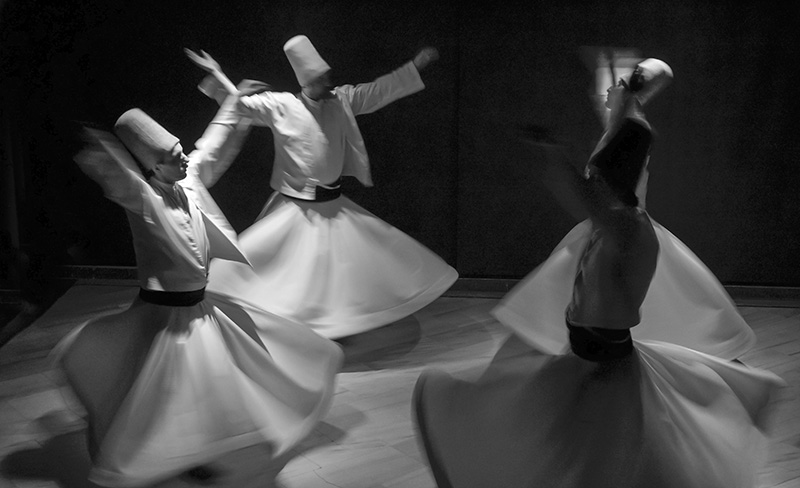
2) dancing men: blurred in not nice way, but this one ok
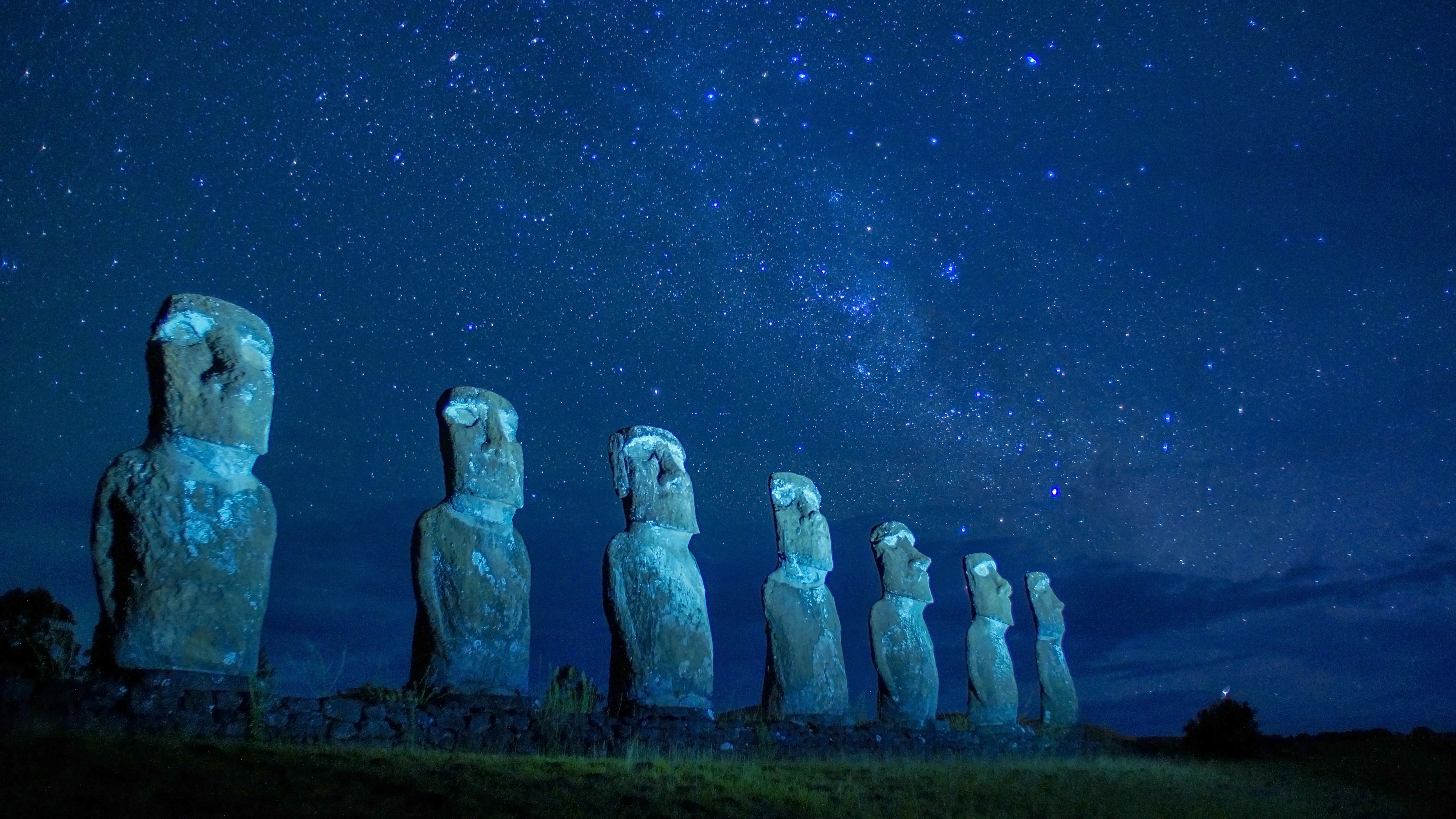
3) statues: left one not sharp (narrow dof), lots of coma in the stars
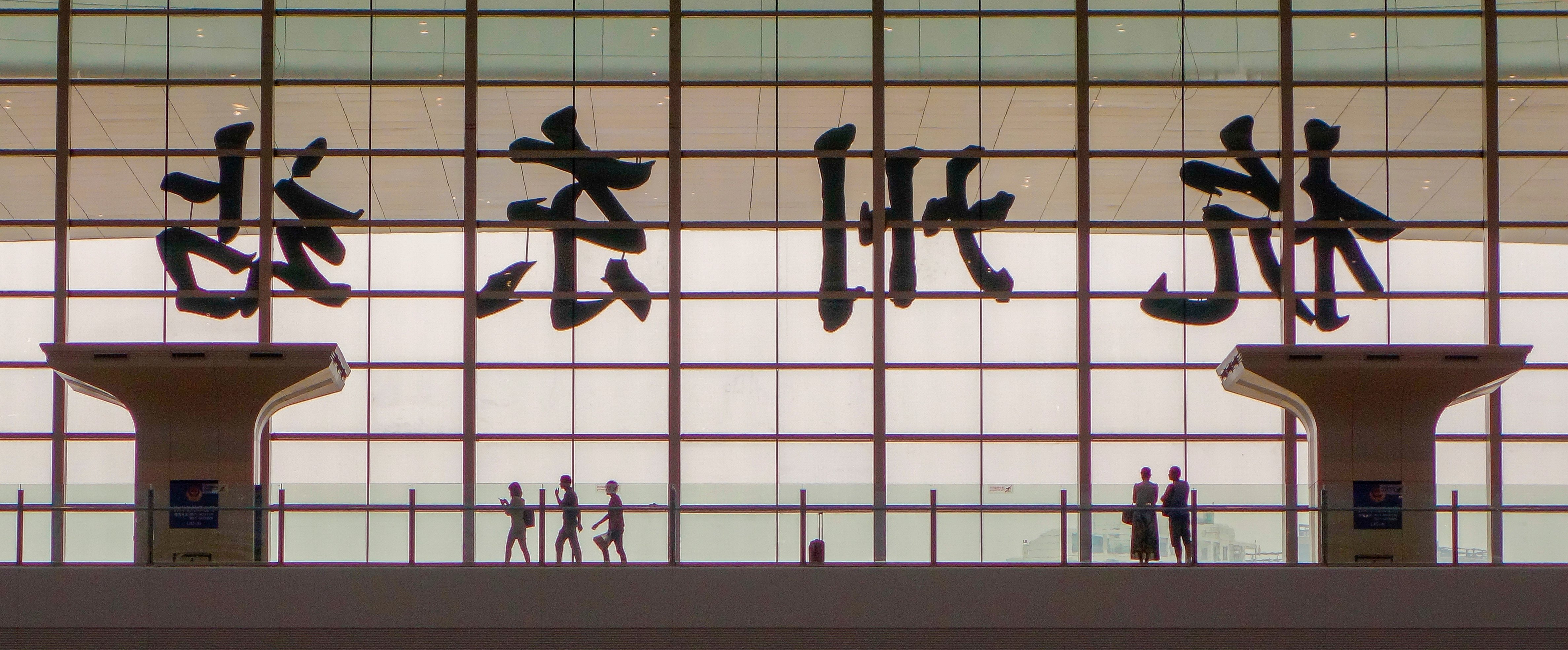
4) chinese signs/people- lots of purple fringing, not sharp
5) candles- overblown
6) street puppets- harsh colours, not sharp
7) painter- not sharp ,lots of CA
I agree..
You do realize that the coma you mention in the stars is basically the apparent motion of the stars due to the rotation of the planet. As I said before, people seem to want all the images to be tack sharp everywhere. And the idea of selective focusing seems lost. And that a slight blur can imply “motion.” It seems to me that many people here want to nit pick about every technical imperfection that they want to see, instead of appreciating the artistry that is apparent in the image making. I don’t find the colors harsh. Then again, a properly calibrated monitor helps in that regard.
While there is some chromatic abberation in the images, they are not worse than one would expect on strongly backlit images shot wide open. These images are downsampled as well. I can’t judge the actual quality from jpegs. I do like the images though. The thing is, you don’t find the equipment suitable for your needs. That’s fine. Why don’t you just say that and be done with it.
Wait a minute….the planet is rotating?
You know, some people don’t know much about the OP. They would probably embarrass themselves a lot less if they did some research and examine the myriad of great photographs that he has taken. Still, knee jerk reactions are not unexpected in the internet. It makes things interesting, actually.
@WML .I don’t agree re: coma, and rest what you said, I think you need to click on enlarged versions,there is enough resolution to judge the quality.
again,
I appreciate a great story and artistry of SOME of the images , I just hoped better quality from experienced photographer. i guess he uses a new system and previous generation cameras as admitted above (nex-6 and rx100, not a6000 mentioned in the article!) – for these cameras-the images are VERY GOOD I assume for a gear used.
I guess FF and A7s images will have higher TECHNICAL quality. Howgh
If you mean that some of the points of light aren’t quite points of light, that’s actually not uncommon, especially when shots are wide open. It happens with lots of camera/lens combinations, not just Sony. These images are still downsampled (even the larger images). It just goes to show you that people have different expectations. It’s like looking at a Rothko. No matter how many times I look at them, they’re just graded variations of colors to me (for the most part). And yet people pay millions for them. To each his own.
I agree, but I dont care abot the “tech”things. Sad to say most of the images are relly not that good.. I expect much more from a photographer privileged to shoot for NG.
But its not that unusual though.. I see this all over the media-industry. Ad agencys cashing in millions from big companies but delivering embarressing results that an amateur could have done better.
There are people everywhere having amazing jobs but that are not that good at doing their job. And thats just plain wrong when there are so many talented young people who cant get a job because the “old-timers” sits safe on their high horses.
You do realize that ad campaigns are collaborative efforts between many creative talents – photographer, art director, ad campaign manager, etc. Of course, results vary but ultimately, it is up to the client to accept or reject the work of their employee. BTW, you should really check out other images by the OP. I think you will find that his talent for photography and the quality of his work to be quite amazing. Maybe you’ll start thinking that sometimes (hey many times), old timers actually know what they’re doing (and do it very well indeed).
Do you really think that exposure time needed be that long for that kind of shot? Please examine and magnify the stars above the last statue’s head. Again I stand correct and feel that half of people from this forum can do better images then these. Howgh.
Actually, exposure time is fully dependent on the available light and what the photographer wants to do with the light. In this case, it appears that the statues are naturally lit. In which case you almost have to shoot wide open and with a shutter speed that will allow you to see lit figures. The apparent movement of the stars is minute, but it is visible. To me, the image evokes the mystery of Easter Island.
The strong point light sources are also showing signs of diffraction, which may be more apparent at wider apertures. Many lenses will exhibit this behavior.
As I’ve said earlier, art is often interpreted differently by different observers. People react differently to similar stimuli. These photographs obviously appeal to you to a lesser degree than it does to other people. Such variance of opinion in a random sample such as SAR readers is not unexpected.
Can you point me to the part I said he “is lacking talent”?
I just think these pictures SHOWN HERE aren’t doing him a justice and expected simply more. If you like them , fine, your threshold for exceptional photography is lower.
Certainly as a Sony user I am glad that big names are switching to sony, good for us , enthusiasts.
You said that you expected more from a NG photographer. The images in his article were suitable to illustrate his point. While his other photographs are ostensibly “better”, you implied that these images were substandard and that half the people in the forum can take better images. Overt generalizations can be misconstrued. I am one of those people who don’t look for technical perfection to find an image inspiring. Is this the best work the OP has ever done. Maybe not. They do serve to illustrate his point – that good work can be done with lighter, easier to carry equipment. I think too many people get hung up on technical absolutes and miss out on the fun and sense of wonder that an image can bring. When I look at the child’s image, I looked at the wide eyed wonder of youth. That the point of focus were the eyes and a narrow depth of field diffused the image somewhat, well, it didn’t detract from the sense of joy the photograph conveys. At least for me.
The eyes of the girl are sharp on my Retina display.
He isn’t looking for a critique (or rather criticism), the article is about fast paced workflow and how mirrorless can be beneficial. Did you read the article? These are not photos for national geographic magazine assignments.
“There is a tendency for many people to oversharpen their images. Not always a good thing” You hit the nail on the head here, bullzeye
Rado…can we see your credentials?? Accordingly, here are Mr. Krist’s…
Bob Krist is a freelance photographer who works regularly on assignment for magazines such as National Geographic Traveler, Smithsonian, and Islands. These assignments have taken him to all seven continents and have won awards in the Pictures of the Year, Communication Arts,
and World Press Photo competitions. During his work, he has been
stranded ona glacier in Iceland, nearly run down by charging bulls in
southern India, and knighted with a cutlass during a Trinidad voodoo
ceremony. He won the title of “Travel Photographer of the Year” from the
Society of American Travel Writers in 1994, 2007, and 2008. In 2000 his
work was honored at the Eisenstaedt Awards for Magazine Photography in
New York City.
EVF rules! 🙂
I a way almost everybody is moving to Sony. Sony is the beating hart of almost every camera.
yet just another advertising -.- ofc he moved to sony because he gets paid by sony. duh.
I am not paid by Sony, but I did the same thing, and, honestly, I think the same way, despite having a shitload of DSLR’s in my drylocker
Riskinhos: I was not paid to move to Sony—I used their gear for about 2 years “under the radar” because of my previous association with Nikon, before I couldn’t hide it anymore. I owned 95% of the gear I use today before I was ever contacted by Sony. Just wanted to allay any “conspiracy” fears, which seem to run rampant these days.
Don’t waste your time. These comments are only to have fun, trying to make sense is impossible. Thanks for the article.
People see what they want to see; People hear what they want hear. You know.
A question regarding Sony minimum shutter speed chosen by camera. I use a Sony Nex 7 (with kit and 50 1.8 oss Sony) for work and this is one of the things I dislike about the camera for it predilection of selecting slow shutter speeds of usually 1/80 or less even in bright conditions (using 50 1.8 oss) where there is plenty of light. Have you had similar issues? Any work around or suggestion other than going full manual would be appreciated (that usually distracts from getting the shot, for my type of photos. This is one behaviour of the camera and from what I have read common in Sony cameras (maybe other manufacturers also?) which I wish could be user customised as to set in my case a higher minimum shutter speed. Also would wish auto iso added on manual mode. Thanx for the article.
The moment you started working for Sony, you lost all credibility when it comes to reviewing photography gear. That’s the price you pay to get the price they pay.
Your statement about integrity is strange. Are you saying that the people who know the gear the best can’t be trusted to tell people what they like and don’t like about the equipment? I would think that intimate knowledge by people who actually know what they are doing (maybe you should ask Sony to make you an artisan) is a great thing for any company to have – they can only make things better for everyone since they want their tools to be reliable (as well as productive). Does that mean that dpreview writers, who basically work for Amazon have no credibility since they are affiliated with a company that sells products they are reviewing? Why don’t you actually read what people write and make up your mind about the utility of the information provided. Or in your case, why don’t you write something that people will actually find useful, since you seem opinionated enough that people may actually find your musings insightful. Or at least entertaining.
In sum … great cameras (from a paid Sony rep) for quick-and-dirty video. Good to know, if you travel light, work on a tight schedule, record mostly video, and can get by with less-than-top-tier quality.
Just curious – what would YOU recommend as “top-tier quality” for dark temple shooting and night market scenes? Seems like the a7s is not good enough for you, just wondering what is the camera you’d count on for those purposes. And please don’t say “5DIII because that’s the industry standard” – you’ll look even more ridiculous.
He doesn’t have a clue, he would hire someone that know what they are doing.
Definitely an advertisement. If you look at the EXIF data on the pictures, they were taken with the RX100M2, NEX7 and NEX6 – all of which are the “older” models. They needed to mention the current model names in order to “sell” the article appropriately.
chjhirt: Yes, those are older pictures with older NEX gear because I have not yet been on another trip with my newer gear, and most of the stuff I shoot these days is video anyway. I have five trips coming up next year, and if you can wait a year, I’ll post some of the pictures and video made with the newer gear. I was paid by no one, alas, to write this…I wrote it (and my new blog) in response to many requests from former workshop students asking why I switched out of a DSLR system.
Those of us that follow your work have been very interested in your gear/technology journey and where you would eventually end-up. Problem with these boards, too many pseudonyms and too little work on display. Thanks for sharing you work Bob Krist!
Bob, small world/Internet, did the around the world trip with you a while back, and after seeing the advantages of using mirrorless for travel photography first hand, I also switched. And now follow this site daily!
he’s really tries cause he think we are stupid. guess he really get paid a lot from sony for all the work.
Who’s the stupid one now? Jackass.
the mod since he sensors the comments.
Full frame sensored?
dunno but sometimes comments don’t appear and an alert apears saying it’s waiting for moderation… something is not right 4sure
Indeed it’s strange.
A7S in APSC is the same resolution as the good old Nikon D2H, isn’t it. Made excellent pictures, in that time and still today. I downsize all my photos for wedding Albums to 4 mpix too, and they look great, I just ask people to tell me if they need bigger size for any of them. At 4mpix downsizing there is no visual difference between the shots of any higher or lower pixeled camera anyway. What prevails is the lower weight of the mirrorless and the use of the EVF for video.
Slightly higher: 5.1 MP.
He says he uses APS-C mode for video, which is excellent on the A7S and has a bit less rolling shutter. The IQ is basically identical in crop mode for video.
I just read an article today from a Pro who shot an entire trip over in Scotland on an Olympus. He’s now doing another trip with the XT-1. It’s all the same IMO. Same story, same reasons and not much difference in image quality. We have so many freaking choices it’s not even funny- it’s great actually. Pick what appeals to you and just use it.
That’s because the article is much more about switching to mirror-less, than switching to Sony, but what would the trolls feed on, if they start thinking?
You are right. GAS got me lately and I bought an Oly E-M10 as a subsidiary camera to my FF. You know what? In daylight, I see no difference between a 6D/35mm IS and a E-M10/1.8, 17mm. Crazy. In low light, I need high ISOs with the FF while the 17mm Zuiko is already tack sharp @f1.8 and the IBIS allows slow shutter speed for low ISOs. Now I don’t know, which camera ends as the subsidiary or even redundant… Since all cameras are good enough, we get the chance to concentrate on photography again.
I just can’t figure out what to do with my alpha gear. I’ve actually used it on my EP5, but since I’ve gotten the 75mm 1.8 I’m fairly convinced that most people talking up FF are blowing it out their assss. There are differences, but man- it is really hard to tell at times. Even the 75 stacks up pretty dang well against the 135mm 1.8- and I’m a pixel peeper for sure. Build quality isn’t the same as Zeiss, but then again I’m paying less than half for similar performance; no screw drive, all quite and fast and light as well. I plan on picking up the E-M10 next as a back-up. Nice camera.
While I agree that m43’s with some of their best lenses is very very good, I can’t help it but an A7S with 16-35mm, 55mm and 70-200mm will do everything better and is a simpler kit (not talking about price here of course).
Man, you really don’t know how to tell the difference in quality.
I’ve shot both back to back for over 6 months. I own multiple systems and I can tell the difference. It’s not as drastic as you’d think. Hardly discernible in many situations.
While reading the article, I was already expecting the trolls. The article is much more about switching to mirror less, than to Sony, not to mention Krist is using Nikkor lenses too. But, hey, the real problem is that Sony gear can’t take pictures.
People need to get off of their condescending high horses. All the author did was share his journey with NG and their requirements for his projects. He saw a limitation and went to reduce that rate and increase his productivity. I know plenty of people who do assignment shooting, and trust me… companies will make demands and they won’t hesitate to give your assignment to someone more capable; they could care less of how you do it – that’s your problem.
Unrelated to this, but the current issue of Popular Photography magazine that shipped to subscribers has an additional publication dedicated to Sony Alpha equipment (mostly the A series cameras) with photographs, stories and such. Paid for by Sony. Good articles, great images, not a bad way to promote their goods.
Sonyalpharumors consistently underestimates serious photographers. I can agree that if you are going to shoot video, grab a Sony video machine, not a CaNikon DSLR.
However, if you are going to shoot stills, Sony has not yet produced a pro-level mirrorless camera.
I hope they will.
However, once the Sony EVFs get that good, I expect to find them in Nikon FX cameras, the camera of choice for top notch prime lenses.
I never understood what “pro” means. What isn’t pro about Sony’s mirror less offerings, given that Krist is apparently making money with them? Also, what precisely is meant by EVFs being “that good”? I don’t see many advantages of the OVFs right now, with the obvious exception of better battery life.
“What isn’t pro about Sony’s mirror less offerings,” – lenses, accessories, customer support.
“given that Krist is apparently making money with them?” – I know people who make money by shooting with an iPhone. What exactly are you trying to prove here?
“I don’t see many advantages of the OVFs right now, with the obvious exception of better battery life.” – that topic deserves an article on it’s own. 😉
What I am trying to prove and I did is that there is absolutely no definition of what “pro” means, people just twist it in whatever way they want, same as what you did. If you make money with your iPhone, are you not a professional? Why would pro mean lenses, accessories and customer support? Is Leica not pro for you? Because they do severely lack zooms and AF. More lenses, accessories and support simply means that the equipment can cover more professional needs, it doesn’t make everything else not professional.
As to the OVF vs EVF, yes, it does require a separate article, but the conclusion won’t be different from what I wrote 🙂
Lol
I think a number of Pros would disagree there (including Pulitzer prize winning photographer Brian Smith). Doesn’t get much more serious than that.
A pro camera is the one capable helping the owner to produce a pro image, so even a phone can be turned in a pro camera. It not all’about the camera…it’s never all about the camera!
In under a year my a7R has easily generated 20 times it’s cost in revenue. Sure had I used my D800E or D810 (which I also use but not when weight is a factor) for those same shots I would have generated the same amount in revenue. But, saying that Sony’s mirroless offerings aren’t pro worthy is simply not born out by my experience or many other pro photographers that have integrated a Sony mirroless camera into their collection of photographic tools that they use.
I threw some of my pictures up on Pixoto.com just for fun. It lets users vote on your pictures and there is a ranking system. Now, of course it’s not pro’s voting on the photo’s but who cares. What I find interesting is the shots that were the sharpest with the best color and what not didn’t do the best. It was those with the most interesting subject matter, not seen often and I caught an odd composition. All the money I spend on glass and cameras and I don’t think people really care at all- like at all. virtually any ILC can produce good pictures these days. It’s still secondary to content.
Agreed! Let me reformulate: Sony has not yet produced a mirrorless camera that can match the viewing quality and image quality of top DSLRs.
I hope they will and that it happens soon.
I disagree with you. When you say viewing quality, is that viewing the print, from a phone, projected on a screen, or what, exactly? And I’ve seen a lot of great work done with Sony ILCs. Of course, the photographer and their vision is really the important element in a great photograph.
“And I’ve seen a lot of great work done with Sony ILCs” – I seen a lot of great work done with iPhone. Let’s all switch our photography to the iPhone, dump all the hassle and bulk of interchangable lenses all together!
If it works for you, why not.
Reformulated, yet still I disagree. How is the IQ of any DSLR better? And what is “viewing quality”? I hope it isn’t the dreaded OVF “advantage”.
But playing devils advocate here, I wouldn’t consider say an Otus for a Nikon DSLR, the focussing screen below f/2.8 is not accurate enough for faster-paced critical-focus work. Wide open portraits on the 5D2 were tough enough, and that was with the course focussing screen fitted, on my 5D3 shooting the 85L was often an exercise in futility, especially into the light where the OVF becomes problematic to both focus and assessment of exposure, here an EVF really sings, but its slower.
Nothing’s perfect – its all a compromise!
FYI EVF doesn’t work for “faster-paced critical-focus work” with Otus either.
Focus
peaking is a good order of magnitude too imprecise. It doesn’t work
good enough even with 50@2.8 (on a full frame) not to mention f/1.4
lenses. Nailing focus with it is more luck than anything else.
Then there’s a zoom mode which is way too slow to use in anything else than static landscapes.
Sorry,
but if you have something like Otus – the best solution is to use
dedicated manual focus matte screen on an OVF (you are correct that
standard matte screen isn’t accurate enough – but come on, who
buys Otus to shoot with matte screens made for AF lenses?!)
You’re obviously not familiar with the little button labeled “C1?” It sits right under your trigger finger, its extremely fast and sensor readout accurate with ZERO focus shift error. Peaking is a focus conformation aid for VIDEO (<2MP files), not for high resolution stills imaging and especially not for wide-open high resolution lensing in stills imaging.
You have my attention though, what body/lens and focussing screen are you using with faster glass????
Lastly. Otus is available in two mounts as far as I know, Nikon & Canon. We've discussed the Canon options for "High Actutance" screens, 5D2 & 6D. What options do the Nikon users have?
FYI EVF doesn’t work for “faster-paced critical-focus work” with Otus either.
Focus peaking is a good order of magnitude too imprecise. It doesn’t work good enough even with 50@2.8 (on a full frame) not to mention f/1.4 lenses. Nailing focus with it is more luck than anything else.
Then there’s a zoom mode which is way too slow to use in anything else than static landscapes.
Sorry, but if you have something like Otus – the best solution is to use dedicated manual focus matte screen on an OVF (you are correct that standard matte screen isn’t accurate enough – but damn, who the hell buys Otus to shoot with matte screens made for AF lenses?!)
Disagreed! When I’m shooting interiors, there is no better 135 camera than an a7r currently. I can use the best tilt-shift lenses (Canon 17mm & 24mm), achieve higher resolution than anything Canon has / equal to Nikon’s highest resolution, focus easily with magnification & peaking, flip out the LCD when I’m in a tight corner and stream images via built in wifi to an iPad for client approval.
For events, the a7s allows me to finally be discreet for candids (versus a large 1d-x + flash & 24-70 setup) and attain lovely low light results for reception photos at a more than adequate resolution for the intended usage. In fact, it catches focus faster in low light (shockingly). It is a great addition.
I like the A7 series. But where are the lenses. The pixel optics rule out using top primes, even with an adapter. Give me an A7R and an A7S with FX mounts and pixel optics designed for FX.
You’ll have to ask Nikon to design a good mirrorless camera then not Sony – but the flange distance will keep it large.
I don’t know about pixel optics, but I know that the Canon primes and zeiss Otus kick ass on a7 bodies.
Still not sure what the wide options south of 35mm are going to show from Sony. Speaking for the FE 2.8/35 & FE 1.8/55 Sony’s they’re as good as anything I had from Canon, especially the FE 1.8/55, it completely outperforms the Canon 50’s. But, yes, I’m a little curious as to what we will get south of the FE 2.8/35. However, south of 24mm (excluding the 17TSE) there’s nothing to write home about from Canon, and that’s a very mature system. I’ll give Sony a little time to catch up with their own technology here……….
We already have the 28mm f2 coming which I guarantee will be better than the Canon 28mm f1.8 without a doubt. With WA adapter I’m also pretty confident that it will be better than the Canon 20mm f2.8. Canon 24mm f2.8 IS and 28mm f2.8 IS are about the only wide angle prime from Canon worth talking about (except obviously the TS/E’s).
Nikon have the new 28mm G and 20mm G, 28mm is excellent and the 20mm is very good for what it is, but again think the Sony modern 28mm will stack up well here and WA adapter will be decent.
I’d forgotten about that, 28mm is (was) the preferred wide. Any idea what the light-loss is with the WA converter, was it a 21mm conversion?
Shouldn’t be any or a very small amount due to transmission losses. Yes it is 21mm with converter and 16mm fish eye with the FE adapter.
Nice, the old band’s almost back together, 21, 28, 55, and a nice portrait lens someday. Whoever said there’s no proper lens range never rocked in the 80’s………. 🙂
Yeah agreed, I think the 28mm is a VERY smart move by Sony. A nice 85mm will be excellent and for me make the whole system complete (with a bunch of other lenses to go!). Other systems have taken an age to get to where Sony FE is in just over a year, impressive.
Throw in a 40mm in there too and we are done.
You taking about flange distance here? Pixel optics eludes me, elucidate.
Flange distance:
http://en.wikipedia.org/wiki/Flange_focal_distance
Pixel optics:
Small lenses in front of each pixel. These lenses are designed to optimize the capture of light for each pixel. This design depends on the flange distance.
If you have to use an adapter to mount a long FD lens to a short FD camera you are loosing this optimization and getting slightly compromised results.
However, the new series Zeiss Loxia Biogon T* Lens for Sony E Mount
promises to finally fix this. These are manual lenses for everything except fast moving subjects, birds in flight etc.
As soon as DxO confirms the performance of these lenses I am going to put one on a Sony A7R and give it a try.
I’ll try again. What is pixel optics?
The Sony A7x cameras are designed for a very short flange distance. This creates acute light angels at the periphery of the image. To optimize the capture of this light the individual pixel lenses on the image sensor of the A7x are offset. The Nikon D8xxx cameras use a similar Sony image sensor but the pixel optics are optimized for a longer flange distance. Using lenses with a longer flange distance, plus an adapter, on a camera with pixel optics designed for a shorter flange distance does not give optimum results.
Nikon had the very good 36MP Sony sensor in the D800, now an improved implementation in the D810. The D810 would be my choice for a stills biased camera, I’d probably choose it for video quality over the A7R too, BUT for the fact it has an optical viewfinder……….
As you point out though, the A7R & those T&S Canon primes is superb, especially the 17TSE. No right or wrong choices, just better for this & that.
You can move focus planes a bit, and shift a bit, but as we have easy focus stacking on anything digital I don’t really see the need. It would not be an impossible firmware update to run a set of shots over a selected focus range to facilitate focus stacking. You would need a tripod to do this well, but my cameras have always lived on them.
I ran a 4×5 for quite a few years and it would assume extreme positions is search of useful focus planes and for framing stuff as it would TILT and SHIFT all over the place. The tiny tilts and shifts on the 35mm format lenses have always amused me.
I love *the look* a larger format produces, trying to replicate that only fools an inexperienced eye, it really is quite special. Its like that debate you often hear from the half-frame guys, they can get the 35mm look with longer glass, but its the wide end that looks terrible. On the smaller sheet film cameras you’re working close with a 90mm lens *for your wide shots* and getting this foreground/background separation in the image, its lovely, but its also a huge PITA……… no free lunch as we say, just compromises. 🙂
Viewing quality under what conditions? In poor light an EVF is way more adaptable, shooting into the light the EVF is more adaptable……….. see my other post on other observations though. I say this all the time, but you have to really use the EVF and get a feel for it, there are a few disadvantages as I previously mentioned. When I think about poor light, then I’d have to give the edge to the A7S, it’ll focus in the dark, the EVF sees in the dark (really, you can MF in near-darkness) and it’ll give you an image anywhere you can actually see something, not a brilliantly stunning image but an image non the less. But if I wanted an all-out-balls-to-the-walls still camera I’d go with the Nikon D810, it does very good video too – but don’t forget all the grip equipment needed for video with an OVF!
What?? I will just assume you meant something other than what you wrote.
im impressed by your simple mindedness
Troll. The glass is better than Nikon and Canon and for someone who does not shoot sports the a7R is unbeatable. It’s Nikon and Canon that have IQ catching up to do.
If you mean the OVF, for viewing quality, then it’s just stupid at this point. I use a camera to take pictures, not to view the world. An EVF makes taking pictures very easy, although it may not make you happy, the ability to focus exactly is a huge benefit for us landscape guys.
“The glass is better than Nikon and Canon.”
Wrong. It’s the lack of top glass that kills the deal.
“An EVF makes taking pictures very easy.”
Agreed.
There is no Nikon or Canon lens that is as good as the FE 55/1.8. The FE 35/2.8 is perhaps slow for someone who shoots wide open but again, as good as anything Canikon makes.
The rest for many of us is Leica and Zeiss so again, it’s a step down to your level.
If you are talking about Zeiss and Leica manual focus lenses I agree. Depending on the mount you can use them on any camera. But if you are talking about brand specific autofocus lenses for moving subjects, Sony is still behind Canon and Nikon. Unfortunately.
Not all of us need auto focus. It is not the mark of a pro in any way.
You can haul your D810 and it’s lenses back into the bush with me but my a7R will arrive with about half the weight and better glass. Your better AF will be of no use at all. As well the RRS goodies on my Manfrotto Art 290, the oldstlye one, will nail down my Sony at half the total weight you will need to nail down that pig even with carbon fiber expensiveness..
About 5 miles is my normal excursion. I move pretty fast.
LMFAO
indeed, very true!
The experience of seeing through a passive/off/sleeping camera’s OVF is the thing I miss with the EVF. With an EVF, its a matter of waking it up, waiting for it the boot and then viewing. Doesn’t sound like a big deal, but for a stills shooter it can be. However, like you correctly point out, where mixed-media/video is concerned its EVF all the way. I choose to take the hit for video functionality, but the technology still feels like that early digital DSLR camera, a bit delayed/slow working.
And a big yes, the reason you state is exactly why Canikon haven’t adopted EVF’s on their DSLR’s. The 5D3 would be the obvious candidate for an EVF, but it’d hamper usage for the *fast-paced stills pro.*
I tried an a77-2 in a store, it’s much snappier / more responsive than an a99. Of all the tech hurdles, making the cameras operate quicker is the easiest to solve as processors, memory, etc. inevitably get faster.
A fast-paced stills professional is going to have the thing on already…. fast-paced thing.
I find there is a benefit with the EVF when reviewing images. I am able to zoom in and see critical focus and if I captured the “moment.” I can do this in bright light and without having to find my reading glasses. OVF cameras require one to use the LCD for image review, which has many limitations – moderate light, clean LCD, and for me reading glasses on/off for every shot and review = hassle.
As Chris G. points out, I agree, the OVF is convenient when the camera is off.
I could actually see the LCD if my arms were only a little longer. 🙂
You better look at Digitalrev’s “Pro Tog, cheap camera” videos. You’ll see what a pro photographer really means…
You better include a link..
http://www.youtube.com/playlist?list=PL7ECB90D96DF59DE5
Hey Bob, for how many years have you used the Nex-series for low light still-image situations?
So “moved to Sony” means “switched to mirrorless” now?
The mirrorless and compact he’s using are all Sony…. what’s the problem?
It’s like “how i moved from stels to toyota”
“how i moved from a bike to a car” would be more logical
What did you want?
“National Geographic Photographer Moves To A-Mount and Claims: ‘A-Mount Is Not Dead”?
Do you think moving from a dSLR to a mirrorless (and a compact) makes the move less interesting? Less important? Is a mirrorless system less capable?!
I don’t think your comparison makes much sense.
National Geographic Photographer Moves from DSLR to Mirrorless
or
National Geographic Photographer Moves from (say) Fuji to Sony
would make more sense IMHO
So, it only makes sense to use brands if one of them is Fuji? They deliberately left out brand because there’s no need to trash the old. It’s not a game. He shot a specific brand until he ran up against limitations and then changed to a brand that was more progressive. There’s nothing wrong with the other brand for many scenarios and therefore no need to invite scorn.
He didn’t change to a different ‘brand’ (Sony is both, mrirorless and DSLR), he changed to a different type of camera.
He changed from Nikon DSLRs to Sony Mirrorless, have you even read the article?
Yes. Have you even tried to understand my comment?
I sense a disturbance in Canikon land.
The force is strong with this one….^^^
Did anyone share this link on Dpreview and wait for the rants~!? I would love to see their insecure reactions~
Haha yeah it was funny to read the Dpreview forum on Jason Lanier’s video why he moved to Sony Mirrorless 🙂
Well, this is a very nice endorsement for Sony–but I would prefer to hear from a REAL pro, like Barry.
They’re reserving that for the January Barrycam announcement. There will be three announcers- one for each layer of the stacked sensor.
Lol
He’s endorsed by Sony, how more of a pro can you get?
I wish I get paid by Sony for using their product 😛
I’ve heard of Bob Krist since the 70’s. Who the heck is Barry?
Just a joke about a forum member 🙂
Admin
How about the next time you feature a guest PRO.photog
You turn off the comment so the PRO. doesn’t have to defend himself.and he or she might post again.
“Professional”
Adj. engaged in a profession or engaging in as a profession or means of a livelihood.
Noun. An authority qualified to teach an apprentice (professor)
Nowhere in the definition of professional does it mention tools or equipment,
So please stop using the word outside its meaning.
Flame on!!!
Bob Krist is an amazing photographer, and about as Pro as one can get…
Heck NO! Leave the comment on.
Reading the comments of morons who think they know better than Bob Krist is highly entertaining! Better than the Comedy Channel.
oh boy!
another post that will be full of resentful canikons with their usual tantrum
kind of when we see an old champion not retire at their time and keep get old playing badly.
canon and nikon could have been great champions, could had bring something new in their prime
but now… there are just like old people in diapers telling young people they can do better, just making the rest laugh of them
canon.
its just plain pathetic, in the last 3 years their released 2 new products (M and SL1) both just copycats of what other companies do last decade, their sensors are so bad that they just go nikon way and start buying from someonelse, all other products are small upgrades if any (remembet that rebel that the only change was the name) and their future, well, seems imposible lol
nikon.
nikon its just keeping the forever number up, D3000>D3100>D3200>D3300 or D600>D610 mostly just fixing last model problem in their new one (and in many cases bringing new faults so you keep buying the same lbody model year after year) when was the last time nikon released a new body that had not flaws (i cant remember) but hey, they will exchange for the new model for a small amount (or free if enough people rise their vocie and for regulators to rapir at no cost)
SO came here and scream all your frustation canikons babys, we know that your parents had negleted you, you are jealous, you are angry, you feel used, make your tantrum, defend your parents like any child would do, even if deepinside you know there are bad, you deserve better, but what can you do, its your family, its imposible to go elsewhere with all your lenses, i mean with all your toys lol
Actually, Nikon is on a pretty good role (of course using Sony sensors). Their d810 and D750 FF models are fantastic. Now of course they are still larger/heavier than mirrorless…but they are fantastic DSLRs.
Now Canon is the one stagnating…
+1.5
nikon is as good as sony allow them to be. sony heart inside the nikon. does this say something to you or not? 36 mln of pix inside nikon means nothing, cause nikon guys do not know how to take the technology to its best. and that is why, people move to sony. massively!
FYI: Nikon shooters are laughing at Sony all they long for how they can’t make their own sensor work even nearly as good as Nikon does.
*all day
Gee, I hate to bring a dose of reality to your world, but Nikon generally gets better images than Sony does, even using the same (assumed) silicon. This is because the CFA (color filter array), and processing have a massive effect on image quality. I intended to buy a Sony A7r but the files are simply not as good as the D800. I like the concept of the camera, but I’ll wait a bit longer to see if Sony develops the camera better, or Nikon produces their mirrorless FX camera.
Actually, I have used a Nikon for the past 5 years and I am only now searching for a smaller camera to use because I want a new camera. I could care less who makes what. Why are you so angry at people that use a certain camera? Getting so worked up about consumer electronics while the world is blowing each other up and Ebola is spreading. Keep it in perspective Brother. Who cares. Cameras really don’t matter…really they don’t. Technology marches forward…no sense getting you blood pressure all worked up.
agreed.
Can we stop pinging other brands? Every camera maker has products that with the eyes, artistry and knowledge can be used to create excellent photographs. Let’s just appreciate one pro’s view of photography and his tool choices. We would all be better served if we strive to be better artisans ourselves. And it is articles such as what the OP wrote that may provide the impetus for some people to hone their craft.
Agreed.
I use Nikons. And I have no problem with those using Canons.
The Sonys are fine.
People can use whatever they want.
All these companies make great cameras.
Those who think in terms of “my camp” vs “their camp” are still stuck in mental kindergarten.
The fascinating thing about this Red Horse guy ranting about how “canikons” will have tantrums, is that…
This clueless numbnut actually became the very thing he accused “canikons” of being:
A ranting, whining, tantrum-spewing, name-calling, jackass.
Hi Bob! amazing pictures, great articles, glad to hear you are still using your RX10 cam’s
and isn’t the A7s amazing? 🙂
Mike: Great to hear from you. I’m very happy with both cameras (although it’s clear from a lot of the comments here that I don’t know what I’m doing:-). Hope to see you in NYC one of these days! BTW, I followed your instructions with the iRig Pre and I’m a happy camper…thanks for the great info! You saved me a lot of $$$ to get great audio!
I sadly just sold my RX10 but agree it is an amazing run and gun video camera, mine has not stopped being put to work since I got it. I have to limp by with just my A7S now which while excellent is still not as run and gun friendly and the RX10 was. Thank you for the great article, my A7S is simply amazing as well and is completely replacing my DSLRs, soon I will just use two A7Ss and four-five lenses and that will do everything I could need, in fact most of the time it will be 16-35mm on one body, 70-200mm on the other and 55mm in the bag just in case.
Awesome! Glad to hear the iRig works for you, next time you are in NYC, definitely! And take the comments as a compliment, excellent photographers aren’t supposed to know what they are doing, they act on pure intuition and instinct 🙂
I use a heavy tripod cause I’m a PRO. I shoot at base iso and RAW cause that’s pro. I don’t use wide angle zooms…that’s for chumps. I use ultra wide exotic glass cause it gives me pro shots. I only go out when the light is at exactly 5200 Kelvin and no more than 7 stops of dynamic range cause pro’s are all about that glow. AF is for chumps too…only manual cause PRO’s check for critical sharpness even if they’re taking pictures of sheep droppings. 12 second delay?…you know it. My pictures are so hot I gotta remove the memory card with mittens. PRO PRO PRO…(cough)
You’re cracking up.
Take your medication.
this is typical reaction: panic of the canikon geek. damn, those guys gets crazy about the idea then someone else is making another brand choice. even more, switch to sony? end of the world for some guys. buahahaha. pain the pinhole canikons?
What the hell are you talking about? Seems sombody mixed your medicine….
Thats sarcasm people. You all shuold check your meds (and head) if you don’t get that.
Yeah, 100% sarcasm…although I do use a tripod as much as possible:)
Bob glad to see you are doing well. I also converted to Sony a few years ago, preferring the RX-1. Dennis Marsico
So the author switched from a DSLR with full accessories (that aren’t completely necessary) to a Sony with no accessories because it’s not outfitted with optional accessories… WTF?
You’re assigning a motivation that isn’t in the article. Everything you say from “because” onward is not what the author said, but an indication of your own preconceptions.
Bob and everyone,
This could be useful if you are using adapted lenses on your NEX’ and A7 cams.
http://www.youtube.com/watch?v=2H5EZP9Cf8E
PS: Someone point this to Sony engineers. 🙂
Great photographs. And the blog is quite interesting. Besides I’m glad to see that professional photographers can be honest about the tools they use and choose, so different to our amateur side where people seems to attack or defend brands as if we were the CEOs of those companies.
There are some commenters arguing, offensively in my opinion, a paid article, I’d suggest to read the ethics section of the photographer’s blog to have a better figure; and see the photographs in this article, they are from a skilled photographer, not a brand amateur evangelist.
the A6000 & A7S are the 2 finest camera Sony has made to date
How is zoom mode way too slow, when it is one button away at worst and it can actually be triggered by the MF ring rotation, so exactly the same speed as using an OVF?
Put the SpeedBooster on your a7S with the Nikkor lenses and you’ll still have the benefits of APS-C mode for video with almost the same field of view as full-frame mode.
Hi Bob!,
Great work. Thanks for a very helpful article. I hope Sony realizes the gist of your article : That a great APSC that can shoot high quality video and with a large, excellent viewfinder and mic input is a serious requirement when traveling light and even for a lot other work. Sony should come out with the top APSC before tinkering with 50 Mp cams. That would be getting the basics right.
Hi Bob – a guy named Colby Brown is showing one of your photos as his. A little manipulated but looks to be the same photo. http://www.colbybrownphotography.com/
Subject matters can not be monopolised. In fact if you had spent one minute comparing you will find although the angle and subject matter is similar – the timing is different, sky is different, people in the shot is different, and the focal length is different.
All of what you state can be done in post. Change the sky. Lens corrections in Lightroom etc. Even clone a few people.
Hi Anton: It’s not the same picture.Petra by Night concerts are held once or twice a week at the site almost every week of the year. Thousands of people go through there every year and there are only so many places you can set up your tripod…there were three other guys on sticks the night I was there alone. So this is a coincidence (two guys with exceptionally good eyes shooting the same thing:-), and not plagiarism by either of us. It happens a lot in travel photography, especially around oft-photographed icons.
Just making sure. Someone could manipulate your photo in post and come up with that shot in less than 30 minutes.
Thank you for your concern!
https://www.flickr.com/photos/112477224@N05/15558073331/
Hi Chris. I’m sorry I can’t answer your questions. Sonyalpharumors keeps censoring any attempt to objectivity.
Yeah there is weirdness here. I had the one you answered above deleted, now it’s back. I would not assume any personal thing.
It’s true the, a7R especially, has angled pixel sites on the edges of the sensor. This is because it is quite an angle for the light with such a short flange distance, only the Fuji X is shorter. This can be a problem with many older wide angle lenses and we get, typically, smearing in the corners. Leica actually has profiles for it’s lenses on Leica cameras for similar reasons, although flange distance is not as extreme there.
This is not a problem with anything above 50mm and as we have a stellar 35mm and 55mm made for the camera it’s in no way a problem for me. I’ll just wait for anything wider. My landscape stuff seldom needs anything past 35mm anyway. The longer lenses seem to be just fine and I expect my Elmar 134/4 to work just fine as well.
Bob Krist, you aren’t not alone who made that switch.
Jason Lanier as he lists the 10 reasons why he stopped shooting Nikon and went to Sony Mirrorless cameras. https://www.youtube.com/watch?v=7wM_5nROeaw