







Original video on Yoku (copied on Youtube for better performance)
Yes guys you are reading it right: [shoplink 43784 ebay]Techart[/shoplink] developed an M-mount to E-mount autofocus adapter! Just play the video above to see it at work. See it to believe it! As you see the adapter moves on the Z-axis to focus the image. Thechart is known for making the [shoplink 43784 ebay]Contax G to E-mount autofocus adapter (here on eBay)[/shoplink]. But there is yet no info about when they will sell the new M-mount autofocus adapter.
All development details can be read at Xitek. Here are some info about the adapter translated by our reader Chan (Thanks!):
Since we started developing FE mount autofocus adapters a few years ago, we always hoped to develop something that allows autofocus for Leica M mount lens. We weighed a few options, and finally decided to use an autofocus system that is similar to Contax AX, meaning a change in flange focal distance. It’s now put it test, and it has pretty good results on the A7R2. The focus sound is soft, and the focus is fast and accurate. The compatibility is also good as well, as the 7 M-mount lens we have worked well with the camera. We would start producing some adapters and give it out for tests.
1. It works best with A7II and A7rII (It should work with other E-mount cameras but we cannot guarantee the outcome)
2. It is compatible with ALL [shoplink 43785 ebay]M-mount lenses (Leica, Voigtlander, Zeiss)[/shoplink] (You don’t need to hold the lens if it’s under 300g, but you need to if it’s over 300g)
3. Manual aperture
4. EXIF, use the app to save 10 sets into the adapter, it should note down the aperture and shutter speed
5. The adapter will move the lens for 4.5mm
6. Support AF-S and AF-C
7. It should have macro
8. If Contax CY-M and leica R-M adapters are used, CY and R-mount lens will have autofocus tooWe will recruit members from the forum to test it. Stayed tuned.
[shoplink 43784 ebay]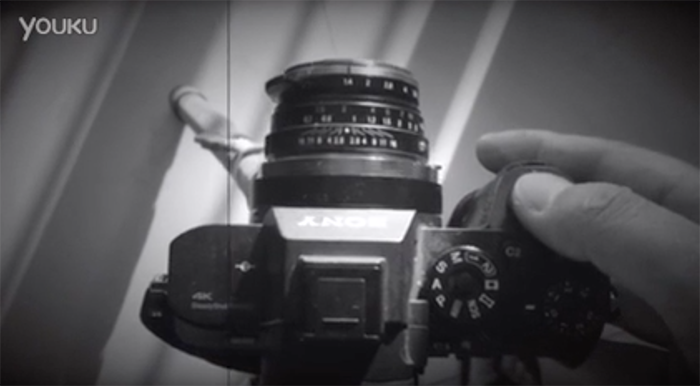 [/shoplink]
145 Responses
Now that is cool.
It is! Can’t wait to test it!
Now they should make one for samyang lenses
Too heavy…
1. Buy this Leica M AF adapter
2. Buy a Samyang lens in Nikon F mount
3. Buy a F to M adapter
Put it all together, and you’ll have an AF adapter for Samyang lenses.
The main problem is doing that is that many (most?) of Samyang’s lenses don’t use unit focus. Image quality at infinity, close-up, or across the entire range might take a hit if you focused with an adapter like this.
Wow. That is really cool!
My main concern/question:
This will alter the minimal focus distance. So how far out can this thing extend? How many mm?
Because if it extends more than 10-20mm you can use this as autofocus macro lens with the new Voigtländer 10/12/15mm lenses! That would be so absolutely amazing!
Yep, it will act as a extension tube for short lens. The main problem, as I suppose it have a maximum extension, is with telephotos – you will be able to focus at far distance untill infinity but you will not be able to focus at near/close distance. For example, a 180mm might not be able to focus nearer than 8 meters depending on how much it will extend.
No reason you have to leave the lens set to infinity, if you want close focus you can rough focus manually and use the AF to finish the process.
10/12/15 are quite retrofocus, so at 1:1 mag the focus plane is inside the lens…
You can set the lens to the closest focusing distance and use the adapter for the rest, couldn’t you?
Hm… I didn’t think about this. But still I doubt you’ll get high magnifications with 10/12/15 (very likely lens designers did not optimize it for such)
With the 10mm you could get to 2:1. Which is more than enough. You could get amazing macro shots with a lot of background and mainly a lot of depth of field! (Just look at shots of the Venus 15mm macro)
Are you possibly confusing something, o do I not understand what you say? A retrofocus lens (without floating elements) focuses by moving the entire optical system. Nothing else does the adapter.
The only conflict would be (theoretically) floating elements or internal focussing.
The focus plane (in our imagination, not for real) is at the distance the lens/camera system is focussed on. At minimum focus distance, it is exactly there, at the minimum focus distance.
Ahh, now I get it. The focus plane would be inside the lens of we could focus as close as 1:1 mag.
That is very cool. I wonder why they used a crappy filter that somewhat obscures things in the video though?
Shut. Up. Take my money already!
An auto helicoid adapter that’s cool.
like….holy ssss?
I was thinking of expanding my arsenal of M-mount lenses, but now I’ve one more reason.
as Bo Dez said, please take my money
can’t wait for a review and then other mount options
Why bother with other mount options? There are already adapters for M mount for most of the other mounts. Stack them and you’re good to go. Having an M mount AF adapter means flexibility – you could AF Canon FD, M42, Nikon F, Minolta MD, Olympus OM, etc.
For example, if you bought a Olympus OM AF adapter, you wouldn’t be able to use most any other mount in a useful way – you could never reach infinity if you adapted a Canon FD lens onto that OM AF adapter.
Holy Sh*t Balls.
Contax AX film-camera has autofocus by moving film front and back. Sony A7 II has sensor stabilizer, maybe sensor shifts front-and-back? I wait many years same autofocus after konica-minolta “shake reduction” technology.
While theoretically possible, I don’t think the A7rII sensor can move nearly enough to be used to focus.
Nope, it doesn’t. not only it doesn’t, engineers made sure IBIS doesn’t shift by z-axis
I don’t think the flange of A-mount have enough space to be able to focus with all lenses.
MUST HAVE!!!
OK, Chinese reader coming to help…
It’s silent, it’s fast
It can extend 4.5mm. So when the lens is set on INF you get roughly (4.5mm/focal length) maximum magnification. If you manually focus to a closer distance, you get higher magnification but lost the ability to focus to INF
If the lens is heavier than 300g you’d better hold it a little bit to help the motor move easier. Although the motor can handle at most 1KG weight even if the lens is pointing to the ground, this much of load would drain your battery juice quickly.
You can put aperture/lens data into the adapter via cellphone APP, the adapter will feed these data to the camera.
You can use it with other-mount-to-M adapter so all the manual lenses (which is not too heavy) can autofocus now
It works only on A7RII and A7MII. Bye bye A7 users.
thanks!
Thanks ZM
谢谢
Could this adapter potentially double as an macro extension tube? I assume that you need to manually focus the lens itself either to infinity or close focus distance for the adapter to work. Changing this default focus distance could make the lens + adapter able to focus even closer.
Edit: See ZM’s comment
Yes, you could definitely do that. It’s basically a helicoid adapter (like Hawk’s, etc) with an AF motor instead of a MF helicoid.
Yeah, focus the lens to its closest, and you got yourself up to 4.5mm variable extension tube, not very useful.
We could have such nice things YEARS ago… small sensor is much easier to move than 300g lens
My previous encounter with the TECHART Contax G AF adapter has left a bitter taste. It was very erratic and clunky and almost shook my poor G lenses to death. But sure, this looks like a cool idea.
On the A7II/rII it seems to work properly now, specially after the update from both camera and adapter.
what about lenses with canon mount? m42, m39? limiting it to leica m seems silly, as market isn’t very large
These guys make Canon adapter already – DEO Saker Falcon Lite is made by the same folks….
You can adapt M42 and M39 on Leica M easily – dumb mechanical adapters are widely available for very cheap.
Give it a minute. I for one find this pretty exciting, but i have a handful of m-mount lenses.
Maybe you could find an M42 to M-mount adapter and slap it to the front. Don’t know if such exists, but chinese manufacturers would be happy to make some if this becomes popular (and it should as M-mount is relatively short and you can adapt to many other mounts)
You could use this for any lens which has an adapter to M mount, just like you can now with *any* M mount adapter.
IMHO, it isn’t about marketing to Leica M so much as they had to pick some mount to target. M makes a lot of sense, since the difference in flange distance between E mount and M mount is short, but long enough to have enough room to make an adapter in the difference in distance.
Try this translation site. It usually does a better job than Google. http://www.microsofttranslator.com/bv.aspx?from=zh-CHS&to=en&a=http%3A%2F%2Fforum.xitek.com%2Fthread-1535183-1-1-2.html
Micro$oft ???
Funny flashback there! I used to call them that in the 1990s. Then I grew up.
Hahahah this will mean AF with pretty much any lens that can be put on M mount which is about any lens made prior to mirrorless……Perhaps this includes Samsung NX too.
Huh?
NX’s flange is closer than Leica M. It’s theoretically possible to make a NX to M adapter and use it to focus NX lenses on a Sony E/FE camera, but you would have no control over the aperture and you wouldn’t be able to reach infinity. In addition, performance would likely suffer as I believe most NX lenses aren’t unit focusing lenses.
Seems like Techart follows a “love em’ and leave em'” philosophy with their products.
Instead of fixing their sort-of-working Techart EF-NEX III’s documented problems, they’re just shoveling a new product out there.
The last Techart III update was in October. It did not contain a fix for the hardcoded focus position field bug I reported to their reseller DEO Infinity two weeks previously – http://www.dpreview.com/forums/post/56620518
They also have yet to implement focus motor speed control, which cripples the adapter with many lenses – http://www.dpreview.com/forums/post/56692298
You probably do not understand that engineering of a moving flange and messing with protocol complications is done by DIFFERENT PEOPLE, you just can’t swap them.
1) This is not a dumb adapter being announced and hence requires a firmware engineer/expert in the E-mount protocols.
2) Your argument effectively states that they’ve got the EOS-NEX III’s firmware engineer sitting on his thumbs doing absolutely nothing. Either that or they fired him after the last update, any way you look at it- the adapter has serious issues that need resolution and they have put 0 visible effort into solving them for over 3 months since the first issue was reported to them via a reseller.
And before you argue that the issue should have been reported directly – there is not and never has been a way to do this. This is one of the fundamental problems with Techart, they are impossible to communicate with.
so? production queue isn’t a week or so. This adapter is not dumb, but it requires only a small subset what complete ef-e adapter does. Probably, the firmware for this adapter was done much earlier that the moving flange was implemented.
and how’s it different from Sony attitude whom needed 7 years to return back uncompressed raw? :o)
They might not even have firmware engineer on salary, maybe they hired him for a project or so
You’re just providing more ways that my assertion they have not been assigning resources into fixing their existing products (e.g. are doing fire-and-forget development) is true.
so? is it easy to find programmer who will mess with reverse engineering protocols?
Whats the point if most Leica lenses are Manual Focus anyway??
That’s exactly the point…
It’s making manual focus lenses AF. That’s the point.
You missed the point completely. It makes the Manual Focus lenses to autofocus by moving the M-mount part of the adapter back and forth, thus getting it closer or further from the sensor, i.e. in focus!
Now I get it. Thx!
If they can do that without any electronics from the lens, means that a focus-trap mode using on sensor PDAF is possible.
Brilliant idea, if it works, which this video fails to show convincingly.
Does any other APS-C E mount owner (such as myself) cry a bit inside every time he/she reads a post like this one? We just want a decent non Zeis priced zoom lens.
100-300 F4G for $800 and I’m all over it.
At approx 1.8kg?
I’m sure it would be large a relatively heavy.
Why cry? It’s not like Techart making this adapter does anything to prevent Sony, Sigma, etc from making the lens you want.
@revaaron:disqus It doesn’t stop Sony from doing anything. My point is that when I visit this website, I’m hoping maybe there’s some news about APS-C lenses, but all what I’m seeing is $1000+ FE lenses or adapters for old non Sony lenses.
That’s a bummer for you and similar users, but that’s kind of the world of Sony for the foreseeable future. Might be time to check out Fuji or M4/3s.
Sony is pushing FE faster than most of the companies, they need to cover the basics first, APS-C have enough coverage compared to FE so obviously it is not their top priority.
If you didn’t see they are selling out every lens they made for FE.
Yeah, it is high time for techart to cooperate with chinese MF lens makers and finally make a bunch of AF lenses for $50-100 where they belong (like Yangnuo makes for Canon already).
Yongnuo is really a curious case, everybody though that they would want to clone all those cheap lens to sell to other amounts, and they just did nothing, almost like they doesn’t have any marketing sense.
I guess developing a mount, with protocols supporting AF (CDAF and PDAF), auto aperture, neasuring focus distance is a big investment. They did it for Canon, Techart did it for FE – they could combine forces, or techart can borrow optics from MF lens manufacturers.
As I said in some previous thread – in-body z-shift would be not so stupid idea. You just need a nice set of simple slim and stabil adapters to use spared flange-distance for focusing via sensor’s z-shift. ANY lens with usable flange distance can be auto-focused than. Add on-sensor tilt/shift and I will buy this camera for any price… well almost any price
Edit: but this piece of tech is pretty cool as well… actually I can put m42, MD or whatever on it via common adapters and get autofocus
The only problem is with lenses that don’t use unit focusing. For lenses with a floating element or that use front of back element(s) focusing, Z-shift wouldn’t provide the best performance. That’s not a big deal for this adapter, since most M mount and LTM lenses rely on old school unit focusing.
On the other hand, I don’t think *any* of Sony’s E or FE lenses use unit focusing. There may be an exception, as there are E/FE lenses I haven’t used, but all of the E/FE lenses I’ve seen use internal focusing of some kind. If the lens doesn’t extend as you focus closer, it isn’t a unit focusing lens.
Do you have any guess as to what the situation is for A mount? I’d guess that a lot of older Minolta A lenses use unit focusing while the newest Sony A lenses don’t.
It only applies to MF lenses anyway, unless you’re talking about tilt-shift, in which case I’d think you’d still focus with the lens, and just change the plane with the sensor.
I was addressing what VicTor said about in-body Z-shift (IBZS) for focusing. It could work great for unit focusing lenses (most MF lenses), but it’d be problematic for Sony’s own E/FE lenses. Because of that – if nothing else – I really doubt Sony would ever come out with a IBZS E/FE camera.
Why would it be problematic? It is all the same thing, it just like adding macro rings – any lenses stiff focus with them, just the focus moved closer.
CDAF with macro rings works fine, but some kinds of PDAF might have problems
It would be problematic because lenses that are not unit focusing will perform worse when focused as if it were unit focusing.
And yes, this would also be true for using macro tubes. That’s nothing new. Macro tubes are used because they’re cheap, not because they provide the best performance.
For a unit focusing lens, macro tubes can be used without a decrease in performance, provided the tubes don’t introduce flare or something.
Any source for the difference? Or at least reasonably scientific explanation? After all, it is just geometry, neither macro tubes nor this adapter have any optics, and it does not care what focusing mechanism is in lens as it is not used. Light is light.
It wouldn’t be used to focus with af lenses. Sure, if it’s engaged for tilt, the af algorithm would have to compensate. I don’t think it’d make non macro lenses macro, but macro shooting is where you’d most likely want to change the plane of focus. Also, and it could be done now, I’d love for focus stacking to be built into the camera.
Oh, I was thinking a-mount.
my thoughts were concerning MF lenses.
But anyway – I can use bellows with any lens, why shouldn’t it work via sensor’s movement? Maybe I don’t see the difference because of lack of deeper knowledge and I would appreciate to learn more – please explain. From my point of view there is no problem.
I don’t see why the “problematic for Sony’s own E/FE lenses” gets in the way of this technology developing. The main “hurrah!” about A7rII was because of ability to focus non-sony lenses. There is big demand on market for using old lenses, third party lenses etc. (you can call it hype, whatever) and sony answers to it wisely. So I think Z-shift could be a really good move which will make sony’s new gen. cameras not only A/E-mount hybrid but even more versatile tools. Just my two cents.
I didn’t say IBZS couldn’t work, it obviously could. However, it works best with unit focusing lenses, and lenses that are *not* unit focusing will perform worse if they are used as if they were. There’s no getting around that fact.
I’m sure Sony could implement IBZS so that recognized lenses (E/FE) were focused were focused with the lens’s own AF motor, with IBZS being used for unrecognized lenses, or of specifically demanded.
Yes, bellows work with any lens. I never said they didn’t! However, if you have a lens that has floating elements it will perform below its potential if you focus it as a unit, by moving the lens closer and farther from the center.
I wouldn’t say that the ‘main “hurrah!” about A7rII was because of ability to focus non-sony lenses,’ at least not for most people. It’s important to a lot of enthusiasts, yes, but it’s not Sony’s priority.
I agree that IBZS would add versatility the FE line, but that’s not how corporations work. They are in the business of making money, not the most versatile tools possible.
IMHO, Sony does little to encourage or promote the use of non-native lenses. I use an A7 because I can use a variety of adapted manual focus RF and SLR lenses, but Sony would much rather I bought all of the native offerings.
not a problem with lenses with floating elements at all: first you just set approximate focus by scale, then AF nails the exact focus.
Ermmm… could you really imagine yourself actually shooting that way. Sounds a little cumbersome.
Now pair that adapter with this!
http://dc.watch.impress.co.jp/img/dcw/docs/670/547/001.jpg
So much grief to replace Canon 40/2.8. 🙂
I cant wait for this to come out! I saw this done using A mount lens parts but with a limited range of lenses. https://www.flickr.com/photos/59224964@N05/23837366540/
I’m still losing my sh*t over this.
If their choice of music is an example of their intelligence, I’m not sure this will work at all!
Plus, I’m not thrilled by the lack of focus in the video…
On a serious note, though, I would imagine that it would need a very precise movement, otherwise the average comment about areas of lens softness (think 35mm f1.4…) would become an irrelevance.
Furthermore, I thought some of the difficulty relating to using older lenses on E mount cameras was down to the angle of light hitting the sensor. Would this cause issues, or actually improve things?
It could be really good for those who have such lenses, but I have my doubts.
Wow, some people never outgrow middle school.
That is the source of some difficulty. This adapter wouldn’t address that problem at all. For unit focusing lenses, this adapter is doing the exact same thing as the built-in focusing helicoid – moving the optical block closer and farther from the sensor.
I was being lighthearted about the music, so I don’t think it justified the ‘Wow’…sheesh!
My bad, I didn’t get the memo that ‘Wow’ had become incendiary.
I was being lighthearted with the ‘Wow,’ so I don’t think it justified the ‘sheesh’… yikes!
Yowzers!
lolol
WOW, that makes it a recursive joke! Cool.
“… Wow, some people never outgrow middle school. …”
The inability to laugh about a harmless joke is an undoubtedly proof for being grown up. o_O
Trying to figure out how moving a prime lens closer/further from the sensor does not also change the field of view.
It does, slightly – but it will do this whether this fancy AF adapter does it, or if you do it with the focus helicoid built into the lens. This is called focus breathing, and it isn’t unique to this (or similar) adapters.
rb67 and similer focus in that way entirely
Trying to figure if it will affect image quality.
If it’s a unit focusing lens, then image quality wouldn’t be affected.
Trying to figure out what you guys are trying to figure out.
Isn’t that how a prime lens focuses?
How stuff works: http://electronics.howstuffworks.com/camera1.htm
That’s how unit focusing lenses work. See my other reply.
Lenses which using internal mechanisms and floating element groups for focusing often change focal length during the process. It’s not normally too much of a deal with still images, but nasty on video where you get focus “breathing”. The unitary lenses movement also has that effect, but at normal focusing distances it’s very minor. It’s on close subjects where it matters.
In general, I doubt “focus” breathing will matter for this sort of photography.
The issue with modern, complex internal focusing lenses is a lot more complicated and I suspect goes beyond simple issues of whether the focal length changes.
Most old lenses focus by moving the entire optical group in a single unit, so the system moves everything at once. This is the same as the original view cameras and a lot of medium focus cameras that use bellows to focus. Some prime lenses, especially macro lenses and some cine lenses will focus not by moving a fixed set of lenses forward and backward but by adjusting the arrangement of the lens groups relative to each other. There was a web site that showed this very well, including with zoom lenses but I have never been able to find it again. The ones that move one or more internal group of lenses may work with this adaptor but they are likely to have more optical aberrations than if they used their normal focus mechanism.
It does change the FoV, it’s called breathing and there’s no getting by that with a design like this. But IDC 😉
Which is exactly what happens with unit lenses (which move the entire lens group) during focusing, which is very common on RF type lenses.
4.5mm is probably enough to focus a normal or tele lens from infinity to slightly less than infinity. 🙂
You lazy one. For a 50 mm lens
f^2/d = 50*50/4.5 = 555.5 mm, half of meter, that’s closer than typical RF normal does
Not so bad for normal one then. 🙂
Minimum focus distances are referenced from the image plane, not the optical centre of the lens. With a 50mm lens (set to infinity) and the lens 4.5mm from the image plane, then objects at (just over) 66cm will be in focus. By the time you get to 100mm, that pushes out to over 2.4m and, at 200mm about 9.3m.
Maybe not so much of an issue with M-mount lenses where the available focal lengths are rather restricted, but of a lot less use as a general AF “fix” for manual telephotos (not to mention the much higher mass to move).
Of course you can always move the lens focus off infinity to get closer (after all, this is essentially just an electronically controlled adjustable extension tube), but it will be a bit hit-and-miss that you’ve moved the lens focus into “range”.
With more complex lens designs, especially telephoto zooms with floating elements, then there may be some other subtle issues which might arise as the lens is used outside of its intended mode of working (although this might be minor).
“(…)but of a lot less use as a general AF “fix” for manual telephotos (not to mention the much higher mass to move).”
I agree that getting the mechanics to a point that can handle he torque of heavier and longer lenses will be hard. However most Mounts have longer fllange distances than M-mount. So I guess there could be more focus shift than 4.5mm for those mounts.
I strap skis to my elbows for low shots with manual focus. I just zoom with my elbows- no AF needed.
Infinity to about 7m on a 135mm Takumar f/3.5.
Every distance that is NOT infinity, is infinitely less than infinity. o_O
Sorry, I couldn’t resist. 😀
The ironic part of this is to see a M-mount AF adapter coming before a Pentax AF adapter.
That really could open up the market for a modular lens system, something like what Voigtlander did with the 40mm heliar, but more high tech.
So unit focusing will be pretty good but you’ll suffer a degradation compared to your native focusing if your lens has a floating focus arrangement. This became popular with the Canon FD lenses. So anything from the 80’s onwards is likely to perform better manually focused.
This is not to undermine how cool this is. I was looking to build this myself but could not get my hands on the spec for the E-mount communication protocol and don’t have the hardware to reverse engineer it. I’m glad someone has made this.
I think only retrofocus lenses will suffer.
This would be good in other lensmounts to focus manual lenses, and the Z shift will provide rxtended close focus capability.
If this works as advertised, it could be a great focus refiner. Focus normally as close as possible, half press, it refines, click. If it works like that without refocus and hunt.
Also helpful if someone or something moves slightly after you’ve focused.
Should be very problematic with tele lenses like 135mm (no close ups without manual prefocusing) an maybe also ultra-wide angles lenses (not precise enough)
Which is why m-mount is perfect for this.
What makes you doubt the accuracy?
This thing is obviously not intended for longer focal lengths. 135mm is far from being a regular M mount lens. Even 90 and 75 are rarely used. The playground of M-mount is clearly 50mm and below.
I don’t know why they started with Leica M mount. Surely there are more Nikon and Canon users out there.
Because the majority of N/C lenses will work the same as an M mount lens when adapted?
Because M glass is relatively light and small?
Perhaps because
1) there are no AF M-Mount options available
2) M-Mount lenses are usually shorter and lighter
3) M-Mount lenses go from short to only modestly long focal lengths which most suit the limited amount of movement on offer
4) There are AF adapter alternatives for at least some Canon and (now) Nikon lenses which work with the A7R II and, undoubtedly, future Sony E mount cameras
5) Leica owners tend to be well heeled and can afford what I suspect will be an expensive adapter
…and thus, the Contax AX was reborn.
But why a black and white video?
Because the adapter is pink, but they want to keep that a secret until release date.
First I was like “Wow, that’s amazing” but than I thought, isn’t the sense of manual focus lens … well … manual focusing? If I wanted a AF lens, I’d buy one. MF slows you down, makes you focus more on composition and let you focus stuff you wouldn’t be able to do with AF. Although this is still very cool stuff, I probably wouldn’t use it – but maybe yes.
100% agreed, but there’s also that human error component at the end that this could help take out.
This is more exciting than anything announced at CES isn’t it 😉
this kind of tech open the posibility of a fixed focus lens.it would be small.try open any lens diagram,imagine a lens consists of only the glasses part,hold by a thin metal barrel..
As far as I understand, with tele lenses focused at infinity, 4.5mm shift will not be able to focus closely, and with wide lenses, it will introduce very significant change in focal length (i.e. your 24mm lens will become 28.5mm lens, which is not the same thing, and even worse for UWA.
So the only usable case is zone focusing long lenses manually and let this AF system increase the precision of your focus. Still interesting.
Unit lenses (those which move all the elements together, and RF lenses are mostly like that, especially at normal/wide angle focal lengths) focus in exactly the same way, so it’s no different. You also don’t change the focal length of such a lens by moving it. What changes is the magnification, and that is not the same thing as changing the lens focal length (and the effects are relatively subtle).
Note that some lenses with floating elements and internal focusing do actually change focal length when being focused, so the two phenomenon do get mixed up.
Video lenses have to be specially designed to avoid lens breathing during focusing.
“You also don’t change the focal length of such a lens by moving it.”
Focus breathing tells different story. 50mm vs 54.5mm might not be a lot, 20mm vs 24.5 is.
That’s because focal length is not the same as angle of view. The focal length of a (unit) lens is a fixed value and simply references the distance from the image plane to the optical centre of the lens when focusing an object at infinity.
Lenses with internal mechanisms and floating groups for focusing are a different thing altogether. They very often do change actual focal length during focusing. A unit lens where all the elements move together simply cannot change focal length.
Focus breathing is an inevitable consequence of standard lens. To avoid it you have to design lenses which actually change focal length as you focus to compensate for the changes in magnification as objects go in and out of the focus.
*** edit ***
nb. I should note that the definition of focal length above holds for symmetrical lenses in that there’s a single optical centre. For lenses with asymmetrical focal lengths (where front and back are different, such as retrofocus and telephoto designs), there’s a more complex relationship and the use of an effective focal length. However, if the focusing mechanism moves all the elements together it doesn’t change the principle. This adapter focuses such a lens in precisely the same way that the helicoil arrangement does. It moves the lens elements (as a whole) relative to the image plane. That type of design is very common on RF lenses.
“Video lenses have to be specially designed to avoid lens breathing during focusing.”
Exactly, and most photo lenses breathe, IF or not.
.
Oy, at first glance I thought it was Minolta M..C/D/X-mount-lens autofocus adapter for Alpha-E-Mount-camera, oh well.
.