







[shoplink 36290 ebay]
[/shoplink]
The following is a guest post from Drasko. And has been first posted on SonyAlphaForum.
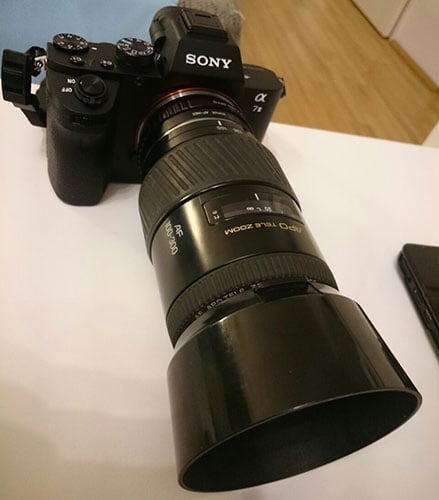
Sony A7II + Minolta APO 100-300mm
by Drasko Stojadinovic
Here is my first impression with the [shoplink 36290 ebay]Minolta APO 100-300mm F4,5-5,6 Telephoto Lens[/shoplink]:
First or all i got this 15 year old lens from a local photostore very cheap for only 70€. You can probably get it even [shoplink 36290 ebay]cheaper on ebay[/shoplink].
This lens is very lightweight and small for 100-300 mm zoom. I was really impressed it still fits in my old, small Sony Bag with the A7II.

I didn`t expect anything from this tele lens for that small price but I’ m really surprised how well it performs. Its not uber sharp like a modern lens but it delivers good enough quality and no sharpening is needed in lightroom. You have to boost the colors, saturation quite a lot. Make shure you get the right Adapter for this lens with aperture dial!
This lens works great in manual with my A7II and the 5axis IBIS.
Click on the images to enlarge:



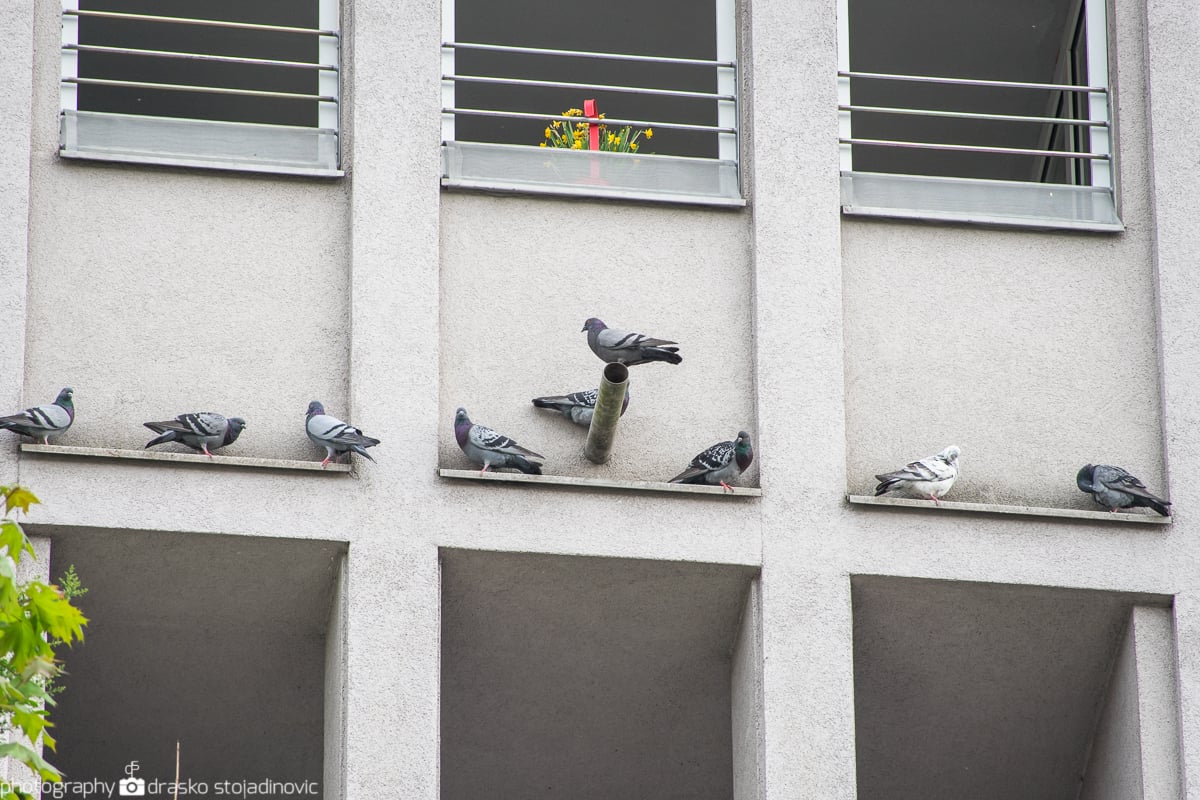
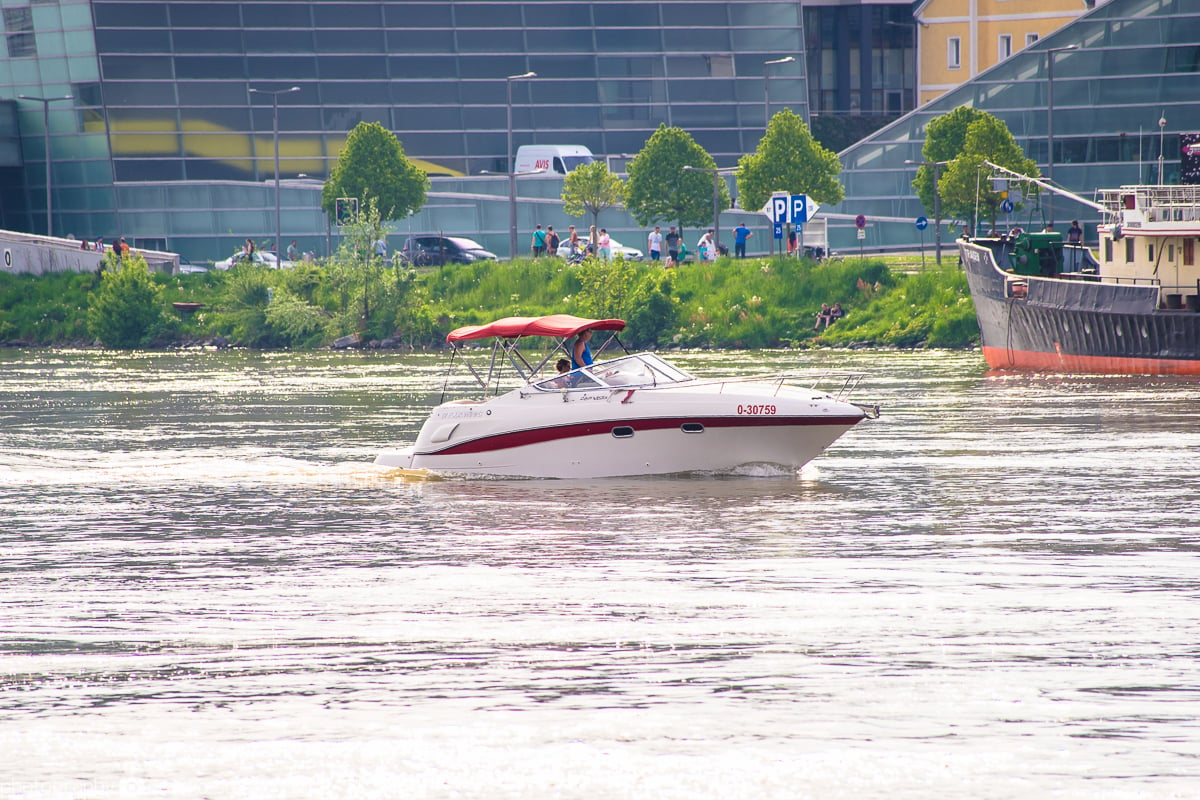

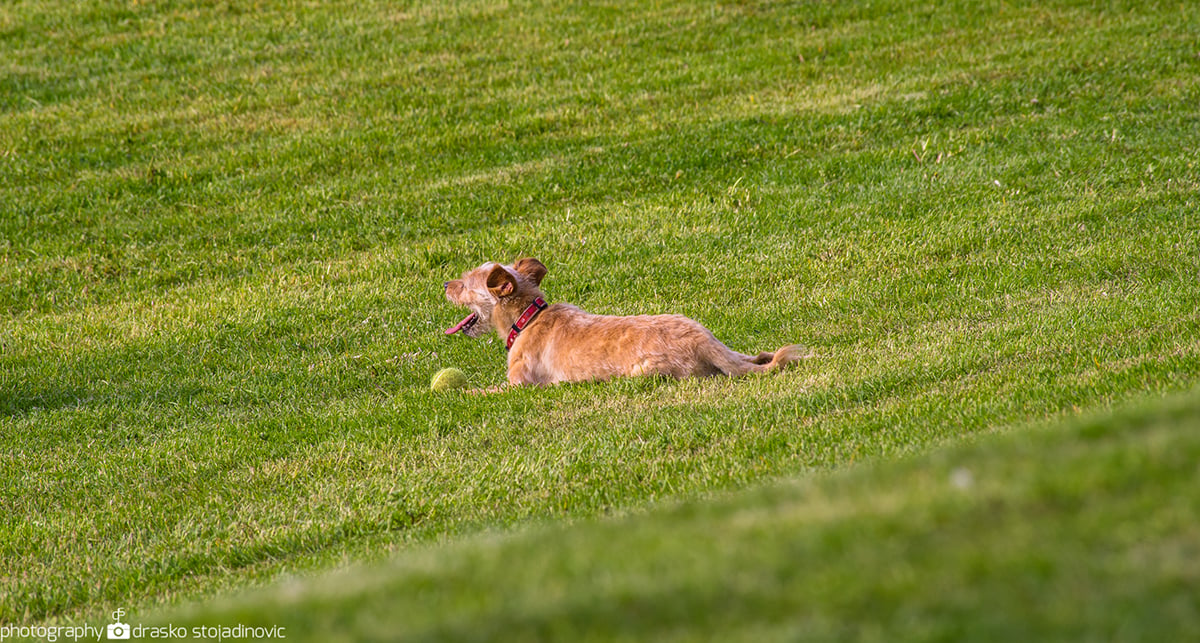
The lens cna be found used on [shoplink 36290 ebay]eBay (Click here to see current auctions)[/shoplink].
28 Responses
Really impressive for a 70 Euro lens! But I suspect the photographer’s skills is also part of the reason why the pictures look great! 🙂
Some people are hysterical.. it’s not “sharp” as new lenses but needs no post sharpening (like all lenses usually do for proper results) and “You have to boost the colors and saturation quite a lot”.. as if ANY lens magically sucks out the colors and the saturation by itself.. my God
Yes, some lenses do have better optics and coatings which contribute to great contrast and saturation. That doesnt mean their saturation is enough for you, for someone else is.
My slightly newer Minolta APO D 100-300mm (the same optically, but with rounded aperture blades and a focus ring that doesn’t rotate during AF) is still the most commonly used telephoto lens on my Sony A77 II, despite also owning a Tamron 70-300 USD and Sony 55-300 SAM.
There’s actually very little to choose between them when it comes to image quality. The Tamron is probably a bit sharper wide open at 300mm, but actually has more CA to fix than the Minolta, and all of them get good results stopped down to f8.
The Minolta has the fastest autofocus of the three lenses (the Sony 55-300 SAM is painfully slow in comparison) although continuous AF tracking isn’t as reliable as the Tamron. Unlike the Sony it also supports the A77’s DMF feature, so you can quickly deactivate AF to adjust focus.
The main reason I often end up using the 100-300 APO is simply that it’s the only one of the lenses small enough to fit in the side pocket of my little camera bag. Even though the Sony 55-300 is an APS-C only lens, the full frame 100-300mm is still significantly smaller. If I want to travel light, not lug around a big backpack, it still allows me to carry a decent enough lens for shots of wildlife, details on buildings, people at a distance, etc.
Also, the tiny and inexpensive minolta 100-200mm f4.5 is a great little travel lens. I find the results from it to be superior to the 70-200 f4 beercan.
I was testing both of these lenses using a77ii and I concur with you. I’ve had two copies of beercan but I didn’t see what some folks were raving about it, too much purple fringing, not sharp, etc. maybe just bad copies.
I received surprising good results with a
Kalimar 60-300 mm f/ 4.5-5.6 AF MC, which is my personal standard zoom in this range on my A//A7II. The lens has been produced by Tokina and was sold by many other companies: Cosina, Promaster, Vivitar, Soligor, Tokina, …: it is pretty sharp throughout it’s range, even at 300 mm. CA and contrast is okay, AF- and MF-versions available (DMF not supported) and it costs not more than 35€ in excellent shape. It is said to be even sharper as the Minolta, German test results from 1989 placed it in front of all its competitors (Nikon, Canon and Minolta). You might consider to give it a try.
Problem with those MC’s- and I have quite a few- is the harsh bokeh. Most are straight six blades. Sharpness is certainly not an issue though.
Bravo Drasko 🙂 i use this lens with my venerable dynax 7d /first 7d which came to Serbia in 2004/ and simply adore it 😉 all the best, Gruber
You can get it cheaper. I’ve seen it online for 55 bucks- ebay, KEH. Let me just say though, it’s a killer lens which- for those in the know- make FE at the present moment a harder pill to swallow. COME ON! So much A mount charm in these lenses and you’re giving up little to their modern day counterparts- if anything. Keep the auto focus, ditch the adapter and rock hard with this little guy.
That’s just it: as great as these old Minolta lenses might be on E-mount, they’re that much better on A-mount because you don’t need an adapter and have fuller AF capability.
I just sold one of these. It’s a good lens for the $$, but I found myself rarely using it once I bought comparable range zooms that were faster, sharper, and/or had more range. The AF is surprisingly quick on these.
Is this good for the a6000? How would it compare to the E mount 55-210?
I won’t recommend it. This lens is doing OK on a FF. But on APSC, it will be worse due to higher pixel density. Just look at the review and see how the FE 24-70 perform differently on A7 and A7r. You should consider getting a APSC lens.
Nothing you said makes any sense. Lens resolution does not depend on sensor size or pixel density.
Go look for review photos. Then you will understand why people buy speed-booster. I personally use film cam lens on both A7 and A6000. It clearly perform worse on A6000. It is up to you whether to believe it or not. It is not an expensive lesson to pay for after all.
I have both speedbooster and normal converters. Speedbooster is always of lower sharpness.
That is another issue. But, as I said, this lens is not an expensive lesson to pay for. I will never use my G45 on a6000 anyway.
Where does Zeiss get off charging $2100 to $4995 for their APO lenses? Unless this lens isn’t really apochromatic…. if we only had some non-challenging compositions and small exports to check this theory with.
A $2100 to $4995 Zeiss APO will hold it’s value better than a mickey mouse consumer APO lens.
I was being tic. I own those lenses.
yes – my comment was tongue in cheek.
Show me a link to that lens on ebay for $70 or is this another click bait ?
They’re going for well under £70 in the UK, so I wouldn’t be that surprised. All you need is a £300 adapter to give you af. I still can’t believe they’ve not release a cheaper “kit” tele zoom for the A7…
I bought the len from ebay for $200 at 2013, now cheaper…. but you need see detail about the used len condition.
Are there any cheap a-mount adapters? I thought the only options were the la-ea3 (which is a rip off for a passthrough adapter) or the la-ea4 (which only gets affordable if you’re planning on adapting a lot of lenses)
Braca Srbi na SAR-u 😀
What is the difference between the “APO” and “D APO” Models?
I’m wanting a budget Zoom lense with reach over 200mm, this seems to be a good option considering I have the la-ea4 adapter.
Would the Sigma DG APO Macro 70-300mm be better option (ability for macro aswell)
Cheers