







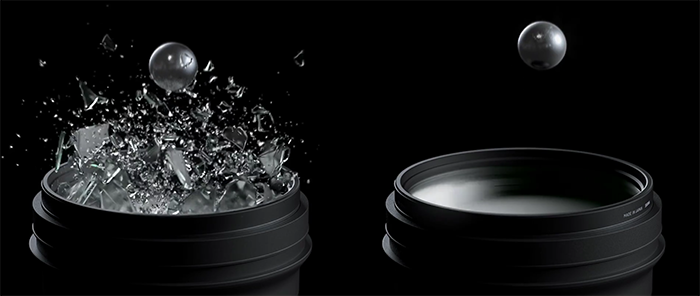
Today Sigma announced a new high quality protective filter made of Ceramic Glass that has the following key features:
- It’s 10 times stronger than conventional filters
- It’s scratch resistant
- It’s water repellant (it also helps to easily remove fingerprints).
- It’s coating’s antistatic function helps prevent static electricity from attracting dust and other particles.
There is yet no info about the pricing and shipment date of the new filter. A full intro video can be seen here:
68 Responses
Looks like an Apple ad. Please no more than 50$.. that’s half the price of most of my lens.
Most of your cheap lenses won’t have 67+mm filter thread too.
Sigma probably didn’t make these filters for people who use
$100 lenses.
Not because a lens is cheap that it’s made of cheap materials or perform cheaply..
It would be even cooler if Sigma announced a line of native FE mount “Art” lenses to put behind their new filters.
Only F2’s please.
So why could the not just make the front element out of this cos if they can make that out of it why not the lens glass , would that because they will want 70 quid for it and it’s a money spinner ?
The thinness of the filter allows it to be much more ‘elastic’, you can’t do that with a thick glass. Can you imagine your front element bending like that?
I wonder what the performance diff is between these and the Hoya HD* line of reinforced filters?
Clear ceramic is basically the same stuff that’s been used as lens domes/protective glass/etc. in other applications.
Most filters provide adequate protection for 99% of the environments one is likely to be in. If the conditions are so severe that your filter isn’t protecting well enough, it’s likely your camera body will be toast anyway. The filter’s optical quality is far more important.
Waiting for the saphire version.
I think this is stronger than sapphire
What does this really give me that my B+Ws really don’t? I mean, I don’t drop metal balls on my filters…
I think that quality wise it won’t give you anything on top compared to the xs-pro mrc from b&w.
Sigma recently learned how to best advertise their products. “Scratch resistant” says little, as “resistant” is not “proof”.
I am pretty sure those filters will be high end, but even Sigma cannot beat physics.
So I thought.
Maybe when your balls do drop, you’ll see the need.
(Just kidding, you make a very good point but the gag was too easy…)
Call me a wizard but I use that thing called lens-cap. Protection filter? Never had one…never needed one. Seriously save your money.
One thing I’m thinking about is replacing the lens cap with this. This way you can avoid fiddling with the lens cap altogether.
It’s going to be an expensive lens cap then 🙂
The problem is that you photograph all the dirt and dust of wich you protect the lens. Depending on the environment you are in this may ask for a more fidely clean-up.
Anyway as long they don’t proof less than λ/8 wave-front aberration and >99% transmission I’ll skip them.
Or just superglue a holga lens onto the mount. Then you won’t lose it either.
If you don’t need or better say don’t want to use them, fine.
But please consider that with the lens cap attached it is difficult to shoot.
And taking care is no guarantee against accidents. If such a protection filter helps you to prevent your lens from serious damage, you’d see its value.
I know that’s one controversial thing in photography. It may arise from the fact that we all use our camera for different things in different ways.
But for me there is zero value. I would need the very best filters out there in three different sizes. This costs about 600. A repair of the lens would cost less. The chance of breaking a lens is what 1/1000?
Besides that all my lenses have protective coatings that are made to be cleanend. Not the rubbisch Hoya filter, wich I had to throw in the trash as I wiped off the coatings…
I bet trying to clip your lens cap back on your lens while trying to find the right alignment introduce a higher possibility of scratching the front element by the lens cap, especially with a deep hood.
And if the one-shot cost of the filter really does have that high financial impact on you, I say either keep your day job or you need a plan B for your business~
Are you serious? What lens are you using? I never touched the glass with the cap. Even if you do… you won’t scratch it as the normally used glass is harder then plastic. Why should I spent money on something I don’t need? It’s better to concentrate my budget on the things that matter. It’s not only technicaly unnecessary with my lenses, wich went through sand-storms and acidic volcano clouds, but economicaly wrong. filter cost > lens repair…
Of course I’m serious~ Currently both 24-70 F2.8 Zeiss and the Sony 70-200G F.28 is my main driver. Used to have the Tamron SP90 macro as my main lens.
Most of the time when trying to clip on the lens, the cap fiddle around until it is properly align and clicks on. This is the moment when the lens cap usually slide on the front element. I have heard glass is so hard, plastic can’t scratch them, but I’m more concern with the coatings, which I believe will came off easily with accumulated friction of scratches or rubbing. Yeah, you can say I’m kinda clumsy sometimes.
And regarding lens repair cost, it is kinda expensive over here, it cost around USD 100~150 to repair a normal lens, and if it is lenses like mine, easily cost over USD200~300 to repair. Not to mention lead time usually last around 2~3 months since lenses will need to sent back to oversea repair centers which kinda sucks. So the cost of the filter definitely is a sort of insurance for me~
So why does the picture illustrate shatter resistant?
May be a useful item (the ceramic lens protector/filter) for the pro to use in the field on expensive lenses. Few amateurs will be able to afford it or need it for their junk lenses, so let’s all make fun of it or post silly complaints.
only an insecure amateur would put down others like herself to raise herself. pros simply get what they need and don’t care what amateurs use
Plenty of amateurs still appreciate that putting sub-optical glass on the front of your expensive lenses will make them perform more like the “junk” ones anyway. Do what you please, they are your own lenses.
Seems they’re available in large sizes only from 67mm (€99) up to 105mm (€329):
https://www.sigma-foto.de/objektive/sigma-wr-ceramic-protector/
That is some high end stuff.
Hope you guys know Hoya was first with the smash-proof glass, and they do offer ones down to 37mm, but ‘only’ goes up to 82mm: http://www.hoyafilter.com/hoya/products/hdfilters/
Only 82mm, nice! 🙂
What is the widest Sony compatible lens rim size anyway?
I wonder if these are optically better than the “regular” filters
I imagine if they were, the company would be making some noise about it.
Seems like they skipped it~
I need my lens filter to do this when i drop my camera.
Adding filters for protection is, for almost all occasions, an entire waste of money and the lens hood serves the purpose better.
What makes this particularly galling is that if Sigma really think it worthwhile, why do they not fit them as standard and make them part of the lens? Or more simply treat the front element with the same process?
I can’t help feeling this is just an attempt to make money from the gullible. Shame on Sigma!
Do you think a thick glass like the front element can bend like that?
For those of us who often do not have time for lens caps, filters offer protection without slowing the user down.
What do you do that leaves you with so little time you cannot use a lens cap?
Swapping lenses on the fly mid event with clients waiting and event planners & CEOs breathing down my neck. Fumbling for lens caps even if only for 10 seconds each time is not going to happen. I’m lucky if I can get the rear lens caps on sometimes.
I’m not sure of the events you cover, but I’ve never had that issue myself. Generally you will know the shots wanted and even if you need 3 lenses but only have 2 bodies you can have the spare ready.
I’ve known more than 1 other photographer who didn’t bother with any caps at all while working, just keeping the lenses in soft pouches or pockets.
I would rather regularly clean a protective filter than the front element of an expensive lens. It’s often far easier and quicker.
Gullible, I am not, thanks.
“I can’t help feeling this is just an attempt to make money from the gullible. Shame on Sigma!”
??? Noone has done it so far, there are millions of existing Sigma lenses out there that would not receive it if part of new lenses. Sigma has become an interesting lens company in the last 3-4 years.
If you don’t like the idea, do not buy it. That simple. Then their “attempt to make money” will not succeed.
I use filters for everything except the cheapest lenses.
Spending lots of money on a lens to get the very best optical performance and then slapping some more glass to the front, that the lens designers would regard as superfluous and which degrades that sought after quality, makes no sense whatsoever.
We have people here moaning about the performance of the 24-70 f4 (I have no issues with mine) and yet others going out of their way to reduce quality is so contradictory it leaves me bewildered.
I never used filters in the past. Possibly for similar reasons, but more likely because I didn’t care about my lenses getting scratched.
However, your point doesn’t make sense to me. There is no fundamental contradiction. Of course a filter will slightly degrade IQ, but the differences are magnitudes smaller than the differences between a good, an average and a bad lens.
It’s all about the skyrocketed prices of quality lenses. If I will ever end up paying 1K for a 50mm or 1,5-2k for a 35mm prime, I will definitely use a protective filter in the future.
Your words suggest that using protection filters is kind of “stupid”, which is not.
May I ask what you do should the filter be scratched?
There are two possibilities: either you replace it, because of the scratch, or you leave it, because a scratch is not important.
If the latter, then a scratched front element would be of little concern, but the former means you will end up spending a fortune on filters trying to ‘cure’ an issue that doesn’t exist.
The simple fact is minor scratches, dirt, and blemishes on a front element are irrelevant and have no effect on image quality. In fact, such things will, in most cases, be far less of an issue than any filter, cheap or expensive.
Add to that there is no evidence filters provide any protection at all makes the investment in them pointless.
Due to the way a lens works, a scratch or a mark will affect a much larger area of the image than its relative size on the element. You won’t see a corresponding scratch on the frame. But you could lose sharpness and contrast on a larger portion of the frame.
For me, if the filter is damaged I replace it. That’s the whole point. If it’s not too bad I might use it when I shoot film, as it’s more forgiving.
While some people claim filters do not degrade, here you overstate the effect of scratches.
To illustrate:
Filters (all of which show some issues and price is not necessarily a guide) – http://www.lenstip.com/113.4-article-UV_filters_test_Description_of_the_results_and_summary.html
Damage to the front element – http://www.lensrentals.com/blog/2008/10/front-element-scratches
or http://kurtmunger.com/dirty_lens_articleid35.html
Now, if you tell me that you’ll be buying Hoya Pro filters, at £150 a pop, and then discarding them every time they get a scratch I am lost for words.
In addition, if you drop a lens that breaks anything, you will almost certainy need to have it checked. I’m fed up of reading about people complaining of de-centred lenses, or those that need maximum AF micro-adjust to get barely acceptable results, even from brand new items!
It’s good to be sceptical, but this is real.
I few years ago, I read an article which explained in words and diagrams why scratches to the front element affects the whole picture frame. It was technical and made sense to me.
I buy quite a lot of used lenses and often end up with duplicates. So I decided to compare clean copies with damaged copies. There is a lot of variation, but sometimes a marked front element will affect the picture quite a lot. It seems to depend on size, shape and location.
So, exposing your front element to wear is a lottery. You may not notice a scratch, but if it’s big enough and in the wrong place, you’ll lose the use of the lens. By definition a scratch is something you don’t control.
I’ve never dropped a lens but I bump into things, such as railings, bannisters, furniture, rocks, brushes etc. But like I said, I mainly use filters against grime.I.e. to avoid repeated cleaning, which may damage the coating and/or glass. It also keeps the resale value up, which is often worth more than the cost of the filter.
I do appreciate your point and if resale value is the motive, that would be the only merit. However, protection from all those items you mention is far, far superior when provided by the hood (I’ve written off a few of those!).
I don’t know who wrote the article you mentioned, but I refer you back to the demonstrations I linked, which are indisputable.
It could be that very, very rarely, a particular scratch in a particular place will have a detrimental effect in some circumstances, but to worry about such a rare occurrence makes little practical or financial sense.
Otherwise, just in case the barrel becomes dented from a side impact you wrap your lenses in a tube of protective foam. Then there’s the body, better get that ‘body armour’ kit. Before you know where you are, your camera costs half as much again, weighs half as much again, and only performs half as well, defeating the whole point of having one!
Cameras and lenses provide my living. I take care of them, but I don’t baby them. I’ve never scratched a lens, or broken a body, and when it comes to resale, as it’s a business, I regard any return as a bonus because my equipment will be an accounting write-off by that point.
I am certain, though, that my profits are better for not having bought filters.
Well, the article wasn’t entirely correct. Significant marks on the front element had a local effect of about 1/3-2/3 of the frame. In the worst cases there was a total loss of sharpness.
But sure, if you use cameras and lenses as business inventory, they pay for themselves through accounting and tax rules.
I don’t use filters in a studio, but I like to get out in the woods, hills and on the beaches, so filters fill a purpose for me.
in my experience, a quality filter will not affect IQ in any noticeable way.
I am an uncurable pixel-peeper, but I cannot tell the difference between shots with filters on/off.
However, I have got a few cheap filters that were thrown in with other purchases. They will ruin IQ completely. I think the issue with filter foes, is they don’t want to spend enough to get a good filter. Even if it’s just the fraction of the cost of a good lens. Hence the inevitable disappointment.
With regard to your 24-70/4, you probably got a stellar copy with a different optical design.
Otherwise, the flaws in that lens are clearly visible without pixel-peeping.
Degradation of IQ is imperceptible.
Degradation of a bank balance, for no return, is not.
I have no idea what your talking about but I’ll follow along:)
Kudos to Sigma! I think they are very innovative and give us good and useful products these days.
It all depends on your point of view. For some, any of this bloody expensive camera gear is a waste of money. But you doesn’t make any sense to me. Sorry.
I’ve been a professional for many years, worked in the maddest places, and even dropped lenses on occasion. I’ve yet to scratch a front element.
My saving money by not wasting it on filters makes eminent sense.
Filters are the greatest source of arguments between photographers. Nobody is forced to use them. If you don’t use them, let others use them in peace.
I know what my filters look like after a day by the sea. I’d much rather have salt spray, sand and oil on a filter than on my lens element.
i use Hoya protectors. Not unbreakable like these but it’s insurance against most things that could happen.
Ok guys here are the pro and the cons of filter supporters. If I may ask; What’s the percentile of broken front elements for not having a filter? Or how many lenses have been saved by having a filter on at the moment of accident? Also how much quality is lost with the application of a filter?
Exactly
If you like use I rather don’t!
I does happen. I bump into things all the time. I know people who have smashed their front element. Very expensive repairs.
But for me the most important reason is protection against grime.
If you use a quality filter, you wouldn’t be able to tell the difference in IQ in a blind test.
Lower quality filters will however ruin the IQ. So I think skimping on filters is the real issue behind this eternal debate.
I bump into stuff quite often (especially with the 70-200), and my lens hood and filter saves my lens many times.
Though I never dropped my gear, but a few of my friends who did drop their gear, usually avoided broken front elements by their hood/filter.
So I say they’re pretty much essential~
Front elements almost never break (unless you shoot a bullet in it), they get scratched.
Scratching the front element of my lenses was always only a matter of time. I scratched them all, sooner or later.
I never used protection filters. I even bought quite a few already scratched, so I didn’t care that much. But nowadays, where well made prime lenses are bloody expensive jewellery, I seriously consider using protective filters in the future.
I dropped my Nikon 85mm 1.4 ai-s after i already placed it in a thick lens pouch. The hood was off because it doesn’t fit with it on. It dropped onto concrete front element 1st. Luckily, the filter was there. It saved my thread. The filter was broken & severely dented but my front element & lens thread were in perfect condition. The shattered filter glass blew off the element like powder & left no scratches. High end UV Filters are totally worth it … but not cheap ones.
But can it fry chicken?
I currently have two 77mm Zeiss filters, might need this sigma to protect those T* coating~
Cool stuff. A few years ago, I looked down at Sigma lenses with some kind of disgust. I owned some, but all were crap. A few years later, Sigma rocks. Seriously impressive.