








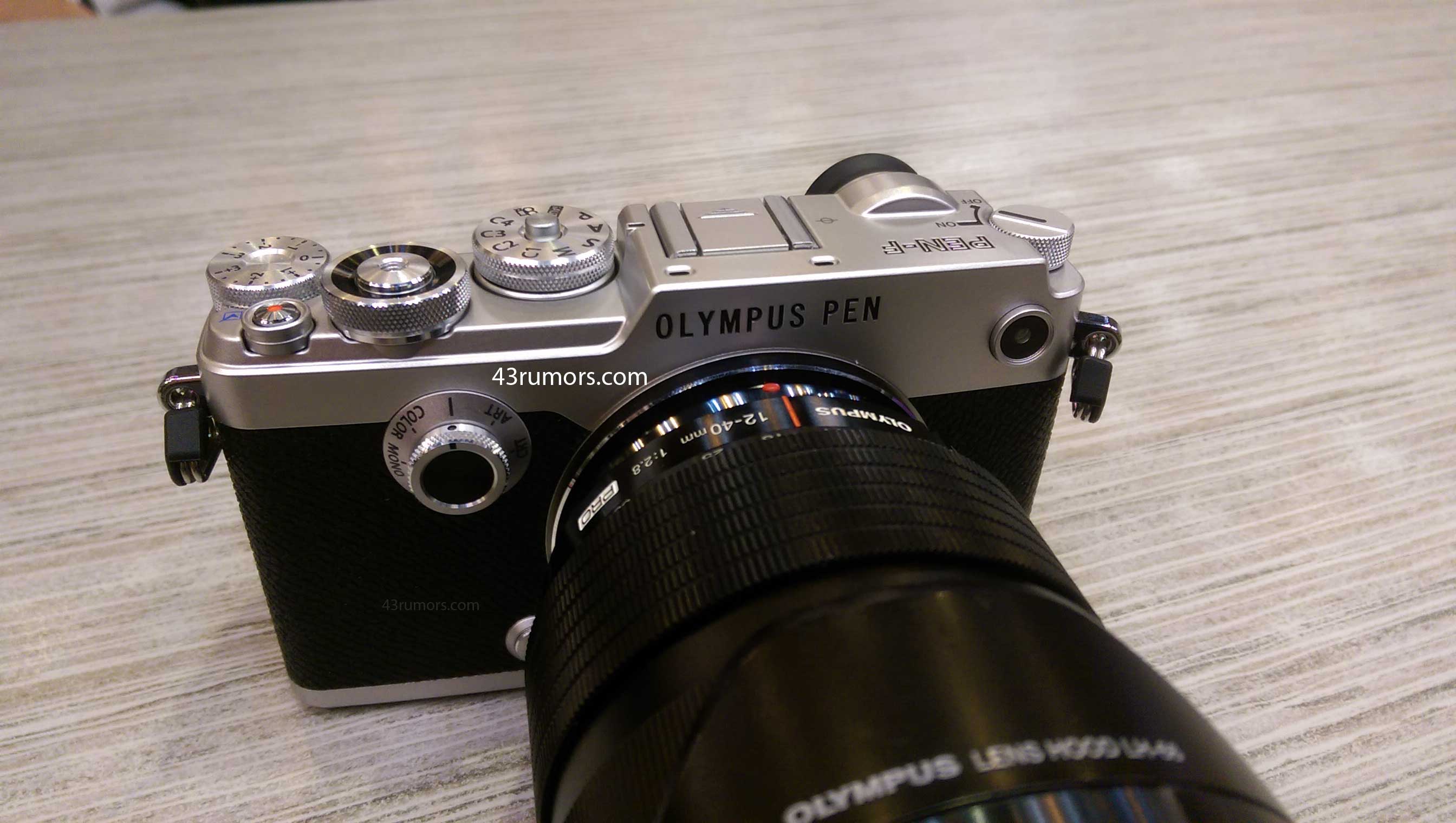
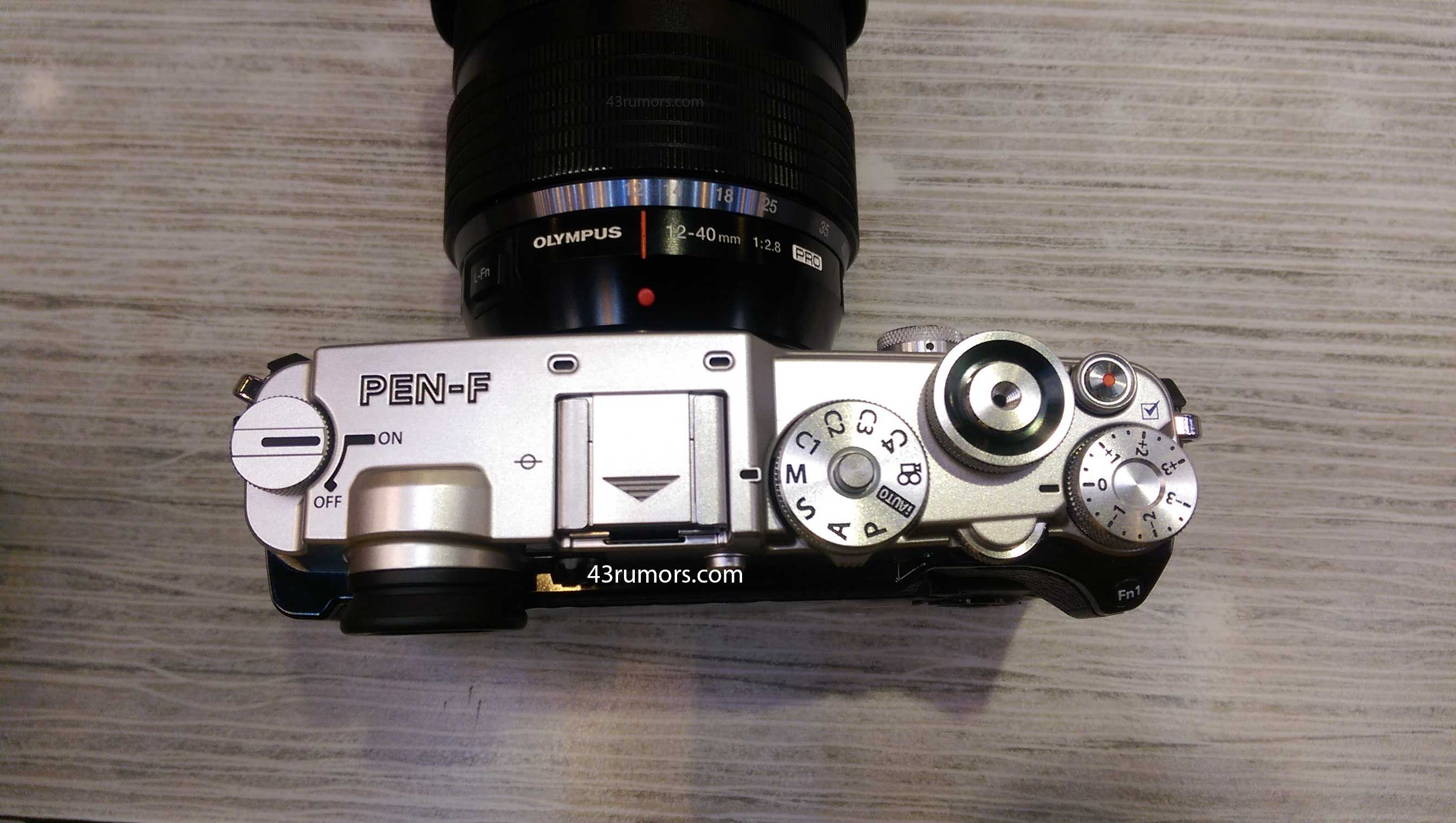
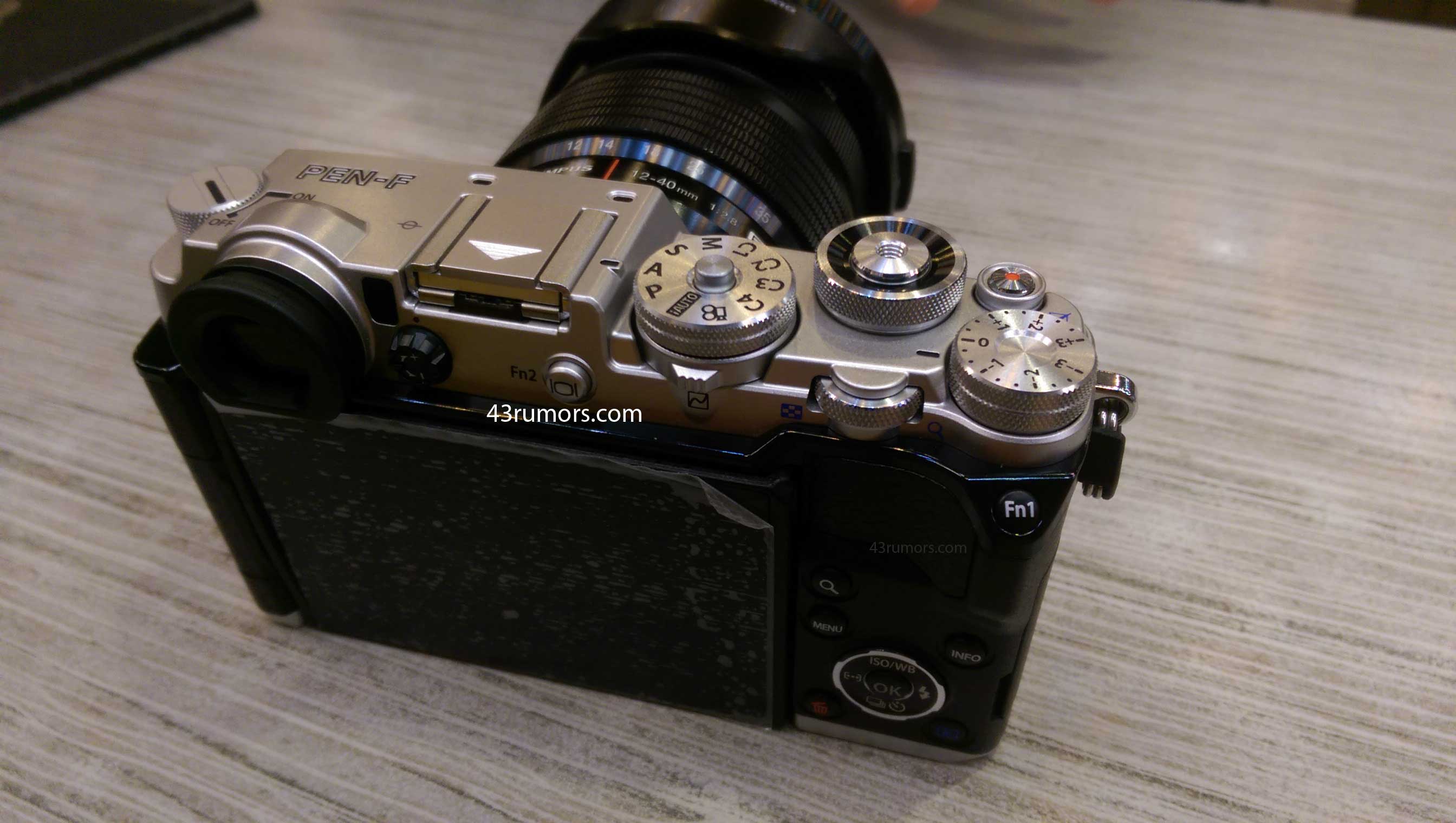
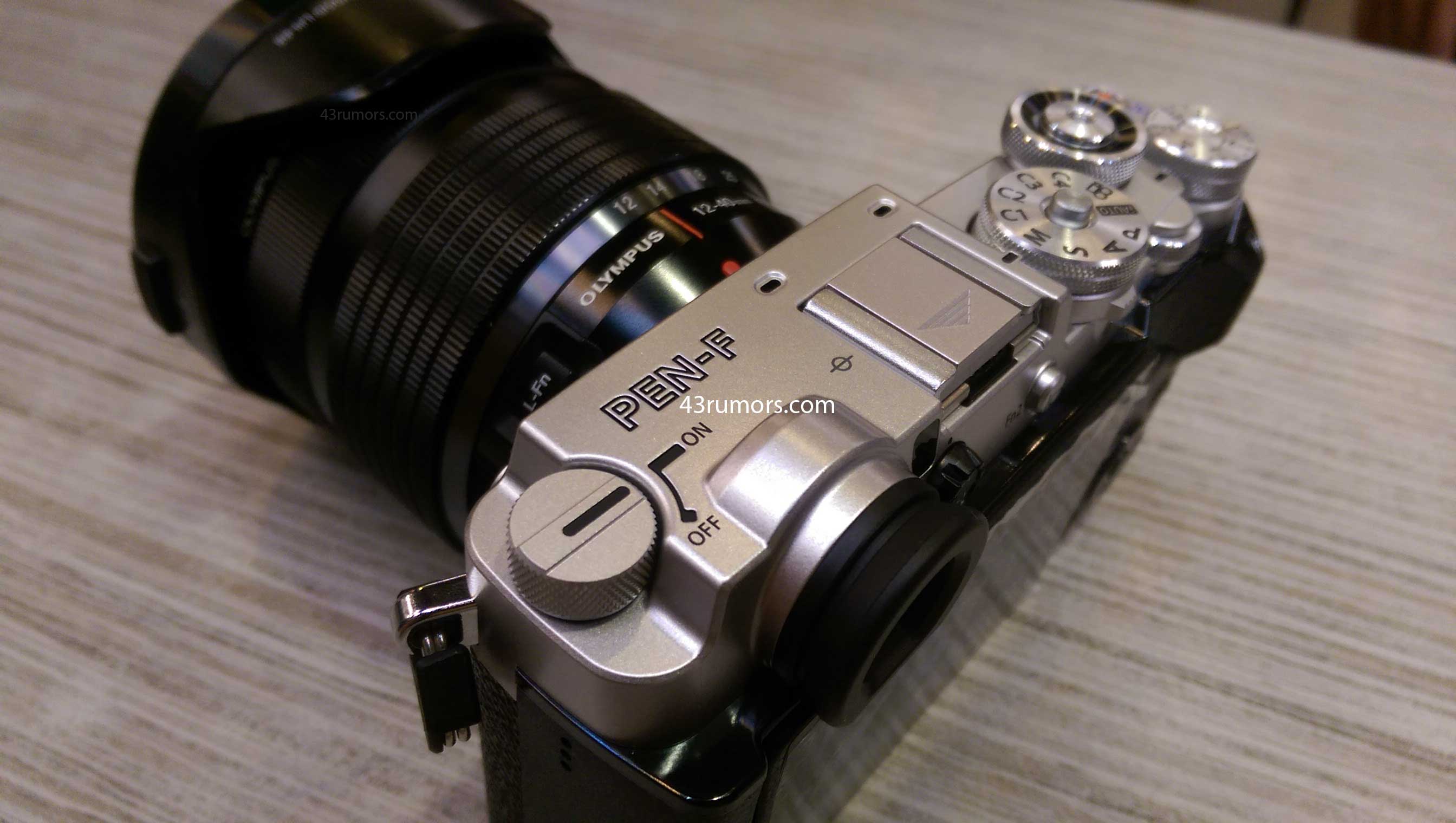
Next week on January 27 Olympus will announce the new PEN-F. Here are all the images of the real thing and as you can see its a real retro styled camera. And despite it’s rugged design the camera is not weather sealed. At 1500 Euro with kit lens this is probably not going to be a hotseller.
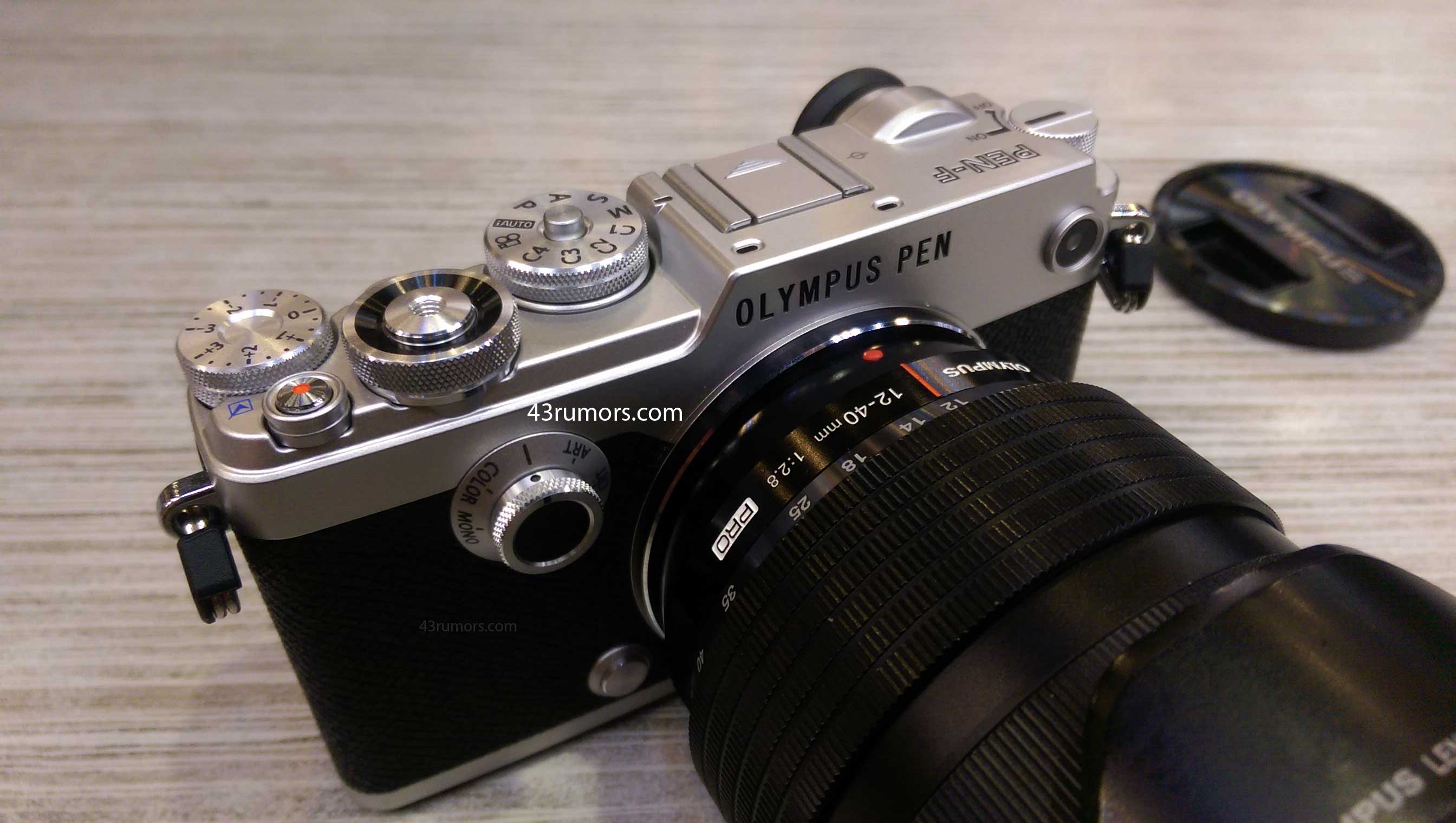
via 43rumors.
31 Responses
Too expensive !
and no silvery lense surface..
Most people aren’t retarded, charging top money and keep riding on retro styling won’t get Oly anywhere.
Same goes to Fuji.
Fuji and Olypmus bringing new and good technology. The Retro Styling is just the cover and some dials, which are pretty functional.
They could make this exact same camera in a sony a6000 or samsung nx500 body… this wouldnt change a damn thing. it is just the looks.. i prefer Fuji/Olympus in style way more than DSLR or these compact camera styling. I hope they never change that.
The issue is the pricing, I believe that was Cheng’s point. The X-pro2 is in line with FF cameras.
The X-Pro2’s turning out to be Fuji’s most anticipated and pre-ordered X camera ever, even surprising Fuji themselves as they push back the shipping date to late Feb, scrambling to make enough units. I’m pretty sure Fuji and Olympus’ marketing researchers know more about their audience than you. Or maybe most people are just retarded?
X-Pro has always been a niche product and don’t expect to sell at large volume. It’s just all hype and marketing from Fuji.
And yes its pretty retarded to get an overpriced camera to be a hippie with technology from 2 years ago and still cant do decent 1080p video.
Most people buying an X-Pro (or Leica M) aren’t particularly interested in video. The rangefinder experience is NOT equivalent to being a hippie–there are a few considerable advantages to shooting rangefinder for street. Compared to a Leica M240/262, the X-Pro2 is an absolute steal. The bigger problem is the lack of a good zone-focusing 50mm equiv. lens in Fuji’s lineup right now to take advantage of the X-Pro2’s new electronic rangefinder, which in some respects is better than Leica’s own rangefinder (you can check exposure IN the rangefinder and you can’t easily knock it out of calibration). Fuji’s winning here.
“Most people buying an X-Pro (or Leica M) aren’t particularly interested in video.”
According to whom, you?
“The rangefinder experience is NOT equivalent to being a hippie–there are a few considerable advantages to shooting rangefinder for street. Compared to a Leica M240/262, the X-Pro2 is an absolute steal.”
It also isn’t a rangefinder at all.
Fuji is winning inside that small market share they own. Good for them, I guess. They seem to be very liked on forums and comment sections, people sing praises to their “photography” oriented interface and their “amazing” lenses, but that doesn’t seem to translate well in huge numbers of buyers.
According to common sense. Why on Earth would you buy an X-Pro for video? It’s like people who slam the Leica M240 for having bad video. I think they missed the point.
“It also isn’t a rangefinder at all.”
I said rangefinder-experience, not rangefinder. There’s a big difference.
There is no rangefinder experience with the X-Pro. It looks like one, but it handles and feels like any other digital camera with similar form factor. If you use the OVF it reminds you to the rangefinder experience. Comparing a Leica M240 to a X-Pro2 makes no sense whatsoever. These are apples and meatballs.
That’s my experience. You may disagree.
The X-Pro2 has to compete with the mirrorless crowd, not the rangefinders. Fuji has made many things right with their X system, so, it managed to kind of lock-in some user base. Olympus has not managed this, except some die hard retro OM fans.
In a post Sony A7 world, m43 has a hard time in my book. Fuji does way better, here I have to agree with you.
It’s not bad looking but, you would think for over $1600 it would have some degree of weatherproofing
Why is that? Price does not and never has dictated feature set.
Could surprise people. Most camera purchases are not entirely rational anyway, nor do they need to be (assuming the buyers aren’t financially crippling themselves by overspending.)
It’s sort of Oly’s Df though. Dials and retro charm but… any new or improved tech? The one thing Df brought was a special mechanism to support older lenses better. Hardly a concern for Oly. Maybe a few of these usability enhancements are supposed to justify the cost.
i have a bunch of fujis, i bought it cause of my needs of ease access of manual controls. iso, exposure. shutter and aperture. also add custom buttons. quality is not importance cause i can make large prints of my iPhone 5s and 6s plus. i have a canon pro1 and it does justice. i rather compare lenses. so far. my leicas and sigma with adapters and my prime fujis are winning the lense battle. hardly see and chroma vignette or distortion.
Just a counterpoint: the only easy to access control on a Fuji (and this even depends on the body) is full stop shutter speed. As soon as you want to access third or half stops, you must use an unlabelled dial. Essentially, you have to split between visibly labelled rings and unlabelled dials. It is an interface that is broken apart. So, unless you only use full stops, it is actually far less easily accessed, and certainly more psychotically designed.
Also: not every Fuji lens has an aperture ring. Nor do many of them even label their aperture stops, and their rings spin endlessly. They are exactly like an unlabelled turn dial on a Canon or Nikon. Only the placement is different. Moving onto ISO (X-T1), it is so poorly implemented that turning it may result in changing the drive dial, and suddenly you have a panorama.
Clearly I am against blind and servile attendance to Fujifilm’s poor design. Had they incorporated half stops on the shutter speed dial and allowed manual control from it only, and made every lens exactly with the same interface (focus stops, aperture stops, all labelled), they would have fulfilled their design prerogative. They did not.
Their cameras are slower to operate than film cameras. By far. Their interfaces are completely strung out on too many design operandi for a single brand. They literally incorporate interface elements Nikon/Canon/Leica/Sony and more into a single body, and each at random.
Bad interface. Some of their cameras are great looking, though.
I’m enjoying mine. My like my preference, the camera gives me what I need to make money. Specially the lenses. shoot and print. unlabeled dials? You sound like a point a shoot kind of guy.
“You sound like a point a shoot kind of guy”
Straight for the ad hominem.
I was going to say that, but you beat me to it.
Lol
Vlad pointed this out below. For your sake (and for reference) ad hominem is a logical fallacy. It is purely animal and an appeal to emotion.
But let’s move on. Punctuating your argument with anecdotal evidence masked as proof is nothing more than a ‘he said, she said’ opinion. Which, in the absence of truth claims, is perfectly fine. I pointed out that X cameras do NOT have good or easy access to manual controls, giving evidence of where the interface breaks down even compared to Canon or Nikon’s unlabelled controls. In fact, even Sony’s A7 controls are more consistent and direct.
That said, I shoot Leica. I like it. I have a connection with my gear. But that doesn’t make the Leica better. It doesn’t make my attachment to it right or proof of its concept. It doesn’t mean that its interface is good, bad, or other. It means that I like it, that’s it. And that preference cannot logically be used to support the brand or object. I see we both enjoy Leica lenses.
I’m sure you’re aware of this, but to some degree, all cameras are point and shoot devices. You point, you shoot. There may or may not be steps in between. If you’re keen you can read about some of the cameras I use or have used here (none of these is well written; please accept my apologies):
1. Sony A7r: http://ohm-image.net/opinion/photophile/review-sony-a7r-ilce-7r
2. Horseman VCC Pro: http://ohm-image.net/opinion/photophile/review-horseman-vcc-pro
3. Novoflex BALPRO T/S (in three parts)
part – 1: http://www.fujirumors.com/novoflex-balpro-ts-adapter-review-part-1-design-operation-controls-adapters/
part – 2: http://www.fujirumors.com/novoflex-balpro-ts-adapter-review-part-2-stability-and-accuracy/
part – 3: http://www.fujirumors.com/novoflex-balpro-ts-adapter-review-part-3-fun-with-the-balpro-ts/
4. Fujifilm GX680 III: http://ohm-image.net/opinion/photophile/dslr-to-mirrorless-to-slr-fujifilm-conversion
5. Leica M240 and my favourite lens: 50 Summicron V3: http://ohm-image.net/opinion/photophile/nagano-japan-summicron-50
Again, each is, in its own way, a point and shoot camera. My most operationally time-consuming camera is a Rollei X-ACT 2, which requires you to cock the shutter after every shot. Lenses do not automatically stop down. It produced glorious stacking photos, but I sold it because its movements were not stable enough for large sensors. I’ve moved on.
Besides, I have a feeling that my comment about unlabelled dials was misread. Essentially, interfaces that are split evenly between unlabelled dials and dedicated wheels and gears – both of which do the same exact thing, are broken. It should be one or the other. If you MUST use a combination of both to do a simple, single task, something is wrong. This is especially the case if that interface is marketed as being direct, and its fanbase praises it for that.
X camera interfaces are NOT direct. They have the outward illusion of being classic and direct, but as I explained above, if you want to hit an exposure of 750 instead of 1000, you must first set the camera to T mode or to 1000 or 500 and then navigate to 750 using an unlabelled dial. There are at least 9 different lens interfaces, and the button array on the back of the camera makes it too easy to accidentally hit something. Buttons haven’t different travel or feel. AF-ON? Same as AFL and any other round button.
This is piss-poor design that again gives the illusion of design gravitas, but fails in its execution. It is a bitter misconstruction of a simple, effective base interface that has been around for decades. Leica nailed it in the digital M by installing half stops on the exposure dial. No need to access ancillary hardware menu items. And there are NO buttons to accidentally push.
One thing no one ever talks about with regards to X cameras is the threaded shutter release (or lack there of). It is there for looks only. While it works, it is poorly manufactured. By screwing in a cable release, the camera can be turned on; the bolt drive is locked physically to the on/off switch. This means that every time you must be careful to turn the camera off if you have the release screwed in and are not using the camera. The M separates the two. No matter how hard you twist, you will not turn on the camera. Likewise, that is the ONLY way to remote fire the Leica. Like or hate that last part, it is dedication to a singular design prerogative. And while not optimal, it is honed, elegant, and evident of attention to detail. No X camera comes close to the M for elegance, attention to operational detail, and an almost religious intolerance for confusing interfaces.
But with the Q, they made _some_ of the mistakes Fujifilm did, namely the exposure dial, which lacks half stops and reverts to unlabelled dials for the full exposure gamut. In short, praising X cameras for their ‘ease access of manual controls’ is a poor argument. Access is demonstrably worse. I’m glad that you’re connected to your X camera. That is wonderful. But it doesn’t make it an objectively better design, it just means yours and its approaches to design and the tradeoffs thereof, match.
why would interface desing ergonomy and consistency necessarily degrade its quality, usability?
I wrote a long and pointed reply, but I think admin didn’t like it. My guess is because I had links that went out from here. It was a good response with or without the links and I’m sorry it was removed.
Essentially, all cameras are point and shoot but well-designed cameras utilise a single, united interface that doesn’t require you to jump through hoops to select off-stop or off full options. Examples of interfaces that break their basic design principle are: most X cameras (to a large degree), Leica Q (somewhat). More exist, but I’ve not physically handled them.
My cameras are:
Leica M240
Sony A7r
Rollei X-ACT 2
Novoflex BALPRO T/S
Fujifilm GX680 III
Fujifilm X-T1
As to what Vlad pointed out – ad hominem – he is right. Ad hominem only ruins an argument. I suggest finding other ways to prove your argument morally or factually better.
Finally someone tells it like it is.
It’s nice to find another mind similarly dedicated to interface quality.
thanks for your honest comment. i will consider it when i finally chose what digicam actually ends up in my hands, when it eventually does (still could take longer than i would have liked due to hostile pricing).
azbest: please understand, that whether or not an interface is illogically ordered, or is inconsistent, a person may like or dislike the camera. X cameras are much loved by their owners. My argument merely support the _fact_ that their interfaces are inconsistent and NOT more easily directly controlled. But again, that doesn’t meant that you will or will not like them.
I hope you find a great camera _for you_.
Wow. Servile and over exuberant dedication to making new things look classic. The original Pen F was sleek; this thing is a monster.
They should make it in a limited edition for collectors, bc I can’t imagine many others are going to buy it. Now Olympus, let’s get on with the real serious business of making a killer EM1ii. That’s the one I will buy — maybe even two of them.
Wow, the “retro” looks much better than a Fuji, surprisingly…since the old epl1 was quite ugly.
ugly