








The new lens is now on preorder at BHphoto, Amazon, BrightinStar.

Here are the latest Japanese May sales rankings:
Mapcamera ranking:
- FUJIFILM X100VI
- SONY α7V
- FUJIFILM X-T30 III
- FUJIFILM X-E5
- FUJIFILM X-M5
- Canon PowerShot G7X Mark III
- Panasonic LUMIX TX3
- SONY α7C II
- SONY α6700
- RICOH GR IV
Yodobashi ranking:
- Hasselblad X2D II 100C Body
- Sony α7 V Body
- Fujifilm X-M5 XC15-45mm Lens Kit
- Fujifilm X-T30 III XC13-33mm Lens Kit
- Nikon Z50II Double Zoom Kit
- Canon EOS R50 Double Zoom Kit
- Sony α7C II Zoom Lens Kit
- Sony α7C II Body
- Nikon Z50II 16-50 VR Lens Kit
- Sony VLOGCAM ZV-E10 II Double Zoom Lens Kit
Surprising to see the expensive Hassleblad on top of the Yodobashi ranking!
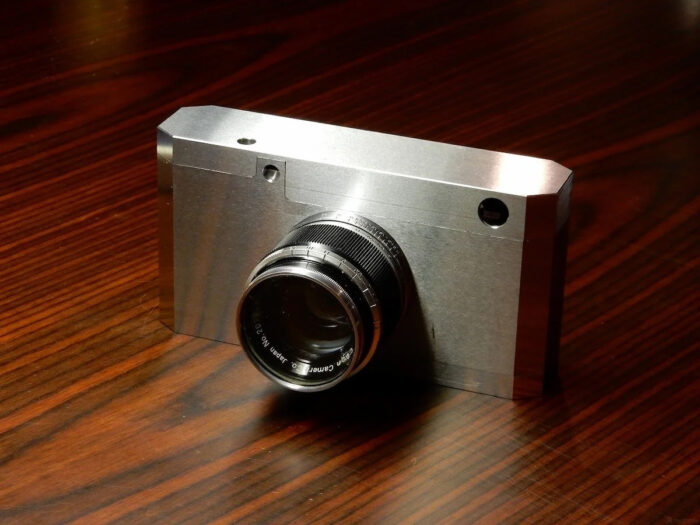
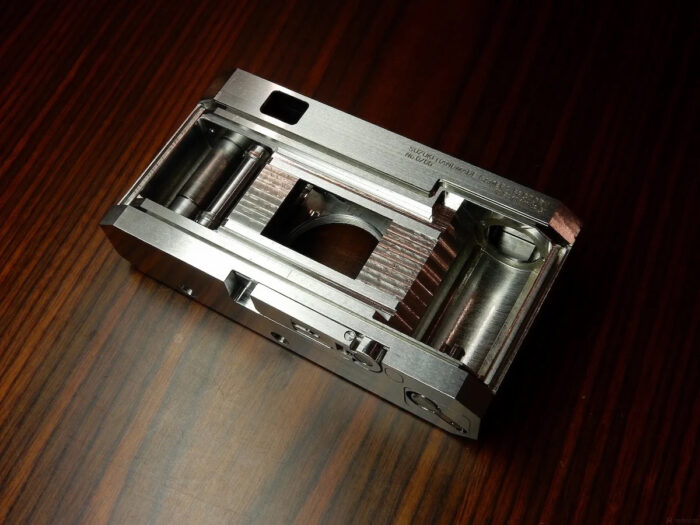
Mr.Suzuki, a Japanese creator is building on this new M-mount camera made of a solid piece of carbon steel. There is no automated assembly line, nor any teamwork—from design and processing to assembly, all processes are completed by the person in charge alone.
70% Complete
The overall progress of the first prototype has reached approximately 70%. All body panels have been milled from solid carbon steel; most parts of the shutter mechanism have also been machined, even the springs are hand-wound. Currently, the optical components are being processed simultaneously—the raw glass is being hand-ground into shape one by one.
The core features of this camera are very distinctive: the body and shell are entirely machined from a single block of steel ingot, rather than stamped or cast. Through precision grinding, the flange focal length accuracy is controlled to an extremely high level. The entire manufacturing process utilizes fully manual machine tools, without any CNC equipment.
Technical Specifications and Timeline
According to publicly available information, the camera employs a metal curtain horizontal focal plane shutter with a speed range from 1 second to 1/1000 second; the viewfinder magnification is 1.0x, with a baseline length of 120mm; the body dimensions are approximately 140×72.5×32mm. It uses an LTM (Leica M39 threaded mount) lens, directly compatible with a large number of older screw-mount lenses.
The timeline is equally clear: the first prototype is planned for completion in June 2026; the second prototype will be manufactured from June to December 2026; and the third prototype—the first production model—will be launched in 2027. The project manager stated in an interview that his goal is to “create the ultimate mechanical 35mm film camera.”
A Craftsman’s Solo Performance
Some media outlets have described it as a “Cybertruck version of Leica”—not only because of its robust steel body, but also because of the almost obsessive manufacturing philosophy behind it. This isn’t a camera designed for cost-effectiveness or the mass market. When someone spends years meticulously crafting each component from a single steel ingot, it transcends its function as a tool, becoming a vessel of time.




Samyang is officially teasing the lens of a new lens that is “Lighter. Faster.Closer”.
Back in March Phototrend had a chat with a Samyang manager where they discussed those possible new lenses:
- 20-50mm f/2 FE AF lens: It is reportedly still at an early stage of development, and its launch would not be expected before 2028 or 2029. Due to its wider aperture, this zoom would be larger and heavier than the current 24-60 mm.
- 28-85mm f/2-2.8 FE AF lens: It was initially envisioned with a constant f/2 aperture, but Samyang would ultimately opt for a variable aperture in order to reduce its size. Unstabilized and slightly larger than the new 24-60 mm, this zoom could see the light of day by late 2027 or spring 2028 if feedback is positive.
- 28-135mm f/2.8 FE AF lens: reportedly already in production for a release planned for late 2026 at the earliest.
- 300mm f/4 FE OIS AF lens: The South Korean manufacturer could even consider integrating a built-in 1.4x teleconverter (effectively turning it into a 420 mm f/5.6) to work around licensing restrictions on external teleconverters imposed by major camera manufacturers. Would be Samyang’s first to feature optical image stabilization (OIS).
- 200mm f/1.8 FE OIS AF lens: Producing this kind of lens could be costly.

Moreover Samayng displayed a prototype of a new 60-180mm f/2.8 lens at the CP+ show:

I don’t know of the lens coming on June 25 is going to be the 28-135mm f/2.8 FE/L or the 60-180mm f/2.8 FE/l. What do you think?