








Japanese business magazine Diamond reports that Sony Group has proposed acquiring lens manufacturer Tamron in a deal reportedly valued at approximately 200 billion yen.
I cannot access the complete Diamond article, so some important details and context may be missing. Nevertheless, there are several reasons why taking full control of Tamron could make strategic sense for Sony.
1. Limiting the Influence of Activist Shareholders
- A changing shareholder structure: Sony has historically been one of Tamron’s largest shareholders, with a stake of roughly 15%. That position helped provide stability to the long-standing relationship between the two companies. In recent years, however, activist investment firms—including Effissimo Capital Management—have built substantial positions in Tamron.
- Preserving strategic control: Activist investors can pressure companies to increase shareholder returns, restructure operations, or sell assets. Acquiring Tamron outright would allow Sony to protect the partnership from outside influence and determine the lens maker’s long-term direction.
2. Strengthening the Sony E-Mount System
- An important lens partner: Tamron has become one of the most significant third-party manufacturers supporting Sony mirrorless cameras. Its E-mount range includes numerous popular zoom lenses that complement Sony’s own products.
- Greater supply-chain security: Full ownership would give Sony more control over lens development and manufacturing capacity. It could also reduce the possibility of Tamron shifting more resources toward competing systems such as Canon RF, Nikon Z, or Fujifilm X.
- A stronger overall ecosystem: A broad selection of relatively affordable lenses has helped make Sony cameras attractive to many photographers. Keeping Tamron closely aligned with Sony could therefore support future camera sales as well as the wider E-mount platform.
3. Combining Research and Development Resources
- Specialized optical knowledge: Tamron brings decades of experience in optical engineering, compact zoom design, precision manufacturing, and glass-molding technology.
- Closer product integration: Sony could combine that expertise with its own work in image sensors, autofocus, computational imaging, video, and other imaging technologies.
- Opportunities beyond conventional cameras: Tamron’s optical capabilities may also be valuable in areas such as automotive cameras, industrial imaging, surveillance, and other emerging markets.
Diamond has a strong reputation for Japanese business and financial reporting, but it remains to be seen whether an acquisition will actually happen and what form the transaction might take.
If Sony does acquire Tamron, the development could be particularly concerning for Fujifilm, Canon, and Nikon. Tamron has only recently begun accelerating the release of lenses for those systems, and Sony ownership could influence how much support they receive in the future.
Would a Sony-owned Tamron continue developing lenses equally for competing mounts, or would E-mount inevitably become the priority? What do you think?
–
Tamron E-mount lenses at BHphoto, Amazon, Adorama.
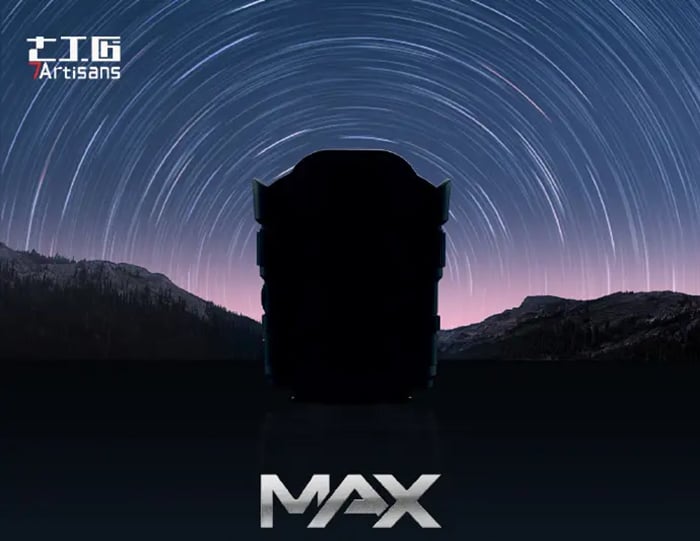
Today 7artisans posted this teaser writing:
A New Beginning | New Automatic Ultra-Wide-Angle Product Coming Soon
This time, we’ll be able to capture the entire starry sky again.
Snapshots with zero waiting time
This will be their second MAX lens after the 135mm f/1.8 you get at BHphoto, Amazon, 7artisan store. And it’s definitely going to be a fast wide angle Full Frame lens. What do you hope to get?

Today Tamron launched the new 12-20mm f/2.8 FE lens for Sony E and Nikon Z mount cameras. But they also announced a major rebranding. Watch Petapixel video to learn what’s changed.
Preorders:
Tamron 12-20mm at BHphoto, Amazon, Adorama, Fotokoch, FotoErhardt, Calumet, Leistenscheider, Clifton, WexUK.

On July 15 Tamron will announce this new 12-20mm f/2.8 Full Frame autofocus lens! Price should be a bit above $1500. It’s a very unique kind of lens and also very compact, way smaller than the Sony 12-24mm f/2.8 GM. I do like it and you?
Here is the full leaked press text:
TAMRON 12-20mm F2.8 for SONY E & NIKON Z (Model A084)
Pro Performance Minus the Weight. Ultra-Wide Built For the Field.
The defining feature of the 12-20mm F2.8 (Model A084) is its ultra-wide focal range, from 12mm to 20mm. The overwhelming breadth of the 12mm perspective enables dynamic expression that seems to “capture the entire expanse of a scene.” With a bright F2.8 aperture maintained throughout the entire zoom range, this lens is poised to become the “new protagonist” for astrophotography and interior shooting.
SonyAlphaRumors.com
The optical system incorporates an XGM (eXpanded Glass Molded Aspherical) lens element, three GM (Glass Molded Aspherical) lens elements, and multiple special lens elements. This design effectively suppresses peripheral blurring and color fringing while correcting sagittal coma flare — a common challenge in astrophotography — ensuring high sharpness from the center to the extreme edges of the frame.
SonyAlphaRumors.com
Despite its exceptional imaging performance, the lens achieves a sophisticated balance of size and weight, measuring just 4.7” (119.3mm) in length and weighing only 20.2oz. (570g).¹ While compact, it remains a professional-grade tool equipped with various switches and rings for superior operability.
For autofocus, the lens features the VXD (Voice-coil eXtreme-torque Drive), a high-speed, high-precision linear motor focus mechanism. Furthermore, with an MOD (Minimum Object Distance) of 7.1” (0.18m) at the 12mm wide end, the lens offers outstanding close-up performance for creative versatility.
¹ Length and weight are for Sony E-mount.
Features:
—Beyond the scope of vision — the overwhelming perspective only 12mm can capture
—Stunning corner-to-corner resolution for astrophotography and nightscapes
—Enhanced mobility for landscapes — a compact and lightweight design
—Comprehensive control features to meet professional demands
—High-speed, high-precision, and quiet performance with VXD linear motor focus mechanism
—Stunning close-up performance — unleashing the dynamism of ultra wide-angles
—Compatible with TAMRON Lens Utility™ — seamless support for video and stills
—Mastery of light — the artistry of a 12-blade circular diaphragm
—Evolution of form — introducing the “Tone Profile Next” lens design
—Integrated flower-shaped lens hood, integrated rear filter holder, and locking front lens cap
—Includes protective lens wrap
Model Name: A084
Focal Length: 12-20mm
Format size: Di III
Maximum Aperture: F2.8
Minimum Aperture: F16
Diagonal Angle of View: 121°58′ – 94°30′ (for full-frame mirrorless format)
Lens Construction: 17 elements, 12 groups
Filter Diameter: – Integrated rear filter holder
Minimum Focus Distance: 7.1” / 0.18m (WIDE), 11.1” / 0.28m (TELE)
Max. Mag. Ratio: 1:5.8 (WIDE) / 1:9.1 (TELE)
Maximum Diameter: Ø90mm
Length: 4.7” (119.3mm) Sony E / 4.8” (121.3mm) Nikon Z
Weight: 20.2oz (570g) Sony E-mount / 20.7oz (585g) for Nikon Z
Diaphragm Blades: 12 (circular diaphragm)
Standard Accessory: Front cap, Rear cap, Lens wrap, integrated hood
Compatible Mount: Sony E & Nikon Z