Advertisement
PHOTOGEARUp to 30% off camerasAutumn deals on bodies and lensesSee dealsSample ad
Advertisement
Advertisement

Here are the specs:

  • Focal Length: 4.5-10mm
  • Aperture Range: F2.8-22
  • Lens Structure: 13 elements in 9 groups
  • Image Circle Diameter: Ø29mm
  • Angle of View: 180° (at 4.5mm) – 175° (at 10mm)
  • Number of Aperture Blades: 7
  • Focus Method: Manual Focus (MF)
  • Focus Ring Travel: 77°
  • Zoom Ratio: 2.2X
  • Minimum Focus Distance: 10cm
  • Zoom Ring Travel: 75°
  • Aperture Ring Travel: 42°
  • Maximum Magnification: 0.27X
  • Lens Dimensions: Ø68.9 x 59.3mm
  • Weight: 330g
  • Available Mounts: Sony E, Fujifilm X, Nikon Z, Canon RF, Canon EF-M, L-Mount, Micro Four Thirds (M4/3)

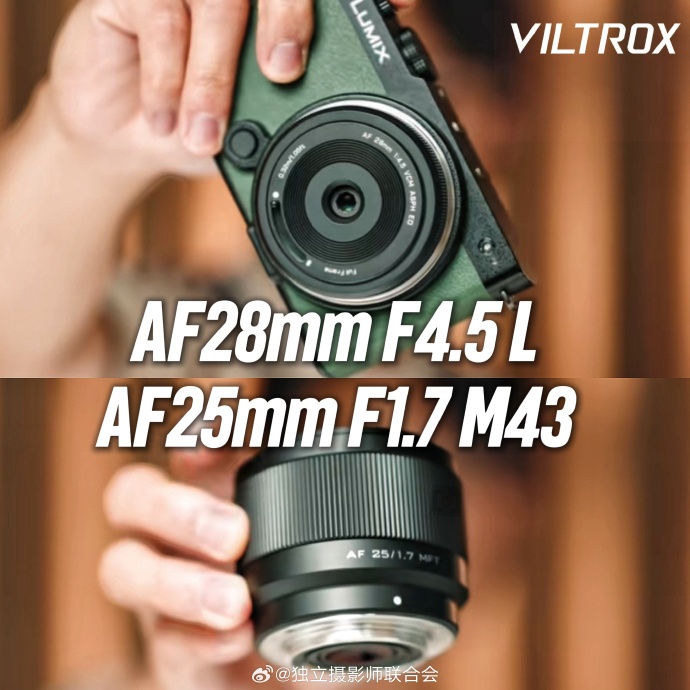
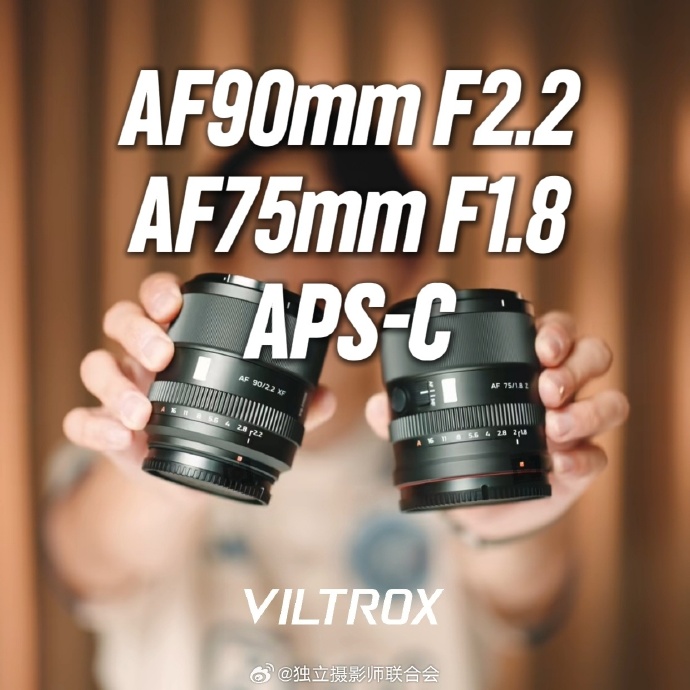
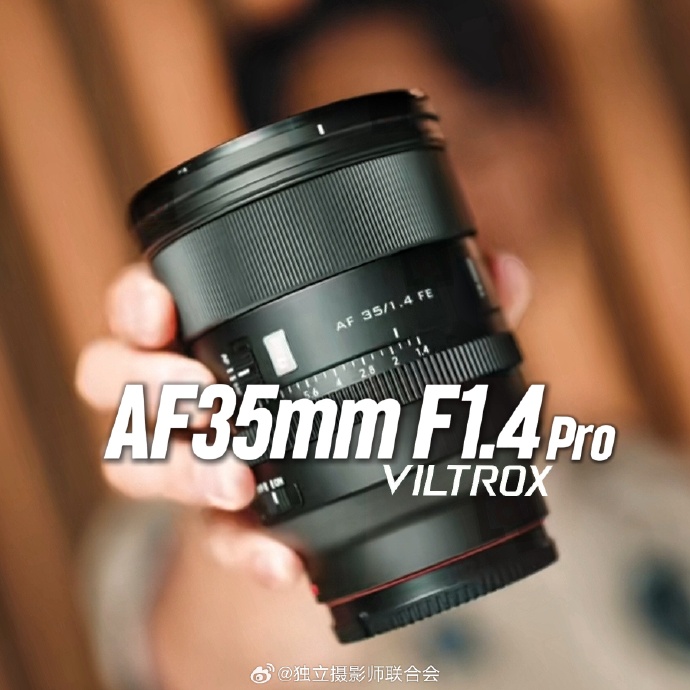
Viltrox never sleeps 🙂

  • Manual Focus Tilt-Shift Lens
  • AF 28mm f/4.5 L (Full Frame)
  • AF 25mm f/1.7 M43 (Micro Four Thirds)
  • AF 90mm f/2.2 APS-C
  • AF 75mm f/1.8 APS-C
  • AF 35mm f/1.4 Pro (Full Frame)
  • AF 18mm f/1.2 APS-C
  • AF 40mm f/1.2 APS-C

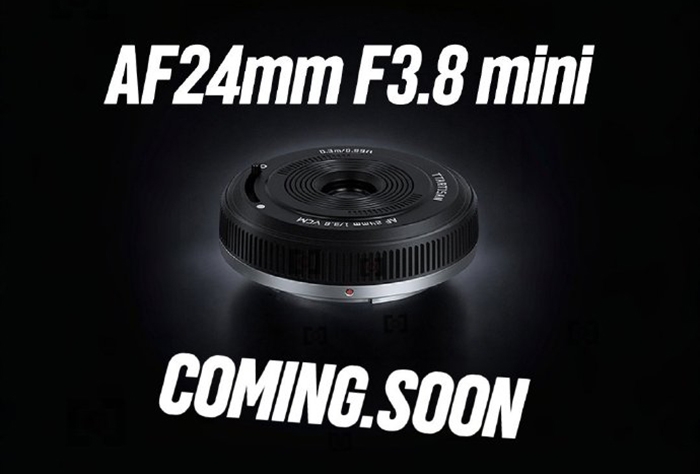
The new TTartisan AF 24mm f/3.8 E/Z/L mount mini pancake autofocus lens is about to be released. It features a VCM voice coil focusing motor, emphasizing compact portability and a lightweight design. With a minimum focusing distance of 0.3 meters.

Laowa has officially announced it will be display new lenses at the Beijing PE Photography Show:

  • New zoom AF elns
  • wide angle AF lens
  • Macro AF lens

All coming as E and Z mount versions. Laowa once displayed a 24-50mm f/2.8 FE zoom so maybe that’s the one we will get?


–

via Weibo

Press text:

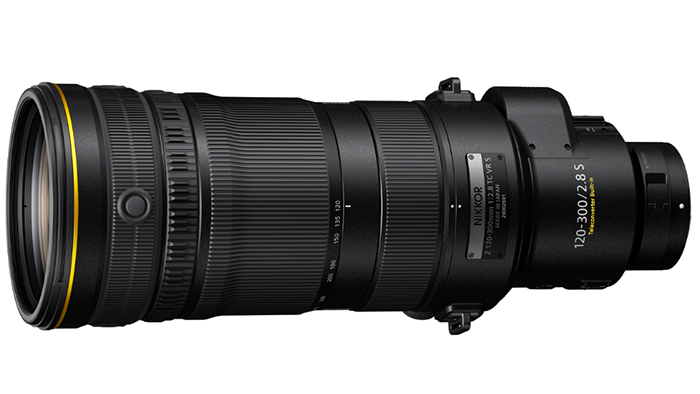
Nikon is developing the NIKKOR Z 120-300mm f/2.8 TC VR S, a telephoto zoom lens with a built-in 1.4x teleconverter

TOKYO – Nikon Corporation (Nikon) is pleased to announce the development of the NIKKOR Z 120-300mm f/2.8 TC VR S, a telephoto zoom lens compatible with full-frame/FX-format mirrorless cameras.

As part of the S-Line* series of NIKKOR Z lenses, the NIKKOR Z 120-300mm f/2.8 TC VR S is a telephoto zoom lens offering a focal length range of 120 mm to 420 mm, enabled by a built-in teleconverter that extends its focal length by 1.4x. The superior optical performance and mobility of this lens will support professional photographers’ imaging expression in genres such as sports photography and beyond.

Nikon will continue to pursue a new dimension in optical performance while meeting users’ needs, contributing to the development of imaging culture, with the hope of expanding possibilities for imaging expression.

  • *The S-Line is a grade of NIKKOR Z lenses that demonstrate outstanding optical performance, adhering to a high standard of design principles and quality control.

Canon and Sony decided to announce their first BIG cameras of the year on the very same day…on May 13

Canon EOS R6 V

  • Mount: Canon RF
  • Sensor: Full-frame CMOS
  • Effective resolution: 32.3 megapixels
  • Max resolution: 6960 × 4640
  • Image ratios: 1:1, 4:3, 3:2, 16:9, 1.6× crop
  • Max video resolution: 7K 60p RAW
  • Open Gate: 7K 30p RAW
  • ISO range: 100–64000
  • Boosted ISO: 50–102400
  • Shutter type: Electronic rolling shutter
  • Shutter speed: 1/16000–30 sec
  • Focus points: 1053
  • Screen size: 3″
  • Screen dots: 1,620,000
  • Angle of view: Approx. 170° vertical & horizontal
  • Weather sealing: Yes
  • Battery: LP-E6P
  • Operating conditions: 32–104°F / 0–40°C, ≤85% humidity
  • Weight: 598 g / 21.09 oz, including batteries
  • Dimensions: 14.17 × 8.33 × 7.98 cm / 5.58 × 3.28 × 3.14 in
  • Price: €2,549 body only

Sony 100-400mm f/4.5 GM lens

First of all this is NOT the successor of the current Sony 100-400mm f/4.5-5.6 GM. Proof is the fact that it’s not named “GMII”. What sets this lens apart is that:

  • internal zoom
  • faster constant aperture
  • super lightweight construction (I have been told it’s surprising how light it is)
  • extreme high optical quality

The lens is rumored to be priced similar to the Sony A7rVI. This means around $5000 and a bit more than 5000 Euro.

Rumored Sony A7rVI specs:

  • Around 67 Megapixel fully stacked sensor
  • New body design
  • Very similar Sony A1II specs when it comes to speed and video performance
  • All the goodies we have seen on the new Sony A7V (AI functions, IBIS, autofocus and so forth)
  • Us price around $5000 and European closer to €5,500

–

via SAR, CR

A lot of cine gear has been announced at the NAB show. Here is a quick roundup:

Leica is getting rid of Sony sensors and in future plans to use the sensors made by the Chinese company Gpixel.

Press text:

New Era of Imaging: Leica Camera AG and Gpixel Announce Strategic Partnership for Next-Generation Image Sensor Development

Wetzlar, Germany & Changchun, China, 20 April 2026 Today, Leica Camera AG and Gpixel, a leading global provider of advanced CMOS image sensors, announce a strategic partnership. Both partners agreed to combine their core competencies in the area of innovative imaging technologies to

co-develop a new high performance imaging sensor tailored for next-generation Leica cameras. This collaboration brings together Leica’s long-standing expertise in premium imaging and Gpixel’s cutting-edge sensor design capabilities to push the boundaries of what is technically possible in digital photography.

The partnership focuses on jointly engineering a bespoke image sensor optimized for Leica’s rigorous imaging standards, enabling unprecedented levels of image quality, dynamic range, color fidelity, and low-light performance across future Leica products.

Dr. Andreas Kaufmann, Chairman of the Supervisory Board and majority shareholder Leica Camera AG said: „I am really happy and proud that our long-term cooperation with Gpixel will result in a true Leica sensor, incorporating the best ingredients of engineering between Wetzlar, Antwerp and Changchun.”

“At Gpixel, we have always admired Leica’s uncompromising approach to craftsmanship and image performance,” said Xinyang Wang, CEO of Gpixel. “Collaborating with Leica gives us the opportunity to combine our sensor-engineering strengths with their legendary imaging heritage. This partnership allows us to co-create a new generation of sensors that will empower photographers with extraordinary image-making capabilities.”

The jointly developed sensor will be purpose-engineered to meet the highest performance requirements in color reproduction, noise optimization, dynamic range, and detail rendering. The collaboration also includes close cooperation in validation, image tuning, and production readiness.

Search

Search
Advertisement

Subscribe to Our Newsletter

*Please also check your spam folder if you don't get the confirmation mail. And mark the mail as "non-spam" to see the future newsletter.

Advertisement
PHOTOGEARUp to 30%off camerasSee dealsSample ad
Advertisement
Advertisement