






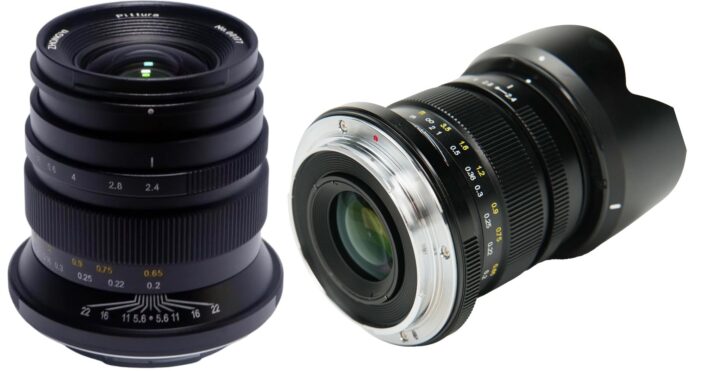

XF 56mm APD vs. XF 56mm
Talk to Rico (open forum for questions & feedback)
Fuji X Secrets Workshops – Rico’s Flickr Sets
Istanbul Calling – XF 56mm vs. XF 56mm APD Sample Images
—

^ Istanbul (X-E2 with 18-55mm kit zoom, SOOC JPEG Velvia)
Happy New Year everybody!
I hope you’ve successfully navigated through the sometimes stressful holiday season. I certainly did, and now we don’t have time to waste, as new Fuji product announcements are just around the corner. Not to mention that I’m supposed to submit the English and German manuscripts of my book on the X-T1 in less than two weeks. The book (which will be available as an ebook and eventually also in print) will incorporate all changes and new features of the big firmware 3.00 update from 18DEC.

^ Istanbul (X-T1 with 18-135mm kit zoom, Lightroom)
But wait, there’s more: Fuji X Secrets is going to Istanbul, a marvelous city for photographers of all genres. From 30APR to 5MAY, an exclusive group of only 5 to 7 Fuji X series fans will be able to explore this mesmerizing city along with Fuji X-Photographer Mehrdad Abedi and myself. Mehrdad’s stunning work as a travel photographer earned him the title story in a recent Fuji X Magazine edition, so check-out his portfolio here, and also have a closer look at what’s in store for you during this one-time event, which will be conducted in German language. As of today, three spots have already been taken.
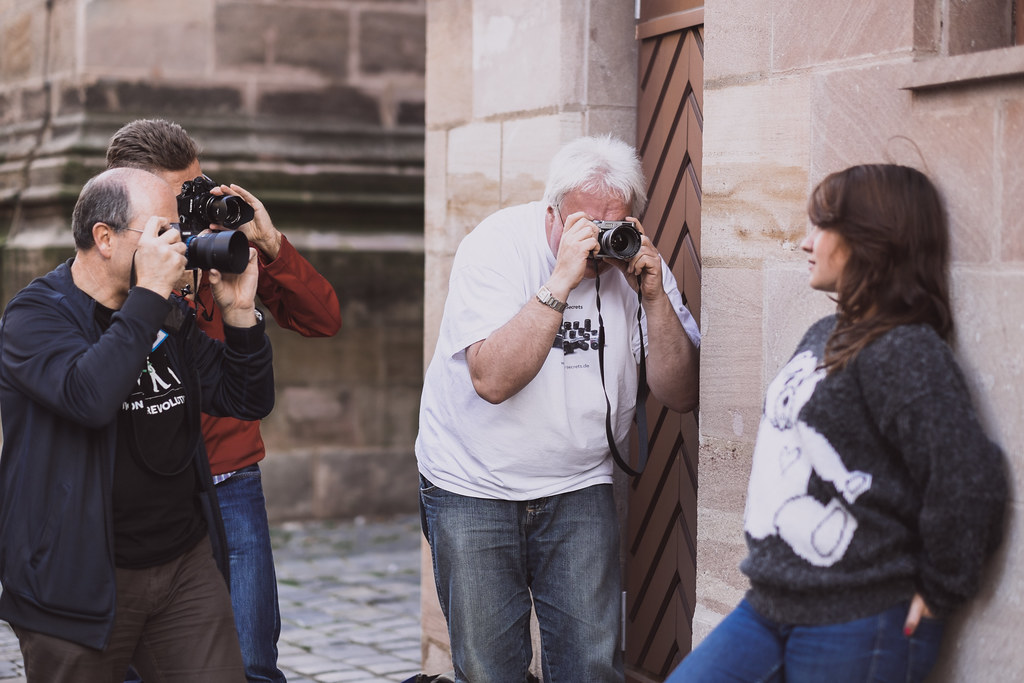
^ Fuji X Secrets Workshop in Schwabach, 3OCT14 (X-T1 & XF56mmF1.2 R, Lightroom)
For those of you who want to stay closer to my current home in Germany, I am also offering a new Fuji X Secrets weekend workshop here in Nuremberg/Schwabach on 11 and 12APR. Two of only four available spots are currently available.

^ Santa Barbara (X-T1 with 18-135mm kit zoom, Lightroom)
If you are interested in an English language Fuji X Secrets workshop this summer (July) in Southern California (Santa Barbara area), please drop me a note at info@fuji-x-secrets.com, so I can keep you informed.
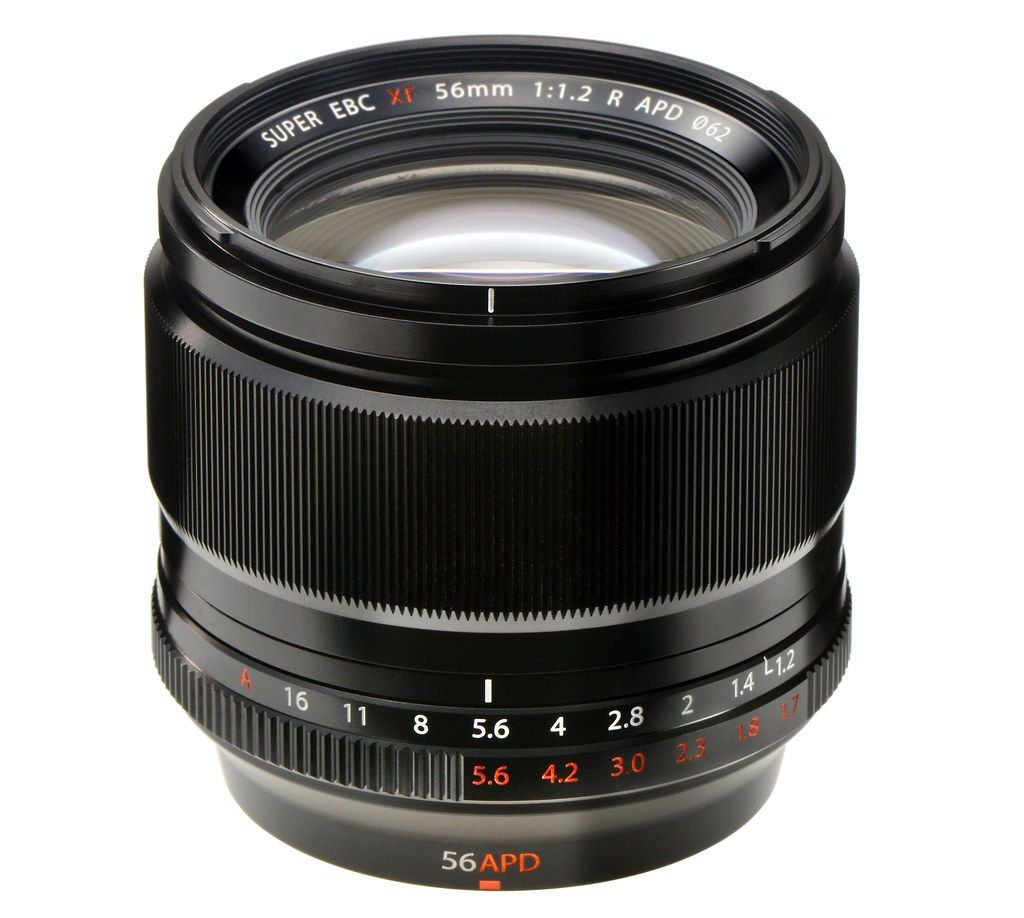
^ XF 56mm F1.2 R APD
Since Fuji is about to officially announce another high-end lens tomorrow, let’s use the build-up for a comparative look at Fuji’s new XF56mmF1.2 R APD lens. As many of you will remember, this lens was on display in September at the Photokina show in Cologne, and it appears that its announcement led to a few misunderstandings.
Let’s be clear: The APD version is not replacing or succeeding the regular XF56mmF1.2 R lens. It’s not even considered an improvement. It’s just, well, different. It presents itself as an option for a small niche of photographers who shoot portraits at wide-open aperture and want very smooth bokeh. Here in Germany, Fujifilm considered this niche as being so special that they didn’t even order pre-production samples of the APD for media previews or sales presentations to dealerships. Hence also the delay in my reporting.

^ X-T1, XF56mmF1.2 R APD, Lightroom
But better late than never. I’ve spent the holidays comparing a fresh production sample of the XF 56mm F1.2 R APD with my trusted regular XF 56mm lens.
So What?
To begin with, let’s establish what the APD (apodization) filter is actually doing. The non-removable filter is installed in the same optical plane as the aperture, so its effect is actually quite similar to closing the aperture of the lens: It reduces the amount of light that reaches the sensor, and it also reduces out-of-focus blur. So what’s the big difference to the actual aperture? Simple: Actual aperture blades features hard edges, while the APD filter uses a soft gradient (like a radial neutral density filter) that brightens from the corners towards the center of the image circle. This smooth gradient has a softening effect on out-of-focus areas: the blur discs are smoothed down. This effect decreases as the lens is stopped down, and at apertures of f/5.6 and smaller, the APD filter has no effect at all.
This means that the APD filter offers its maximum impact wide-open at f/1.2. Stopping down the lens (the actual aperture) obscures more and more of the APD filter’s neutral density gradient until there’s no effect at all at f/5.6. That’s why Fuji recommends using the XF56mmF1.2 R APD between f/1.2 and f/2 for the filter to have a visible impact.
In order to clearly see the difference between a regular 56mm lens and one with an apodization filter, it’s best so take a picture that consists of nothing else but blur discs. After all, this is where the APD filter is supposed wo work its magic, right? So I did just that, taking deliberately defocused shots of a corny christmas light installation in my neighbor’s garden. Here’s what it looked like with my regular 56mm lens:

^ XF56mmF1.2 R @ f/1.2, SOOC JPEG Provia
And here’s the same subject shot with the APD version:

^ XF56mmF1.2 R APD @ f/1.2, SOOC JPEG Provia
I think that this example illustrates pretty clearly what the apodization filter is doing: It’s smoothly shaving the edges off those blur discs.
It’s good to know that the APD filter affects blur discs of all sizes (and hence any defocus level), as you can see for yourself in my sample gallery on Flickr.
To illustrate this point, here’s another comparison, this time with less defocus and hence much smaller blur discs:

^ XF56mmF1.2 R @ f/1.2, SOOC JPEG Provia

^ XF56mmF1.2 R APD @ f/1.2, SOOC JPEG Provia
Again, the APD version displays smoothly shaved-off blur discs, which is exactly the effect that users of this lens are looking for. It also means that the APD filter affects all areas of an image that are out-of-focus. On the other hand, in-focus areas are rendered just as sharp as with the regular 56mm lens.
Get Real!
That’s nice, but what about more realistic subjects? To make a comparison, I set up a situation in my living room, manually focusing with both lenses on a candle and shooting this subject at apertures between f/1.2 and f/5.6. Here are the results wide open at f/1.2:

^ XF56mmF1.2 R @ f/1.2, SOOC JPEG Provia

^ XF56mmF1.2 R APD @ f/1.2, SOOC JPEG Provia
In this more realistic example, the differences between the two lenses are less pronounced. We can see that the regular lens leads to a blurrier background (just compare the extent of the blur in the chair’s armrest). However, the APD version is smoothening the blur by softening the edges of the blur discs, so overlapping blur discs result in a less busy bokeh.
Closing down the aperture gradually reduces this smoothening effect, as you can see by clicking through the remaining samples of this scene.
At f/5.6, there’s virtually no difference between the regular and the APD version:

^ XF56mmF1.2 R @ f/5.6, SOOC JPEG Provia

^ XF56mmF1.2 R APD @ f/5.6, SOOC JPEG Provia
Even if the improvement may seem marginal: any improvement is an improvement, right? So why not dump the regular XF 56mm lens and replace it with the (seemingly better) APD version?
It’s not that easy, because the APD filter introduces shortcomings of its on:
- The brightness of the lens is reduced between f/1.2 and f/5.6. For example, setting the APD lens to f/1.2 results in an effective lens speed of f/1.7. Since the APD lens is slower, shooting wide-open in poor light requires slower shutter speeds and/or higher ISO settings. At least you don’t have to guess, as the effective aperture is shown by red markings on the aperture ring.
- The APD filter also has a negative impact on autofocus performance. Fast PDAF (phase detection AF) is not available at all, and CDAF (contrast detection AF) performance is reduced in poor light along with the decreased lens brightness.
- The APD version is significantly more expensive than the regular version, so you basically have to pay more for less performance. For the APD version to be a reasonable choice, you really, really have to love its softened out-of-focus blur at wide-open aperture.
A Little Shootout
To make things easier for us, I used both lenses to shoot a handful of real-world samples in the field. Look at the examples and ask yourself whether the differences are strong enough to justify the extra expense. All examples were shot wide-open (f/1.2 setting) and processed with Lightroom 5.7 (each pair with identical settings and brightness/exposure & white balance equalization).
First, let’s look at a typical bokeh killer: leafless trees and branches lurking in the out-of-focus background. It’s a no-no for portraits, but people seem to shoot such situations, anyway, and I remember reading heated complaints about “busy backgrounds with branches” when the original 56mm was released almost a year ago. So I wondered: Is the APD lens an actual remedy for this issue, or is it just wishful thinking? See for yourself:

^ XF 56mm F1.2 R

^ XF 56mm F1.2 R APD
I’ll let you be the judge of what the APD filter can (or can’t) do for you.
The next example features a calmer and more distant background, but with a twist, as I also included two small pillars in the shot that are much less out of focus. I wanted to see how the APD filter affects different kinds of blur:

^ XF 56mm F1.2 R

^ XF 56mm F1.2 R APD
As expected, the background blur is less pronounced (but smoother) in the APD version. This is no surprise, as the APD filter acts like an aperture with soft, semi-transparent edges.
Here’s another example that shows both front and back bokeh with less blur than in previous shots:

^ XF 56mm F1.2 R

^ XF 56mm F1.2 R APD
It might be interesting to note that in a blind test, some observers preferred the regular version of this scene due to its better subject separation and increased blur both in the foreground and background. It seems that at least to some, the negative APD effect (basically a slight increase in depth-of-field due to the APD filter’s nature as a pseudo-aperture) outweighs the increased smoothness of the APD filter.
My final example illustrates the opposite situation: a close-up with great subject separation and pronounced blur discs (thanks to the backlight situation):

^ XF 56mm F1.2 R

^ XF 56mm F1.2 R APD
Here, the difference between the lenses is quite visible, but that doesn’t mean that everybody will prefer the softened look of the APD lens. Some may prefer the larger, more vivid blur discs of the regular lens.
I have a few more direct comparison examples for you in my Flickr album, simply click here to have a look.
It’s Up To You!
I’m glad I made this comparison, as it pretty much showed me what to expect from both versions of the XF 56mm lens. Performance-wise, the regular 56mm lens with its “real” f/1.2 aperture and fast PDAF is the winner, but I can certainly imagine myself using the APD version for wide-open portrait shots that don’t require maximum AF performance. Face detection works equally well with both lenses (as it’s CDAF-based, anyway).
What’s Next?
Tomorrow, we’ll take a brief First Look at the new XF16-55mmF2.8 R LM WR zoom lens.
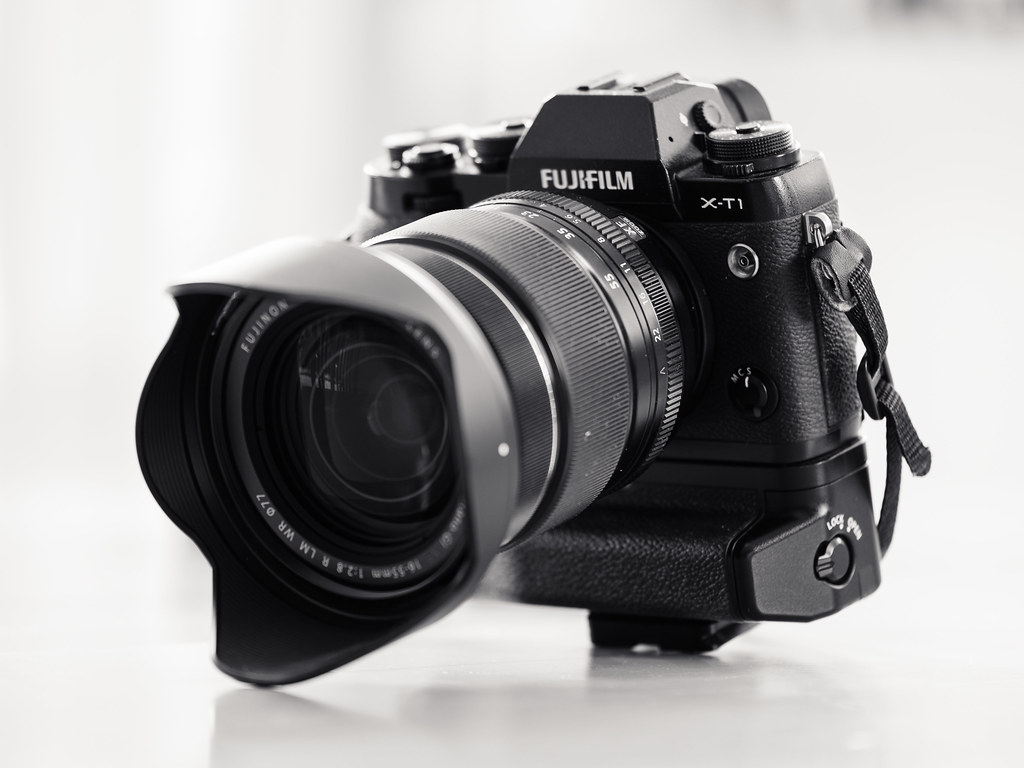
X-T1, XF50-140mmF2.8 R LM OIS WR, Lightroom
- XF 56mmF1.2 R APD
BHphoto / AmazonUS / Adorama - XF 56mmF1.2 R
BHphoto / AmazonUS / Adorama - XF 56mmF1.2 R WR – New
BHphoto / AmazonUS / Adorama
For your convenience, here’s a TOC with links to my previous X-PERT CORNER articles:
- New Firmware Features (3): X-T1 Firmware Version 3.00
- New Firmware Features (2): Using Camera Remote
- New Firmware Features (1): Using AF+MF
- First Look: Fujinon XF 50-140mm F2.8 R LM OIS WR
- Using the Fujifilm X100T
- First Look: Fujifilm X30
- First Look: XF18-135mmF3.5-5.6 R LM OIS WR
- X-E2: Behind Firmware 2.00
- First Look: Fujifilm TCL-X100 Teleconverter for X100(S) Cameras
- First Look: Fujinon XF10-24mmF4 R OIS
- First Look: Fujifilm X-T1
- First Look: Fujinon XF56mmF1.2 R
- Exposing Right
- Using Auto-ISO
- Using Face Detection
- First Look: Fujifilm XQ1
- PDAF & LMO Lens Firmware Updates Coming in November
- First Look: Fujifilm X-E2
- How Fuji could save the X-M1
- X-A1 vs. X-M1: Photo Ninja Edition
- X-A1 vs. X-M1: the Shootout
- Using the Fujifilm X-A1 [& X-M1]
- First Look: Fujinon XF23mmF1.4 R
- RAW Converter Shootout Results
- Ultimate RAW Converter Shootout
- First Look: X-M1 with New Kit Zoom and Pancake Lens
- Zeiss Touit vs. Fujinon XF
- Remote Shutter Control for X Series Cameras
- Apple Camera RAW, X-Trans and EXR
- First Look: XF55-200mmF3.5-4.8 R LM OIS
- Studio X
- Using the X100S
- Using the X20
- X100S vs. X100
- X20 vs. X10
- RAW, JPEG, Silkypix and “Fuji Colors”
- Adapting Third-Party Lenses (updated with Speed Booster)
- RAW for JPEG Shooters…
- Tips for Updating your Firmware
- How to Clean the X-Trans Sensor
- Using the XF14mmF2.8 R
- Decoding XF18-55mmF2.8-4 R LM OIS
- Comparing RAW converters: JPEG vs. Lightroom, Capture One, Silkypix & RPP
- XF14mmF2.8 R appears to be almost distortion free
- How to Expand Dynamic Range
- How to Use Extended ISO
- EXR, anyone?
- Capture One – When the Going Gets Tough…
- Using Shooting Profiles and the Quick Menu
Rico Pfirstinger studied communications and has been working as journalist, publicist, and photographer since the mid-80s. He has written a number of books on topics as diverse as Adobe PageMaker and sled dogs, and produced a beautiful book of photographs titled Huskies in Action (German version). He has spent time working as the head of a department with the German Burda-Publishing Company and served as chief editor for a winter sports website. After eight years as a freelance film critic and entertainment writer in Los Angeles, Rico now lives in Germany and devotes his time to digital photography and compact camera systems. His new ebook The Fujifilm X-E2: Beyond the Manual is available at Rocky Nook.
40 Responses
To me, an APD bokeh looks artificial, as if someone skillfully masked out the main subject and then for some weird reason applied a lame Gaussian blur to the background. In short, it looks… unoptical.
I prefer crisp rendering of the original lens.
Looking at these samples, I prefer the bokeh of the 56 APD.
Looking at my bank account, I prefer the regulare 56 😉
If need be to add some extra blur to the specular highlights… Good ole Photoshop to the rescue. It’s rather easily automated, too. Noodling bugs me, specular highlights don’t 🙂
share the same opinion. prefer the non APD crisp bokeh. APD version looks like software manipulated bokeh.
aside bokeh…APD versions look a little warmer to me, specially in the skin tones
There’s indeed a difference in color transmission.
Rico, a quick question… Have you noticed any correlation of bokeh rendering with LMO?
No. Have you? The SOOC samples are with LMO, the Lightroom samples are (obviously) not.
I haven’t done any comparative testing yet… but it just occurred to me that I’ve started seeing “bokeh noodling” right around time when the first LMO firmware has been introduced.
As a vanilla 56mm owner, can’t say the difference is anything like significant enough to make me want to change to the ADP.
Firstly, that last image, beautifull, what a teaser ! That combo definitely needs a grip. Which one handles better, the MHG grip or the battery grip ? Rico can you say someting about that ?
Secondly the images taken with th 18-135 mm after postprocessing looks great.
Rico, thanks.
I prefer the battery grip.
I have both grips. My vote is for MHG, as for some reason my middle finger just hurts after extended (10+ hours) shooting with shallow stock grip. Battery grip adds a nice resting space for the pinkie, great set of vertical controls and a decent vertical grip… But the stock horizontal grip just aren’t grippy enough.
So this is the basically the reason for the price difference between non-ADP and ADP http://www.bhphotovideo.com/c/product/21722-REG/Heliopan_706751_67mm_Center_ND_3x.html/BI/19115/KBID/10779/SID/fr
No, the APD filter is the other way round (darker towards the edge). I suspect the filter is quite inexpensive for Fuji, but the cost is due to the rarity/specialised nature of the lens compared to the vanilla 56mm.
I had edited my post to state the reverse, but yes we agree. I don’t know if it is inexpensive for Fuji in the standpoint of yield due to the exact nature of the reverse-central grad filter to be nearly perfect each and every time.
Really surprised that the APD version is incapable of using PDAF… and I don’t understand why… *confused*
This is what Fuji says about it:
“By installing apodization filter, signals input to phase detection sensor (photodiode) is biased from ideal position. Then, this biased energy causes wrong information for actual focus position. Then, phase detection AF has been cancelled for this lens.
On the contrary, contrast AF shows correct focus position definitely.”
Hm, interesting… kinda wish I could visualize it a bit better haha. Thanks for the info 🙂
Either this piece are poorly translated from something that’s already been a mumbo-jumbo in Japanese, or Fuji just proudly enered the territory of oxygen-free hi-end copper wiring.
probably means some kind of refraction
Nice timing on the article Rico – my regular 56mm 1.2R arrived this morning (along with the 23mm 1.4mm). The reason I went for the original 56mm was mostly due taking portraits of kids in low light situations, I need every ounce of AF speed I could get! Nice comparisons though!
wow, those GWC’s in Schwabach are super creepy!
lol
Nice review Rico! But I was checking the pictures you posted in Flickr and for example the last one it seems much much much more sharp to me in APD version. If you look and the face of the girl, eyes and mouth are scharper than in the non APD version. What do you think? and what about F.8? do you have any example?
How could I set F.8 on a F1.2 lens?
F/8???? no?
F/8???? no? Someone will work at F/8 with both lens even is the lens are 1.2… 🙂
F8 isn not F.8. There is no need to compare F8. There is no difference at F8.
Ah ah now I would like to know what F8 is 🙂 Have a nice evening! Thanks
F8 = f/8.
F.8 = f/0.8. Very fast lens, there are a few out there, but not yet from Fuji.
😉 ahhh just one dot… anyway thanks and I can’t wait for the 16-55 review!Ciaooo
In the U.S., .8 = 0.8 or 0,8 (in Germany, Italy, France, Eastern Europe)
As I wrote in other discussion, but it is more relevant here.
There is also a very nice comparison of 56 vs. 56 APD here:
http://www.fujivsfuji.com/56mm-1pt2-vs-apd/ (I have not seen this being linked from FR, but I don’t follow regularly).
Unfortunately Fujifilm did put only single apodization filter in the lens. If they
had put in two, the bokeh could be even smoother – I have explanation in
diagram here: http://jtra.cz/stuff/essays/bokeh/index.html#apodizationdiy
Regarding the ’18-135mm kit zoom’ reference in this article….I think anyone that calls the 18-135 a ‘kit zoom’ should be slapped 😉 LOL Seriously. The 18-135 is far better than most ‘kit zooms’. It really is a superb lens. But yes, I understand why some may call it that (since it can be ordered as a bundle with the X-T1. But still….you know what I mean 🙂
Interesting – this is Fuji’s trial to let forget full frame and Fuji’s power has always been in the Fujinon lens design. There are (for me) a few buts. This 56mm automatically delivers a better DOF management than a 35mm (50mm eq) would. unfortunately, a 56mm (or 58mm) is a quite interesting focal length in 35mm, in APS/C it isn’t – where most would want a much shorter FL for their main lens. And of course in a studio, for portrait purposes this will work, but with a less good AF (already not Fuji’s particular strenght) it makes this purchase again less interesting (thinking back on the poor XF60mm AF competence I’ve grown very skeptical in this sense). Anyone serious with professional photography comes always to the same principle, how a 35mm sensor (or larger) still makes sense. Stepping down to a crop factor forces a manufacturer to step into so many design challenges – only to get close to the same 35mm properties… At the end, this is only effecting in faster, larger, heavier and most of all expensive lenses. Still you’re forced to a (in the Fuji case 5 years olds) sensor design that is absolutely not in the same league as Leica M, Sony A or the best Nikons. A first remedy is that Fuji would drop that overly complex, resolution-killing and non artifact free CFA and finally choses a more advanced, recent APS/C sensor with a standard Bayer CFA – likely based on the current Sony sensor line. Even than to be honest, when 35mm-concepts are available off the shelf at an interesting price setting, I don’t know if Fuji can hold the momentum in the long term. I’ve always hoped they could become a kind of Japanese Leica, but better and bigger, but everyone notices how much pressure Fuji experiences on its margin – almost permanent discounts, not to mention the value of Fuji gear on the second hands market…?
Regarding the market value of Fuji you are spot on. Although I love their gear, it tend to depreciate quickly because of the big discounts Fuji eagerly offers. However I have no intention of selling my Fuji camera anytime soon and lower prices is a great incentive for newbies to try Fuji gear.
Thank you for the Pictures.
I can spot two differences. the APD with who does shade the aperture blades has more/deeper DOF and provides a little bit more sharpness at 1.2 (actually it’s real aperture is noted on the aperture ring by shading giving more DOF)
second effect is blurred rings which is very nice.
But the best effect is on skin, where OOF can get nervous without APD. The APD does blur this away perfectly and it’s not that obvious parts of the face are in or out of focus.
Also fine structured fabrics get rendered by far better when it is getting OOF.
Same with Fur or Hair.
So the most attractive OOF effects are on the close to focus objects.
The OOF from longer distant to the focus (more blur) are not the big major difference except for highlights blur rings.
This effect can not be made with an digital filter at this high quality.
But who looks at pictures an does notice it ?
I have the 56mmF1.2 R, there was no APD at that time I got mine. I’m still happy with it thought.
such a small difference for such a big price gap
I got my hands on the APD and did some testing on 3 different assignments. A very interesting lens. There are differences in quality, sometimes subtle, sometimes obvious. When I returned it to the person who loaned it to me I was surprised how reluctant I was to give it back. If you would like to see my comparison please follow the link below. There are three pages in all.
https://wp.me/p2aLV3-35j