







[shoplink 40741 ebay]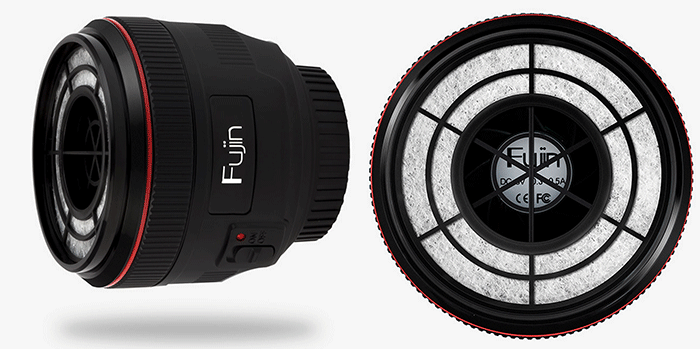 [/shoplink]
If you want to suck out all the dust inside your camera than you really have to buy the new Fujin Mark II! The cleaner looks like a lens and comes in Canon EF or Nikon F-mount which you can easily use on a Sony via any adapter. You can buy it on eBay [shoplink 40741 ebay]here (eBay Alex-Tokyo)[/shoplink], [shoplink 40743 ebay]here (eBay Alex-Tokyo)[/shoplink] and [shoplink 40744 ebay]here (eBay Alex-Tokyo Nikon version)[/shoplink]. And the Nikon mount version on Amazon (Click here).
PetaPixel epxlains how it works:
Inside the Fujin is a high-speed electric fan that produces 2.7 times more airflow than the first generation Fujin lens vacuum, changing the air inside your camera 6 times every second.There are special electrostatic filters that are designed to be inserted in the front of the lens. These attract the dust, dirt, and sand particles as they flow out of the camera chamber.
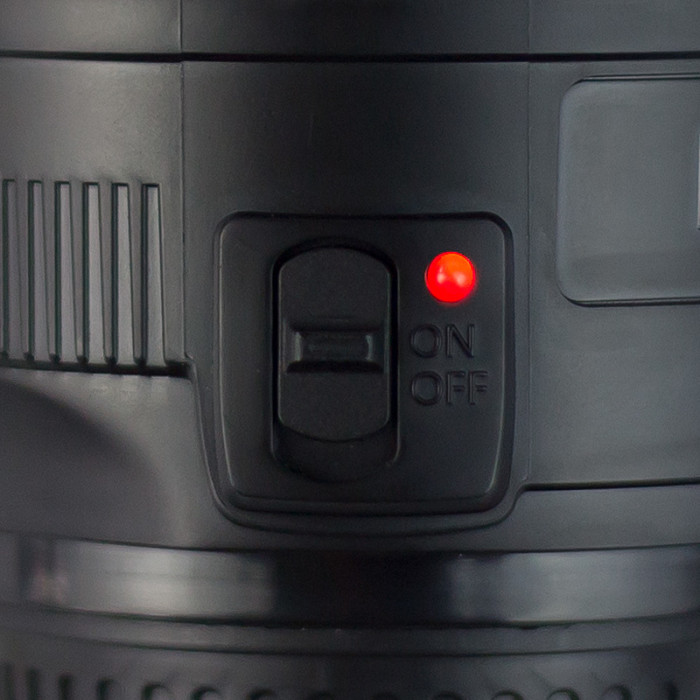
The Lens-vacuum-cleaner is powered by simple AAA batteries and there is a simple on off button on the lens to activate it. There are four videos posted by Fujin on Youtube to see how it works. More pictures below.
Order options:
Fujin mark II cleaner on eBay [shoplink 40741 ebay]Canon mount at Alex-Tokyo)[/shoplink], [shoplink 40743 ebay]Canon mount at[/shoplink] and [shoplink 40744 ebay]Nikon mount at Alex-Tokyo[/shoplink]. Nikon mount version on Amazon (Click here).
Fujin mark I cleaner on [shoplink 40753 ebay]eBay (multiple sellers)[/shoplink].
[shoplink 40741 ebay]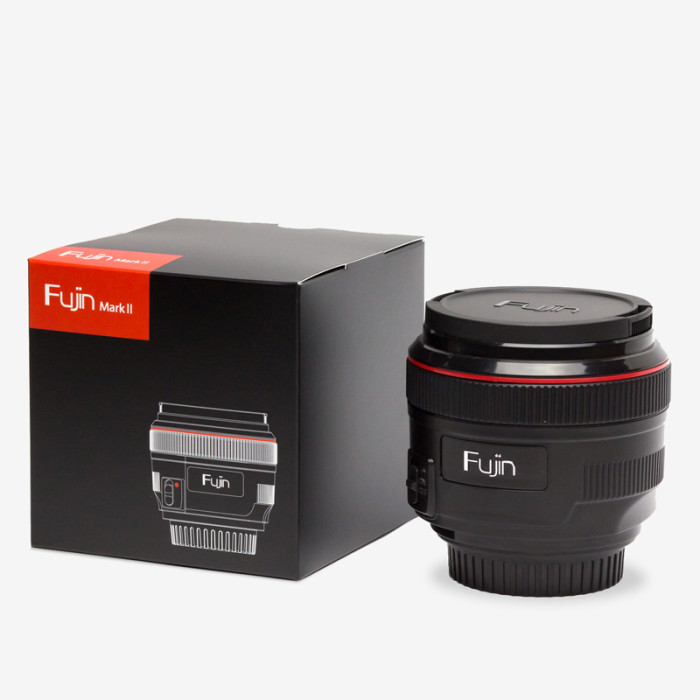
 [/shoplink]
56 Responses
No A-mount!
Proof that A-mount is dead. 😉
Couldn’t we use this adapter to mount the Nikon F mount version to an A-mount body? https://www.fotodioxpro.com/nikon-f-lens-to-sony-alpha-minolta-af-maxxum-dynax-camera-lens-mount-adapter.html
Sure but might make vacuum cleaner less effective. Can of air & IBIS has worked for me in the past.
Yeah, the little lens shaped vac is kinda neat, but it is kinda silly. Carefully holding a hose from a regular vac would probably work as good if not better also.
Even the vacuum cleaners need to be adapted in FE-land.
Now that’s funny!
Nikon F fits E-mount without any adapters
This is interesting. I just noticed that nikon lens caps work on E-mount lenses.
Is it 100%?
Good to know – Nikon’s F-mount would be a nice source for a cheap DIY playing around
Unfortunately I haven’t investigated in detail. Chinese body cap for Nikon fits my 5N albeit doesn’t lock. If the Nikon thing has protruding elements it won’t fit (because of baffles in E-moount) especially on crop cameras.
Wow, imagine how hard this thing would suck with a speed booster!
From their description, only the air going OUT of the camera is filtered? So you’re blasting unfiltered air into your camera, and then filtering it on the way out. Should work great if you do it in a cleanroom, but in any other typical indoor area, you’ll just be exchanging the dust already in your camera with new dust from the room you’re in. Wouldn’t it make more sense to filter the incoming air?
The description is wrong. If you go to their web site and watch the videos, it is easy to see that the debris is ejected out the center where there is no filter.
You got it backwards https://youtu.be/WG1AowlVuqY?t=91
If it is a vacuum…the air will not be going into the body, the air is sucked out.
Unless we’re creating an eternal vacuum inside the body, air will come in to replace air sucked out.
For nearly $150 it better be eternal.
You can safely guarantee that this is not creating a vacuum in the camera body. Firstly because no camera is that air tight and it would leak like mad (think of the lens mount if nothing else). Secondly, because to do so you need a vacuum pump, which is a wholly different type of device (and axial fan). Thirdly you won’t create much of an airflow to shift the dust with just the air in the camera body. Finally, camera bodies aren’t designed to have a vacuum in the sensor chamber and, in the unlikely event you could create a vacuum there, air pressure might dislodge something.
I think they just got their description the wrong way round. There’s no reason to filter dust on the way out. It’s on the way in that matters.
I think I previously saw a diagram on their site or petapixel that shows the filters working to reduce / filter airflow on the way in as you suggest.
That description is surely wrong. There’s no point in filtering air on the way out and every reason to filter it on the way in.
Samsung will soon come out with a better version.
after they close down the “camera, tv and so on” departments?
Are you astroturfing for Samsung, but just doing it really badly?
How would you ever know if this really worked?
It works if you feel it works *strikes zen pose*
Erm… the same way you know if your sensor is dirty or not…
This thing really sucks……………:)
Please stop thinkingaboutcocks
Sony cams suck…and now you can return the favor 😀
I wonder how many people will forget the cleaner in the camera and then take it for a shooting session hehehehe!
No adapter is going to give an airtight seal so it will reduce the effectiveness of this gadget.
Massively, depending on the adapter… Even in the best case, I can’t see this taking dust off the sensor.
F-mount fits in E-mount so no adapter is needed.
Yeah, I’m actually worried that it would bring in more dust by sucking air in from the edges of the adaptor.
wow, it has a red ring, must be canon L lens!!1
Now if Sony lenses didn’t suck any dust into them… My 50/1.8 got dust inside despite it’s has fixed anterior and exterior elements and focus-by-wire.
Maybe this will calm you down: http://www.lensrentals.com/blog/2015/06/i-dont-know-why-it-swallowed-a-fly-weather-sealed-lens-with-a-fly-inside
Umm no. This is expanding zoom with physically coupled focusing ring.
…
I know military lenses are filled with nitrogen and sealed, why can’t we have all nice things?
You should read the article more thoroughly. Not even “pro level” optics with pro level “weather sealing” is dust proof. Not even close.
“pro level” is not engineering solution. It’s a lot easier to seal internal focus, focus-by-wire 50/1.8 than zoom with multiple helicoids
Still, all lens manufacturer fail to seal their lenses. Again, read the frigging article. Every lens LensRentals has needs regular disassembly and cleaning, primes or zooms does not matter, they all get dust inside after some use.
The completely dust proof lens is a myth. Unless you come dragging with medical or military stuff. Those are made to whole different specs and budget.
I bought a waterproof camera for $60, Nikon S33 now sells for $116 at amazon. Doesn’t look like waterproofing is difficult xD
I worked at factory which produced military hardware and I didn’t see that waterproofing was difficult. Producing things like FF BSI sensors or ultrasonic motors is. Why they can’t seal a lens like sel50? Because they don’t want to.
Perfect. Now go to Sony and seek employment as a lens designer. How hard can that be with your comprehensive background. GLHF USW…
This appears to be a good product, though rather expensive. It would be ideal if it could be used simultaneously with the camera’s built-in ultrasonic sensor cleaning.
I take it that it doesn’t work with weather sealed bodies?
Why? It will surely have both (filtered) inlet as well as outlets. Sucking in dusty air through gaps in bodies would not be a good idea at all (and I doubt that the sensor/mirror box areas in camera do allow for such airflows due to the danger of dust).
I still don’t quite get how the thing works, the way it seems it sucks air in from gaps around the body and out though the front.
It is a battery powered filtered blower. It blows air into the chamber of the camera that enters via the big white filters on front, it is then expelled through the black center part. The idea is the air gets blown on the sensor and hopefully will carry the dust out of the body when it exits. The video seems to indicate that you should activate the cameras cleaning function while doing this. Also some stuff on opening the shutter but that would not apply to Sony’s newer cameras.
While it is an interesting idea it has some serious design flaws. 1) the outlet should be through a tube that extends further away from the inlet circle otherwise you are just circulating dusty air because 2) the white filter looks pretty piss poor, you need a very fine mesh for a filter if you want to avoid the very small dust/pollen that you are likely to have floating around you when you use this thing.
In the end I doubt it is worth using, I’ll stick to canned air and an occasional wet cleaning when needed… I would be afraid this thing would just result in more dust overall in the camera than not using it at all.
I don’t think this would work…
You should be able to do that. Just start the vacuum and put your camera in cleaning mode.
So – CaNikon fan’s adapting to Sony? 🙂
I’m waiting for the dyson edition.
Well, let me guess. Replacement “special electrostatic” filters are available only from the manufacturer, who recommends changing them frequently. Price of filter TBA.
Or dusty at least 🙂