







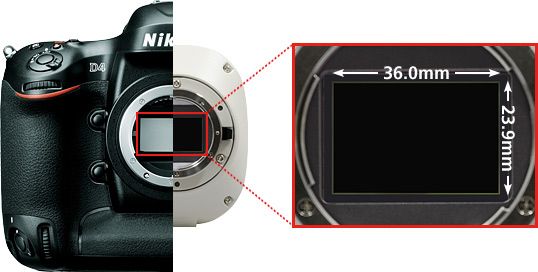
Many months ago I reported how Sony was developing a Full Frame monochrome sensor. Interesting enough Nikon just announced a new DS-Qi2 monochrome camera for microscope use. It has a 16.2 Megapixel Full Frame monochrome sensor “that features high pixel density, high sensitivity and low noise, making it an excellent choice for applications in quantitative fluorescence imaging.“. As you know “most” of the Nikon FF sensors are made by Sony so is that one a Sony FF too?
I hope we will get such kind of sensor on a real RX(?) camera soon!
Here are the sensor details:
Key Features
High Sensitivity
Detects even faint fluorescent signals
7.3μm pixels, high quantum efficiency, and very low read noise allow the DS-Qi2 to read in even faint fluorescent signals.

Excellent Linearity
Reliable quantitative analysis made possible
With a linearity error of ±1%, the DS-Qi2 is a superb tool for measuring intensities in fluorescence samples, including timebases intensity measurement and radiometric measurements.
High Frame Rate
Fast focusing, even with fluorescent images
With a high-sensitivity CMOS sensor and USB 3.0-based data transfer, the DS-Qi2 enables high-speed live imaging and image capture at up to 45 fps (1636×1088 pixels).
Low Noise
Acquires dim fluorescent signals with ultra-low noise
2.2 electrons read noise coupled with a large full-well capacity allows the acquisition of fluorescence images with very little noise and very high dynamic range.


LLC-PK1 cells expressing GFP-EB3 tubulin with low noise. Large linear full well capacity allows acquiring both the brightest and dimmest areas in a single capture.
Sample courtesy of: Michael Davidson, National High Magnetic Field Laboratory, Florida State University
Time-lapse Photography
Fluorescent time-lapse imaging through integration with NIS-Elements software

With a large field of view and pixel density, and low noise, the DS-Qi2 is ideal for time-resolved imaging applications.

Time-lapse images (every 1 second) of LLC-PK1 cells with GFP-EB3 tubulin. Each image represents the maximum intensity projection of the time-lapse, allowing visualization of the end-binding protein located on the microtubule plus-ends, and allowing tracing of the microtubule path.
DS-Qi2 captures an extremely large field of view, but still represents very fine details as demonstrated in this cropped time-lapse sequence from a large FOV image.
Objective: CFI Plan Apochromat λ 60x oil / NA: 1.4
Sample courtesy of: Michael Davidson, National High Magnetic Field Laboratory, Florida State University
0 Responses
Come on. Really? “As you know Nikon FF sensors are made by Sony so it’s 99% likely this one is indeed from Sony.”
Because the D4 sensor is Sony.
you are right.
The right sentence would have been: “MOST of the Nikon FF sensors are made by Sony”
But Nikon also buy his sensors from Toshiba (APS-C size) and have commissioned Aptina for the D4 FF sensor.
Ok, I corrected my sentence. Althaugh the 16 MP is “nikon” designed it doens’t mean it’s made based on a Sony sensor.
http://chipworks.force.com/catalog/ProductDetails?sku=NIK-22803_00738&viewState=DetailView
The 16mp is a Nikon design but the conception have been commissioned to Aptina, therefore not based on a Sony Sensor.
I thought it was Renesas that made it with Nikon’s designs.
can’t remember where I read it was made by Aptina but you can be right. Anyway no Sony’s involvement for sure.
The D4/D4s sensors are made at Renesas. Aptina doesn’t make FF sensors (so far). Nikon 1 sensors are made by Aptina.
thank you for the info (same for Hendrick the elder) didn’t knew.
the photo show a D4 which have a 16mp FF sensor, so it’s most likely that it’s the D4’s sensor that have been converted in B&W.
The problem is that the D4 sensor have been created by Aptina under the specification of Nikon.
Sony is not involved in any way and if there is a Sony FF B&W sensor it has nothing to do with this Nikon’s annoucement.
D4 and D4s sensor is made at Renesas. Aptina produces the Nikon 1 sensors.
Aptina makes the sensors for Nikon 1. D4 sensor is designed by Nikon, fabricated by Renesas.
Andrea, if you paste the images from Nikoninstruments.com already, why not include also an image of the actual DS Qi2 camera housing. It looks nothing like a photographer’s camera and your D4 picture is just completely misleading! There are plenty of full-frame CCD or CMOS monochrome imagers out there for use in scientific imaging and none of them is used in stills cameras aimed at photographers. Manufacturers are, for example, Sony, Fairchild or Hamamatsu, maybe Nikon does some of them themselves as well. I highly doubt this sensor will find its way into a “normal” camera
they are called “microscopes”.
The image is misleading? It’s the official start image of Nikoninstruments!
Ok, now I see… apologies. So it looks like a monochrome version of the D4 sensor. They do have a microscope camera (which does not resemble the D4 at all from the outside) based on the D4 color sensor.
ha ha haaa… wait a minute. Correct me if I am wrong but are all cmos sensors are black and white with RGB color filter grid placed over the monochrome cmos sensor. So how the hell could this be new? I am so tired of these crap companies throwing around the word “New”. Try doing something “new” stop milking customers with crap you released years ago, better yet stop crippling & bogging down cameras only to resell the un crippled version of what the camera should have been in the first place. (D750>D600, D810>D800/E, D4s>D4, all Canon cameras with their old ass sensors).
All I know (as a monochrome user) is that I would love to have a monochrome Sony A7m.
This Nikon cam is a scientific camera that needs a computer to operate and capture images. From the specs, it does look like a fabulous one.
It is worth noting that the base ISO is at 800!
It seems that something is moving on side of the manufacturers. Samsung is also jumping in the breach. http://photorumors.com/2014/09/28/samsung-is-rumored-to-announce-a-new-nx-achromatic-black-and-white-mirrorless-camera/
I will buy it if it shows up before an A7m.
I’d buy an A6000 with a Monochrome APS-C sensor, but that ain’t gonna happen. F**k Full Frame.
A Samsung NX 300 Achromatic with a 16mm f/2.4 lens is on my shopping list.
Back to manual focus (e.g. Zeiss Otus), back to monochrome, what’s next? Back to film, flash powder, manual light meters?
Glass plates. Ef facebook, etc. 🙂
push all the way back to cave painting
A new B/W sensor rumour 🙂
http://photorumors.com/2014/09/28/samsung-is-rumored-to-announce-a-new-nx-achromatic-black-and-white-mirrorless-camera/
You don’t really have to “develop” monochrome sensors, conventional sensors Sony makes are already monochrome before a filter array is put on top of it.
Exactly. Most likely the Nikon D4s sensor without Bayer filter, which explains the high sensitivity. No Sony involvement here.
But obviously Sony could ask Nikon if they can buy the sensor for an A7 or RX series camera, so Admin might be right.
lol… why would they need to if they have 12 mp sensor?
16Mp is designed by Nikon, their 24Mp for APS-C too. So, Nikon can only use Sony sensors in their compact cameras.
Not a single nikon cameara’s sensor with 24Mp is designed by nikon.
They are either disigned by toshiba or sony, and probably both fabricated by sony, since toshiba has shared fab with sony long time ago.
Wrong! D3200 and D3300 use a Nikon/Renesas sensor, D5200 and D7100 use a Toshiba sensor, and D5300 use a Sony sensor.
All Bayer sensors are monochrome when you take off the Bayer filter.
This is pretty cool. Wish I had one in college
why do we even need a dedicated b&w camera? Is there something better to use a monochrome sensor compared to a colour one? If not, ppl can just turn their photos into b&w in PP?
minipixels.net | Automotive Photography
Perfect for street photography
Even better for B&W photography 😉
There are many reasons to use a dedicated monochrome sensor. First, no interpolation (which means an extremely high resolution and micro-resolution as you are getting true information at the pixel level). Second, extremely wide dynamic range. Third, extremely high sensitivity. So performance will outstrip color sensors (even layered sensors like the Foveon Merrill, which I prefer to CMOS).
Once you get past the considerable performance gains–and make no doubt, they are truly considerable (see: Leica M Monochrom)–there are some psychological reasons that might make a photographer more considerate of the images that he/she is making and why he/she is using a dedicated monochrome sensor for the particular work they are doing. Same as a photographer choosing BW film over color film. Thoughtfulness about the colored filters that will be used. Basically, when a photographer is forced to be considerate, you’ll get better images. At least that’s what I’ve experienced.
I will be buying the first affordable monochrome-sensor camera. Hopefully it’s a Sony mirrorless camera.
A Monochrome sensor uses all the info. A color photo converted to B&W throws away info during conversion.
Did you know that Phase One makes a Monochrome Fifty (50) Megapixel Medium Format Back ?? Some photographers are willing to spend a lot of money for a Monochrome sensor. YMMV.
yeh, it throws away the color info during conversion which is info you don’t need anyways if you want B&W lol…if it’s throwing away info that reduces IQ then I see a point but if it’s not then I don’t see any advantages …my 2 cents
All sensors (apart from Foveon) are monochrome. They only become colourful if you add a color filter array. There is no need to any special sensor for this.
Exactly! The Leica M Monochrom uses the same CCD sensor as the M9, but without a CFA. So there are plenty of sensors to choose from.
I’m quite surprised Sony hasn’t invested in Professional grade equipment for specialized fields. Minolta AF had a 3x-1x Macro, and with recent Sensors from Sony, they could easily make their way into the field while offering in-house lenses for it.
“..while offering in-house lenses for it.”
LOL! Are you talking about Sony? Hahaha
Everything can be possible in the world of fantasy!