









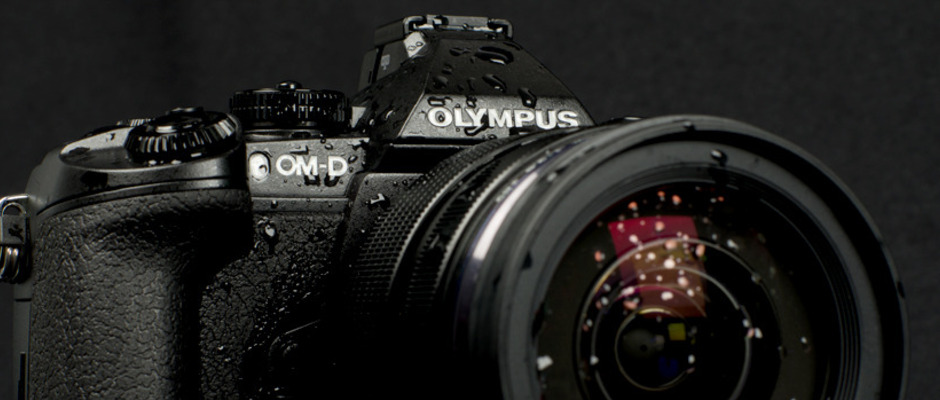
Future models of Olympus camera’s will have more video capabilities, says European product manager Michael Guthman. “Movie capabilities will be a top priority in the future”, Guthman writes in an email to Dutch journalist and documentary maker Vincent Verweij. The latest OM-D E-M1 has been heavily criticized for it’s lackluster video capabilities and apparently Olympus is addressing the issues.
Guest post by Vincent Verweij
With the introduction of the ‘professional’ OM-D E-M1 many users were expecting big improvements to the video part of the camera. Previous models had very limited video-features. But the dissapointing fact was that video did not improve. The photographic side of things did, but video stayed behind. And that’s strange, because Olympus has the best video stabilization on the market, with it’s superb 5-axis on-sensor system, that works with every lens attached to the body. It’s like having a steadicam in the camera, smoothing every move and even stabilizing the shot while walking. It completely eliminates the need for external stabilisation gear, such as gimbals and even tripods. The 5-axis stabilizer makes the OM-D series a very interesting option for video-journalists and documentary makers, such as myself, who often have to work handheld in unpredictable situations. One would expect that Olympus would cash-in on this unique technology, by adding features that are critical to videographers. But they have, as of yet, not done that.
The most important video problem in Olympus camera’s is the lack of choice in framerates. All other brands, Canon, Nikon, Panasonic and Sony offer a choice of 25 or 30 fps, some even 24 fps (which is the standard for digital cinema and theatrical projection). All digital Olympus models ever produced, including the OM-D series, have always only been capable of filming at 30 frames per second (the US and Japanese standard).
Why is 25 fps so important? Well, Europe is a PAL-country, so in order to show footage on a TV, or distribute it as DVD, it must be shot on 25 frames-per-second, or 50 fields, else it will drop frames, giving every shot a stroboscopic effect. But not only that. The PAL-standard in Europe was chosen because the European electricity system runs at 50 Hz. By using 50 fields per second, you avoid flickering of video when filming in artificial light. Even in daylight situations this can be a huge problem, for example a few fluorescent tubes in an office with daylight coming through windows, will ruin the shot. The fixed framerate of 30fps makes Olympus camera’s practically unusable for anything but amateur video in Europe.
There are other things which should improve, to make Olympus camera’s more attractive for video use, not just in Europe. The obvious one being a better codec and higher bitrates. The bitrate on the EM-1 is now 24Mbit/s in 1080p, only a slight increase from the 20Mbit’s on the E-M5. The E-Ms use H264 and MJPEG codecs, causing compression artefacts such as banding and blocks. What videomakers want is high bitrate, low compression recording with a codec that stores every frame, not just keyframes. Think ProRes or CinemaDNG. And ofcourse a 4K option in the future. Blackmagic are leading the way here, with a range of affordable micro-four third camera’s. They also have 13 stops of dynamic range and 4K resolution in the top-model.
The HDMI-port on the OM-D EM-1 now does live output, that’s great. But it can only output video with metadata overlayed on screen. Rendering it unusable for recording with a second, external recorder (with a better codec). Same story with audio. The EM-1 now has an audio input, allowing external microphones to be connected. Great, but the audio level can’t be monitored on the viewfinder and LCD, so you have no way of telling whether the audio levels are okay.
Next, a built-in ND filter like the Panasonic AF-100 has, would be absolutely fantastic. That camera has an internal neutral density filter that is essential for video recording. The dedicated dial on the camera body lets you adjust the setting in three steps with any type of lenses.
I asked Europe’s product manager for the EM-1 about the video issues. Michael Guthman replied: “As you know Olympus is a company which is coming from the photographic side of the business. Therefore our top priority is to develop cameras which fits perfectly to the needs of photographers. However we know that the movie functionality becomes more and more important and we are getting the same request from customers. Therefore we could ensure that we are aware of this. Movie capabilities will be a top priority in future.”
Let’s hope Olympus lives up to it’s promise. Most of these issues could most likely be fixed via a firmware update, on the existing EM-1 and EM-5 camera’s: 24 and 25 fps framerate, a better codec, HDMI clean output, audio metering. But 4K, ND-filters and higher dynamic range are things which would need new hardware. In the best case, Olympus will start with a firmware update so that videographers like me don’t have to wait until next year for an Olympus camera we can actually use.
Preorder Links:
Olympus E-M1 body at Amazon, Adorama and BHphoto, Amazon DE (via DL), Amazon UK (via DL), Amazon ES (via DL), WexUK, Topshot FI, CameraWorldUK.
Olympus M. Zuiko Digital ED 12-40mm f/2.8 PRO Lens at Amazon, Adorama, BHphoto, AmazonDE (viaDL), Amazon ES (via DL).
Olympus E-M1 with 12-40mm Lens kit at Amazon DE (via DL), WexUK and CameraWorldUK, Amazon UK (via DL), Amazon ES (via DL).
Olympus E-M1 with 12-50mm Lens kit at Amazon DE (via DL), WexUK, CameraWorldUK, Amazon UK (via DL), Amazon ES (via DL).
Olympus EP-13 Eyecup for E-M1 at Adorama and BHphoto.
Olympus HLD-7 Battery Grip for E-M1 at Amazon, Adorama and BHphoto.
Olympus LC-62D Metal Front Lens Cap for 12-40mm at Adorama and BHphoto.
Olympus LH-66 Lens Hood for 12-40mm at Adorama and BHphoto.
142 Responses
If only this can happens!
I’d say it’s much more likely for Panasonic to implement a 5-axis IBIS than for Olympus to implement all these “dream” video features.
As a 50/50 photo and video shooter, the lo
lol As 50/50 photo video shooter, lo the sole reason i won’t buy the EM-1
lol again, something is wrong with the keyboard. Anyway i won’t be getting the EM-1 solely beacuse of the 30fps video, it’s mostly unusable in Europe. Im sure Olympus are losing many potential customers. Fingers crossed firmware update makes things right.
So far since starting on the EP1 I have been left with a good selection of lenses and no body to satisfy my needs… I will not put down the PEN till I feel the next camera will be all I need it to be…
If Oly FW updates the EM1 to include 25p 1080 video I will be very very close to getting one… If they add 50p & 60p I will deffinatly get one… If they add better codec and RAW output there won’t be many people not getting one!
“OM-D E-M1 has been heavily criticized for it’s lackluster video capabilities and apparently Olympus is addressing the issues”
Come on, really? What, they only just realized?
Olympus know what they are doing. If they improved the video on the E-M1, what would they offer next time?
No. This is a calculated move in incremental steps.
Bring M4/3 to maturity with the E-M5. Items to improve from the Pen range include Video and AF tracking. (also keep the E-P3/5 price inflated to make the OMD range look good by comparison in their range).
Produce E-M1 – improve AF tracking to appease E-system users and make proper use of the 4/3 lenses. Interesting to see if that works out for them.
Next OMD? Improve video (but it wont be to Panasonic’s quality).
After that? New sensor? and on it goes……
They’ll have a new customer if they add a global shutter.
TOO LITTLE TOO LATE FOR M43. Mirrorless ILC is a DEAD FORMAT without profit. I Canon SL1and 70D will proliferate.
Nice try Panolympus… But you’re DEAD AS DISCO.
in a contrary actually M43 has better option for videography due to wider depth of field,.and more choices of lenses rather than limited canon aps-c
The killer feature especially from olympus body is the 5 AXIS IBIS , which something you can not have from Any canon body,.thx stupid troll
And that most m43 lenses have been built with video AF in mind, i.e. very low vibration and quiet – not many DSLR lenses can say that… let alone the ability to have motorized zoom (there is plenty of scope for mortorized zoom to do much more sophisticated stuff then it does currently).
I like disco.
Important reminder: Take your medication!
Ken Rockwell, is that you?
Coming from a guy that likes Canon, which BTW, has not improved video and even the 5D has this smushed lower-than-1080p resolution? If you really need high ISO, 5D really offers it but besides that, there is not much, unless, of course, you hack it to use the experimental RAW capabilities, which are really great.
and I like you too, think it’s either a 6 months firmware update (with at least 28 mbps, 24/25/30/60p) or it’s too little too late.
Disco speaking can you please google two guys in Tokyo/Flashworx? 🙂
BTW. Admin, 42/1.2OIS not gonna happen in this Dec.
Disco is not dead at all ! Just needs a firmware update !
Well, Olly fixed the issue in the E-M5 where 5-axis IBIS didn’t apply to video with MF lenses, via firmware. I hope they do the same with video framerates at the very least.
I recall that the issue wasn’t acknowledged by the Japanese side until the fix was offered, which is very Japanese!
no way – hey didn’t add the fokus peaking to the E-M5 for instance and so on. One will for sure have to wait for the E-M1 successor, and if one is interested in the new features, one will have no other possibility but to buy it.
May be they will even use a larger battery and an articulated screen *fingercross*
In a way its typical Olympus – bring out something, which is revolutionary with a pair of major shortcomings, and then bring out in a short time a successor. I am thinking about the E-P1 and E-P2..
Very nice post, thanks a lot.
I’m waiting for the very same things.
I believe that has something wrong with all that.
If the new Sony Nex show up with IBIS, my suspects will be confirmed.
http://upload.wikimedia.org/wikipedia/commons/f/f5/Weltkarte_der_Netzspannungen_und_Netzfrequenzen.svg
Makes one wonder how Olympus came up with 60Hz and not 50hz if they only had room for standard.
It just shows you that the US lives in a world of their own. 😉 😀
How many countries other than the US use 60Hz? Can you read the map properly?
I can see more than 2/3 of the world uses 50Hz.
That accounts for land mass though & not population.
Care to explain your statement within the given context?
“It just shows you that the US lives in a world of their own.”
They do. As long as they have murdoch and sky news they never need to look anywhere. See a world of their own. Luckily this does not apply to all. However visiting some US websites I am not sure about that last bit.
China, India, Europe, Australia, half of Africa = PAL and SECAM (France, Russia) is sort of PAL.
So yeah most of the world’s population
The conclusion is that the Japanese love the taste of sucking American butt. Mwhahaha!
The Japanese must be loving the taste of American gluteus maximus.
can you? There are not many. so why the question?
Why don’t you ask Olympus?
Someone pulled terada’s head out of his ass, hey?
Yawn, Olympus need only sell 5-axis ibis to Panasonic and Blackmagic and stop to scream.;-)
24 & 25p and clean output to a second monitor is possible, but audio level will very much depend on the hardware and if it has the ability to show levels to software. The codec change will also depend on the hardware and if it can handle something like DNGCinema. It is a VERY verbose format. If they can provide 24, 25 and maybe 60 using the existing codec which rips very good as seen by the Luminous Landscape review, we should be very grateful until the iteration of the camera.
Any firmware upgrade that you are talking about requires EXTENSIVE testing and Olympus has said they may not have the resources. They have also said in other interviews they looking at more and other WiFi connectivity including direct to PC.
Let us hope sales grow to give them more incentives
It will be spring of next year before we see a firmware update at the earliest.
2013. Sept. 25 – http://www.43rumors.com/mr-terada-talks-at-mirrorlessleassons/
Asked why the E-M1 lags behind the GH3 when it comes to video quality Mr Terada says: “We are concentrating on priority matters, specifically establishing nice still image quality. This is our priority as a camera manufacturer and our reputation on the market is for still.”
So who should we believe? Mr. Terada or Mr. Verweij?
+1
I think they’ll throw the dog a bone in the next model just to have some incremental improvement for the sales team.
A good article based on a weak source. I wouldn’t give too much credit on this european manager who said that stills are the top priority, and just after that video is the top priority too. Everything is top priotity for him. I would much more trust Mr. Terada who said one week ago that video isn’t a top priority for Olympus (which is a pity, but probably the reality).
But if you want to be frustrated again and again, hear the german manager…
Agree – Mr Terada is an actual engineer involved in production whereas this Euro Manager is some MBA whose role is sales, marketing and distribution within Europe. I highly doubt this guy has more detail than would Mr Terada…which is a shame, if they would release an upgraded video spec we could get back some forum space for discussion about photography rather than people begging and whining for video improvements from Olympus.
I think that it will take one or two years to Olympus start to make things right.
Besides better codec, audio metering AND control, HDMI output, let’s not forget about timecode and some other things.
Let’s say Olympus implement AVCHD 2.0 next, so it will have 1080p24/25/30/50/60 but from that to audio controls, timecode and more? It will take time, they say that they are aware? I bet they were aware for a long time and still, the E-M1 lacks a lot of things, a LOT!
I have more hopes of Panasonic offering a better IBIS on legacy lenses than Olympus offering a better video codec, HDMI output, audio controls, timecode and omre, just too much for Olympus.
If Panasonic can manage to make IBIS usable in video mode and a 2~3 stops effective, that’s plenty, it won’t look like a steadicam, but at least you have all the other things right.
Can Panasonic pull the organic sensor or at least the Micro Color Splitter for the next GH camera? But I would really like to see a GX7 successor with some of the GH feats, just like they did with the GX7. A GX7 successor with the same sensor as the next GH, IBIS, mic imput and even without the better codec would be a good balance between size and feats for me.
Either way, I think the next GH camera is going to be the top of the line Micro 43 camera.
Let’s be honest, it has all the bells and whistles that any Olympus cameras has, with superior video. all it needs is IBIS. If Panasonic can add in the same IBIS as the GX7 (Or better) to the GH5, with the option to use IBIS in video, it’s Game Over.
We all know Olympus isn’t focused on video, this was just some propaganda to sell some cameras, on the HOPE that Olympus will update the video. It’s not gonna happen. More lies from salesmen trying to push some cameras.
yes it’s probably talk from a sales rep who just wants to say what the customer wants to hear – anything that leads to a purchase is acceptable – never mind the truth.
however – bells and whistles is not what matters in a camera. Despite Olympus cameras often lacking desirable features – they are great tools, genuinely made for photographers – and that’s why they will remain popular and no amount of features Panasonic or any other manufacturer puts in their cameras will change this.
Not really the same, but why does anyone buy Leica cameras when they are easily surpassed by others? Features are just part (an important part) of what a camera is about.
It goes the other way around – why is the GH2 still popular? Features? Or perhaps it is because it was an ensemble of things, big and small, that made it really nailed video very well. And another camera that offers better specs might not readily replace it.
Each manufacturer has its own take on what a camera is about, its own focus – and as a customer, that’s ultimately what you should find out: looking beyond the specs, which camera has the right balance of elements for my taste, my workflow, my purpose.
And you’ll find that ultimately, seen like this, (almost) any camera can really be the best – for someone.
Great article. It’s like the Luminous Landscape review said, Olympus would sell thousands more cameras if they just included different frame rates. This would be my top camera if they just did a couple of the things listed in this article? Why, when the GH3 is awesome for video? Because of the 5 axis stabilization. Some folks have no idea how valuable that would be for documentary work. They have this amazing technology and are not capitalizing on it- they’re basically telling all video enthusiasts to look elsewhere. It’s crazy.
Here’s the deal, you can’t expect sane decisions from someone suffering from insanity. Olympus leaders are a few beers short of a six pack. They could have sold twice as many lenses if they would have made them black too, so what do you expect?
Well, they eventually got that figured out, and took my money for a black 75mm. I’m sure they will figure out the video too.
I like Oly’s philosophy of concentrating on one utility. Tools which are designed for a single task are more useful in the long run, although I can understand the appeal of multitasking to techies. The thing is, video seems to be an endless source of gripe. If Olympus adds more frame rate options, offers a low compression ratio and audio gain control there will be even more complaints about the lack of 120fps and 4K (which nobody really needs), poor video ergonomics and whatever the latest technology. And of course – price. Low budget videographers are hard to please. Perhaps not even trying is the best strategy.
+1, for many people you can wonder if they are really goin to make broadcast or cinema productions, with all theose wishes flying around. Like a photographer who insists needing a 32mp sensor, but in the end only publishes his work on internet forums,blogs etc. But its cool to have lots of overhead for such publising platform probably.
+100
the ones who want to make video production should buy a video cam, that easy !
Yes, why carry one device when you can carry two!! dumb
Nope, lamer, we’ll simply buy a Panasonic since they already offer good video and stills.
Ulli, you know better than to not make a strawman argument.
Absolute agree. 😉
+1
adding those details will make way to the high end user, and will prob blow away the GH3 and any other lower end serious video camera.
I wouldn’t be surprised if the em6 had better video already. After all, Olympus needs an incentive for people that upgrade.
I don’t understand how some of these companies can be so clueless., they have amazing opportunities to secure market share by catering to the video market yet they neglect it. And for those who are of the mindset that the video market is small compared to the photography market it’s true however consumers won’t both good photo/video specs and the video market is not as small as you’d think just look at the BMPCC even if BMD could make the cameras in sufficient numbers they would still have trouble keeping up with the initial demand.
Surely capitalising on your current tech (IBIS) and offering something that appeals to both photographers and videographers is a good option yet they actively make the decision to neglect it and then make statements about how they will do it in the future (because they’ve been criticised for being morons and leaving it out in the first place, people at Olympus actually sat around and decided not to implement something relatively simple that would boost sales).
Reminds me of the Panasonic G1, which was the perfect camera for video, but panasonic did not include video capabilities for some odd reason. A year or so later panasonic came with the GH1, but that was a model very hard to find many shops.
This is the most important post in the last 2 years on 43rumors. Olympus has been inexcusably remiss, and I’m not sure I’ll wait for them to do what they should have done by now. It is hubris, pure and simple. The photo side has been fine all along, it should have been video that got focused, remedial help. Indeed, where are the firmware updates for improved video functionality? Announce now Olympus what you plan to do with video, because I’ll be embedded in another system before you get your act together. It has been a waste to only involve photags such as Robin Wong and Damian McGullicuddy in new camera development, for if Andrew Reid had been brought in the E-M5 and E-M1 would have been stellar cameras on the video side as well. Olympus, are you deaf? Get Andrew Reid onboard! I don’t trust you’d know where to begin even if you wanted to improve video.
“This is the most important post in the last 2 years on 43rumors.”
Perhaps in your mind
Scott is right. It will certainly increase camera sales and adds great resale value to the E- M1 even if many of us owners don’t use the video. Just take a look at the price of a used GH2. Case closed.
If this post is true and Olympus does lift their game when it comes to video (& soon), then YES, this *is* the most important news on 43rumors.com in the last couple of years.
>Next, a built-in ND filter like the Panasonic AF-100 has, would be absolutely fantastic.
Yes, but that implementation would require way too much space. I hope for a different solution that fits into these small bodies.
not to mention dulling those pdAF pixels
5axis IBIS + 1080p@60fps + good codec like prores or GH3 video bitrate please !!!!
Sony took the best out of Olympus (5axis ibis) and now will release that videographer camera very soon… (I hope)
But wait! The Sony will be mirrorless, and will therefore have such a Shutter Shock that it cannot be used: all the images wilk be horribly blurred!!
Sony has (optional) electronic first curtain shutters in their current mirrorless line… shutter shock is just a memory at this point.
That’s an error , ealier or later.
Mr. Terada says focus on still quality.
Are they talking to each other?
I believe Terada.
Terada may have meant the focus with the E-M1 is photography but that doesn’t rule out that future focus will/can be on video.
It would surprise me if there was a fourth line of O-MD out in 2014-2015 that was videocentric like the Panasonic GH line
Line 1 The E-M5
Line 2 The E-M1
Line 3 below E-M5 ( no EVF or weather sealing) coming in 2014 maybe?
Line 4 videocentric, coming in 2014/15 maybe?
About time…
I do not think so….
If videocapabilities is disturbing the stills output then why have it at all?
So Oly does support NTSC (somewhat lackluster) but neglects PAL.
Doesn’t make sense, never did. PAL has more users.
Casual users may not care or notice the lack of PAL support. It’s a silly restriction from Oly. The sensor has the capability.
It’s like having a car with a very powerfull engine and the worlds best suspension that you can not take racing if you wanted to because it’s tuned for best fuel economy.
Maybe Oly should put out a E-M1f just to prove they can or just let the hackers community have a go at the code.
I’m from Europe and I won’t buy EM-1 (expensive camera) without video improvement (via firmware) – 25/50.
+1
I am a still shooter and occasionally shoot some video. I take the 5-axis IBIS than having a higher bitrate camera without any stabilization to avoid taking these shoulder mount rig.
https://www.google.com/search?q=video+camera+shoulder+mount+stabilizing+rig&client=firefox-beta&hs=CDE&rls=org.mozilla:en-US:official&tbm=isch&tbo=u&source=univ&sa=X&ei=69FSUpSDB8qxrgecuYDgDg&ved=0CG8QsAQ&biw=1360&bih=623&dpr=1#facrc=_&imgdii=_&imgrc=6pka2gXZp7JTKM%3A%3Bpyh94LsPob7BeM%3Bhttp%253A%252F%252Fi.ebayimg.com%252F00%252Fs%252FMTYwMFgxNTM5%252Fz%252F4A0AAOxy2YtRsHXR%252F%2524%28KGrHqJ%252C!ngFBh!8-0YZBRsH%28Qlkdg~~60_35.JPG%253Fset_id%253D880000500F%3Bhttp%253A%252F%252Fwww.ebay.com%252Fbhp%252Fvideo-dslr-camera-rig-stabilizer%3B288%3B300
or maybe this too
http://www.imaging-resource.com/news/2013/09/30/keep-your-camera-super-steady-with-the-chicken-based-galluscam-spoof-video
I’m happy with OMD-video, and I use also 3xGH2 bodies everyday.
PAL counties requre 1/50 or 1/100 shutter to avoid flickering.
That’s all. If you not deliver video to TV broadcast, you can make movie ft 30p or 29.97p without stroboscop effect. All DVD-players, TV-screen and PC are multi-system.
You can edit all at 24p or 25p sequence if conform all source clips to 24p or 25p. At that case you can get use extra frames for slight slow motion rapid.
Join our Facebook OMD-video group.
http://www.facebook.com/groups/omdvideo/
F I L M!!!!
OLY just jump to 10 bit and 24p 25p 30p 50 p 60 p
that is ist…. JUMP!!!
if not i will buy on this PRICE
one BMC C Poket = filming
one lowprice Nikon d3200/ canon d600 = Photo
most (?) important thing this post is missing: the lack of focus peaking in video. handheld shooting with manual lenses is possible becasue of in body IS, but focusing manually is crucial with f0.95 for example, but how, without peaking? with the E-M5 I can get rid of any flickering shooting at shutter speed 50 or 100. and I dont care about the bitrate if the image looks still better than with my hacked GH2.
+100
agree… i’ve experienced this more then enough…
higher bitrate so macro blocking artifacts can be avoided when filming any kind of motion.
I find I don’t need that focus peaking when using CV 25/0.95 with GH2@VK.
So if I was asked to suggest fw updates:
– higher bitrate
– 1080 50/60p
– fps
– make sure SDXC interface can utilize Sandisk ExtremePro 95 MB/s
– turn sharpening (REAL) off in movie mode
– introduce new picture style: call it video; flattest possible image output.
If that fw happens before GH5 (a raw video camera according to some ;)) I can think it (EM1) over.
Nice Post to sum up some needs of broadcasting video. Still I don’t believe that Olympus will focus on video soon. I talked with terada on last weekend on a promotional event for the e-m1. And he is really nice and professional, and he said that it’s not planed to focus on video in the near future… But Hey just to give the video guy a some hope-at least they are aware of the ntsc/pal problem, as the light flickering is a problem for casual non professional videos as well.
Oh and the”other” thing that a few people yell about: there is no plan in full frame at the moment. He even laugh that some people got his statement this way, a he clearly said that there are no plans, but nobody in electronic business can say for sure what’s in 5years uptodate-so nobody can exclude technology.
“he said that it’s not planed to focus on video in the near future…”
In that case I’m slowly moving out from m43
Why on earth would you want to leave m43 over video?? As m43 thanks to Panasonic and Blackmagic Design have the best system out there for video!!
(well…. unless you’ve got a boatload of money for say an Arri, then it is a whole different ballgame however)
So, how do you activate the live HDMI out? Seems it’s for play back only…
The article is good and ticks most of the boxes. What is important is not that the Olympus cameras outperform the GH3, but they have a reasonable selection of frame rates and bit rate options. The video quality from most Canon DSLRs is not too brilliant, with lower than expected resolution, moire, and aliasing. Yet pros and enthusiasts have embraced Canon DSLRs for video shooting. That’s because they have a good selection of frame rates and a reasonable bit rate.
There is no excuse for the lack of video options on the EM-1. If Olympus simply opened up their firmware, there is a whole army of video experts who’d probably give the EM-1 some much better video, for free. This is after all what happened with the Panasonic GH2, and Magic Lantern for Canon cameras. In other words there are no shortage of video experts who would have helped with a much better video implementation in the EM-1. So the only question is why didn’t Olympus use their expertise. Thom Hogan has written quite a lot about strange insularity of the Japanese camera manufacturers who refuse to listen to outside advice. They persist in producing cameras with annoying deficits, which could easily have been much better cameras, if only they had consulted more widely.
A problem I see on forums etc, is that Olympus m4/3 users say I don’t use video, it’s of no interest. Unfortunately Olympus appears to be listening to this. However, just because many old style photo enthusiasts who post on forums, have no regard for video, it serious hampers who will buy a supposed professional camera, with such limited options.
It really does hugely limit the EM-1’s appeal as professional camera. A very large proportion of working professionals now use video to some extent. Clients will request specific frame rates or formats for distribution. Professionals won’t make a fuss about the lack of frame rate options and a higher bit rate on the EM-1, they will just look elsewhere. That’s it with professionals, it is tools for the job. It’s not like enthusiasts that bellyache. A lot of pros would have looked at the EM-1 for its stabiization, seen the limited frames rates, and simply look elsewhere. If anyone looks at the video and filmmaking forums, this is exactly what happened. There was a lot of interest, they saw the limited implementation, and then simply forgot all about it and looked elsewhere.
Canon made exactly the same mistake when they brought out the 5D mkII 5 years ago. They simply put 30 frames per second video in it, so photojournalists could also take video footage. It quickly became clear that although many loved the video, the 30 frames video was highly restrictive to those using video. So in a well known series of events, Canon provided further frame rates and video features by firmware update, and the rest is history. Canon now produce movie cameras and lenses, and have a headquarters in Hollywood, even though 5 years ago they got it wrong, but they learned from their mistakes.
So how come the 5D mkII example is so well known, it happened 5 year ago, but Olympus don’t seem to have noticed? The simple fact is that a pro-camera with 30 frames only video, is too restrictive a tool for many working professionals, who will simply go elsewhere. The other manufacturers soon cottoned on to this, and most pro stills cameras used by working pros, now have a lot of video options. It’s only niche producers like Leica and Fuji that have ignored this. However, clearly Olympus has much bigger ambition to produce more mainstream cameras. So why seriously limit the amount of pros who will use the EM-1 professionally, by unnecessarily hamstringing the EM-1? I am not persuaded by what this European manager says. Yes it is sensible, but Olympus have had 5 years to develop what is little more than software for the EM-1, as the hardware is clearly capable of far more. The failure to do so is incompetence.
Well written!
Developping software isn’t an easy task. It needs programming, testing (including non regression tests) and costs a lot.
Terada explained here ( http://www.43rumors.com/more-terada-interviews-no-silver-e-m1-coming-we-do-not-exclude-a-full-frame-future/ ) how Olympus developped E-M1 (and it’s probably valid for other cameras): they worked for 3 years on the code without the sensor in hands (and we can guess that specs evolved quite a bit during those 3 years). So they worked by “specs”, building a virtual camera, and designed their truepic chip and firmware for months on that “modelized” camera… And we all know they were working on E-M5 and E-P5 in the meanwhile…
Maybe they lack engeneering power, maybe they lack money to invest in developpment, but it already took them 3 years to bring TruePic VII to life focusing mainly on “still photography”, I can’t imagine how long we’d have to wait for upgraded video capabilities on the same hardware…
We may call it a “marketing mistake”, but they probably thought it was the smartest move for them (based on economical data we don’t have).
SteB:
Well done.
It’s not just the pros who want to embrace video: it’s “rest of us.”
My niece got into photography two years ago, guess what her favorite pastime is now?
Video is the new photograph!
To delve into the 5D2 situation a little further, it wasn’t so much the 30fps restriction that caused consternation as it was the “automatic” nature of the camera. The framerate was a problem in that it was *true* 30fps, which caused audio sync errors in some productions (30fps in NTSC is actually 29.976fps since the advent of color). The major issue was that camera aperture and shutter speed were completely automated, which caused a myriad of problems with light flicker indoors, and random DOF shifts between shots. I shot a scripted video at the time using the “hack” of half-mounting EF lenses so the camera had no choice but to shoot at the aperture I had dialed in before dismounting them (an old EF trick). Getting the shutter speed to not flicker was trial and error, and caused a bit of frustration from the actors left waiting for their cues. A year later the first firmware update addressed the manual-control issues, and the majority of problems (including the 30fps-is-not-30fps) were fixed. The 24fps option came along a bit later, and was probably important to those shooting in the industry, but at least the video potential of the camera had already been opened. 25fps was also enabled when you have the camera set to PAL output… but I am not sure at what point that setting appeared.
Well written indeed, really hope somebody with influence in Olympus just might happen to read this!
Olympus, if you look at Panasonic and think they’re too far ahead with video to bother, then don’t…. look at Canon instead! Easy enough to catch up with them 😉
And likewise, if you opened up your firmware you’d see huge long term pay offs!
Just look at the top two ruling the hybrid video world: Canon and Panasonic, both have people outside those companies who made them the top choices which they are today. MagicLantern and PTools, wouldn’t be the same without them.
Even Nikon has NikonHack which is making some serious headway and is looking bright for the future.
Olympus however is way behind here, and needs to lend a bit of help by opening up and not putting up barriers to outside people assisting in their own time, otherwise they won’t.
Some of you guys are reaching for the sky. Do you really think that you should be able to buy the capabilities of Red in a still camera that sells for 1,400.00 ? Geeesh….
The only mistake that Olympus made in regards to video on the E-M1 was to not include PAL. I would think that a firmware/software update could expand the offered video frame rates to 25/30 and 50/60 1080p (maybe only 25/30). Perhaps some improvement in bit rate but many a thousand dollar consumer camcorder have no better and it’s pretty silly to expect more from a 1,400.00 still camera.
Times have changed, look at Blackmagic. Even lower end Lumix G6 does much better video.
Just because people are asking for better bit rates, PAL formats does not mean that they are asking for RED.
Most cameras today have PAL format. Even most cheap Point and shoot cameras have PAL format capabilities.
Except Olympus who still hasn’t been able to catch up with this.
It was their choice. They chose not to include it.
Against the users’ needs.
Why don’t you people just buy a real video camera?
http://www.red.com/products/epic
And sure, most of us have 17,000,00 to fork over for a cinema camera… You sure are bright.
InDetroit,
Why don’t you people just buy a real photography camera instead of demanding better pictures from Olympus?
http://www.hasselbladusa.com/products/h-system/h5d-40.aspx
The Hybrid is the future, not the video cam or the still cam.
Olympus: please fix it in the E-M1 if possible.
The same way we buy a 5D for $3K and it’s antiquated in 2-3 years or at least lost all of it’s value that is your RED EPIC etc.
Time marches on. Once upon a time a basic calculator cost $1000 and now you can buy them for $3.
There is no good reason ALL the camera companies can’t up their games in video. Olympus finally is learning that they are losing heaps of sales due to this. Hopefully Fuji will have a eureka moment about the importance of shooting video soon too. Hopefully Canon will offer a mirrorless cam with some balls soon.
The model for video capabilities should be the Panasonic GH3. Now I own one and love the video and the features but its as big as a 5D so that needs to change.
I guess the priorities are changing the cosmetics of these cameras and selling us new ones every year as opposed to any significant innovations just tiny ones that get us 20% closer to what we want.
High MBPS write speeds (easy, ask a hacker)
Mic-in, head phone out jacks
multiple frame rates
MOV files not MP4..yech!
manual audio level controls
not too hard or too ambitious
I want my… I want my… I want my 24p!
Olympus gets its chips from Sony, it doesn’t have the resources to fab a sensor. Sony decides what features Olympus gets, from now until forever. In other words, no Olympus products will be allowed to compete with Sony’s worst product for video. That’s just the way it is, Econ 101.
I don’t know about the sales numbers but Olympus have designed their own sensors and had them fabbed by Aptina {CX} and Toshiba { D5100/D7100} the V1 was on par with the larger 12mp mFT sensor and the D5100/7100 is the best current APS sensor on the market.
sorry that should read Nikon have fabbed
Maybe 5200 and 7100. I wonder if the Pentax K-3 will go have a Sony sensor…The K5-II(s) had a Sony sensor and it was better than the D7000 in IQ and ISO performance…Too bad they have old and modest lenses…
Sorry , cocked that up lol yes it was D5200 and D7100.The Pentax K5-II difference was down to a slightly lower base ISO and even then it was only a 1/5th of a stop difference, they also had some form of RAW smoothing going on at higher ISO.Though great cameras for the money.
Olympus is getting the sensor from Sony, but they are probably writing the software on their own.
Otherwise Oympus cameras would be just re-branded Sony cameras…
bit off topic but fotohanskeuzekamp mailed me that a batch of E-M1’s have arrived in their shop and they offered to put one aside for me.
We shoot high end wedding video. We have switched to 30p and most of my competition has also switched. You dont need 24p in the camera.
Not holding my breath on any worthy updates.
Most Micro Four Thirds and APS-C users are amateurs and they shoot video only for family occasions, travel or street performance. They do not broadcast their videos. So what’s all the fuss about only 30fps? Buy a Blackmagic Pocket if you want pro videos. It works with mft lenses!
There is a sliver of truth in this, I am quite happy in ‘broadcasting’ my first videos through flickr.
But the gist of a photographer, i.e. an enthusiast, has always been experimentation, so why not offer it in video?
Even, I wonder if Time Lapse belongs more to Stills or Video. Certainly Oly deserves to keep an enquiring mind, since lifestyles are diverse, and image so pervasive.
I see it more in the realm of documentation: to show the movement of an urban environment can be as important as showing its geometry or inhabitants.
The Blackmagic does not have IBIS. If panasonic had enabled IBIS for video in the GX7, i would have bought it right away, but they didn’t. I need 25p, because my other camera’s record 25p.
It like saying why do you need IBIS, just use a tripod.
That fuzz is called 50hz power-cucle and interference with artificial light. That fuzz is called spending wasay too much time (and throwing away quality) when wanting to combine it with video recorded by approx every other camera in that 90% of the world that uses 25/50fps. Yes, that matters, ESPECIALLY to amateurs as they are way less likely to have the knowledge and tools to work around this.
Thinking this is only relevant to professionals recording video for broadcasting? Come out of your ivory tower and take a look at the real world.
I am no video expert nor do make any claim to be, for the average man in the street taking family videos , kid school shows,holidays,family events etc. Edited on a PC and burnt to blu -ray for playing on a 50-65inch TV as a UK shooter just what do I lose .I am not trying to be funny,I have made multiple videos from my GH2 and from my E-M5 and other than being a lot steadier I cannot see any great difference.
If you shoot mostly outdoors, and keep things at 1080p30, nothing.
Indoors can be a totally different story when getting to deal with artificial lighting. You can get flickering and banding effects.
Or to quote the article which actually describes this issue quite well:
“The PAL-standard in Europe was chosen because the European electricity system runs at 50 Hz. By using 50 fields per second, you avoid flickering of video when filming in artificial light. Even in daylight situations this can be a huge problem, for example a few fluorescent tubes in an office with daylight coming through windows, will ruin the shot. ”
That is a well documented and understood issue that goes back to the early days of TV, and still applies today.
More knowledgeable videographers will tell you you can usually work around such issues by proper choice of shutter speed, and that indeed works, but is something I’d argue is beyond what most people know and want to know about recording a bit of video of some family event or such, hence I’d consider addressing this especially relevant to that ‘target audience’ also, and a bit less so for the ‘professional videographer’.
Off topic: Steve Huff has beautiful words for m43 format and GX7.
Yes, I just read them, and I concur: m4/3 is the Leica of the 21st century.
Sony which aims at being the FF substitute has a long way to go, And it might be overkill:
http://m43blog.com/new-reviews-of-sony-rx1r/
Never forget that Leica’s advantage was blazing operation compared to View Cameras. m4/3 has LiveView, IBIS and FAST AF, while having marginally the same IQ of a Leica.
Let’s see if Sony can compete with the A7, and LENSES.
That should shut up some mouths (shallow dof & fullframe i.e.).
I’m not so positive about Sony 7 and 7r: the first has PDAF which I don’t need, the second lacks AA filter and PDAF. Both do not have IBIS, both are not that cheap, both have brand new sensors. And the only known lens is a 35mm f2.8, compact but not so fast as I’d like. My main doubt is: how will they work with legacy lenses? Only time will tell.
Right now, as you I think, I have found the best compromise in m43 gear.
I think referencing pro mFT sources as some kind of “Gee, look mFT is the best choice” is pretty silly.It is not hard to get fanboys to sing the praises of their chosen love. Who would have thought a fixed lens FF compact wasn’t as flexible as a system camera with multiple lenses.
“”I’m not so positive about Sony 7 and 7r: the first has PDAF which I don’t need, the second lacks AA filter and PDAF. Both do not have IBIS, both are not that cheap, both have brand new sensors. And the only known lens is a 35mm f2.8, compact but not so fast as I’d like. My main doubt is: how will they work with legacy lenses? Only time will tell.”””
I think you are missing the potential of these Sony FF options, for people who already own FF glass and do not mind manual focus. Just about any FF lens ever made can be used on an appropriate adapter, manual focus is a doddle with the Sony focus peaking.
Contrary to what the mFT mafia would have us believe there are no shortage of high quality cheap relatively lightweight FF primes.The Nikon F1.8g range is a good case in point, obviously high quality fast zooms will always be heavier but compared to mFT glass of the same nominal aperture you get better DOF control, better DR, better high ISO, and with the 36mp option better resolution. I am seriously tempted 7R 36mp no AA , a favorite wide prime, a fast fifty and a short-tele 85-135 would be capable of amazing results and not too heavy.
The advantage of a 36mp FF are many with the potential for incredible results.It wouldnt totally replace my mFT kit but man it sounds promising
mF7i7, I own M mount lenses, and look forward to use them at full potential, still I will believe in Sony FF when first tests will confirm the new 7(r) have no issue with legacy lenses.
I have written that m43 is the best compromise for me, what’s wrong with that?
I can use f1.4/1.8 keeping the whole face on focus when taking portraits at actors, I can use at my advantage the double DOF when shooting landscapes, and I think this format has a great selection of lenses.
That’s a fact, to me. Is it an expensive format? Yes, but I own the gear I need and I won’t buy a new mft camera just because it’s the new version.
I treat gear as gear, and I don’t care at all about brands.
About the fixed prime lens you mentioned: I have always said that the only fault of RX1 is the missing built EVF, otherwise I would have already bought one (I’m keeping an eye on an used one, let’s see what I can do).
“m4/3 is the Leica of the 21st century.”
Yep, small overpriced niche with a bunch of mad fanboys defending everything the company does to the death , spot on
Man do i hate Olympus, this video nonsense makes my blood boil every time i think about it. I’m a tactile person, i like the feel of the camera and the lens in the hand, and i like metal. The Em1 is basically the best build of any professional camera on the market. That matters to me. And for that reason alone i forked out a bit over 3 thousand $$ for an OMD Em1 with 12-40 kit and a 75 f1.8 in black AND a $70 lens cap for that sucker. I’m a 50/50 stills and video shooter. This camera was not the best choice on the market for the video side of things. But the GH3 i felt is more compromised overall due to the poor EVF and overall lower build quality in the body and panasonic lenses. You buy into a system for the glass. Olympus has the glass i want to be using for this camera and beyond. I think sometime soon someone is going to make a professional 4k m43 video camera based on one of the Aptina sensors, and when that happens that will be my professional video solution. At the end of the day Olympus was never going to offer best in class video specs on this camera. I can live with 8 bit video. I can live with low bit rate codecs. I can live without 60p slow motion. I can live without audio levels. I can live without 4k and raw and all the pipe dreams people may have when they put a wish list together of the perfect camera. But one thing i never thought i’d have to live without was my PAL framerate. I live in a PAL country and i shoot everything in 25p. This is for my personal use, and its my personal choice. Not having that choice in what is undeniably a camera made for very serious enthusiasts which aspires to capture professional users too… its basically beyond my comprehension really. It seems like the easiest thing in the world, you have 30p, its 5 less p.. pretty simple. Like i said its beyond my comprehension that this can be a deliberate omission and the only thing possible to feel about it is anger, and lots of it. But i made the decision to buy the camera, and invest in glass to go with it and thats that. Olympus got my money, what they won’t be getting is brand loyalty. And given the fact that i went to a fair bit of effort to find a dealer to take my money the moment they were open for pre-orders so i could ensure i got a camera first up, and now i find out the 12-40 has been delayed indefinitely meaning i’ve got nothing and there’s people everywhere who went body only with camera’s in hand. The moment Sony, Canon, Nikon, Blackmagic, Panasonic or anyone announces their next camera they have my attention. Something better comes along i’ll dump that Em1 i’ve paid for but can’t get, and the glass, and put the money toward the next thing.
Please insert some line breaks and use that odd thing called paragraphs… This is just a huge wall of text, and while you seem to have something to say, and I really tried to read what you have to say, I don’t get beyond the 3rd line of text.
Panasonic video demo of their 5-axis “HYBRID O.I.S. +” used for video (off/on), as implemented on Panasonic ZS30(TZ40); seems to offer a performance more or less like Olympus 5-axis IBIS:
http://panasonic.net/avc/camcorder/features/hybrid_ois/
Anybody know if something something similar can be expected for Panasonic m43 cameras?
I have a panasonic TM900, which is a 2 year old model. The Hybrid OIS is fantastic, much better then the OIS of the 14-140 m43 lens. I wished it would be build into a m43 camera. Sometime this Hybrid OIS does not do what you want, but then you can turn it off, but for run and gun video I think it is fantastic.
The problem with the TM900 as with all camcorders is controls. It does not have any FN buttons and Custom settings, the EVF is very bad quality, what i miss most is a exposure and focus lock button. It has all the manual controls but you have to press many buttons to get what you want, and afterwards you have to press many buttons to get back.
Thanks. From what I understand the new Hybrid OIS + should be even better than Hybrid OIS because it’s now 5-axis stabilization, according to Panasonic. I also hope Panasonic eventually will build good image stabilization for video into m43 cameras.
This is the moment in time where the industry needs to move in a new direction and take their software open source. Olympus are great at hardware. Woeful at software. There is little doubt this camera has all the hardware it needs to do basically all the things people are asking for here. User selectable frame rates, multiple codecs, higher bit rates, most probably raw. There isn’t a camera on the market that once hacked was found to be exploiting its full potential. These manufacturers are so caught up in the arms race of making better sensors, better processors, better bodies that by the time they get to market cameras are shipping with firmware that its tempting to call an afterthought. It just seems they don’t allocate rescources in that direction. Its a pretty broken system when a group of people can come along and supercharge the performance of a camera like the Gh2 for free in their spare time. There is a market for these peoples services. i would without question spend $100 on firmware to open up my Em1. For the ungodly privilege of shooting 5 less p and having 25 frame per second video that matches my country of origin and everything else i’ve shot on any other camera in the last 5 years i’d give Olympus and extra $100. Hell i’d give them $500, just to have a camera out of the box i’d be able to think of as not being crippled. If Olympus opened up their code tomorrow for the purpose of 3rd parties doing the work they are unwilling to do then by the end of the week i’d be willing to bet some 15 year old kid in the Ukraine who like to hack could take $100 off me and probably another 1000 others. 100k for a few lines of code some genius forgot to, didn’t have time to get into the final camera.
At the end of the day yes i think Olympus and all the others are leaving a lot of money on the table through being undisiplined and neglecting to get the best of of their own products. If they had it in them to swallow their pride and make it possible for dedicated 3rd party specialists to get in there and do what they are doing with the gh2’s and 5d’s of the camera world then the worst thing that could happen would be they’d probably sell a whole lot more camera’s and field a whole lot less complaints.
Having dealt with, supported, made money with open source software for the last 15 years, I’m not so sure you understand this correctly, but lets first address the ‘supercharge the camera for free’ claim.
What you don’t seem to understand is that in order to guarantee things, you design software well within the limits of the hardware. That always leaves room for squeezing out more, but that doesn’t come for free, it generally comes at the price of things like heat production, no longer being able to guarantee certain timing constraints etc. This can be a desirable choice for a user, but not something that you can support as a manufacturer that easily.
Second, you seem rather unaware that all high-end cameras are real-time systems, and while open source has produced a lot of wonderful things, a reliable real-time platform isn’t one of them (and no, Linux isn’t anywhere near a true real-time platform).
Opening up to the point that you don’t create huge hurdles for people wanting to hack the firmware? Great. Document it to the point that you make it easy for people to explore and make their own modifications? great, but a platform where you cannot guarantee certain results in certain ways that are fixed and can be put in paper is not going to work very well if you want to sell a professional tool.
Tinkerers, technicians, and people trying to do things on a shoe-string budget will be absolutely interested in modifying things to their desire. A professional is mostly interested in tools that work in well documented ways and produce predictable and reliable results.
I am most certainly aware that software should be designed within the limits of the hardware. What i am advocating for, whilst also knowing no Japanese tech company would ever consider it, would be a controlled access to professional third parties who can make money providing real firmware improvements that are within the limits of hardware.
What i am not interested in is going beyond those limits and melting sensors and bricking camera’s trying to get 4k raw off the sensor into SD cards at 120fps, but rather smaller leaps. The EM5 and GH3 share the same sensor, Olympus’s video implementation is 30p only, Panasonic 24, 25, 30, 50, 60p. The canon 1Dc is the same as the 1Dx and shoots vastly improved video, up to 4k, on the exact same hardware. Canon charge 6 grand more for that camera just for software improvements. The Em1 that shoots 30p is most certainly capable of 24, 25p. The differance in not in what hardware dictates these camera’s can’t do, its in what software dictates they can. Whether or not Olympus intentially cripple these camera’s to leave room for future adoption to drive sales or its just a case of not having the rescources to get more features in doesn’t really matter to me as a consumer.
All i know is i have paid a fair chunk of money for a camera that can do something i want it to do and it doesn’t. If i can’t pay Olympus to give me features i want, which are completely reasonable, it would be nice if there was someone who could provide that service for me.
Actually i’ve just given myself a great idea.
Why don’t Olympus copy what canon did with the 1D X/C??
They’ve launched the EM1 now, so in a few months time once production is at full capacity and sales start to level off why not release an EM1-C [Cinema] The exact same camera as the EM1 but with tweaked firmware focussed on video features and performance. Put a small team on it and set a target of equalling the GH3 video specs and charge users who want video a premium. I’d pay $2000 for a GH3 equalling EM1, for IBIS alone i’m willing to be a boatload of other video guys would too. It’d be the best thing to ever come to market in the sub 5k category for video.
Problem solved
Q, I agree that extending video to cover at least multiple frame rates etc would be nice, and should probably be posxible with the existing hardware. However, Olympus is selling us a device for a given price with a certain set of features, and didn’t promise things beyond that, so I don’t see how not getting what wasn’t promissed should somehow piss me off, rather, if what is sold doesn’t do what I want for an acceptable price I’ll simply go elsewhere, which is Olympus’ loss, not mine.
A good article and hopefully a harbinger of things to come. However, much of the article implies advanced features are commonly found on competitors’ products, example being built-in ND filters. No interchangeable-lens camera I know of has ND filters built in. The Panasonic LX7 does, but it can because of the small size of the sensor. Acquisition of raw video isn’t found in the competition either (at least not without a hack).
The simple fact of the matter is Olympus, like Nikon, is a still camera company that does not make video cameras (like Panasonic, Sony and Canon do). This hurts both Olympus and Nikon. Even AVCHD would be better than what Olympus is hawking now, but I imagine they can’t or don’t want to pay the licensing fee (which don’t have to be paid by Panasonic and Sony, because they jointly developed the standard). Remember, Olympus’ last generation of cameras used AVCHD Lite, and at least you could get 720 60P. Unfortunately, Oly diverged and we are stuck with codecs full of motion artifacts and of low resolution.
I shoot with a GH3 and an E-P5. Neither camera does what I want an all-in-one camera to do…both are close. The GH3 is my go-to video tool, but its maximum shutter speed is only 1/4000, and its color leaves much to be desired in still photos. The E-P5 gives me the color I am after, it gives me 1/8000 shutter speed, and it gives me the magnificent 5-axis stabilization (which is better than any implementation of shake reduction I have worked with). But the E-P5’s video leaves much to be desired, namely because it doesn’t have 60P, 25P or 24P; but also because the video quality is simply subpar.
An easy fix would be for Olympus to license AVCHD 2.0, but they will probably bolster their in-house codecs, which is okay if they do a nice job.
If the Panasonic GH5 (Japanese companies like to skip 4s) does color anything like a Nikon or Olympus, I will buy it, and Olympus will miss a payday from my wallet. Unless they step up to the plate in the important area of video.
All they need to do is use the GX7 sensor or better, add the GX7 IBIS or better, improve Wifi support and make it slightly smaller… There is no prisim, so make it flatter. Combine elements from the GH3, G6, GX1 and Panasonic will have a winner.
I’d be surprised if Panasonic includes something like 5-axis IBIS on its next GH camera.
It’s not needed to make it a great camera, but to be the “camera that will rule all of MFT”, it would have to at least close to Olympus 5-axis performance in both stills and video.
I do think the roadmap for the GH5 is pretty obvious: GX7 sensor, 1/8000 shutter, 1/320 x-sync, 2-axis image stabilizer, and focus-peaking. I do believe the Panasonic still camera division would love to put a raw codec into the camera to battle the Pocket Cinema Camera, but I don’t believe Panny’s professional division will allow that. Perhaps corporate HQ will twist their arm, the way they did with so many GH3 features.
As it is, I predict the GH5 will be the first and only camera that will do everything I want/need it to do as a still photographer who occasionally shoots video. I cannot wait. Still, I think Olympus can make this camera, but all indications are they won’t.
My guess is that Oly will try to ‘ride two horses at the same time’. It will make lenses for Sony FF 35 and see if the format catches on. At that point it will be very easy to provide a body of its own.
I personally concur that one could provisionally get a Sony body, ONE native lens and adapt some legacy. However, as I referenced , there will be problems in AF, evenness across the frame and other operational speeds.
Another factor is that actually video half frame, that is m4/3 seems to be a successful format for video makers. Like 16mm it has resolution enough for news.
So in respect to m4/3 Sony new system is the experimental one, while m4/3 is the established one. It’s not a matter of fanboys, but of taking stock of realities. When Sony provides 36Mpx with the same per pixel resolution AND operational speed of m4/3, then perhaps one could consider the price of the new native lenses and see if it is worth it.
As it is, I can see some having both systems, but it is difficult to see one replacing the other just because the price of the FF 35 sensor is getting cheaper. The rest does not.
Better video. Yeah, that’s the ticket. That’s what people want. Not pictures from cameras. Video.
Right. Let’s make the u43 cameras bigger and bigger. Make them as big as an APS-C. Hell, make them as big as a full size sensor camera.
And then wonder why people won’t buy Canon 5D size m43 cameras.
stop whining – video adds no size and supprize supprize… there are such things as video CAMERAS – why get 2 cameras when 1 can do it all?
If this happens in a timely manner then this will be absolutely fantastic!
As it will further strengthen the great Micro Four Thirds system for video (thanks Panasonic!!) by adding Olympus to the fold (because as mentioned at the moment Olympus’ video is only good enough for casual amateur use due to missing features, not serious professional use), looking forward to trying out their 5 axis stabilization with my vintage lenses.
It’s a real shame that it doesnt have this basic feature to chose between 25fps/30fps.
Why pay hundreds of euro’s more than for the Panasonic DMC-GH3 and lose out on 25fps.