









The Pixel shift tech from the Hasselblad H5D-200c. Something similar is coming from Olympus.
Two trusted sources told me the new Olympus E-M5II 40 megapixel sensor shift shooting mode works on tripod only. It’s not meant to be used handheld. Well, this is somewhat obvious but now we know it with 100% certainity.
Reminder of how this works:
The camera has a 16 Megapixel sensor that can shoot up to 40 Megapixel by shifting the sensor (in up to 8 frames of single shots). The sensor shifts for 0.5 pixel for every shot.
The sources didn’t explain me in very detail how it works but my guess is that it works in a similar way of the Hasselblad H5D-200c. Hasselblad (Pdf file here) describes the tech in that way:
High precision piezo-electrical actuators control movements of the sensor in ½ and in one pixel increments. By combining six shots, offset by a combination of both ½ pixel increments and one pixel increments, the colors, Red, Green and Blue of each point are obtained with a double resolution in both the X and Y directions. The result is an astonishing 200Mpixel full color image with no artifacts, such as moiré.
The Bayer Mosaic filter pattern covers the pixels of the sensor. Moving the sensor in one pixel increments between shots, allows for the exact R, G, B values to be captured in every pixel. The multiple captures are then assembled to deliver the correct colors and ultimate definition of detail. Adding captures, each offset by a ½ pixel sensor movement, creates space for extending the sensor resolution from 50Mpix to 200Mpix. The outstanding definition of color and detail is maintained

Specs known so far:
– The body is Magnesium alloy body
– The body is dust and water sealed with resistance to low temperatures (Just like the E-M1)
– 16MP sensor (Same E-M5 16MP sensor)
– TruePic VII Image processing engine
– 5-axis camera shake correction (effective 5 stop correction)
– Video 60p full HD
– Video 24fps
– 77Mbps bit rate
– Touch 3 inches 1.04 million dot Vari-angle LCD monitor.
– 2.36 million dot EVF
– Camera in keystone correction
– Live Composite
– Wi-Fi built-in. Remote control from the smartphone
– Hi-Res composite shooting functions of 40MP (eight shots at 0.5 pixel step I to produce an image of 40MP)



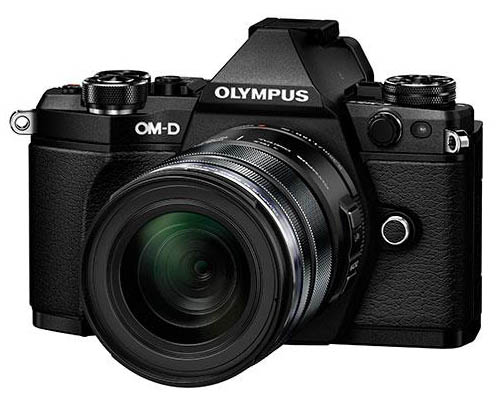
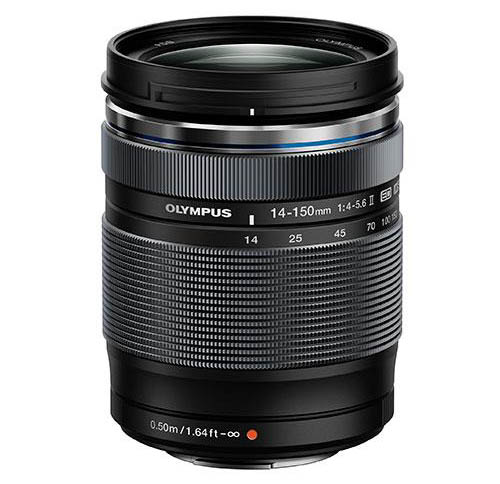
–
For sources: Sources can send me anonymous info at 43rumors@gmail.com (create a fake gmail account) or via contact form you see on the right sidebar. Thanks!
For readers: Don’t miss any news. Join our group on facebook and follow our tweets.
Rumors classification explained (FT= FourThirds):
FT1=1-20% chance the rumor is correct
FT2=21-40% chance the rumor is correct
FT3=41-60% chance the rumor is correct
FT4=61-80% chance the rumor is correct
FT5=81-99% chance the rumor is correct
316 Responses
Wasn’t this obvious?
I think that he mentions that?
Sorry Olympus, Olympians….i am not impressed for a 2 1/2 year time development not such a big improvement or new features for a successor….only an incremental update/minor new features….maybe the em1 will have it…..
I tend to like the new camera…It has a lot of tech refinements…VERY nice ones!…but it should have a new sensor…I think that this is a blunder. If for no other reason that the competition is brutal in this segment and price range. If I buy one to complement my EM1 ,I will wait to see how good the sensor shift actually is in reviews, and I am going to wait to see what the EM2 has coming..and by then the intro price will have settled down on the EM5 II, making it more attractive financially.
Exactly. Yes, the refinements are nice, but Sony was able to give arguably more refinements to its A7 II camera in one year’s time than Olympus is able to give its users in THREE years time! Who among us actually thinks Sony will not upgrade its sensor within three whole years? This is just a sad situation for the state of m43.
Sony FF sensors still dont have a 2 stop advantage over the m43 sensors they them selves made in 2011. For equally good sensors there should in theory be a 2 stop advantage to FF because of size. I would say they havent done anything but put out different MP sensors. Good for us Oly focuses on more useful stuff.
E-M1 sensor has 11% better SNR than Sony A7s when same depth of field (two stops higher ISO for Sony) needed. The A7 line has the normal 1.5 stops benefit when shooting with same ISO, but no benefit at all when doing prints with correct magnification, same ISO resulting same quality regardless of the setting.
Doh! Who makes sensors though?
I agree, if for no reason other than marketing. I really like the E-M5. My biggest gripe is CAF. The two things that would definitely get me to get my wallet out are substantially improved CAF and/or markedly improved sensor quality. The E-M5 has a fine sensor, but after 3 years I thought we might see something like a backlit sensor that offers a meaningful improvement. We’ll see. There could still be some surprises when officially announced. But I’m not a real video guy and while the ii has some very attractive features and seems to improve handling, I’m not sure it offers enough of an upgrade for my needs.
How do you know that CAF has not been improved?
I don’t know. Indeed, I’m hoping it is improved. I don’t really care about the specific technology. I’ve read that Olympus has been seeking solutions other than PDAF. So if they’ve come up with something like Panasonic’s new technology I’ll be very pleased. But the absence of PDAF or hints of improved CAF lead me to suspect CAF has not been improved significantly in this body.
The E-M5 was an excellent first step for Olympus. The MII better make improvements in a number of areas because Samsung is coming on strong and then there’s the imminent arrival of Canon and Nikon.
It will be interesting when Olympus makes the official announcement.
Yeah..we do not know anything for sure yet …but the rumors here are quite reliable…even if it was just a small improvement in the sensor along with all of the very nice tactile and other tech upgrades for someone to shell out over $1000 for a new body with a smaller sensor than a lot of the cameras he could by at that price or less…it definitely is less-than…..It will be interesting to see what the final product is and how it sells.
incremental updates are fine. If they did nothing, they would still be selling a camera that was 2.5 years old. From a business sense, not good if you compared them to competitors. I understand we all want something more revolutionary, but there is little left to improve but the sensor at the moment, and that seems to be a big challenge.
Wouldn’t buying a copy of Photo Acute be much cheaper?
I am going to guess that having precise, incremental Raw captures (if the Olympus works in raw), will be better and more immediate than PhotoAcute…
I believe that PhotoAcute only works with JPEG, Tiffs etc..conversions from the Raw File.
Does the Hasselblad use RAW files????
I need to correct you here.
Photoacute 3.X accepts most RAW formats natively. I also know for a fact that version 2.X already accepted other RAWs through Adobe Camera RAW.
The point is: I never had any ORF from my olympus bodies or RW2 from my GH2 rejected from PhotoAcute, even from recently released bodies.
Perhaps it’s using DCRAW, I don’t know.
Anyway I prefer my workflow to include a previous conversion from RAW from Capture One and them feeding PA with the TIFFs. Why? Because the demosaicing in C1 is cutting edge and because it gives good results.
I had read that it did not process Rawls..that is why I said “I believe” LOL! Thanks for the correction and the info.
Would be interesting to see a comparison of a hand-held sequence of photos run thru PhotoAcute compared to a tripod image with sensor shift …now wouldn’t it!
As soon as files are available, I don’t mind doing it. 😉
I would like to see examples that you may have of a still shot before you run it thru Capture One and PhotoAcute and after. Can you show me a comparison. That is relevant now! I was not aware of PhotoAcute until you mentioned it. I am going to guess that there a not that many profiles on MFT lenses..right?
I’ve got a few projects running over the weekend for the next weeks, so I cannot guarantee I’ll find the time to do it.
But I suggest you download the trial and run it (I believe it’s just time limited) on a set of files from your own camera.
The profile list is here: http://www.photoacute.com/studio/download.html
But don’t take it literally. The profiles are used to correct CA and lens distortion. PhotoAcute will still work it’s magic even if your lens isn’t profiled. 😉
That’s another reason why I go through Capture One first. This way the corrections are already in place before the real work starts.
Care to link to some before and afters?
Yes it would. It’s 149$ IRCC.
And if you profile a body/lens combination that isn’t yet on their database, it will cost you 0$.
So…can we shoot incremental captures?
Like, 2,3,4,5,6,7,+ 8-shot captures with incremental file sizes. Say, a 3-shot 24MP capture?
It appears that the Hasselblad is like that (but, it costs a LITTLE more)
…or is the Olympus only 1-shot and 8-shot?
The “up to 8”-part in the text gives hope… It would be great if you could choose e.g. 1/2/4/8 captures.
m43 shooter are mostly snapshoter and will use it nevertheless freehand.
so we will enjoy more crappy m43 images on instagram and flickr.
What are doing here, instead of posting your wonderful work on flickr and instagram ? Stop losing your time, get a life !
According to your dumb nick, you are some brainless poofter. Please do not post your snapshots.
I’m truly impressed by your argument. Sincerely.
Well..if your photography ability is anything like your ability to to spell and compose sentences, then your photos must look terrible. 🙂
regardless of his capacity to type, his comment is inane and useless.
why give some attention to something that you despise?
Let it go on the record that I am giving attention to you. 🙂
Yeah but, you’re too chicken$hit and sniveling to back it up with anything. So suuk it.
Then they can sit beside your crappy photos there too?
I like it. The retro design harkens back to the Oly’s original film cameras in appearance – especially the silver model. I hope it sells like hot-cakes. The list of improvements is impressive and very much welcomed. The E-M5II proves that Olympus is listening to it’s user base and is not distracted by the clatter from trolls and idiots.
Great design from Olympus!
Obvious as mentioned. But depending how fast it is maybe it could work for very fast shutter speeds.
Unless IS must be turned of and only this mode enabled. That would be a bit awkward to use on the fly
Also no mention if its just for Jpeg and it produces multiple spperate ORFs for of camera stacking. That would be another downside.
Also for video guys I see only 24p mentioned… hahaha!
24, 29,97 and 60fps.
I would be happy for other sets
FHD 25fps, 29,97fps, 50fps and 60fps
HD 25fps, 29,97fps, 50fps, 60fps, 120fps
VGA same but 240fps as bonus.
Also obvious that the IBIS has to be switched off for Hi-Res composite mode shooting.
Since the IBIS is obviously shifting the sensor, I would guess camera is smart enough, to stop messing with stabilisation movement, while Hi-Res is in operation
Hopefully it will require only one setting altered. Something like High Res ON, not individualy “IS off” and “High Res on”
Admin- electronic shutter option? 🙂
The interesting bit about this camera and the one noone is talking about is that it’s positioning itself to be a video monster, but I understand this as Olympus has always been dismall at this.
Now, the codec is better, the frame rates are extended, let’s just hope that the sensor is doing full readout and not subsampling as usual. We already had an exclusive and amazing advantage: IBIS on video. I can’t see how this cannot be a hit if the readout is good.
NB: Forget 4K, no one is ready, and no one needs it for another 5 years.
Hey Bruno, I think that the incremental upgrades are good. I am happy that Olympus has finally upped the frame rate as the camera was praised for its IBIS technology but critiqued for it’s lack of adjustable frame rates et al. I purchased the OMD EM5 and did so for a number of reasons, portability and the fact that I grew up using a OM4/ti (still with a view to getting a OM3ti one day… One can only dream) I think in this day and age we are swamped with so much technology that many get caught up in this arena as opposed to making images which are compelling (in my view) I think that the camera is innovative and will produce great images in the right hands. I just pray that the pitch it right in regards to pricing.
The frame rates weren’t even my biggest reserve concerning video on Olympus. At least you could film during the day.
The two real problems were:
* The codec – (much lower h.264 profile, at least 2 years behind Panasonic) and a dismall bitrate that would easily degenerate into a block fest if there was any non linear movement in the footage.
* The sensor – subsampling that left you with an image that has absolutely no detail, no texture and no comparable resolution to Panasonic bodies. I sincerely hope they have evolved it because this was the MAJOR handicap.
I don’t know what Olympus camera you have used but E-M1 has none of those problems. And that amaze me that so many judge E-M1 with results of E-M5 while the quality difference is like night and day between those two.
But how many really knows that best movies are viewed often in 4-17Mbits….
“But how many really knows that best movies are viewed often in 4-17Mbits….”
That is not how it works, that is not how it works!
Tell that to all the people buying GH4 and Samsung NX1 The video will be good I hope but certainly no monster and Sony A7II has IBIS and full frame video but that is no good either.
Can’t compare, it’s another price tag from the E-M5 mk II, and a whole different segment. I bet there are more LX100 sold worldwide than GH4 + NX1.
4K isn’t completely useless though. Considering a FHD output, it gives you leeway for stabilization and reframing in post, it can give 4:4:4 FHD resampling and also better detail preservation, but none of those advantages makes a big difference if you have IBIS and good sensor sampling to start with.
4K’s real and obvious advantage is, well… 4K. But if you look at it, there is nearly no professional delivered 4K content anywhere you look. Except p0rn of course, but those people are always on the cutting edge of tech… one of these days, you’ll blink and they’ll have invented wireless batteries!
Olympus has squandered 3 years with it’s 5-axis stabilization technology. The E-M5 should have come out originally as the “video monster.”
But the focus of the E-M5II should be as the “ultimate run-and-gun.”
A video “monster”? Lol.
Maybe forget a 3/4 world video users! Video monster???
–
Yeah, I agree with Duarte and expect the E-M5II to be a VIDEO MONSTER indeed!! Two years ago I shot a small video and had to the opportunity to compare a hacked GH2 to the EM5 and was amazed by the Oly’s video quality. Plenty of dynamic range and detail, along with excellent color: https://vimeo.com/51538858
It was a shame Olympus did not improved video in all these years (frame rates and codecs). But finally it happened!!! So can’t wait to try one of those EM5II.
And FYI, in Brazil (only) broadcasting is made in PAL-M (29,97fps), but everybody shoots NTSC. I mean e-v-e-r-y-b-o-d-y. Cameras here are sold in NTSC format. I produce videos professionally for more than 20 years and never touched a PAL camera. So your map is not that accurate.
But let’s hope they also included 25/50 frame rates for our european mates. 🙂
Rinaldo where is the audio in your video??? i’m curious for the sync.
This map it’s from wikipedia, but which is the point, ok in Brazil everybody use ntsc but in the rest of the world not, and Olympus don’t care about a lot of people in the other countries.
Anyway i’m a european user and e-v-e-r-y-b-o-d-y use only PAL camera, my entire gear is 25-50p why i should buy a Olympus camera 30p?!
For me, and for a lot of users the biggest shame is the implementation of a 25/50p, i think 3 minute for reprogramming the firmware. This is not a monster, it’s teasing people.
🙂
Why audio? It’s an ‘image’ comparison. The audio was recorded externally. 30p is not enough for me too, I need 23,976/24 and 29,97 occasionally, that’s why I sold my E-M5. But I’m quite sure they will include 25/50p rates, so let’s wait and see.
so what can you photograph with the sensor shift ? I t seems to be very limiting…I don’t think you could even do landscapes due to moving clouds and breeze in the trees..I guess architecture…food and product photographers would enjoy this.
I doubt it’s to take minutes, unless the light level is very low.
Mainly products and portraits.
What? Hasn’t anyone else here shot portraits with large format? You have easily a 1-4 second exposure times and subject needs to be still at that time.
Landscape works too but in limited situations. What can be little sad thing.
Awesome! I can break out my victorian-era photography posing stand too, so they can hold still enough for 4 seconds to resolve 40MP.
It really helps me to put the models at ease and capture natural, fluid portraits.
“GORGEOUS, THATS PERFECT, NOW DON’T F*#)(*ING MOVE FOR THE NEXT FOUR SECONDS”
I see dead people portraits…
😀
I imagine most landscapes would be doable. I can’t imagine the whole process taking even a second for 8 exposures if the average exposure is, say, 1/100s.
Studio, goes with the pc sync.
This is obviously not the way forward for higher megapixel counts in the MFT format. We need a new sensor generation with a higher pixel density, *IF* we want more megapixels. Not important for me, but I certainly wouldn’t say “no thanks” to 20 or 24 megapixels 🙂
12 MP with better high ISO please, and 30 MP sensor shift.
I think I’ve seen you say this before? I don’t disagree, but I think it could be acheived in-camera with a 16mp sensor that simply uses more pixels for light sampling, so it captures a 12mp image using 16mp sensors.
Personally I’d like to see support for even lower ISO’s than 100 in order to eliminate noise even if it requires a tripod and longer exposure.
But have you tried taking a 16mp image, then using software to scale down to 12mp? the pixel interpolation would blend pixels so and reduce noise, and with the right resampling algorithm (bicubic sharper) the image would look sharper.
All in all, more megapixels mean a higher DPI can be achieved, and that means the ISO noise becomes less obvious. Therefore I still think it’s important to increase the resolution.
30MP sensor shift? Not too sure I’m even interested in sensor shift at all.
More pixels means smaller pixels which means more noise. No thanks.
Which also means better glass required. No thanks.
More pixels means more pixels, nothing else.
http://www.clarkvision.com/articles/does.pixel.size.matter/
I await your learned response with baited breath.
Not really.
Also, smaller noise.
And who says noise can’t be reduced?
Well maybe it can, but if so, it is likely larger pixels will benefit as well so their advantage will remain.
16 -> 20 or 24Mpix is negligent difference. If you have one black dot on white wall captured by single pixel with 16Mpix sensor, then 20 or 24Mpix sensor captures that dot with single pixel or it is single pixel that affects to two other pixels by making them gray.
To get more clarity and details, you need double the resolution, so you need 64Mpix m4/3 sensor to see a difference and then four pixels would capture that single white dot while being clear.
Make that single dot anything as detailed like a eye lash or bird feather and you want that 64Mpix sensor instead 20 or 24 megapixels because the difference isn’t there.
You get far more details with 16Mpix and moving a 10-20% closer the subject than with 4-8Mpix more. Or buying a new optics that resolve more like move from Olympus 40-150mm f/4-5.6 R to Olympus 40-150mm f/2.8 Pro.
Or if wanted to make a landscape with higher sharpness, instead one shot take a two vertical ones.
Megapixels sounds huge difference as we talk about millions of pixels, but it is just a static, while relatively the amount of pixels per detail really doesn’t grow with 4-8Mpix so much that it would give better resolution.
The part you haven’t thought through:
“You get far more details with 16Mpix and moving a 10-20% closer the subject”
What If I move 10-20% closer with that 24 mp sensor?
It’s all details. Every pixel counts for improved sharpness and is an increased opportunity to differentiate between colors and edges.
I hear what you’re saying, it’s incremental, but it has to be because unless somebody makes a quantum technological leap in sensors, incremental is what we have.
I know most of the older, cheap MFT lenses can’t resolve details at resolutions much higher than 18mp, but there are also plenty of newer ones that can, like the Olympus 75mm ƒ1.8 – I bet that lens still performs beautifully at 32 megapixels.
I don’t know. To me, that sounds like a great idea. You have the ability to get very high resolution when you need it (albeit with limitations), without the downside of high resolution sensor. RAWs from D810 weight 45-50 MB, even 60 MB at very high ISOs. That’s a bit much for general purpose camera. And that also impacts things like burst rate for example. Not to mention shutter shock issues are much worse at higher resolutions.
I wouldn’t mind a step up to 20-24 mpx, but only if noise is kept at the same level, and burst rate does not suffer. But rather than that, I’d prefer it stay at 16 mpx, but offer all around better performance (noise, dr, etc.) and maybe an option for 14-bit RAWs.
Of course, there’s this nagging question. Will this sensor-shift mode produce only jpeg files? If so, it’s usefullness drops significantly (from useful to gimmicky). That would be a huge dissapointment.
But being tripod-dependent means you could just as well shoot 6 overlapping shots and stitch them in something like Photoshop’s “Merge to Panorama”. Sure it saves you the hassle, but it’s basically the same thing. Oh, except shooting separate shots and post-stitching is not tripod-dependent.
Sensor-shift is a marketing gag. It would be better to reduce the noise, instead of investing in such feature. When will Oly declare noise reduction as the main thing? At ISO800 all Oly digicam has to much noise in the image (speking for raw-shooter)!!!!
It’s quite obvious that this features also reduces the noise.
And it is quit obvious that ISO 3200 is great on E-M1 and even extended (software boosted) ISO 6400 is very well usable.
I have shot with max ISO with great results for 30x20cm frames.
Nah I would say E-M5 ISO is fine up (and including) 1600.
Even in RAW. I use it a lot and find the noise very acceptable and easy to deal with.
3200 is different… it’s still quite ok, but starts to be come much more visible.
And 6400… Only use it if there is no other way. ^^
Indoors, where I shoot my 16 month old all winter long, really requires me to pump to iso 3200 to get a fast enough shutter speed to get sharp results. I am displeased with the 3200 results. 1600 is fine. 3200 is not. THIS is why I am concerned Oly doesn’t have any new sensor tech. I am perfectly happy with the depth of field of m43. It allows me to achieve an artistic vision just fine. I am, still wanting cleaner high iso and more headroom in the files.
The upgrade looks perfect if it weren’t for the forever stagnant sensor tech. If we get a decent re-roll on the EM-1 I guess I will bite. There’s no free lunch, but increasingly the fujis look like the best compromise.
I also do not use my e-m10 over ISO 2k, ymmv. You may want to consider an A7s for your indoor use.. just saying.
If you only have Oly digicam, you will not see the difference with other manfacturer!
Meh. It is fine up to ISO 400, at ISO 800 the colors start falling apart quite quickly.
The small portable camera that need a big heavy tripod:)
Or a sexy, svelte carbon fiber one! 🙂
So does D800e and every Sony A7 camera. If you want to get sharp results with those cameras, you need to use very sturdy and heavy tripod. The most common problem with those cameras for image quality suffering is that people don’t use tripods or then they have a light travel tripods that shake from touch.
You know when your tripod is sturdy when you place camera on it, take a telephoto lens and take 2-4 second exposure time to round light out of focus and then lightly tap with finger the legs. If the light source draws a oval shape or doesn’t have sharp edges, your tripod isn’t sturdy enough and vibrates too much.
“So does D800e and every Sony A7 camera. If you want to get sharp results with those cameras, you need to use very sturdy and heavy tripod.”
That’s not true at all. Are you familiar with the concept of shutter speed? You should try taking the camera off of scene mode once in a while.
Sure, you can go and talk about succeeded landscape photographers and they give you same advice.
You should own a A7r like I do to understand the thing.
It is just a rule of thumb that focal length == minimum shutter speed, not a guarantee. A Sony A7 suffers from shutter shock even if you would have a 24mm focal length and 1/800 shutter speed, you get very minor shock that causes image to look blurrier. That is because of the high resolution.
Mount camera to sturdy tripod instead a basic one or handheld and you get much sharper results. Other thing that helps is to place a sandbag on or below the A7r to absorb the shock.
And as you don’t know, because you are unskilled troll, I shoot only in M mode. All other modes are for shooters who can’t handle cameras in full manual.
Lol, I own an A7r. Apparently I know it better than you do, as I know that the shutter shock only occurs through a certain range of focal lengths, at certain shutter speeds, and even at its worst will only take the 36MP capture down to about the equivalent of the 24MP A7. If for some reason I’m looking for “extreme sharpness”, I know exactly how to avoid it, but most of the time I’m looking for a good photograph, not a sharpness tech demonstration.
“It is just a rule of thumb that focal length == minimum shutter speed, not a guarantee.”
Who said anything about focal length == minimum shutter speed? You can actually turn that shutter speed *faster* than 1/focal length, if you’re a sharpness junkie, “Mr. Full Manual”.
Here’s a good link for you: https://photographylife.com/what-is-shutter-speed-in-photography
If you have any questions, let me know, I’m always happy to help someone just starting out!
You have failed to read everything, come back when you know what A B C means.
Ah, “you can’t comprehend my genius”.
The last refuge for someone who has been thoroughly embarrassed.
You are wrong.
Shutter shock is not because of the high resolution but because of the shoddy shutter implementation in the camera.
A minor delay (20-30ms) can usually mostly fix this unless the shutter is really cheap and badly designed and unfortunately Sony went that way…
Fool.
I have a hard time understanding how this can work. For example; What happens if you take a photograph of two parallel hairs from a distance that the camera sees it as one thick hair. Will this sensor shift trick be able to somehow see both hairs?
Yes, Because currently both hairs are overlapping each other that optics draws them on single pixel row. Shifting the pixel row (sensor) half-pixel to side and then a another, the resolve capability is now on same pixel row two pixels, but the first 0.5 pixel move gave even more calculation data.
4 x 16Mpix is 64Mpix. It is very well known that 16Mpix m4/3 correspond 64Mpix sensor in Small Format.
The sensor moves around one full pixel, starting like from top left corner, right, right, down, down, left, left, up, up and between each move there is a photo taken.
With a eight moves, we get twice as much data and then we can downscale it to get a 40Mpix (still, I could think it could be a 64Mpix).
The optics is a limiting factor in same way as with any other, meaning if you have a terrible optics, you don’t get any sharper results, but you get more details like you would have a higher resolution sensor behind twice a better optics, but still worse than using a great optics in the first place.
So using a Olympus Pro line or primes you get double the resolve capability for those because we get more information between the pixels to recalculate the otherwise missed light ray.
The idea is similar to exposure stacking to build a HDR or do sky shooting or focus stacking.
E-M1 already does calculations to reverse the blurriness caused by circle of confusion after f/11 and higher resolution you have the sensor, more information there is to use to recover the blurred image back to the original sharpness.
It isn’t sci-fi or a trick, just simply mathematics where with big data we can find out small differences.
I bet there are Olympus workers drinking every Friday evening reading this sites remarks laughing uncontrollably.
It’s kind of lame that this sensor shift feature is promoted with examples from Hasselblad…
Only by the admin not Oly
>It’s kind of lame that this sensor shift feature is promoted with examples from Hasselblad…
It’s kind of lame that this sensor shift feature is explained by Admin with examples from Hasselblad.
There, fixed it for you.
Using examples from Hasselblad to explain Olympus’ sensor shift technology is rather disappointing.
Tnx 🙂
It isn’t promoted at all, since the camera officially doesn’t exist yet. This is a rumor site, in case you didn’t know. Olympus has nothing to do with how admin chooses to explain their features.
Like promoting a Lada as having some Mercedes tech…
Or Canon as Leica
I suspect you’ll see plenty of examples on Feb 5.
The big question is: Will it work with studio flash? Will I be able to set the 4 exposures in say 1 sec difference? Will I get a RAW file? I work with m43 and often use it in studio for watch photography and the like. So far 16 MP were enough but there might be a time where someone wants a 40 MP file. 🙂
Studio flash, yes 8 exposures with adjustable interval. RAW, yes.
RAW, I highly doubt it. It’ll probably spit out a JPEG.
I don’t know about the flash bit, probably.
The Hasselblad implementation creates raw files, so it’s not unheard of.
Yeah, it’s also a $40,000 camera. The EM-1 (with the same processor) already does a version of this stacking with its starlight mode. It stacks 8 shots to reduce noise and spits out a JPEG. I expect that this will work the same way.
produce a RAW File and there is an intervallometer to adjust the flash recharge.
That sounds perfect.
pretty sure the pc sync terminal on front is for studio flash.
Jealous and insecure crybabies, crying about Olympus innovation 🙂 Keep crying as you get left behind.
Yawn..
Are you one of those talented photographers we see here on daily basis, wasting time writing useless comments while their wonderful Canikony is taking dust on the shelf ?
Altaic is a regular here and an genuine user and fan of Olympus cameras.
Hey, he is referring to the trolls…!
Or feeding them?
Was really hoping for sensor improvement. While this looks like a nice camera, IMO it doesn’t bring the OMD line forward in a significant way. Disappointing.
The unfortunate (for us) reality is that it is very hard to convince executives to spend lots of money on R&D for an unprofitable division and in a very shrinking market. Until (if) the stand alone camera market stabilizes, most advancements/innovations will be in the image processing pipeline (much less risk and sunken costs) vs the sensor. Still there is probably a good stop or so of DR to be wrung out of existing fabs with process tweaks in the next year or so.
It looks to me like an E-M5 with a better EVF and a kinda neat but not too useful scene mode. The E-M5 is a great camera though, that’s not a bad thing, it’s just surely not a compelling upgrade if you already own one.
Anyone from Olympus here? Is this the best you can do after 3 years. You want me to buy and use this camera with it’s 3 year old sensor for another 3 years? You can keep it, Olympus.
You’ve already let us know, while posting as 500 different user names that you aren’t interested in this (or any other ) m43 camera. Disappointing you won’t cost Olympus a dime.
Sure, there a re a couple of paid shills posting under different names. There are also a couple of objective types, normally called “trolls”.
It easily takes 10 positive messages to offset a negative one. Hands-on experience is also crucial. I predict even harder times for Olympus.
A troll by any other name would smell as bad. We can smell you all the way from here.
I predict even harder times for trolls.
It is not a problem of the sensor. But the software of the processor in the digicam…. Oly could do it…. but, they like to sell more digicam…. give more money…. all manufacturer do it ….
better algorithm on a 10 year old digicam gives you better image quality….
If it ain’t broke, don’t fix it!
Cool, less people in the line is always nice for me, as I don’t like to wait.
Maybe I even buy another one as a backup.
I’ll then call it Joe’s cam.
🙂
The current OM-D sensor gives me better image quality than the Canon 5D Mark II, so what’s wrong with it? If there’s something wrong with the pictures you’re getting, it’s not the cameras fault.
It’s not the equipment, it’s you!
The problem is 5Dmk2 is 6,5 years old and even PHONES now can shoot better (4k) video than this prereleased camera. Hope, Olympus will introduce new top camera this year.
I’m not talking about video. It’s stills and up to about half a year or a year ago people happily bought the 5Dmk2 and were satisfied with its IQ. The current OM-D sensor might not be good enough for amateurs, for pros who need to earn money with it, it is.
That is the thing, OM-D gives better results than Canon cameras in hands of professionals, when many Canon owner praise their image quality they get from Canon. And is the reason why Canon still is up in photography business. But when the manufacturer brand is switched to “Olympus” or “Panasonic”, suddenly it isn’t good enough anymore.
The old three years sony 1″ sensor (rx100 20mpx) gives me almost the same image quality than the new m43 sensor, this is comparable, not the insane comparison m43/FF.
Well, I think you are right. Today’s 1″ sensor is where yesterday’s 4/3rd sensor was. Which means perfect for 95% of usage. The problem is that there are no desirable ILC systems for them. Nikon hardware guys had a good idea but horrific implementation (i.e., unusable).
I highly disagree. The E-M5 sensor uses a lot of tricks to climb higher in the test charts, but I find the overall IQ worse than my older 12mp E-P2 sensor.
The “digital look” is quite terrible on the E-M5, and the images look flat. And even though it should have higher DR, I’m not seeing it in my images at all.
That outdated 5DII might score worse on the test charts, but it produces beautiful images. At least in my opinion, much better than any M43 sensor.
Can you elaborate on the tricks? I have both E-PL1 and E-M10, and I find the current 16mp sensors much, much better than the older 12mp one. In every regard. Mind you, I do quite a bit of long exposure work (including astrophotography), and the difference is huuuge. The old sensor was mostly useless for many of those applications and required a lot of tricks to work around its shortcomings. With E-M10, it’s a breeze.
Yeah I agree and especially for long exposures (I also do some astophotography) the current sensors are clearly way superior!
Anyone claiming something else is just troll trying to badmouth m43.
“The “digital look” is quite terrible on the E-M5, and the images look flat. And even though it should have higher DR, I’m not seeing it in my images at all.”
That is exactly how EM5 images looked to me as well when I had one. Very digital and flat. I wanted to love the camera so much, but the files IMO are just awful. Using good lenses helps but that ugly digital grain becomes apparent too quickly. The OMD line is otherwise brilliant, but I just can’t stand the look of the images compare to good APS-C and FF.
Get a good calibrated monitor and a well preset E-M5 blows all but the very best from Canon/Nikon out of the water. The colors Olympus produces are fantastic and it takes a long time to get something comparable with Canon and Nikon unless you go full out and spend a boatload of cash.
I just think you are so used to rubbish that everything else does taste off to you…
😉
Dude, I have both of those cameras and if you really think that then nonsense, then the problem is most definitely you, as you have absolutely no clue what you’re talking about.
But hey, I do have a nice vintage bridge to sell you. Interested?
I can’t say for JPEGs, always use RAW and process with Capture One Pro.
Yeah that’s just not true… unless you are shooting with a Noct on the m43′ and a beercan with the 5D2.
I’m not talking about the lenses, I’m talking about the sensor. You get to buy high end lenses on any system to get good results. That’s what customers pay you for.
Now that the new EM5iis major attraction 40mp capability is revealed to require use of a sturdy tripod to use makes it of very limited use except for few studio and stationary situations. Question if I take 16 fuzzy pictures and try to join them together won’t that still just give me a fuzzy 40mp picture? Yes the pixels might be there but that does not necessarily make them any sharper resolution? I think the existing improved HDR modes with 3 pictures merged to provide better DR is more important in improving our pictures.
For me I would frankly buy the older EM5 while still available at $600 while I can before forking out $1160 for a EM5ii body just for an improved EM1 EVF and the swivel screen.
what about the much improved ergonomics?
Yes the handling appears would be improved and I would hope more tactile buttons to press. Don’t get me wrong, I like everything on this new EM5ii other than the price compared to the old EM5 just now.
Why do you presume you would take 16 fuzzy pictures?
For stationary objects, I’d much rather use this system than simply bumping the resolution of the sensor to 40MP. A 40MP sensor would increase noise and reduce the performance of lenses. The sensor shift tech (at least the Hasselblad version) lets you get the full benefit of the lenses, plus the better resolution.
My mistake as the EM5ii combines 6 pictures and my reference to fuzzy pictures is that without tripods some may try using this feature hand held anyway and in such case would not improve the resolution.
Thanks for your above clarification
Always entertaining to read the comments. I for one am very interested. No it is not a revolution in sensor tech, and yes the usual rules apply that the higher ISO the more you need a larger sensor for image quality. I don’t worry about this. In my 13-14 years of digital photography I find that I seldom shoot above 400. 1600 would be occasional and m4/3 is adequate if not stellar.
Very interested in the pixel shift method of increasing resolution. I can see many situations where I would use it. Seen some impressive shots from Hasselblad using this method and having it in a smaller, lighter and much less expensive body fits my needs.. A tripod is not a problem for me as I cut my teeth in the film days when 400 was the highest. But really what they are saying is the camera must be steady to use the pixel shift and there are many innovative ways to do that. While this camera may not suit everyone (no camera does) I think it might be just what I was waiting for and saves me from having to get a second larger format camera. Watching this closely. Definitely not ideal for everyone but will work well for me.
The sensor shift technology is same way usable as is the Live Composite, Live Bulb and Live Time.
How many whiners really even use those functions? All what they really seem to want is just a larger sensor, perfectly smooth 25600 ISO and everything free, so they can post photos to their facebook.
Volume sales of imaging devices continued to decline in Romania in 2013, falling by 16% in volume terms and by 12% in value terms. The sharp decline was attributable to the prolonged recovery from the economic crisis that limited the purchasing power of consumers. In addition, growing preference for alternative consumer electronics such as smartphones or even tablets cannibalised a substantial proportion of imaging devices’ volume sales. The fast pace of innovation making mobile phones a suitable replacement for cameras and camcorders as well, intensified the downward trend in the sales of imaging devices. Romanians in general are interested in purchasing a smartphone with a high-quality built-in imaging device and are inclined to spend more on high-end products, just to be able to replace their compact camera.
Imaging devices is expected to decline sharply over the forecast period, with a retail volume CAGR of -13%, while value sales at constant 2013 prices are expected to decline by a CAGR of 10%. The average unit price of imaging devices is set to increase by 18% over the forecast period due to the increasing preference for SLR cameras among non-professional users. Alternative products like smart phones and phablets are predicted to continue cannibalising imaging devices.
Romania? Wtf cares about Romania?
Or any of those broke eastern European countries?
Isn’t the average wage there about 400€?
Of course they go cheapest possible, if the alternative is to not eat!
Average yearly income in Romania is about $5000. The World Bank classify the country as ‘upper middle income’. So not quite as miserable as you would have us believe.
LOL
Instructions on how to get a 40mp shot of moving subject without a tripod:
1. Shoot film.
2. Scan your shot with E-M5II
😛
I shoot m43 and 645 film, so that is exactly my plan!
That idea is wicked!
In all seriousness, I have scanned slides in just this way using an E-M5 and even with the supposedly ordinary 12-50 you can resolve the grain, so 40MP would be a wee bit of overkill.
So Olympus pulled a Canon this time 🙂
Get a Canon SL1/100D…small & lightweight body with a full 18 mpix on APS-C sensor ! no thrills & no frills far away from this Olympus sensor tech…
Hey, that is a camera, what has it got to do with this?
Are you getting overtime?
No, you get yourself an SL1 and be happy with your toy. After all it’s an excellent camera right?
That camera doesn’t have the external controls or versatility of shooting (tiltable touchscreen to focus/fire in one press, IBIS) and you are still stuck with larger lenses. Its also a low-grade Canon APS-C sensor which I doubt is even better than this old m43’s sensor.
Perfect for landscape lovers and still life. there’s nothing bad with using a tripod: for everyday walkarounds you can leave it at home, but even with IBIS I would use it for landscape photography, if really interested in achieving the best output.
Same thing for architecture and in studio works.
Perfect for shooting paintings. It will also be very interesting to see how it handles moiré.
Moiré shouldn’t be an issue because the Bayer matrix is not used in the demosaicing process..
Even if it would be present you will easily fix it in LR.
It is fixable, and moreover, shooting paints, you typically take fewer pictures and work more in post process. I agree on all that. If I can choose, I much rather double check on LR that everything is fine and correct as little as possible.
You do realize IBIS does nothing to stabilize anything moving (like trees in a breeze) or at higher shutter speeds. I swear, these Olympus weenies think IBIS will make all their pictures perfect without understand anything about it’s limitations.
IBIS helps by compensating the micro movements of the camera, it has nothing to do with subjects. I wonder how many people really think that IBIS should really stop leaves from moving in the wind, as you say.
It’s not a limitation, just a helping function, like sitting belts in a car or ABS on brakes: useless on normal conditions but they can save your life.
When taking landscape pictures and in need of longer exposure times just wait and hope for the right moment: nothing new.
https://www.flickr.com/photos/marcosartoriphoto/15982633272/in/photostream/lightbox/
Oy, and you trolls don’t even bother to read anything before you fall into your verbal diarrhea spouting.
He clearly meant that he would use the camera for landscape, etc. even with IBIS instead of a tripod.
I suggest you get some reading comprehension before you try to show off how “smart” you are…
LOL…..it remains a toy gadget camera with a pro price. Sorry but you must be really really stupid to step in M43…….
I gain money with m43 gear…… 🙂
Do you mean that you sell m43 gear? Because you certainly aren’t selling photos, something that a m43 ‘camera’ just isn’t capable of producing.
We know what you earn money with, and that is not your photo toy…
Hey, I do too.
🙂
I do sell surprisingly many shots that I made on the fly with my m43 camera that I carry almost always around with me.
Just like the saying goes “the best camera is the one you have with you”…
Right, says the person that won’t post his name….
Stupid is the idiot that come here to post nonsenseness.
Somebody has run out of material.
I suppose the next step will be the introduction of global shutters. With both technologies present it will be possible to produce high-res and noise-free images seamlessly. Combined with sensor movement in the Z axis, other effects such as adjustable background de-focusing can be implemented too. In other words, sensor size will become almost irrelevant.
I’m fascinated by this. I have used Photoacute for years, but with mixed results (for increased resolution) and many camera-lens combinations are not supported. This might potentially be much better as it could work with every lens. I do alot of tripod work, so it really could be a huge asset. In particular, I wonder how it will treat subject movement will it be able to isolate and render these areas at regular resolution, or will it be ‘blurred’. If the former, it would really be excellent.
No way would I make a buy/no buy decision based on anything in this discussion. Too much misleading or totally uniformed posts compared to the truly well informed. I’ll wait to see what reviews say after holding it and running specs.
Well said!
Do they still make tripods?
No, Olympus no longer makes tripods and what they did make was more copy-stand than tripod. Try Sirui.
Try hand-holding any camera when shooting 1:1 macro at f/11-f/22 @~ISO 100. It’s hilarious.
$1400 for the body?! — rumored price I saw. That’s insane. Cannot be true?
That’s the price with the new 14-150mm super zoom lens.
I saw that too. I don’t believe it. I also saw 900 British pounds. The straight up conversion would be approximately $1350 but the European countries have steep value added tax and cameras always seem to cost considerably more in Europe than in the USA than would be implied by straight up conversions. My, pure guess, is that this will come in around the same price as the E-M5.
Old EM5 for me
no problem…
Bad cameras are made for tripods only. Think of phones. M43 is more or less a phone. Ouch, I have seen the prices.
I hope its android!
This is no surprise.
I wanted to love this camera. But it’s a dud.
What other camera is better?
I’ll stick to MFT:
EM-1, Gx7, GH4 are all better cameras. Not saying this is a bad camera, but it’s a weak offering 3 years after the mk1 and at $1200+
What is this “sensor shit mode”?
I don’t think this being a tripod only feature is a surprise, nor do I find it offputting. For the type of work you require 40 MP you’d use a tripod anyway! For landscape, etc, this is awesome! For other work, turn it off, and use handheld, you won’t need more than 16MP anyway! I think this particular feature is great!
Yes I *do* need more than 16MP. At a time where the slightly larger APS-C can offer very good 28MP, it’s behind the times to still only offer 16MP in a new product.
We’re at 4k-5k Monitors now, in a few years 8k will be available and then I’d like to have my images from today at more than thumbnail-size.
Not to mention that I quite often do some heavy cropping and still want to print large, so the more MP the better. It’s not as if it has any real drawbacks anyway. There are only advantages to a well implemented MP-increase.
I’d like to exclusively use m43, but unfortunately I still have to keep a second (way heavier, larger and more expensive) system to give me the MP I need.
So go on Oly, Pana…show us some MP love!
Very true, a 24MP m43 sensor should not be out of the question if Sony can make a 20MP 1″ sensor. On the plus side, 24MP with Sensor Shift would produce a 60MP picture, for landscape work even more awesome.
This will not work for landscape in general. Landscape is not stable. Trees, rivers and clouds move. Light changes!
This feature works for product photography in controlled environment (studio). It might work for portraiture if you have a very steady model. 🙂
If anyone thought this would not need a tripod, they didn’t understand how the sensor shift worked.
That said, this is a wonderful option to have for architecture, product and macro photography.
Sensor shift could work handheld if there was a much more powerful processor. It just needs to locate a couple sharp edges that are non parallel to each other, and then shift each of the 8 images, so that they line up on top of each other. The edges will have to be cropped by x amount of pixels due to the slightly different framing of each of the 8 shots due to it being handheld. In some ways it is like Sony’s Multi frame Noise reduction where it takes 6 handheld shots, auto aligns, and then crops the edges.
Would not work… you need sub-pixel accuracy, so you can’t align.
Yes and no – there’s too many assumptions for that.
I’ve written stuff that takes images, used the open source align image stack and reduce noise (like “hand held twilight on sony cams”), but the accuracy for that is FAR less that what this requires.
Here, the need to be accurate is too great. The next image is not JUST another image. It’s an image exactly 1 pixel offset, at all points on the image. if you are handholding, then you may be moving around. A tiny twist can put the top off sync by a little and the bottom in sync, or you can move from 1 pixel offset to 3 during the shutter open period.
And what if the “sharp edge” you located moved by 1/3 of a pixel and the sensor can only move by 1/2 px? Or if it rotated?
Seriously. This feature in Hasselblad bodies is well covered online. Just look around.
Even if they make it fast (it is really slow in Hass.), you need a very stable tripod. We’re talking about shifts by μm. Even vibrations from walking around the camera can make the result unusable.
A moving object in frame is a different matter. This will *NOT WORK* for any kind of action.
Even if you’re talking a picture of a tree and the leaves wobble, you’ll end up with a huge mess (or an error and no picture at all).
“A moving object in frame is a different matter. This will *NOT WORK* for any kind of action.Even if you’re talking a picture of a tree and the leaves wobble, you’ll end up with a huge mess (or an error and no picture at all).”
Unconfirmed. Yes it is possible, but Oly tends to put a premium on use-ability, so I think we should reserve judgement.
One item to note is that, while both cameras are using a bayer sensor, the Hassy method uses 4 or 6 exposures and Oly’s is supposed to use 8.
The reason for this discrepancy could be functional, seeing as Oly’s customers presumably have different expectations than Hassy’s.
Regardless, its funny seeing seeing yet another example of the versatility of Oly’s sensor suspension.
“Unconfirmed”? 😮
Too many “rumors”. Too little physics at school.
Hasselblad implemented 2 modes.
4 shots are made with shifts by 1px. The result is still 50Mpx, but with full colour information, so sharpness is improved.
6 shots are made with shifts by 1px and 0.5px. The result has 200 Mpx (but these pixels are not as good as in 4-shot variant).
It is believed that Olympus implemented only one algorithm (they could provide more with updates). Why they need 8 shots for 2.5 resolution multiplication? We’ll learn that in a week.
But the basic principle holds. You are taking N shots. To increase sharpness you need these shots to contain the same scene. If scene changes (globally or locally) you’ll not get extra sharpness – just extra pixels (again: globally or locally).
Piotr, since we believe the only mode is eight shot, or double the requirement of a known system, its nice to imagine the engineers found a way to mitigate some limitation of the known system, however unlikely, or impossible. I’m sure you have sound reasons for your confidence this is not the case. You’re right about the lack of physics, I was an art major. Jan
I knew it would be limited to tripod use. I called it. What a rip. AND with a old sensor. Don’t waste your money, nothing new here, just a Old EM5 with gimmicky tech.
A M43 sensor is just that, Limited to daylight and tripods. Keep the bodies and lenses small and affordable, and it may live. If M43 can’t do that, it will DIE. Mark my words.
There is just too much competition now and M43 market share is dwindling every year. Olympus and Panasonic is going to Price themselves out of existence.
I still think the body styling is ugly as sin, but the sensor-shift thing is actually very interesting to me. I already have a stable tripod rig that I use to shoot macro, and I’m wondering if this would produce better 1:1 shots.
Ugly?? Interesting how opinions can be so different. Ugly to me is a DSLR… basically the same design back from the 80’s. The same boring thing year after year. Very easy for Canikon: to spend almost nothing on R&D and still people keep buying it, cause yes, they can take good pictures. But it’s sad how those companies don’t innovate anymore… 🙁
Yeah, the lines, the proportions, the hump (especially the hump!). The E-M5 looks busy and fussy to me. Kind of like they just kept adding pieces on to patch other things, rather than really thinking through what each line accomplished and how it affected the overall look. I will say it looks worlds better than the E-M5 Mk I. DSLRs look like tools to me – big and clunky, sure, and not what I’d consider attractive, but generally not ugly – just very utilitarian. I tend to like Panasonic’s bodies (except the GF line post-GF1). I love some of Sony’s designs – big fan of the RX1/RX100, and I also like the Fuji X-A1. Olympus’ designs have always just looked odd to me at best and ugly at worst.
D750 is a sexy camera.
Looks completely pedestrian to me. But hey, style is subjective but the results from a D750 are not… its an amazing camera.
Says DSLR’s are ugly because they have a design from the 80s…
Fawns over the EM-5II which is based on a design from the 70s….
One thing is get inspired, another is never change….
This is an interesting definition of “ugly”.
You call something ugly because it is 30 years old? How old is your wife?
DSLR design is optimized for handling. And it works.
People are not born with a taste in aesthetics. They learn to like some things (same with food and music). The fact that SLR design hasn’t changed much for so long is a proof for it being attractive (meaning: easy to get used to).
As for the “nothing on R&D”… I guess R&D departments have some more interesting things to do than analyzing customers’ visual preferences. And clearly current DSLRs are better than what we got 10 or 20 years ago, so some money had to be spent on this evolution.
How soon until the Sensor-Shift technology is available in a Pen body (E-P6?) The Sensor-Shift plus the E-M5-2 Flippy-Screen in a Pen body would make a dy-no-mite Tripod camera.
Why a Pen you ask. The Pen has NO Faux Pentaprism to get in the way of a Tilt & Shift adapter.
Dump the hump!
NEVER! Did it and came back. NEVER AGAIN!
Hump the dump!
“The Sensor-Shift plus the E-M5-2 Flippy-Screen in a Pen body would make a dy-no-mite Tripod camera.”
Sure it would. Dump the viewfinder, etc., save a few bucks and ounces, while keeping the output = not too shabby.
Have you ever used a view camera ??
With the advent of live view, very few people use the viewfinder when the cameras on a tripod.
You don’t realize my post was in agreement with yours? Read it again.
And yes, I used to own a Sinar.
You can have it with PhotoAcute on any camera.
Bend over and I’ll show you. Troll.
m43users: I like to travel light, and I don’t like big, heavy lenses!
Olympus: Now you need to carry a tripod.
m43fanboys: Oh, t-that’s c-cool! Suddenly it’s no problem to lug around a giant tripod even though I can’t lug around heavy lenses!
Tell me which option weighs less. A) Nikon D800 (needed to get close to 40mp), 24-70 f/2.8, and a tripod. Or B) Oly E-M5 II, 12-40 f/2.8, and a tripod
Heavy is still heavy. At least with the Nikon setup you’ll get far higher quality images at every ISO, and not just be relegated to shooting paintings and fruit LOL. And the ergonomics of the Nikon is better (don’t forget to order your new extra grip, fanboi). Nikon all the way!
we want to laugh… hahahaha
what jealousy does to some.. LOL…
I use Nikon full frame for my professional work and m4/3 for my fun/personal projects. So, nice try with the insult, but I’m hardly a fanboi. And nice job avoiding answering my original question.
You can use a smaller tripod for a lighter camera and lens. I am not sure but most high quality landscape photos have seen are taken with a tripod. In a studio for taken pictures of non moving stuff a tripod or other type of mount is used most of the time. There are some real nice and light tripods available and most of us like to buy equipment.
Not sure when one would need 40 mp other then landscape, or I guess if you are a super cropper, I’m not as I was a slide shooter originally.
You don’t really that need f/2.8 on a Nikon,. D800 produces 36 mp files without a tripod. So in reality:
D800 + kit lens
versus
E-M5II, 12-40 f/2.8 + tripod
Yes, that is true. But for my uses, I would argue that for the times that I’d want max resolution (landscape, architecture) I’m going to be on a tripod anyways. Like for dusk shots at base ISO and f/8 or so, there’s no way that is going to be perfectly sharp handheld.
I use a tripod with my 4×5 camera. I use a tripod with my DSLRs. I use a tripod with my Sony Mirrorless camera. If Olympus Dumps The Hump (thanks speltrong!) on O-MDs I’ll have no problem using a tripod with M4/3.
Whiney Fanbois are predictable — all they do is WHINE!
I have a nice travel tripod that is steady, small and light weight. Not a big deal, I use it for night shots. They are not expensive and work well, especially with the smaller cameras.
Sorry to hear that using sensor shift is mandatory with this camera. Also sorry to hear that tripods are made of pure neutronium in your universe.
My instincts tell me Oly has yet another winner here; This is confirmed, when applying the Inverse Troll Hate Equation. As far as making substantive improvements over the previous model (which I owned), even a child would recognize the clear and effective addition of features.
As I said in a previous post, I am not sure I would feel the need to upgrade to an E-M1II this time, due to the improved class of build and viewfinder alone.
Very intriguing to me, is the super-resolution potential for situations like this one, shot with the E-M1 and Lumix 20mm over the summer:
You trashed your shadows.
My instincts tell me Oly has yet another winner here; This is confirmed, when applying the Inverse Troll Hate Equation. As far as making substantive improvements on the previous model (which I owned), even a child would recognize the clear and effective addition of features.
As I said in a previous post, I am not sure I would feel the need to upgrade to an E-M1II this time due to the improved class of build and viewfinder alone.
Very intriguing to me, is the super-resolution potential for situations like this one, shot with the E-M1 and Lumix 20mm over the summer:
Why the doppelgänger post?
No. This feature will work only for stationary objects. It will be rubbish for any movement (including rivers, trees pushed by wind and so on).
Yes, well in the case of the water, blurring can be advantage. However, where trees pushed by wind and similar are concerned, I tend to agree. It is extremely unlikely the camera will be able to revert to (for the sake of discussion) “selective single frame capture” when processing for such shifting elements.
Three words: Photoacute and Radiometric Alignment.
I see you are very well informed. Do you use internet already?
At computer resolutions, returns from having additional sampling positions are diminutive. People who wear glasses would have a hard time distinguishing between the provided sample images at 200% zoom. And for the kind of work that requires 40 MP one would likely use a tripod anyway. To me it’s a little gimmicky feature – unless one occasionally requires a huge resolution. It’s nice to have but limited in use.
Sounds like you need a new computer/display/glasses.
40MP would negate having to carry a longer focal length lens. If you carry the tiny 45mm lens around, you can crop the center and turn it to 90mm and still get a high resolution image that is printable.
You can even today do that!
This is the one that allows you to carry that 45mm and turn it to 450mm!
Thom Hogan has a credible plan to save the camera business http://www.dslrbodies.com/newsviews/panic-is-setting-in.html For him it’s Connivence, auto save to cloud, ability to mark heroes in camera, etc.
For me, connivence means plug-and-play to Capture One. The lowly Sony a5100 ($600.00 with kit zoom) is plug-and-play, but NO M4/3 is plug-and-play. Why is that ??
Connivence?
Yeah, I was thinking the same thing.
Thom Hogan is wrong. Nothing will reverse the downward shift. The market will just have to adjust.
I respect Thom’s opinion alot but in this he’s wrong. There is no way to make any stand alone camera as convenient as a smartphone is for most people.
For starters, 2 devices will always be more complicated to carry than just one. And that dedicated camera has a charger, maybe some lenses, some other accessories, etc. Already far more complicated for the average person.
Then to pair the camera up with a smartphone / computer, etc…again, another complication that many people find difficult. Marking favorites, send to Facebook, etc…in camera…again, far more complicated than just using your smartphone, taking a “good enough” image, and then directly posting to FB.
Thom is correct in describing why the majority of the market prefers smartphones to dedicated cameras; he just won’t accept the fact that there is no widescale solution to that for the camera vendors.
It would be like back in the day advising the makers of horse and buggy equipment to compete against cars by adding larger tires, getting faster horses, etc.
Camera companies need to adjust to the new realities, and perhaps try to enlarge the enthusiast market…hence the campaigns to attract people to dedicated cameras over smartphones.
You have hit the nail on the head.
The reality is, the peasants (joking 🙂 ) will just use smartphones because they already have one, and they can get it upgraded every year or two without a perceptive cost (phone contracts). Additionally they either can’t tell the difference image wise or are happy enough with quality to not bother paying hundreds of dollars for a purpose camera.
I would love to just slide in my iphone in and get all the processing/emailing/facebooking/cloud advantageously done on it, with apps updated regularly/3rd party processing.
You don’t think that Mr. Hogan’s ideas will sell to the “enthusiast market.” Part of the problem is that some camera users are defecting to the Smart-Phone, never to come back. My guess is making cameras a little more iPhone like could slow, but not stop, the defection.
I think that trying to attract NEW people to buggy-whip technology is a losing game. 99% of the people who don’t own a camera now, will NEVER own a camera.
My guess is that in a few years we will have a very few commercial photographers, some PJs (not many citizen-journalists in war zones), a small number of hobbyist (BIF, wet-plate) and the dinosaur “you’ll pry my Full Frame DSLR from my cold dead hands” photographers. Gearheads will move-on to another hobby when the camera companies switch to medical imaging 😉
I’d change your horse and buggy analogy to BMW refusing to put gps, Bluetooth and networking into their cars because they still drive better than a Ford focus with all of those. BMW didn’t just enlarge the enthusiast market, they led with high technology.
He’s spot on. Software is a major factor. it’s why I pick panasonic over olympus. If a camera maker had the networking improvements hogan asks for I’d absolutely consider the camera, and likely chose it over the competition.
He is an idiot, and you are even more worthless for quoting him.
You can cry all you want crybabies but it’s going to be another good camera from Oly. It’s everything good about the EM5 + an awesome sensor shift feature + good video mode + better EVF + better screen that tilts + wifi + freezeproof + better image processor. What are you sissies crying about? If you can name another camera at the price point with all this good stuff then you can buy that camera and put it in your handbags next to your tampons
The only point of that will always be the price point…. any camera is a good camera if the price point is right… but yes… this looks very interesting …. maybe now I’ll think of retiring my GH1 …
I wouldn’t be surprised if at release it cost more than E-M1 current price though…
I think this is the right move to make the E-M5 line a little better featured. Now there will be more to differentiate it from the E-M10. And it gives them more reason to make the follow-up to the E-M1 ever better 🙂
The only good thing about flip out screen is that it allows you to turn it away completely (keeping the back of the screen outside). For real use, old style screen is better. I’ve used Lumix G5 and OM-10 so I can compare.
But you play with yourself too much.
This camera will be a solid seller for Olympus. With the improved video recording and 5 Axis Stabilization, Olympus may actual start to eat into the GH line just a tiny bit. I know 2 indie film makers who put off buying a GH for the Olympus announcement next week.
I’m completely ok with this. The fact that the camera does this in body is plain awesome. I only gripe that it isn’t cheap.
Buy the Hasselblad or wait a couple years.
The above three pics are deceiving. Your lead to believe that, without the increased resolution, you wouldn’t get the color and detail in this pic- but context folks, context. Step freaking closer and use a different focal length. Do you need 100 or 300% crops? This only matters for master croppers. It’s still really awesome, but there are work rounds for this. I’d rather stitch that one off pic PP.
Are you quite all right?
You don’t need 5 axis IBIS either, just hold it steadier, don’t breathe, and learn the yogi trick of stopping your heart.
just step in and use a difference focal length! who cares if the perspective changes leads to a completely different composition!
thanks for the advice, ken rockwell
I think Olympus has it right on this one. If you are an early adopter then you will buy the new camera for the new bells and whistles no matter the price, that is the early adopter tax that is expected in electronics. If you are a casual user then you’ll wait a year or year and a half when this model has seen a significant price drop like the Gx7 and this will offer a lot of value.
I would really ignore the price when evaluating this camera because if it is too expensive for you, wait a year or two and it will be down 50%. If price doesn’t matter to you then this offers some intriguing updates from the original M5
It probably wont mess up tree foliage any more than the CFA does on the Fuji Xtrans sensors….. 🙂
That’s old news, the new demosaicing algorithms for the Xtrans sensors can render foliage almost as good as a bayer sensor.
Much worse. X-trans at least gives reproducible results and as Franko points, demosaics has improved much, whereas moving leaves will produce artifacts with superresolution.
Wobbly old sensor, at a silly price. I am sorry for the 5 noobs who are going to buy this.
wonder if dark frame subtraction can work if you are doing a night landscape?
Yes. All what you need to do is capture dark frame before/after you have done shooting.
You don’t need to do dark frame subtraction on every shot if your shooting conditions doesn’t change. You just get the sample and then process photos in editing phase sampling using the separately taken dark frame.
The existing Olympus cameras since the EP-3 have optional automatic dark frame subtraction on long exposure shots. I expect it would work just as well with this. One dark frame for the entire shift series. I am quite interested in the low light performance of this, as this is probably the big weakness of the Olympus cameras.
All you naysayers are noobs! Ha. Even on medium format, full frame too, all super hi-res production photography is done on a tripod. For my part, I am not so enthused about the sensor-shifting trick because I don’t shoot sit-down portraits or highly-detailed landscapes, and I don’t print the very large, very often. The folks who do, should look at this camera. Hasselblad users know exactly what sensor-shift is good for. It is the star feature on a $45,000 camera.
Well I am going to be using it for sure!!
People are stupid. On SAR a lot of people believe than no lenses will “resolve” 50 mp FF sensor. Here people believe the micro lenses will deliver such resolution, and only pixel size is a limiting factor.
Nope. It’s still 16mp per exposure, then the camera will collate from the exposures to 40mp from the sensor shift trick. so you don’t need additional lens resolution like the FF lenses which will need 50mp per exposure
If the image cast by the lens on the sensor doesn’t contain the necessary detail, then the image produced by the camera won’t contain that detail either, no matter if the sensor has 40 MP or if you use the sensor shift technique. You will get more pixels in the image, but you won’t see smaller details unless they details are passed on by the lens in the first pace.
I guess you don’t understand how this works then.
Yes, I understand, but you didn’t understand what I wrote. The sensor moves in 0.5-pixel increments, in order to capture smaller details than would be possible with one regular exposure. But if there is no more detail to be resolved in the image cast by the lens, then it doesn’t matter. You can never record details that aren’t there in the first place, don’t you agree?
So, depending on how many megapixels worth of detail the lens can resolve, the amount of detail you get in your image will vary. You might very well need a better resolving lens to take full advantage of the sensor-shift technique, again depending on the lens.
I guess you still don’t understand, basically it works more similarly to a non-bayer sensor. Generally each pixel is made up of 4 subpixels of light, but because the sensor cannot measure the blue and red and green at the same subpixel, the colour information at that square is lost especially for fine detail. By moving the sensor 1 subpixel at a time as each pixel is made up of 4 subpixels arranged in a square, each subpixel becomes a full pixel, the only problem is the camera needs to be incredibly still as shake will move the camera in over 5+ pixels anyway, and so it will be difficult to match each pixel to a specific colour.
However if they can make it work at a high enough speed in bright sunlight, it might be possible to do this hand held, but might require some ingenuity to use the gyro to be very accurate also.
Your idea only holds true if the lens can only resolve say 8 megapixels, but generally most lens today are rated at resolving a certain number of megapixels in “Bayer” matrix of sub pixels, but the same lens can generally resolve four times that unless it has been designed specifically for Bayer sensor, like if they put a grid of green checker filters on their lens, or something specific for Bayer len’s. It’s the same reason why Foveon lens can grab more detail than Bayer lens at the same resolution as less colour information is lost at a pixel, however Foveon will lose colour in a different way due to light having to pass through the substrate and thus losing some light. The method Olympus and Hasselblad uses, basically quadruples the light but is susceptible to shake, movement and light changes, but everything has pros and cons including shrinking each pixel size in order to cram more pixels in which increases the chances of noise as each pixel is more susceptible to wandering electrons caused by heat/charged air/etc and so it will be harder to take an average.
Ideally the single pixel camera would be the ideal solution, http://wiki.ldv.ei.tum.de/tiki-index.php?page=Single+Pixel+Camera you can make a massive pixel but catch the light in a different way, but has major inefficiencies in the same problem sensor shifting works. But it allows you to do more fancy stuff like vector images, so you are no longer bound by a grid and make proper real curves to match reality, although vector monitors haven’t been made in decades but it would produce images which can scale much much more larger than anything possible, but that tech is in the future, and may require different lens design. It might cause vector node peepers instead of pixel peepers though, who look at angles and stuff but at least it would be different.
So explain please how camera turns a 16 mp lens into 40 mp one?
Again?!
There have been SO MANY texts and posts on the matter (even on 43rumors). Use google.
Multi-shot backs in medium format have existed for a while. Hasselblad makes the most popular one. You’ll easily find a description of how it works.
Ehm, Moon, sorry to correct you on this, but it doesn’t matter if you move the sensor or build in a 50MP sensor. The real question is, if the *lens* can deliver as much resolution, and for me it’s pretty clear that most lenses won’t.
However, the feature is very useful nonetheless, especially if it would be possible to save the resulting shots not as a 40MP image, but as a classic 16MP image, because the resulting shots should suffer from Bayer artifacts, and should be sharper and with less noise.
So I still don’t have an answer to my question, or maybe I just missed it?
Is this 40mp thingy only done in jpeg, not raw?
OK, a second question just occurred to me: If there are already limitations in its use (eg, tripod only, stationary subject matter…), why just 40mp? Why not 80? Why not 1000?
Because there’s a limit to how many pixel widths the sensor movement can cover.
Because this is not made like a panorama, when you stitch shots side by side.
This feature moves a sensor by 0.5px so the camera can apply different demosaicing and produce more detailed shot.
Another question you could ask: why 0.5px and not 0.1px? Wouldn’t that give more pixels in the result?
Yes, it would. But you’ll record almost the same information multiple times. So while you could produce many pixels, you would not get more details. Similar result can be achieved by clever upsampling – you can make more pixels with smoother color gradients, but you’re not adding details to the picture.
As for the RAW/JPEG – there is no official information, but of course it can offer RAW files (it uses them internally). Support for these files in third party software (like Adobe Camera RAW) is a separate problem. You can search for similar information on Hasselblad multishot backs, although I’m almost sure they need Hasselblad’s software (Phocus) to be opened. Anyway, most Hasselblad owners possibly prefer TIFF over RAW. 😉
OK, another silly question.
If I’m a user such that I want to take slow, deliberate, high resolution photographs of immobile objects on a tripod, why would I buy this camera and not say a D810 or something? On a tripod, note that the D810, too, becomes a mirrorless camera with live view.
Alternatively, if I like to take photos in the field and want to carry a tripod for slow, deliberate, high resolution photographs, but for some reason don’t want to carry a heavy D810 out there, why not just go for the Sigma DP family? Considering if I’m patient I could probably buy all three- DP1/2/3, of whatever generation, for the price of the EM-5II body alone, and the DP’s won’t give up anything in the weight department?
because; once you’ve got your rad high-def pic for whatever you wanted it for, you can click a button and go back to your original, lightweight, super-cool lookin, weather-proof, mag-alloy, trendy little travel cam.
So these are both good answers, but if I’ve already got a 3-year old lightweight, cool looking trendy weatherproof EM5, there’s no motivation to get the EM5ii.
Because if what I am missing is high res tripod shots of immoveable objects, there are other alternatives that can extend me in other ways without the duplication.
And what would that alternative be that is easier than selecting a menu item on an existing camera?
That’s the point. If I already have an EM5, the EM5ii is not an “existing camera.”
And if I have to contemplate buying a new camera because I need high res on a tripod, I’ve already mentioned alternatives: The mirrorless weatherproof full frame D810 with its dynamic range and high res raw (not the Olympus emulated 40mp jpeg), or the mirrorless lightweight and cheap-bodied Sigma DP, also with raw.
Note that if I have to go with the Nikon or Sigma choice, they would also allow me to extend my photography in other ways (eg, super fast focus of action for the Nikon; lightweight walking around or travel for the Sigma) than would just buying what is otherwise just a duplicate of the EM5 I already own.
If you’re just starting out, fine. If you already have an EM5, and the 40mp jpeg emulation is the main motivation for parting with your cash, it seems like there are other alternatives to consider.
yeah think I get what your saying, but for the package myself and Eddie described, there is no alternative on the market. Whether or not you’ll upgrade depends on your needs, but I doubt it would be economicaly viable to purchase into another system than to upgrade the body. Personally, I’m stoked for WiFi feature rathher than the resolution. I missed that on the EM5 just to transfer photos at the end of the day for throwing at Instagram. Thats enough reason for me to upgrade.. each to their own needs.
What if you like taking photos in the field, but need an occasional slow, deliberate, high resolution photograph?
Put it on a rock or tree stump or something.
I don’t think the Sigma DP family is a viable alternative. You do not have interchangeable lenses and the bodies range from $700 for the older generation (merrill) to $1000 for the new one (quatro). So can’t get even 2 of those for the cost of an E-M5II body. Plus then you’re carrying around multiple cameras because those are not versatile enough to do everything (especially with being a fixed lens camera).
The D810 is $3000+ and big. The cameras are not really in the same category.
But if you are shooting on a tripod, then the camera size doesn’t really matter much. There are lots of alternatives in this territory.
This post and all the comments about whether the lens will resolve 50mp & the like has me thinking, (i get it doesnt need to). However, if Oly glass resolves 16mp like a champ, and a M43 sensor is 1/4 of a 35mm equiv, then Oly lenses would(?) resolve 64mp built at the same quality if they were built for larger 35mm size? That being the case, Oly & Panna really are doing well to push out such competitive quality at a much smaller scale.
I put a Sekor C 80mm f1.9 lens on the em1 a while back (just for fun) and it sucked, not sharp at all, despite being beautifuly sharp on the 645.
I am looking forward to this camera so much, Really, I’m more buying it just to help Oly sales than really “needing” it, over using the 5-6 various cameras I’ve got.
I really love the M43 system.
That is the thing. Example DX0 translates the values to crop factor, why you never ever will see a m4/3 optics to be as high as optics for the higher format. You need to factor the resolution capability of the resolve capability. Meaning like 8Mpix translates to 32Mpix etc. And suddenly you have side by side correctly evaluated values.
This is one reason why Olympus is regarded top class lens manufacturer next to Zeiss among those who know how optics works.
Image circle has little to do with lens resolution. And no, if you scale a sharp MFT lens (like 45/1.8) to cover FF image circle it would not resolve 64 Mpx just because the sensor is 4 times larger.
And BTW: resolution of lenses is linear, not square.
Older lenses might not be sharp on your M1 for many reasons. E.g. your adapter might not be very precise.
It will be interesting to compare a 40MP sensor shift image to a 50MP Canon or Sony image at 4x the cost and in the Canon’s case, 2x the size and weight.
Canon and Sony win, especially if the subject is moving. I know that moving things are not popular with the m43 crowds…
Very clever. Both are going to be tripod cameras, largely. The Canon will be interesting to hand hold.
Conversely, there are cameras much smaller than the E-M5ii that take pictures at 2-3x the resolution. There are even phones that fit that bill.
Pixel shifting normally means that to get the most detail out of the image, you need to shoot with a tripod. This however doesn’t stop anyone from actually trying to shoot the image handheld. There will most likely be a number of images shot handheld with pixel shift when the E-M5II comes out. For those out there comparing visual acuity of a pixel shift image to a standard Bayer array image, the results will be very similar especially with the number of pixels for larger sensors. However, resolving using pixel shift tends to lead to images with more fine detail especially with good lenses. I just don’t think the difference in end quality will really make that much of a difference in the image. It may be more of what is convenient to shoot in which case non-pixel shift cameras tend to be simpler and will give better images due to flexibility. If you’re shooting product in a studio setting however, pixel shift will probably beat the socks off of a standard Bayer array image. I still think that Sigma Foveon however is a better concept.