Advertisement
SNAPCLOUDBack up every photoTry freeSample ad
Advertisement
Advertisement

Pergear announced the new 50mmf /1.4 Full Frame manual focusing lens you can get at Pergear and Amazon. 10% OFF Coupon Code at Amazon US with coupon code “8VQNDWZJ”

Japanese business magazine Diamond reports that Sony Group has proposed acquiring lens manufacturer Tamron. The potential transaction is reportedly valued at around 200 billion yen.
I cannot access the complete Diamond article, so some details may be missing. However, if the report is accurate, the development could have important consequences for Nikon users—especially as Tamron has become an increasingly valuable contributor to the Nikon Z-mount system.

Why would Sony want to acquire Tamron?
Sony has held a stake of roughly 15% in Tamron for many years, making it one of the lens manufacturer’s largest traditional shareholders. Meanwhile, activist investment firms, including Effissimo Capital Management, have accumulated significant positions in the company.
A complete takeover would allow Sony to protect its strategic relationship with Tamron, limit outside influence, and gain greater control over the company’s optical technology and manufacturing capacity. Tamron is also a major supplier of popular third-party lenses for Sony E-mount cameras.

What could a Sony takeover mean for Nikon?
This may be the most interesting—and potentially concerning—part of the story for Nikon photographers.
Tamron has recently expanded its support for Nikon Z-mount with lenses such as the 35-150mm f/2-2.8 Di III VXD, 50-400mm f/4.5-6.3 Di III VC VXD, 90mm f/2.8 Di III Macro VXD, and 16-30mm f/2.8 Di III VXD G2. Its growing Z-mount lineup has given Nikon users more choices beyond Nikon’s own Nikkor lenses.
Tamron is also widely believed to have played a role in several Nikon-branded lenses. Products including the Nikkor Z 17-28mm f/2.8, 28-75mm f/2.8, and 70-180mm f/2.8 closely resemble existing Tamron designs. This relationship allows Nikon to offer compact and relatively affordable alternatives to its premium S-Line zooms.

Several possible outcomes for the Nikon Z system

  • Business could continue as usual: Sony might allow Tamron to operate independently and continue releasing lenses for Nikon Z-mount. Selling lenses to users of competing camera systems could remain profitable.
  • Nikon Z development could slow down: A Sony-owned Tamron might prioritize E-mount products, resulting in fewer or later Z-mount releases.
  • Nikon’s rebadged-lens strategy could be affected: If Nikon currently relies on Tamron designs for selected Nikkor products, Sony ownership could complicate future cooperation.
  • Nikon may strengthen other partnerships: Nikon could respond by developing more lenses internally or expanding its relationships with manufacturers such as Sigma and Cosina.

There is no reason to panic yet
Even if Sony acquires Tamron, existing agreements would not necessarily disappear immediately. Tamron already has commercial relationships and products across several mounts, and ending profitable partnerships would not automatically benefit Sony.
Nevertheless, ownership matters. Sony could eventually influence which mounts receive new lenses, when those products are released, and which technologies remain exclusive to E-mount.
Diamond is considered a credible source of Japanese financial news, but we still need to see whether the proposed transaction develops into a formal agreement. For Nikon users, the key question is not simply whether Sony buys Tamron—it is whether Tamron would remain free to expand its increasingly important Nikon Z-mount lineup.
Would Sony permit Tamron to continue supporting Nikon at its current pace, or could this mark the beginning of fewer third-party Z-mount lenses? What do you think?

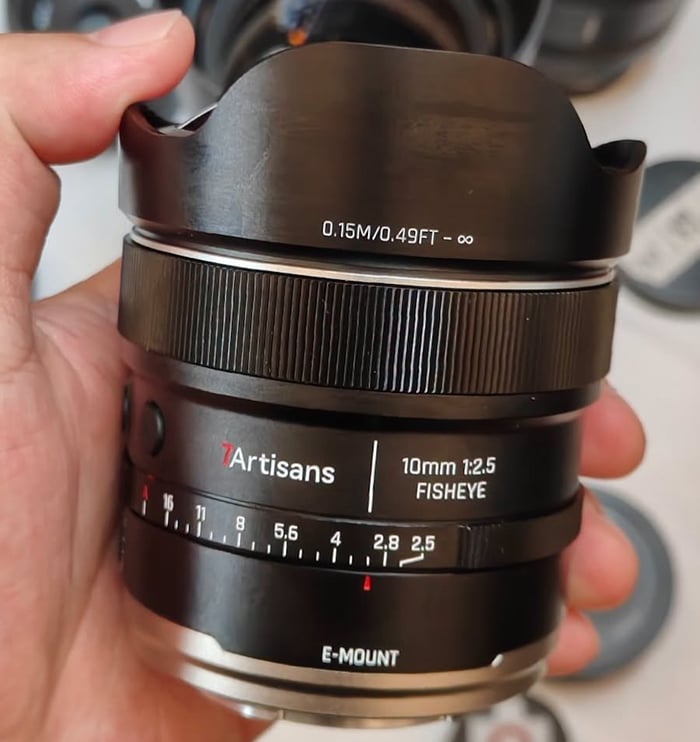
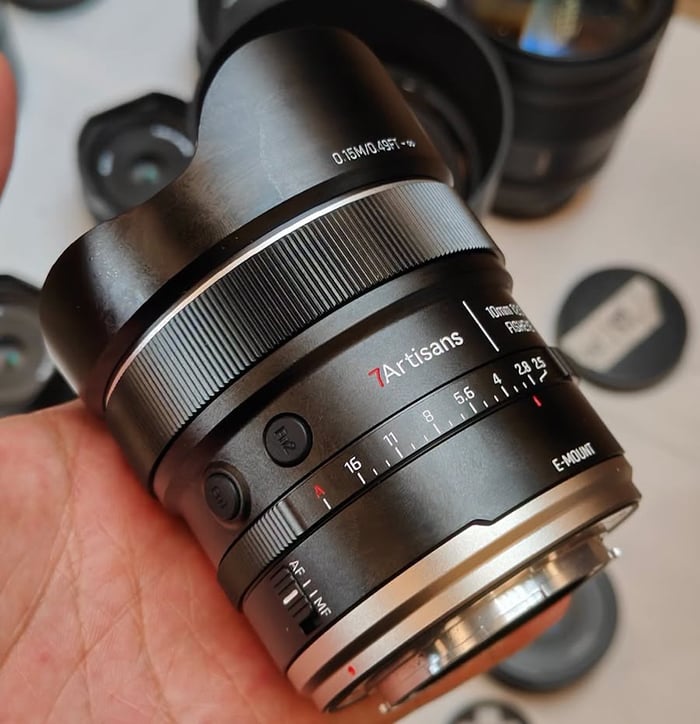
The company confirmed the launch of a new 7Artisans 10mm f/2.5 MAX Z lens on July 28:

When a fisheye lens is more than just a wide field of view 🔭
📌7Artisans AF 10mm F2.5 Full-Frame Auto Fisheye Lens
185° field of view, capturing the universe for you
💡MAX-level optical performance, autofocus for more efficient creation
Metal body, ≈504g, portable and stress-free ✅
⏰First release on July 28, 2026 at 11:00 AM
✨E/Z/Lcompatible

The images show the E-mount version:
Chris tested the four High Res cameras from each company. That’s what he thinks about them:

1. Panasonic Lumix S1R II (44 Megapixels)
  • At base ISO, this model resolved slightly less detail than the other cameras, though the difference is very minor.
  • At higher ISOs (above 5000), it applies aggressive baked-in noise reduction to the RAW files, resulting in cleaner images but a noticeable loss of fine detail.
  • It has the slowest readout speed of the group at around 37ms, which can result in more rolling shutter distortion when using the electronic shutter.
  • However, its in-camera high-resolution multi-shot mode is a notable feature that works effectively when shooting on a tripod.
2. Sony a7R VI (66 Megapixels)
  • Thanks to its higher resolution, it offers a noticeable improvement in overall detail, making it highly effective for heavy cropping or large-scale printing.
  • It showed strong dynamic range and high-ISO performance, which is attributed to image-stacking technology and the noise advantages of having more pixels at equivalent viewing distances.
  • Its readout speed has improved significantly over previous generations to around 19–20ms, though some rolling shutter can still be observed in fast-action scenarios.
3. Canon EOS R5 Mark II(45 Megapixels)
  • Its overall sharpness and detail are comparable with the Nikon Z8.
  • While it uses baked-in noise reduction in its RAW files, this sensor handles it well, preserving detail while keeping images clean at higher ISOs.
  • Equipped with a stacked sensor, it boasts a very fast readout speed of around 6 to 6.5ms, making rolling shutter virtually non-existent and making the electronic shutter highly practical for high-speed action.
4. Nikon Z8(45 Megapixels)
  • Like the Canon, it delivers strong sharpness and detail, but produces slightly cleaner shadow details and smoother blacks when shooting at high ISOs.
  • Featuring a fast readout speed of under 4ms, it allows users to shoot fast action and sports using the electronic-only shutter without worrying about rolling shutter distortion.
  • The sensor’s balance of speed, dynamic range, and clean image quality remains a solid asset for shooters.

So who wins?

  • For Raw Sensor Performance (Detail, Dynamic Range, and ISO): The Sony a7R VI is the clear top performer. It is favored for its high 66-megapixel resolution, which provides unmatched cropping flexibility, and its class-leading dynamic range (greatly aided by its dual-exposure image stacking).
  • For Speed, Wildlife, and Action: The Nikon Z8 takes the crown. Its sensor scanning speed of under 4ms is so fast that it completely eliminates the need for a mechanical shutter, allowing you to capture high-speed action with zero rolling shutter issues.
  • For the Best All-in-One Hybrid Package: The Canon EOS R5 Mark II is highly praised as the most versatile option. It beautifully splits the difference by combining excellent 45-megapixel detail, strong high-ISO noise control, and a fast 6ms stacked sensor that enables incredibly high burst rates with minimal rolling shutter.
In short, the Sony a7R VI stands out as the best for outright image quality, the Nikon Z8 is the best for speed-oriented action, and the Canon R5 Mark II is the best all-around camera that does everything in a single package.

Meike has officially announced the development of the AF 85mm F1.2 lens—a full-frame, autofocus prime lens featuring a fast F1.2 aperture. It will utilize Meike’s latest proprietary technology, prioritizing weight reduction while maintaining high optical quality; the optical design is already largely complete, with the lens body weight kept under 900g. Two development paths are currently being explored:

  1. Engineering plastic version: 750g–780g
  2. Metal version: 870g–900g.

Which version do you prefer?

–

via Weibo

This is quite cool: You can get a fast 50mm autofocus lens for just $89 at BHphoto, Amazon, and the TTArtisan Store!
Search

Search
Advertisement
SNAPCLOUDBack up everyphotoTry freeSample ad

Subscribe to Our Newsletter

*Please also check your spam folder if you don't get the confirmation mail. And mark the mail as "non-spam" to see the future newsletter.

Advertisement
Advertisement
Advertisement