







It’s your time. Thanks for all the stories and images you share with Fujirumors. Keep it up and share them via facebook, twitter and email fujirumor@gmail.com.
Lawrence
A couple of weeks ago I posted the top 10 selection of Lawrence after a month with the X-E1. If you missed it, then I recommend you to check this FR-readers zone here. Now another month passed and Lawrence wrote:
“Hi Patrick, last month you posted a link to my “first month with the Fuji x-e1” series of photos. Here’s my followup with month #2. Feel free to link / include / post on FR. Here is the link. BTW love your site – believe it or not, it’s the first website I check in the morning as I’m catching up on news. As a quick thank you, I just used your affiliate links to get a 14mm f2.8. Cheers!”
Lawrence
photos fuji can’t take
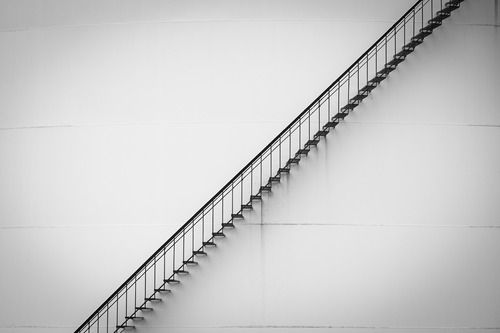
I don’t know if you’ve seen this website, but back when I first got my X-Pro 1 last year, I kept reading about how unusable it was due to the focusing issues and lack of a minimum shutter speed in auto ISO. I was surprised because I was able to get results that I was quite happy with. So I started a Tumblr blog with examples of the types of photos that people said you couldn’t take with the Fuji X-Pro 1.
http://photosfujiscanttake.tumblr.com
Most of the commentary is entirely sarcastic. I mention this only because a lot of people think I was being serious.
I thought I’d let you know about it since with the new firmware updates, the whole issue of Fuji X series cameras being too slow seems to be falling by the wayside, but I like to think my blog served its purpose.
photos fuji can’t take
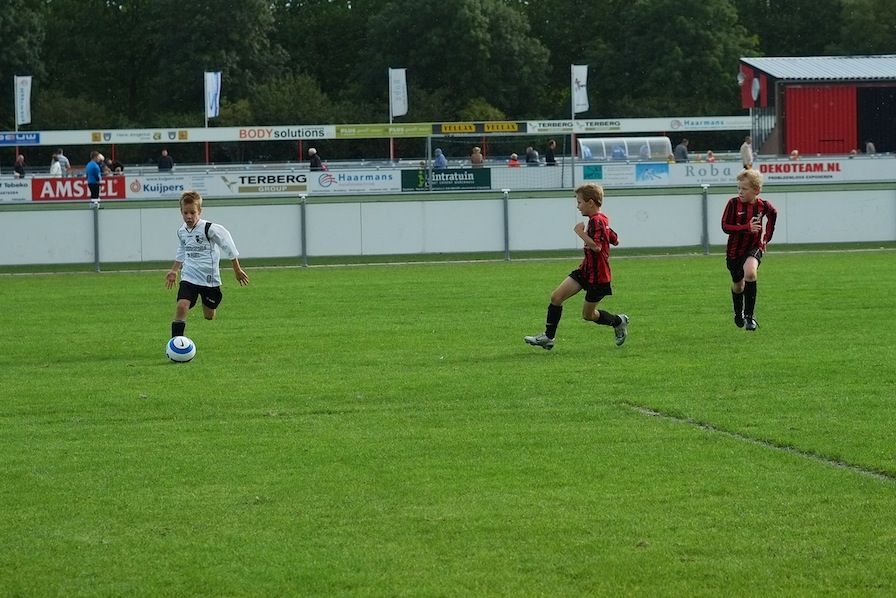
“The firmware 2.00 update clearly did nothing to help getting sports photos with the 60mm lens, which is still slow as a dog.”
Oli
“Good morning Patrick 🙂
Just wanted to send you a brief note telling you that while I’m feverishly checking online every day for an estimated availability date for the 55-200, I also had quite a bit of fun with the XF14mm lens.
At first I wasn’t sure whether I should invest, the price being quite steep after all, considering that I’m 110% satisfied with the 18-55 (once again: this is NOT your average “let’s throw it into the bundle”-kit lens!!!) , but the numerous rave reviews about its optical qualities made my G.A.S. (Gear Addiction Syndrome) kick into overdrive and I finally decided to treat myself to a three months early birthday present 😉
If you have a spare moment, please feel free to check out this short set here:
http://500px.com/OliGlod/stories/91244/going-wide
I continue to be wowed by the Fuji quality and can’t wait to get my hands on those 55-200, 10-24 and 56mm lenses 🙂
Best regards and keep up the great work,”
Check out also Oli’s thoughts about the XF 60mm here (Love at second sight). ” I turn to the Fujis for fun, quality and “soul”… Oh, and can you spell BOKEH-LICIOUS? :-)”
Oli

Byron
“Thanks for the fujirumors website. It’s always fresh, and it’s the only camera-lusting site I have time to indulge in. Here’s what I’d like to see adapted to Fujifilm’s newest flagship camera.
A square sensor. It’s my understanding that 35mm SLR cameras produce 2×3 ratio images because the mirror needs to flip up without contacting the rear element of the lens. Because the x-series is mirrorless, the option of shooting square (and in doing so bringing the mega-pixel count to a cool 24) would be a godsend for fashion photographers and art-documentation/product photographers. This IS a professional camera after all, right Fuji? Those who used to shoot 120s with a [shoplink 15463 ebay]roliflex[/shoplink] understand square obsession. Ideally all classic ratios would be Q menu options.
More focus options on analog switch. My [shoplink 15464 ebay]S5pro[/shoplink] ([shoplink 15465 ebay]Nikon D200 body[/shoplink]) and 85mm f1.8lens was the best combination going for candid portraiture. Fuji renders skin tones like no other, and the grain at 3200 was somehow pleasant in its film-likeness. But best of all, there was a switch at the back of the camera to choose AF modes. A closest subject or face-grabbing focus option switch at the back of the X-Pro 2 would appeal hugely to photo journalists and wedding photogs. The X-pro looks like a quick camera, it might as well start acting like one.
I understand that a dual processor is being introduced to greatly decrease EVF lag [admin: no trusted source told me ever about it]. This is essential. For a sensor that excels in low light, the x-trans deserves a viewfinder that can keep up with it. Good tweak Fuji! Let’s hope it delivers.
Manual controls in video. We know that it’s not primarily a video camera, but please just let us choose a frame-rate or lock down the shutter speed and ISO. The video has an RCA handycam-like auto exposure. And also, what’s with the dynamic range loss in video mode? I feel like I’m recording at SLP on my Maxwell VHF tape. I mean, I know it’s a retro styled camera, but really… 😉
The shutter dial is lovely, but I find that real-estate could be better used. I’d love little half clicks between 30, 60, and 125. Quite often the required shutter speed is 1/45sec or 1/90sec. Would those be delightful options to click to.
Also, when processing in-camera RAW, if the jpeg would appear with the same name + R it would slot itself after it’s parent file for easy reference and organization.
The panorama-swipe mode is a gadget. Get rid of it I say. Panoramas are better made with the camera held still and stitched in post. And please bring double-exposure to a Drive menu. That shit’s dope.
On a curiosity note. Ive always loved Sensia slide film, but I’d never heard of Astia. But they seam to render similarly. Is this a weird Canadian thing? but then “S” represents Astia as a quick-menu icon. What gives?
Thanks again for the wonderful website. I check it everyday. Have a look at mine for a Fujifilm fix. All photographs are from X-E1’s and S5pros. www.byrondauncey.ca
All the best
Byron

15 Responses
I have been wondering why there is no mirrorless camera with a square 24x24mm sensor. It would be nice to switch between square (24×24), landscape (24×18) and portrait (18×24) format without turning the camera. I guess one problem would be to get the corresponding OVF/screens, as these are not available in the market. Another problem maybe stronger vignetting towards the edges if using APS-C-lenses with this larger sensor.
Its probably cheaper to turn the camera! You can set the XP1 (and others) to a square format, and also 16:9. So between turning the camera and selecting the square aspect ratio you have everything already. Well, 50% and a compromise …
If I were doing lots of portrait at 2:3 I would probably use a DSLR with one of the grips that duplicates the various buttons and allows for natural 90deg rotation.
Given 23.6*15.6 current sensor size the image circle of of the fuji lenses is 14.14mm. A square format sensor 20mm*20mm would therefore give same level of vigneting/distortion as current DX sensor. A 23.6mmhorizontal * 20mm vertical sensor would be good – if DX format selected camera just uses the 23.6*15.6 part of the sensor as now.
One thing I’d like to see in the next gen cameras is very simple. Perhaps even in a firmware update to existing ones…RAW files at 12k and 25k ISO. The JPEGs are awesome, but as the ISO goes up, I tend to use RAW. The noise reduction is far too aggressive for me.
Shoot ISO 6400 and push the files to 12800 and 25600 with the internal converter.
Thanks. I’ve never tried the internal converter in that manner. I’ll give it a shot.
Totally off topic, but I figured you’d be able to help, Rico.
I’m about to purchase a Samyang/Rokinon/Bower fisheye, but I’m a bit confused. My understanding is that the lenses are all the same, just re-branded. B&H has them listed at all different prices. Is there any reason to pay extra for what I understand is the same lens? Or are there indeed differences?
Thanks in advance.
I believe the reason we have not seen a square sensor (like a 24 x 24) is the cost of the glass and the lens. Remember that the lens is round, but only covers a rectangle now. This means that the side to side aberrations must be corrected, but the vertical aberrations at the edges, do not need corrected because they are not in the image. Many pocket digitals offer a square image, but it is merely a cropped rectangular image. The size of the Fuji X-Series would be larger and the lenses heavier and more expensive to offer a square format larger then the 35mm size. As additional proof, look at the MTF graphs of the lenses.
Look at the specifications of the XF 14mm lens. The S stands for Sagittal (vertical) and the M, Meridional (horizontal). Notice how the S line drops down much sooner than the M line. The lens was designed to be sharp throughout the rectangular sensor size. The lens, therefore, in the vertical direction, begins loosing detail, micro contrast and other benefits after the edge of the sensor frame. Putting a square sensor behind that lens would produce an image with most likely unacceptable images in the top and bottom of the square.
It’s a great idea, but I believe that is what the medium format cameras are intended to achieve.
Don’t mean to be a troll, but there is not much truth in this comment.
The only thing that matters for the glass-sensor-combination is the diagonal. The single elements built into a lens are all circular. So if the mount would allow it, you could actually use them in an arbitrary orientation.
Sagittal lines are radial lines, through the optical axis. Meridial lines are perpendicular to them, so actually tangents to circles with the optical axis in the center.
There are no square sensors because people are used to and prefer 3:2. One could speculate about the reasons for this, maybe a relict of the film era, where 3:2 would give you a larger area with smaller film rolls. Or because you get a wider angle in one direction with the same image circle. But it certainly has nothing to do with MTFs.
If you look at it closely, you will even have less vignetting, because your optically sensitive area is in average closer to the center.
Thanks for the reply, Dirk, but you aren’t quite correct. You are right that there are horizontal and vertical directions in a circular lens, but the lens is designed for a rectangular image area. This is why you see the vertical axis of the lens lose detail much faster than the horizontal plane. I.e., the rectangle is wider than it is high. This is on every mtf graph.
This is why you can take a typical digital image and cut the sides off to make it square. My point was you could not simply take the wide edge of a digital image and make a square sensor without changing the physical lens. If this were true, more cameras would have a square sensor just so you could take a vertical shot without having to turn the camera.
Lenses look round, but the design is maximized to transmit detail to a rectangle. It would be much easier to design a screw that focused by rotating the glass. However, notice that lenses move in and out with the glass remaining stationary.
That all said, it would be an easy firmware update to add a square format to the menu by slicing off the sides. Maybe Fuji will add that option?
My wish list for the next X-Pro/X-E camera
1. No or almost no EVF lag even in low light.
2. Exposure compensation scale placed outside composition area (preferably in the bar below the composition area next to f-stop/shutter speed/ISO) and only visible when exposure compensation is set.
3. Dedicated buttons for ISO and WB adjustments (or enough Fn buttons to assign to ISO and WB without using the AF-point adjustment activation Fn button recently added in Fw).
4. Auto ISO like Nikon D7100 or at least like X100S (I know this has been announced by Fuji to come in a later Fw release, but we have yet to see it).
5. Built in flash on X-Pro too.
My wish list for the next X-Pro/X-E camera (updated)
1. Face detection AF like on Nikon D800.
2. No or almost no EVF lag even in low light.
3. Exposure compensation scale placed outside composition area (preferably in the bar below the composition area next to f-stop/shutter speed/ISO) and only visible when exposure compensation is set.
4. Dedicated buttons for ISO and WB adjustments (or enough Fn buttons to assign to ISO and WB without using the AF-point adjustment activation Fn button recently added in Fw).
5. Auto ISO like Nikon D7100 or at least like X100S (I know this has been announced by Fuji to come in a later Fw release, but we have yet to see it).
6. Built in flash on X-Pro too.
My wish list for X-e2:
1. tiltable rear LCD
2. hybrid phase/contrast AF. Ideally for a moving subject it can use phase detect only to track subject.
3. faster / dual processor for faster AF / lower EVF lag
4. 20 or 24mp
5. Auto iso min shutterspeed is higher of uses set shutterspeed (freeze subject motion) or 1/effective focal length (with user defined multiplier like D800). It should also remember different settings for OIS & non OIS lenses.
6. face detect AF
7. weather sealing
Rented an x-e1 and used it exclusively for three days during a family vacation. The EVF lag was terrible. Tracking birds in flight was near impossible. Tracking running kids? Same. I really wanted to like this camera but couldn’t. I’m waiting for the x-e2. Note: I’m over 40 so using the rear LCD for composition is a challenge without long arms or reading glasses.
Having used Leica for the past 15 years, I love the manual simplicity of the Xpro1. That said, I’d love to see a few items on the Xpro1.
1. I’d love to continue seeing manual, marked f/stop rings on prime and fixed f/stop zooms. I constantly adjust f/stops and want easy manual control.
2. Minimal weather sealing would make me feel better as my photography is mostly outdoors (maybe an XW series of primes weather sealed as well?).
3. I would prefer not to have a built in pop-up flash – we lose some weather sealing and they are way too easy to become loose and knock off. One like the X100s would be fine, but not necessary, IMO.
4. For such a solid body, it would be great to have a more sturdy battery/SD cover. The plastic one currently used is almost an insult to the rest of the camera build quality.
5. Would be nice to expand the multi shoot bursts instead of stacking them all together. It is difficult to see the images when they just run through a sequence. I may have missed that in the manual, but I don’t use it because of the stacking.
6. how about a green dot on the front? Just kidding.
I love the control and image quality and have used almost 90% of my final images as jJPEGs out of the camera. This is like film processing and I love it! Thanks for a great resource here, fantastic site.