






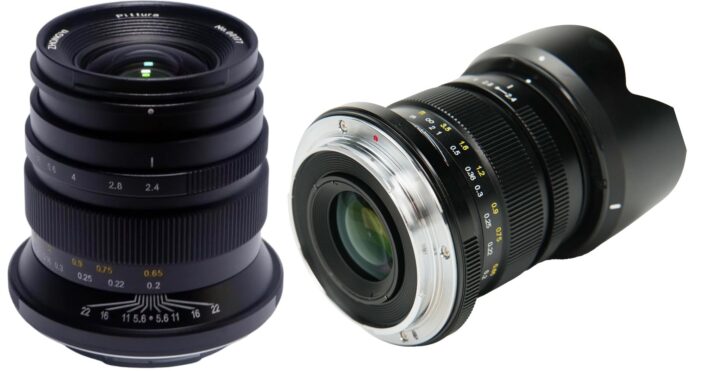


XF 16mm f/1.4
The Fujirumors Window to Photokina just started. So, if you can’t go to Photokina (like me), but don’t want to miss anything, stay tuned on Fujiumors also via facebook, google+, RSS-feed and twitter.
[UDPATE: Admiringlight posted a report with some more images of the upcoming lenses. In short: X100T: the new HVF rocks / Graphite X-T1: beautiful / X-T1 firmware: coming in November / 50-140mm: fast focus, marked aperture ring, very pleasant bokeh, zero chromatic abberation “even when shooting sparkling silver jewelry” / 56mm f/1.2 APD: softer out of focus renderings and a bit more wide open contrast. / 140-400mm: 86mm front filter, Very fat, but somewhat short for the focal length / 90mmF2: larger than any of the 85mm f/1.8 lenses for SLRs / 16-55: “When I inquired about the lack of stabilization, I was told that the 16-55 had the stabilizer removed in order to improve the image quality further“.]
After the 140-400 (click here) more images surface on the web, showing upcoming Fujinon glass:
– the 16mm f/1.4 with focus clutch mechanism, DOF & Focus scale – filter size 67
– the 90mm f/2 – filter size 72
via ephotozine
Fujinon XF 90mm f/2

112 Responses
Is the 90mm f2 a Macro lens?
No
shit… stil waiting for that kind of lens then…
The zeiss covers that! Fuji is vary unlikely to make one?
Zeiss is too short, ugly and expensive…
If not a macro, what is it? bigger and slower version of 56 1.2? That doesn’t seem to make sense.
A portrait lens?
doh…i was thinking 56 v 60, not 56 v 135.
This is to mimic the classic 135/2 lens from 35mm, mostly used for portraits. Like the 56 is for classic 85mm lenses.
uuuhhhh nice!!! I want that 90mm f2!!! now? 😀
For what they are, those are TINY wow
Yep and someones going complain they are to big too. Get over it they are as small as can be at the F stops they are, If you want small you will have to shoot slower lens end of story.
It’s nice to see they’re using the small flange distance & mirrorless-ness to their advantage. I immediately thought of the miraculously tiny leica 21/1.4
That Leica is a beast. But then again, it is a super-fast wide angle. You’d need 14/0,95 or so to match it in APS-C, and that, too, would be huge.
Yes, someone will complain, and I am that person. It’s not about maximum aperture… Fuji just doesn’t try hard enough on compact size (just like they don’t try hard enough on image stabilization.) My X-Pro 1 with the 56 on it is as big as some 36×24 cameras with similar or greater shooting capabilities. 90mm is a focal length I need, but from the looks of the photo I might as well go back to lugging around a Nikon…
I was thinking the same thing about the size of the 90. Between the weight of the X-Pro1 and that 90mm, I might as well be shooting with a Nikon again.
Also looking at the widh of it, I guess it goes without much say that using the X-Pro1’s OVF is going to be out of the question entirely now.
” I might as well be shooting with a Nikon again.” it all depends on the lens quality
Not so sure. If lens draw (OOF, etc., is what matters, I prefer Fujifilm) but in terms of actual lens resolution/vignetting, and all the measurable benchmarks are collated between same generation non-kit lenses, you’ll have to split hairs over which is better.
Sorry these are super big hands…. 🙂
Explain me the meaning of ‘TINY’. Oh, wait, I get it.
TINY in caps. An irony.
That 16mm looks about the size of the 23mm. That would be nice.
And the 90 looks like a clone of the 56mm.
72 filter size vs 62 is not a clone, but a huge one.
I also don’t understand why the excellent canon 85 1.8 for full frame is smaller than this 90 f2 for a crop sensor.
oh well, i was really hoping for 16, 23, 56, 90, and eventually the rebuild 35 to all be 62mm filter size.
My ideal set up…
90mm compact enough but how much weight? Want, want, want. )
Compact enough for what? It’s huge.
I want a 23mm f2!!!
Buy x100t 😉
Is there a reason why you can’t just use the 23mm f1.4 and just turn the aperture ring over a few chicks?
Yes, the reason is the size of the 23mm f1.4. Too large for my taste. And no, I don’t want to buy any x100t instead.
Don’t buy X100t. Buy X100. Much prettier JPEGs
Badda boom! Wait, that was a real question?
Indeed, it would be great if Fujifilm started making small, compact lenses in line with the 18, but focused on size and quality rather than speed.
Shipping and price on the 16mm?????? this is going to be a well used lens
one year from now i guess
“When I inquired about the lack of stabilization, I was told that the 16-55 had the stabilizer removed in order to improve the image quality further” – interesting. I guess a floating element or two could degrade image quality. I for one am glad to see them putting optical quality above all.
That was also always Canon’s reasoning as to why the 24-70 2.8 never got IS.
I personally however prefer to have image stabilization on zoom lenses of that focal length – if image quality is crucial, I can always use a prime lens.
Nikon as well. You do have to give further thought to the matter if most makers of glass are going the same route. Sure IR/VR/OIS is not cheap, but when you’re talking $18oo-22oo for a lens,a few hundred is not much to add to the cost. I can in a way see the logic of why pay more to degrade the quality of optics in a nearly $2k lens
The lack of IS has to do with long time reliability. The first generation of autofocus lenses (without micromotors) lasted no more than a few months of daily use without needing to realign elements. Vibrations in the car booth were sufficient to degrade the quality. Now IS needs another set of free moving lenses, which means more risks of going out of alignement due to use and vibrations. Of course the differences are more visible at wide apertures, where depth of field does not compensate for defects.
Have we not been saying this for months now? 😉
But it’s nice to hear them say it indeed, according to Jordan Steele that is.
Please. If you think OIS ruins images then there is an option to turn it off. That said, including stabilization, like other Fuji lenses, would have been a better solution for a broader number of users.
Not my words, but Fuji’s. I would imagine (being only a layman) that the problem is that it’s the ability for the element to move that is the problem. So switching OIS off has no effect as the element may still be slightly out of alignment.
90mm F/2 looks sweet!
A little fat though, but i bet it’s worth it.
“”When I inquired about the lack of stabilization, I was told that
the 16-55 had the stabilizer removed in order to improve the image
quality further””
Yeah, handheld image quality will be “improved”. Landscapes are great with shake blur. This is a blunder of epic proportions.
Of course stabilization does not belong in each and every lens, it must be on the sensor (for rotational and translational stabilization too) – but that is not provided either.
Personally I would ditch IS for better IQ any day. If the IS was reducing IQ good riddance… I don’t use it much as its not like it stops movement in landscapes or on the street.
I guess you drug a big and sturdy tripod with you all the time, or only photograph in bright sunlight.
Yes because you have absolutely no chance of getting 1/60 sec at f2.8 on an overcast day. Where does this nonsense come from?
I guess it comes from people who learned how to stop down.
Thanks, point taken. But I would personally never stop down to the point where I could not confidently hand-hold without some other form of support.
The thing is that your confidence level will rise with the availability of IS. Mine did anyway, and so did my keeper rate in low light conditions.
Of course IS is not going to help in every situation and I’m sure that its proponents are well aware of that. It’s just another one of many conveniences that photographers have at their disposal these days and it can be quite helpful if you are aware of its limitations.
There are other times of day except daytime, and there are other locations besides outside in the light of day.
Shoot landscapes with 18-55. You don’t need wide apertures anyway. If I need top quality I don’t trust ois and use tripod anyway. So better optical quality is welcome for me.
Fuji’s OIS is a joke anyway. Endless threads about blurred photos with it on.
I have no complains even on my crappy XC 50-230. It always adds at least 3 stops to shutter speed with no blur.
18-55 is not wide enough and I who in their right mind would own both? Waste of money and bag space.
2mm makes little difference. If you need to get really wide you need 10-24 anyway.
Not that little, more than 10%.
In math sertanly but not for practice. When I shoot fixed lenses and I use only 2xFocalLength step like 12-23-56-(90 for future). IMHO 10% is nothing to talk about.
“This is a blunder of epic proportions.” Really?…. master of understatement, I guess.
Invest in a tripod perhaps? They tend to be the hallmark of landscape photographers…
You’d be surprised in the number of situations where you can’t use a tripod for a landscape shot.
That 60mm should have a DMF or WR, or both. Otherwise, why sacrifice a focus clutch?!
(wishful thinking)
because the clutch is really most useful for street photography (or at least that is the sales pitch), and 135 is a little long for that (assuming you meant 90, not 60)
Yeah, I meant 90mm (edited original comment; it was surprisingly easy, thinking about abusing these editing powers now)).
Clutch is extremely useful. I use it all the time on 23 and 14mm primes. Could’ve been of great help on 56mm, but it doesn’t have one…
How come this 90mm f2 is larger than the Samsung 85mm f1.4 (also APS-C mirrorless)?
They had to have room for the magick Fuji pixies.
well, there might be some truth to that, when we eventually have 36mp APS-C sensors it will be nice to already have lenses capable of resolving the detail
There’s no way it was going to be a small lens. Fujifilm have the habit of making medium-large lenses for small sensors. It will make great images, but probably make you wonder why you ditched your dSLR.
Why does 16 have DoF scale on lens if DoF scale is viewable inside EVF??
And why do any of the Fujifilm cameras have ISO, exposure speed, or correction on labelled dials? It’s all available from the EVF.
Is this a real question?
Never heard of a “hyperfocal distance scale”?????It’s how we old school types shot street, sports, and weddings before auto focus and film speeds over a.s. a. (Iso) 400.
Comments from home chair???
It’s disappointing that none of the mirrorless makers has iterated their pancakes. Lenses get bigger and bigger, but the small pancakes are what makes the systems really portable.
And that 90/2, which many people said would be small, is a beast. Biggest 135/2,8 equivalent lens I’ve seen.
I’ve seen bigger
That’s what she said
I do not see that it’s big and dark compared to 135mm is not correct. A few more shots 90mm. http://tinyurl.com/q7dhf2a
it’s disappointing canon’s 85mm is larger than their 50mm and especially disappointing that their 135mm is larger than their 85mm. oh em gee…
You may have missed my point. Which was only that I’d like for the small pancakes that make up much of the systems’ appeal to get a little bit more love.
none of them, not only here in Fujiland, has been updated.
Fuji made wrong decision about their stabilizer. OIS is a big joke and never efficient.
They should have used IBIS like Olympus.
With IBIS, every lens can make use of stabilization, even with legacy lens! It also makes lens smaller because the stabilization system is installed in the body. Problems solved.
16-55/2.8 is the example. The lack of OIS is because of the impact to IQ. What a joke?
What if the xp2 has ibis?
Or the X-E3?
I don’t think they will have it. But I hope I will be wrong.
In lens or in body stabilization. They both have their pros and cons. You’re taking a very simplistic view of the situation.
ois is generally better than ibis as far as stabilization goes. how bad at taking photographs are you that you absolutely need it with a fast lens?
the 16-55mm was to keep a constant f2,8 aperture.
don’t forget to stop by canon’s and nikon’s sites, too.
OIS is better according to whom? It is only better in certain specific situations. And what happens when one day there’s a new stabilization technology? You prefer to change the body or all of your lenses?
“ois is generally better than ibis as far as stabilization goes”
Please enlighten me what makes you think so. In general, In-OIS is better than IBIS in only one case – long telephoto lens.
And, except this one, IBIS is better for the rest of scenarios. I’m sure to say this because I use Fuji, Olympus, and Nikon gears.
@Matt012
100% agree. OIS and IBIS have pros and cons, but OIS lead to more disadvantages than advantages.
Ultimate fail on Fuji’s part! The 16-55mm was the lens I was waiting for, but with a 77mm filter, this lens should have had OIS to justify the size. Now it just looks way too big and perplexes the mind as to how it can be thicker than the 50-140mm than is both slimmer AND stabilized. This seems like a sad, sick joke on Fuji’s behalf and the main reason why I will pass on the X system.
“main reason why I will pass on the X system” – yeah right. I’m almost certain you can find some small reason to pass on every system available and thus will remain cameraless and lonely for the rest of your natural life. How cruel Fuji, HOW CRUEL!
Say what you will, but we all have our reasons for investing into a system. For me, I love the ability to zoom with fast constant apertures in low light. That is why I was waiting for the 16-55mm to make its debut. The fact that it will be lacking OIS is a major disappointment for me and has crossed Fuji off the list of potential systems.
Hopefully, Fuji is the sole company crazy enough to possibly upgrade an existing lens so close to the original’s distribution. Similar to how they updated the 56mm, maybe they will also update the zoom to carry OIS as well!
So you’re saying, you’re not skilled enough to shoot without IOS? (even thought you are getting quality on the other side).. It is sad how you people complain about technology over glass quality. im glad you are not switching to fuji, because i think you are not skilled enough to use the system.
umm.. because the 16-55mm kept a constant aperture to justify its size.
Yes, but the 50-140mm also has constant aperture, includes OIS, and has a slimmer profile. The word from Fuji is that it also has stellar optical quality as well. Why couldn’t they do the same with the 16-55mm?
I love that big fat 90mm/f2!
Btw, I am just an amateur and don’t need worry about carrying that thing for hours on a wedding. And I personally don’t care about OIS at all, I even don’t like it.
Yes, fuji is gonna be fatter and fatter, no doubt.
Yes!! Cant wait to get this baby!, always want some decent AF 135 mm equivalent for Fuji X,
Mi idea of “the holy trinity” will finally be complete. 16 1.4, 23 1.4 and 56 1.2 🙂
Well, if Fuji ever enters the FX-arena, I’ll need a bigger bag than for my pro-DSLR-stuff now. Clear. Looking at Fuji, the story about MLICs being lighter and smaller is just becoming a myth – no more.
Complicated lens designs and large aperture primes will always be big and heavy. They even get bigger and bigger over time (Zeiss Otus). The only exception from that are Leica M lenses. But please look at their prices before yelling about Fuji.
However, Fuji cameras are small and paired with the right lenses you have at least plenty of possibilities to keep your system compact.
So I cant see any type of myth.
It probably delivers extra image quality. The Canon 85 1.8 is good/great but not exceptional.
Let’s not be too fanboyish. The Canon EF 85 1.8 gets rave reviews, tests with excellent sharpness and bokeh. Something is amiss with the size of the 90mm. They say it’s a mockup so hopefully the production model will be more reasonably sized.
OMG, with the 16/1.4 a wet dream will come true! 20 years ago, the responsible designer would have been sent to the insane asylum.
The focus clutch mechanism with the distance and depth of field scales of the 16 and 23mm lenses should be standard to every prime lens, except the pancakes.
Well done Fuji, well done.
90 f2 looks like a 90 f1,2 – so fat… I would have expected a much slimmer lens. Probably very heavy too.
16-55/2,8 no OIS? Why? Not very convincing. 18-55 with OIS is almost as “fast” as 2,8 without. Strange. 2,8 is also very very big and looks so heavy that the benefit of mirrorless cameras is almost negated.
Stabilization does nothing for moving subjects. Ill take the constant 2.8 any day of the week.
I don’t get paid by Fujifilm but used about anything else over 60 years. This is clear: Fujifilm have done the most creative, intensive and substantial progress in camera and lens design history in a very short period. In Fujinon here is no so-so lenses, good lenses and stellar lenses. Only stellars that stand up against ANYTHING ever made by ANYONE. (despite those loose aparture rings I just can’t get). They really make history and made many of my dreams come true already. Never a doubt about Fujifilm glass or cameras for me whichever gets in my hands. If it’s a bit heavier, a bit fatter, a bit longer than you expect, no OIS., it has a reason and it DOESN’t matter!!! It’s just an excuse for a creatively handicapped why you can’t be a Photo God. I don’t see anything better out there and I can do anything with them better than ever before. You spoiled and picky skepticals get your bag, go out and shoot, show what you can get out of your gear and spend less time with finding flaws and blame the best. Because finally it’s all on you not about the gear anymore. Fujifilm is on the mission.
Did someone actually say “epic fail” in this forum?! Fuji lenses are beautifully crafted metal objectifs that put the overpriced, mediocre plastic offerings ny canon and nikon to shame…after 30 years shooting nikon, I can speak authoritatively on that. As for the ‘full-frame’ snobs that love to throw out uninformed comments here, I’m happy to pay attention to comments from true pros who spend less time pixel-peeping and more time selling their incredible aps-c images…sensor size matters far less than sensor performance. A Fuji sensor accomplishes something none of my 5 Nikon DSLR cameras could never do…record EXACTLY what I see. I’m fired up over Fuji!
Now that the XF 16-55mm F2.8 has arrived, what about this XF 90mm F2.0?