







[shoplink 43784 ebay]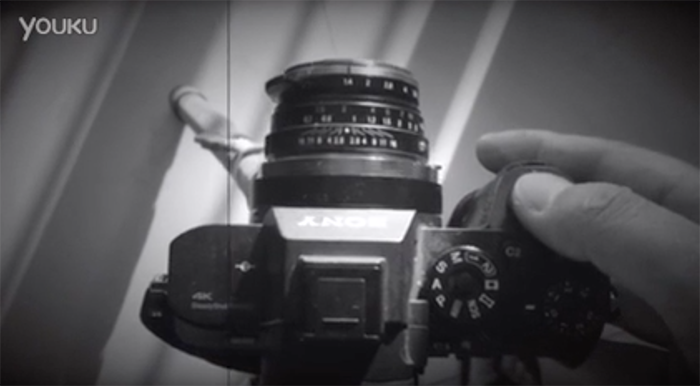 [/shoplink]
The developer of the M-mount to E-mount autofocus adapter contacted me yesterday to share some more info:
Just to let you know that we will be officially distributing the coming new Techart Leica M -> Sony E autofocus adapter globally. We are now in the stage of pilot run for a small batch and it should be ready by mid/end Jan if everything goes smooth.
If SAR readers have any question please comment this post and I am sure the developer will answer you!
55 Responses
Great news, they will have more time to finish the development of the buggy EF-NEX III …
Interesting how they state here that they want to answer questions about new/upcoming products, however existing customers have no way to contact them regarding issues with existing products.
This is very tempting…but I don’t think the movement range is large enough for many tele lenses.
Are there any long Leica M tele lenses? The longest I’ve heard of is 135mm
Does it matter? How many people own actual M lenses, compared to those who own other manual lenses that could be adapted to M?
I guess you can start focusing to the approximate subject distance and
then let the AF work. The movement is large enough in this case and this
method allows to focus faster.
That’s the only way.
You would set the tele to MFD then let the adapter work. You could actually then macro focus it in a way. I don’t really think this was designed with telephoto lenses in mind though.
I doubt if it could focus very close with an 85mm. Focusing on the body and with the lens at the same time could take some getting used to!
After my experience with the Techart Canon AF adapter, I would stay away from them. The build quality is not very good as compared to even commlite. I guess they need to work hard on the overall product quality and finish too, not just on the internals
Maybe it will be in the same manner as it works…it’ll be sent out, then it’ll come back, be sent out again, then come back…?
As a casual observation, I hope their work is a little cleaner than the body they use for testing…it looks like the dog buried it first!
Afaik they’re a little workshop, this is to be expected.
Their post-sales support also leaves much to be desired.
I would give them the benefit of the doubt if they were at least attempting to provide a method of tech support/bug reporting/feedback, but the reality is – there is NO way to contact them to provide a bug report with data and most of their previous adapters go for ages without known issues being fixed.
The only “contactable” entity is their reseller, DEO Infinity – but even they are difficult to communicate with and clearly unable to handle trouble reports. I attempted to contact Techart regarding an issue with the EF-NEX III back in October and received no response from DEO beyond “we’ll send to our engineering team” – I have received no requests for clarification/additional data, and the issue has not been fixed with a firmware update. http://www.dpreview.com/forums/post/56620518 is the issue to be specific
Similarly, multiple people have reported to them that the EF85/1.8 USM is unusable with the EF-NEX III, but there has been no effort by them to rectify the fact that they have not implemented focus motor speed control in their adapter – http://www.dpreview.com/forums/post/56692298 – This leads to severe hunting/overshoot without ever locking AF on lenses with very fast AF motors.
We are the NEW global distributor of Techart (for this item only) and will handle all the pre/post sales enquiries for this new Leica M – Sony E autofocus adapter. We will do our best to answer everyone enquiries and provide a better customer service. Thanks!
It seems to me that this is one of those contraptions that if it was a good idea would have been implemented many years ago.
I know there are occasional inventions that make you wonder why no one thought of it before, but I don’t think this is one of them!
I think it was. They even put autofocus into lenses. Then you don’t need this.
“but I don’t think”
Yes, this is clear.
What is your problem?
I can only assume either you are the worst troll on the internet,or you have some pathetic inferiority complex and try feebly to make yourself look good by posting endless contradictions, or drivel.
No other explanation fits your behaviour.
Another comment from the brilliant mind of Peter Kelly!
You don’t get my comment, you don’t get this device… You don’t seem to ‘get’ much…
I get it all perfectly, thank you, and I would love you to point out anywhere of anything that I have said which is materially incorrect.
Oh, but of course you can’t.
You spend your time failing miserably in your attempts to impress; what a sad little man you are.
Your comments prove you don’t get it and you have said nothing to disprove this, other than to say ‘I get it’.
You need psychiatric help, dear boy. Seek it and seek it soon.
Another top Peter Kelly response. Please, continue.
he’s right
Who’s ‘he’?
Would you be referring to MdB, who is clearly a nasty piece of work who only likes to throw around insults?
Or are you referring to me, in which case I’d love for you to provide some illustrative evidence?
Nikon had this kind of adapter long ago.
So does Pentax but theirs were converters: Nikon TC1.6 A and smc Pentax-F 1.7x AF Adapter.
They had to be to account for the change in flanges distance.
Indeed or, rather, the other way around: since camera and lens had (obviously!) the same flange distance and the interposed autofocus adapter must have some thickness, they had to make it a teleconverter so as to increase the lens’s flange distance.
The beauty of short-flanged mirrorless camera when used with legacy manual focus SLR lenses is that one can interpose an autofocus adapter between camera and lens without having to make it a teleconverter, thus without any glass nor altering the lens’s original field of view and optical properties.
In some cases – just because it’s a good idea doesn’t mean it’s easy to implement.
It was not until recently that third-party E-mount adapters with anything more complex than a stepper motor screwdrive existed. Even for 100% electronic protocol conversion adapters, there’s still enough unknown about the E-mount protocols that no adapter in existence works well in all use cases.
As more and more gets known about how the E-mount AF protocols work, it becomes easier to implement different kinds of adapters.
“this is one of those contraptions that if it was a good idea would have been implemented many years ago”
Alright how about this, there ARE devices like this, have been for years. It is not a new concept, however there have been limitations in the past because of flange focal distance, which needs to be able to be made longer and shorter than the lenses native flange distance. This has not been possible with DSLRs. Minolta, Pentax, Nikon and Contax have all done this in various ways in the past.
Now there are mirrorless cameras with room for adjusting the FFD, great! However there hasn’t been any platforms with excellent on sensor phase detection before, apart from the Nikon 1, which nobody seems to have cracked yet anyway and besides, who wants to use Leica M glass on a Nikon 1? Seems like it would be a pretty small market.
So there you have it, a change in circumstances have changed what is possible / viable.
But you sir are too arrogant to admit that you don’t understand, so instead of ASKING ‘I don’t get this, if it was a good idea wouldn’t someone have done it before?’, but instead mouth off as an expert.
“but I don’t think” still stands.
Good day.
This will be my last comment on the subject, as you are too tedious and blinkered to make any more effort worthwhile, but I will put you right on a few points.
First, I never ‘mouthed off as an expert’ at all; I merely expressed an opinion, which I’m perfectly entitled to do, and never made any claims to it being a more valid one than any other. Indeed, until plenty of people have had the opportunity to conduct tests, no opinion can be judged at all.
As to ‘devices like it for many years’, my understanding is that they were teleconverters which allowed AF. The very fact that there are so few in evidence demonstrates reasonably that the implementation was never particularly successful, which was the entire basis of my point (I have no intention of apologising if I didn’t word it very well).
With regard to its possible merits, surely the idea of using such a device would be to make use of lenses with desirable qualities and give them AF, but unless this works perfectly (presumably made to Leica standards if we’re talking about Leica lenses) then most of the benefits of the desirable lens will be lost. It would be a singularly pointless exercise to spend more money to achieve a function at the expense of the very reason you might have the lens in the first place!
Finally, you again provide a superb example of irony. Absolutely text book! If you weren’t so arrogant and had read a post that you thought was lacking in understanding, all you’d have done was to provide the missing information and educate the writer. But no, in your supercilious, nasty manner, that you repeat time and time again, you wrote a one-liner put down because you think it makes you look clever. It doesn’t. You are an especially miserable example of a troll.
Lots of excuses and nothing else. Boring as usual.
FOR THE DEVELOPER: you mentioned that with the old A7 and A7r it might not work properly. Are you referring to af speed, or to af accuracy as well?
Yes. Since A7II and A7RII has a different focusing mode which allows a better user experience with this adapter, we suggest users with these 2 cameras to use our adapter. You can still use in old A7 but the speed and accuracy may not be optimal
Ought to be workable for unit focus lenses that move the whole optical system back and forth.
It isn’t ideal for lenses with floating rear elements, which change their internal geometry for close focus rather than moving the whole shebang. But perhaps you could scale focus those on the lens to be about right, and then let the adapter make final adjustments.
Correct and agreed
awesome!
I don’t get it. You pay a lot of money to get the best manual focus experience available in digital (Leica+Sony) – and then you put this gems on this adapter …. NO WAY!
Yes, there are situations where autofocus is needed (at least for me :-)). But then lets take one of these nice Zony/Seiss autofocus lenses – they are good!
I guess most people are excited because this adapter is like a proof of concept that would allow many oher mounts to get af-adapters without the painfully tedious and expensive need to reverse engineer all those electronic af-protocolls. It is also a workaround for AF-systems that use screw drive motors in the camera body. It sure seems to have some downsides since the focus reach is limited and might not work with longer focal lengths but it is a really innovative feature when crammed into such a small adapter.
There are situations where if this was a subtle, refined solution that it could be the difference between hitting and missing. Unfortunately, it’s unlikely to be that.
There’s nothing to get, unless you are paying for others people’s equipment.
I think M-mount might be the most used for third party makers.
I’d love to test this with my M-mount lens with my A7rii. So cool.
Does this pass 6-bit coding?
Do you want me to make a better video for you?
When AF is disabled, does this move into a ‘resting’ MF position where the flange distance is standard M mount distance or does it just ‘stop’ wherever it happen to be when the AF was switched off? This will be important.
Maybe they can make one with a full time manual override.
Of course full time manual override is possible (they are completely manual lenses after all) however the position they are in at the time of MF will determine the range in which they can focus. It needs to ‘park’ in a position where essentially infinity is infinity, or in other words at the exact same flange distance as M mount.
Agreed this is an important question for the developer, as it impacts whether the adapter will be able to be used as a manual focus adapter when desired.
We have taken this into consideration and so you will be able to set in the mobile app the resting position of the adapter. Either stays in the last focusing spot / standard m mount distance / or somewhere in the middle.
As a B&H customer who has been waiting months for a Deo-Tech Contax G to E adapter I’d like to see Deo Tech focus on filling existing orders….
A new clean video demo would be nice to see…
It is an Idea I had since 10 years, and proposed to many suppliers and camera manufacturers.
So, you can imagine how I’m Happy.
Just I wonder why they had chose the shortest flange for this, with brings mechanical limitations to the clearance. Well, with the advantage we can replace the lens mount with any kind with a simple little adapter.
And, if the clearance is too short, we can adjust the focus of the lens itself to be close enough to our subject, depending of our practices.