







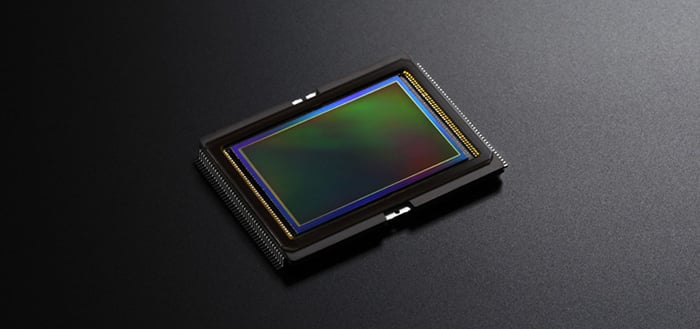
Sony announced that it will split off its semiconductors operations and create a separate company. This will help them give autonomy to accelerate decision-making and make them more accountable for their profitability.
Engadget. writes:
The move means that Sony’s core businesses are now mobile, gaming, imaging (cameras), movies, music and financial services. Those businesses — especially mobile — will now have to stand on their own without sensors to prop them up.
As we know from previous reports the camera division is doing fine. And todays Sony decision will not change anything for the future.
92 Responses
I wonder if other companies will now get access to sensors at the same time as Sony branded cameras instead of the rumored “six month delay”
A7s sensor have been exclusive 18 months and counting. I wonder how much more time has to pass before people accept Sony cameras have higher priority for Sony’s semiconductor division.
Nobody needs 12mpix FF sensor in today’s photo world. It is basically for video cameras, but not optimal for those either. Only Canon could be interested in that, having lenses to cover it and video camera division to sell it, but they have sensors of their own, with OSPDAF etc.
Just out of curiosity, what is your prediction peevee?
Do you think Nikon will have Sony’s 42 Mp BSI sensor by April next year?
My suspicion is that they’ll skip it. A D810 update might appear in Q1 of 2016, but I’d be a little surprised if it was only 42mp. That said, the next generation of Nikon DSLRs will be distinguished more by another component than the sensor.
That is too convenient answer. You leave me with the impression that Nikon isn’t interested in the 12 Mp sensor, nor are they interested in the 42 Mp sensor, but are very interested in the 36 Mp sensor.
This doesn’t seem very credible to me. It’s kind of like saying “Nikon could get that 42 Mp sensor any time they wish, they simply choose not to have it“
Nikon doesn’t seem interested in revisiting 12mp. Within their customer base, there doesn’t seem to be demand for it. If Nikon were stronger in video, maybe.
I didn’t say a D810 followup would be 36mp. ;~)
Well, we know for a fact that Nikon is very interested in 24 Mp and 36 Mp sensors. It’s their bread and butter in the high end.
It just seems weird to suggest that Nikon has no interest in the 42 Mp when they so obviously love the 24 and 36 Mp they are providing their end customers.
You seem to be missing the subtlety of my point: I expect the D810 replacement to be in the low 52-54mp range, not 42mp.
I actually agree with you. If Nikon ever upgrade its 36 Mp sensor, they will have to commission a new sensor from one of the sensor foundries.
And depending on when this new sensor was commissioned, it may or may not have the BSI technology. For example if it was already designed prior to the reveal of the A7Rii, then the next Nikon sensor will most likely not have BSI.
They won’t be able to get their hands on the 42 Mp sensor for cheap, since it wasn’t their commission, and they don’t own the design of it.
I’m not sure BSI gives all that much benefit at these photosite sizes, and it’s clear already that it costs more to produce, has lower yields at large sensor sizes, and has additional heat-related issues. Sony needs the BSI more for the short flange distance than they do for DR. Better side-to-side color integrity is not something Nikon needs for F-mount cameras; they already have it.
Given that the 36mp sensor they’re already using actually tests better than Sony’s new 42mp sensor, I don’t see them moving to it for only 6mp more. Further, they don’t really need the PDAF on the sensor itself. Much more likely they’ll take their Toshiba-produced DX sensors and make them FX with their next generation of improvements, which puts them in the low 50’s in mp, and matching Canon, their primary competitor.
The A7rII sensor is pretty good in my testing so far. But it’s not really a game changer by itself. To me the bigger pluses were 4K video and better focus, not better pixel quality. But even those have some small drawbacks.
Thom, any idea why Sony didn’t scale up their 24mp DX sensor?
Yes. Sony has moved Exmor through now six or seven increments. They’ve been reducing process size, thinning the silicon layers, changing the photo diode/electronics positions, and much more. I think they’re trying to pull the Intel thing, where they just keep the target moving against all competitors. It’s expensive on the R&D side, but it means that they’re state-of-the-art across all sensor sizes if they pull this off right. Sony’s at 150nm process while Canon’s still at 500, for instance. The BSI gives maybe another third of a stop benefit (more with even smaller photosites). The stacking gives them faster refresh and lower rolling shutter issues.
Just scaling an existing design up is easy, but it doesn’t really give you a benefit over competition. Remember, Nikon has that 24mp Toshiba sensor they could scale up to FX very easily.
Curiously, Nikon is the other company that doesn’t seem to keep scaling their sensors. They’ve done it a couple of times, but mostly they’ve been at the forefront of changes in internal structures and electronics support, much like Sony. This seems to be coming from Nikon’s work in steppers. As the stepper side discovers how to do new things on the fab, the imaging side is trying to exploit it.
Thanks for a very interesting comment!
Oh God no, you mean XQD card in D8xx body? 70MB NEFs? so I hope they also make a “s” edition with 27mp sensor.
If I may be so bold as to ask, what is this other feature that will distinguish the next gen of Nikon DSLR’s? The AF? Hybrid VF?
Wish I could be specific, but it might give away the source.
I think lead times on such developments are longer than that. Nikon MIGHT have 42mpix by April (or tomorrow), but it would only mean that they started development with it many months ago.
From general consideration, I think by Photokina 2016 Nikon will announce something to compete with 5Ds and A7r2, Sony or not. For example, Toshiba might well made something for them – say, a ~55-60mpix sensor based on the same pixel architecture as their 24mpix APS-C sensor. If Sony is not willing to sell them their 42mpix at the price Nikon wants.
Oh well, from the way you argued, I thought you were sure that Nikon would eventually get the 42 Mp BSI sensor from Sony.
I don’t know how much this matters to average consumers. I am not buying a new smartphone every year, either would I buy a new camera every year. Not very desperate to get my hands on any new camera.
The company is still owned by Sony. It’s simply changing from being under the umbrella of Sony’s devices group which includes storage and batteries into Sony Semiconductor Solutions
I think this is very much about creating “clear water” between the sensor and imaging businesses so that customers of the former will feel more confident about being treated equally and that commercially confidential information is less likely to “leak”.
With 1″ it looked more like 1 year delay.
“Those businesses — especially mobile — will now have to stand on their own without sensors to prop them up.”
I’m almost certain Sony’s mobile phones will still be “proped up” by the best smartphone sensors the company has in the foreseeable future.
What ever they mean by “prop them up”.
Sony’s mobile phones have tiny market share. Sony and Verizon just canceled the release of the latest Sony Experion Z4V phone. In short Sony’s mobile phone division may not be around very long.
More importantly to Sony, the iPhone uses Sony image sensors…that’s huge business. There was a report not too long ago of Sony building a new image sensor fab thought to be for next year’s iPhone 7 camera, which is expected to use new stacked sensor tech. I wouldn’t even be suprised if Apple is helping Sony build that fab to lock up its production capabilities.
Now here’s an intriguing thought: what if Apple buys the Sony image sensor division? They probably already account for a huge amount of their revenue, and Apple will also need image sensors for its new car. This would also give Sony a badly needed infusion of cash.
Now it’s pretty wild speculation…but who knows?
Maybe look at the Experia Z5 and acknowledge the fact that it sports Sony’s up to now most advanced smartphone sensor with PDAF.
Where is Samsung and Apple’s smartphone sensors with PDAF?
“There was a report not too long ago of Sony building a new image sensor fab thought to be for next year’s iPhone 7 camera”
If I where to make a guess, I would say next year’s iPhone 7 sensors will be made on Sony’s current fabs. There is probably nothing new in that sensor which Sony’s current (and very modern) fabs can’t already accommodate for, other than maybe Capacity issue.
Everything could go wrong with the new fab, it could get delayed, some other external unforeseen issue might pop up, it wouldn’t be very smart of Apple to do that.
Experia could be made of unobtanium, it still doesn’t sell in any significant volume. See my point above: Sony Imaging (and Sony Mobile) are NOT Sony Semiconductor Solutions biggest customers. Far from it.
It is very common for Apple to finance the building of new factories for its manufacturing partners, even the huge FoxConn in China. It’s the only way that Apple can ensure these facilities are built in time for its huge and growing demand, and it locks in production capacity. So by financing such facilities, Apple is reducing the risk that their manufacturing partner couldn’t create the facilities in the time that Apple needs.
Sure there are risks to Apple, but overall it’s paid off for them. Business is not about avoiding risk, but managing risk intelligently. And nobody does that better than Apple.
So I can believe that Apple is involved in helping Sony get a new fab off the ground for the iPhone 7 next year.
Either way, I do believe that the camera for the iPhone 7 will involve new sensor tech; they’ve acquired a few companies specializing in this. Whenever Apple acquires a company it usually takes a year or two before we see its tech in Apple equipment and so the timing would be right.
Here’s the bottom line: Apple is right now probably the best run company in the world with the best execution. They are probably the largest and most important customer for Sony’s imaging division. Apple’s demand for image sensors will only grow, with the iPhone, iPad, and perhaps an Apple car.
So I actually think that Apple could end up buying the Sony image sensor business. And even if they do not, then Apple will still be the most important customer to Sony.
I’m not sure I can agree with you on this. An electronics assembly line in China isn’t the same thing as a Multi billion dollar semicondctor fab.
You need more proof on the table if you want to convince people that Apple money is where Sony’s next Billion dollar fab is from. Sony has already announced the cost being on themselves as far as I know.
Well…I said this is all speculation. And I do believe that Apple has financed projects on the scale of a new semiconductor fab. it’s not really a stretch for them.
Apple has by far the largest, most complex supply and manufacturing chain of any consumer electronics firm…experts have said it is only rivaled by car and airplane manufacturers. Please do not underestimate Apple or their capacity to go big.
But hey, if Sony is putting all their money on the table for their next fab to make sensors for Apple, more power to them. I am sure Apple is very happy to keep their money and let Sony build it entirely. Apple doesn’t do these deals out of charity; they do it so they can ensure they get the parts and products they need when they need it. But somehow I still believe that Apple is in a far better financial position than Sony to make that new fab happen.
It’s not Apple, the growth comes from China.
Sony has gone on the record saying the expansion is to fulfill the needs of Chinese clients.
““Of course we will meet the requirements of our
top customer, but we are expanding capacity with orders from Chinese
smartphone makers in mind,” Suzuki said.“
First off, I have no dog in this hunt and I really don’t care how it all comes together…the bottom line is the same: Apple is likely Sony Semiconductor’s biggest customer by far…and they will get what they want…and next year’s iPhone camera will most likely sport some pretty big tech breakthroughs. Just how Sony fulfills the orders for Apple is just a matter of fun speculation.
However, I will say this…IMHO that statement from Sony may not mean much…Apple has been known to sever ties with suppliers if they leak information about what they are doing with Apple…so if I were Sony I would cover up and lie too, in order to save my business with Apple.
But again, it really doesn’t matter to me.
A couple of things. I think you underestimate the value of +1 billion dollars. It’s not something Apple can simply hand out to Sony one day, and then threaten to leave from the next day.
I agree with you that Apple is their biggest customer. But there is still funky explanation problems like: if Apple has so much power,why is the current Apple sensor not better than the Z5 sensor?
Apple’s iPhones had PDAF in their camera sensor since last year (iPhone 6). Whose IP is behind that I don’t know, but Sony wasn’t exactly the first one to put PDAF into sensors.
The part of this restructure that is most likely to effect us is the seperation of sensor and imsging devisions.
The best case is imaging devision will now be able to concentrate on building better cameras and lenses….they might even actually start acting more like a camera company…. while the sensor division concentrates on building better sensors to put in them.
Worst case is the divisions fail to succesfully cooperate and Sony cameras would suffer because of it.
Just a matter of time before A mount splits off of Sony and becomes a separate division. Juuuust waiting over here….anytime now….few more moments…………
You mean like a bad bank that is split off to be wound down?
The company is still owned by Sony. It’s just separate division just like TV is a separate division. It will be renamed to Sony Semiconductor Solutions.
Right now the sensor business is under Sony’s devices group which includes storage and batteries. After the change it will be under Sony Semiconductor Solutions.
That’s all. The company is still owned by Sony
A division is different to a wholly owned company. This is the conversion of a division into the latter.
One good reason for this could be to create “clear water” between the camera business and the sensor business. This means that the sensor business’s many customers would feel less disadvantaged by preferential treatment of Sony’s own camera business. If customers feel they aren’t getting the best Sony sensor technology and related services, then they might look elsewhere. Also, the Sony sensor business will, by its nature, have to be aware of some highly confidential information from it’s customers about potential new products. For example, if Nikon were to discuss the specifications for a new sensor they wanted, it would provide an insight into a new product they might be launching in the future.
It’s not perfect, but this could give customers more confidence about disclosing commercially confidential information.
“If customers feel they aren’t getting the best Sony sensor technology and related services, then they might look elsewhere.”
It won’t be as easy as that. The alternative will have to be better or else there will be repercussions for the company who breaks up with Sony.
Let’s just imagine Apple going sour and leaving Sony to buy some other sensor instead.
Then Samsung will have the superior Sony sensor, and they will be able to slaughter Apple in their marketing for next generation phones.
Apple just shot itself in the foot by leaving Sony over petty reasons.
Sony is in a position where you cannot underestimate the power they exert.
They are in a position where they can tell Samsung and Apple: “Take it or leave it, I have a ton other customers on waiting list who want this sensor instead of you, and I have limited capacity to provide for all of you“
I’m sure it won’t be as easy as that, but Nikon already source some of their sensors from other companies. There are a couple of other viable competitors who could conceivably put in the investment should they see an opportunity.
This sort of thing is always a consideration when dealing with a vertically integrated manufacturer as a supplier of components.
“I’m sure it won’t be as easy as that, but Nikon already source some of their sensors from other companies.”
Sure. But ask yourself this:
“Why hasn’t Nikon discontinued the D800 and D810 yet? Sony is treating Nikon so bad, Nikon should just discontinue the D810 and D800 in protest!”
You know the answer. It’s uncomfortable to admit. But you know you underestimated the power balance between Nikon/Samsun/Apple vs Sony as the Supplier for all of them.
That may be the position now, but the world is littered with companies who thought they had a strong hold on the market which then proved not to be true. The computer market, especially, has many examples like Digital Equipment Corporation who thought they’d locked in a lot of customers. Complacency is never a good thing.
I any event, I’d be surprised if this is not a considerations. It’s hardly controversial. I’ve seen exactly this sort of thing in my working life.
And I think you’re right on that.
But I also think Sony is not complacent. They are continuously aggressive with their sensor development.
It’s the main reason Sony is able to keep the best sensors to themselves, while their 2nd best sensors are still better than the competitor’s sensors.
When/if the other foundries produce sensors that surpass Sony’s 2nd best sensors, Sony still have a way out, they can start offer their best sensors to their customers.
That’s how strong their leverage is currently. The power balance has shifted massively into their advantage.
In your own answer is the answer ;~)
Correct. Sony is not complacent. Moreover, Sony Semiconductor Solutions knows that Sony Imaging is actually a SMALL customer, not one of their larger ones. But those two statements together and what do you get?
I actually come to the conclusion that Sony’s Full Frame E-mount Lenses are far more profitable to the main company as a whole, than whatever small volume of FF sensor sales Sony has from Nikon.
I also come to the conclusion that Sony has a strong interest in protecting the sales of these FF E-mount lens sales.
And I come to the conclusion that Kazuo Hirai will be able strong arm Sony’s semiconductor division into following orders to give certain advantages to their FF E-mount cameras.
> more profitable to the main company
Not sure about that. Thing is, Sony Semi’s sales/marketing costs are nearly nil, Sony Imaging’s sales/marketing costs are enormous. External customers use far more of those sensors than Sony Imaging, and without those customers driving sensor costs down Sony Imaging’s products would be more expensive. Wait, they are. Look at the A7s price versus the A7 price.
> Sony has a strong interest in protecting the sales of FF E-mount lens sales
No doubt. But those lens sales won’t come close to what Sony Semiconductor is selling in sensors to external customers.
> give advantages to FF E-mount cameras
We’ve been through this debate before. Fact of the matter is that Nikon uses more full frame Sony sensors than Sony does, and by a very large margin. If Sony Imaging has to absorb all the R&D and manufacturing costs of FF sensors, their cameras are going to get very pricey (and they already are in this generation).
Personally, I’ve come to the opposite conclusion you have. Hirai has given every sub-group the same marching order: prove that you can exist on your own. If you can’t, you’ll be sold/closed. I don’t see him pushing the display division to make the camera group’s LCDs better than others. Ditto batteries and other things. Just the opposite is happening: every group is being told to “stand on your own.”
“and without those customers driving sensor costs down Sony Imaging’s
products would be more expensive. Wait, they are. Look at the A7s price
versus the A7 price.”
You try to raise this as a problem, but I actually don’t view this as a problem.
Nikon’s customers do not see the 6500 dollar price of the D4S as a problem.
The A7Rii customers do not see the 3200 dollar price tag as a problem(biggest pre-order numbers in recent history).
Nor do the A7S customers see the 2500 dollar price as problematic.
And I actually don’t think Sony sees this as a problem either, or they wouldn’t have allowed the A7Rii and A7S to happen.
On the contrary, I think Sony sees the synergy:
1 group of products that require massive volume of fab capacity (smartphone sensor).
1 group of products that require minimum capacity but has maximum Revenue from its high camera pricing, and provides further revenue from lens sales. this group of products is the 1st party exclusive Sony sensors.
This latter group, the more minimal they are, the less they interfere with the high volume group. The compensation comes from the higher pricing, and the end customers have 0 problems with this.
I also think Sony is intending a bonus objective here. To make Nikon smaller, and to make Sony Alpha cameras bigger than Nikon. That is also a probability that could happen. And it has Full synergy with the idea I laid out.
Price Elasticity of Demand (PED). Higher prices = lower sales numbers.
Now, all the camera companies have been moving upscale. They’re trading against PED right now because overall unit volume is continuing to slide downwards, and no one sees an end in sight. But a line predominately of high priced cameras (>US$2500) is not a sustainable camera business by itself.
As for the D4s, the US$6500 price WAS a problem. Nikon got very few of the D3/D3s crowd to upgrade to the D4/D4s models. The D4s sells in very, very low volume. The D750 and D810 are the primary full frame sellers for Nikon, and absolutely dwarf the D4s sales.
Sony has targeted Nikon since taking over the KM line. They’ve gone backwards in ILC market share while doing so, while Nikon has sat at the exact same 33/34% market share the entire time.
But you will agree that the A7Rii looks like it could change the game, won’t you?
What if Sony’s Imaging division could showcase that its A7Rii, A7iii, A7Riii etc. will be able to steal sales from Canon and Nikon’s D750 and 5D mk3, etc. The pre-order numbers and I assume the sales numbers for the A7Rii must be excellent.
Revenue from FE lenses would skyrocket as well.
Either way, Sony just needs to stay on the same Pricing level as the D750 and D810, and the A7Rii and A7ii fulfill this checkbox more than enough.
In a shrinking market like the camera market, the ideal for sony is:
Tons of Sony smartphone censors + lots of Sony Full Frame sensors
And not:
Tons of Sony smartphone censors + lots of Nikon Full Frame sensors
A7rii is no game changer; it’s the most preordered Sony in history perhaps…but not the most preordered camera…that’s a false conclusion that Sony marketing wanted to create.
I am sure for Sony the A7r2 is selling well…although it’s hardly sold out everywhere. DSLR’s still outsell these Sony A7 models by a large margin.
I believe this was said by B&H, not Sony. And it wasn’t in all history, just in recent years.
That’s why I think it’s credible, since I haven’t really been impressed by Nikon and Canon’s “innovations” these past few years.
So when they say it’s the most preordered camera in recent time, that’s in comparison to Canon and Nikon as well.
That remark about the A7r2 being the most preordered was by Matt Granger, a photographer in Australia…who did not reveal his “sources” or explain what he meant. He simply said a “little birdie” told him…
So we don’t know if this is compared to only other Sony cameras, to all brands, which stores, which country, etc.
My guess is that this is all marketing hype. Sony would have no way of knowing preorder numbers of other manufacturers like Canon and Nikon. And a store like B&H is certainly not going to reveal comparative sales numbers…that would violate good retail ethics and I am sure anger every other company like Canon and Nikon…not good business. Plus it would give competitors insight into the sales numbers of B&H. And to do this comparison right you’d have to obtain sales data from a good number of stores in a good number of regions.
So the most that probably could be said is the preorder numbers versus other Sony cameras, and that would leak from Sony.
Interestingly enough, when that Sony QX camera thingy was released, I remember an article about how that camera was the most preordered Sony camera at the time. So this seems to be a habit with Sony.
So I do think this a7r2 has done well for Sony, at least in the short term…we’ll see how sales hold up…but for now I’m not going to trust Matt Granger’s “little birdie.”
There’s more to the pre-order game than you seem to think. When people think that supply may be limited and the camera might be good, they pre-order, and often from multiple sources. The number of cameras that are returned (or cancelled) from pre-orders is very, very high.
I’m still evaluating the A7rII. My present thoughts are that, no, it isn’t a game changer for many people. It’s a tricky proposition, as lenses enter into play as well as the camera itself. But in terms of all-around performance for the widest variety of subjects/photo types, I’d say no. For someone who is more casual and is going to stay in the 24-200mm range and doesn’t worry too much about subject isolation, maybe.
That said, it’s a pretty good camera. I do have to re-evaluate whether m4/3 is still working for me at the “small camera” end, though lenses get in the way with FE.
It’s going to take another six months or so before we can actually see whether Sony has made any change in market shares. My initial take is no, they haven’t. A lot of what’s happening is that they’re stealing their own market share (A-mount users moving the FE), and upgrading their own user base (Mark II upgrades from originals).
I get it. Basically you’re arguing from the point of view where Sony’s Alpha camera will lead to nowhere, and that it’s smartest of Sony to just give up and produce Nikon sensors.
I think Sony has other plans in their mind. I think Sony thinks they can and will have the capability to shake up Canon and Nikon’s marketshares eventually, getting there closer and closer.
And I think their camera business has great synergy with their Semiconductor business and that their fabs will truck on at full capacity with or without Nikon on board.
But I do wish Toshiba good luck with replacing 36 Mp sensor. Last time I checked, Toshiba didn’t even have 180 nm process for CMOS production.
Not at all. It seems you aren’t aware of what I’ve written about Sony over the past couple of years. The E-mount strategy is essentially fixing issues that were present in both the video and still side of the imaging group(s) (formerly two groups, now merged into one). It clearly is their strategy moving forward, and it’s a strategy I agree with. Indeed, it’s the first time I’ve agreed with Sony’s imaging strategy in a long time.
The A7rII doesn’t have to be a game changer for their strategy to bear fruit and give them a sustainable business. Their current 11% ILC market share is enough to keep them going, and if they can increase that even a bit they’d be in good shape.
But too many folks have pronounced the DSLR prematurely dead. Having just used Canon/Nikon/Sony top end cameras side by side in a tough test, I just don’t believe Sony is there yet. Meanwhile, Canon and Nikon both progress and will both introduce new pro models in Q1 2016 that show where their future technologies can lead them.
“But a line predominately of high priced cameras (>US$2500) is not a sustainable camera business by itself.”
What about Leica? They seem to be doing well selling extremely expensive cameras and lenses.
Leica doesn’t have thousands upon thousands of employees and fixed plant costs as do Canon, Nikon, and Sony. For any of the big three, just selling high priced enthusiast/pro cameras would be a huge and painful contraction. For Nikon it wouldn’t be sustainable at all. For Canon and Sony, it also wouldn’t likely be looked at as sustainable.
“And I come to the conclusion that Kazuo Hirai will be able strong arm Sony’s semiconductor division into following orders to give certain advantages to their FF E-mount cameras.”
When semiconductor was under the same hood as Imaging in Sony Corp it wasn’t the case so why now that they’re independant it would change.
Semiconductor is bigger than Imaging and they alway were the dominant part, treating Imaging as simple client.
Maki-san, father of the RX serie, explain in interview how he was obliged to plaid it cause to the direction of semi conductor to produce a 1 inch sensor and convinced them because he was sure he can carved out a market big enough (the high-end point and shoot) to make profitable.
You seem to believe that Imaging is upper in the chain of command than Semiconductor but it never was the case, it’s the other way around.
We have seen evidence of both things happen. In 2012 the Semiconductor division was in charge, as you mention, and they gave a lot of benefits to Nikon.
But in the later years, 2013, 2014, 2015, the Semiconductor division has done a lot of favours to the Imaging division as seen in the A7S, A7Rii and the upcoming A6000 successor.
The D800 has been discontinued. The D810 wouldn’t be due for update until early 2016.
Right. The camera business isn’t a huge user of image sensors compared to the overall market (smartphones, computers, security, auto, industrial, etc.). There’s enough excess fab capacity out there that any camera maker with their own sensor IP designs can find a producer, as Nikon has proven with Aptina, Toshiba, and Renaysys.
Just a couple of years ago, these other foundries where still using old manufacturing for CMOS, 250nm which Sony has long since surpassed.
High end full frame sensors are not just about capacity, but also Capability. for example, you cannot take the D800 sensor which was build on 180nm CMOS process and ask Canon’s 500nm process fabs to produce this.
Whilst the camera business isn’t a huge user in volume terms, what is sold is high value. MFT, APS-C, FF, and MF probably have pricing out of all proportion to the silicon estate.
As far as camera sensors go, Sony probably have a lead in the ability to fabricate large size BSI sensors (and MF CMOS for that matter). That said, technology can easily be eroded. I think Sony will want to be seen to be playing fair with their customers.
Well, no. The image sensor that Sony makes for Apple has Apple intellectual property in it, just like the A# processors that Apple uses and has Samsung and others make has Apple intellectual property in it. Apple can and will take their IP and put it in different fabs if they so desire, as Samsung has discovered.
The real issue is this: Sony and Samsung have a huge investment in fabs. An investment that isn’t easily matched elsewhere. Thus, they have the biggest capacity to produce, and Apple needs huge capacity and seems to need more every generation now. There aren’t many places Apple could go, but they can and will go there if Sony doesn’t treat them well. That would have a huge impact on Sony Semiconductor Solutions if it happened, by the way.
You also seem to think that only Sony has IP at the sensor level. Not true. Indeed, Sony has had to acquire quite a bit of IP from others to produce things like the phase detect they currently put on some sensors. The things that are being worked on now that might catapult a new sensor above an incremental update to Exmor pretty much all seem to be happening outside of Sony. Quantum dots, Fossum’s photon detector, etc.
This is a ploy used by many large corporations, the reason for establishing spin off’s is to take advantage of tax and liability laws originally intended for small businesses. The corporate officers or board of directors of these spin off’s are handpicked puppets whose strings are pulled by the CEO and CFO of the parent company. Don’t be surprised if the “separate” company behaves very much like it has over the past decade. Creative bookkeeping, nothing more.
It s another way to put an end to Sony mobile business, like they did with TV screen and Sony store because those businesses were less profitable and more weak points;)… Even though Sony still owns it, they can close its division without affecting the rest of businessses on market share for ex…
Slightly trickier than that, but basically correct. Spinning Sony Semi out means that it can attract investment directly at lower interest rates because of its growth/profit. And it needs massive investment in new fabs to stay ahead. TV has the opposite problem: it has to cut costs and restore profitability and growth to attract investment. Imaging (video and still cameras) is somewhere in between that, though it is currently still under the Sony Corp. main grouping at the moment.
The Sensor division is very profitable.
This is bad news for the camera divisions as they can’t be propped up by sensor sales.
So if something isn’t making a good profit (say Alpha Mount camera) then it could easily get discontinued.
This move puts the onus and credit on the specific divisions (camera or sensor) involved. If properly executed, this would ultimately be good for the shareholders of Sony and for buyers of Sony camera and/or sensors (in non-Sony cameras).
“And todays Sony decision will not change anything for the future.”
Or yes it will. It will mean once again that the latest and greatest sensors will be available to competition from the get go once again, unlike in the recent years when Sony limited 20mpix 1″, 12mpix FF(?) and 42mpix FF for themselves first (propping up camera division at the price of reduced sales in sensor division). The sensors are STILL not in the list of Sony sensors available for sale!
http://www.sony.net/Products/SC-HP/IS/sensor2/products/index.html
This is not a sensor list for direct commercial sale. Here is the current Sony Financial Results. You can clearly see where the profits and losses are:
http://www.sony.net/SonyInfo/IR/library/fr/15q1_sony.pdf
What one has to do with another?
I think you make the mistake of thinking that the off-the-shelf, available immediately list is the only sensors you can get from Sony. Money talks and has always talked. I know of no restrictions with Sony Semi in terms of providing sensors for others, and historically, a lot of “Sony sensors” were actually triggered by Nikon custom orders.
Nikon does not seem interested in a 12mp Exmor (moreover, they have a perfectly fine 12mp sensor of their own they could simply update). The group of shooters that are still buying cameras like the D4/1Dx actually want more pixels for cropping flexibility. Most of the A7s demand derived from the video side, actually.
“Most of the A7s demand derived from the video side, actually.”
That is what I wrote.
“…they have a perfectly fine 12mp sensor of their own…”
Which sensor is that?
The one in the D3s, which if they updated with the changes they made for the D4, would be competitive today.
Do you know who made the D3S sensor?
The D3s was indeed a benchmark. They are still competitive in the press and sports world. An improved D3s sensor in a Nikon mirrorless… Arrrg..just dreaming.
The D3/D700, D3s, D4/D4s/Df sensors are all Nikon internal designs that I believe are all fabbed by Renaysys. Some of the D3xxx sensors are also Nikon designs. The D5500/D7200 sensors are Nikon designs fabbed by Toshiba. In the latter case, Sony and Nikon have cross licensed a bunch of stuff. So the Toshiba sensors have Exmor-like sensels and structures with Nikon-designed electronics, I believe.
Wasn’t the D7100 also a non-Sony design? And are the reports that it had a Toshiba sensor a misunderstanding? Does Toshiba actually have any sensors designed by them or are they only fabbing? The D7100 sensor was known for having a bit more pattern noise than the Sony EXMOR sensors.
And if there is a common thread, if on top of the D7100, the D5200 and D5300 also were non-Sony sensors, than all 24 MP DX sensors used by Nikon were non-Sony (something somebody, I don’t remember if it was you, had alluded to).
The D7100 sensor is an earlier generation of the D7200 sensor, and was fabbed by Toshiba. Toshiba does have its own sensor designs, but small ones for smartphones, autos, and security.
Yes, all of the 24mp sensors Nikon uses in the current DX models are non-Sony. Indeed, Sony didn’t license the 24mp APS Exmor sensor to anyone else for a long, long time. Plenty of companies are still using the previous 16mp generation (Fujifilm, Pentax, etc.).
If indeed the Sony/Nikon relationship has broken down, that may have some impact on technologies used in future sensors, as many of those that Sony is using now, including PDAF and on-sensor ADC, came initially from Nikon IP.
I’d be curious as to whose stepper Sony is using in the BSI fab. I suspect it isn’t Nikon anymore.
Fuji and Nikon will now be releasing it’s camera’s without the 6 month delay. Competition on the camera side is good. And profitable for the Sony sensor company. This is good for all of us consumers too. Sony will benefit too of course.
Understandable. Investors will be happy: Earning release.
http://www.sony.net/SonyInfo/IR/library/fr/15q1_sony.pdf
That’s Harai’s goal: make every sub-group within the overall Sony structure maximize its performance. I’d say that Alpha mount is on its last legs, and was before this announcement.
I assume you means Alpha A-mount as I believe E-Mount also comes under the Alpha branding.
In any event, I’m sure your right. If Sony put the capability of the A7R II in a slightly larger body to allow for a larger battery, better power dissipation and, maybe, dual card slots and throw an LEA3 adapter into the box (which can’t cost much to make), it would truly spell the end of A-mount bodies. The A-mount lens line will be around rather longer, but the end would be signalled for those as well.
“Sony announced that it will split off its semiconductors operations and create a separate company. ”
It is the day whole photo world should celebrate. Mark your calendars.
In about a year Sony will lose its sensor advantage, and competition will blossom again.
Nothing of that sort of happening. Right now sensor division is under Sony device group which includes other products like batteries and storage. It will be separated from that.
It will be still owned by Sony
They mentioned management changes explicitly.
It’s so that when they get sued for compressed raw, the entire brand doesn’t go down.
they weren’t under the same division before anyway.
-Semiconductor+storage+battery.
-Sony Imaging: Still camera (Alpha & Cybershot) + video (pro broadcasting device).
And it’s the video part that make the most of benefit of the division, so they already have a crutch to lean on.
Please Sony, do NOT sell the A7S sensor to Leica. That would put myself in serious financial trouble.