







Today I’d like to introduce you to a mini-series of 3 posts, covering those Fujifilm products, that are probably underestimated by many X-shooters. And just to be clear, I was one of those, who initially thought: “Why the heck is Fuji doing this?”
But the more reviews I’ve studied, the more feedback from X-shooters I’ve read at our Forum, and the more I had the opportunity to actually test (and in part also own) these X-gear, the more I realized that I was plain wrong with my initial impressions.
So I apologize if, for the lack of enthusiasm towards some gear, I missed to adequately cover those products on FujiRumors after they were launched, and I hope to make it good again with this little series of 3 Episodes.
Today we start with the X-T10, in episode two I’ll cover 1 camera and 1 lens, and in episode three again, 1 camera and 1 lens… and now you can guess which one 😉
Epsiode 2 here / Episode 3 here
Nr 1
Fujifilm X-T10
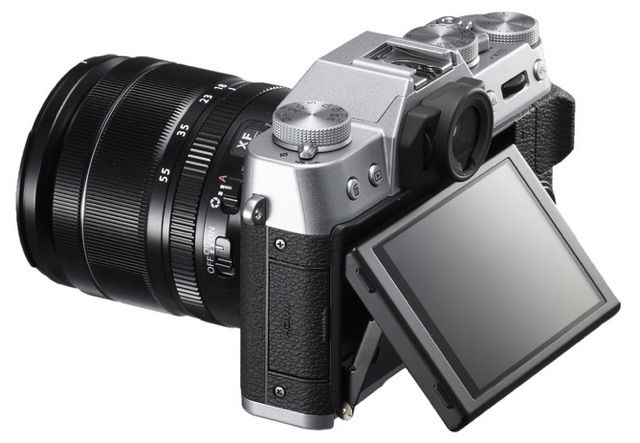
When I started sharing the first rumors about the Fujifilm X-T10, most FR-readers had big doubts if such a camera makes sense… and I admit, I was one of those. And the closer the release arrived, the more rumors I shared, the more people seemed to be disappointed. Just read the comments of the X-T10 rumor posts, and you’ll not find a lot of love for it.
Yes, at least amongst FR-readers, the X-T10 had a really difficult start.
But then the various reviews came out, and they mostly talked very positive about this camera. Let’s take dpreview:
“So who should buy the X-T10? Anyone looking for a digital camera that feels, handles and shoots like, well, an actual camera and not an electronic device. The a6000, the D5500 and the O-MD E-M10 might seem more appealing or capable. […] But from my experience having shot with all of these cameras, the X-T10 is hands down the most pleasurable of the bunch to use. Fujifilm makes cameras for people who love cameras, not specs“
Now, recently I went to my local store and asked for the X-T10. They let me play a while with it… and I tell you: this was enough to sweep away many of the perplexities I had.
And probably, if I would not already own an X-T1, I’d go for X-T10. Why? Here some PROS and CONS
– NO ISO-DIAL: The X-T10 has no ISO dial. And I actually prefer it. Why? As X-guru Rico said at our Forum here:
“[On the X-T10] you can change ISO with any command dial, front or back, or you can also use the up and down selector keys. You can use any of the 7 Fn buttons to pull up the ISO setting in order to change it. You can also use the Quick Menu to pick a new ISO setting. Additionally, you can store different ISO settings in your 7 Custom Settings, so changing ISO by selecting a different custom set is also an option. Obviously, the X-T1 is much more limited “thanks” to its manual ISO dial. Hence no ISO in the custom settings and only one global Auto-ISO choice.”
Evidently, there is no right or wrong, it’s just a matter of personal taste. So here is a poll. Let’s see what FR-readers prefer.
[poll id=”125″]
– FULL AUTO MODE with Scene Recognition: I think I would rarely use the Full Auto mode, but it’s handy to have. If I’m super-lazy and just want to take a quick snapshot or give my camera to friends, who are not into photography, the Intelligent Auto Mode is the way to go.
FXF member jeremyclarke wrote at the X-T1 or X-T10 topic: “The full auto switch seems like a really smart idea to me that will help both hardcore professionals and hardcore amateurs.” Why? Check it out here!
– PRICE: That’s probably the biggest PRO of this camera. The X-T10 costs $799. That’s 38% cheaper than the X-T1 (regular price $1,299). An amazing price for what you get.
– LOOKS: In real life it looks good. Much better than the rendered internet images suggest. Still, the X-T1 looks even better, but the X-T10 is definitely something I’d be happy to carry around!
– BUFFER: If you shoot often in CL and CH mode, then you better go for the X-T1.
– EVF: X-T1 has a bigger EVF. In my opinion, this is the biggest PRO of the X-T1. That said, the EVF of the X-T10 just works great, too.
– WEATHER SEALING: For many this is a must have feature. Not for me. If I can save 38% of my money by getting a non weather sealed camera, which built quality is good (and the X-T10 is defintely well made) and delivers the same IQ of the weather sealed one, well, then I go for the cheaper camera (especially if things like this happen).
Of course there are more differences… the X-T10 is smaller, the X-T1 has a more pronounced grip, it’s not so easy to accidentally turn the drive dial on the X-T10 and what not…
Overall there would be just one thing I’d really miss from the X-T1, if I’d switch to the Fujifilm X-T10… the bigger EVF. If you are fine with the EVF size of the X-T10, this camera could the best choice for you.
This was the first part… there are still 2 cameras and 2 lenses to come. Make your guess about what will come as next.
Fuji X-T10 – USA: AmazonUS / BHphoto / Adorama EU: AmazonDE / AmazonUK / AmazonFR / WexUK / AUS: Camerapro
cheers,
 Fuji X Forum, Facebook, Google+, RSS-feed and Twitter
29 Responses
For me, ISO is a primary control: I prefer to set the shutter speed and aperture I WANT to use, then vary ISO to fine-tune exposures as the lighting conditions change.
If the X-T1’s ISO dial were non-locking, I’d prefer that. But having to push that little button to move it makes it impractical to use, so for me the X-T 10’s control is better. (Fuji should learn how to do locking buttons from Olympus: push once, it’s locked; push again, it’s unlocked.)
Re the EVFs, it’s important to note that the X-T1’s only LOOKS bigger. It has higher magnification, but the two finders’ pixel counts are exactly the same, meaning they show exactly the same amount of detail.
“I prefer to set my ISO…
using the dedicated ISO dial (67%, 207 Votes)
via menu using a function button/command dial (33%, 101 Votes)”
Setting ISO manually makes no sense except for testing. You should set your desired shutter speed and aperture and adjust overall brightness using exposure compensation, ISO should come automatically (it is purely a technical parameter at this point).
My way of use is the only one that makes sense, everybody else is just stupid. Right, peevee?
Ever shot with flash, have you? Also there are some of us who don’t have the “privilege” to have EC work in manual mode so we have no choice but to set it manually.
Then you’re relying on the camera’s metering, which can change between shots even if you’re shooting the same subject in the same light, and is incapable of taking into account the reflectivity of the subject.
What you’re saying is absolutely fine if you’re a street shooter or a run-and-gun journalist and absolutely insane if you’re anybody else.
In-camera metering is important thing in the flickering indoor light. And outdoors light tend to change too. If you need a specific brightness of the subject, just set it with exposure compensation. I never seen in-camera metering being wrong more than 3EV (even close to that).
AceFlibble is talking about consistency, not correct exposure. Take 5 shots in a sequence and because of slight changes in position and framing each one might have a different exposure. It’s much faster to set ISO manually once than to dial in EC for every shot.
So what if it has a different “exposure”, if it actually has to have different “exposure” (which is really ISO, not exposure) due to different brightness of scene with different position and framing? Consistency of ISO has zero value outside of testing situation, consistency of brightness has value. Otherwise you will blow your highlights with too much image amplification every time brightness of the scene increases, or will have to brighten in post (needlessly amplifying read noise in the process) every time it decreases.
The only other case where manual ISO setting makes sense is fixing ISO at base for maximum image quality, with static subjects, on tripod. But the same can be achieved by adjusting real exposure parameters (aperture value and shutter speed, not the now-meaningless ISO) while monitoring ISO on the screen, static subjects are not running anywhere.
The only time in-camera metering is important is if you’re running and gunning in different lighting conditions. You would be surprised how little you change your exposure when you set it and want to have consistent exposure for your shots. Most indoor places don’t have bad, flickering lighting. Outdoor conditions don’t change constantly except in partly cloudy days. Even still, it changes every few minutes not every seconds.
I’m in manual 90% of the time. If you’re in any of the A modes, you are relying on the camera meter to determine the exposure for you. If you’re using spot metering, you better be pointing to the same place all the time if you want consistent exposure.
Heck, with the EVF using exposure preview, it makes it even easier to use manual mode. And it gives you greater control. The scene gets darker? change iso, aperture, or shutter depending on your situation.
I would say with exposure preview EVF, manual mode is much easier than any auto modes if you want to get consistent exposure for your shots.
“Most indoor places don’t have bad, flickering lighting. ”
Practically all indoor lighting is flickering at 60Hz nowadays. Nobody uses incandescent anymore which did not flicker that much. If you don’t see it, you exposure is just too long, or you don’t shoot sequential with locked exposure.
Being 3EV out is a pretty big deal. And you’re missing the point. Exposure compensation is a relative control, not an absolute. It doesn’t matter what you set the exposure compensation to be, if your camera has decided that this one particular frame needs to be half a stop brighter than the last one, it’ll still be half a stop brighter than the last one. That change can happen even in the middle of burst shooting over a period of just a second.
Fashion, product, wildlife, concerts, countless lightning conditions and types of subject dictate that auto ISO and exposure compensation is not good enough. Your camera doesn’t know if it’s looking at a brightly-lit black subject, a medium-lit but very reflective black subject or a poorly-lit white subject. Ever try photographing osmeone wearing a piece of satin clothing under point light? The camera will vary its metering by a full stop or more depending on whether or not the particular few threads in the middle of your frame are reflecting the light or not. Exposure compensation doesn’t help that, unless you are somehow capable of bending physics and the limits of the human body and are changing your exposure compensation dial in literally a one-hundrenth of a second or less. Shoot a bald eagle’s eye and your camera is going to give you an exposure several stops below what it would give you if your move the frame—or the bird moves within the frame— just half an inch onto its white feathers. Exposure compensation won’t correct that. If you set it to compensate for the eye exposure, the exposure when it lands over the feathers will blow out, and vice-versa.
Auto, P, Tv and Av are great modes for street, journalism, some very hectic weddings and shooting your kids. Most professional fields demand more precision, more control, and work with subjects and in lightning which no camera’s metering can cope with. Period.
“t doesn’t matter what you set the exposure compensation to be, if your camera has decided that this one particular frame needs to be half a stop brighter than the last one, it’ll still be half a stop brighter than the last one. ”
If you don’t like this, use AEL for that. But unlike AE, you cannot adjust ISO quick enough with light flickering at 60Hz.
Ever try to photograph a metal concert with strobe lasers? It makes common bulb flicker seem like continuous video panels. Ever have to film or shoot something off-screen in a PAL territory? Even specific anti-flicker modes can’t help you. And yet you still don’t want to use any form of auto exposure for those situations.
Auto ISO and exposure compensation is slower to shoot and more random. Categorically. The only time it is quicker is when you don’t know what or when you will be shooting. In any situation where you know what your subject is and where they are, auto ISO is a needless gamble.
Like I said before, there are a few roles in which automatic exposure modes, including auto ISO, can be useful. There are far more situations and jobs, however, which demand—and I do mean demand—manual control over these parameters. If your work or hobby does not make those demands of you, good for you, you’re one of the lucky few who can set something to A and get on with it. Do not conflate your requirements and experience with the needs of everybody.
Sorry, I never shot a situation when manual ISO was necessary. But strobe lasers sound plausible.
ISO is the first thing I set so for my camera to constantly adjust it on its own would drive me nuts! I see the lighting conditions and know if I’ll be shooting something that requires fast shutter or not. I kind of look at it like analog film and adjust based on lighting conditions. Look at my surroundings know what ISO I would require, set it and forget it until something drastic happens.
Nope nope nope……. You got to be kidding me. What in the world did you buy a Fuji for, if all you want to do is use exposure compensation? On location? You are gonna put your trust in exposure compensation? Not me.
I hope the X30 will be one of these products you mention. Its ratings on Amazon are phenomenal, better than its better-specced competition, which ties into your article the other day on the a7 v. the X series.
I agree, the X30 is an excellent camera that is highly praised by it’s users.
Admin, a while ago you posted a rumour about a possible X40. Have you got any more information regarding this?
I was the same. I thought the X-T10 looked like it was going to be an absolute joke, then I used a pre-production unit for a couple of hours and placed a preorder the next day. On paper it is categorically worse than the X-T1 in every way and rather stupidly designed, but in reality it’s as faultless as current technology can allow. Since I bought the X-T10 I’ve barely touched my X-T1s and I’m strongly considering selling them and buying a second T10. The only parts of the T1 I wish the T10 had are the larger EVF and tethered support, but even then, I use the EVF so rarely it doesn’t actually make a practical difference and the T1’s tethered functionality is so garbage you may as well not bother. For £500 new on the highstreet—less than a used T1 sells for online—there’s nothing really to complain about.
Same with the ISO dial. In fact that was my #1 complaint about the T10 before I used it. Taking away the ISO dial but keeping the mode dial? No, do it the other way around, surely?
Well, the front dial of the T10 works so well for ISO, I don’t miss the top dial of the T1. In fact I know I can operate the T10 quicker than I can perform the same actions with the T1. Switching the shutter dial to T means I have full manual control and never touch the top dials. It’s not quite as slick as the Canon twin wheel system, due to the placement of the front dial further from the shutter release, but it’ll do.
My work kit now includes the T10 all the time and the T1 and X100 are relegated to the status of dust-gatherers. All I’m missing is a replacement for my old-but-godly Mamiya 6×7. Hint hint Fuji. Hint hint.
The ISO dial could be really slow. Thank god is has Auto. I haven’t figured out how to use auto ISO on my Df. It is really painful.
When will camera manufactures realize ISO is part of the exposure triangle? We should definitely have a dedicated dial to change it at whim. It shouldn’t be locked either like X-T1. They’re still clinging to the obsolete film age thinking where we couldn’t change the ISO. It’s the digital age now, so we should be able to change Aperture, Shutter, and ISO easily to suit our tastes.
Also, that shutter dial needs to be in 1/3 stop increments. It makes no sense to have 2 dials for shutter.
The X-T10 to me has a near-perfect user interface for ISO, shutter speed and aperture. An aperture ring, a front dial for ISO and a rear dial for shutter speed (in T mode). Now all that’s left is to remove the top dial which is redundant. Instead, add two small OLED screens that display the current value over the corresponding dial. That way everybody should be happy: you can see your settings at a glance and you don’t limit software modes and remote control because the dials are hard-wired.
I’m a new member of the Fuji X family. It was the X-T10 that made me jump in and join y’all. I rented one first and just couldn’t put it down. What sold me on it versus the X-T1 was size and the price. I don’t really care about the features I’m missing. This camera with the 27mm goes with me everywhere. I wanted something small, but with lens options, and this fits the bill perfectly. I have the 35mm coming soon and then the 14mm will be next on my list. The display is great, I can still access and change ISO easily, and I don’t care about weather sealing honestly. This camera is just fun to shoot, and I like the classic SLR look and feel.
I convinced a cousin-in-law to purchase an X-T10 before his recent trip to Alaska. Unfortunately, the lack of weather sealing became an issue – when he dropped the week old camera overboard while halibut fishing. I am awaiting the full story upon his return 🙂
I had the xt1 and had mixed feelings about and sold off the Fuji the xt10 brought me back and to me image quality is better (I only use raws)
The X-T1 ISO dial is one of those things that sound like a great Idea but in practice I think that it compromises too much other functionality and is not the ideal ISO solution. particularly with the lock button that Fuji installed. I say that having both the x-E1 and x-T1 and have experienced both the dial and menu implementations
Having a dedicated dial means that you lose ISO options in the Q menu. The ramifications of this, is that you cannot include a particular ISO setting in the C1-C7 presets. the end result is that the X-T1 becomes less efficient in use than the lower models in that situation.
My experience. I happen to need max quality sometimes (studio work, landscape with tripod, portait). I select minimum ISO at the beginning of the session, and keep it to the end. I also select f/8 on the lens, and keep it. Second situation. Max quality is not critical. I select auto ISO, top ISO 3200, and never had any problem, even lifting up shadows in postprocessing. High ISO in modern sensors is simply better than what we are mentally ready to admit. So I don’t get the ISO command problem. For me it can be anywhere, but I would not chose an external wheel à la X-T1. By the way, the Q command works so well I forgot last time I went into menus.
I stumbled onto the x-t10 on a whim. I shoot almost exclusively with manual lenses, and have- with the advent of mirrorless cameras- a real aversion to purchasing glass that can be used on only one system. My digital camera of choice for using M mount lenses had been the Ricoh GXR…A fine camera in many ways. The low price of teh X-T10 caused me to give it a try. I was pretty sure I would ultimately return the camera.
To my surprise, except in instances where size and weight are major considerations, the Fuji has replaced the GXR and my go-to digital back for all of my old manual focus glass. The thing is, I still like the images rendered by the GXR, and would not have kept the Fuji simplly for image quality differences, but the Fuji just feels so much better in hand. The tilt screen is a big plus as well.
Fuji has come a long way in the area of allowing accurate manual focus through EVF. They deserve the success and accolades they recieve.
I own an M8 and an M2; I love them and use them regularly, but sometimes I long for the live view and EVF advantages of the M 240. Unfortunately, that camera is out of reach. The X-T10 goes a long way toward scratching that itch, and takes up very little room in the camera bag.
I definitly think that Fuji should incoporate a switch or a dail so you can go from slow shooting to fast shooting instantly in X-T2 and X-Pro2, like Nikons U1, U2 modes and canons C1,C2,C3 modes. The fast shooting mood should be COMPLETELY customizable and override ALL settings from the normal slow shooting mode. You should be able to set EVERYTHING in the fast shooting mood, shutter, aparture, iso, atofocus mode, atofocus point, drive mode, metering mode, exposure compesation, filmsimulatin etc. Hopefully they will uppgade the autoswitch in X-T10 so it will be customizable in the future too.
I think the poll is incorrect… (or at least confusing)
Via menu or via command dial are 2 completely separate things.
I’m absolutely fine with the 2nd option, but not via menu