








shared by dontblameureyes: Indonesia
TOP FXF THREADS TOC
– Episode 1: Why do (some) People Hate Fuji? * Mock-Up X-T10 Vs. Real X-T10 (with XF 35mmF2 WR) * X Lens wishlist & more *
– Episode 2: CLASH of the FUJIS: X-PRO2 Vs. X-T2 :: X-T1 Vs. X-T10 :: 14mm Vs. 10-24 :: 16mm Vs. 23mm :: 90mm Vs. 56 APD & more
– Episode 3: Which 3 primes combo is your ideal setup? :: X-PRO2 wishlist :: Be careful with thumb grips :: Sensor dust & more
– Episode 4: POLL: No In Body Image Stabilization, do you bother? :: Old Lenses For Dummies + more
Follow Topics: Just one of the advantages for registered Forum Members
Feel Free to Join Us here

General Discussion
– started by Newsphoto: “Me and my Fuji (post a photo with your Fuji)”… it’s Selfie Time… join the Party 🙂
– started by Patrick FR: “XF33mmF1.0 … should Fuji make it?” Yes or No?
– started by tedorland: “Image Stabilization… Does it bother anyone besides me that so many Fuji lenses lack OIS, and that NONE of the Fuji X-bodies have in-camera stabilization?” Read the answers here.
[poll id=”93″]
[poll id=”94″]
Fuji X System
X-T1 / X-T10
– started by methodphoto: “X-T1 and Multiple Exposure” Read why this is a hot topic here.
– started by rjmvandermeulen: “Wireless TTL flash with Fuji X-T1“. Is it possible? Discover more here.
X-E1/X-E2
– started by abjurina: “X-E2 NEEDS a new update and here’s why“… so here is why !
Fuji X Lenses
– started by eagle_friends: “Bokeh Club: A remanent of my days at the Pentax Forum Website. This thread is dedicated to posting examples of beautiful bokeh using Fuji lenses and/or cameras.” A Must See for Bokeh Friends.
– started by benjaminthomson: “Not a lot of love for the 14mm“. If you love this lens, then say it here!
Adapting lenses to Fuji X
started by IKO: “Old lenses for dummies […] Feel free to recommend some lens you love or that has a strange special effect you like“. The rest of the story here.
– started by andrewlee: “Best m42 50ish mm lens?” You have the answer? Then share it here.
X100S/T
-started by yosemirza: “Are we going to have Firmware update for X100T just like XT1, at least the AF system?” Who knows? Discussion here.
ACCESSORIES
– started by photog: “My favorite travel photo backpack” Recommendations here.
– started by MildManneredMarc: “Fujifilm Strap ?” Help here.
IMAGES
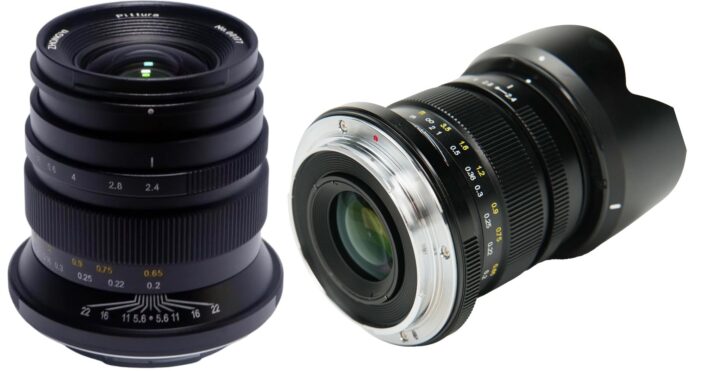
shared by JuergenK :: Samyang 12mm F2.0 NCS CS X Mount

_ _ _
shared by DerBielefelder :: Fuji Flowers

_ _ _
shared by harry-angel :: Streetphotography (open thread)

_ _ _
shared by Don Pino: Landscapes with Fuji X

_ _ _
shared by MatusKicka – Streetphotography (open thread)

_ _ _
shared by Vanquished :: landscapes with Fuji X

_ _ _
shared by joergs :: modern architecture

_ _ _
shared by Russ – First time astro photography

_ _ _
shared by mbart :: Landscape With Fuji X

_ _ _
shared by bigbadwolf – landscapes with fuji x

_ _ _
shared by Casa :: Old Lenses for Dummies

_ _ _
shared by dv. – Fuji Flowers (Open Thread)

111 Responses
OIS in Fuji primes?
No thanks! Makes the lenses even more heavy.
In that case I’d rather have IBIS then stabilization in the primes.
But personally I don’t bother at all, I’ve always been able to take photos without stabilization for over 25 years. Images will not get much better by adding IBIS to the body or OIS to the lens.
THIS.
I left M43 for Fuji. I had plenty of lenses most notably the Olympus 45mm, the P/L 25mm and my favorite, the 20mm pancake. I also had the GX7 with a limit ibis. But at the end of the day, I left because I wanted better IQ and Fuji bodies and primes are around the same size. I showed a picture comparison of my P/L 25mm vs the Fuji 35mm and there was no reply. Because the proof is in the picture. What good is ibis, if I can still take a better photo with me XE2 and the 35mm?
I shoot street and in low light. Sure it may be usesful, but I don’t want to pay extra for something I didn’t need, nor miss in the first place. For those that want it, get a Sony, or fall back in IQ and get an Olympus.
Assuming it’s technically possible, is there really any downside to IBIS?
The in-body stabilization question is really a tricky one – I think we can agree that the Fuji X system currently has pretty much the best in-lens stabilization system on the market.
This is my view of the situation:
Why to stabilize lenses and not sensors:
– Resulting stabilization is (or can at least be) better than in-body
– Higher range of movement since there are limits to how far a sensor can move compared to a lens element
– Stabilization can be tailored to the individual lens
– A stabilized lens will work fine with an older or cheaper backup body without IBIS
Why NOT to put stabilization into lenses:
– Added weight, bulk, mechanics and moving parts
– Increased initial cost
– higher repair/maintenance costs
– Can negatively affect image quality
– Not well suited for wide angle lenses
Why to put stabilization into the body:
– Stabilization with non-stabilized (third party/vintage/entry-level) lenses
– Usable with wide-angle lenses without a loss of quality
– Allows for software-based multi-shot options to maximize resolution
– Level of stabilization and algorithm can be adapted to, say, use different settings for video
– Stabilization system sensors could be used to record the precise movement data of the camera for video for use in professional video postproduction (I think Blackmagic are doing something like this already) – only makes sense once Fuji implements a usable video mode
– more lightweight lenses can be used
Why NOT to put stabilization into the body:
– Increased cost
– Image stabilizer is usually the very first thing that breaks on pretty much all Pentax SLRs
– Market for dedicated stabilized lenses shrinks and they may, even though they yield superior results, not longer be viable to produce, or possibly only the very high end lenses.
Looking at all that, I think that supporting IBIS in the cameras *in addition* to having stabilized lenses available could be a great addition. Particularly being able to use stabilization with more wide-angle and vintage lenses as well as the possibility of a multi-shot high-res mode would certainly be very useful.
why not both?
That’s my point. The two systems would complement each other as neither is completely ideal for all applications. In-body for wide angle lenses, vintage manual lenses, situations where small and lightweight equipment is a priority and for a multi-shot mode, and in-lens stabilization for longer focal lengths and when ultimate no-compromise stabilization quality is necessary.
However, as noted, the downside is that an in-body option might lead to only the absolute high-end lenses getting image stabilization due to too few people being willing to spend more money for the better in-lens stabilization when the majority is perfectly content with an in-body solution (see the Sony crowd).
As I understand IBIS also helps at macro distances when OIS is quite useless.
Macro distances would suggest macro shots which should be from a tripod. Not just to reduce shake etc but also to fine tune composition. To increase depth of field it is also required to layer many shots together given the close distances involved. This also means a tripod is required. IBIS for proper macro work is a non issue.
Your composition argument would mean that all photos would have to be shot from tripods 🙂
I agree that a lot of people getting blurry shots simply have bad technique and are buying cameras that are not very well matched to their skills, however if stabilization enables us to shoot macro images hand-held in situations where there is no time for a tripod or where it would be impractical to set one up, that’s actually a good thing because it allows us to get photos we wouldn’t otherwise been able to take. And if the subject is moving, you can’t really do focus stacking anyway.
But speaking of focus stacking, I wonder why cameras like the Fujis with their AF don’t offer a focus bracketing mode wher you’d press the shutter releas and the camera would use the AF motors to move through the various focus distances.
The composition issue with macro is greater than other styles / types of photography. Move just a fraction and the composition is completely changed. IS and IBIS does help with quick closeup shots though where a tripod is not possible. Planned macro work will normally always be with a tripod though. Close to subject distances with 100mm FL mean it is often the only way to get exactly what you want rather than a quick snapshot on the fly.
Focus bracketing would be a useful tool in all honesty, much more than IBIS (based on IS being in lens for Fuji at the moment). Many times I’ve had to stack images from closeup studio shots as diffraction comes into play too much and you still don’t have enough DoF.
Some of the new stuff Sony have come up with (sensor design etc) is excellent and I’d rather Fuji spent time and resource on this. The IS in lens on the 50-140 is incredible and a lot of that comes down to it being built specifically for that lens. A generic IBIS system will not necessarily achieve the same level of IQ because it has to handle all types of lenses.
I have no doubt it will arrive eventually, I just hope it’s not at the expense of IQ, size and weight. And if it does, make a model of camera that focuses on max IQ without added bulk. That small Sony A7r mkii is now 650g a whopping 120g less than a Canon 6D…. 2 large packets of Walkers crisps 🙂
These extras are moving the camera away from the small and light, which is the main reason they were developed originally! At least with in lens IS, you have the option to use a lighter weight lens.
from what I have tested it helps a bit.
But OIS isn’t useless there if done right! The Sigma 105mm macros stabilization is pretty good in macro mode! I’d say 3 stops at least (the IBIS might say it’s 5 stops, but that’s just one scenario with one special lens. And macro isn’t that scenario [personally I’d put IBIS at 50% of OIS for macros)
Till now I did not used an IBIS sensor camera.. but I feel its good to have it in camera body than in lenses[ I am taking about primes]…for obvious reason..weight..
But we must remember..every mirrorless system will have IBIS by end of this year except fuji..I hope IBIS sensor is there on Xpro2..though its not rumored in this site.
For what it’s worth, less awkward phrasings are, “Does the lack of IBIS in Fuji cameras bother you?” or, “Do you worry about the lack of IBIS in Fuji Cameras?” Normally, the subject of “bother” is doing a negative thing. I’m not sure it will actually mislead any of your readers, though I’m not honestly sure. But don’t worry; it doesn’t bother me much. 😉
Yes, I agree. Is “IBIS a priority for you?” could have worked too, but I’m sure we’ll all be fine.
I only knew about OIS in lenses until now ;), but IBIS sounds good IF this would not imply a whole new line of lenses and making the current lenses incompatible. At the time I’m more interested in how manual focussing could work more ‘naturally’, without all the in-lens sounds I hear when using the focussing ring.
OIS in primes? No – make them all about quality. Only exception are long macro lenses like the 120mm!!!
Put OIS into specialized lenses, that need it. 50-140, 100-400, 120mm macro.
IBIS? Yes would be cool. BUT there are some problems with it (shutter shock is only one of them). If (someday) those issues are no more, I’d like to see IBIS in Fuji bodies too.
both Olympus (and the only Pana with IBIS the GX7) as well as the Sony A7II are reported to have Shutter Shock.
This means, that the first curtain triggers some vibrations (since the sensor is moving) and that the resulting pictures are blurry.
There are ways to work against it (elektronic first curtain) but those come with problems as well.
If those problems are solved, there is only one benefit of OIS vs IBIS: the stabilization is made specifically for one lens and optimized for it. especially for ultra long and macro this can make some difference
OIS is superior in focal lengths beyond 200mm. Under that, IBIS tends to be better.
Is Shutter Shock an issue even when the IBIS is turned of?
I haven’t had the chance to test it, but I guess it depends, how the “IBIS off” mode is implemented. Normally it shouldn’t show (too much) Shutter Shock
Ok. In that case it seems like a very handy thing to have available in certain situations. And for most of the time when it’s not needed, keeping it off would remedy any downside. A case of rather having and not needing, than needing and not having.
Now I am looking for Fuji to combine the Sony A7R2 and Canon 7D2, but with 24MP.
So what you want is a full-frame mirrorless camera with the performance of a top-end DSLR? And just why must FUJIFILM do this? Why not ask that of Canon or Nikon or Sony, as that appears to be their game.
No…that is not what I said…
the Sony A7R2 brings a new senor, 5 axis IBIS, 4K video in a mirrorless body
Is that too hard for Fuji to do…I think not…Fuji themselves said they will be coming with a new sensor, and a new processor to deal with the 4K video they plan to include…
Fuji has not said anything about IBIS…but there sure are a lot of Fuji users here that would love IBIS to go with their Fuji primes…myself included…
Fuji has said themselves, that they were impressed with what Canon did with the 7D2…specifically the 10 FPS…and video…
I think Fuji will target 10 FPS for the coming X-T2…Fuji is already at 8 FPS with the X-T1 and Samsung (I think) is at 15 FPS.
Fuji has continually said they are staying at 1.5 corp factor to FF, so I don’t get where you would get that I think Fuji is going FF.
If anything Fuji might go MF, but I think Fuji will always keep the current crop factor.
So Robert, don’t be a jerk.
Don’t get personal when you have no grounds for your statements.
My point, however, is that we are in a consumer market, so if FUJIFILM isn’t offering what you want in photographic gear, then go buy the products of the other company that does offer it. The alternatives are many: Panasonic, Olympus, Canon, Nikon, Pentax, Sigma and Sony.
Or, more clearly, why not demand that Canon produce a mirrorless version of the EOS 7D2 camera? Personally, if I wanted 7D2 performance in a camera, I’d go buy a 7D2 right now and not whine about FUJIFILM not offering the same performance.
But the big question for me is always: if some system is deficient, then why do people actually buy into said system?
Because it suits a purpose. I am trying to downsize from Nikon and large FF lenses. So I didn’t want to go FF. I bought an X-T1.
I felt APS-C would give me the best tradeoff of quality, and Fuji had a lot of people extolling its virtues.
Let’s be clear here: IBIS is a huge benefit, providing increased stabilization for primes in addition to zooms. It should also be noted that both of Fuji’s primary competitors — Olympus and Sony — are now offering IBIS in an increasing number of their mirrorless cameras; and all of their current flagship models.
For those who believe you don’t need stabilization with fast primes? Nonsense. You obviously don’t shoot in a wide enough variety of situations to realize it. Just because you use a fast prime doesn’t always mean it’s desirable to shoot that lens wide open. Plus, not everyone’s hands are always fully steady. And sometimes the shot requires you to use the tilty-flippy screen and hold the camera over your head, with a prime, at 1/30th sec. See what I’m saying?
And the new 16-55 f/2.8 would benefit from this, too.
The poll seems to bear me out.
To remain competitive with Olympus and Sony, I believe Fuji will have no choice but to look seriously at offering this in the near future. It also provides another competitive sales advantage over DSLRs.
Unless you want the effect in the photograph of a slow shutter speed, i.e. motion blur, every reason you gave can be fixed with higher ISO sensitivity sensors. Now since the latter is inevitable, why bother with the added complexity of IBIS?
Every company is after higher sensitivity sensor. Thus the signal to noise ratio is usually about the same in the cameras of one format. Thus cameras with IBIS will always have an advantage over non-stabilized cameras.
APSCs’ do not perform very well at high ISO
And neither do 50MP FF sensors. True “low-light” performance has nothing to do with the size of the sensor, but everything to do with the size (or density) of the photosites on the sensor. (This is BTW why FUJIFILM is probably sticking to 16MP sensors.)
I hope you could leave canon out since they hasn’t improve things for a long while. I do think you should compare those 36MP ones, which has a similar pixel size with Fuji’s 16MP. Things are improving. Samsung already gives a good example by rolling out BSI sensor.
I like the little cutted-off disclaimer about the mirror. Anyway, these tests in general mean absolutely zip, because they use different lenses. If these comparisons were done truly scientific, then they’d all use exactly the same lens. Also, how were these images processed? Everybody knows that “mud-walled hut” software chokes on FUJIFILM’s sensors.
There are two ways to compare. Get them on the same ground or get the best possible results from each system. Later is more meaningful.
Your opinion.
Indeed. However, in reality I won’t tune my environment to let all my gears share the same starting line. I am more interested in finding most suitable gear for given environment.
You know you can turn IBIS off when ever you want to, right,
No downsides, except battery penalty.
Yes, especially when using large aperture primes. IBIS means that the sensor is not fixed but held by a moving mounting system.
This is acceptable when using lenses of f4 or smaller apertures as the depth of field should cover slight inaccuracies in the position of the sensor. However when using lenses of f1.2/1.4 such as the majority of the Fuji primes, that inaccuracy will result in one side, or top/bottom of the sensor not being exactly parallel. The result will be that one part of the image will be slightly out of focus and visible in even moderate enlargements.
The engineers at Fuji know this and that is why they are reported to smile when IBIS is mentioned. However it’s a good gimmick which impresses the unknowing and enables Sony to sell more cameras.
Interesting I didn’t know that about ibis… Thanks for the info
Sorry, but that’s just not true. Olympus has plenty of fast glass, not to mention the Nocticron 42.5mm f/1.2, and none of them exhibit the shortcomings you discuss. Moreover, Olympus is said to be working on some ultra-fast primes, possibly f/1.0.
those new 70-200 lenses (as well as Fujis 50-140) have outstanding IS.
I have yet to see IBIS match those.
But yes: especially at wide angles it seems, that IBIS works great (and those also work with shutter speeds that are not affected by Shutter Shock)
Interesting. Is this an issue even when the IBIS is turned of?
Even though I don’t care for IBIS, I think it should be added since their competition has it.
IBIS is a must. I got lot of blurry images with Xt1 and it was one the main reasons I got rid of it besides the waxy image quality.
While I have no trouble with blurry images, not including it in-camera, and relying completely on lenses is very 2010. It’s 2015. It would be great if Fujifilm would join rank, unless their only competition is Leica.
Well Leica seems to join ranks now with Q.
Sorry to sound abrupt but what about using raw (No waxy image quality) and considering changing your body holding technique ? Not that it matters since you’ve got rid of your X-T1.
the main reason for blurry images is about 2-20cm behind the camera most of the time
There are not as many scenarios where stabilization is useful as one might think
If something is moving? you don’t need it
If you want to expose really long? you don’t need it (you need a tripod then)
there is only the: “not moving and exposing not long, but a bit longer” scenario for stabilization. And if you shoot in this scenarios: most of Fujis zooms have OIS and for example the 18-135 as well as the 50-140 are outstanding (the second one I found to be better than any other OIS or IBIS system I have tested yet)
Nothing to blame Fuji for if you don’t know how to handheld and operate a camera…
He probably do indoor shooting a lot.
Yes, Chris this happened to me at an indoor event/low light. In the good light the Fuij is excellent.
Fully agreed. I think you need a d7200 more than xt1 in such conditions.
I can hold very steady but when your pressed to shoot and things are moving quickly the IBIS helps alot. If you ever use an Olympus for a few months you would understand what I mean, a lot more keepers.
Just another thing that can break… I’m totally fine without OIS or IBIS.
So am I – only one of my seven lenses has OIS (and I don´t need to use it on this one), and I never missed stabilization in any kind of situation, bright light or dark interior. Exact setting of the camera helps a lot to prevent blur, and every system has it´s limits (stabilized or not). For those who need IBIS, Sony is waiting with open arms, every single photographer has to choose for himself.
And if Fuji adds it to their new models? I would have it off the most time, but maybe there can be a situation when it will help in the future.
And frankly I doubt that Ibis can be made to be as efficient and fast for all types of lens from 10mm to 400mm (next year). I am sure that OIS is uniquely tailored or at least configured for each individual lens. Not counting that OIS must be located at a point in the lens where the movements are limited to the bare minimum, which cannot be the case for IBIS sensors; so has to be limitations. All large manufacturers (Canon, Nikon, probably others) have always explained that VR or IS was superior to IBIS, & I don’t doubt that they had the R&D budget
I would rather like to see stabilization tuned to a specific lens and focal length. And Fuji has a very efficient system in their lenses (those who need it).
APSCs do not perform very well under low-light to date. Having OIS along would allow you to squeeze a bit more IQ out of your body by keeping ISO low.
Sometimes – and sometimes the slow speed is contraproductive. IBIS can be a help, but is surely not the holy grail (as a new much better performing sensor surely is).
There is no much better APSC sensor yet. A6000 is still out-performed by A7.
New production technology is needed, Samsung shows with their 28 MPx sensor how to do it, it performs almost like a FF sensor, and if such a sensor would be coupled with Fuji processing… There is not a such sensor yet on the market, but that does not mean that nobody worked on it in the last years and maybe it´s ready to go to the people this year – we never know. When we see what Fuji made from the classic 16 MPx Sony sensor, who knows what they are capable of with a actual modern 24 MPx sensor. The A6000 sensor would be a logical choice, but one can only quess.
Indeed BSI greatly improves counting statistics. Sony only needs to cut it smaller for APSC bodies. If X-P2 has BSI, I would buy one. However BSI is widely used for a good while now.
But only for very small sensors, where it has large benefits. Samsung is the first with BSI APS-C, and Sony just fresh with BSI FF. The 65 nm production process is more important, nobody else has it.
Sony’s production rate could not satisfy market needs these days.
Of course an apsc sensor is outperformed by a 35-mm one. By one stop to be exact. That’s basic photometrics. And the next size up will be just that much better than 35 mm. Etc. Until you get to the giant sensors used in big telescopes.
The question is, what is the best comprise between system size, cost, and performance. “Best” as in what works best for you.
Nothing broke on my Fuji in 3 years now…
You have stabilization, either lens or camera… If it breaks, it breaks. Bodies are easier to replace than glass…
I am definitely jealous on all those Sony or Olympus, stabilized bodies.
This could mean smaller lenses with no OIS.
I still consider Fuji X as a system that merely excels in good light – mostly outdoor situations. Inside the low light the performance is often not stunning, it’s not really easy to use the X-series as a full blown event shooter solution without experiencing issues. IBIS could change that – at least for a bit, it won’t help the not so breathtaking ISO performance of the current X-trans – so it’s worth the extra money. It’s also the cheapest way of improving the resistance vs vibration, in lens OIS is a lot more expensive and IBIS would render all our current glass having benefit of it. Last but not least, it’s one of those features that could improve the X-series sales vs. competition. Not to have it on board as a standard feature is likely a less free option than it appears to be in 2015, almost any direct competitor has it. While a lot of potential buyers will mark it as a clear disadvantage of buying the X-series. At least I would take in account when buying into a new CSC-system.
Plenty of event shooters did great with the D700 and that – from what I’ve seen – performs pretty similar in low light compared to the Fujis (the Fuji might be slightly worse due to its cheated/different ISO values). Also the Nikkor 85 1.4 lens is even a little slower than the Fuji counterpart. And for wide angle IBIS won’t benefit you as an event shooter because people move and you would rarely (if ever) want to go under 1/60th anyway.
Where do you shoot? I’ve shot in some pretty dark places but to reach the limit of f1.4 lenses and usable ISO 6400 you need to be shooting in a dungeon. Yes, there are better cameras today of course. But imho the performance of the Fujis in combination with their fast lenses is absolutely sufficient for extremely dark locations. The Fujis are certainly more limited because of their terrible low light AF.
I’m pretty sure Fuji will wait this out. In a few years or hopefully this year the whole IBIS thing will be a discussion of the past when the organic sensor hits shelves and kicks FF asses with low light performance. Hope never dies…
Organic sensors might end up to be a sweet dream after all.
That the trouble with emerging technologies. Sometimes they succeed, sometimes they fail.
I think it would eventually be determined by research budget and how much more profit it could bring. It is always about business.
They might obviously. But there are only two options:
a) Fuji is releasing the organic sensor with the X-Pro2 this year or
b) they will release the X-Pro2 with a “normal” 24 MP sensor.
The 24 MP sensors have been out for years and the quality is terrific. Actually Nikon debuted 24 MP in November 2012 even before the X-Trans2 came out. So if Fuji does not manage to create this organic sensor they will be left in the sensor dust and I’ll fear for their future. I wouldn’t mind, I’m great with the current sensor but many people will opt for the Sony A7 series.
The problem is not that the 24 MP sensor itself wouldn’t be good enough. But if it’s not for the organic sensor then the X-Pro2 and a new sensor should have seen the light of day at least a year ago. I wouldn’t know what other “new technologies” they’re waiting for. It isn’t IBIS obviously so it can only be a new sensor. And when they debut a new sensor it needs to be cutting edge and not one that others have been using for years.
Before Sony no major upgrades roll out in 1-2 years. I think we are just getting used to ultra fast hardware upgrades. We are also expecting curved sensors. If Sony get sweet results with BSI. Fuji might change plans.
You’re absolutely right. But there’s a difference between starting with a cutting edge sensor and keeping it for years (like Nikon) and starting with an old sensor and keeping it for years (like Fuji). Fuji extracts amazing quality out of that sensor but you won’t get around the fact that there are just better sensors around now and so you wonder what Fuji could do with those…
And the problem with the X-Pro1 was simply that it started out with too many problems. Had it had OSPD points and better AF from the start it would have lasted much longer…
Fuji’s achievement is mostly in software, which you could replicate on other bodies easily on your computer. I’d love to see them in the spec match.
The X-series are powerful outdoor shooters, but as a mainstream solution for low light inside events they are really cumbersome camera’s. They are at the end capable to perform the same job as any 35mm sensor DSLR will do but you’ll be losing a lot more opportunities/pictures. I’ve worked during the years with a lot of Nikon F models – and really, they could almost do everything in dim light. If not, there was that magnificent Nikon CLS system. Even with noise, the Nikon images are more subtle and gentle, the X-trans is much harsher and unpleasant to look at with a higher ISO setting. There are a lot of good properties and features in X-series, but regarding low light behavior they not really what you can expect from a premium camera system in 2015 (and to be honest, that has been a bit of issue since the very first release, this is not the most recent sensor technology). It’s really time now to move to a next step and who is not seeing that is really not aware of what competition is able to do. Fuji can maybe argue that it’s for a number of reasons better to stay with the smaller APS/C system instead of a 35mm one, but they run into technical limitations the current line of Sony A’s (and also the newer Nikon F’s) just don’t have. It has become a kind of cliché, but Fujifilm talks now in interviews about an organic solution 3-4 years now but in reality they are developing an entire product line on the same 5 year old Sony sensor line that has been revamped a bit to match their own requirements – in the meanwhile, we’re playing with an almost historical ISO performance while competition is really doing a lot better in this area. Time for change!
You know some people seriously believe Fuji apsc is better than FF. Maybe some 10yr old FF.
The second part (Fuji needs a new sensor) is exactly what I wrote below.
The first part, well, I guess it depends on your type of shooting. I’m not the spray-and-pray type of shooter so I wouldn’t really lose any shots because of the low light performance. If I lose shots on my Fuji it is because of the terrible AF performance in low light.
AS IS: no IBIS = 250/300 shot (half with 16-55 or 50-140 2.8 mounted)
TO BE: with IBIS= 100/150 shot or less.
Imho the IBIS is battery consuming…(and delicated..)
I would likely have it turned off most of the time, but it would be useful for macro and telephoto.
I am more interested in seeing what Fuji does with its next-generation sensors. Looking forward to the fall to see what Fuji has up its sleeve with the X-Pro 2.
Since Fuji reads this, the X-Pro1 may never be released as fast as Sony is raising the bar.
Yeah, really raising the bar without lossless RAW files. A lot of great features, but the output is still not optimal. I wouldn’t spend my hard earned money on that.
Though, I do agree that Fuji needs to step it up with the next generation of cameras with respect to dynamic range and resolution, I am not worried about whether or not they will have IBIS.
I would like to see a full frame Fuji interchangeable lens camera with a set of high-quality fast primes (21mm, 50mm, and 85mm at launch). But, sadly, it seems that Fuji scrapped that idea.
If the technology can make a stable matrix and use all optics is stabilized, then why give up on this?
Those who do not need, do not vote. Disable this option in the camera or lens, if you do not need.
Reactionaries do not have to define the development of cameras.
In short you want people to shut up when they point to the disadvantages that IBIS and or OIS have.
The fact that such technology does cost money (licensing and/or reasearch and development) and therewith will increase the price of each and every body produced is not something you don’t bother about as long as people who disagree with your opinion shut up…
You do not find $ 20 for a spare battery?
Fuji have a very wide range of cameras. Let stabilized matrix will be in the top models, buy a camera without a stabilizer.
20 dollars for the extra spare battery plus 250 dollars for the IBIS to be implemented and 300 grams extra to body weight and some extra bulkiness due to the fact that the system needs to be implemented….
No I’d rather have a lighter and cheaper camera then having extra weight, bulkiness, extra accessories that are needed and having to pay extra for something that is not a necessity.
What 300g extra for body weight? Oly E-PM2 with IBIS weighs just 269g with battery and SD card, and almost all of it is not IBIS. 🙂
For comparison, Pana GF7, without IBIS, with slightly smaller body and the same sensor size and mount, and smaller battery (230 shots vs 360 shots in the Oly), weighs 266g. 3g saved.
Maybe you have meant 30g?
Buy cheap Fuji camera model without a stabilized matrix. Expensive top Fuji camera, you still can not buy. What do you care what it will be?
Exactly. I want max IQ but I don’t want extra bulk, reduction in IQ & potential for faults that IBIS will bring. I can’t just take IBIS out and leave it at home when I need to travel very light when climbing.
IBIS improves image quality not the other way around. Get yourself an Olympus for a while and see how you feel then. Even 3 stops would be great.
If only Fuji would make hi-res cameras that could benefit from IBIS. I struggle with the A7r but have no problem with the x-pro1. As it is now, it isn’t necessary to use those technologies.
This is a problem A7r.
36MP and an unbalanced shutter that gives blurred image.
Fuji will do everything well.
Yeah, I would like to see what Fuji could do with that 36mp sensor. An X-Pro-like or X-T-like camera with that sensor and a set of high-quality fast primes (21mm, 50mm, and 85mm at launch) would be fantastic. Sadly, I doubt it will happen anytime soon, as Fuji seams to have dropped that idea.
A reasonably priced medium format mirrorless camera would be even better, but it would likely be too expensive for most…
You need higher shutter speed. X pro1 actually has a similar pixel density with A7r.
Maybe on 23 @1.4 not having stabilization is OK for 16mpix sensor yet (for stills only, unstabilized handheld video is still useless). But 55 @2.8, a whole lot of pictures will be smeared, even on 16mpix cameras (and higher res are surely coming).
Now, of course it is 21st century and stabilization belongs on sensor. Or better yet hybrid for long teles. And rotational component is mandatory.
“But 55 @2.8, a whole lot of pictures will be smeared” It seems improved technique and better aperture speed selection is needed if you are unable to use 55mm f/2.8 lens without camera shake.
Seriously, I’ve been using the 16-55 f/2.8 & 135mm third party primes and never had any issues with the X-Pro, X-E1 or X-T1.
A lot of the time (not all though) people seem to want IBIS to correct a problem that can be easily resolved through improved exposure settings and proper holding technique.
And video? Most stabilisation is only…. okish. For running and gunning style video though you need to use a Camera Stabiliser of one variety or other for proper smooth results otheriwse viewers will often feel seasick. Other than that, tripod, sliders plus other rigging.
Anyway, Fuji need to create good video first before you start worrying about IBIS to stabilise it 🙂
Agreed. HDR could help suppressing ISO.
You apparently shoot in very good light only. You as well can use 18-55/2.8-4, even some slow f/5.6 in sunlight, why overpay for 2.8?
I want better weather sealed lens. XF 1655’s weather seal is not effective. 1 hour walk along the beach, took out for 15 shoots, I have a visible speck in it. Easily seen beyond 16/8 in the picture.
Chris, you seem to be the only person I hear of having these problems. Metal fleck, dust fleck from beach, fiber caught behind rear element. You either are a very unlucky guy or there is something off here. But your experiences don’t really apply to Fuji’s WR or QA being bad in general since we can’t say that without proper statistics. And most people’s WR seems to be doing great…
Let the pictures do the talking then. I laid hands on 2x XF 16-55, 1x XF56, 1x XF 10-24, 1x XF35. The 10-24 had speck in it after a trip to DC but only visible at F/22. I won’t criticize XF 10-24 since it is not weather sealed. How do you think about this is not my concern. But I do think my 2 copies of XF 16-55 from 2 different vendors carry enough weight as a description of truth. After all I seen people do not even care if their lens are de-centered. Oh, yes, the 2nd XF 1655 has noticeably better centering than the first one.
I’m always gobsmacked when people take their “weather-sealed” gear to a salt-laden environment (like the beach) and then complain when said “weather-sealing” fails.
So you buy weather seal to use in clean room?
Quoting myself: “salt-laden environment”. As in corrosive, as in reacts negatively (from our PoV) with stuff, as in un-“weather-seals” lenses and cameras.
BTW, that sand test, which I haven’t seen, actually means nothing, unless they also state the minimum size of the grains and the pH.
it is nothing but an excuse for being faulty. At least olympus would survive.
Plus Olympus already has IBIS. So what are waiting for then? Go grab an E-M1 and some Panasonic lenses! Yippee!
I own multiple systems right now. Oly isn’t bad after all. Sony’s weather seal is quite robust as well. Construction wise Fuji has something to learn from them. Fuji USA probably will spend a few more days replying my email regarding cleaning services. Let’s see how effective they are. So many people claimed Fuji is great in construction and services. It might turned out to be an illusion caused by unreasonable passion.
If I vote yes to the first question, what’s the point of the second?
Not all lens can have OIS, especially those fast lens.
I just found this statement on Ken Rockwell’s site, and I so much agree… Better manual focussing should become something of a priority:
‘The only gotcha with this Fuji lens (50-140mm), like all of them, is that while
autofocus is very good, manual focus is nowhere near as good as a DSLR
lens. There is no mechanical manual focus; it’s electronic, and manual
override requires some menu fiddling and camera firmware updating to
activate (turn on AF+MF deep in the camera menus). Manual focus is
always very precise, but slow.’