







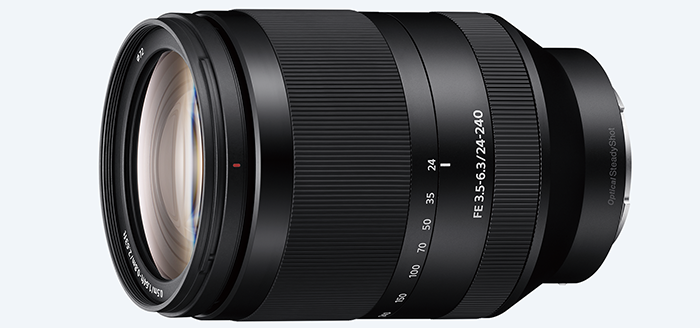
The 24-240mm is the perfect travel lens for FE camera owners. You can check the price and preorder it here:
In USA at Amazon, Adorama, BHphoto.
In Europe at Sony Germany, Sony UK, Sony FR, Sony IT, Sony ES, Sony NL, Sony BE, Sony AT, Sony CH, Sony SE, Sony FI, Sony NO, Sony PT.
What’s hot with the lens:
– A travel zoom that starts with 24mm…hurray! (Most travel zooms start at 28mm)
– In lens stabilization
– Weather resistant
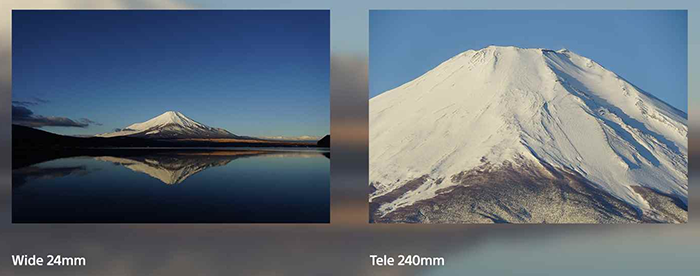
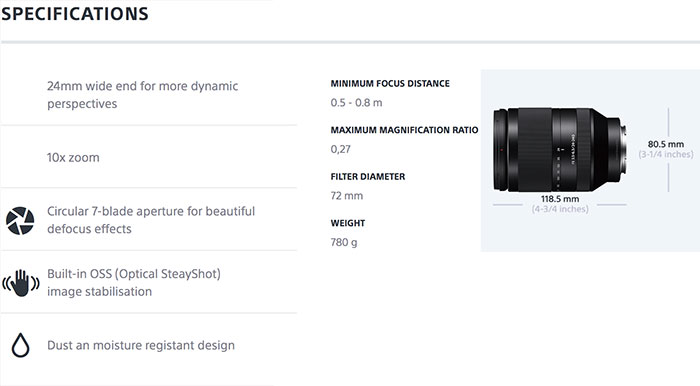
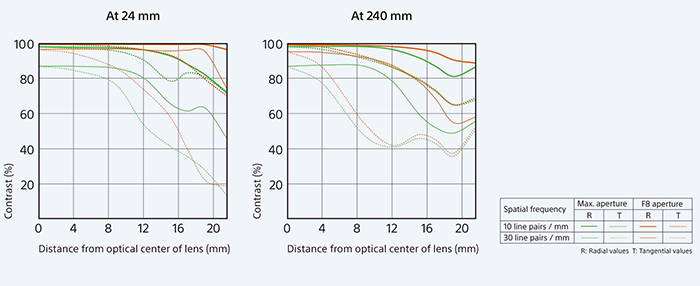
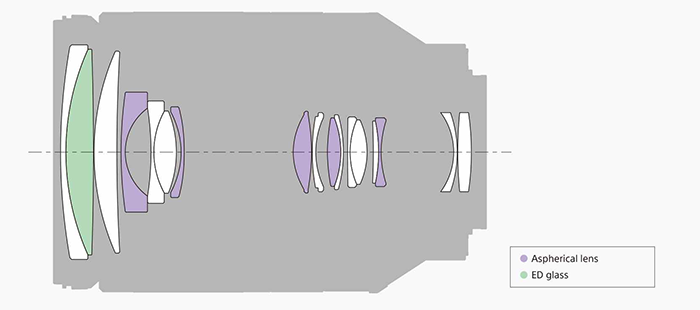
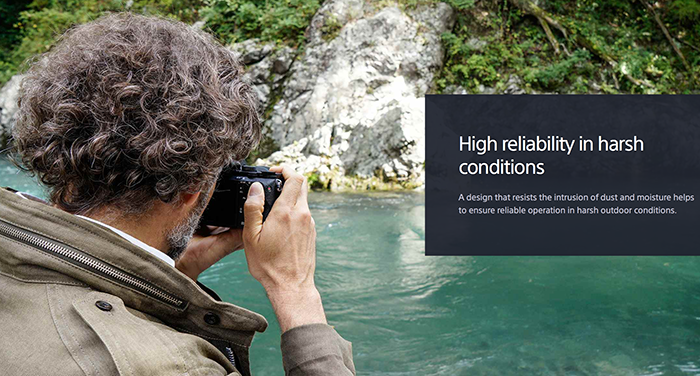
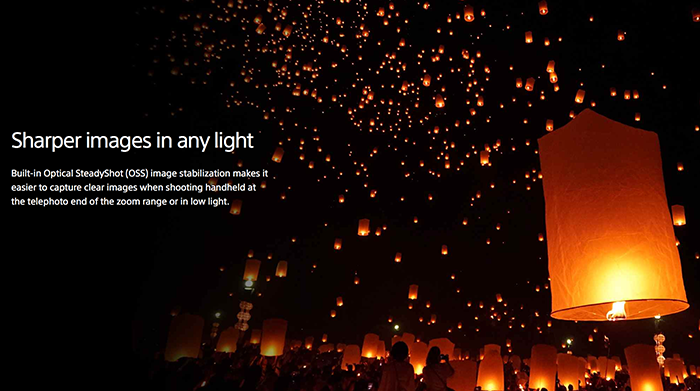
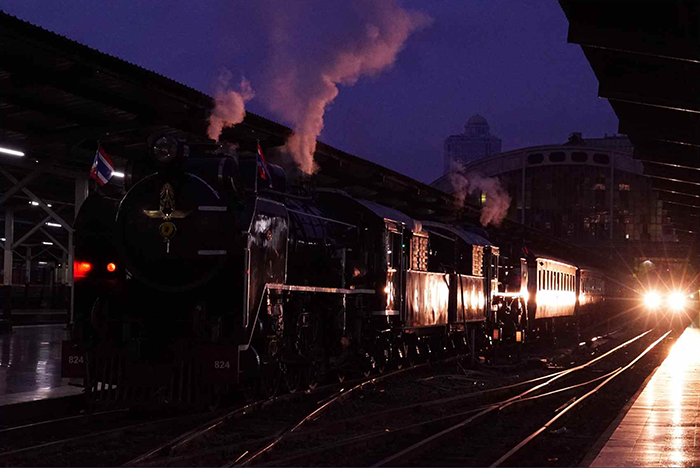
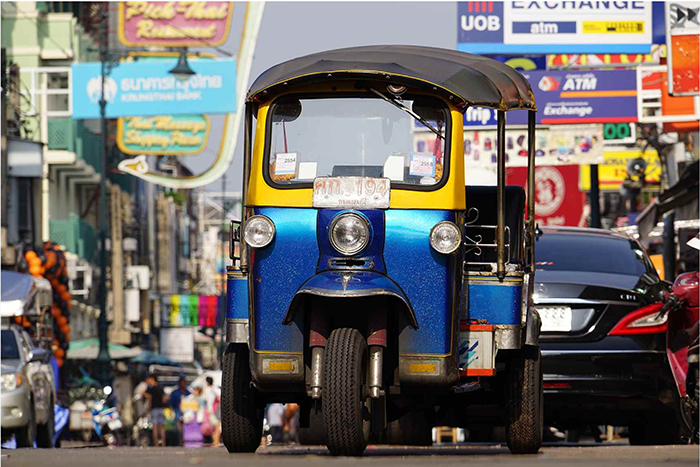
Image samples provided by Sony (no high resolution available).






Preorders:
In USA at:
Zeiss 35mm f/1.4 FE at Amazon, Adorama, BHphoto.
Sony 90mm f/2.8 FE at Amazon, Adorama, BHphoto.
Sony 24-240mm FE at Amazon, Adorama, BHphoto.
Sony 28mm f/2.0 FE at Amazon, Adorama, BHphoto.
Sony Fisheye Conversion Lens for FE 28mm F/2 at Amazon, Adorama, BHphoto.
Sony Ultra-Wide Conversion Lens for FE 28mm F/2 at Amazon, Adorama, BHphoto.
Sony Fisheye Converter for E 16mm F/2.8 and E 20mm F/2.8 Adorama, BHphoto.
Sony Ultra-Wide Fisheye Converter for E 16mm F2.8 and E 20mm F2.8 Adorama, BHphoto.
In Europe at:
Zeiss 35mm f/1.4 FE at Sony Germany, Sony UK, Sony FR, Sony IT, Sony ES, Sony NL, Sony BE, Sony AT, Sony CH, Sony SE, Sony FI, Sony NO, Sony PT.
Sony 90mm f/2.8 FE at Sony Germany, Sony UK, Sony FR, Sony IT, Sony ES, Sony NL, Sony BE, Sony AT, Sony CH, Sony SE, Sony FI, Sony NO, Sony PT.
Sony 24-240mm FE at Sony Germany, Sony UK, Sony FR, Sony IT, Sony ES, Sony NL, Sony BE, Sony AT, Sony CH, Sony SE, Sony FI, Sony NO, Sony PT.
Sony 28mm f/2.0 FE at Sony Germany, Sony UK, Sony FR, Sony IT, Sony ES, Sony NL, Sony BE, Sony AT, Sony CH, Sony SE, Sony FI, Sony NO, Sony PT.
Wide Angle converter at Sony Germany, Sony UK, Sony FR, Sony IT, Sony ES, Sony NL, Sony BE, Sony AT, Sony CH, Sony SE, Sony FI, Sony NO, Sony PT.
Fisheye converter at Sony Germany, Sony UK, Sony FR, Sony IT, Sony ES, Sony NL, Sony BE, Sony AT, Sony CH, Sony SE, Sony FI, Sony NO, Sony PT.
40 Responses
Is there any information about what aperture the lens will be at certain focal lengths between 24mm and 240mm?
f3.5 @ 24mm and f6.3 @ 240mm
That’s correct but not whathe wanted to know 😉
But that’s all we know for sure. It’s not linear, and up to the manufacturer’s decision. We’ve seen lenses that quickly reach lower max aperture after just a little bit of zoom. For example, look at this image on DPR from the LX100 test: the RX100m3 goes from f1.8 to f2.8 max aperture already by going from eqv. 24 to 28, and stays that way all to the end of it’s focal range. And then, there are other that are much closer to linear.
http://www.dpreview.com/reviews/panasonic-lumix-dmc-lx100/images/Equiv_Ap.png
I don’t know exactly as I can’t find it anywhere.
Assumingly it will be approximately
– f3.5 @ 24
– f4 @ 35
– f4.5 @ 50
– f5.6 @ 85
– f6.3 above
I reckon it’ll hit f4 closer to 28mm…
Yes.
Apparently I didn’t explain how I meant my indication.
3.5 only at 24, than f4 until 35, than 4.5 until 50, etc.
Thanks – that makes sense (and is exactly why I wouldn’t touch a superzoom with a barge pole).
These SE Asian samples and the 35 1.4 samples from the same places look like they come from Brian Smith. Is there any photographer credits?
Agree, these do look like typical Brian Smith shots. I think a few are from Cuba. I would love to see these in full res.
Five photos in this post are definitely from Thailand. 🙂
Anyone know when this will be available in Australia?
According specs on the sony.de site it has a 7 blade aperture not 9 as indicated in one of yesterdays threads.
I’d be interested into it as a pure holidays travel-all-in-one. For that purpose (as I don’t like pp’ing all of my holiday images) color rendition and CA/Vig reduction in-camera is important to me. Usually I use its images for photobooks, TV presentation or small prints only, so I wouldn’t bother soft corners much.
I’ll check out, once my premium reseller gets one. 🙂
The “sunstars” in the trains picture also indicates that it was taken with a 7-blade lens.
A bit heavy, to be honest. Will be tiring after prolonged use for travel photography. Need to see more pictures and analysis to see whether it’s worth the price and the weight. Unfortunately, there’s no lighter and cheaper tele-zoom alternative in the system, with the only other tele, the 70-200 being even heavier and more expensive.
1.85lbs for the 70-200
1.71lbs for the 24-240
70-200mm is surprisingly not much heavier.
I saw the pricing for Japan, the retail price between the two are not much different either.
Actually 70-200mm street price is cheaper than 24-240mm.
Lucky I live in US. 24-240 is a lot cheaper.
It’s not much heavier, but neither are light to begin with. For a “tourist lens”, that’s in your neck the whole day. I’d prefer a lighter and sharper 24-135 f3.5-5.6 or slightly longer, and a separate 70-300 or 100-300 f4-5.6, each with less optical quality compromises.
Nice pictures. I wonder if A6000 + 18-200 would be better option i.e. lighter and yet similar IQ.
I was hoping this lens would be like Canon 28-300 i.e. high quality zoom but it is too small and cheap for that use and the MTF charts clearly show it is not in the same league
Still it may be nice lens if A7 is the only camera used. It will for sure offer wider angle than 18-200, better handling of low light as the A7 sensor is better, more control on DOF i.e. more mm and bigger sensor will work together on this one. Ohh forgot – 14 bit RAW
For travel I’m planning on pairing the 24-240 with the A6000. Extra reach, sharper corners and larger effective aperture at equivalent ranges. I’ll pocket the Sammy 12mm in case I need something wider.
Larger effective arpeture? How’d you figure that? Its still going to be the same 3.5-6.3 on APSC. Arpeture is unaffected by the crop factor. So you’re actually losing 1-1.5 stops due to lower APSC sensor sensitivity, when compared to FF
I often wonder about the intelligence of people on the internet because of how quickly they correct others without thinking through their responses. I said “effective aperture” for a reason newbie. On the A6000 you’re looking at F3.5@35mm equiv, F4@50mm, F4.5@75mm, etc. etc. Yes, smaller sensor, less sensitivity. /sigh
And I wonder about your intelligence, considering how quick you are to insult others.
So tell me Newbie… What the heck is “effective arpeture”, given the lower sensitivity of a sensor? Sure, you gain 1/3 of a stop at every focal length in comparison to FF, but you lose 1-1.5 stops worth of sensitivity and 2/3 stop deeper DOF at every effective focal length without ability to go shallower.
So what do you gain with such setup? No wide angle capability and worse low light ability in turn for extra reach + a smaller body?
“So what do you gain with such a setup?”
You’re an idiot. Sensor sensitivity has nothing to do with aperture. Did I ever mention that I cared about low light capability? NO.
Will I be using this to shoot action (which the A7x sucks at)? Yes. Do I care that the aperture is larger for a given equivalent focal length crop vs. FF? H*ll Yes. Will this lens do far better than the 18-200mm the 1st poster I was replying to mentioned? For most things I want, yes. Would I rather have more telephoto than wide end? Yes.
Your posts are pointless- they boil down to “FF better” without even knowing what I’m using it for or taking my post in context as a reply to the previous poster.
And there’s the intelligence point underscored again.
You never mentioned shooting sports in your previous replies, and while yes, you get some extra reach, the added bulkiness, poor egronomics and extremely slow lenses are hardly the choice for sports shooters. Has it ever occurred to you that the entire E-Mount range sucks for sports?
Maybe you should get a life. At least that would allow you to lighten up a bit and not be so angry all the time. Learn to have intelligent discussions without insulting people.
Stop being an dumbass and get a proper camera with a 70-200/2.8 lens. A77II with SAL70200G come to mind. Here you are calling me an idiot, then you’re planning on using a slow a*s, poor quality superzoom for sports. That is beyond funny….
I think you might as well buy the 80x optical zoom Nikon compact camera.
F number is relative to the focal length.
You can’t just multiply the focal length for the 35mm equivalent and expect a 35mm F3.5 performance.
It’s equivalent to 35mm F5.1.
No, you’re flat-out wrong. The f-stop remains the same, the depth of field changes.
You think the f-stop remains the same.
Actually, your focal length remains the same too.
Look at the numbers on your camera.
It should still say 24mm F3.5.
Depth of field changes because of the F-stop conversion…
F stop is a relative number.
F-stop = Focal Length/diameter of the entrance pupil
Your diameter doesn’t change so if you want the conversion equivalent, then there you go.
Aperature just controls the amount of light coming in.
What’s important is total amount of light the sensor is receiving.
What good is large opening if your sensor can’t collect all the light coming in.
Might as well have a smaller opening with bigger sensor that can collect all the light.
You’re not looking at it quite right. The strength of the light hitting any given part of the sensor is the same whether it’s a crop sensor or a FF sensor at a given aperture. Maybe it would help to think of it this way. If a FF sensor is a 20 lane highway and the aperture is a 100 mph speed limit, then a crop sensor would be a 15 lane highway with the same speed limit. The brightness of the 15 lanes is still the same, there isn’t light “lost” the way you describe it. That part of the image just isn’t recorded, but the part that is captured is just as bright as it would be on a FF sensor.
Maybe the terminology wasn’t correct.
You may not be losing light, but you could be collecting double the amount of light at a given aperature if you were using full frame because the surface area of the sensor is double the size.
You’re not losing money by working $6/hr but you could be making $12hr…we call that “lose money”
If you think putting on a FF lens on a APS-C camera give you a sharper image than using a APS-C lens, it is a myth you know.
I agree that it’s not always true, but it often is. You can’t make a generalization on this, because the answer is different for every mount, lens type, and vendor. My 70-300L is definitely sharper across the frame on a crop body than the 6D, and my 40mm STM is as well. However, you’re not going to find a sharper zoom on a crop sensor than the 18-35mm siggy, period. The Nikon aps-c 18-200mm is far better than the 28-300mm on crop. It just depends on too many factors, so the answer isn’t sharper “yes” or “no”, the answer is “it depends”.
Given that the E mount 18-200mm goes into the toilet at anything past 100mm, I expect this new zoom will beat it, while giving a bit more room in the aperture department since the F stop transitions occur further into telephoto. At the very least it should outperform at the 200mm mark, where a coke bottle beats the 18-200.
is it 24mm – 240 mm on a6000 (aps-c) or its is something like 38-350 ?
On APS-C it will be 36-360mm equivalent. Its FF lens.
no! ONLY the *filed of view* will be equivalent to (mm * crop factor).
on APS-C 24-240mm will be 24-240mm with field of view like 36-360mm lens.
he didn’t had to write field of view to get the idea.
Calculated MTFs = worth nothing. Doesnt mean it cant be decent lens, just those MTFs are marketing.. nothing else.
Just preordered the 24-240mm through the link on the page.
I hope the Admin get a penny or two 🙂