








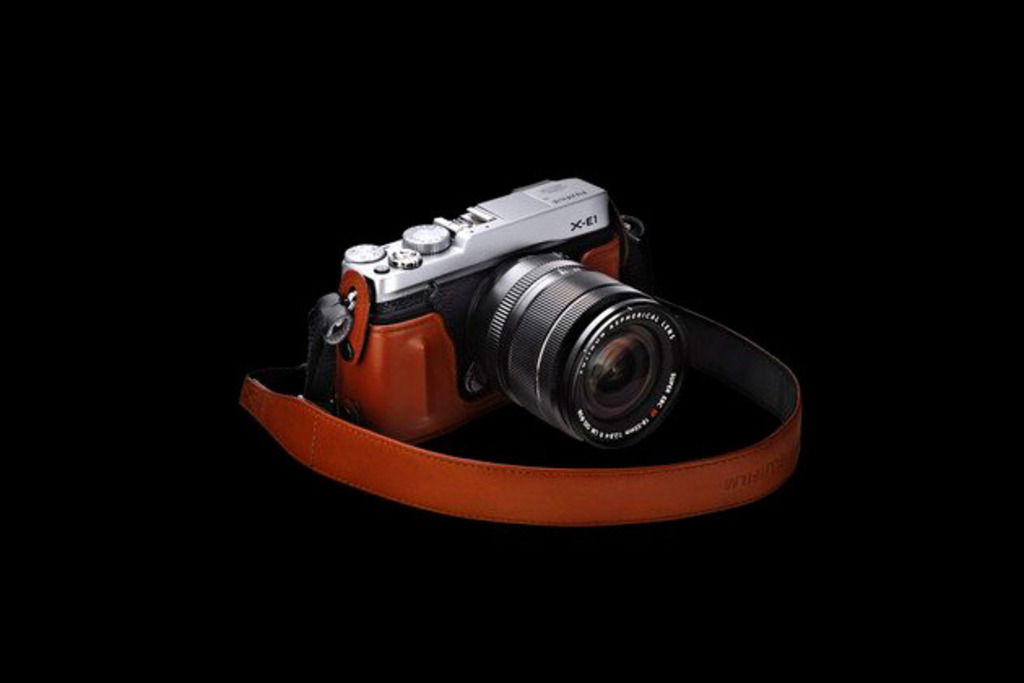
Yu Yoshida is analyst at Credit Suisse and he debunked the mirrorless hype in his latest Interview with Reuters. The main reason why mirrorless isn’t really growing anymore is that “buyers put connectivity above picture quality” and:
Consumers don’t want to connect cameras to phones, analysts say; they want a single interface that can instantly upload photographs to social networking sites such as Facebook Inc and Twitter Inc.
Mirrorless isn’t catching up in USA and Europe because “consumers tend to equate image quality with size and heft“
And in the long term only Canon-Nikon and Sony are likely to stay in the digital camera business.
Mirrorlessrumors opinion:
I am neither a well paid analyst nor a marketing expert. But all I can say is that it’s years now that I hear that small manufacturers like Pentax, Olympus and so on will die. And it never happens. Probably because analyst tend to focus on numbers and do not see the full picture. Olympus for example keeps the digital camera business alive also because the profitable medical business can take advantage of the sensor and imaging technology coming from the camera division. And than there is that Japanese culture that doesn’t fit with the western idea that what’s unprofitable has to be sold or closed.
My guess, the Reuters analyst is plain wrong with his forecast 🙂
16 Responses
There is only one market where mirrorless isn’t growing as quickly and that’s because Oly and Panny haven’t aggressively pushed into North America.
Micro Four Thirds , Sony and Fuji re doing really well in Europe with their cameras much more visible in the hands of consumers, even when you see DSLRs you can tell they were purchased 3-8 years ago.
“buyers put connectivity above picture quality” these buyers should have never been aggressively targeted in the first place as they produce very little profit etc for the camera companies, any company still targeting these consumers is foolish in the extreme.
Really I have no respect for Reuters anymore, did they send an untrained and poorly paid naive 17 year old teenage photographer into a Syrian war zone last week to get killed?
There financial “news” reports these days seem to be written ( or re-edited from the original submitted material) to affect company share price and sentiment, me wonders…
How canikon can get 66% of the ILC market world wide now if people just bought their products 3-8 years ago?
Oly and Pany cannot pushing aggressively in North America because they lost money with their camera division; they need to dump the price of their cameras to sell it. Only Sony is doing well world wide with MILC, but they are losing money too. You know, the camera market in general is collapsing because the people thing the image quality is good enough with their smartphone and it’s more convenient than any cameras on the market. ILC system will begin to be a niche product until the camera makers wake up and bring something new to the table : removing the mirror is not enough. The same story happen at the end of the films days, where cameras maker reached a plateau and peoples was happy with disposable cameras, because they were more convenient.
No comments 😉
If i see how many of my friends and collagues left their nikon or canon home and go out now with a mirrorless camera i feel that the whole article under the name credit suisse is a bit overrated. At last here in the Netherlands.
I put this in with these:
“I think there is a world market for maybe five computers.” — Thomas Watson, chairman of IBM, 1943.
“There is no reason anyone would want a computer in their home.” — Ken Olson, president, chairman and founder of Digital Equipment Corp., 1977.
“640K ought to be enough for anybody.” — Attributed to Bill Gates, 1981
+1
I’ve heard enough “experts” to know that they as often wrong as they are right. While currently the mainstream is still dSLRs, the future of serious photography is clearly mirrorless, and this is where Canon and Nikon still have nothing worth mentioning to offer. Wasn’t it Nikon who had to lower their predictions recently?
SLR sales are going down constantly.
Everybody who has already looked through the EVF of an A7 will agree that optical viewfinders will soon no longer be needed.
I read the linked article and wonder how/why there was no mention of highly capitalized Samsung, which recently merged their camera and smartphone divisions in response to market place realities regarding the general public’s attraction to smartphones over digital cameras (compact, MILC, DSLR).
The only leeway I could give the ‘expert’ is he may be equating ‘Consumers’ with the ‘General Public’,
almost all of whom have no interest in photography.
I see this almost on a daily basis at school events with 40 to 50 parents holding their smart phones or tablets to photograph their children at a school play or concert, standing alongside me and my MILC, and actually sticking their phones into the scene on my LCD.
These parents are only interested in obtaining their child’s image and sending it to relatives, just as the ‘expert’ was quoted above:
“Consumers don’t want to connect cameras to phones, analysts say; they want a single interface that can instantly upload photographs to social networking sites such as Facebook Inc and Twitter Inc.”
I agree with his statement IF he is referring to the General Public as ‘Consumers’.
But when you look at the rest of us,
Photographers – Amateurs, Enthusiasts, Experts, Professionals – I see a very strong interest in my MILC gear as I shoot my MILC standing next to these photographers holding their DSLR’s, by often being asked “What kind of camera is that?”, even “What the he– are you shooting?”
All the signs point to the elimination of the mirror box and to many amazing MILC’s with amazing technologies to come.
> the western idea that what’s unprofitable has to be sold or closed.
It’s not really “western idea.” I see a lot of that good ol’ conservatism in Germany and France too. There are still private family businesses here. (And protectionist laws making corporate take-overs very hard and expensive.)
I think it stems from the modern American business practices: equate everything’s worth to money and act only on that number. (But that is not even generally true when applied to USA itself: not everybody there has lost their mind to greed.) IIRC, from what I read, the change in USA also happened relatively recently when mass shift of private companies to public companies happened. Previously ownership was an involved process, demanding commitment and often responsibilities. Now, with public companies and stock exchanges, it all devolved into a single number – number of shares times price. Business is not “people making products” anymore – business is just a “bag of cash” and unfortunately is managed accordingly.
As mirrorless user for more than 4 years now, I readily admit that there are no magical formulae. People still are fascinated for what they see in cinema, TV and they see those old Nikon F, CSI Nikon SLR, “serious” SLR stuff. I live in Europe and it is true that I seldom see a mirrorless camera on the streets. Sometimes the odd Olympus pops, but no Fuji or Samsung, yet people are loaded with Canon and Nikons.
By making the cameras so compact, designers have fallen into a trap, meaning that people are not ready to fork out serious money for such “small” cameras, perhaps size does matters.
The interview does not reveal nothing surprising, the photo world is already reduced to Canon/Nikon, Sony has the tech and financial means to stay in business, plus they make money with others by selling their sensors. I think Pentax will remain due to the size of Ricoh in the photocopiers business. Fuji is walking fast to its way out in my opinion, they don’t sell enough cameras to make money from their sensor, but they have a strong imaging division. It was no surprise to see Fuji so anxious to get Olympus. This reasoning applies to Panasonic too. As Sony further enlargers the full-frame entry and marketing it (true or false) like real professional cameras, leaving the others looking as amateurs, this is a threat for M4/3 cameras, as good as they are.
Finally, no surprise to see no mention of Samsung, their future is written on the wall for a long time. I think they will move to gadgets where photo/phone technology is needed, some original stuff more in line with their electronics business.
When one remembers that Credit Suisse got it all wrong with the other banks and generated the 2007 crash, I would not give much credit to their previsions…..And I am Swiss of origin !
I have said it many times before, there was a time where mirrorless frustratingly lagged dSLRs. However, that’s not the case anymore. Now it’s up to Olympus and Panasonic to heavily market these cameras, not to mention Sony, Fuji, etc. The ONLY reason most people buy bulky Rebels and d3000/5000 dSLRs is because they don’t know any better. And the analyst is right in this case, people equate size with being better. Mirrorless is not going to die, it’s the way things are moving, and will continue to move.
As for mirrorless being crushed by smart phones, that’s ridiculous. It is going to be quite some time before smart phones can capture an image as well as larger sensor cameras. The day WILL come that smart phone cameras will be fast, accurate and have respectable low-light capabilities. When that happens ALL camera companies will be very worried.
Mirrorless cameras compete with dSLRs, not point and shoot or smart phone cameras. Although, most people think it’s the latter. Therein lies the problem.
I should add that I do agree that connectivity will be a must in all future cameras. It needs to be seamless and easy. However, I’m not so sure Android in a camera is really necessary. That may be overkill.
Some of my thoughts:
DSLRs and mirrorless are for photography, while point-and-shot and smartphone are for general recording. (did I miss “pro-sumer” cameras? are they still selling?)
Smartphone may take over the market of compact camera because (the expert is partly correct that) *some* consumers put connectivity above picture quality, because their main purpose is to record and to share as soon as possible. However, talking about photography, picture quality does matter, that’s why the general public still believe that serious or professional photographers use those big DSLRs.
DSLR and mirrorless are competing with each other, but in the same time they are also expanding their markets. Less-expensive DSLR get people into photography, and then mirrorless get more people into photography. The slow-but-easy “Share to smartphone” function in new Sony cameras is really a response to people’s need in connectivity, and so it doesn’t quite possible that smartphone is competing with mirrorless.
Those mirrorless companies are not making great money, maybe because the cost is still quite high, and they have to put great resources in marketing (as somehow people still think that photography = Nikon/Canon).
MIrrorless cameras are not a replacement for compacts or smartphones. They are replacements for DSLRs. And the only reason we had DSLRs in the first place (or SLRs) is because you can’t put AF and AE sensors on a film. I guess mirrorless cameras will catch up with the speed of DSLRs in the next 2-3 years, eliminating their advantages. Canikon will wait until the last second to jump the mirrorless train but they will make sure to have something up their sleeve by then.
I would argue that the Reuters guy is right but for the wrong reasons. The limiting factor in “digital photographic advances” has little to do with photography and everything to do with capital, electronic circuit technology, manufacturing assembly skills and marketing. My crystal ball sees Canon, Sony and Samsung as the forces
in “photography” because of the above capabilities. There will be a periphery of
specialized providers – Nikon, Fuji, Ricoh, and perhaps Panasonic – but their combined market share will be rounding errors. Look for consolidation – wouldn’t surprise me to see Panasonic, Olympus, Fuji and, suprisingly, Nikon swallowed up by one or more of the three above. Like cars designed in computerized wind tunnels, the products will be pretty much differentiated by exterior design and old line preferences. Unlike most technology products, price points will remain relatively constant due to volume
declines.