









[shoplink 51548 ebay]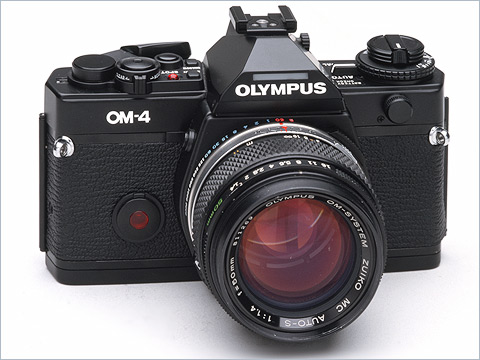 [/shoplink]
Dpreview interviewed Mr. Setsuya Kataoka from Olympus. These are some of the interesting information he shared:
1) Future OM-D cameras will be able to create multi-shot high resolution images in such a short time that photographers will be able to use the feature handheld.
2) The most important development of the OM-D E-M5 ll is not the High Res Shot mode itself, but the improvements that have been made to the 5-Axis image stabilization system that makes the High Res Shot function possible.
3) The advantage that the improved 5-axis image stabilization system gives OM-D E-M5 ll photographers outweighs simply having more pixels because it produces better detail in images than a full frame DSLR can handheld
4) It is the limitations of the sensor that prevent Olympus from offering ISO 100 but Olympus hopes this will change very soon.
5) Touch AF: Their suppliers are working on making the touch function available right to the edges of the screen.
6) When asked if he would like to make a digital version of the [shoplink 51548 ebay]OM-4[/shoplink], with minimal buttons and no rear screen he said that he would love to and that he had been thinking about it for a long time, but he added that he’d have to concentrate on products that make a profit first!
133 Responses
+1million for OM-4!
Looks like Sony only has 3axis IBIS and by clever marketing they call their software correction 5axis. So it really isn’t Olympus tech.
http://www.sonyalpharumors.com/sony-stand-report-by-dpreview-new-zeiss-35mm-fe-has-direct-drive-ssm/
They stated some times ago that it was not Olympus tech. Sony IBIS works slightly differently, with manual focus lenses it uses 3 axis (better than nothing anyway).
It looks like it only has 3 axis mechanically and does 2 axis with software correction. See link.
And Nikon calls their sensors “Nikon tech” although they are Sony and Canon calls their 50mp sensor Canon tech although it is Sony. So “They stated some times ago that it was not Olympus tech” is not much worth.
3 + 2 axis stabilisation for lenses that can communicate with the camera (native Sony and Zeiss lenses), 3 axis mechanical for “legacy” lenses, where you need to set the focal lenght manually. Olympus offers a 5 axis stabilisation for everything.
About sensors: I can’t tell how Companies promote their products, but Sony is mainly a sensor selling company, it makes sensors foralmost every other company (and uses its new camera releases to show off what the new sensors can do).
Fuji uses Sony sensors too, but they’re tweaked by their XTrans tech.
The sensor inside Leica T is the “old” one from Sony.
That inside my “old” RicohGR is the same of the Leica T, without AA filter on it.
When I see how mad some people get when talking about camera brands and sensor sizes I ask myself if I am missing something important. To use your words, all of this is “not much worth”.
I care most of what I can do, even with an “inferior” piece of gear.
Makes you wonder why { if gear is not that important } you have hundreds of posts on gear rumor sites
Because I’m interested in photography. 🙂 so many people act as if they were crazy hooligans defending their “beloved” team: they don’t care about sport though.
Being interested in something without being blinded by some kind of distorted religious preconcepts make me love photography and keep my feet on the ground when discussing about it.
Actually I like to talk about gear, but not as if I had to defend a system or another.
And better doing with real friends and passionate hobbists and pros in front of a good drink. 🙂
You didn’t bother to read the link, did you? But let me do this for you:
“We got to play around with the unit, moving the sensor up, down, left, right, and rotating it. We found, however, that the sensor did not tilt at all in this assembly, so we asked how the system corrects for pitch and yaw. We were told by the engineers that measurements are continuously recorded and used to algorithmically correct for pitch and yaw.”
To stress the point “We found, however, that the sensor did not tilt at all in this assembly.”
So there is no 3+2 or axis stabilization, there is only 3axis stabilization and 2axis software correction.
Yes, and as I wrote, the 2 axis stabilisation can’t work with legacy lenses because there are no contacts between the lens and the camera, and as you wrote, the software correction can’t be applied.
We’re saying the same thing, I must be less clear, it’s because English is not my first language and I’m also doing other things while checking the website 🙂
I don’t know how Sony came into the IS: we know they helped Olympus when in financial troubles, but I think Sony engineers were able to open an Em5 and look for themselves at its IBIS, then figured out on their own how to achieve a similar result without asking for it to Olympus, without paying for the use of a patent, or simply because their sensor and camera is different.
Sony DIDN’T help Olympus.
Olympus had lots of companies (including companies that were not photographic competitors) wanting to buy a stake in the medical imaging business and decided to go with Sony who got a 10% stake.
Olympus didn’t need the money to survive. It was used to increase market confidence and support the share price.
It was almost certainly ‘arranged’ by the banks to make Olympus harder to buy and reduce the possibility of a hostile bid.
I wish people would make an attempt to understand how the financial markets work especially in countries like Japan, where cross holdings and co-operation across competitors is common.
Canon 50mp sensor is Canon made hence the poorer low ISO DR a standard “feature” of Canon sensors.
A mansion I hire ppl to build is mine, NOT the company’s. May be yours theirs.
A mansion some ppl for you is “your tech”? Huh.
Canon 50MPx is really made by Canon.
Nikon uses both Sony and own designs (manufactured by at least 3 companies).
>It looks like it only has 3 axis mechanically and does 2 axis with software correction.
Yes. And Oly’s IBIS does exactly that too. You moron.
>It looks like it only has 3 axis mechanically and does 2 axis with software correction
Yes, and Oly IBIS works exactly that too.
Really? When I clean the sensor it clearly moves in all directions.
Is Olympus ending its long history of managers saying nothing in many words when being interviewed? This is indeed an interesting interview. Item 3, though, is, of course, marketing BS.
Om-d 4: isn’t it enough to keep the swivel screen of Em5II closed?
I’m still waiting (just curious) for that Trip35 rumored last year.
Olympus must consider their moves very carefully given recent market trends. I would like to see a digital Trip too, but unfortunately any effort towards niches would be out of the question at the moment.
Perhaps it is time for the manufacturers to join forces and collaborate to design non-mainstream products. I know collaboration is almost unspeakable in the Japanese corporate culture, but it makes sense now like never before. As you pointed out, many of the camera components are shared across brands anyway. Looking at the bigger picture, much of the R&D invested in camera technology as a whole can be considered redundant.
That’s exactly what I was thinking about, when imagining a reborn Trip35: a fixed lens alternative to the Sony RX1, sharing its sensor, different body à la Olympus and a great Zuiko50mm f1.8 lens on it.
No.3 lol
Yeah… it seems Sony is not willing to give them smaller pixels. 😀
Remeber that 16 Mpx-u4/3-sensors have already smaller pixels than 50Mpx-FF-sensor. And none of the current u4/3-lenses can resolve 16Mpix-sensors, not even close in some cases (DXO-mark-data). So even smaller pixels would not be that beneficial anyway.
Yeah, sure. And it’s just some kind of magic that high res mode can somehow match 36mpx D810 in resolved details, despite using those poor quality MFT lenses that obviously can’t even deliver 16 mpx worth of resolution. Obviously that can only be magic, right?
If anything, the high res mode proves that most MFT lenses are sensor limited in what they can deliver.
Not exactly. In Oly’s case, the composite high resolution image uses multiple samplings of the same information. It is an elegant way to bypass lens constraints, but Oly’s choice to downsize the 64mp RAWs to 40mp JPEGs is indicative of an optical limitation to resolution.
I agree, it is an elegant way to overcome sensor size and pixel count.
Or maybe the 40mp end result is because they are still sampling with pixels twice as big as needed for “true” 64 mpx? Let’s not kid ourselves, the high res mode depends on a form of interpolation algorithm to arrive at the end result. This is not the same as Foveon for example, where each “pixel” samples the whole color information, where final image is 1:1 match with the sensor (at least before Quattro).
Besides, you’re starting to contradict yourself. You just claimed that MFT lenses can’t resolve 16 mpx, but now you’re saying 40 mpx is the limit. So which is it?
The limit for a single exposure would be something like 14mp (~4 microns at the focal plane is about the limit of optical glass). The more times you sample the more detail is revealed regardless of the lens you use.
I am not sure this explanation makes sense for the following reason: if the information was not getting through the lens, it does not matter how many times you sample it, as you would not be able to recover it. So, the limitation is not in the lens.
This is where the half-pixel shift becomes handy. Each exposure contains slightly different information from the previous one.
Yes, but this simply means that the information is getting through the lens 🙂 Thus the limit is the sensor and/or Bayer array.
First of all, I just noticed it was not you who made the claim of MFT lenses not
resolving 16mpx, so sorry for my comment that you contradict yourself. I’m not sure now if this is your position as well, or not.
Anyway, your 14mp number makes little sense. You do know that to get 1 pixel of final image, the demosaicing algorithm takes at least 4 ‘raw’ pixels into account, right?
Why do you think diffraction becomes apparent only around f/11 on MFT, and not f/5.6 as it should based on calculations (Airy disk vs pixel pitch)?
The truth is that 16 mp sensor gives you 8mp of green, 4mp of blue and 4mp of red resolution. So for example, if you shoot a predominantly red subject, you will get around 4mp of actual detail resolution, no matter how good the lens is. Demosaicing also produces artifacts, that limit the resolution as well. This is the reason why Sigma’s 16mp Foveon sensor wipes the floor with pretty much any traditional sensor, maybe except 36mp full frame and higher (still better with moire and aliasing). Since most of the photos are not of only red/blue/green subjects, the demosaicing algorithm can squeeze out a bit more than those 4/8 mp. Looking at DXO scores, the limit is around 80% of declared sensor resolution. Much less for sensors with optical low pass filter (compare sharpness results for lenses mounted on D800 vs D800E)
To sum it up. No, MFT lenses are not the bottleneck here. They are most likely good enough for 32mp sensors, and the best lenses can probably make use of 40mp or higher resolution sensors. Of course, with such sensors diffraction will hit at f/5.6.
I’ve never been a fan of hyper resolution, but in my experience the differences in detail between the E-5, E-P2, E-M5 and E-M1 with a good lens (ZD 50/2 macro) are negligible at best. You might be right in theory, though.
What, what else would you expect from increasing the sensor resolution by around 10%?
The fact is that even a simplified high res multisampling (4 exposures, so that each pixel samples full color data) would give you more increase in final image resolution, than upgrading from 12 to 24 megapixel sensor. Olympus goes even further, getting extra 4 shots “in between” pixels to squeeze out even more resolution (it gets more data points to interpolate between).
BTW, I’m a bit surprised they did not include this simplified mode. That would produce 16 mpx final image, so the file size would not be an issue.
Me too are surprised that you can’t limit the number of exposures to 4. If they are making it possible to multisample handheld I thing 4 exposures will be a limit in the beginning.
The technology allows you to force multiply whatever your sensor is. Whatever you are whining about is trivial. Let’s not kid ourselves or in your case stumble )
How is it possible that people still don’t understand the high res mode? So much was written about it!
Búllshit.
The DX0 resolution charts are “format ratio” related. You need to multiply those by 4x to get the resolution they would resolve on 35mm.
You will NEVER get DX0 to state fair numbers between formats, they are all just format related that you can’t cross compare at all. And if you even trust DX0, you are a fool.
Why do you compare with FF?
Sony has a 1″ 20MPx sensor which performs as good as the 16 MPx MFT.
And you missed the idea behind “resolving a sensor”. There is no such thing as “lens X resolves 16 MPx”. It can resolve 16 MPx *ON* a 20 MPx sensor. But at the same time: 25 MPx on 36 MPx sensor and so on.
With more pixels on the sensor you always get more details in the final picture.
Those goals are rather long-term and many of them depend on “suppliers”. Olympus has some great ideas, but technology is not quite there yet.
For example, making 8 exposures within 1/60 of a second would require an average exposure + sensor readout + sensor shifting duration of 2ms. This cannot be possibly managed without a global shutter and some serious amplification of the signal (especially in non-daylight conditions). Sounds almost like science fiction at this day and age.
Nevertheless, it’s good to see some clear vision from an Olympus executive. Olympus will celebrate its 100th anniversary in 2019 so I’m keeping my hopes high.
Mobile phone with camera that can be used across the world WAS science fiction just 30 years before.
Grow up, and start reading history, please.
Well I’m thinking four years rather than 30.
This is not about science fiction but physical limits.
30 years ago we already had a digital camera and we knew that it will get much smaller. Similarly, we knew a computer will become very small once the first fully digital and electronic one was made.
In other words: we had new technology and we weren’t even close to its limits.
This is not true today.
As sneye has pointed out: 8 exposures in 1/60 means 2ms per one shot.
In other words: 500 fps at 16 MPx. So this camera would have to beat the Phantom Flex4K in a small, cheap package. Not likely in this decade…
I see you’re a propagator of learning history.
E-M5II does 10fps max (burst mode – without any metering, but that’s what we need for multiple exposures).
I suggest checking what was the max fps of consumer cameras 5, 10 or 20 years ago.
But you have to flap the shutter in normal burst mode. Nikon V1 does 60 fps full resolution burst with electronic shutter, so we’re far from the limits.
Besides, you’re probably not up to date on latest developments. Samsung actually claims that they can do a full sensor readout (28 mpx) at 240fps. That’s ~4ms per frame. With that, you could theoretically make the high res shot at what? 1/25 sec? And that’s with currently available tech. Well, not Olympus tech, and whether this could actually be put into consumer product is another matter. It’s one thing to do this in the lab, another to make it work in the camera. But we’re not nearly as close to the limits as you seem to suggest.
I used the word “camera”, not “sensor”.
The image has to be processed and stored.
And quite a lot of data has to be send through the camera.
Lets assume that a 16 MPx sensor outputs around 20 MB of data per shot. At 500fps you’re looking at 10 GB/s.
At the moment this is 5x faster than how PC parts communicate (PCIe v4: 1969 MB/s).
For this kind of transfer you need more power, more heat dissipation and better technologies. That’s why high speed cameras (e.g. Phantom) are so big and expensive. They use technologies which are yet unknown in consumer electronics.
So Samsung cameras can’t do 240fps, even though the sensor can.
Samsung uses the 240fps for metering and AF, but the data is quickly filtered, so the camera has to handle 240fps from few hundred thousands pixels, not 28 million. Similarly, Nikon V3 can do 1200fps at sufficiently low resolution.
Now, if only Olympus could get Samsung interested in making a sensor for them. Which, by the way, is something that is far from out of the question. I’m sure that Olympus is willing to make deals with anyone as long as the unit quantities, and price can be worked out.
As I predicted, it appears that Olympus WILL implement this as practical, widely useful feature, it is just a matter of time and likely much sooner than expected by some.
We shall see. To me, this list seems like a strategic roadmap rather than an immediate plan. I wish I could ask Mr. Kataoka a few questions. He seems like an open-minded, positive individual.
I agree. Its true we cannot be sure of success, but this is part of their core philosophy so, this emphasis on practicality is completely expected.
Just thinking about loud: what if Oly is making a DSLR style Fullframe Kamera? Is it posible to make Saal lenses like the old OM lense?
I suppose it is possible, but extremely unlikely. Quote: “…he’d have to concentrate on products that make a profit first”.
Yeah, i think so too. But i also think that it would be profitable for Oly to try this gamble. It would be an instand buy for me!
You can spare yourself the wait and get such a system now (albeit made by another manufacturer).
The problem is that they’d start from scratch with lenses. I’d guess designing a fullframe body wouldn’t require that much effort, but the stabilisation system would need to be redesigned to handle a four times larger sensor. At the moment Olympus still struggle to get a complete lineup of Pro-line lenses with up to a year or more between initial anouncment an deliveries. Launching a fullframe now would not make much sense.
And even if they did how many people would sell their existing FF lenses and system and move to Olympus.
The FF market is very small, around 7-8% of interchangeable lens cameras sold, and the way the market is going people are looking for smaller cameras, especially as sensor technology improves and they no longer need the performance of the larger format.
I suspect the main reasons many professionals now buy the Pro FF cameras is no longer because of the IQ but because of the frame rates, ruggedness, shutter life, sealing and so forth. Plus they also have a cupboard full of lenses that fit at the correct focal length
No. The markets are full of Zuiko objectives, highly praised for their sharpness and contrast.
The problem is that you can’t just adapt those to digital cameras as sensors has thick filter glass (example E-M1 has 4mm thick filter, Sony has 0.5mm thick) on sensor that cause problems.
All what Olympus would need to do is to make 35mm sensor, original OM mount, no rear LCD and big EVF. It would be just for old Zuiko objectives usage.
Handheld multishot would be VERY cool.
3) only if shooter has parkinson’s disease
Yes, it sounds like bollocks until you consider colour artifacts.
http://www.thewanderinglensman.com/2014/01/for-ultimate-quality-you-just-cant-beat.html
http://www.sonyalpharumors.com/the-shutter-vibration-issue-explained-by-joseph-holmes/
http://www.josephholmes.com/news-sonya7rshuttershake_followup1.html
No, the shooter doesn’t need to have any disease. The high resolution cameras are very vulnerable to shake as each pixel is very much smaller per detail than lower resolution cameras. You can not just handheld those beasts and get perfect shots.
Then again there are some units like from E-M1 that has shutter shock (my unit doesn’t have any problems, so I can keep anti-shock feature disabled and keep 8ms delay off from shutter) and it causes as well problems.
A7r shutter shock is different than mirror slab or hand held shake. So be careful in comparing it to a D810. I had the EM1, have the A7ii and the D810. No problem using it handheld for most problems. The EM1 didn’t get close in DR and detail. By the way, the new HiRes mode is already used for quite some time and doesn’t increase real lp/ph drastically (MP is increased, but details are oversampled).
http://dspace.mit.edu/bitstream/handle/1721.1/37814/46987815.pdf?sequence=1
http://www.strollswithmydog.com/olympus-e-m5-ii-high-res-40mp-shot-mode/
http://www.strollswithmydog.com/mtf50-trusted/
Olympus nice ideas but only as good as Sony or Panasonic’s sensors that they let them have.
There is still room for a Trip/Pen with a viewfinder and no hump -do it Olympus
A lot of people who don’t own OM-D cameras talk as if the format is limited. I partly believed it until I got one. Fact is, the cameras are not sensor limited in any way. The only reason to go full frame is if you have a customer that needs pixels for very large prints. You beat the game and have a lot of fun with a bag full of fast, sharp primes, which you can afford because you didn’t break the bank on the camera body. I bought a tripod for those occasions when I would need to avoid using ISO 6400, and I have never used it, even for night shots. If you gotta have a Trip, go get a Panasonic slab and permanently mount that 20mm lens. It is awesome and beats the pants off the RX100 and LX100 cameras, closest thing to a Trip. After a mistake, I have no idea what the aversion may be to the “hump.” I had an EP-1, but that viewfinder “hump” on these very small cameras is no problem at all. I think what is going on here is a tempting thought: a small, fixed-lens, full frame camera would beat the expense, but I think it is short- sighted. Great photography is as much about optics and clever technique, and having a big sensor behind a lens compromise appeals to me, not one bit. Sorry. I respectfully disagree. I think the the Trip would be boring. Budget full frame. Nice. I would only shell out for the sensor if I was willing to shell out for the great glass, all big.
If I was you I’d be worried about Nikon and Pentax and Fuji as well, and pretty much everyone except Canon and Sony, as they all commission other companies to make sensors for them.
Hold on, Canon as well, as they use Sony sensors in their compacts.
Have you seen this one? A new EVF for the E-M1 II?
Seiko Epson has announced that it will exhibit a new ultra high definition electronic viewfinder LCD panel at CP+ 2015.
http://www.ephotozine.com/article/seiko-epson-to-showcase-ultra-hd-electronic-viewfinder-technology-26922
Good find!
Didn’t I say month or two ago that next gen EVF from Olympus is doubling the current E-M1 EVF (2.36Mpix) and making it even bigger (current 1.48x, possible future one 1,68x). You really do not want to use any DSLR after E-M1/E-M5II/X-T1 and once this new EVF comes out, you do not even want to look at the direction of the DSLR OVF.
I hope that detail will be clearly visible in both stills and motion.
Following my post 2 days ago on the new OMD EM5 mkII.
I have tested the full res yesterday:
https://plus.google.com/photos/101191223694267273293/albums/6115716250200490145?authkey=CIPmnb2irMy_VA
One can see the full-res can really give better details.
By request, I tested the silent shutter today (electronic shutter)
https://plus.google.com/photos/101191223694267273293/albums/6116060501315793777?authkey=CITB_cfPmJnHeA
Look at the 4th photo where the car door crack doesn’t look vertical. It does has rolling shutter. The car is probably going at 25 miles per hour (40 km/hr). I also noticed different light flickering. This is also caused by the e-shutter. The wheels are also slightly distorted.
I know the photo looks like crap but I had to dial up the ISO to get a reasonably fast shutter to keep the car reasonably sharp.
Feel free to ask me other questions.
see my photos at: 500px.com/yatbond
Hi, could you share more observation about C-AF? The former E-M5 was very bad in this area. Panning is almost impossible in C-AF mode. I dont agree that C-AF is useful only for sport photography, what about children, dogs etc? Thank you 🙂
So in summary, save your money because Olympus has something better coming out soon. Good to know
Welcome to digital photography and Moore’s law.
Digitalized OM-4 (with LCD, at least optional) would make a lot of profit..
Don’t forget the processor has to be locked to a set iso and colour/bw mode for 36 shots until it can be changed. No image replay and no EVF light compensation. Manual focus only. If you don’t want these limits why not buy an EM-5ii
Cause Im not an idiot. 🙂
Interesting as far as “minimal” is concerned. I think the OM-4/3 had the most buttons in the series.
Oh how I’d love the same multi-spot metering they had to reemerge in my OM-D.
Bruce Kolber wrote:
Here is how it worked on the OM4. The “Multi-spot measurement” was
activated by pushing the “Spot” button. You used the center ring
in the viewfinder to meter a small area, pressed the “Spot” button,
a dot appeared on the shutter speed indicator bar in the
viewfinder, you recomposed (recentered), pressed “Spot” again, and
a 2nd dot appeared. The end of the shutter speed indicator now
moved to a new position that was an average. You repeated until
you had metered the obviously different light and dark areas of
your scene. If you “oops’d” you hit the “Clear” lever and
remetered. The benefit of this manual process was that YOU picked
the areas to meter. It remembered the metering for 120 seconds or
until the shutter was tripped. This was in the mid 1980’s.
http://www.dpreview.com/forums/post/8741188
That multi-spot metering was awesome, but I would not use it anymore. Because EVF and real time exposure live view. If being unsure, enable the over/under exposure warning and you never ever have problems in exposure.
If you use eye glasses, get a better EVF rubber eye piece to give you shade against dierect sunlight.
I have an OM-4 Ti. The multi-spot metering was amongst the best metering systems ever put in a film camera. However, The ESP metering in modern E-Mn cameras is probably better, certainly in conjunction with the compensation dial it is.
1) Expected because as Olympus now improved the IBIS gyros and sensor for its movement, it is just question that IBIS can be enabled while the HR mode is enabled.
Currently the HR mode needs to be thought as usable as any photography situation with one second shutter speed when it comes to subject motions, and there are plenty of those situations, like example this:
http://neunzehn72.de/wp-content/panos/prag/
Taken with Olympus 40-150mm Pro and HR mode.
As you can see, the moving subjects with the HR mode enabled doesn’t matter at all!
2) I totally agree and I have been saying that to many. As while E-M1 IBIS is awesome and capable to 5-stops (even up to 8-9 stops when handler is good), it is E-M5 II that really changes the IBIS even more as it really “locks” in the scenery and feels even more difficulty to get moving.
3) That is totally correct. Example Sony A7r and Nikon D800/e/10/a and future Canon 5Ds/r are just cameras that you can not use handheld in most situations if you want the resolution to be tack sharp without motion blur. You need to mount those cameras on tripod any situation basically and/or add extra weight with mounts or sandbags etc.
And while so, OM-D offers capability to get tack sharp 16Mpix photos that are sharper than handheld photos from those cameras. And even when correctly mounted and dampened, the difference between 16Mpix and 36Mpix is negligent. And at this time the only real challenger for 16Mpix is E-M5 II with HR mode and medium format cameras that has 64Mpix or more. That is required to get the noticeable difference to details. And the coming 50Mpix Canon / Sony cameras are closer but not just there.
5) That is nice to hear, as sometimes it would be nice to focus just edge of the frame. Now it is just the one focus point deadzone on edges.
6) I would love that but only with single feature. A 35mm sensor, OM mount. No rear screen, no delete button. Just similar fashion as OM-4 was. Make there large 0.92x EVF (OM-4 had 0.84x but OM-1/2 had larger) and even make there a real leveler to load frames in S-AF mode if wanted (possibility to disable it).
Get a 50Mpix sensor from Sony and design the sensor filter thickness so Zuiko objectives sharpness and contrast doesn’t suffer and call it “OM-E” camera. Suddenly every Zuiko objective prices jumps up as you can natively use those manual focus objectives, tack sharp ones that are sharper than most Zeiss objectives.
Make it special edition model, like 5000 units only. Update it then 4-5 years later.
If you think image stabilization can move a subject of a photograph back to where it was after it has moved, you have to re-think again.
What may help though is some in-camera ghosting removal capability when merging the multiple shots together.
And you must think again as I didn’t even say anything like that.
I hate to break it to you, but it is simply not true that you need a sturdy tripod to get more resolution out of a camera like a Nikon D800 than a E-M1 or 5. I’m not sure where that fallacy began but it just makes a person look silly when they repeat it.
As a user of both a D800 and an E-M5, there is a huge difference in resolution / dynamic range / other aspects of image quality, handheld or not. I am not a tripod guy (for the most part) and have taken thousands of sharp images in all sorts of situations with both cameras. The mass of the D800 helps steady the camera during exposures and it there is little consequence to boosting the ISO a stop or two to raise the shutter speed to a safer speed.
There is nothing out there that can compete with the small size and quality of the Olympus cameras, and I would love to have in-camera stabilization on full frame that works as well as Olympus’ 5-axis, but there really is a big difference between the two formats.
I think of my Nikon as the new medium format and my Olympus as the new 35mm. Each has its own purpose.
Sorry but as ex-D800e owner and current A7r owner, I totally disagree with you.
Go to stores and among professionals (I mean skilled experienced professionals) and they tell you same thing. You can as well if you want browse little bit web and find out the same problem.
Most D800 series and A7r bashers have handheld camera, had bad optics or otherwise bad technic, or even not so sturdy tripod. Those cameras with great optics requires to get camera very steady.
So all of my personal experience is wrong because a store or a pixel-peeping website said otherwise?
Or is my opinion wrong because I’m not a “skilled experienced professional” in your eyes?
Are you considered a “skilled experienced professional” or do you just listen to what everyone else says rather than make your own conclusions?
No, because other experienced users say as well that you need tripod to really get good sharp photos.
Do you shoot handheld? Yes
Do I shoot handheld? Yes
Do I know from experience that to maximize the potential I need tripod? Yes
Do you know that to maximize potential you need tripod? No
Well, I don’t have any problems using the D810 and getting tack sharp images handheld. My wife neither.
Moron
I have an OM-4 and I think it would be loony tunes to produce a digital version. The model is a film-era wonder. In this digital era, we use bracketing, exposure lock, and HDR modes to cover the bases. None of the film-era OM cameras can touch the automation we currently enjoy.
I owned and shot with a few of the OM-4’s in the 80’s and you are correct, interface requirements prevents a repeat of that design. However, the OM-D series IS the ‘equivalent’.
There are many here who have never used a 35mm camera. I don’t think they realise that once the film was in and the iso set that was it until the next film was used, no changing from colour to black and white on the fly. Unless the film was replace without using the roll up. Something that would be very expensive. Each shot had to count and you had to wait to see if it had been “nailed” no shooting hundreds of shots and maybe one would “make it” as can be done today.
Tis true. Even with my first digital cameras, I was still very deliberate about everything. It took a while to give in to the temptations. One was to let the camera do most of the work and confine myself to composition, and the other was to abuse the shutter button for jolly.
Id like to see a film simulation mode on digi cameras, just for training or fun, where you set the dial to Film Sim for eg, where you’re given 24 exposures, you pick an ISO that is fixed for the shots. (maybe even a film simulator filter) and the photos are stored unable to be reviewed before the photos are downloaded onto a computer. Just as an exercise in those limitations that made us slow down for shooting film. I’d use that more than “storyboard”
There’s an app called 1hourphoto (or Onehourphoto) on the AppStore: it allows to see the picture you took only after one hour. Of course it works only with smartphones, and I see it as a way to educate people to spray and pray pictures with their devices. 🙂
1) Go out and buy 32-64MB memory cards
2) Set camera colors with contrast, curves, vivid modes, or use B/W mode with curves.
3) Set camera to JPEG only, adjust resolution to fit card for wanted frame count.
4) Set ISO to 3200-6400 for look, or use ISO 200-400, allow only to change ISO when memory card is full.
Extra:
5) Get a fancy objective like 15mm f/8 body cap lens, or my favorite 17mm f/2.8 pancake.
Now you have a camera that allows you to capture just about 24-32 frames per card.
Just do not press preview or delete and have fun.
Sorry, we can’t add a film winding sounds to notify when the film is just about get in roll, so you can easily pull film out for development. That you need to imagine yourself 😉
64Mb cards would be going back up in value by now wouldn’t they?? 😀
But yeh, otherwise I can make the film advance and film rewind sounds myself 😉
I don’t really use bracketing, exposure lock and only sometimes HDR modes if I want to send photo from phone. I use only the 3F 3EV (three frames, 3 EV stops each middle being the one I choose) in extreme situations (5F 3EV bracketing would be crazy to use).
I use the EVF, two dials and 2×2 leveler to adjust settings as required.
I even mainly use JPEG, but usually I take photos in RAW+JPEG. Most of the time camera is in AWB, unless I want to change it and then I use custom white card profiled on the scene.
By making a digital version of the OM-4 would not mean it would not have those things.
OM-4 with digital sensor would be:
– OM mount
– 35mm sensor with ultra low filter stack and famous SWF
– Maybe a famous Olympus 5-axis IBIS
– Aperture controlled via Zuiko objectives
– Shutter speed selected in half-stop stepping via physical dial in mount, between 1″-1/8000.
– Live Bulb
– Live Composite
– Live Time
– HDR + Bracketing
– 0.92x EVF with 4.4Mpix, auto brightness and +-3EV exposure live view.
– D-pad + OK to control settings via EVF
– Spot metering button
– ISO dial top of the camera in 1 stop stepping
– On/Off switch top of the camera.
– Battery and Card slot
People love simple cameras, there is market for such special cameras. Not everyone is a pixel peeper and tech person who like to get E-M1 level camera to twiddle about. Look many sports or wildlife photographers! They look most often semi-automatic modes like A and S. Because with DSLR cameras it is way too difficulty to get correct exposure or focus, so they use auto-focus with tracking and semi-exposure controls.
There are huge markets for Leica kind cameras, and many loves the physical knobs in Fuji X-T1 camera, no matter that they are slow to use and requires to twiddle with them.
A special edition camera with small production line would allow to make it higher price for special people. And there are many who love Olympus OM bodies and have large collection of Zuiko objectives and wish they could use their full image circle and capability.
I would bet that 2000-5000 units could be sold in very short period.
Why are bloggers suddenly obsessed with the idea of “minimal buttons and no LCD”? Just because Leica made one of their silly collector editions like this for their Arab-sheik-and-rockstar customer base, that doesn’t mean it’s a good idea for photographers who actually take pictures.
As Mark pointed out, with a digital camera you CAN’T have both minimal buttons and no LCD. (Unless you do a ‘camera’ like the Air Clip, in which the LCD is on your smartphone.) You still need a way to set the date and time, format the memory card, etc., and nobody’s going to want to squint through the EVF to do that. The Epson R-D1, with its analog dial readouts, was about as close as anyone has come to a practical LCD-free camera, and I loved using mine, but I still had to open the LCD occasionally to choose color modes, format the card, etc. Now the E-M 5 mk II has the same option to fold over the LCD as the R-D 1 had, so you can just keep it closed if you find it distracting, and unfold it only when you need it.
And about the O-M4‘s multi-spot metering: Yeah, back in the day that was a great way to (slowly) compute a compromise exposure that avoided burning out important highlights and blocking critical shadows. But today we’ve got something that’s faster and even better: Turn on exposure warnings and then adjust the shutter speed, aperture, and ISO until you don’t see any orange or blue in important picture areas. I haven’t taken a traditional meter reading in two years, and I don’t miss it.
Multi-spot was certainly not slow for me, it became a totally automatic and dynamic part of a (zone) shooting process, all made possible by its brilliant interface.
You talk as if the dynamic range of a digital sensor is unquestionably superior to film. That doesn’t appear to be the case: http://apples.carsonwilson.com/index.php?/archives/36-Real-World-Test-Kodak-Gold-200-vs-Nikon-D60-Dynamic-Range.html
Have you extensively used multi-spot metering on an OM camera?
I believe this one is better:
http://120studio.com/dynamic-range.htm
That’s a really old test, although modulo raw processing film looked better in that one. I suspect that if repeated on a modern camera, digital would win.
How many times you set time in your camera?
Exactly, just once normally, if traveling then twice on trip and changing just hour.
You format card trough EVF, you do everything trough EVF. It isn’t a problem because you anyways use EVF.
With E-M1 I would love to have menu open trough EVF, so I would not need to use rear LCD for that little. The rear LCD is usable for me only when I want to tilt it.
You would not need to buy the digital version of OM-4. Without rear LCD and just with OM mount, it would not be threat to m4/3 and anything else. Those who have lots of Zuiko lenses would buy it. It would be awesome camera if it would have the 0.92x EVF, 4.4Mpix, minimalistic rear panel, 35mm sensor and maybe a IBIS.
The E-M5 already is the digital version of the OM-4. What you describe, is some sort of niche weirdo camera that Olympus is not crazy enough to make. The only camera maker doing/likely to do something similar to what you describe is Leica.
Does it have 1.8x EVF? 4.4Mpix EVF? No rear display? a 35mm sensor with OM mount?
No, E-M5 isn’t at all such.
Minimalistic rear panel: E-M5 II just flip the screen backwards and it is gone!
I love my touchscreen, no ty.
The only threat it would be is Olympus’s bottom line.
Dunno. It’s like photographers are stupid and need as few things on their cameras so they don’t get confused.
Here’s an example of OM-4 multi-spot in use. Earthquake, October 17th, 1989, San Francisco, CA. Extreme dynamic range situation, controlled by taking two spot measurements just prior to pressing shutter. OM-4 automatically computes average. I probably used the OMZ 24mm F2.8 for this photo.
Yeah, film and multi-spot metering with an OM4- Ti just can’t hack it:
http://i1351.photobucket.com/albums/p794/An0nemu5/Forum/Gwald%2009%20047_zps7cs0fiq7.jpg
Bracketing? What’s that?
Nice lens!!!
I loved the OM4’s multispot (the Canon T90 had it too), back when I was on film.
With today’s digital technology we should be using whatever’s best. Still waiting for someone to implement one-touch zebra previews.
Er, the OM4 is a full frame SLR. So he’s really proposing a diminutive full frame DSLR that weighs well under a pound. Awesome.
Maybe the way for Olympus to produce an FF camera is to design it with a “submount.” Basically, it’s a semi-permanent mount that establishes a dedicated electronic contact with whichever lens manufacturer you are using. If you have sony, nikon, canon, pentax, or other lenses, this “submount” would take in consideration the optical filter, allow for full digital operation and olympus wouldn’t have to worry about making a dedicated set of lenses. In fact, it might become the future since now anyone can produce a camera, add a specific “submount” to the camera and shoot with their set of lenses.
The sony A7 is a compromise in that it’s lens set is very limited, and adaptors are not truly dedicated to deal with lens designs based on a certain optical filters.
Dedicated camera/lens systems are stupid are too limiting by design.
Get it straight: (m)4/3 is the new 35mm.
Dropping the rear LCD screen for nostalgia purposes seems a bit ill conceived if you ask me, and the E-M5II is already an OM4 equivalent. I just think Setsuya-San was being agreeable.
From my perspective I think a full frame fixed lens camera from Olympus would be an instant classic, but Oly is clearly heavily invested in M43 lens production and IBIS implementation of the current 16mp sensor so I don’t see this happening in the short term.
Don’t think that Olympus should make new objectives. There are plenty of Zuiko objectives in use out there.
OM mount. Nothing else. No auto-focus, no digital controls, no rear screen peeping etc. Just simple digital camera with 35mm sensor, no new objectives but use old Zuiko ones. You can even then use adapter to get Canon or Nikon objectives mounted if you want! As OM bodies are same size as Sony A7 line is.
A full manual focus would not be a problem. No new objectives would not be a problem. Simple to use (no much buttons or settings etc) would make it very easy to learn and to use. Good exposure metering system and it would be just great.
Why such a camera should be competing there for everyone else? Why it couldn’t be just a great camera?
You could use an OM adaptor on the new EM5II and manually focus your 40mp picture til your heart is content. I can’t see why Olympus would make a camera that is so backwards looking that it wouldn’t even have an EVF, auto focus, or any of the mod cons we’re all so used to. if people want the full retro experience they’d just go and buy an old OM.
Read a again. You missed all previous posts. It would have a 0.92x 4.4mpix EVF.
Have you considered that manufacturers make a profit mainly on lenses? It wouldn’t make sense to sell an interchangeable lens camera without a chance to sell lenses for it!
Have you seen what Canon and Nikon are doing? Or what hasselblad, PhaeeOne, Mamya etc are doing?
I own 7 zuikos and I would buy a such digital remake even if 3k!
I understand what you say, but the lenses for those systems are still sold, especially for CaNikon. MF digital backs have a small high profit market. I don’t think the market for OM only cameras would be profitable enough…although I would love to be able to use my analog lenses again tha way they were supposed to be used. I think the best way would be an adaptable digital back for 35mm SLRs, a-la Leica R digital back…would it even be possible? Think about it, a digital back you could adapt to any of your old SLRs, to imbue new life in them again…bliss!!
You mean this?
http://www.wired.com/images_blogs/gadgetlab/2011/04/digital_film-1.jpeg
And this?
https://lh3.googleusercontent.com/_kZXbL4O94IA/TZoTl_9F_HI/AAAAAAAACUU/biLXf27UhSE/s800/Picture-2.png
Exactly like those…the electronic film rolls were a fake though, if I remember correctly. I don’t think the digital back in the picture ever made it to production either?
I have many Zuikos but I don’t like to use those in any digital camera as their filters doesn’t give the legendary sharpness.
The Zuiko prices would jump for that mount. Manual Focus is terrifying thing for many, but there are photographers who have made whole excellent career shooting with manual focus cameras. Yet there is not a single photographer who has done full career with digital cameras 😀
Modern solutions, like turning the LCD inward, is a much better approach than none at all. Leica has an M body sans LCD, but asks as much $$$ for a version with one … makers should give us both options, an LCD that [for me tilts up and down] and also removes completely, when I don’t want it. Modular attachment, eplug connector, dead easy ergonomics I suspect? This follows the pro system camera approach as well. Let the user decide how many add-ons they need or don’t need. Flash, Battery grip, LCD, audio. All these things seem best as accessories vs one camera body with a bunch of internal compromised compensation.
I wonder if they have that AIR concept as pro cube in mind, down the road? Like old film Medium format cameras where you bolt on whatever it is that you need, back, bottom, sides and top …
Olympus knows that these digital innovations are the future of photography
I’d like a digital OM-4 which would be exactly like the original – except for the digital sensor, the SD card slot, the larger battery and the EVF, and a built-in 0.5x focal reducer behind the OM mount – with the reducer plus mount exchangeable for a Micro Four Thirds mount only if possible. Oh, and I’d like the hotshoe to be compatible with both the OM and the Four Thirds flash system, if we’re at it 🙂
WOW…that ouch list REALLY caught my attention! New tech, like the hand-held high-Rez and the simple things like REAL ISO 100 that is lacking on al cameras..I will buy that camera!
I am a stills guy I will also take any-&-all improvements to the image stabilization. … Bring it on Olympus!
Give me some more dynamic range and less noise and I can kiss my FF kit good-bye!
Ouch list = punch list! Spell check is funny sometimes! LOL!
pay for new sensor order or provide new sensor factory better than this way,
use shift-high-res with nomad sensor ,what the hell who make oly do that?
ok,Kataoka i bet new generation sensor with more-pixel and resolve pixel-problem(lost image and weak quality) better than your shit!-pixel oh no called shifting-pixel,
then in future Kataoka,do not change this sensor,use it forever , ha ha ha