









The following is a guest post by Andrea Wonisch. Feel free to contact me at 43rumors@gmail.com if you want to write an article for 43rumors. Thanks!
–
Landscape photography with µFT cameras
by Andreas Wonisch (www.andreas-wonisch.com)
If you think of landscape photography you usually think of photographers armed full with heavy backpacks, carrying large lenses and even larger cameras. You would think that having a professional full frame camera is the only way to go. Think again: During the last six years I almost exclusively used micro four thirds cameras and lenses to photograph landscapes all over the world.
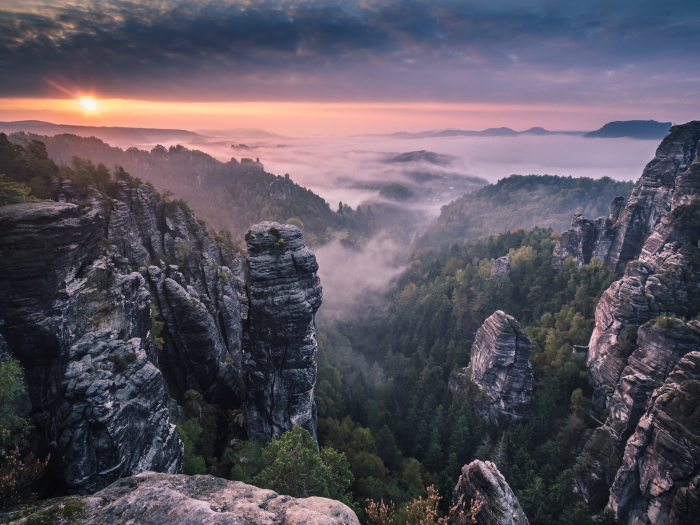
Before starting to write about why I use cameras other photographers sometimes call “toy cameras”, let me talk a little bit about my philosophy when being out in nature. My aim when doing photography is finding special places and moments in nature that I can enjoy and admire. I aim for these magical moments that may be only visible for a few fleeting minutes at best. I want to preserve and depict these moments and share them with other people so they can enjoy them as well. My camera, my lenses, my computer at home and my image processing software are all just tools that I use to better capture and represent these moments. I’m not doing photography for the sake of photography but because I enjoy nature and I’m again and again amazed by what I find there. Photography is my way to share these findings with other people.
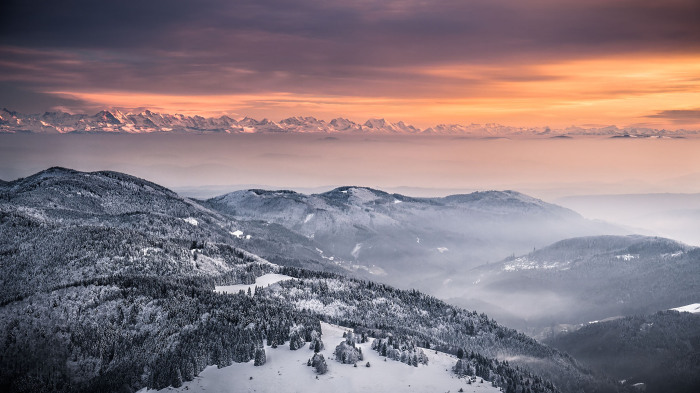
That’s why I do not aim for having the most advanced camera, the sharpest lens or the largest sensor. I feel that I need the best tool that let me create the landscapes I admire. And in the past this worked best for me when using µFT cameras. I think there are several advantages in using compact, lightweight mirrorless cameras. One is obvious: You don’t need to carry so much stuff around. This can be especially of advantage when doing hiking tours in the mountains. Just a few kilograms less can make or break a shoot since you arrive less exhausted at your location and can concentrate on the important things: the landscape around you. I remember once doing a tour in the Alps with another landscape photographer and he had to carry more than 20 kg because of his heavy gear and lenses. I was below 10 kg and still was able to do the same kind of photography.
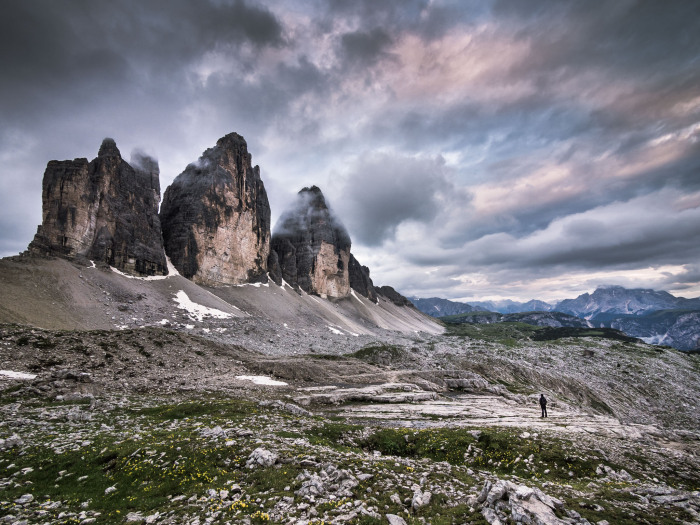
The second advantage is that with mirrorless cameras it’s really “what you see is what you get”. This is very helpful when photographing landscapes because what you see through the viewfinder of a traditional DSLR is not what your sensor will capture. This leads to the awkward technique of first looking through your viewfinder, then quickly putting the camera down and looking at your screen to find out what you captured. Often then you have to change settings again until you will be finally able to take the photo you want. With µFT cameras or mirrorless cameras in general you already see through the (electronic) viewfinder what the final photo will look like. This can significantly speed you up. This might seem counterintuitive when doing landscape photography but since the best light is usually only there for a few minutes at best you will be glad for every second you save hassling with your gear and be able to take photos instead.
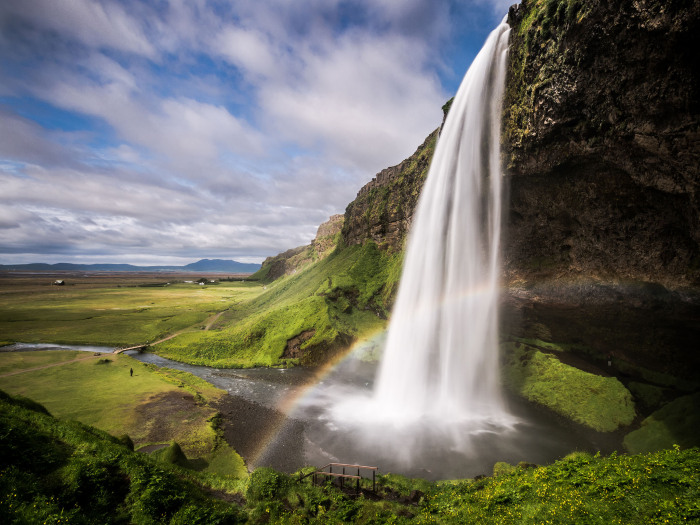
The third advantage for µFT cameras is that they are so easy to carry around. If you are a hobby photographer like me you won’t be able to carry your full gear with you everywhere. Especially not if you travel with your significant other or family. In these case syou can still bring a µFT camera with you, especially the new ultra-compact cameras like the Panasonic GM1 or GM5. I was surprised on how many good photos I took with my GM1 when being just on a leisure trip. Often you are getting great light at a moment you would least expect it. And in that moment most of the time you won’t have your heavy DSLR with you. But you can still carry a compact µFT camera almost everywhere.
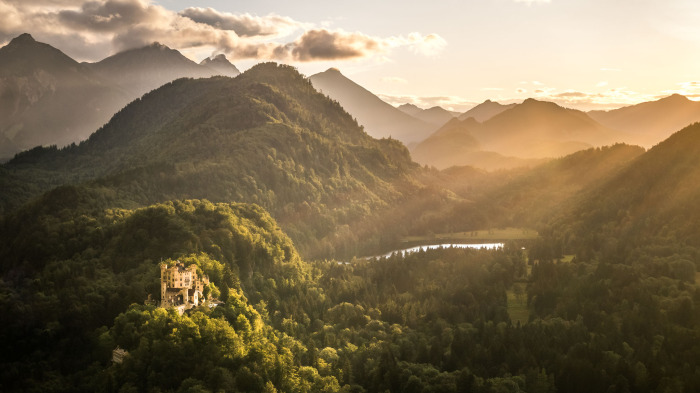
But what about the picture quality? No doubt: Full format cameras have an advantage here. And so do medium format cameras. Or even large format cameras. You will always find a camera that will do better in picture quality. But the question is: What sensor / camera size combination is the best for your photography? And here I think µFT really shines in most situations. It’s not that I do not own any other camera (for pre-planned shootings I sometimes also use a full format camera) it’s just that I like my µFT gear the most. And if you have any doubt that you are hampered in your photography efforts because you don’t own the latest, great camera forget about it. Your camera is just a device to help you share your view of the world. In my opinion the best camera is the one you don’t even notice when being surrounded by beautiful nature.
More about Andreas Wonisch’s landscape photography can be found at his Facebook page: https://www.facebook.com/andreas.wonisch.photography?ref=bookmarks
75 Responses
Very nice pictures, thank you for posting the article admin.
I agree but fuji is no slouch either…partially even better…IQ, wider lenses with filter thread e.g. 10-24 f4 fuji….only lacking the 75 1.8 equivalent lens….
Where’s this coming from? Olysonic lenses have filter threads.
Fujifilm can be justifiably proud of their compacts and bridge but their interchangeables are not quite up to the MFT functionality yet, lacking the lens range, bigger and heavier, and they have to try a lot harder to beat a GH or OM-D on IQ.
The point of taking MFT up a mountain is they are small and light. I’ve been there and switched long ago from 35mm SLR to 35mm compact auto-zoom. MFT are now producing pictures as good if not better than 35mm film.
What exactly re they lacking in lenses or functionality, comparatively speaking, especially when talking landscape photography?
This is the BEST advertisement for Olympus ever – Olympus should learn form this learn how to do a good advertisement for the product 10/10
Did you spot the old GH1 in there producing pics as good as the E-M5
And the matchbox sized GM1 which is remarkably good in low light.
We have Panasonic and Olympus cameras and have to say that the Panasonic ergonomics and interface knocks sports off Olympus.
Olympus are mostly 2 or 3-axis body stabilisation, Panasonic OIS is 5-axis
For that duh? go figure moment, my E-PL7 works best with OIS lenses.
A lot of Ollie shooters use Panny lenses, go look on Flickr.
Best long lens for Pentax? Optically stabilised Sigma.
I love my E-PL7 pocket camera but my GH4 eats E-M1 for breakfast. There not much I can do with a D600 that I can’t do with the GH4 and theres more than a few things I can do with the GH4 that the D600 won’t even consider, such as doing AF at dusk/sunset. The sensor can do ‘low light’ but the optical AF can’t focus on what it can’t see :- functionality.
Yes the D600 with its “insane” dynamic range wins here but only just with 14EV vs the GH4’s 13EV, and remember the D600 is a most-excellent full frame camera.
What’s not to like about MFT? – an equally good advert for Panasonic.
at small size even a 1 inch sensor looks good.. the proof is in the big print.
who cares how landscapes look at tiny resolutions on facebook.. nobody buys images from facebook.
i also would judge a camera only after original RAW files.. not such heavy edited images.
otherwise you will judge the photoshop editor.. not the camera.
So, you’re saying we should not judge the camera by the edited images on the web, only by the final large print. And at the same time, you say we should only look at unedited RAW to see if the camera is any good? Sounds contradictory to me. Unless you have a habit of doing large prints of unedited RAW files. Which is fine by me, whatever floats your boat. But I would edit my RAWs before printing them.
prints and cameras are the same to you?
you are a strange person then…
i buy a camera because of it´s image quality not because of the skills some of it´s users have.
i buy prints for the LOOK of the finished product…
go figure… you may get the difference.
No, they’re not, that was my point. You’ve just removed the context of my reply and you’re trying to argue with a strawman.
I’d rather see what the camera can do than what you can do with Photoshop. Nor for that matter how well Abobe Camera Raw works.
Personally I’d judge the camera on its sooc jpeg.
Most reportage will accept sooc jpeg only because this shows the picture has not been altered by editing and the picture may be wired in immediately so there is no time to post develop any raw files. The publisher may crop the picture but they need the full original.
> nobody buys images from facebook.
says who (besides you)? sure, noone buys the small recompressed versions shown on facebook, but it’s enough to judge if one likes the image. and sometimes people buy prints after seeing such tiny resolution facebook images. maybe even often?
and yes… totally makes sense to judge a camera only after original RAW files…
proof is the big print? well, not much time ago big prints were made with cameras with worse image quality. those newer m43 cameras deliver quite good files (yes, i know, bigger sensor can deliver even better quality, but that’s not what it’s about here…).
nonsense….
well, maybe. but could you go just a little bit more into detail about what exactly of my posting is “nonsense” and why?
Yes it is nonsense. The photographer stated he is doing this for fun. He is not trying to sell these even though I am sure he could. These people are probably sitting on their computer playing with themselves, reading gear reviews and criticizing others while the photographer is out hiking and enjoying the real world.
but he is trying to sell the images through his website and i hope he sells some or many of his nice images from time to time.
maybe that “nonsense….” posting from LOL wasn’t meant to be an answer to my posting but to the one from the other guy…
real landscape photographer use medium or large format cameras, still.
like andris apse.
these m43 images look good for small print size.
but i would not try to sell them as big prints.
maybe to the selfie crowd but not fineart people.
how exactly is a “real landscape photographer” defined? but it’s funny to try defining it by the gear a photographer uses…
but well… those rumor sites are mainly for the gear addicted. i really shouldn’t be surprised here.
Yes, you are correct. M4/3 can do only 4×3 meter prints and not much larger. Sure we can go and buy the 35mm so we can get 6x4m prints at same quality!
Se should be using a very carefully “even better” wording as I wouldn’t call 2-stop disadvantage on 35mm format as “better”. And m4/3 format having just 1.3-1.5 stop smaller noise quality is negligence at worst.
There really ain’t difference between 35mm and m4/3 when photographer is A photographer and not a pixel peeper who compare 9*3′ size photos from 12″ distance!
How would you call it then? These two stops become very visible when you need them.
some just judge the final photo if they keep the intention of the maker in mind, not everyone needs to watch the raw, unless you use this article as a guide for deciding which camera to buy, wich means you are reading the wrong article.
You obviously don’t use photoshop then, because it can’t magically make a bad image good. If the DR isn’t there, composition is off or the lighting is just plain bad/boring, you will not be able to salvage the image unless you spend hours creating 100+ layer composite image. Even then, you would likely end up with an image that just looks heavily photoshopped instead of enhanced.
You can’t be serious…
Great article and pics, although for my taste they are a bit overprocessed. You give some v. sensible reasons for using small format. After all its IQ is more than enough and you prove that 80% is due to the photographer and his/her decisive choices about light.
I feel however that this will fall on the deaf ears of the noobs and trolls crowding this site. Pearls before pigs.
hey i was born in the year of the pig
May I suggest to whoever posted this for Andreas Wonisch that if it is not your first language then butchering English spelling is forgiven but may I suggest using a spelling checker and proof-reading before posting an advertisement of work as it gives a rather poor impression.
Enthusiasts maybe but I do not think any professionals consider MFT to be toys.
I’m not sure if everyone is aware that MFT can easily print onto A2/Poster size
Beautiful photos indeed.
Images say it all … really don’t need photographer’s assurance … we are in digital age .. and those large format or full format doesn’t matter here … its an age of good sensors, technology, software for manipulations and a good photographer with good ‘eyes’ … I don’t really believe these photos can be captured even in Medium format without a pair of good ‘eyes’ of a photographer …
the different formats of film (esp like 4×5 and 8×10) see the subjects different then can be done with our usual cameras, if you dont close your aperture too much like landscapers do. This applies also to 24×36 and the mediumformat sensors but to a lesser degree. So the format can matter.
Recently I read an article where medium format and larger still can outperform MF sensors. So digital is not as ultimate some of us think
Great work, and a well balanced story. I must admit, I prefer black and white, but this certainly shows what M43 can do in the hands of a good photographer.
As for post processing: a ‘real’ digital picture is just a collection of ones and zeroes. Even watching a raw picture is watching a processed picture; just an fully automated processed one, with no consideration for atmosphere, interpretation of intention. Just like one size fits all clothes; no one in their right mind thinks of that as ‘honest neutral clothing; people are just different shapes, whether you like it or not.
And for those who think things were more honest in the pre-digital film age: a film photo is just a collection of rather crude and shapeless silver salts (black and white) or chemical clouds (colour), both made visible by careful processing. Nothing neutral about that either (check reciprocity, aggitation, dilution and much more for the way that processing changed the visible picture).
what a useless post!
landscape can be done with any cam from bridge to pro cam. ridicolous atricle
Of course, and this post proves you can also use M43 cameras. Ans the results look great.
what a useless comment, we already knew that it can be done!
I would totally concur with this post! As a landscape photographer I’ve used nothing bust mostly Micro Four Thirds equipment and I’ve been able to grow a following on Instagram of nearly 50K followers. So I’m happy with the open standard as an artist.
awesome photos Nate!
Thanks! 🙂
lol….. followers… lol.. really…l i pity you.
nice post 🙂
I too have gotten great landscape images from m43 – the difference between the images taken with m43 vs. FX DSLRs really comes when you get to challenging light conditions or you need to display large or crop. Also the lens selection of m43 for landscapes can be a bit more challenging depending on what you want to do or the type of shot you want to take.
As with any format below large format or widest medium format, you should do panoramas. Take just multiple shots and you have more than enough resolution.
With m4/3 all is required is to take 3-4 shots vertically and you have few times more megapixels than DSLR gets with one frame.
And there is huge difference do you carry a 3kg system or do you carry 1.2kg system.
All true, but if you will be stitching, then you can take a FF mirrorless with a single lens and it will weigh the same.
even smartphone images look good on the net if the photographer knows what he is doing.
so who needs heavy m43 cameras when smartphone images look good.. is that what you are saying?
The DR on a phone camera is a far cry from m43’s which offers enough DR to take these amazing photos. Even the best cellphone cameras will clip and not give this nice subtle gradation that can be had from m43’s and better. Once technology gets there and some type of new lens tech gets added into phones then yes, no need to carry a bulky m43’s camera.
The DR on a m43 camera is a far cry from a FF, which offers enough DR to take amazing photos. See how that works?
how does it work? 🙂
m43 isn’t some absolute “golden mean” 🙂 I believe that was Reihmann’s point.
learned something again I guess…yay?
Why ask, if it’s obvious? To pave the way for some irony?
It’s clear you know nothing, Reihmann.
Do you know what is the current most used medium for any photograph? It is a WWW page!
The photos are below 800×600 by size. They are viewed from uncalibrated crappy displays and more likely with laptop that has resolution 1336×768 or below.
35mm is a DYING FORMAT. A DYING! It is not dead, yet. But it will be in next 3-4 years.
And when Canon and Nikon release their DSLM variants from their top DLSR cameras, no one even takes seriously the 35mm as it is still big and ugly format to operate and to use and benefits are negligent to m4/3.
Nonsense. It’s hardly a dying format with FF cameras getting cheaper to the point of being a couple of hundred of dollars more expensive than m43.
It is very much dying format! The price ain’t the proof it ain’t dying. Sales drop, technical reasons to get such are gone because m4/3 and MF!
They are always heavier and bigger than m4/3 ans never as good as MF.
35mm is dying, its dead already started on DSLR era as everyone moved to HF and then to smart phones and now the rest are moving to DSLM and getting rid of the heavy and large camera systems, reason why 35mm succeeded to overcome MF! Because it was lighter and smaller! Now there is a new format, modern format designed from scratch to digital era and it is just beating speed up for dying 35mm!
In few years canon and Nikon bring their DSLM and speed will accelerate. If those don’t have same bajonet as current Nikon and Canon cameras has, 35mm is dead in 1-2 years.
Same as someone above, you are seeing m43 as striking the perfect balance, but that is only subjective. MF is very expensive and heavy, the difference between it and 35mm is significantly bigger than that between m43 and Sony’s FF mirrorless. It is actually 35mm that is the last affordable step in IQ. What you are calling a “new, modern format designed from scratch for the digital era” is merely a smaller sensor with a 3:4 aspect ratio. In a few years, what do you think Nikon and Canon will be introducing? APS-C?
Is it just me or do all those pictures look soft? They are amazing, don’t get me wrong, but I just thought they seem a little soft. Hopefully, it is not my monitor. Still, great post and a good read.
I think they look great. We are becoming used to badly downscaled and over sharpened images.
There should be more posts like this- nice sensible photos. I don’t to landscape but this makes me a bit curious.
Wow, the level of jealous douchebag trolls on this site is almost impressive. A lot of well-deserved compliments for the shooter, but also a load of utter a-holes trying to hide pitiful, immature jealousy with everything from childish comments to attempts to sound critically intelligent. You know – I truly to believe this site would be better off with ALL COMMENTS DISABLED.
Thanks for the nice article. I like all of your presented photos.
Jiri
Anything looks good on a computer monitor. I just sold my 9-18. Ok lens, but the lack of contrast and sharpness killed it for me- contrast more than anything. Print your photo’s at anything bigger than 8×9 and you’ll know what I mean. I look forward to Oly’s pro wide angle next year. CAN’T WAIT.
I’m not so sure if that means m43 does not offer enough to take amazing photos.
Absolutely not the point. I think that all systems are of interest and which one is good enough is a subjective issue. My disagreement is with choosing m43 as the best balance, when trying to look at things somewhat objectively.
You seem a bit jealous. But luckily, in case you can’t get that many followers, you can always post this kind of comments to express your feelings.
because i have nothing else to do
Valid point 🙂
Canon and Nikon are just a duopoly which will be broken (finally) by Panasonic-Olympus/Sony soon…..Canikon are just living on the glory of their film past and DSLRs…..they will never make good mirrorless……mirrorless for them is just a joke
I’d dare say for 90% of users out there mirrorless systems have surpassed DSLRs in terms of usability (which is all that matters, IQ being on par). Except, people aren’t aware of that yet.
The problem though is that while this may sound nice for Sony, m43, Samsung and Fuji, Canikon have a lot of mind share and if they manage to pull out something interesting even that late, they will be able to keep their positions. I doubt it, but it’s very possible.
Shutup n00b…..
Nice little writeup. Most of the photography I do is landscapes, and I love the look of the photos posted here, so I appreciate both the perspective and the skill.
This doesn’t directly relate to the weight of camera gear, but the comments about being nimble and quick to take a photo immediately brought to mind a recent trip to Arches National Park. Right before sunset, a group of hardcore photographers had gathered on a slightly hard-to-get-to spot on the far side of one arch and had set up tripods and their gear getting ready to snap a photo of the arch with the sunset behind it. I noted the dedication and preparation, and continued to wander around on the other side with my handheld camera and vacation lens.
I’m sure they got nice photos–maybe exactly what they were looking for. But when sunset came, I’m pretty sure that the angle wasn’t very good for where they were all set up–there was a cliff on the spot that would put you where you’d actually see the sunset, and the clouds weren’t all that pretty–it was more the incredible color of the light on the face of the arches that was striking.
Noticing this, I sprinted to a good spot to grab a photo in the literally minute, give or take, that the light and shadows were really gorgeous, and then it was gone. I didn’t get anything I was going to hang on my wall, necessarily, but I did get a very nice photo out of it, and if I hadn’t been ready to move quickly to a different spot and take a photo immediately I wouldn’t have gotten the shot at all–there was at most 60 seconds or so between when I realized what I was seeing and when it was gone.
Sometimes knowing exactly where the sun will be and being ready with a tripod in exactly the right spot is the way to an awesome photo. Other times, though, noticing something and being able to get to where you should have been in the first place quickly, and fire off a shot before the light is gone, is far more valuable, even with landscape photography.
I also really appreciated that last bit in the writeup. From a pure, analytical quality standpoint, there will always be a better camera than yours, unless you use some sort of Hassleblad monster. But in the real world it really comes down to a camera that takes photos that are good enough for whatever you want to do with them, and meets the price, convenience, and size/weight balance you’re comfortable with.
For some people, an iPhone is the right camera–it takes good enough photos for their needs, and has the convenience advantages. For others, like me, m43 is a sweet spot of sufficient quality with a reasonable price, compact form, and ease of use. For others, it’s a low-end Cannikon DSLR, or a pro-grade full-frame DSLR, or a medium-format studio camera.
They’re all perfectly valid choices if they take the pictures you want/need them to take, and you like the way they work. If you’re getting worked up about the fact that someone else’s balance of factors doesn’t fit yours, well, maybe the problem isn’t what they chose, it’s that you think your preferences should and must apply to everyone.
We look out on some form of a landscape every day of our lives, yet the landscape is the most difficult subject to photograph. Human being use many senses to understand their world, but since a photograph is limited to a two-dimensional visual medium taken at a moment in time, most people are disappointed by their landscape photographs. Mountainous areas are frequently the favorite subject of landscape photographers, since they exhibit asymmetry and depth, but try photographing the prairie, the floor of the sky. That is an extremely difficult subject.
People like to see landscapes printed large so that they can examine the detail. Some years ago, I went to the Chicago Art Institute to view an Ansel Adams retrospective and found myself quite disappointed by his early works printed small. In my own photography, I found landscapes taken by a miniature format camera — a 35 mm OM-1 SLR — not to be up to snuff. Better was medium format, but ultimately I went to 4×5 and 8×10. While I loved the detail and dynamic range of large format, it was the cost of processing that ultimately led me to drop it.
Now I stick to digital. My familiarity with Olympus and its history of small, highly portable cameras and lenses, led me to Micro Four-Thirds. When working with miniature formats — and that is what M43 to FF are — it’s most important to be comfortable with whatever equipment you are using. There is no magic system, and excellent results can be achieved with most of them. When the noted New York photojournalist Weegee was asked what the exposure was on one of his photos, he responded, “f8 and be there.” However, micro formats, such as smart phones used as cameras, have serious limitations, especially in dynamic range.
All good but inferior devices must come at inferior prices. I see a problem there…
Oh dear boy, has the bad man broken your toy? Tell papa. By the way papa, I think some spanking is overdue, you really need to learn some basic manners.
Haha! Is that… seriously… it? Is that all you got? And before you try a comeback, try not hiding your identity, wuss.
I am sick of this “mirrorless is good” posts
Nice photos. Challeging for me: to foget technicalities and focus on nature.