






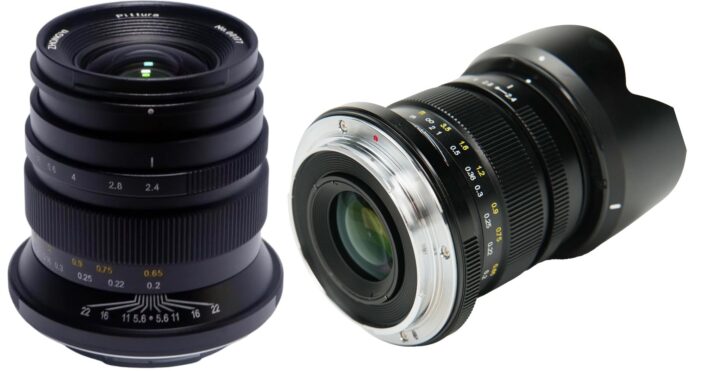

Can X mount and X series lenses can support a larger sensor? Johncaz investigated this question, and you can read his tests here.
From the conclusions:
“I could be wrong in my assumptions, so if you know better, then please leave a comment below and enlighten me, but this difference between the Samyang and Fujinon lenses is proof enough for me that the X-mount can handle a larger sensor. I’m not sure about a full frame, but I would bet that a 1.2x crop factor sensor would be a perfect match.”
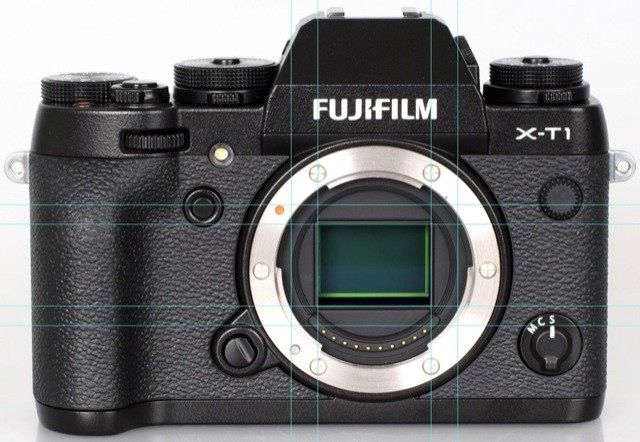
But tell me, what’s more important than the sensor size? Exactly, it’s to know how to make the best out of the camera you already own, no matter which sensor is inside! And today you can look deep into the secrets of the Fujifilm X-T1 thanks to Rico’s latest book “Fujifilm X-T1: 111 X-Pert Tips to Get the Most Out of Your Camera“!
It’s a must have… and a steal, since you can purchase it for just $12.
You can buy it also at AmazonUS, but just for Kindle and with DRM.
116 Responses
I saw that article the other day. All through I kept remembering what Fuji themselves have publicly said: it won’t. I will take Fuji at their word.
But I suppose this post will be good for about 100 posts of people arguing over something so trivial.
Yes, indeed. As much as Apple always said: “No, we are not going to produce bigger iPhones. There is no need for that.” And guess what happened? The sales exploded. You see…
There’s a difference between Apple saying we’re not going to build bigger and Fuji saying the XF mount doesn’t support 35mm size.
Fuji said: we are not going FF.
Fuji said:
“We have no plans to go FF, just now” (Mr. Kawahara 2013)
“The X-PRO2 won’t be FF” (Fuji Guy Greg 2014)
“Of course we investigate FF… or Medium Format” (IR interview with Fuji engineers 2014)
I have the feeling that all the options are still on the table (but just after the APS-C line is complete).
Of course all options are on the table. But using XF lenses on a larger sensor is not an option and hence not on anyones table.
crop compatible XF lenses?
This is what Sony does with E-mount. So it really is possible, supporting APS-C on larger format, already on the table and tasting good.
I don’t care… I just want the Monochrom version out of it… 🙂 (In the same big retro package)
Of course all these options are on the table; Fuji would be mad not to; but I guess they are watching closely the market trends
Fuji before said the XF mount doesn’t support FF.
“From an interview with AP: Fuji has asked AP to point out that the current XF lens range is not compatible with a full-frame sensor.
Speaking on 25 September, Kawahara said: ‘None of the lenses are compatible with a full-frame format because the covering circle would not be large enough.”
I think a move to a larger sensor (let’s say smaller than 24×36) with the ability to use the existing lenses would be a first for a company.
For marketing purposes it could elevate Fuji’s reputation, not to mention provoke the competition.
Well done, John Kaz, thanks for the idea…
To what end and to what photographic purpose would this serve?
i opt for a 24x24mm square one.
If Fuji would include a larger sensor (let’s say FF) in the next camera generation with the same mount, the available lenses would still have the “wrong” markings. A 56mm on APS-C is not a 56mm on FF (speaking of what numbers everyone is used to for the field of view on FF). I
wouldn’t mind, but I can’t imagine that Fuji would let us get away with this “cheap” possibility to just switch the body and get FF with the same “APS-C lenses”.
Therefore I think, if Fuji ever introduces a camera with larger sensor (I don’t need one atm), they will likely also introduce new lenses. Everyone who’s happy spending the additional money – go ahead 🙂
Of course there would be new lenses and a new mount along with a new sensor format. It’s trivial, but then again, it appears that it’s just too easy to generate traffic by warming up the same fairy tale again and again and again and again and again and again. And again.
And again
I don’t think it is in johncaz intent just to generate traffic
I think he’s just a photographer & a geek, a person who follows his interests and curiosity and, as good as he could, tried to understand what’s behind the X-mount sensor-lenses/larger sensor story.
So he put his time and effort into this test. Nothing wrong with it.
Well, it’s not happening (as Fuji has said several times), so it is somewhat wrong. Of course, if this doesn’t bother anyone, it’s great reading matter. 🙂
I remember Fuji officially denying an X100 successor just a few months before the X100S has been released. Or Fuji denying that the X-Trans sensor is made by Sony. So, sometimes I’m a bit sceptical when they deny things.
In this case you say it won’t happen. I have no reason to doubt that.
But this doesn’t change anything to John’s test and investigation if it would be technically possible to realize it. That’s the story here I think… not if Fuji will put a larger sensor in the X-T2 or not, but just if it is technically possible or not.
It is NOT.
Dude… take a deep breath.
No, it’s not possible. This is just pie in the sky speculation on a slow news day. Fuji has been quite clear both explicitly and implicitly (if you read between the lines) that FF is not on their agenda for the foreseeable future.
What you’re going to see in the near future is much better sensors, not bigger sensors. Sony’s A7 series is the wrong bet, IMO.
Minolta and Nikon (and probably others) had 58mm lenses for 35mm sizes. In the end the only thing a focal length does is crop the view in front of you. Wide or small, it’s not that important. The perspective (relationship between camera, subject, background) is what really matters. Hence why this fascination with 35mm has more to do with “bragging rights”, “pride”, and “gear lust” than photography.
Huh, 56mm ist still 56mm on FF, the field of view is different on APS-C. So the markings are ok.
this is incorrect. The Fuji 56mm gives same FOV as 85mm on full frame, but the Fuji lens states the 56mm focal length. Focal length depends only on the optics in the lens not on the sensor size.
A 56mm lens is a 56mm lens. Focal length is a physical property of the lens, and doesn’t “change” depending on what size sensor/film you put behind the lens. You might have some sort of association between field of view and focal length (for a given sensor size), but the lens’ focal length will always be marked correctly.
However, who cares if X-mount lenses project an image circle larger than APS-C? They’ve been designed to perform well projecting onto an APS-C-sized sensor, and that’s the only sensor size Fujifilm is ever going to market them for. All lenses project an image circle larger than the sensor/film they’re designed for, but that’s not a reason to record every last degree of a lens’ field of view.
I don’t see them introducing an APS-H sensor in an X- Series camera, as there aren’t any available on the market, as far as I can see. Who knows. To be honest, at this point, who knows if we will see an X-Pro 2. I am hoping we will, but who knows.
Since I am planing to write a book on the X-Pro2, Fuji better should come up with one! 🙂
Yes, I’m desperately waiting too, because I already finished your book. Great tips!
There will be another book before the X-Pro2 book. 🙂
X-T10?
I was actually thinking about an eBook covering ISOless photography and dynamic range extension.
Sounds great!
What is ISOless photography?
It’s based on the fact that any sensor has one ISO sensitivity. All the other numbers are mathematics to approximate the stops we’re used to seeing. So all shots really happen at base ISO and are amplified either digitally or through analog means to give us the result we want. ISOless takes it a step further. You always shoot at base ISO and have the shutter speed and aperture you want. Then you amplify the ISO in post. At least in tools that are flexible enough to go over 2 stops amplification.
Very informative, thank you 🙂 Not sure I see the benefit for the type of photography I’m doing, especially if it means more post production. I’m trying to reduce post-production time 😉 I enjoy the shooting part far more 😉
Same here. The longer I stay in the hobby the more I want to take better pictures than debate measurement statistics. But the tech side of me always seems to be interested in knowing about it…
Yeah… my motto for the year is simplification in terms of post processing and even shooting (35mm my newfound friend) and focus on creative ideas, projects, and enjoy taking photos to the fullest 🙂
Good choice. Of course, not having to worry about exposure makes things even easier. I also like the peace of mind of never experiencing overexposed images again. One less worry.
How about posterization while shooting “isoless”?
The technical aspect of isoless would be interesting but probably beyond what most here now about sensors/physics etc.
Posterization with 14bit files is imo no problem.
btw Fuji is not the only nor the first manufacturer to use a isoless sensor (the IMX071 that Fuji uses seems to have this behavior in general).
I’d love to see a manufacturer built on the isoless concept and revamp photography (the holy trinity of aperture, shutter speed and ISO) as we know it. ISO is no longer, it’s just gain.
When you loosen yourself from the “ISO thinking” you can achieve a lot more and really benefit from it
So Rico – please write a book about it!
I’d love to, as you know, ISOless is one of my hobbies, and what you describe (a concept camera that does away with the old thinking) is also something that I have been discussing with Fujifilm. That said, I’m pretty sure Apple or Google will beat them in this area, basically redefining popular photography.
Yeah. I love the “old/retro/has been working for ages” approach of Fuji (combined with some modern ideas), but when it comes to “starting photography new” the Google and Apple could just have a totally different (more modern) approach.
But working with ISOless sensors and using their benefits can happen right now, with a lot of cameras. What puts Fuji a bit apart, is their implementation of DR expansion (probably due to the X-Trans CFA?!). The way DR200 and DR400 on Fuji cameras work is one example on how to use isoless sensors: don’t increase the iso, push the darks. It increases the Dynamic Range and decreases noise (in the parts which are not pushed)
[I know you know about the theory and practical usage, but I guess not everyone who is reading here 😉 )
DR400% goes back to ancient Fuji compact cameras, not to mention all EXR compacts that offered up to DR1600% (aka 4 stops of DR expansion). Also, Fuji’s Nikon-based DSLRs had a sensor with extended DR capabilities.
It’s ironic that Nikon’s Df, which is the model offering maximum DR expansion, ends at around 1.7 EV underexposure (according to dpreview) to expand DR. So even 7 year old Fuji compacts offer more than Nikon’s current top full-frame sensor camera. That said, Nikon is now clearly entering the field of ISOless photography with the new D750, which offers an ISOless (ETTR) exposure metering mode and a flat tone curve option.
Didn’t know about the old Fuji models.
The D750 with it’s expose for hightlighs (or whatever it’s called) and near isoless sensor could perform really great – as you say, it seems manufacturers get that they can use and market isoless
What I’d love to see is someone going even further: I read about this concept a time ago (probably even from you): get rid of the iso dial and use 1 dial for Dynamic range (expansion) and one other for general brightness increasing (so basically iso but don’t call it that way and don’t “burn it in” since it can be done later – it’s just digital gain). Changed the way I think about modern sensors and photography . And also about JPGs.
That concept would of course need a great RAW converter for all the RAW shooters
Yep, that was me. I’ve also talked about it at Photokina. I’ll also promote new ISOless features it in my notes for Fuji’s WW meeting in March. You are perfectly correct: There are useful features that can be implemented in today’s existing cameras, simply by improving the firmware.
Yep, that’s definitely one way to look at it. Of course, it gets even more interesting when you look at what adaptive ISO can do for you in concert with the camera’s JPEG engine. It’s not just about DR expansion, you can also use the DR function for high-key JPEGs or for portraits in harsh light that still display smooth skin.
It’s explained in my X-E2 and X-T1 books, but since the topic is extremely popular in my workshop, I might want to expand on it in a separate publication. This column of mine was very popular, too: https://fujixsecrets.wordpress.com/2014/08/19/isolos-fotografieren-mit-der-fujifilm-x-serie/
Is there an english version of your article?
Not that I know of. The article was basically an introductory piece for my Fuji X Secrets workshop delegates here in Germany, because ISOless camera features are a very popular topic at every workshop. At least as popular as shooting moving subjects with (contrast detection) AF.
id buy that book.
Any chance you (or anyone else) is working on an X100T book?
I don’t have to believe… I know: the X-PRO2 will come this year
Maybe. Maybe not.
I close my eyes and keep faith in the Japanese source 😉
We’ll see. Eventually, it will arrive. It’s Fuji’s flagship model and the original X-Mount concept, after all.
I think Fuji lenses cover a larger circle to give a better image quality in the corners, so if you put them in front of a FF sensor, the advantage is gone.
They can also make a sensor in between full frame and cropped and make it square.
If it is true then doesn’t that mean that Fuji Customers have been paying more for glass then they should ? I mean, if it’s made to accommodate larger sensor then it sure as hell is driving the cost of the lenses up.
Nope – lens always “illuminate” an area larger than the sensor (or film) failing that you’d get all the corner defects and need to have a much more thoroughly designed lens (if even possible) hance much more expensive to design/produce
Umm, no? If it were so then CaNikon would design lenses just for FF and use them on APS-C but that is not how it works and that is the reason why FF lenses are usually way more costlier than APS-C lenses
No because the FF lenses illuminate an even larger area (larger than FF that is) – and are even more expensive. So Nikon/Canon or anyone else will only illuminate an area which is necessary for the level of quality they require as part of the design
So if Fuji lenses illuminate large enough area for FF to fit then that ideally is area same as Canikon FF lenses. It means that Fuji aps-c lenses cover bigger area than Canikon APS-c lenses and in turn makes them unnecessarily costly
Only some lenses seem capable of it.
Lenses that have come out fairly recently, for the most part. Lenses that have come out since Panasonic and Fuji partnered on the organic sensor.
It could be that they know they’re going to eventually have APS-H (1.2x) crop sensors from that project, and have built for it since.
It’s a long shot, but certainly in the realm of possibility.
Yeah, i know that it’s for recent releases but my point was that if fuji pushed ff lenses with aps-c bodies then nor would that be practical or ecnomical.
APS-H would make sense since the difference isn’t as huge as APS-c and FF.
I am afraid you are coming to the wrong conclusions; Reread what was said. it is NECESSARY to illuminate a larger area to get good quality.
This is normal, not only Fujifilm does this, check this video : http://youtu.be/Yte54o1agXU
Look at this image:
http://upload.wikimedia.org/wikipedia/commons/thumb/8/80/Crop_Factor.JPG/600px-Crop_Factor.JPG
All lenses project a circular image. So what is the biggest sensor that the lens will cover? Is it one the size of the red rectangle? The problem is, if you have a sensor whose corners are right at the extremes of the image circle, then the image quality will be poor at the corners.
Maybe you should use a sensor the size of the blue rectangle? Then there seems to be a lot of good image not being recorded.
Lens designers design lenses that project an image circle large enough to adequately cover the sensor and perform well in the corners, but not so large that it’s wasteful. And that is also the case for X-mount lenses.
Be happy with your X-mount lenses and APS-C sensor, and stop trying to second-guess the experts.
No one’s second guessing Fuji Designers. I all i am sayin that a lens that works with APS-c and ff both without cropping the image or driving costs way up cannot exist. I am a hobbyist so I can never justify buying a ff anyways. APS-C is the only sensor I’ll ever work with.
slow clap
Fuji X, µFT, Samsung NX, Canon M, Sony E (not FE!), Leica T those are all new mounts which where build from the ground up. And they all got 2 things in common.
1. short flange distance
2. the mount diameter is about ~1.5 times the size of the sensor diagonal.
And there is a reason for that! The modern sensors need special lens design. And to design those lenses (good optical quality) without making them too big, it needs a big back element (which dictates a bigger mount)
Fuji could fit a bigger than fullframe sensor too, but image quality (especially in the corners) would suffer (a lot) – it would also need new lens design.
Everyone interested should read up on how Leica had to customize the M sensor (microlens shifting etc) to make the M lenses work okay.
I need a popcorn munching emoji for these posts about 35mm sensors. I’ll just sit back and watch now with this parting comment, “if you can’t get the shot with APS, you’ll definitely not get it with 35mm.”
There, there: http://www.reactiongifs.com/wp-content/uploads/2011/05/tumblr_ljh0puClWT1qfkt17.gif
If Fuji were to make a full-frame X-T1-like camera, I would probably buy it, but I might hate myself later, for reasons I don’t currently understand.
Why the obsession with Full Frame sensors? So that you can put a 85/1.8 lens in front to get a shallower DOF? Guess what, you have a 56/1.2 which is the same.
The same goes for almost every focal length. When Fuji can’t match FF offerings in DOF such as full frame 35/1.4, 50/1.4, 80-200/2.8, 135/2 lenses; it usually gives you sharper/smaller/more beautiful lenses such as 35/1.4, 50-140/2.8 and the upcoming 90/2 which will be one stop slower in terms of DOF but are better than FF offerings in many other ways.
Wild guess: fuji’s upcoming X-Pro2 will feature a larger sensor to allow a rangefinder viewfinder style using only an electronic viewfinder… the lenses and “photography” zone will remain APS but the larger sensor will be used for this.
I’m seriously sick of this fullframe/APS-H rumors bullshit. The X Mount is not fit to house a fullframe sensor and Fuji will certainly not be as stupid as Sony and try to mash it in. Fullframe is not worth it and a second system for Fuji, after investing deeply in APS, would be financial suicide. Get the hell over it people…
Sony was stupid for creating a camera that’s far superior in image quality to anything Fuji has, for making sensors that Adobe can raw process, for bringing the price and size of FF down to enthusiasts like you? Sounds like someone has a bad case of cognitive dissonance!
What are you doing here? Seriously, why don’t you go and buy a SONY and be done with it. Almost all your posts are Sony this and Sony that, or full frame this or full frame that. Just get over it and buy a Sony if you seriously believe that it will improve your photography. You sound like a gearhead. Of course, you could disprove this by sharing a link to your photos on your portfolio/website/flickr/instagram – wherever you keep them. Show us how your only limitation sensor size 😉
Sony made huge sacrifices when they put a Full Frame sensor in the E Mount (which was made for APS-C).
For Edge Sharpness especially with fast lenses you want a special lens design (ok, it’s not special but common since moving from film to digital sensors). Still: it’s not easy designing fast, good lenses for the FE mount (especially when you also want to make it small and not too expensive).
Sigma said the same thing.
And yes, the FE 55mm f/1.8 is magnificent, but 1 good lens makes no system.
Oh yeah, 11bit compressed Raws….
Far superior? Really? Sorry I can’t tell, especially when viewing photos on Flickr of other photo sharing sites. That said, the quality of an image is just as much due to the photographer’s ability.
And, compressed RAW files aren’t exactly great….
Meanwhile Sony is in financial problems. They got rid of Vaio. Now they want to get rid of the smartphone and TV division too. Sony will end as a sensor maker for other companies.
The X mount will die a slow and painful death if Fuji doesn’t move up to full frame. M43 has a definite size advantage over Fuji when it comes to lenses and is more likely to survive the Sony full frame charge. Once Sony breaks the 1000$ barrier for full frame the market will shift. The D610 and 6D can already be had for around 1200$ and I’m sure Canon and Nikon will respond with “entry level” full frame cameras, they already have a generation under their belt. Fuji will be stuck playing the in-between game.
I love Fuji, but I’m worried about investing in too many lenses. If I learn they’re future proof for full frame I’ll add at least the 56mm to my collection and the 23 a little down the road as well.
@ µFT: APS-C has either better quality (same pixel amount/output size) or there is nearly no size benefit (same pixel size). Right now the advantage mFT has is, being longer on the market (more lenses) and the AF speed (contrast detection).
@ Sony: they **cked the FE mount up. Too many compromises (right now)
Both systems are great, but far away from Fujis philosophy.
Totally agree that Sony messed up royally but technology will save them down the road when refraction is less of an issue… And they’re selling like hot cakes. It’s not really about what we want, it’s about what the market dictates.
I moved from mFT and their crazy small lenses to Fuji cause Fuji feels to me like a camera, whereas Sony and Olympus felt like geek toys. But the market loves what Sony is doing and they will flood the market with full frame until everyone will want one.
I see another xpro, some lesser derivatives of that same new sensor on a bunch of XE and XT cameras and then full frame. They’ll have no choice.
Slow and painful death? sorry that’s plain bullshit. Sensor size is not everything. If sensor technology improves further, the difference will be even more negligible
If technology improves for aps-c it will also improve for full frame, which will always have a slight advantage. Like I said, it’s not about what you and I want, it’s about what the market dictates. And Sony’s got it right: full frame for cheap. No lenses, no “soul” like Fuji has, relatively comparable image quality if we’re not nitpicking, yet look at how much more they’re selling. That right there is the beast Canon, Nikon, mFT… everyone will have to fight when they go full frame for under 1000$… just because most people want full frame.
I was hoping for a no. That would have silenced or the “I would buy fuji if it went FF” coach photographer crowd. Not that I have anything against FF, I would just hate to see Fuji start doing slow FF lenses just to keep size in check (like Sony).
This obsession with full frame sensors has to stop. There is no evidence whatsoever that full frame will help you take better photos. More perhaps in low light, but better? Just check the atrocious photos people post on FB d800 group 😉
you mean slow like the Sony 55mm f/1.8?
Exactly. Fuji got a smaller, cheaper 35mm F/1.4, and the difference in speed is field irrelevant.
If it wasn’t for Zeiss, the FE mount would have slow lenses with mediocre image quality. The only modern mirrorless mount that was probably designed (but isn’t yet used) for full frame seems to be the Leica T.
+1
No worries. Fuji will first release a 1.2 crop sensor and will tell you in 2017 that your lenses works on Full Frame with the launch of a new body 😉
There is no evidence whatsoever that APS-C will help you take better photos than micro 4/3rds.
Fuji needs to cram a large format sensor in the X mount. FF is not big enough. I will not take a 2.5 crop factor FF over a Large Format
these theories are getting SO LAME…..
Seriously… Bigger sensor bull***. What is the point ? What about a 256 mega pixels in medium format ? Please, stop it.
I am completely sick of all this. At the end of the day I want good IQ, reasonable high ISO capabilities and thats all.
Oh wait – one more thing: a resolution that
1. matches the lens resolution
2. which allows me to shoot hand-held (more resolution means more prone to even small shake)
16-24 MPix sounds about right to me, but any more is just ….. Aw…..
If you look at the speed of lens releases in the last 3 years and compare that to the roadmap for the next two years one should wonder why the lens designers have slowed down so much. The reason is probably that Fuji is coming out with a new FF line of cameras and they want to release a lot of lenses on launch day.
😀 It’s so fun imagining many salivating on their keyboard now!
Actually, guys, I can’t rule that out as a possibility but I doubt it’s happening. What I can tell you for sure: Fuji ain’t putting a bigger sensor in an X-mount camera! They derived nearly every focal length from the classic focal lengths on FF and they would be stupid to mess that up. 56mm * 1.2 crop factor = 67.2mm EFOV. Awesome idea!
Fuji has already flat out said that full frame is not on the horizon any time soon.
And Apple said it would never make bigger iPhones…
Do you actually believe a corporation when they say something? If they think it makes business-sense to lie about something they will do exactly that. Being honest is not exactly the highest value in capitalism you know.
As I wrote: I don’t believe it is happening. But you should never fully trust those statements. And in case you didn’t notice: the first paragraph of my post was sarcasm 😉
That’s great and all…but all I’m asking for is a firmware update for my x-e2 that links spot metering with the focus box.
Great article and many thanks! So with a 1.2 crop the focal distances are not so weird. The 23 1.4 would be a 29mm and the upcoming 16 1.4 would be a 21mm. I assume smaller than these are APS-C only.
I don’t know. . They would have tell about this bigger sensor capability on the roadmap, not sure. .
Panasonic has demonstrated how to get the most out of sensor that can’t quite be covered by the image circle of a lens with its LX-100: use an already-existing sensor and then allow the user to choose how the image should be cropped.
Fuji could do this by inserting an existing full-frame sensor in its cameras, and then allow users to choose to, say, crop to 4/3 dimensions (more image “height” than currently available–and thus perhaps better image quality than when using cropping images from the existing APS-C sensor) or stay with the longer landscape dimensions currently available–although that might be stretched a bit depending on the image circle of the lens in use.
Personally, I’d support that sort of flexible imaging, which could use existing lenses to their best advantage depending on the needs of the photographer.
I think something like this is a lot more likely than Fuji using a weird new sensor format created just for them. An unusual, low production volume, 1.2 crop sensor would probably cost more than a full frame sensor just because of economies of scale.
Way to go Patrick!!! This will rank as one of the most entertaining threads of the year. So much gibberish so little facts, so much misinformation it boggles the mind.
I do care what comes next but I know that as time goes on products tend to always get better and market pressures tend to drive pricing down. I say this from a financial analyst perspective. There are exceptions like Cable (ha ha ha) But also great examples like the Toyota Corolla that costs about the same as it did 7-8 years ago and is better now.
Does or has anyone on this site every worked in a consumer electronics business in a production capacity? I hear talk of lens production yet does anyone know what their capacity is on the NEW plant that was built to make the push in this market? What is known about their (Pana’s) chip fab and if they are ordering packaging ahead of production.
Buy what you like and if it does not exist then buy the best you can and wait. OR shut up and put your $1B into creating what you think is the best product.
Could this also be interpreted that SOME of these lenses may be easily adapted to full frame with a different mount and a change in one or two of the rear elements? None of these “image circle” tests are focused so saying “I see light as big as a full frame sensor” is not quite “I see an image as big as a full frame sensor”. But perhaps with a few tweaks, Fuji could use the same production lines and inventory and start a new full frame line when the time comes with some of the lenses we already know and love.
Wild speculation here, of course. It would also be awesome for these lenses to be future proof without modification but I somewhat doubt it.
stop speculating…it is doubtful it will ever happen. The camera you have is already sufficient.
Measuring the visible circle != the lens suitably covering the circle. This is a lens design question, not a paper circle question. Lens designers everywhere are chuckling. I still don’t understand the fixation of a crowd that chose to buy a non-FF sensor camera on when their camera will be FF. Isn’t this like becoming a vegetarian and then complaining that carrots don’t taste bacon-y enough.?
couldn’t agree more.
slightly bigger a FF sensor could fit. Too bad…
The only benefit of an bigger sensor would be: Just don’t have to turn the camera from landscape to portrait.
But why are we always waning an bigger sensor from Fuji ? Live with it that it is and will be always apsc for the X-mount.
If you need an bigger sensor go and buy an other system there are plenty of nice systems and even more of nice lenses out there.
If you cant get the picture with an x-mount system… an 35mm FF camera will not help you getting better pictures !
You would not argue here about larger sensors if you need them.
You just would get an Phase one or an Alpa and go to work as then you have no time, whining X-mount and sensor size.
People grow up the X-mount is fine as it is, work with what you have and don’t think about something who never will come to reality.
Now get your gear out and start using it.
Yes, unless you believe the camera takes the photos. Most people invest in 1) gear 2) more gear 3) even more gear 4) maybe some workshop. I’m arguing against this obsession with gear.
Good photography starts with 1) Inspiration. Improving visual literacy, familiarizing yourself with great photographers’ work. Most people skip this, and have no idea how bad their photography is because they lack perspective, visual literacy. 2) The creative process – understanding light, composition, perspective, expression, styling, backround/foreground, etc. 3) The “maths” of photography. Understanding exposure and 1/160 at F/2.8 ISO 200. 4) Choosing gear for your photography needs.
Most people start backwards. First question I got asked when people like something I post online: what camera? what settings? Gear and maths. And you end up with gearheads and measurbators who know everything about camera gear, but asking them to post links to their photos shuts them up 😀
The m43 system looks very capable by the way 🙂
Look at Fuji hipsters…such speculation, such desperate longing for bigger sensor. Canon smash puny toy fgt cam with full frame sensor of superiorness. Call it the herrensensor! Lel at gey Fuji hipsters
PS: 1967 called, it wants it ergonomics back