







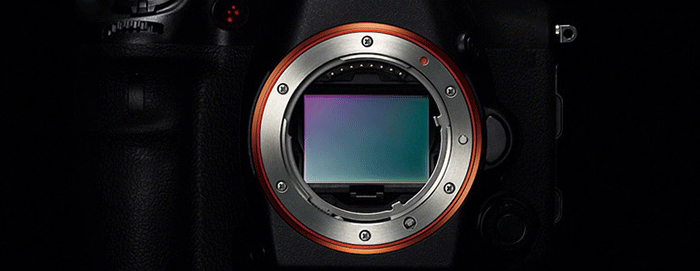
There are more and more rumors confirming the High Megapixel war will tak place during the first half of 2015. And it will be a big Sony versus Canon battle. Sony should release a close to 50 megapixel sensor while Canon will also offer one (or maybe two) such cameras (Canonwatch).
I am yet not sure if it’s the upcoming Sony A9 E-mount FF that will feature that “almost” 50 Megapixel sensor. But it’s certainly going to be a hell of a rumor time after Christmas here on SAR!
To not miss any of them quickly subscribe our social network:
RSS feed: http://www.sonyalpharumors.com/feed/
Facebook: https://www.facebook.com/sonyalpharumors
Twitter: https://twitter.com/SonyAlphaRumors
GooglePlus: https://plus.google.com/104216500156717934391/posts
145 Responses
Any A99 M2 info?
Pretty easy to guess, no rumours needed.
I guess, Canon megapixel monster, like pentax FF, will not come for a LOOONG time 😀
hmm, 50mp? Sure! But wait a second, 50MB per picture? That is like almost back to film days when storage is a factor.
Come on, storage is dirt cheap nowadays.
I still gets thousands of 36MP images on a memory card, 50MP is not going to cause storage problems.
Processing will be more of a concern than storage for those who shoot high volume.
@all Ok, I was exaggerating. I just hope that the transfer speed (wifi to phones/SD to pc), storage size, processing power for both camera and pc will continue to improve, not only in performance but also in price. If nothing improves (in near future) means less space for the 50mp pictures in SD cards, more time on waiting and less money to spend on other stuff.
Which lens offer the resolving power the 46MP sensor needs?
Pretty much all of them, in the centre. My dirt cheap OM 50 f/1.8 is untroubled by 36 megapixels at f/2.8.
46MP on full frame has the same pixel size as 20MP on APS-C, and people have been using full frame lenses on 24MP APS-C sensors for years without problems.
Public perception of high resolution sensors (and the idea that only super expensive lenses can make use of that resolution) is the only thing holding progress back, sadly.
Sure if you only care about center. There is a reason why Zeiss Otus was created. http://goo.gl/kw7zBR.
Even if we care about center only, prime on high MP camera replaces a zoom.
Do current lenses work well on aps-c 24mp cameras?
Sure it works well in many cases but this is a FF sensor, the requirement is different.
The pixel density of a 24mp aps-c sensor is equal to about 54mp. If a current full frame lens provides enough resolution for aps-c then 46mp won’t be an issue the full frame sensor is just using more of the image circle.
Wait so we’ll get the worst of both worlds, tight pixel pitch of APS-C and bad corners of FF… great, can’t wait! But half wits like Barry sure will be happy, until the user feedback starts coming in, then we’ll get all the ‘great’ responses like ‘Sony should have done x, Canon won’t make that mistake’ and ‘Sony have released a half baked product because they should have done y’ etc. Because what people think they want and what they really want with what is possible to achieve are two very different things.
There is nothing wrong with options to suit varying needs. Saying no one needs certain features or tools is as equally ergegious as saying everyone needs it and everyone will revolt if it doesn’t come out tomorrow (Barry).
Sony A9 Pro will have:
* 3-leyer 48MP (3x16MP) sensor
* Improved AF (from A6000)
* Focuses -4EV with f/2 (from A7s)
* Rangenfnder body (with side EVF placement)
Thank you.
How do you think pixel-masked AF from A6000 could ever work with 3-layer sensor?
Because people are dense? Witness… this forum.
yeah
Fortunately not gonna happen.
Why do people still think AF systems on mirrorless cameras are a ‘thing’? “Just jam that AF system from the A6000 in there, plus the one from the A7S… come on Sony do it already! don’t know why they just don’t stick it in there?!”
Oh I hope not. 50MP isn’t for me.
There is a particular use for very high resolution, which is digitizing black-and-white film negatives. You don’t need many bits per pixel for this, but you do need a large number of pixels to record the granularity accurately. Film is basically a 1 bit image with a very high number of “pixels” and random dithering to give tones.
The problem is that a Bayer sensor has at best half the advertised pixel count, because of the de-Bayering algorithm.
An electronic first curtain would be essential to get the benefit of such a sensor.
AS long as they’re gonna offer:
E-mount FF “A9” and A-mount “A99II” with the following different flavours: “R” (36MP), “S” (12MP) and “normal” (24MP) (hopefully A9 with swivel LCD as well).
With all the improvements required, you name it.
Then they can battle with 50MP as much as they want: I couldn’t care less (ME, of course).
I think your “normal,” is what the frenzy of the past week or so has been about. IBIS, better af, reasonable file size, improved grip. The R’s replacement will be the A9. The only thing I’m not sure of is the 7s. I’m sure they will do something…but that camera’s pretty tight! Guess the big question is how much of the 7s’s high iso performance into a big sensor.
If the a9 body is larger than the a7II than there should be slightly improved heat dissipation, which could lead to internal 4K when Sony is prepared to offer it outside of the middle to higher end video camera offerings.
so you’d say the S & R could be unified as a line if it got a little larger. That would be cool, although I’m hoping not too much bigger. The unimposing size is valuable for many reasons.
I don’t know about merging the two less compatible bodies. I think we could see the stock a9 replace the a7r and an a9s replacing the a7s, with the a7II the only body I’m that series. If there really will be an a9 body that is – there are years of nex-9 wishful thinking that went no where.
I think your right that they will keep them split. This is ok for me as long as the form factor stays relatively small. If they go big, as in near DSLR size, hopefully the bodies would get merged. Its a give and take and I just hope they play it right.
A few things to improve the A7s would be to make the video output 10-bit 4:2:2, increase the 4k/UHD frame rates to 60p, and add internal 4k/UHD recording. But then you’d have a mini PXW-FS7 at 1/3 the price.
Agreed. It just depends on how far and how fast they want to go..and what that implies they have up their sleeves.
You’ll be able to get 60p from the shogun, (in the future) supposedly
A-mount will be fortunate enough to at least get an a99-II, it’s safe to say that there will not be any variations like the a7.
They better have a non mechanical shutter if they are going to bring out a 50mp sensored cam. That is the single most thing I would look out for. I do not trust that Sony can provide a camera with minimal shutter shock.
Reading 50mp in max. 1/160 seconds. Uuhm
EFCS will be enough.
The big question is will the Sony sensor be Bayer or stacked???
Bayer. Stacked sensors don’t work (very poor sensitivity, expensive, blind to certain colours, images require extensive processing).
Or Color Sampling?
that was a hoax, forget about it
the one thing missing to completeley drop the a-mount is a better adapter. i would like to see something that integrates ergomnomicly with the a9-body, that doesn’t extend futher downwards than the camera itself. and room for bigger batteries!
I would prefer to see electronic conversion so the converter can be a simple extension tube like device with a chip built in.
Yes that will work well with screw drive lenses… Barry logic strikes again!
You would not be happy about the AF performance in that scenario
I‘d rather have 54mp since this leaves round numbers on the pixel numbers at the sides. I’m sort of obsessive about these things…
I prefer multiples of 16 – better for the JPEG format!
Huh?
JPEGs are stored in 8×8 (or 16×16 if chroma-subsampling is used) blocks. Partial blocks have to be used when the dimensions are not exact multiples.
If you have no partial blocks in your JPEG, it enables lossless rotation (by 90 degrees) by simply reordering the blocks. If you have partial blocks you can’t use this trick as partial blocks are only allowed on the right side and bottom of the image, hence rotation requires a full re-encoding resulting in quality loss.
Yes, sure, but block size is 16, not 16000000 (=mp) 🙂
S.Yu is implying a 54MP sensor will be 9000 x 6000. 9000 isn’t divisible by 16.
Then they will make it 9008×6000. Just like they made the 6mp sensor 3008×2000. Problem solved.
I think you’ve missed the point, the original post was hoping for nice round numbers for the horizontal/vertical resolution, I was suggesting a practical reason why multiples of 16 would be better. That is all.
46 is an odd choice and I’m doubtful. If Sony is going high res, 48.8mp makes the most sense. Since they just released their 50mp MF sensor though, I could see sony sticking with 36mp for another year.
Admin
There has been absolutely no news for a long time about A mount bodies.
Based on the currend lack of long lenses for E mount and the necessity of the laea4 there is still a place for a good A mount camera.
What do you know about future A mount cameras.
What do you think he knows, if there are no news?
A99 is being discontinued… Take from that whatever you want (which will most certainly, for you, spell the ‘doom’ of A-Mount, when in fact most likely means that a successor is not far away).
46mp and the a9 may not even have it?
That would hardly be a megapixel war.
If after all this hype for all these months all Sony offers is a 46mp version of the same old bayer sensor ther will be A LOT of dissapointed angry people and Sony credibility will be non existant.
If Sony however offers a more advanced super sensor in A mount first and in E mount later than Sony will be showing a commitment to A mount with actions rather than mere words and the delay in E mount would make more sense.
+1
Admin has sold their A7r and know much more than they are saying. All will be revealed over the next 2 month. Sony have been investing in new sensor production lines for stacked sensors, and if you read the spec of the colour sampling sensor it was called a stacked CMOS sensor, want to bet against this new technology being in the pro mirrorless body???
Well there’ll be 1 disappointment person for sure. I’d be fine with a 46MP Bayer sensor if they include a fully electronic shutter and the same DR as the D810 sensor.
I have read new sensor here and there. We’ll see!
War, huh, whoa-oh-whoa-oh, Lord
What is it good for?
Absolutely nothing, listen to me
All those photographers using the A7S won’t be happy………………………are you serious? It’ll be 48MP with an effective 8K readout…………and you didn’t hear that from me!
46mp and call it a disappointment? oh boy, imagine a9 with a “ground breaking completely newly designed (sony term of minor modification on D800 sensor)” 36mp sensor….
The upgrade that we expect to be 40, 46, 50 From Sony could very well end up beeing just a up to 38 Mpix. We never know untill it’s released – 1 week max.
If this is true 46 vs 50 canon will have significant advantage in the numbers game, 54 curse 50 would have been much better. Seems small but….
The difference between 46 & 50 is not very significant, the design of the sensor is. The one with the best image quality (sharpness, dynamic range, color depth, ISO performance, etc.) will be the winner. If past is prologue it will likely be the Sony sensor.
I can already see a difference in RAW processing times from 16 to 24 MP and imagine that 50 MP would add to that. I suppose that Canon, Nikon and Sony will all use these high resolutions to create a demand for new lenses. Having said that, still looking forward to see the results once these come to life.
if it’s 50 mp you no longer need complex demosaic and it will be faster than 16 mp demosaic.
I am sorry to say that I have no idea what you are talking about but trust you expertise on the matter. Thanks.
Demosaicing is necessary for all bayer array sensors regardless of how many pixels there are.
Foveon like sensors andColor Sampling sensors however do not require demosaicingbecause cowlor information is available at every pixel location.
In that case what Dmitry says is true and processing is much faster.
In fact the color sampling sensor …rumors have surfaced…is supposed to shoot hd video at 16,000 frames/second.
Actually there is still a very complex math RAW conversion process for Foveon.
There will be faster computers. They do keep improving 🙂
Hopefully more and more of editing sofware will start using the video card.
Boy I hope your right. My ’11spring MBP struggles with the R files in c1. Particularly with masking. Fan spinning, cursor lagging out, hot mess. I’ve ordered the iMac 5k and am really hoping it to be better..although the big fear is the a9’s files will crush it(if it’s the big MP one).
Have you gone to C1 8 yet? It is quite a bit more efficient but C1 has always lagged a bit in RAW processing time but you can’t argue with the excellence of the results when used by someone skilled at C1 🙂
Yes, and it was an improvement, and nice upgrade to boot! C1’s worth the trouble, heres to hoping that iMac can handle it!
It shouldn’t have too much troulbe 🙂
I’m starting to doubt these rumors for both canon and sony. I know nothing however.
Why ? It’s like doubting the existance of a 10-core CPU they do exist, they are expensive.. but you know they will become mainstream eventually. It’s only a matter of time.
I read too many photography forums and news sites. Almost all of them now say nothing about these sensors. If you look back there are always hints about every camera, it’s just finding them.
Like people talking about a Nikon D750 a year ago.
Of course, at that time many were still dreaming about a D700 replacement in a D800 type body with 24MP and 8fps.
But at least the name was correct!
I’d rather see software developers start utilizing the 4 to 8 cores at hand. I’m looking at you Adobe, Lightroom performance on the current 8 core Mac Pro seems pretty slow when I’m processing compared to current laptops.
Sigma is talking about a ff foveon sensor and the ceo says that the most cost effective way to produce it would be to simple enlarge the die and not change the pixel pitch.
The result would be about 100mp.
The result of scaling up the current 19.6 MP Quattro sensor would be a 44 MP full frame sensor.
The sensor has 3 layers and theycounteach color therefore this would be considered about a 125mp sensor.
The files would be about 44mp of non interpolated data which could be scaled to about 180mp at the same level of interpolation as current bayer sensors.
125MP? Where are you pulling these numbers from?
The Foveon quatro sensor has 19.6MP in the top layer and produces. It has two lower layers with 4.9MP each. It is 1.5x smaller in each dimension than a full frame sensor. Scaling it up to full frame would yield 19.6 * 1.5 * 1.5 = 44.1MP. It would produce 44.1MP images, albeit with a high level of detail. It would not get anywhere near the resolution of a 180MP Bayer sensor, that is pure fantasy.
The dp2 sensor is 48mp actual 46mp effective.
That is thier latest foveon sensor.
Where are you getting your numders from?
I’m getting my numbers from DPReview:
http://www.dpreview.com/search/?query=fovenon%20quattro&terms=fovenon%20quattro
You are incorrect, again, the X3 Quattro is the latest Foveon sensor, which is 19.6 megapixels, by an sane method of measuring resolution (i.e. it produces 19.6 megapixel images).
When and if Sigma makes a ff sensor we will both see how many pixels it has.
*sigh* Barry you STILL need to learn the difference between spacial resolution and colour resolution. You are SO caught up with ‘stacked sensors have more MP, because x3’, but you are very very confused about how a scene is sampled.
Sigma’s own spec sheet says that the number of color detectors (their jargon to differentiate from a Bayer pixel) is 5424×3616 or 19,613,184 pixels in the final image. That is the spatial resolution of the sensor. Yes there are differences in the color resolution due to the three layer sensor vs Bayer’s interpolated color, but not in spatial resolution.
Foveon pixwls are 3 layers and the native fole is not interpolated.
Therefore sigma counts each of thes pixels 3 times.
In a bayer sensor a 24mp sensor is actually 12g 6r 6b.
Each 4 pixel unit ..6mp….are then interpolated from 4 different locations and recombined to a 24mp file.
Everybody knows that Barry, the bottom line though is that you still get out a file, that is 5424×3616 which is 19.6 megapixels. Yes the color information is not interpolated but it is still only 19.6 million discrete data points in the final file just like if you had a 19.6 megapixel Bayer sensor, not 58.8 as Sigma would have you believe. What is different is that in the bayer sensor, the color data is interpolated while it is not in the Sigma sensor. That gives you higher accuracy of each of those pixels which in turn is a higher perceived resolution relative to the Bayer sensor, but it isn’t 3 times as much – Matt Grum above gave an accurate description as to why not. Don’t get caught up by marketing sensationalism!
i own the dp series, and you get around double the resolution
so the 16mp = 32ish bayer (it can depend on subject how much you gain)
the lenses are also increadibly good too, sharpness wise they must be near perfect.
the quattro sensor isnt as good imo, but u get about the same resolution, maybe abit less, looks more “bayer” though
What you have said is somewhat correct (in a rather 1999 mentality). Actually a whole buncha lotta of estimation is required; not a single pixel on whatever file is output is a true representation per the actual light that came onto the sensor at the inception of the photographic capturing processing. Even with the sharing and comparing within pretty damn good algorithms of today of the neighboring pixels, it is still mathematical smudging. A stacked (Foveon) sensor is a one-to-one representation at each claimed resolution site, while in a Bayer world the pixels output are a conglomeration that could just as easily be output at 18, 9, or even 96 or 144 mega pixel file of photographic information. In reality, the Bayer matrix does produce the products that they do only because of the increase in megapixels for it still stands that groups of four are used to make a pixel, and not all those four are interpreting the same information, but after the fact pooling their information and estimating. A Bayer based sensor is like calculus in that it can be really accurate, but seldom if ever one hundred percent correct… just really good guesses at best.
Yes, it is true – every pixel in a demosaiced Bayer image is an estimate – the result of a calculation based on the best available data.
But guess what – every pixel in a Foveon image is too! The general conception, fueled by Sigma marketing, is that the Foveon sensor has red, green, and blue pixels stacked up at each location and the values are simply read out to create a full colour image. Pure and simple. The truth, however is this:
What you actually have in a Foveon sensor is not red/green/blue layers, but a top layer which is sensitive to all colours, a second layer which is mostly sensitive to green and red (but still slightly sensitive to blue) and a bottom layer which is mostly sensitive to red (but still slightly sensitive to green and blue). From this mess you have to try and solve a system of equations to work out the most likely amounts of red/green/blue at each pixel. Oh and then you have to apply sharpening to the bottom layer as it’s much thicker than the others and photons can diffuse into neighboring pixels, resulting in a blurring effect.
An awful lot of processing goes into to the final Foveon image, more in fact than a Bayer image.
The problems with depth diffusion mentioned above (and to an extend sensitivity issues) are the reason the Foveon abandoned the idea of three unique samples per pixel with the latest Quattro design, which has 1/4 the resolution on the bottom two layers. Another sign the concept is, sadly, flawed.
You are fundamentally misunderstanding the concepts of interpolation and demosaicing, leading to you [repeatedly] massively overestimating the benefits of stacked sensors. Let me explain how it actually works:
The sensor in the A7R has 9 million red pixels. These 9 million red pixels are interpolated to produce a 36 megapixel image, that is true. However the neighboring green and blue pixels are also used to help estimate the values of the missing red values. This works incredibly well in practice, as the colour channels are usually strongly correlated.
For example, a yellow object will have very similar values for red and green. Thus instead of 9 million values, suddenly we can use the green pixels giving 27 million values. A grey object will have matching values for red, green, and blue, thus very little estimation is required to generate 36 megapixels of data.
Now consider a 9MP (x3) Foveon sensor (that is 9MP of red, 9MP of blue, 9MP of green, all on top of each other, you can call it 27 megapixels if it makes you feel better). You claim to be able to interpolate this up to 36MP, however there are no intermediate values to guide the process, each missing pixel has to be guessed, and in the absence of any hard data it is assumed the image is smooth in that region (if you want to be technical, a cubic spline curve is fitted to the data).
Thus the quality of the unguided interpolation of the Foveon image is much lower than the Bayer interpolation, which has real data about the missing pixel locations. In practice you can only upscale the Bayer image about 1.4x in each direction before the detail is the same as a Bayer sensor. So a 44MP Foveon is really equivalent to an 88MP Bayer sensor, not the 180MP you keep claiming!
Will we have Low light performance over 3000 ISO with the 46 MPixels sensor or unfortunatellly it will be back to Nex ages with only 1016 ISO?
i know the A7R have a better Low light performance than A7 but it surely because they removed the low pass filter
low pass filter doesn’t affect high iso
does a filter( a piece of “glass”) not affect the transmission of light through it? Therefore if the transmission decreased, the High Iso will not be either?
it’s glued to the sensor so it doesn’t increase number of glass-air surfaces
OK, right…. I m the weakest link, i quit 😉
It still absorbs a small insignificant amount of light, not enough to effect high ISO in any meaningful way.
It because the A7R sensor has a Gapless Microlens Array and since the r has way more pixels its more noticeable.
The vapourware standoff.
The only way for Canon to end up with a 50 MP usable sensor is if they buy it from Sony, haa ha …
and still Canon will be the preferred brand for every photographer 🙂
funny, but true
Always the same: photographers and internet geeks are very different things.
For a while, but not forever!
They have a year or two to react, after that it would be too late.
Actually, I’d say nikon has always been the preferred brand — if we’re being completely honest!
Actually, I see more Canon users jumping ship to Sony. Head over to Canonrumors forum and you’ll see those tempted 🙂
Or Samsung…or make it themselves.
We are not talking about vacuum cleaners and TVs.
Thanks captain obvious:
http://www.samsung.com/global/business/semiconductor/product/cmos-imaging-sensor
http://www.canon.com/technology/canon_tech/explanation/35mm.htm
Yea, captain Einstein, the best source to get a balanced opinion about Samsung and Canon sensors is their MARKETING pages ?!?
I bet you could read the same sort of statements from Nokia’s website, just before they went down!
Canon and Samsung both design and manufacture image sensors. No amount of opinion or stupidity spouting will change that fact.
Nobody is denying the fact that they produce sensors, we are discussing the QUALITY of their sensors here.
Look at my original post I said that the only way for Canon to have a USABLE 50MP sensor is to get it from Sony!
You were denying it when you were talking about vacuum cleaners. Canon most certainly has the capability to produce such a sensor and make it “usable”:
http://www.dpreview.com/articles/2773376832/canon120mpsensor
Meanwhile Samsung certainly has the resources if they choose to invest in making such a sensor.
No, I wasn’t denying it with my statement for vacuum cleaners and TVs!
It means – if you are looking for a cheap and decent vacuum cleaner or TV go to Samsung.
This is where they are strong!
This doesn’t mean they are not making sensors.
How many people actually need a 50Mp sensor ?? I don’t, and I doubt that many do. But I’m sure that they will be BIG sellers.
neeeed? no, but I Want one and will happily Buy one if presented with an offering. Resolution is important to me, but I find the digital backs to be a poor investment and too overpriced to justify buying.
Most people don’t even need a camera because their photographs suck. But that’s not the point, right?
To be fair, how many people needed a 36mp sensor?
Advertising Photographers do. The ability to get a high resolution crop out of a single landscape frame is a BIG deal!
I am actually one from those who shoot HMP cameras, therefore I use Hassy H4D how ever, I will NOT touch CANON any more even if they come with 100 MP cam. I can tell you, that caring Hassy H4D is enough. It is heavy like hell. Canon is same brick like Hassy.
I appreciate A7 line of cameras for their image quality and light weight.
50MP but with 3 fps and a burst of 2 seconds? And need a new computer fast enough to process?
Yes if your still using your Dell pentium IV machine.
Worthless reporting; misleading headline. Canon Rumors clearly states that this is a stale rumor with no basis in reality. The Canon 50mp sensor is a unicorn. Meanwhile, everybody here gets all worked up. Click bait. Click bait. Click bait.
And that canonwatch article got exactly one single comment, lol. Oh, it belongs to the same network of rumor sites, uhu..
And unicorns exists so where are you going with this?
Hold your horses, Canon is capable of this. How? A Full Frame Dual-Pixel Sensor. With Sony, they can do pretty much whatever they like. They just posted their business plan for the camera division with three separate design goals, Sensitivity, Speed, and Resolution.
I’m not impressed though. The A7s and A7 II has more value than a bump in resolution.
Better, release a new sensor with Image quality of a Foveon which in, IMHO, has medium format quality at lower resolutions.
“with the image quality of a Foveon…” Um, Foveon image quality isn’t all that! I think if you had the image quality of a Foveon you’d be screaming about poor high ISO noise characteristics.
Yes. MF cameras fare the same. I just love how MF or the Foveon renders an image at base ISO. It is not resolution but something else which is hard to explain.
Anyway, Sony will come up with that sooner than I would expect as seen from multiple patents they applied for.
IT certainly would be intersting to see say Canon came up with 40Mpix sensor (no antialias filter).. that way we would know if their lenses have the resolution. They have updated quite a few of them allready. So in that sense it’s plausible that canon comes up with a about 40Mpix sensor. But mililarly as it is with Nikon I bet only few Canon’s own lenses reach the above 25 resolution.
Canon lenses handle a 36mp sensor just fine (adapted to a7r).
46MP RX2 curved sensor please…that’s all we need to know.
And what lens will you use on that ? You’ll have to pick one and stick with it smart guy.
I’ll use the 35mm 1.8 I hope they attach to it. It should be epic…so epic in fact that epic will have to ch ange its name to mundane.
i guess this will never end ^^
How are things Andrea? No post in a couple of days…. is everything ok?
Everyday Canon lets this be a ‘rumor’ only 1000’s of more Sony mirrorless are sold. If Canon can get the live view, EVF and critical focus right with true 14 bit color and not Sony’s lossy algorithm then I will go to Canon.