







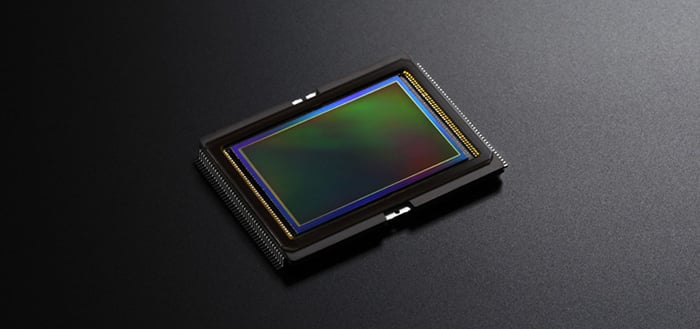
Image of the Canon 6D sensor.
My friend Steve from CanonWatch got a quite strange rumor. According to one of his sources Canon will announce a new DSLR in 2015 which uses a Sony Full Frame and Foveon alike sensor! I haven’t heard any word about this from my trusted sources. But I can confirm a really completely new Sony sensor will be launched in 2015. Maybe the sensor is that good that Canon cannot keep up and has to buy the Sony sensors just like other companies often do?
I think it would be wiser for Sony to use the new generation sensor for their own new FF cameras. Although Sony could do a lot of $$$ selling sensors to Canon…
0 Responses
It is also possible that Canon sees not to much of a market for the stacked sensor cameras and sees no good reason to develop the sensor by it self.
But sees good reason to use it???
Don’t forget Canon still using 500nm process generation for their FF sensor (1dx, 5dm3). While Nikon use 350nm design rule in their D3, D3s ,
Sony 24Mp sensor use 250nm and 36Mp sensor use 180nm.
Only if Sony’s cell phone and TV divisions did well, that would be the end of Nikon and Canon. 🙂
Yeah, that’s what we need. Less competition. What could go wrong? ;^)
Maybe Sony would start worrying about keeping existing customers instead of focusing on gaining new ones.
Just kidding, they would never do that 🙂
Yeah, like Sony is so concerned and caring about a-mount owners. Explains why this a65 owner went Nikon full-frame. ;^)
Well done. Now you can flap off.
If Sony starts selling sensors to Canon, they will loose their sole advantage over them. Canon has by far the best system lens wise, their cameras have the best autofocus capabilities. The only thing where they lack is sensors. If they get the best and newest sensor from Sony, it will be another nail in the a-mount coffin.
Nobody is getting the best sensors from Sony now, since the D800 debacle. Sony keeps the best stuff for themselves and opens them up to 3rd parties after a couple years.
Maybe Canon made the sensor layout on themselves, but the dont have the facility to produce it.
So they buy in “producing capacity” from Sony.
So it would be still a “Canon” sensor…
Really? In mirrorless Sony certainly sticks to cutting-edge but in a-mount your statement is comical. ;^)
Who cares about A-Mount?
Have you read any A-Mount thread recently? A lot of people do. 90% of people in Europe/US don’t care about mirrorless.
Nope, same 3 or 4 whiney a$$es.
http://www.sonyalpharumors.com/the-a-mount-frustration-post-what-should-sony-do
93% of statistics are made up.
Not me particularly any more. Switched to Nikon, a growing trend with a-mount owners.
I know, yet you still come back to troll. How are you enjoying your wonderful new Nikon with third party lenses? If only, if ONLY you could have bought them in A-Mount right?
In fact, Sony is wasting their sensors in mirrorrless (10% adoption rate in Europe/US), allowing Nikon to gain advantage (D610 / D810 / D750 all use Sony sensors).
Nothing is wasted. There was 0% mirrorless several years ago. As to a-mount, its market share being quite steady for some time, Sony simply changed direction; Nikon and Canon aren’t gaining anything they didn’t have before.
>As to a-mount, its market share being quite steady for some time
Could be growing.
Why? probably the stacked sensor will only be available in a few bodies. Sony as a company will make more money (what is good for Sony) and they will put that sensor in more then one camera (probably both E and A mount). And in the end there will be one system with two mounts, just like Canon (who has actualy 3 mounts EF, EF-S and EF-M) The E-mount will be the largest mount in sales for Sony where EF-s mount will be the largest mount in sales for Canon.
Will the A-mount dissapear in the end? Maybe, maybe not.
Sony believe they they have a competitive advantage in their mirrorless technology.
They live in Asia, where mirrorless adoption rate is 40% (still 60% don’t want mirrorless).
In Europe and US mirrorless is a mere 10%! 90% customers don’t want mirrorless.
Sony will simply waste this technology by putting it only in their mirroless cameras, while at the same time licensing it to Canon.
I would like to know where do you get these numbers from.
http://photorumors.com/2014/02/17/fujifilm-is-planning-to-compete-on-the-full-frame-market-new-x-e2-firmware-is-coming-soon-company-wins-5-if-awards/
Thanks. I am not sure though which market those numbers are for.
They say it:
Mirrorless market in Japan is 40%, in Asia is 25%, in the US and Europe is 10% (Nikon said the same thing during their interview)
No, I mean, is that 40% of all cameras in Japan or 40% of all ILC in Japan?
Don’t know about all Europe, but this year mirrorless cameras are expected to reach 25% in Germany: http://www.heise.de/foto/meldung/Deutscher-Kameramarkt-in-Zahlen-Weniger-DSLR-mehr-Spiegellose-2390238.html And Germany is not the only European country with 25% mirrorless sales.
Interessante Information, danke schön
This pretty much means that Sony will have a total, unchallenged monopoly on a large sensors.
I see no reason to be happy about that.
First: this is a rumor. Second it is not said that Canon will ONLY make cameras with stacked sensors. It is very well possible that these sensors only be used in the high end cameras. Look at Sigma, the Foveon sensors are not only good, they have their downsites too (high ISO performance, Color rendering etc)
Wrong Nikon make some of their sensors too (the brilliant d4s and df 16mp ff for example). They get a lot from sony though too
That’s where A-mount is going!!
I’d wish, but it’s baseless guess.
If a stacked sensor can be produced without the inherent shortcomings of the Foveon design, then it would surely become the dominant design as it would offer massive advantages. However, I remain to be convinced that there is a practical design out there. But we will see.
Damn! It only took 2 years after a Nikon cam. Now it will be 4+ years before such a sensor makes its way to a Sony cam! 🙁
No wonder Zeiss, Sigma and Samyang are making Canikon mount lenses as a priority.
Colour matrix (like Bayer or Fuji X) is probably not going away — it’s a fundamentally efficient balance of light gathering, luma resolution and chroma resolution. There’s a reason it has been the default solution for a couple of decades.
But I could imagine a Foveon-alike variant existing alongside a Bayer camera. If Canon put out a 5d3F (or whatever) aimed at the landscape/studio tripod market, that’s got excellent colour and sharpness but a couple of stops less high ISO, they could do some business with that.
Right balance? How is that?
Multilayer sensor can gather up to 100% of light which is impossible with bayer, thus the higher SNR.
Multilayer sensor has higher spatial resolution than bayer.
And it is more accurate in colors since there’s no need in artificial expansion of filter bandwidth to increase light gathering at the cost of color separation reduction.
Well, I admit #2 and #3 are definitely work if #1 does, otherwise we have an uncertainty.
In principle you are right, but it will require something which works on different principles to the Foveon sensor. The Foveon’s achilles heel is that it produces very poor colour separation between channels. Unfortunately that means that a great deal of chromatic information is lost. It can be compensated for by using common mode rejection techniques. Unfortunately, it can never be properly recovered and this is seen as lots of chromatic noise at higher ISOs.
So, unfortunately, the inherent advantage that more photons cannot be fully realised.
This is not to say that a different stacked sensor design couldn’t overcome the problems, but it’s a huge technical challenge with no obvious solution.
The reason for bayer being the default is a very practical: it can be done in a 2D process.
For something Foveon-like you need threedimensional structures, something only recently introduced to processors and memory; that was highly experimental when Sigma introduced their sensor. But those complex structures are becoming more mainstream in recent times.
> For something Foveon-like you need threedimensional structures, something only recently introduced to processors and memory;
LOL what? 3D structures of memory?
Memory is flat as it could be. The only 3D alike are vector operations: something that was impelemented in DSPs for image processing a long time ago.
If you were aware of the difference between data organization and semiconductor manufacture you’d realize how funny your post is.
surely Sony will use this sensor for its product. we have seen many examples from the past 😀
They should produce/sell a cripled version for Canon…
Canon could just put Sony label on the camera, or SonyCanon, and after few years change it for Sony, sounds familiar? 😉
Regardless of the sensor technology, if the rumor is correct, Sony will still waste the opportunity by putting it in their mirrorless cameras first (or exclusively), and Canon will continue to own the market with the new Sony’s sensor.
Sony couldn’t afford to develope the FF sensors if they couldn’t sell them to other manufacturers. Nikon accounts for more than 90% of the 36MP Sony sensor. Think about it.
Exactly what i was about to say.
Well of course it does, since Sony never put the 36Mp sensor in a proper DSLR.
It doesn’t have to be this way. If Sony continued to develop its A-Mount system, they would be able to sell the sensors themselves.
Sony don’t make DSLRs. They make ‘mirrorless’ and faux mirrorless with plastic mirror.
A camera with a plastic mirror is, by definition, not mirrorless. It competes in the same niche as DSLR.
That’s why it is ‘faux mirrorless’
SLT is more of an ‘unconventional DLSR’ than ‘faux mirrrorless’. It obviously competes against DSLR, not mirrorless, and Sony markets it (well… used to market it) as a type of DSLR.
A Sony SLT is a Single Lens Reflex camera. There is nothing in the term SLR that means moving mirror.
The “Reflex” does. That means it flips up.
So the SLT IS NOT an SLR.
Single Lens Translucent, it tells you in the name.
Have the D800s really outsold the A7R 9 times to 1?
More than that.
data please
Compairing D800 to A7R sales makes no sense. They’re completely different products.
Sony never produces a proper SLT competitor to D800 with the 36Mp sensor.
You are the one saying it is a wasted opportunity. So show us the numbers that show A99 sells better than A7 series.
LOL? A99 didn’t feature any of the A7 series sensors.
Exact same sensor as A7.
OK, I stay corrected on this one.
Anyway, there’re other factors. A99 was a half-hearted effort at best.
1. The main differentiating factor between DSLR and mirrorless is AF – Sony put A77’s APS-C AF in A99.
2. Unlike the A7, A99 received zero advertizing/marketing.
3. A7 is a new segment with no competition, A99 has to compete with Canikon, and at a disadvantage from the very beginning – a camera with entry-level specs and D800 price.
4. The whole uncertainty over A-Mount future situation has been hurting the sales. Sony is moving its A-Mount userbase to Nikon.
5. A99R and A99S with 36Mp and 12Mp senros were never released.
Conclusion: Sony bent over backwards to promote the A7 series and next to nothing to promote A99 and SLT in general. That’s what I call a wasted oppurtunity.
DSLR market is much bigger than mirrrorless: http://photorumors.com/2014/02/17/fujifilm-is-planning-to-compete-on-the-full-frame-market-new-x-e2-firmware-is-coming-soon-company-wins-5-if-awards/
And with a proper offering Sony could grow its market share there, not waste a good sensor exclusively on the 10% mirrorless market.
Well A7 has all of those things, so where are those numbers? If mirrorless is so poor, A99 will have outsold it.
Logic? Mirrorless is 10% of the market, that means most people over all systems are interested in DSLR, not mirrorless.
As in the Sony system, A7 vs A99, I listed the reasons why A99 couldn’t be a big hit vis-a-vis the A7.
And the A99 is a DSLR according to you. So despite the ‘excuses’ the fact that the A99 has a 9x larger potential audience it should have sold better than the A7… So where are those numbers?
Cicrular logic. You dismiss all my arguments as ‘excuses’, and then ask the same question all over again.
Circular logic. You dismiss all my agruements as ‘excuses’, and then ask the same question all over again.
Besides, I never said 99 is better than A7; I said Sony is wasting opportunities by competing exclusively in the mirrorless market and disregarding the much bigger DLSR market.
The flawed logic here is yours. Tell me which is bigger, 50% of 10% of the market or 3% of 90% of the market? Which would you invest in? How much of that 3% is made up of high end cameras like the A99? How much of that 90% DSLR market is made up of the high end FF cameras? How much market growth in the established DSLR market can Sony realistically take, given the resources they put into it in the past and still got nowhere. How much do you think the FE series cameras are affecting the high end mirrorless market by comparison? What kind of attachment rate do you think the FE cameras have compared to A-Mount cameras? What about A-Mount FF cameras? Owning a large proportion of an expanding market vs a tiny portion of a shrinking market is a wise move by Sony. Plus you figures only account for certain markets, in other markets mirrorless are much stronger, considering Sony is in a global market what overall is the stronger market for them mirrorless or DSLR?
1. Where did you take this 3% figure from? Sony has 8,5% in DSLR, used to have 15% when they really put effort in it (it’s not ‘nowhere’). Could be still bigger if they continued to do so.
2. Sony is already invested in both; I’d understand the shifting of priorities towards E-Mount and then FE, where they have less competition, but eventually the competition will come to FF mirrorless as well.
2. Where does 50% in mirrroless figure come from as well?
3. Before SLT, Sony failed to differentiate their offering from Canikon. That’s why SLT was devised, as Vlad mentioned. With proper AF, marketing, roadmap etc… I can’t say what market share they could realistically achieve, nobody can 🙂 But more than the 15% they used to have.
4. Attachment to FE is understandable, there’s no other FF mirrorless so far; that, however, is certain to change, if FE is successful.
5. It’s hard to speculate how much the DSLR market will shrink… Sony seem to believe they can replace DSLR with mirrorless altogether. We can only wait and see.
6. Worldwide mirrorless adoption is 12% (same sourse). Not much difference there.
duott, you are basing yourself on the premise that if Sony would put more effort in a-mount, then they would eat market from Canikon. And that is the problem, because while your argument is valid, it is not that simple. In 2006 Sony bought the business from Minolta and very quickly rose to something like 12% market share (I might be slightly off on the numbers, working off memory here), which I would guess were those few who decided to stick to the mount. Many others lost any confidence, as their company went down and was bought by Sony (when Canon changed their mount, they also lost lof of confidence and it took them many years to shake that off). Since then their market share has fluctuated to something like 14-15%, but never took off. This can surely be attributed to Sony not doing its best for the system, but when you consider that they had excellent cameras, excellent lenses and the cheapest FF out there, one starts to realize that there are other things to consider. Sony basically started from zero, while Canon and Nikon have their reputation to build upon. When those two own almost the whole market, it is difficult to start eating their share, even with a better product. You need to have something really different. Hence the SLT. Except, in the meantime, they went lateral with the NEX-3 and NEX-5 and according to their own words, they were surprised by the adoption. Given that they were changing things around already (SLT), they simply saw a better opportunity than fighting an uphill battle in the DSLR market.
That’s all true.
Mirrorless market was new and lucrative, but soon competition kicked in.
Sony moved up to FE, where they stand uncontested so far, but sooner or later they’ll face stiff competition here too.
I understand shifting of priorities towards the most lucrative thing ATM, but not abandoning the A-Mount line alltogether.
Sooner or later the dust will settle, and Sony will face competition in all segments; meanwhile, their market share in DSLR shrunk to 8,5% already from the 15% you’ve mentioned, and if they continue to neglect it, will fall even further.
I doubt they are abandoning anything a-mount, for me this is another internet myth, but they surely have slowed down, probably redirecting resources.
As to competition in mirrorless, even before the FE line, Sony was the worldwide leader in market share in mirrorless, at least according to their own words. That is pretty impressive, considering the existence of the m43, which not only appeared two years earlier, but is also supported by two companies. Fuji and Samsung didn’t seem to make much of a dent either.
Exactly. Sony need to build on their momentum in mirrorless.
I’d like to believe this, but I’ve come to accept that A-mount is being shown the door. I suspect we’ll get another iteration of the A99, and then that’s the end. After it’s been out a year or two and they’ve gotten the bulk of sales they can get out of, they’ll announce the retirement. I’ve come to be OK with it, though, as it’s not like my current A-mount cameras will stop working the moment they stop developing new ones, and those A-mount lenses can still be used on the E-mount cameras via adapter (though sadly without IS, which sucks when using tele-zooms). And if I do decide that ends up being a problem for me, I’ll just quietly switch to Canikon or E-mount native lenses.
Competition kicked in? They were the competition, Olympus, Panasonic and Samsung were all in mirrorless before Sony. m43’s wont go FF, neither with Fuji X and who knows with Samsung, they will just as soon drop their current system for something else tomorrow.
Fuji is expanding their APS-C line-up better than Sony (since it’s their only line).
Same for Samsung, look at this THING: http://photorumors.com/2014/11/02/the-upcoming-samsung-s-300mm-f2-8-ed-ois-nx-lens-is-huge/#more-63460
Fuji may very well go FF: http://www.fujirumors.com/new-source-x-pro2-will-feature-full-frame-sensor-3-5-ff-lenses/
Since when? Sony have more E-Mount lenses than Fuji and have more on their roadmap (disclosed) and have much more (undisclosed).
APS-C lenses only. Exclude the bigger/heavier/more expensive FE ones.
Should I also exclude bigger / heavier / more expensive Fuji ones? Should Canon users exclude all L series lenses when talking about the 7D MkII, afterall they are all full frame lenses?
I used to own an APS-C Sigma 50-150 f/2.8… it was MUCH lighter/smaller than any 70-200 f/2.8.
People bought into E-Mount for compactness, and are now disgruntled that Sony now only releases the bigger/heavier FE glass. A lot of comments like that on this forum. That doesn’t apply to 7D, people don’t buy 7D for compactness.
And? I didn’t buy into it for compactness. I bought into it for flexibility. YOU just said the 50-150mm was much smaller and then say 7D owners don’t care about smaller… so which is it? You can’t just go discounting a lens because it is capable of working on a bigger format. The 35mm is MUCH MUCH MUCH MUCH MUCH smaller than your cruddy Sigma, so do we discount the Sigma because it is bigger? So let me get this straight, you complain that Sony doesn’t have lenses like Fuji, then you say that the FE ones don’t count because people want mirrorless because it is small… Have you actually used the Fuji’s or seen their lenses? This is so backwards I cannot even begin to understand. There just is no pleasing some people, they will always find an excuse or a fault…
Sony have a bigger lineup than Fuji and it is expanding much faster. They also have two different formats so you can own one set of lenses and get two sets of effective focal lengths from the one set of lenses. That means each lens has 2 focal lengths, that makes every single one of them much smaller than Fuji’s and much better value, much lighter etc. But some people will just be blind in their unending ‘hate’. If you want Fuji garbage go buy a Fuji.
An FE 70-200 f/4 doesn’t magically turn into a 50-140 f/2.8 on APS-C (which Fuji offers).
And if Sony ever releases an FE 70-200 f/2.8, it won’t magically shrink in size/weight to fit an APS-C image circle.
Your arguments get more and more deluded as time goes on. No you are right it doesn’t, so lets compare what you get shall we?
Buy a ~900g Fuji 50-140mm f2.8 and get a 75-210mm f4.2 lens 135 equivalence, cost $1500ish.
Buy a ~900g Sony 70-200mm f4 and get a 70-200mm f4 + a 105-300mm f5.6 in 135 equivalence, cost $1500ish.
One lens, two formats, more choice, less weight.
This arguement is really weird…
I was talking about APS-C users who bought an E-Mount for compactness, not FE users who have an additional APS-C camera.
No, you were talking about Fuji vs Sony in lens releases. You make these claims that it is about small size but talk about monstrous lenses (relatively speaking) like the 50-140mm? You also claim it is about APS-C users wanting a small system yet compare to Fuji whose lenses (apart from 2) are all rather large, despite being an APS-C only system?
Fine, Sony has smaller lenses than Fuji for APS-C users. Their FF lenses are as big for equivalent lenses. The fact they have FF lenses for a system that offers both FF and APS-C is a positive, not a negative. In Fuji you can only buy lenses that are as big as FF lenses for Sony FE… So what is your point again? Oh yeah, isn’t Sony terrible for giving users a complete system with two different formats and more lenses to choose from. Bad Sony, bad. Yay for Fuji saving the day *sigh*.
This whole discussion (not only this thread) seems to revole around how you view mirrorless… as a system designed for the sole purpose of compactness… or as a full-featured system to replace DSLR. You support the latter, that’s why you constantly emphasize “complete system”, “versatility” and so on.
I agree, if the latter was true, Sony would be far ahead of all competition, who don’t even have FF mirrorless yet. And discontinuing A-Mount would make perfect sense.
Besides if no one is interested in mirrorless, then A99 should easily outsell any / all the A7 series.
what makes them so different? Nikon has lens systems but body wise I’d prefer the A7r. Both 36 MP FF cameras. They are contemporaries aimed at the same user/market
DSLR vs mirrorless, obviously
>aimed at the same user/market
Nope. There is an overlap of people who wanted a FF mirrorless, but bought DSLR because mirrorless didn’t exist; they can switch from Canikon to E-Mount now. But there’re also a lot of people who want DSLR.
Flickr says 8 times to 1.. looking at today’s average daily users (D800 + D800E, no D810 listed yet, versus A7r).
1835 daily average users vs 232 for the A7r.
So imagine what Sony could sell if the successor of the Canon 5D 123 would be using a Sony sensor.
Of course, long term Canon and Nikon take on a very big risk becoming totally dependent on Sony and also Sony would have plenty of time to reverse the camera fortunes later on..
D800 predates the A7r by a few years. 🙂
They developed the A7S sensor for their own use.
I don’t care that much, so here’s my completely off topic question 🙂 What about the forthcoming RX1?
or the Monochrome camera..
Although this sensor could be pressed into acting like a monochrome camera if it comes with the right software.
I’m really interested in a Sony monochrome camera: I am ready to buy a MM but I’m also waiting for a new version of it (read with the optional EVF and Live view, for longer lenses). The Sony monochrome camera would still miss the rangefinder experience though..
The Leica MM is without a match and I doubt a CMOS (Leica MP) based RF would be any good.
I am actually looking for a non RF liveview monochrome cam but not in a Leica package. The Samsung rumors give some source for optimism. Only when Samsung do something Sony get into the act. Hopefully, there will be a A7M soon.
Tha’s my doubt also: photos from the CCD of the Monochrom look way more “organic” than those from a CMOS sensor, but since I haven’t tried a CMOS sensor without a Bayer filter I can’t really say how the output will be. Personal question Vivek, in case you own a MM: I have not tried it with a longer lens (90mm) and wide aperture, how do you find its use in dim light, let’s say in a theater, jazz concert? Unfortunatly I had no chance to borrow it for the above mentioned occasions.
What about having an “old” camera sensor tuned, by removing the Bayer filter? (i know a “native monochrome sensor would be better..)
Marco, I own one (MM). Long lens and dimlight would be disaster for focusing with the RF (hence I would like a liveview cam), although the camera is capable of capturing (with lots of details and tones) a lowlight scene. I have had a NEX-5N monochromed. Out of camera images are magenta in color and needs quite a bit of work in the post capture to get to black and white. The deBayerification also removes the microlenses which isn’t good for many things.
Also check Alex H. here: http://www.dyxum.com/dforum/nex5n-monochrome-conversion_topic106851.html
Thank you for the reply. The focusing difficulty in dimlight is the only reason why I’m waiting for a CMOS sensored MM240.. And of course I’ll have to see and consider the drawbacks of that sensor.. Hard decision to make, when a camera is so expensive. 🙁
The monochrome RX1 was rumored months ago, then nothing appeared here. I think Sony thought about it, given the buzz of Leica MM, but I don’t know if big S has the guts to offer a monochrome Rx1. At what price then?
I guess the only thing that remains to do is wait.
I have some DNG files and I know how much latitude (shadow details) MM offers to work with, it’s amazing.
you mean the RX2?
I sold my RX1 in anticipation (september photokina) but we wait. tick tick tick.
Sony has a history of coming out with products and cameras and then not following up.
The original R1 was a genius camera that Sony just had to tweak a little, but Sony dropped it like a hot potato. I hope RX1-2-3 isn’t another
You say you sold your camera on a rumor? Very wise!
+1
Errr how can you ‘drop’ something that is fixed lens / system? By not releasing a follow up? I didn’t realise that releasing a camera meant you had to keep releasing iterations of that camera forever otherwise you ‘have a history…’. I guess Canon have a history of this too, Nikon also, Olympus too and Panasonic, Fuji are pretty bad at this as well, so is Ricoh. But no, you are right, Sony have a history…
http://www.canonrumors.com/2014/11/canon-to-continue-using-canon-sensors-in-dslrs/
What thay can say: “Sony do better sensor than cannon”. Nikon also don`t want to public say, “we use sony sensor”! But true is Sony sensors are the best
Who is Cannon? Never heard of that company.
lol
I`m sorry I think of canoon …
If Canon and Sony both use the same Sony sensor, it’s guaranteed that Canon will get a hell of a lot more out of it than Sony will, even though it’s Sonys own sensor. Seems that Sony just don’t know what to do to get the best out of their own advanced technology. Maybe they should poach some Canikon guys who actually know what photographers want and how to provide it.
Didn’t Sony say they only use their latest sensors in their own products? once they have something better, they then sell the older tech to Nikon, Canon and the like….
Not exactly, but close.
Yeah that’s the first thing I thought of when I read this. That statement about selling older sensors or always being one -up on the others with their products/sensors might have been a very poor choice of description if they want to sell sensors to other companies. That could be a bigger business (more profit) than their actual cameras.
See: “Cutting off your nose to spite your face” (american expression)
Sony didn’t say that. They said they made sensors in three categories, one that they make just for Sony (A7S sensor), one that they make for everyone (Say NEX-5n sensor) and one that they make and then later offer it to others at some point later down the track (say RX100 sensor).
Sony made the 36MP D800 sensor available to others, but due to (I believe) a number of factors they left it out of the A99. These were the lack of PDAF on sensor (which the A99 needed to have something better than the A77 AF module), lack of EFCS (which many D800 and A7R users complain about) and that the market was demanding ‘not more MP’.
They have made a new updated version of the 36MP sensor with EFCS and faster readout, which has gone into the D810. However Sony have a new camera coming with a new sensor and the D810 ISN’T getting that, which suggests to me that Nikon is NOT getting that sensor initially, so the D810 sensor is the best available to them (and why they updated when they did). Whatever rolls in Jan will unlikely be in any other brand for a while.
I don’t know whether it will be seen in an A-Mount, but will almost definitely be seen in an E-Mount. I suspect it will be in both, but who knows?
Isn’t OSPDAF only incipient in A99?
Erm not quite sure what you mean here?
Sony’s sensor business is a bigger business than their cameras and existed before they released ILC cameras following the Minolta IP acquisition. It made sense for Sony, as a sensor maker, to have a line of cameras to use them in as an additional outlet for the parts they were making. This is a good thing – other companies pay for the R&D and Sony camera users benefit.
Sony had a line of camera before Mino acquisition, just not DSLRs. Sony make sensors for all types of camera, most of which are much bigger business than DSLRs / DSLR sensors.
No, they said they have different categories, and one is the category you mention above, like the sensor in the A7s. But that leaves some other categories as well. E.g. the category with the sensor for the Nikon D800, that was used only later in the A7r :D!!!
You got it backwards:
Sony’s PRIMARY photographic business is to sell image sensors to camera manufacturers. Sony SECONDARY photographic business is to build and sell cameras to show of Sony image sensor and EVF technology without violating any contracts with their component customers.
So? Sony clearly said they have three streams of sensors. All you have said is what ‘you think’.
Exactly.
1. Sony makes sensors for customers under contract. Nikon is one.
2. Sony develops new sensors.
3. Sony makes non-customer-exclusive sensors for their own camera products.
They make exclusive sensors for their own products as well.
What you mean is that Sony makes products (exclusively) for their own products. Of course. That is the third product stream.
So what is your point again?
I love how people state things with certainty on here.
Care to cite your sources, or is this simply conjecture?
I agree with you. Some of these comment sites offer a lot of babble.
Check Sony mission statements and financial statements for a first hand impression of the real Sony. Remember that Sonyalpharumors may have a quite different agenda.
A quote from Steve Jobs”If you don’t cannibalize yourself,
someone else will.”
Sell to Canon and all others if possible! That is the best for Sony!!
Not really. With enough market interest Sony can take full advantage and have a huge market lead with their sensors that differentiate them from the rest of the market. Look at the RX100 and how much of a lead that camera had over everything else.
They already have 100% market share in FF mirrorless, what are you talking about? Lead over whom, Leica?
In general, not just in FF mirrorless. Sony make other sensors that aren’t FF.
You are so right, look at Sigma, they are selling tons of Foveon cameras, don’t they?
questions are:
How many people realy want a stacked sensor camera? Besides the sharpnes of the pictures (no AA filter) there are some downsides too. like color rendering, not good at high ISO etc. So the Foveon-like camera is not the do all end all camera.
It is very well possible that a camera with stacked sensor will be more expensive, so will sell less then the same camera with a bayer filter.
Well you talk about it like you have seen and used Sony’s stacked sensor. You are of course talking about the Foveon sensors. That’s like saying ‘Sony sensors must suck at dynamic range because Canon one’s do’.
Other camera manufacturers are using the rx100 sensor. I think Canon is one of them. Not having a unique doesn’t detract from how great the rx100 series is nor the potential of the photos one can take with it.
Sony had exclusive use of that sensor for over 2.5 years. It generated a LOT of interest and was totally unique. It is also an incredibly popular camera, most notably for it’s sensor over any other particular feature.
The sensor is the most boring part of the RX100 series. I’ve owned Mark I and Mark II – both great cameras as a compact whole.
Also, supposedly Canon is using the current RX100 II / III sensor:
http://petapixel.com/2014/09/23/review-canon-powershot-g7-x/
What part of exclusive for 2.5 years was difficult to understand, no really, explain it to me? And yes, the RX100 is an excellent little camera, I am sure you aren’t the only person to have ever used one so your advice isn’t really required… But the point was the interest and ‘buzz’ around it was for it’s sensor. The rest of it’s qualities were already found on many other enthusiast compacts of the time.
I was politely telling you that you confused the RX100 and the RX100 II (that or you do not know how to do simple math). The RX100 II was announced in June 2013 and the Canon PowerShot G7 X was announced in September 2014. That seems like 1 1/4 years…not 2 1/2 years to me.
Also, I mentioned that I have purchased two of them because you wrote today to someone else:
“Was it you who was arguing the other day that A6000 doesn’t have low light AF abilities because you saw a video on youtube and therefore you know?”
Therefore you obviously like to criticize someone for not having used a camera before (yet having the audacity to talk about it)…but now you also, in nearly the same breath, like to criticize when someone says they own / use a camera under discussion. Rather troll-ish.
I could not disagree more with your conclusion, very few buyers of the RX100 cameras give a $h1t about the sensor. The super compact body with great lens, kick out screen, wi-fi, pop-up EVF and manual control abilities are what do it for most.
No you are right, I must be cranky. I did bundle the RX100 sensor/s as being one sensor, yes it is redesigned. The rest I mostly agree with as I say, probably a bit cranky for which I apologise.
What I cannot at all agree on is the last part. People care about the sensor, not ‘because of the sensor’ but because the camera could produce much better image quality than other cameras of a similar class. The fact it does all those other things well obviously make it a complete package, but there were and are cameras around that already did everything else you mention (pop up EVF is new, but that is the 3rd gen RX100 only and relatively close in release to it’s actual competition). The RX100 series had basically no competition for 2.5 years, mostly down to the difference in sensors and as such the RX100 being a much better package (with most other things being similar). In fact many people thought and still think that a number of other, lesser sensored cameras did many of those things better.
No problem – it’s Monday.
The RX100 has been an impressive engineering feat for Sony. I can intercut a99 & rx100 II photos and video without problems. Really the RX series as a whole is a big winner and, in my opinion, can continue to win regardless of whether or not they share sensors beyond Sony. All cameras used to share “sensors” (made by Kodak, Fuji or Ilford) yet still the cream rose to the top.
What’s that got to do with selling components to other companies? Cannibalizing yourself just means don’t hold back on selling something revolutionary which might undermine your own established products.
In face Apple are a good case in keeping things proprietary. For a brief period they did license other manufacturers to produce Mac-compatibilities. This turned out to be a financial disaster for them, so they stopped the practice.
If you want to pass on Steve Job’s advice, give it to Canon and Nikon who are clearly reluctant to produce mirrorless cameras which might undermine their own DSLR sales. (The Nikon mirrorless is in a different market segment).
It benefits all. Great if true
Sigma says Sony is working on Foveon, CanonWatch says so. Don’t know. What we know for sure is that Sony is at the forefront with sensor teach, see A7s sensor. Samsung maybe too.
We know Nikon has been left behind a long time ago.
We know Canon has not come up with anything new for the last 5 years. They also stated they use the best sensor available, they use Sony sensors in the compact segment and very likely use a Sony 1″ sensor in the recent GX 7.
So either
a) they have been busy hacking away on the next next generation of a super sensor in the quiet, or
b) they have been happily sleeping on their past laurels..
An indication would be their spending on research and development in the past and what their number of applied patents in this area has been and to see if it has gone down, up or what. But personally I have no idea or time for that (nor many others here seem to have that either). So I will just wait and see, we always will:). But my virtual money is on b).
Right, Canon has been using Sony sensors for awhile. They even say they use the best sensors available for there cameras at the time.
Foveon-like. Not “Foveon alike.”
Sony didn’t ruin A-Mount, the market did. They never designed E-Mount to replace A-Mount, it was meant to be a point and shoot upgrade. However the market for mirrorless took off and people demand more and more from them. Sony is trying to keep up with market demand in this regard, they are going where the market takes them. Olympus did the same thing, but they had a pitiful share of DSLR market so dropped it like a lead balloon. Sony has a more noteworthy user base, but it is still very small compared to what they have achieved with mirrorless in just a few years.
Numbers?
Numbers on what??
Success of E-mount vs. A-mount?
Olympus was a failure by design; small 4/3 sensors.
Shifting priorities to E-Mount is understandable; neglecting A-Mount altogether is not (unless Sony believe they can somehow replace, not complement DSLR with mirrorless).
They can and will. SLT is borderline mirrorless anyway.
How?
Let’s look at it this way, the primary difference and only real difference between SLT and mirrorless is one has a dedicated PDAF module and a mirror to feed it, the other does PDAF on sensor. Was it you who was arguing the other day that A6000 doesn’t have low light AF abilities because you saw a video on youtube and therefore you know?
Here’s a comparison of AF-C’ing running kid: http://verybiglobo.blogspot.ru/2014/05/sony-alpha-a6000-worlds-fastest-af-part.html
That’s A6000: https://farm3.staticflickr.com/2905/14154985315_c2530791d8_o.jpg
That’s the old 1DM3 from 2007 (!)
https://farm3.staticflickr.com/2904/13968326948_29dba0e19e_o.jpg
Olympus was a failure? Because of the 4/3 sensor size? Sensor size for the olympus and panasonic cameras are perfect and make the cameras small and great looking. I own the canon 5d mk2 (FF) nikon d600 (FF) Sony A7r (FF) Panasonic GH4 (m4/3) and olympus em10 (m4/3) Best video quality from them all is the GH4 which is 4/3 and camera thats most used for me even on big photoshoots and weddings is the olympus em10 which is 4/3 again because its small has the best color reproduction from them all, has built in IS and the 16mp shooting in RAW gives me quality thats nearly indistinguishable from the nikon or canon. The other cameras are collecting dust and i will be selling the canon and nikon but keeping the sony because its mirorless and i like the size. Never judge a camera for anything until u have spend at least a week or so with it!
Read carefully: we’re talking about 4/3 (Olympus DSLR), not m4/3.
Yes, here we are again with another m43’s user with loads of different brand FF stuff who can’t tell the difference. I have owned m43’s and I can’t tell the difference between it and a cellphone.
I can tell the difference. M43 is superior is what that is.
Does this make sense or am I just tired? You can tell a difference in what? m43’s is superior to what, a mobile phone? You would hope so given how much they charge and how many rabid fanboys there are… But don’t try telling me there is no difference between m43’s and 135. I bet you also think that m43’s is vastly superior to 1″ no?
Sarcasm in the above statement. Anyhow, “difference”…what exactly does that imply and to what degree. You have to quantify the statement if you say 135mm is “superior.” Two words the suggest a certain level of ambiguity.
Yes, there is a difference. Here are a few:
1) Dynamic range- I can tell, but it is inconsequential most of the time. 12 stops is enough IMO and most certainly competitive with most FF sensors.
2) Noise- whatever. It renders it fine in most applications up until 1600. I wouldn’t go above 800 and it is there even at 250- don’t care, not a big deal- massively overstated. Then again, I wouldn’t take an A7 above 400. Then again, it’s all relative and people here think you can shoot FF at 1000 ISO or above and have no noise at all. Rubbish, the signal to noise ratio is lower- yes, but it is still there.
Sharpness? Perceived megapixels? That’s the stuff of textbooks. I can’t tell the difference on a MONITOR. That’s what I suspect most everyone else is viewing their stuff on these days. It doesn’t matter the system though- using a prime is always divine. I also can’t tell the difference on prints at about 8×10…I haven’t gone larger but many have.
On a side note, I hate reviews that spit out numbers and offer no tangible comparative data. Show us the prints! That’s what I say. Give me the goods, let me use my own eyeballs to determine if something is superior over something else. From what I have seen, I don’t see any FF superiority. I just see another tool for different applications. It’s actually depressing if you shoot both and have a lot of money invested in fast full frame glass…newer model bodies.
Now, maliability of files…that’s the other hat trick FF defenders like to pull out. Application again….I can get what I need out of it…I jack those shadows up about 1.5 stops with M43- seems good to me…at lower ISO levels….say below 400.
Wait, let me add one more thing to this. Rendering…I personally like the Zeiss rendering over Zuiko glass. I find the bokeh to be more “creamy”- if you will- and more contrast. I dig it. Personal preference and it isn’t a dig on the Zuiko stuff…but I like that Zeiss look. I personally…me speaking about myself here….can’t seem to replicate the contrast I get with Zeiss glass in LR with software. Maybe I suck at PP. Either way, that’s why I still shoot Zeiss.
Thanks! In full support of your statements. But do you really believe we can convince people like abortabort with reasonable arguments… 🙂
Here is another one who sees no relevant difference between FF and a OM-D E-M1. I just sold the best ever Canon lens, the EF 135mm 2.0 L, since the 75mm Zuiko is equal if not better, half the size and has better AF than the Canon combo. I am not a gear change everytime type of person but the advantage of the E-M1Zuiko combo was too obvious.
Well if it suits your needs go for it. Mobile phones suit many other people too.
If one would listen to m43 users, that system is small, cheap, with great lenses and features and there’s no “relevant” difference with bigger sensors.
M43 images are closer to cell phone quality than full frame, and that’s a fact. People either love it or hate it, I’m in the latter camp.
Nothing can ever be better that M43; past, present and future. This sensor format was handed down from God through Moses.
Who says so? Just accept that Oly has the best handling mirrorless cameras today (given that there are no bad cameras today) and IQ is at least ‘good enough’ for enthusiasts and a growing number of pros. Shuffle A4 prints or even larger from m43 and FF and then tell what is what. M43 ist not THE best but it delivers for people who know what they need and what they want. If m43 suits best, why invest in more. Otherwise we all need to go with medium format for no doubt we will be prepared for everything. But if you wish, yes larger sensors are ‘better’ if all is equal, better pixels, better noise and it is more obvious the larger one prints. Nobody ever said something else.
Yes, they had huge cameras with small sensors for a lot of money. You also forgot that they have decent sensors since only two years ago, before that there was the 12MP that they used on every camera for years and which had the DR of my Powershot G10. The system looks attractive since only two years and with the current slew of mirrorless offerings, I am not sure how long they will be able to keep up.
“sensors” come in all shapes and sizes. some big “sensors”, some small
“sensors”, some in between “sensors”. you may like it to fit in your pocket or just your hand! you may
like to carry it in a bag, or over your shoulder!!! the point is, know how to use your “sensor”. learn it’s strengths and weaknesses. don’t point and laugh at other people’s “sensors” because they may be smaller. they may know how to use it a lot better than you and your “sensor”. sensitive “sensors”, grainy “sensors”, bloody low light “sensors”. just make people happy please!
If Canon did use the Sony sensor, it’s guaranteed that they would get a heck of a lot more out of it than Sony would if they used the same sensor in their cams.
why exactly?
Do you mean like Nikon who optimize their sensors for the DxO mark ratings, and then all skin tones look yellow and the colors look like garbage compared to Sony?
I have no idea about the truth of this rumour, although I think it very suspect unless the sensor division can function unilaterally apart from the camera division.
However, I’m intrigued by the almost universal assumption concerning the ceaseless huge improvements we will see in sensors. Given how close we seem to be getting to the limits of physics (in terms of light gathering efficiency) I can’t see it continuing at the previous rate.
This also goes to the consumers incessant quest for the next greatest thing. Personally, I would be astonished if new sensors come out that anyone could determine a difference in 99% of real world shooting, meaning that it is all somewhat fanciful.
I hope I’m proved wrong, though!
Actually it is. Sony semiconductor is well above Sony imaging in the Sony’s food chain because they make big money.
In an interview published here of Maki san, he explained that he had the agreement of his direction but that the real green light for the rx100 project was when semiconductor was convinced of the viability of an 1inch sensor in their range.
Great news, the only concern if the upcoming sensor is going to be licensed for Canon only and the fellow Sony users will see it in a few years…
finally barry will jump ship!
the sooner the better
Let me guess admin, one little bird called Barry whispered this rumour …
This is beyond BS…. lolololololol…we all heard last time. 7D mark II, foveon sensor alike….rumors being here for a LONG TIME…and…NOTHING….even less outsourced… absurd
Oh no, remember is was DEFINITELY happening at Photokina, then it was DEFINITELY happening at Photo Plus… (and we even had Barry to back it up, this was DEFINITELY happening!) and now it is next year and a Sony sensor but not a Sony sensor. This is all driven by Canon to create ‘some’ interest in their brand because their actual products don’t do it. See Impossible indeed.
To be fair, having worked in the tech industry (mobile phone SoCs) this isn’t all that uncommon. Roadmaps keep getting pushed back when you’re trying to push technology forward faster and faster.
So much for this rumor.
http://www.canonrumors.com/2014/11/canon-to-continue-using-canon-sensors-in-dslrs/
“… A new rumor floating around the web says that Canon is going to use Sony multi-layer sensors on two upcoming PROFESSIONAL CAMERAS… …received emails disputing this claim and that Canon will definitely continue to use Canon designed and manufacturers sensors in their DSLRs…”
Rumor vs rumor. Pick you poison. And even if Canon won’t use any Sony sensors in their DSLR cameras, the term “professional camera” also includes video cameras for example. The Canon C series is facing some serious competition right now and might not be selling in the numbers Canon want.
Can’t imagine Canon choosing to do this. It’s a point of distinction- use Sony sensors and you might as well call yourself Nikon.
Yeah, but is it still a “good” distinction?
Depends what they have up their sleeves.
Most do not care which foundry produces the chips in their cameras so long as the photos it produces, the price and the features it offers are compelling. Canon called itself Canon for the better part of the 20th century while sharing the same “sensors” with Nikon, Pentax, Minolta, Olympus and others without problems.
Its informative to go to CamonRumors and see what concerns them: dynamic range. For us its high ISO. We always ignore what we have and complain about what we think we don’t have!
This is so true! Everyone on here always thinks it is ‘happy land’ as soon as you switch to Canon or Nikon, because they’ve like got more stuffs and that, it must be great! Right?!
Yes that’s the main argument, having 200 lenses to choose from 😀 I still gotta see one who owns them all. and there are so many mediocre canon lenses. Now Sony brings one single lens with a bit soft corners at wide angle and canon fanboy repeat ‘sony has no lenses and they are all bad’
Shhh, Sony have a whole 2 lenses I’m their entire range of FF lenses that are supposedly not up to snuff (according to the ‘experts’) but they also cherry pick the competition, Sony MUST have the best lenses from Canon and NIkon and Fuji and Sigma and Olympus all at the same time remember! Otherwise Sony are cr@p and have no lenses. I have recently owned Canon and currently own Nikon as well and for each there are literally a handful of lenses I would actually pay money for, the majority of which are made by third parties and available on the all three major mounts. Let’s not mention that Canon and Nikon have loads of other issues, don’t offer anything other than straight DSLRs. ‘Would sir like a DSLR or a DSLR? This one has good low light but the AF is pathetic, this one has good AF but please don’t attempt to use it for landscape. Will sir be taking both? Sir will need two different memory cards as even though they all look the same they are different and we have changed around all the controls so you can’t have one that operates the same as the other, why would sir want that!?’
I don’t complain. I am happy as a clam with my a6000. Would I like a7s iso performance? Sure. But how can anyone complain about modern sensor performance?
Maybe Sony can make the sensors and we can get nikon and or canon to make us cameras.
After seeing EOS M and Nikon 1, you don’t want them making any mirrorless cameras for Sony.
why mirrorless?
why mirror?
Why mir?
Never ask WHY, you silly H, YHW will get angry and you never get any answer. Never try to go backwards when it concerns the path of creation since you can’t. Every GOD on this planet has his own opinion, and life is a mirror, hahahaha
I know what you think now, but, sorry, we philosophers are sarcastic in all, we like to talk in riddles, but it becomes an habit, that’s why we wrote those silly books once that people take as a guide to kill each other today. Hope none of you will do that now as well for a mirror with the reasoning that “my mirror is the only true one”.
New Eos M is coming soon.. and it will be amazing. That’s what I have heard.
Well I don’t have a mirrorless camera yet, but my canon performs way better than my Sony. It just seems that Sony falls short on their camera efforts. I applaud Sony for their technology advancements but their products seem to be engineering marvels but they can’t finish the final product to make a really great camera. Canon and nikon seem to have the experience to make great cameras. Their flash system is mature, the lens selection provides choice. The only problem in my opinion is nikon and canon believe their DSLR is more important than mirrorless. Sony feels the opposite. E mount is their baby. A- mount was adopted from Minolta. Once canon and nikon change their mindset they will start making great mirrorless cameras as well. Sony makes great sensors but they never seem to put the best sensors in their cameras first. Otherwise the 99 would have had a 36 Mpix sensor like the 800 but Sony sold us out. Funny how the 36 showed up in their e mount and not their a mount.
Doesn’t canons new rx100 copy use the same 1″ sony bsi sensor? I think they’re already using Sony sensors.
They have been doing that for a long time when it comes to compacts.
well…
sony had follow my advices from the last years, lol, yeah like they were listening…
-when everybody was jumping ship from compact cameras because smartphones were killing it, i say “just put bigger sensors, get IQ and size no smartphone will ever match” they get RX line, make money and every manufacter companie its now buying/copying their sensor strategy in compact market, sony its leading
-then i told about a camera with 3 diferent sensor pixel size, while my initial idea involve a diferent sensor technology, the a7 line its pretty much the soul of the idea, and put sony cameras on the pro map, its a success, i say “focus on niches, give to every niche the best camera you can make, instead of making an average camera that would not full fill any niche”
-loking at that image, seems like that sensor its 16:9 ratio, if sony next year release the sensor with the technology i told, well, im not surprised even canon starting to buy sony sensors, it will change everything, i wish sony keep the BRAV name for the new image/raw/video format, and we finally will kill that bayer sensor crap along with foveon non sense dreams
PD i feel bad when admin ignore my article i submit a long time ago when asked for “fiction articles” about future cameras, half had come true since then and the other half, well its a matter of time
Well, if your article was written the same way as your comment…
I’m glad you did not give your knowledge to CaNikon 😛
Don’t believe this rumor. Canonwatch also was sure that the 7DII will have a 24MP sensor. But if the rumor is true it will be interesting: combine the Canon pixels with the Sony read out archtecture. More over Canon managed to get more IQ out of the Sony sensor than Sony. See DXOmark G7X vs. RX100 – a result that is ignored by this site.
Congratulation~!! 🙂
After many year lack behind, finally Canon get higher DXO sensor score than Sony.
Oh wait… are this sensor come from Sony? 😛
he’s already confirmed that it’s sony sensor. read the comment before you reply
I believe that Canon will have to use Sony sensors at some point. Sony seems to be the only sensor manufacturer able to create cheap new technology large sensors. Look at the price difference between Nikon’s Aptina FF sensors like in the DF compared to the Sony in the D610. Canon is surviving on old sensors where their yield is high and are able to be competitive. But when the new tech comes Nikon will out match them on price and they will be forced to buy from someone else.
One day Samsung might catch up, both in quality and price. For now, their price is cheaper, but the quality is barely good enough. That’s why they dominated phone camera sensor(good enough is okay) but for higher specced phone camera, manufacturers turn to Sony.
This opinion is a little outdated. You look at recent offerings and there is very little in it between a Sony and Samsung sensor. Dxmark hasn’t tested a samsung camera since the nx300 in January 2013. Even then comparing it to the nex6 which was released at a similar time, there is very little in it. The nex with a sensor rating of 78 and the nx300 76. nex iso score of 1018 and nx300 942. This is amlost 2 years ago. Their new aps-c sensor in the nx1 will out resolve sonys and likely outperform it in high iso performance.
The Samsung NX1 Sensor definitely the best & highly technology APSC sensor.
This rumor is false.
Canon responded to the rumor and denied it.
Somebody has to do this prank.
The way to figure out if a SAR rumor is accurate or complete baloney is to look at its timeframe from the actual event. Anything over a month in the future belongs on the cover of the National Enquirer next to the image of the space alien shaking the president’s hand in the Oval Office. ;^)