







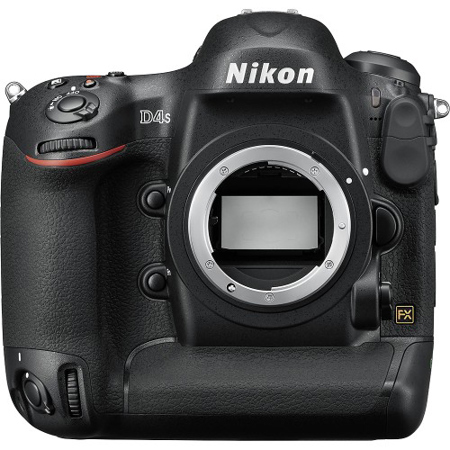
This time we don’t have a new Megapixel race. It’s a complete ISO madness 🙂
Today Nikon announced the new Nikon D4s (specs here at Amazon) which uses a new 16 MP sensor and goes up to 409,600 ISO. This isn’t a revolutionary camera. It has plenty of small improvements and a nifty price tag of $6,500.
Sony flagship:
Sony never had a sort of flagship camera like the Nikon D4 series or Canon EOS 1D series. And honestly I never got any realibale rumor about such a Sony Flagship camera that could comepte against them. Sony’s focus is on the development of $2,000-$3,000 Full Frame cameras rather than $6500 FF.
Would you really suggest Sony to make such a high End DSLR, pardon SLT, pardon A-mount mirrorless cameras? 🙂
0 Responses
First ! Anyway. If you need such ISO, i think you’re a bad photographer. Henry Cartier Bresson didn’t have 1 millions ISO. Word
with that logic hcb himself would be a bad photographer because he “needed” a 35mm leica, whereas Charles Dodgson (aka Lewis Caroll) only needed wet plates….
I see what you both meant. However these are extreme example. I never said it is bad to have high ISO on your camera. I’m also convainced about new techs features for our cameras. But still…. do you really think more than 400 000 are really useful ?
I would definitely agree that you certainly (obviously!) don’t need iso 409600/57° to be a good photographer, but to say everyone who needs it for his type of work is per se a bad photographer is a bit harsh, wouldn’t you agree? also I’m convinced that it is always useful to have a higher sensitivity, obviously for nightphotograpy (that’s the type of photography I personally enjoy the most (although not with a large sensor camera, just an om-d or rx100)) but also highspeed photography or ultra slow motion video…
Whatever is needed to get the right shot is what’s needed.
Lewis Caroll decried the new technologies as allowing the rabble in the room. He felt letting the everyman make pictures destroyed the art.
yes I know, funny isn’t it just like some pros feel about cellphonecameras…. personally I don’t agree I can’t follow the logic, how can something new make something old less good?
The answer today is marketing. Which works. Look at the hivemind like response when a new Sony product is announced and you’ll understand: people mimic what they see and what their environment dictates so quickly they forget to have a thought for themselves.
A real photographer doesn’t always get a choice of the conditions he has to work in… by your way of thinking why did we ever go away from pinhole cameras where people had to stay perfectly still for 10 minutes.
Well, that prototype from last years NAB could be such a thing…
Seriously – Sony should make such a high end sports model and giving some handful of them to well known sports photographers and photo journalists making sure the cams are to be seen and recognized in TV news and sports events.
Sony already has a camera which can do 11fps with continuous AF and metering….and it costs $700.
Does any one else hate the way battery grips look on cameras or cameras that look like they have a permanent battery grip? They make the camera look so big and bulky. Reminds me of a modern looking Polaroid.
This IS a big and bulky camera. All of the ones at this pro level are. It is purpose-built and does what it’s supposed to do best, and in comfort. Size, weight, looks/appearances don’t even make it in the requirements spec of these products. It is all about usability, utility, reliability and comfort for the photographer, who’ll be holding this for 6-8 hours with huge telephoto attached to it for example. All that matters are the end results.
Vertical grips are great but the only good one is from Sony. It keeps the viewfinder and trigger on the same level, both portrait and landscape.
The times wen I use a 3D or D800, I’m always ending up with the viewfinder against my cheek 🙂
It’s nice to go all day without needing to change a battery. Coming from canon, Sony SLT battery life was a big adjustment.
If the rumored A79 indeed has the ability to shoot 8 – 14 Fps with a APS-C 32 MP this would surpase this new Nikon on speed, but at high ISO !!!! thats the question , how good will high ISO be ???
I hope the high iso performance of the A79 is good, but let’s not fool ourselves. There is no way for a 32MP aps-c sensor to even remotely come close to a 16MP full-frame sensor when it comes to iso performance.
Question is: Are we read to pay $7000 for the A79 or Axx?
Another relavenat question is: how is the raw-compression? seeing some night shots online and from my A77 takes a couple of days ago, I’m not very happy with the artefacts in dark areas and around light sources surrounded by darkness
You saw night shots online from YOUR A77? Sounds like you’re making up a story and really have no experience with that camera.
If you could learn to read, you’d see the “and” in… “night shots online and from my A77”
And if I could learn to write, it’d after that be written “taken” instead of “takes”. The online shots I refer to are are those that Admin here posted about a couple of days ago, where they look at star trails
I’ve taken many (200-300) night shots using my A99 processing the the raw files in Photoshop CC and Camera Raw converter and the results have been excellent. I have experienced no unusual artifacts and suspect there is another possible cause other than the raw files. Sorry for the misinterpretation of your post Emir.
I always tell people to use the SR converter out of the box if they want to see RAW processing that is less likely to have artifacts. There are times when Adobe’s little sidecar hack destroys ARW files for fun.
If you don’t want to use SR then use Capture One. Their program does a much better job in ARW conversion than Adobe products.
dyna, thanks for your reply. Do you mean the Sony Raw Converter? To use that one to export to tiff-files used in e.g. Lightroom?
Yeah, that’s the one. And, look, it’s slow. It’s unrefined. People don’t like it’s GUI, all of which is true and understandable but the fact remains it was written for your file and Adobe was not. Adobe can’t be bothered to license your file so their “representative” file is often simply NOT representative. If you want a more powerful tool with even greater control, as I said, Capture One is another good alternative.
I’ve noticed lightroom loves to add artifacts into my shot’s from my a7 at times which pisses me off to no end especially when people bang on about how “great” it is.
The real reason to make a $6,500 super-pro camera is not to sell a bunch of them. It is to show people how good you are, and that you can be taken seriously. That camera comes to represent your whole brand. When people buy an entry-level Rebel, they are buying a little piece of the 1Dx. When people buy an A58, they are buying a little piece of… what? The A99? It’s a great camera, but it is not a flagship.
1DX and d4s are specialized cameras for sports and night photography even its good for night seen documentary style filmmaking but for anything else you will need higher megapixel camera
something like A7r 😀
BS… you don’t need 24 or more megapixels to get good shots. I can show you shots taken 10 years ago with a 6 megapixel camera that you could tell a part from a picture taken today with 24 megapixels… because when they are printed at normal sizes you can’t see the difference in detail. So unless your trying to shoot billboard the pixel war should be over.
Agreed that you can not tell difference between resolutions on small prints.
Disagreed on that you don’t need high resolutions. Cropping is great, especially for wildlife photography.
Agreed and not to mention the extended color palette which makes a huge difference in post production. Ask any sky, skin, or snow specialist.
409,600 is not an iso value for iso you also need DIN, it is just asa, anyway maybe we should switch back to DIN ore something entirely new (since digital sensors are not film anyway) 409600 would be roughly? 57 DIN, a much more manageble number….
The 409,600 is just a headline figure. How many photographers will actually use that figure, but much more importantly, what will the image quality be?
It’s actually relatively simple to produce such a high ISO number. You just increase the amplification factor (either in the analogue stage, or digitally). However, it will still be constrained by the quantum nature of light itself. Once you only receive a few hundred photons in each pixel (which is what will happen if the light conditions force you to go to 400K ISO), inescapable physical barriers, in the form of photon shot noise, will limit dynamic range to only about 4-5 stops, even if you can get quantum efficiency near 100%.
In short, the headline figure is marketing stuff. Compare the performance at something more sensible – say 64,000 ISO. Which, I should emphasise, is still miraculous territory for those of us raised on film.
It would help Sony enormously if they could get over 1000 ISO without looking crap. Hopefully they will start thinking about photography with their new DSLR’s rather than gimmicks and video.
I’ve been hoping for that for a while… and still do.
A camera like this is great promotion for the brand I believe.
Did you ever heard a camera called a99? or even a58? I thought they are good at low light situation. Even my a77 works well at ISO 1000 or so.
Like it or not, video is a key dslr feature now. Like it or not, all Sony SLT / mirrorless cameras are shooting a constant video stream to feed the EVF. The ability to save the stream as a video file does nothing to diminish still photo abilities. It is not either or.
There are many benefits to the electronic viewfinder, like
being able to focus a manual lens as easy or easier than on a film camera (zoom and focus assist). I
just purchased an 85mm 1.4 Samyang lens for $250 that is nearly as good as a
$1500 auto focus lens. It works great.
There are many benefits to the electronic viewfinder, like
being able to focus a manual lens as easy or easier than on a film camera. I
just purchased an 85mm 1.4 Samyang lens for $250 that is nearly as good as a
$1500 auto focus lens.
I like the EVF too. Manual focusing on it is much better than on canon dSLRs.
My a900 is good to 1600 ISO, my NEX 5N better than that and my a99 better than that. “[W]itout looking crap,” as you say is a crap statement.
@James
I still use the A850, on a regular basis, with f/2.8 lenses or better with excellent results. I doubt @Kennie has used a FF Sony camera.
The second you shoot A99v or A7r over 1000, you’ll change your perspective quickly. I work at 4000 commonly on my A7r with zero hesitation.
@Kennie there is no way you have either owned or used an A99 or A7r
The A99 can easily perform up-to ISO 4000 w/o any issues. The A7r produces excellent images at ISO 6400.
You can shootin complete darkness and still get a bright picture… 🙂
Yes, Sony needs a solid $4,000 to $5,000 camera! They need a reliable pro level camera that the worlds top nature, landscape and sports photographers will want to use.
I’ve stuck with Sony over the year because I like their tech (EVF, image color, IBIS, etc.). But when I’m out shooting in the field, I often find myself wishing my camera had better image quality and performance like the Nikon D4 series. Minor the huge batter grip of course.
I don’t know. There are a ton of the world’s top nature and landscape photographers that use the A7r as of this writing. There are studios up and down both US coastlines that are devoted to the A99v and the A7r. There are plenty of working pros using the gear. There are less of them because Canon and Nikon have 40yrs of industry backing up their users’ investments but Sony isn’t doing poorly by comparison, truly they are not.
Also, the fact is that many of these working pros you speak of are now using multiple systems to meet their needs. And the Sony A7r in particular met a great many of those demands.
At 49%+ of the mirrorless marketshare, Sony is doing well in the one market segment that can be seen as a growth area. It’s slowed down after the initial steep curve of adoption but it isn’t slowing nearly as badly as DSLR.
Sony have a plan. Not everyone will be along for the ride but then, they’ve never needed that. For better or worse.
Although I would strongly consider such a purchase if Sony did release it – my answer is no.
It would be pointless for Sony to release a 6k+ pro body without first addressing the lack of a profession ecosystem of flashes, wireless triggers / accessories, RAW lossless compression options, battery life, service / support and firmware. At the top of the improvements would have been AF performance but maybe Sony has patched that hole with the advent of the a6000 ospdaf.
Releasing a pro body like the 1dx before working on the ecosystem would be putting the cart before the horse.
Cameras like the Dx and 1D series are holdovers from the film days and, in particular, the Nikon F5. Back then, form necessarily followed function – the look, size, and design of the F5 was dictated by the space and battery capacity necessary for the motor drive, as well as for the motor drive itself. You have a generation of working photographers who assume that the only way to get a fast shooting speed is to have something that looks like an F5.
Within a decade, many of these photographers will have moved on and taking their place will be a generation of photographers who cut their teeth on compact SLRs, mirrorless cameras, or maybe even iPhones.
This movement is already starting to happen in the pro video space. Ten years ago, I doubt anyone would have taken even the humble GoPro as a serious videographer’s tool and yet what would Breaking Bad have been without the numerous shots from the POV of inanimate objects?
So should Sony make their version of an F5? I think they might as well make their version of a Hasselblad 500 or Linhof Technika while they’re at it.
I was with you until you mentioned a GoPro as a serious videographer’s tool… GoPro is great if your a blogger or some Youtuber trying to shoot from your skateboard helmet, but the quality of the output is nowhere near the quality a serious videographer would want or need.
That depends entirely on the wants or needs of the videographer. The advantage of the GoPro is that they’re rugged enough to capture footage in conditions you’d never expose more expensive gear to.
If you’ve ever watched more recent episodes of the show Mythbusters (Discovery Channel in the US), they get tons of footage from GoPros that make it into broadcasts that would ordinarily be unachievable with conventional cameras.
So is the camera good enough for “serious videography”? It’s good enough for a popular show on a basic cable network, which is more than I can say for any footage I’ve ever shot. 🙂
But if you’re still not convinced, then replace “Black Magic Cinema Camera” or “Canon 5D Mark II” in place of GoPro.
I have one, the quality is ok, but you can´t compare it to a pro videocamera or a dlsr the image. The video is flat, mushy, no dynamic range, noise creeps in low light, tiny sensor etc.. you need to do a lot of post to make the image acceptable in a big screen.
Minolta (now Sony) built the Maxxum 9 in response to the F5 and it was generally considered superior by reviewers of the day. I say best SLR ever made.
If Sony announced such a camera, that would give a huge boost to the Sony’s imaging brand and crush any A-Mount-is-dead rumors once and for all.
And it wouldn’t sell anywhere near enough to support the marketing that would be required to sustain it. Sad. But true. And there are no A-mount is dead RUMORS. There are only A-mount is dead CRIERS. They are not the same thing. Not by a long shot.
Cameras such as this are not made to sell well and bring in profits.
For Nikon they most certainly are. Nikon is the little camera maker here, with little to no other portfolio to speak of and they have been in trouble of late. This is not the camera that will save them, and the fact that it continues their pace of refinement instead of innovation… that’ll make a few of the Nikonians happy but most of them will be wondering why Nikon can’t just accept the change and move forward, as their own CEO and Product Development people admitted only a month ago.
I think it would, There are plenty of A850, A900, and A99 users that would likely upgrade to a more professional camera.
Sony just has to produce and sell a 36mp A99 variant using a similar form factor (built in battery grip) that’s similar. Call it the A99XL. There is no point in designing a camera from the ground up for a small niche.
Sell it for $4999.99 with a 24-70mm f/2.8 Zeiss. it’ll sell.
Every system which wasn’t strongly linked to the professional segment… failed. Like Pentax, Minolta, Kodak… Olympus survived thanks to a big and professional range of lenses and a great small professional camera. Even with the smallest sensor systems cameras. Sony is doing a poor job with lenses, sadly. Must change directions….otherwise will fail.
Pentax 645 and 67 were excellent camera systems that were strongly linked to the pro segment.
Minolta had the Maxxum 9000 and prior to that, the XK and XK Motor that were strongly linked to the pro segment.
Kodak films had strong links to the pro segment for decades.
Then there’s the long list of companies and brands that have failed these days despite their strong links to the pro segment: Rollei, Mamiya, Contax, Yashica, etc.
Canon and Nikon are successful camera companies and they have a strong presence in the pro market. The former doesn’t require the latter and if you look at the history of these two companies, you will see that they achieved the former long before they achieved the latter.
Things are a lot different between then and now… pros aren’t the only ones recognised as taking good photos anymore. The trick is to reach the widest audience. Why do you think big camera makers (e.g. Canon) are giving up on low end cameras? It’s not because pros use smartphones… we know that much.
Sony officially started making mirrorless a real competitor after they released the A7/A7R. It will take some time to win over stubborn Canon/Nikon old timers who took 25 years to master a SLR but everyone already knows that mirrorless will be taken up by a large number of pros in the coming years. With Nikon’s failure in the serious mirrorless market, Sony is number #1 and is guaranteed to be in the top #1 or #2 position. The other will be Canon which is the only other full-frame-capable manufacturer who can seriously punch back with their own at any time they decide to enter, especially given their tech (dual pixel AF) and the well developed range of tele lenses that really don’t require a redesign for mirrorless.
No, the investment would not be worth the return since Sony has no real professional services to speak of and getting the news organizations of the world to change would just not happen. they are much better off spending their investment dollars in continuing to innovate rather than copy.
I need ISO26214400 to shoot stars by handcarry
Nikon knows how to build a real pro camera. Are you paying attention, Sony?
I’m sure that Sony has torn apart and inspected the Canon and Nikon pro cameras and knows exactly what the technology consists of. Sony could easily build a camera at that level if they felt it made business sense.
This camera is a joke. Its just camera with a built in hand grip, and an outrageous price tag. Its designed for people suffering from little camera syndrome. I’ll wait for the A99 replacement it’ll probably be more versatile, at one third of the cost.
I’m pretty sure Sony (Nikon’s FF sensor supplier) will be selling a camera that is equally capable in the near future.
Maybe they can launch a 36mp A99 variant with the same form factor, and call it the A99XL
Maybe Sony should sell a A7r variant with a built in battery grip as well called the A7XL, and charge another thousand or so bucks.
It is pretty much irrelevant whether Sony made a camera
that was just as capable beyond the small pro Sony user market {
compared to Canon or Nikon} . There are other more critical factors
including in this niche the choice and availability of high end long
telephoto glass and critically a true worldwide pro service .Sony has
neither.
There is no way that a seasoned sports/nature
photographer with $10,000s worth of Nikon lenses would consider jumping
ship.The D4/1DX type bodies are designed to be ultra durable work tools.
The A99 is far more arguably an overpriced gadget laden camera that sacrifices image quality .The raw files from the A99 are poorer than their rivals at high ISO.
The truth is Sony can hardly compete barely compete in the
low-mid level DSLR market { not for lack of quality } the evidence of the dramatic decline in Sony’s DSLR sales and market share is clear evidence of this.
Its the same with current Sony users like myself. I have well over $10,000 worth of Sony, Minolta lenses, and bodies. Switching to any other platform would be expensive and pointless. A new Sony camera like the D4s would have to be designed, and marketed to current Sony users upgrading from the A850, A900 or A99.
Sony has a Professional Support network for its video cameras. I really have never understood why they haven’t extended this service to cover Sony’s range of Full Frame Cameras.
However rumours are beginning to circulate that this is in-fact happening and the service will be inlace by the end of the year. Sony Pro.
As for ultra durable the A99 is a step back from the A900, however it is more than adequate for 99% of applications, and has retains a excellent price performance ratio.
These are pro grade bodies with genuine tank like build quality. The A99 high ISO is only just better than Nikon APS never min the FF 16mp sensor The DF is more than a full stop better than the A99.
http://www.dxomark.com/Cameras/Compare/Side-by-side/Nikon-Df-versus-Nikon-D5300-versus-Sony-SLT-Alpha-99___925_919_831
The type of photographers who buy D4S/1D will not even look at the A99 , for all its gadgets it lacks in critical areas. Poor telephoto choices , no professional service, poor C-AF/tracking. Then there is pricing the Sony A99 launched in the UK at £2500 body only . The “advantages” of the A99 are anything but when compared to serious pro options. EVFs are not their yet , C-AF/tracking way behind the best , add in the poor { for a FF } high ISO
Most A99 users wouldn’t consider a Nikon D4, we’re two different target audiences.
For the price of a D4S I can buy a A99 with two Zeiss lenses which is probably the better of the two deals.
The A99 has better Dynamic Range, Colour Depth, and a higher overall DxO score. Its telephoto choices are more than adequate for professional use. The Zeiss lenses are excellent, and the G-Series perform well within expectations.
Yes the A99 was overpriced when launched, but it can now be purchased for $2299.99 CDN which is a bargain for a camera with its superb levels of performance.
Last time I checked IQ was the what the primary motivating factor for camera purchases.
“Last time I checked IQ was the what the primary motivating factor for camera purchases.”
You would think so but Canon in its huge APS market have been using the same { mediocre } sensor for years.
The A99 has poor high ISO and C-AF. The D4S is a specialist tool where high ISO and high end C-AF/tracking are what matters, along with superb build quality and access to a huge choice of native mount AF lens/flash/accessories.The professional services is a major weakness of Sony . If Nikon users want the best DR, color depth and high resolution they have the D800/D800e to choose from. Regarding choice with telephoto lenses I would debate that they Sony options are less and cost significantly more the Nikon 300mm F2.8II + 500mm F4 costs £2000 less than the Sony pairings. Your suggestion in another post to look at used Minolta lenses may well be cheaper but seriously decade old lenses are not the first though for pros
Your right a direct comparison of the $2299.99 A99, and a $6499.99 D4s is really pointless. They’re obviously designed for two different purposes.
Sony does have some excellent glass, but Minolta does too. Good glass is good glass no matter how old it is, and Minolta has lenses that can be had for a fraction of the cost of the current Sony editions.
As for lens purchases, it really depends who you work for really. I’m allowed to buy used lenses from a store like KEH, because I can claim the lenses at the end of the year along with the rest of my expenses.
For example I bought the Minolta 300mm f/2.8 in mint condition for a quarter of the price of Sony’s new model.
Sometimes it just makes more sense to buy second hand or rent specialty lenses.
You know, if Sony had released a D4 and then a D4s camera, Sony users would have bitterly complained at the low resolution of the sensor, and the lack of truly forward progression where apps are concerned or they’d have a problem with its lack of dials (a comment I hear on here daily) compared to Fuji, and that the viewfinder isn’t as good as Olympus… no, sincerely, it wouldn’t matter.
Back when I worked for Olympus, during the pre M4:3 days, when we were leading the charge in optics designed exclusively for digital, and our menus were being borrowed left and right by the competition without any credit from reviewers, the color accuracy and blah blah blah we used to joke that Olympus could invent a camera powered by its own perpetual cold fusion device with ISO 500,000 and a global shutter (among many other features usually grinningly referred to during fits of team drinking) and all we’d hear is why the sensor was so small.
It won’t matter when Sony releases an amazing camera (they’ve released several). All people want to do is tear them down. I understand the frustrations when a specific camera doesn’t meet a specific need (I personally have about zero use for the D4s so where’s that put it philosophically for me? It means it doesn’t qualify as MY professional tool so does that undermine what Nikon has going? Not a bit) but no one camera will ever meet all the needs.
Photographers continue to be the most entitled bunch of brats outside of my daughter’s middle school cafeteria.
You’re probably right!
What annoys me with Sony is that they are run by the marketing people. They make one TV for those who want 3D, one for those who want ultimate picture quality and one for those who appreciate sleek design. They don’t understand that’s the one and same person. Same with cameras; One has good controls, the next one doesn’t. GPS on some point & shoots, but not on mirrorless cameras. Why? Doesn’t make any sense to me. I’m not asking 70 MP full frame with 149 FPS for $249. But this is just me.
camera groupies/gearheads are no different than guitar owners—99.9999% have never been inside recording studio, yet they all type like they can design a better Strat or play like (or with) Clapton.
You’re totally right!
I’m on of those gearheads putting too much money in this camera stuff even though I often shoot in auto mode and probably couldn’t tell the difference between a photo taken with a good point & shoot and a $6000 full frame – but then again I’m paying for my stuff. I could also take photos with the iPhone that costs less than a 16-70mm Sony (Zeiss) zoom and has a touch screen, plays music, surfs the interwebs, has a burst mode and automatically adjusting flash color, is small, has photo editing apps, can share photos to Facebook, got GPS, calendar, email, app to pay my bills, free messages, video calls, book and games. Considering all this, I believe it’s justified to demand good controls and feature set from a device that just takes photos.
PS. Do you use your car to it’s true limits? Do you use all the features and processing power in your computer?
i think we have to wait… maybe the new “hybrid-mount” is a real flagship – including a special pricing
=> 32 MP, 5-axis-IBIS, z-shift, a-mount, e-mount… 4999$ :p
Sony can’t compete in this price range becuase they don’t have the support demanded by professionals. I think it’s funny though that Nikon is still banging out that 16MP sensor though. But, I’d rather have excellent performance out of a 16MP than a noisy 24MP sensor.
My words.
They are sticking with the 16 mega pixel sensor because the
processor and memory write circuits don’t have enough throughput to handle the
11 FPS using a 24 or 36 mega pixel sensor. They would use a higher resolution if they could, and I think many were expecting to see an improvement.
Where did you get that? 36 Mp with 11 FPS requires only 1.2 GB/s bandwidth, your iPhone does 9 times that no problem.
5.04 GB/s and keep in mind that data is being processed (number crunching) it not just straight data transfer like a Cat6 cable.
a6000 does 11 fps, and it has 24 mpix … I think Nikon stick to the 16mpx because it is enough, and because this camera is aimed for a buyer segment that looks at the limited mpx count as more “serious”, plain marketing in other words.
The buffer on the A6000 fills up at about 20 frames, where the D4S is closer to 90. 20 frames wouldn’t be usable for a sports photographer, that would be only a two second burst then the waiting time for the buffer to clear.
for that price difference even sony could throw up a bigger buffer. 60 frames at 24mpx would still be impressive
I agree, but I don’t think Nikon wanted to make any major changes to the underlying hardware (processors, data buss etc) saving that for the next new model. The D4 to D4s was more of an enhancement or tweak. Still an impressive camera.
The A6000 is only a APS-C sensor, like the A77 it can output very fast, 12 FPS for the A77, the A99 with the same pixel count and processor but FF can only do about 6 FPS.
Bit contrary there Thomas you think “its funny that Nikon stick ” to the 16mp sensor , however you would rather have “excellent performance” from a 16mp sensor. In its specialty niche the 16mp remains the best high ISO sensor on the market.Until we get a genuinely new technology in sensors I think any gains will be small from one model to the next.
I don’t think there’s anything funny about it. For such a high end camera I would think people would expect 24MP at this point. I guess not.
Well, I’d rather stick with the 24MP sensor and control the light/exposure time. If I was a sport photographer I’m sure I’d want a “dedicated” low res/hi speed camera. I’m not, thus I feel my A99 suits me better.
A99- my next camera. Can’t wait.
Absolutely not. Sony doesn’t have the support needed for sports professionals and of course, the price tag. The 500 f4.0 has such a high price only Sony loyals and fanboys would pay for it. And the a99 at launch was priced higher than the competition so I would expect such a pro-grade camera being priced 1000USD above competition with the same or lower specs than Canon or Nikon (just like it happened with the a99).
First, Sony need to offer a 300mm f4.0, 400mm f2.8 or f4.0, a 600mm f.0, 800mm f5.6, 70-200 f4.0 and lower the prices of Accesories (high end accesories from canon are priced lower than Sony ones and offer more features).
They need to make A-mount lineup attractive first then promote it to professionals with a high-end APS-C and FF camera
The A99v at launch was designed to compete against the 5DMkIII and the D800. The D600 has not been nor will it ever be the competition for the A99v. So, at launch, the A99v was cheaper than all its competitors and caused the constant $200 instant rebate Nikon has attached to the D800 since.
As for the 500mm f/4, man, Nikon’s 500mm f/4 and Canon’s 500mm f/4 are stratospheric in their pricepoints as well…. and then put into place the 2.8 offerings and their respective 200-400 lenses… all of them are amazing and all of them are the price of a car. Are you saying only Canon or Nikon fanboys or loyals would purchase these lenses as well? I don’t see the logic. If you need it and can afford, it you buy it. That’s gear maintenance 101. There’s no fanboy there. And, yeah, it’s loyal. Because A-Mount.
Sony’s A-mount has been attractive to many working pros (most of whom picked up Sony thanks to the Zeiss lineup which they deemed interesting enough back when it was merely 4 Zeiss offerings). It’s not a system for everyone but no system is. Arguing otherwise is futile, while saying that Sony isn’t competing is also a misrepresentation.
You can buy a full frame Nikon and 500mm f4 with thousands left in change compared to the Sony 500mm on its own.
I agree, Sony’s pricing on the long lenses is insane. There are some bargains (relatively speaking) on the used market for Minolta glass which is also very good quality.
I’m slowly buying a trove of Minolta G-Series lenses to insulate me from Sony’s outrageous prices.
Again. At $8500 can you agree that the argument remains irrelevant? Only fanboys and loyals would buy a lens at this price, correct? Or the 600mm at $10.5k? Which is the same price as the Canon 500mm II? I just don’t see the relevance unless you’re saying that these lenses mean nothing to 95% of all new photographers looking to break into the industry because they simply can’t afford any of them. I mean, by this discussion, no one would buy anything but Panasonic 100-300 M4:3 and Olympus 75-300 ED M4:3 because isn’t that 600mm equivalent anyway? And at far, far less than $800 each! It just doesn’t compute, is all. The price of the 500mm f/4 could very well force someone to choose another system and that system, given the options, would indeed be Nikon because Canon’s is also “too much.” But when the price of the lens = the price of what you drove to pick the lens up in, I think the point becomes rather moot for the majority.
500mm F/4.0 or larger lenses are the kind you rent only on those occasions when you have no other choice.
If you properly, plan, your jobs you can avoid this kind of pain in the pocket book.
$4000.00 or more is allot to pay for a specialty lens.
Must be the people you know because there are lots of indies and non-pros who buy Canon/Nikon lenses over $4000 each.
Rental prices are also quite high, so it makes sense for both pros and non-pros alike, as long as there’s the capital.
No just professionals, and business owners with common sense. A specialty lens that is rarely used is not worth the added expense.
Love your assertive confidence. I can’t help but facepalm.
I hope you enjoy palming yourself. Bye.
How can you say such stupid generalised things without worrying about looking like an imbecile? I know… you can always register a different user name and come back.
@genotool
Your obviously an irritating little TROLL, who’s sole purpose is to annoy forum members whose opinions differ from yours. Maybe you should find a Sony camera form for immature adolescents. It might be a better fit for you.
Bye genojunk
Or maybe you don’t speak English because asserting that indies and non-pros don’t buy lenses $4000 or over is definitely not a matter of opinion. According to you I’m some agency or some pro photographer.
You need to stop talking about a subject you clearly don’t understand ROFL
Now that you’ve managed to lose all credibility with the readership of this Blog, through you immature retaliatory remarks maybe its time for you to grow-up, and go away.
I stand by my belief that $4000.00 or more is allot to pay for a specialty lens (like 500mm F/4.0 or larger), and not worth the added expense.
Bye genojunk
You definitely don’t speak English. Credibility is not something that one loses by being rational ROFL You on the other hand have lost all credibility because you were slammed for your ridiculous statement that independent and non-pro photographers don’t buy lenses at prices $4000 or over and for your weak attempt at changing the topic by name calling. Even for the latter you only have the wit of an 8 year old… get in with the times LOL
Learn the subject and don’t say stupid things. It’ll do you much good.
@Genobaby
Are you over yourself yet? Are you trying to impress anyone with your poorly written inflammatory remarks? Clearly its not working. Has anyone liked any of your posts yet? I didn’t think so!!!
Nobody likes the know-it-all. Nobody appreciates a Self-Appointed Expert. Pseudo-intellectuals like yourself are a dime a dozen these days.
I doubt your a qualified photographer. I doubt you possess a Degree in any Multimedia related discipline, or even something as simple as a Certificate in Photography. I doubt possess and credentials at all.
You need to grow-up. You need learn to listen to people who’ve are both educated, and employed in media production. You need to find another age appropriate blog where you can communicate with other like minded peers.
Don’t bother replying. I’m done wasting anymore time.
ROFL… just as I thought… you are here to get validation from general idiots by expecting them to “vote” on your one liners.
Certificate in Photography? LOL It’s clear that you can’t even click on a username or google and find out a bit about them. I’m a scientist and that’s what I my education is in. If you graduated from high-school you’d figure that out by looking at the details behind my photos and the topics I write about on my blog.
Even though I wouldn’t wipe the dirt off my tripod’s feet with your certificate or your job designation in a field of knock-knock jokes, your job or even my job has nothing to do with what you said. You’re making ridiculous generalised assertions saying that independent and non-pro photographers don’t buy $4000 or more expensive lenses. I for one have a lens that I paid around USD 6000 for.
I certainly don’t have a certificate. I earned a B.Comm, long before you were pushed through elementary school. I work for a large marketing firm in Ottawa. We hire photographers as required.
ROFL….Your an amateur with money to burn, or a liar.
You obviously don’t work as an independent photographer.
Most quit photography within two years after graduating from Algonquin College, here in Ottawa, because jobs are few and far between. Competition is intense. Most independents can barely feed themselves. So lenses that are over $4000.00 are normally rented and rarely owned.
Non-pros (possessing the correct credentials, but not employed in the field) or independents, don’t buy $4000.00 lenses, they rent them.
ROFL….You are neither a non-pro or independent. Your an amateur with money to burn.
B.comm… that perfectly explains the lack of logic and consistency in what you say LOL
Personally I’d buy the 600mm Minolta f/4.0 instead. Plenty of them can be found in mint condition for a fraction of the price ($5899.99 or less @KEH).
Actually when the A99 was released it was priced right along with the competition. After that The D6 and D600 came out. But the A99 is a better featured camera and still cheaper than its real competitor 5DMKIII. But no.. Sony doesn’t have the user base or lens base for a $600 Sports camera. Not that many customers to split up.
Sony makes fine cameras for most users. What they need to make now are more good lenses. The a7 is a very compelling camera. But not without a wide-angle zoom, macro lens, 24-120mm-type general zoom, etc.
Absolutely – Sony needs a high-end, pro-spec’d flagship camera.
We need to see more pro’s using Sony gear. We need to see more award-winning photos taken with Sony cameras (World Press Awards, National Geographic, etc.) That’s the only way Sony will be able to join the ‘big leagues’ and get the coveted reputation of a pro camera ‘brand’.
And that *will* have an effect on the sales of *all* Sony cameras. It’s the type of marketing money can’t buy. Look at how much Nikon and Canon rely on their brand image.
But not yet.
Sony still has a few kinks to work out (both with the system, as well as their support). Maybe in about a year or two. Just in time for the summer Olympics.
Wether Sony should or shouldn’t do it I don’t know. I do know I wish so badly that they would, as it would most likely keep me a sony user forever, I’m currently right on the fence. Loving a few things sony, but really needing a beast of a camera that is weatherproof and can’t crank the iso through the roof for a wildlife cam to take anywhere and do anything.
I don’t know if this would be a marketable object for them however because I doubt they could take sales from a ton of canon 1d/nikon D users. It seems most of these users will already have such a huge investment in their glass that they would shy away from switching over to a new system. I do think that they need a flagship beast of a camera to be a viable option to compete with canon and nikon as a full and complete professional camera source, but Sony also needs a lot of glass to do that as well that isn’t out yet. The quality of materials is there but the sheer quantity and accessibility of gear is not as far as I can tell.
I simply think that most sales for a flagship camera would only come up from already sony users, most likely those itching to get a flagship camera and looking over the fence as canikon users drooling. While this may keep these customers, I’m not sure that will be enough income to actually make the project worthwhile and not a loss. I can’t see the big guys coming over and buying into a system on the first flagship camera when they also have to drop over 10 grand for a 500/4 (I do understand they can go minolta, but most professionals will want easy servicing options). The ordeal of selling a huge lens set up that these pros will already have and then rebuying all these comparable lenses (of which the sony used market is less saturated than can ikon) will be a huge obstacle. Plus, it seems fit that most big time photographers are doing it for a living, so no one wants to completely invest in a brand new flagship model and risk it being a crapshoot and ruining their business/lives/reputation/bank account.
Really wish it would happen though….
6 grand on a Sony camera? Thanks but no, thanks.
Do the cheaper cameras properly first. Fix the bugs. Keep it up for 5 to 10 years. We might talk then.
Isnt Sony Pro/broadcast abiut to release a new very high end A mount camera next month.
Dont know if thid will be video only or if it shoots photos too.
Im strongly suspect it sill be easily over $3,000 or $4000 bucks.
Sony has plenty of experience in tge high end pro market. They have video cameras that cost more than a new BMW car.
Sony is working hard to be the #2 camera maker in the world…
Sony can never become #2 unless they also have pro bodies, more pro lenses, and better support and rental for the pro market.
Why don’t they? They have a chain of Sony stores around North America, and a modern distribution system already in place. They should really take advantage of it.
Sony Stores – What is going to happen with them with the PCs and TVs gone. Our local store only has a small portion devoted to imaging. I would guess 70% goes to TVs and PCs. I wonder if those stores will still be around after the TVs are gone.
To become #2, Sony needs to improve their customer support, and improve it a lot. Who would invest $6-7k into the pro body from a manufacturer, which doesn’t support its customers? I wouldn’t. If you go to NR website, you’ll hear how many Nikon shooters complain about Nikon’s customer support, warranty policies, etc.
It is apparent to me Sony is struggling to support what they have on the table and should stick to a game plan of popular high-volume bodies or a new market like the FE bodies where they face no direct competition.
That said, if they want to go high-end pro, rather than go head-on against Canikon in high-end pro DSLRs, they might do better applying their engineering talents and economies of scale into a sub-$10,000 (body) MF system for pros. I suspect they could compete well in this space given their expertise in sensors and I don’t think MF users would expect a huge number of lenses be developed to support it.
I think Sony will provide the tools soon enough. They’re probably shifting the required resources from the recently axed divisions (PC, LCD TV) to the imaging division as we speak.
Sony needs to launch a mirror-less 54mp 4K, Z-Shift A99 variant with a larger body like the 4Ds to satisfy the needs of this target audience. Its all about having the biggest baddest camera available for the sheer bragging rights. It doesn’t have to be profitable, only a few photographers are going to lay down the cash for this Camera (not me). It just has to be better than the competition.
It’s called the halo effect. Car manufacturers do it. Think Lexus LFA or Nissan GTR. Nobody buys them, but the fact that they’re made gives the brand a better name.
I agree 100%
I’m a piss poor consumer because all I’ve ever seen is waste. Admittedly beautiful waste but waste nonetheless. The fact that the 1DX is an amazing camera has done nothing to dissuade me from NOT buying a Canon… I personally have never seen one and made assumptions about the rest. It never ceases to amaze me that so many people do.
I don’t mind living where you live… very common to see GTRs here on the streets 😀
Yeah a high spec pro camera is a showcase of the pinnacle technology of the respective company….From a marketing perspective it’s invaluable.
This rumor is not about competition, it’s about form factor. Just a reminder that such camera is coming.
Its been rumoured that Photokina 2014 is going to be filled with some serious game changing suprises.
Honestly, I think it’s sensor. It is the final bit nobody can do right. The rest is quite expected.
like the A6000
Sure, Sony will make a Pro camera and everyone will sell their Canon and Nikon gear, because they like gadgets more than putting food on the table. Sony could decide to compete just to demonstrate that they can compete in this market. They can use their pro video support to also support such a system, but with the parent company in the red, I doubt that they can afford to lose more money on a show horse.
Pros or even Semi-Pros aren’t going to sell their systems because a fancy new camera comes out. Most of us have tens of thousands already invested in glass, and switching would cost thousands upon thousands. Canon, and Nikon know this, and Sony is only beginning to catch on.
We make it simple for ourselves – We have Nikon, Canon and Sony
Based on many of these comments, I wonder how many here actually make a living at photography … or are just “armchair” pros?
Professionals usually have a large investment in lenses and accessories which makes switching brands a bit difficult … add in how long the economy has been depressed, and the prospects get even slimmer. Many pros also have established sales/service ties to the company in some form or another.
While a $6,500 body may seem a stiff price to pay, these type cameras are built to sustain high volumes of work day-in and day-out … and more importantly, are proven as such.
Unlike Canon or Nikon, Sony has neither a built-in specialized user base that is vested in their brand … nor do they have a professional network to support them … nor are they a system proven over decades of performance.
Some years ago I did make the switch to the Sony A900 for my Wedding&Event, Portrait, Corporate Studio … it was a maverick move as most wedding shooters use Canon (thanks to the 5D), followed by Nikon (who was slow getting to FF). My gamble has turned out just fine, and I continue on with an A900, A99 and now a A7R.
Detractors should be more tolerant, Sony is a relative newbie, and is finding their way. I’d say the whole mirror-less category is a good foot forward, and I’ve already used the A7R for paying work to good result. Other Pro friends have done the same. I affectionately call it :”Mighty Mouse” and it most certainly has saved my shoulders and back a good deal of stress.
Marc Williams
FOTOGRAFZ, LLC
Great write up Marc! It seems the photography world is one that is deeply routed in brand history and development.
That certainly explains why so few pros are tempted to jump ship. As an amateur, I know I could recoup a reasonable chunk of my investment through Ebay, but I can see that being a non-starter for a pro who’s heavily invested in a system. Factor in Sony’s lousy system support and feeble customer service and they’re not exactly going to make in-roads into the pro market.
On the other hand, I rarely see press photographers shooting with anything higher spec than a 5D iii, so that might be another reason for Sony to steer clear of releasing a £5,000 body…
Well put, Marc. The A7 and A7R seems to have generated more interest from Pros than anything Sony has ever done, and from a wider variety of pros at that.
Trey Ratcliff, Gary Fong, Philip Bloom, David Taylor-Hughes, and Nitsan Simantov are all off apparently making money with their A7/A7rs despite the fact that those around here are declaring mirrorless unsuitable for pro work (bearing in mind that for the armchair pros, “pro work” for some reason is always “sports photographer”).
Z shift will rapidly focus any Glass via adaptors Your argument is INVALID .
Well said!
малии. колко коментари за никоня.. тц тц тц. сбъркали сте сайта явно.
” Sony’s focus is on the development of $2,000-$3,000 Full Frame cameras rather than $6500 FF.”
сони и за 2к и за 6к ФФ да пусне никога няма да стигне нито Никон, нито Канон по каквото и да било.
“по каквото и да било” – пич, успокой се, Сони отдавна са задминали и Никон и Канон по много неща. Няма перфектна система, всички си имат своите предимства и недостатаци, но недей с такива глобални твърдения да плюеш по Сони.
yeah right, tell him!
haha. кви генерални изводи си си извадил, явно имаш някакъв проблем със споменатите марки. сори.. не ме интересува 🙂
VERY High ISO is pretty handy for making video:
http://youtu.be/b4ZIdu1adWg
That topic came expected, after Andr… ehh “PierreChris” posted about the 400k ISO hype on Dpreview.
16MP???? That’s a bit low for such an expensive gear, no?
Enables very fast image processing – allowing more processing power for af and noise control with a fast (and virtually endless) burst. Plus, most people who buy this will not necessarily need to crop into the image, because frankly, if you can afford this you can afford the right lens for the job…
Personally, I’d prefer a 16mp low noise sensor over a 24/36mp high noise sensor any day.
+1
That would be interesting if they were mutually exclusive.
http://1.static.img-dpreview.com/files/p/E~forums/53190550/7e70f8b8f5be4de388e40b2cec15d20b
I see what you are saying, but look at the advantages that come with the lower resolution… Once you weigh it all up I can’t see any other choice.
Umm not sure if you have heard but there’s this thing the kids are doing called resizing digital images… has been there since computers were able to do digital image processing. Might want to look it up.
So, a camera for people who don’t do prints
For prints, people would buy the D800 or even go Medium Format. This camera is not made with portrait and landscape work in mind.
A couple of interesting observations on the Amazon link.
One, the attention-grabbing headline is ISO of 409,600 which, of course, is ridiculous. The Amazon write-up mentions a much more modest “Noise-free shooting from ISO 100 to 25,600.” Don’t get me wrong, noise-free at 25,600, if true, is huge but it’s a far cry for the upper limit.
The other thing I find interesting is folks poo-poo this expensive niche but Nikon must be doing something right because Amazon warns customers “Due to high demand we anticipate being unable to fulfill all customer orders with our first allocation.” Not too shabby a start.
Amazon said the same for the A6000
I would suggest SONY go back to highend DSLR market but with new design. A perfect idea came to me is to adopt a dual-CMOS system. One CMOS locates behind mirror like traditional DSLR for picture shooting. Another CMOS locates above the mirror for viewfinding and video shooting. Optical viewfinder can be replaced by electronic viewfinder. Since viewfinder and video shooting do not require very higher pixels, we can put much more phase detection elements on the seconed CMOS to enhance focusing without affect quarlity of still image which is generated by the first CMOS.
That is 2008 news and implemented by Sony on the a300 series (CCD).
Hell, 2006. Olympus E-330.
Disregard the two lower posters. This technology is due for a resurgence. Sony has a spectacular 2MP sensor in the FS100, add that as an EVF and video recording sensor, and implement the really nice XAVC-S codec and I’d buy three.
Honestly, I’ve been waiting for Sony to release a full-fledged Canon 1D-level professional camera since I bought my A900, and I don’t see how they can substantially grow their market share without it. When a new camera customer purchases an SLR, they’re buying into a lens mount. Investing in the Alpha A-mount will likely feel risky to the masses without a complete upgrade path to top-level professional-class cameras. I bought into the system for the AF Zeiss glass, but I’m a minority. The mass pro market wants a secure long term investment.
Sony, if you are reading this, please don’t hold back any longer. The A99 could have been a dream camera with it’s image quality, but it was crippled by it’s memory buffer. Please, please, please release a pro-camera and launch a new professional support system with it. I will gladly pay $4-$6K for a flagship EVF Sony with unlimited buffer at 10FPS + with pro version of the AF in the A6000 that covers the entire frame and full weather sealing. Also, make it as easy to tether with Adobe Lightroom and Capture One as it is with Canon.
no evf, no peak focusing, no on-sensor IS but huge body, 11 fps as in a6000, only 16mp – forward into past with the nikon flagship camera :D.
Yep. That’s what Sony is thinking too and that’s why they never will gain any market share in pro photographers – they, just as you, have no slightest clue what pros need.
pro sector dies :). who needs to care about it by producing expensive gear that will become obsolete in 2 years. only mastodons like nikon or canon :). 16mp tells a hell lot about the “real high level requirements” of a “pro sectore” in compare to amateurs.
sony is pro? where is the pc-flashsync in the A7 grip?
A7 is not pro.
actually sony IS NOT Pro 🙂
Is there a difference to be seen on a photo taken by what you call a pro camera and a non pro camera. Generally, a Pro camera is that heavy stuff where you pay more to get less. D4 is a brick that makes low resolution photos that are sufficient for any newspaper page and that allows to work in low light without flash. If now it had a silent shutter system, it would be perfect for journalism. For the individual use it is too heavy, too expensive, too low in resolution, and those who buy it make it a religion. But, anyone has the right to waste his money the way he wants. It has what DF should have and it should have what DF has. The first are it’s features, the second it’s the pricing. D4 has all and is too expensive for what it has, and DF lacks all, except the sensor, and is too expensive for what it has not. It is as simple as that. Now, still, and I repeat it at every comment on those cameras, “it is not the sensor who makes the pricing, it is Nikon” with it’s recently acquired “follie des grandeurs.”
Should Sony follow this trend? Maybe, but you have then to decide if you sell 4 millions of units for 2000$ the box or just a 20000 for 6000$ the box. Much of a bit can make mach more than a little of much. GOD knows that since 2000 years, and it feeds quiet a lot of lazy fellows on this planet by collecting nickels day by day. All is not about what it is and what it looks like, all is about what you do with it, and here, Nikon walks beside it’s shoes since a 5 years.
I would buy a pro body, mirrorless, weather sealed, silent and normal shutter, a little bigger housing with Ibis, and a nice 24 mpix sensor that is remodeled and pushed the same way they do it with the aps-c 24 mpix in A6000. If it does good shots at 10500 iso, and sells for 1999$ the body, it will satisfy just anyone. And, I know Sony can do that without any problem. A7 is not pocketable anyway, so who cares then about 1.5 cm more in all directions when it has all one looks for, like GX7 body. And then, make A-EF mount fast primes in MF only at reasonable prices. I focus manually as fast as any AF and, I focus on the spot where I want to focus, not where the camera decides to focus.
Hope that Sony reads this message too and that it stays within their mind. And, stop this eternal pixel race. They bring more and more pixels while they have not even been able to reach perfection with the pixel count they had before. By the way, I do not want a 32 mpix NEX-7 replacement, if that is the intention, then make the same body with different pixel counts, 20, 24, and 32 mpix, so anyone can chose what he wants. I still wait a camera with a sensor cassette that allows you to change the sensor to your needs, a bit like digital backs on medium format. It must not be difficult to make a drawer at the bottom you pull out and replace by another one. I NEX-7 replacement will be 32 mpix, I am out of Sony. I do not even know by now if i will wait until the end of the year. Sony’s marketing policy gets boring.
Because pros complain there’s no Wireless flash triggers for Sony, but only use pc-sync anyways, right?
So who produced the sensor, Nikon by itself?
ISO 409,600 is a gimmick.
Useless. Perhaps not for testing the limits, but for all intents and purposes … useless.
Minolta made the terrible error of not having a real pro camera for long stretches of their history, and I would argue never really did. This was a mistake and cost them the number one spot, which they could have, should have had, on the early days of autofocus.
It is a must for the brand and its also right, to give long time customers a way up.
I would buy one.
Of curse they need to fx autofocus and flash issues. The current faults I both areas are tolerated by many amateur, but not the pros.