







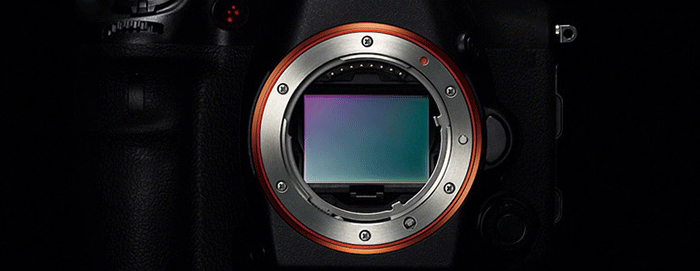
One of my sources told me that Sony developed a new 54 Megapixel Full Frame sensor. It has 2460 focusing points (no joke!) and the focusing area covers 78% of the entire sensor. The sensor is still very expensive to manufacture. But if Sony will manage to lower the production costs that sensor could find his way in 2015-2016 A and E-mount cameras.
Reminder: Plenty of new cameras and lenses will be announced in January-February. There will be A and E-mount cameras, both Full Frame and APS-C. Stay tuned on SAR 😉
—
Message to sources: You can send me more info anonymously by using the contact form you see on the very right of your browser. You can also contact me directly at sonyalpharumors@gmail.com.
For readers: Subscribe the RSS feed (Click here) and Twitter (Click here) stream and the Facebook fan page (Click here) in order to not miss any news!
—
Reminder (SR = Sonyrumor):
SR1=probably fake rumor
SR2=rumor from unknown sources
SR3=50% chance it is correct
SR4=rumor from known sources
SR5=almost certainly correct!
321 Responses
What will be construction of such sensor? Bayer filter? Foveon-like?
My money would be guessing bayer, since its the most mature technology of the two you mention. If it was foveon-like, with the likely marketing it usually comes attached with, that sensor would be a ~18mp x3 but marketed as 54mp. Although still possible, I don’t know if people would buy a foveon-like Sony camera.
This 54mp sensor likely utilizes a bayer-array. This rumor is very plausible in that this is essentially the Sony 24mp APS-C scaled up to full frame size.
Almost certainly Bayer. The question is BSI or FSI?
BSI would be too good to be true
Finally! Its about time.
As soon as I saw this you were the first thing to come to mind.
Happy Hanukkah, Barry!
That means the same pixel density as the APSC 24Mpix sensor. Hopefully without the CA problems.
They should call it the Barry sensor.
+1
+1 LOL!
Hahaha I was totally thinking of you when I first read this headline. If this sensor comes to fruition next year, it’s all yours 😉
Haha
+1
I read your post previously. When I read the title, you pop into mind immediately. And yes, the Barry sensor. +1
lol, +1
But what will they then call the 72MP foveon sensor?
I want them to call their new $4,000 A-mount flagship “Everyman’s Camera”
The Barry two
+1 haha
Congrats, Barry, but I think you should wait a few months or a year and insist that your name be attached to the first 100 MP sensor.
You must be happy today.
Too long to have to wait.
The Barry three.
Sensors cause CA??
Not only CA, but also horrible flares. Take yourself some pictures i n the city in the night with old Alpha 700 (12Mp) and any camera with more Mp and you’ll see the difference. That’s why I sold newer cameras and still use Alpha 700.
Yes. CA is a function of both the lens and the sensor. People usually associate CA with only the lens because back in the film days, it really was caused by just the lens. The sensor’s sensitivity to different wavelengths of light and the angle at which the light hits the sensor can cause CA even if the lens itself is perfect.
Man… the stuff you claim to know! 😀
Sensors having a mosaic doesn’t cause CA… we already have a term for that and it’s called artifacts. Sensors having a non-linear response also doesn’t cause CA. The microlenses on sensors can potentially cause blooming but not CA. The sensor filter glass does cause CA but being a high quality flat piece, it doesn’t cause enough to be noticed under normal use.
Microlenses cannot cause blooming, because blooming occurs *IN SILICON*, when potential well overflows.
And yes, they do cause a bit of CA. The sensor glass DOES cause CA if light falls at shallow angles (that’s why Leicas IR filter is very thin and AA is nonexistant) — also this is why all cellphone lenses are calculated with sensor filter glass in their aberration calcalation
Suppose one sensor is sensitive down to 380 nm and the other down to 350 nm. On course, math is used in jpeg-engine to make them produce similar sRGB values. The extra light caught by the second sensor will add very small signal but a lot of spherochromatic aberration (seen in pictures with sky)
Or suppose you have B&W film which is sensitive only to blue rays. No chromatic aberrations at all. As spectral sensitivity goes wider, the demand for achromatization of lens increases too.
@Boooe
There are a few things that you have missed:
1. Microlenses can’t cause “a bit of CA” because there’s only one micro lens per photosite. No matter how bad the dispersion is the light still goes in to to the same detector. With very severe dispersion it is possible that certain wavelengths might not be detected as they don’t hit the center of the well or something but that’s not going to cause chromatic aberrations in the sense we all know it.
2. What micro lenses can do is reflect light between adjacent lenses and this can be picked up when the sensitivity is increased. In your defense, I’ll admit that “blooming” may not have been the best term for this effect.
3. Sensor filter thickness is taken in to consideration when modern lenses are made and it’s not only limited to cellphones. Sure, it is less of an issue on DSLR lenses that have long back focus distances.
4. The CA from a glass element reduces down to insignificant levels it’s ROC increases, even if it’s made from very high dispersion glass. I doubt these levels are high enough to create a colour blur between two photosites.
5. Typical sensors have a peak response in blue at 450nm and drops to nearly nothing by 400nm. Microlenses themselves reduce a lot of the shorter wavelengths. A few dozen nms +/- is not going to make any noticeable difference except under scientific test conditions. Even then, wavelengths below 400nm are worth around or less than 2% of the total light transmitted within the sensitivity window.
6. You are using “JPEG engine” very loosely here.
1. “No matter how bad the dispersion is the light still goes in to to the same detector.” Or nearby one, producing colorshift. Microlenses improve receptance only for certain wavelengths and certain angles. Some wavelengths will get more diffuse scattering, which isn’t strictly CA but most people would label it as such.
3. most of patents for DSLR lenses don’t ever mention on-sensor filters.
4. thickness of all on-sensor glasses can be as much as few millimeters, that is, hundreds of pixels. And even very good glasses have Abbe numbers about 70-90.
Come on, we have already seen examples where the same lens is better on Leica than NEX despite the latter having higher pixel density.
5. it doesn’t have to be under laboratory conditions. on the contrary, it barely noticeable when photographing B&W resolution charts. But, in quite probable scene: tree branch, which is dark, and sky which is bright and has lots of UV. In such conditions, when even less than 2% of light is poorly corrected, you get purple, instead of brown branches. So, like some manufacturers cheat with ISO ratings, they may cheat with short wavelengths as well, just cut shorter wavelengths more — and your lenses will suddenly become “better”
@Boooe:
1. Saying that colour shifts are caused by diffraction of light at the microlens level is unsubstantiated. How can you say it’s not refraction? At any rate, it’s wrong to call it “chromatic aberration”, as long as people who’ve had an education in physics/optics design lenses.
3. “Most” is a dangerous word 😉
4. You’re out of your mind if you think that the width of CA produced by the sensor filter is measured by the thickness of sensor filter glass. Have you done any calculations as to how wide the CA is going to be or are you just pulling these claims out from between your couch cushions?
5. The purple you seen in images aren’t from ultraviolet! RGB sensors can’t detect real violet because they detect… red, green and blue! ROFL The purple you see in RGB captures is made up of red+blue. Light in UV wavelengths have no business causing a high response only in red and blue without touching green to produce the purple you claim. Common sense? Also I have a UV-capable camera, high end UV pass filters and I convert my raw files at the bit level… so what do I know 😀
1.I did not say it was diffraction. People don’t care what really, they just see NEX 7 sensor doesn’t work well with many lenses.
4.I have some experience with ZEMAX and I have written computational software myself.
5.Having photogear and using software made by someone doesn’t make you automatically to understand how this works.
Oh, I usually use “purple” and “violet” interchangeably.
“blue”,”green” and “red” are where peaks of CFA transmission lie, but sensor is sensitive to a wide range of light. Different cameras use different IR-UV cut filters and different CFA filters (small-sensored cameras have usually a lot weaker IR cut filter).
I don’t think the CA problems are significant with long focal length lenses such as would be used by wildlife and sports photographers.
And the more you crop, the less likely you are to care about the corners.
A high Megapixel sensor will also be ideal for digitising film, and for archive work in museums and galleries. And for studio work that is now done on Medium Format digital cameras. A bellows with full tilt and shift movements would be very useful with such a sensor – shift at the lens end, swing and tilt at the camera end.
Bellow for tilt is the past. It’s time for tilting the sensor itself.
Now that, is a good idea!
Also pretty close in pixel pitch to the OMD (3.75 microns), 54Mb A7 (3.98 microns), it doesn’t have much of a real world diffraction problem, file size might be a bit of an issue though.
Admin
Is current technology- bayer or naw rechnology?
Do you know if the E-mount cameras expected for January-February will be full-frame ? Or maybe a nex-7 successor ?
Because I preordered the Zeiss 24-70 FE, and it will be shipped only in February.
So, I can wait for buying my gear (I could be interested by an A6, or something like that).
But some christmas promotions might be interesting too…
It was rumored on this site and others a while back that we should see a real NEX 7 update (not sure what they’d call it since the number 7 is taken with the A7 and the NEX name is dead). Also, there is rumored to be a cheaper FF option to come, perhaps in the NEX5 form factor without viewfinder.
Both options to me make it near impossible to decide which way to upgrade for me at this point. I have the 5n and was originally looking to get the 7 eventually as its the logical upgrade, but if I can get the same quality images at an even more affordable price than the already reasonable A7, I’d be very tempted even if that means buying an all new set of lenses to take advantage of the sensor.
It would be awesome if it was back-illuminated, then we’d have awesome low light performance and high resoultion
At that density, you’d gain maybe 1/6th of a stop and quite possibly at the cost of some extra crosstalk. Not going to happen until much higher densities.
Forgot to mention $$$$$$.
In the end, mass produced BSI sensors will be cheaper, because they require less silicon and can offer higher degree of integration.
Yep, but right now it’s going to be a major cost driver still.
Yes, but shallower pixel wells which makes a difference on the E-mount system.
Complete elimination of pixel vignetting and colorshift is more important.
That makes me think of a sensor that still has 20mp in 2.7x crop mode if they can make FF sensor with pixel density of RX-100. Wow, what an extra reach. And its full res? 147mp, Barry’s wet dream.
More about porn for gear heads than a practical use for most of us.
This megapixel obsession is getting old and boring.
If its so old and boring why are you reading and commenting.
All they have to do is finding a way to implement on capture pixel binning for processing power and storage saving. Everybody’s happy.
practical: 54 mp vs 16 mp is like having free 1.8x teleconverter of ideal quality (also, which works with ALL lenses), saving another 400 grams in your backpack.
Isn’t it good when you can turn 55/1.8 into 55-100/1.8-3.2 with ZERO additional weigth and size and NO TIME and NO DUST mounting/unmouting?
that is exactly my point.
Are there any new FF FE cameras to be released?
Yes, but not in jan/feb as I understand it (hopefully these will be the lo get awaited new a-mount bodies)
Lo get = long. Andrea, any chance of native edit option?
3*16.8M is about right for foveon type sensor
54M FF 35mm is a bit overkill, what lens have such kind of resolution?
54M 36x48mm is good resoltion for 645 MF cameras
Well, FE35mm easily outresolves A7R, according to many testers, including Steve Huff. So I don’t see why not. Don’t forget that this resolution is about the same as NEX-7 pixel per area. Nothing new here, just bigger total sensor size.
Lets put this lens resolution nonsense to rest.
Lenses are compared and rated by taking pictured witj CURRENTLY AVAILABLE SENSORS therefore the RAYED RESOLUTION cannot exceed tje sensor resolution and is usefull only for comparison.
The ACTUAL RESOLUTION of lenses is much higher.
An average prime lens exceeds 300 line pairs per mm when tested on more sophisticated equipment than used for consumer rating.
Higher resolution lenses can resolve 600-1800 .
The Rated resolution is tied to an arbitrary contrast level and is only usefull for comparing one lens to another.
The actual resoltion of most older lenses and almost all newer lenses exceeds the resolution of any sensor we will see for a long time by magnitudes.
So where is this world that you speak of that has no diffraction? 😀
1800 lp/mm? Must be one heck of a f/0.35 lens.
Do you actually have any idea what difracton is?
Diffraction in a lens is an edge effect caused by a bending of light around the edges of the diaphram. This results in a slight loss of contrast.
The smaller the opening the grater the percentage of edge effects particularly at extremely small apertures like f48.
This results in a small decrease in contrast/resolution but it is never going to make an image unusable.
This effect is minimized with perfectly round flat aperture disks ( which modern lenses do not use) or by simply not shooting at the smallest possible apperture.
Lens diffraction will not be a significant limitation to high resolution photography.
Pixel diffraction results from light from one pixel leaking to adjacent pixels.
This is an issue with sensor desighn and minimizing this is one of the things sensor desighners will deal with when desighning a higher res sensor.
All these formulas that some sar menbers talk abought dont really need to concern us because they will be dealt with by the sensor desighner.
No one will produce a high resolution sensor that is not usable because of diffraction.
Two ways manufacturers currently reduce the effects are by the use of microlenses and back iluminated sensors.
Ofsetting
Offsetting the microlens further reduces diffraction.
The bottom line is by the time a sensor is produced it will actually be the high resolution sensor it claims to be and will take high resolution pictureswith your current and future high quality lenses.
SAR has a large number of PIXEL PHOBIC readers that will spout a continuous stream of reasons why pixels are to be feared.
No matter how many of these myths I dispell they keep producing new ones to replace them or repeat the old ones over and over.
We will eventually have higher resoltion despite the PIXEL-PHOBICS.
Thats what the silent majority want.
As you claim to have an idea, show the math to calculate the minimum aperture you need to resolve 1800 line pairs for 650nm light. I do… that’s how I show numbers.
1800 lp/ mm is an xample of what some special porpose lenses can do and is not for general photography.
Even 300lp/ mm wold result in over 400mp if a sensor could capture that much detail.
Resolution is a gradual dimmunition so none of your formulas will accurately describe what can or cant be resolved.
Sensors of incteasingly high resolution will produce increasingly sharp pictures with todays lenses certaianly beyond 200 mp.
PIXEL-PHOBICS will continue to invent more obstales no matter how many I debunk.
Higher res is possible
Is commiing
And is wanted by the silent majority no matter how that scares you.
You ask me to show you math to prove why things cant be don
Well I am unable to do so because anything can be done whether you believe it or not!
Such lenses are used for photolithography.
If typical lens for small sensored (1.2 micron pixel) camera has to resolve only 2 microns, lens for making such sensor has has to able to resolve details dozens times smaller than pixel size.
If it is bayer CMOS again then we won’t see significant improvement anyway. I can live with bayer. If it is pure CMOS again, then I will pass: it won’t have better low light sensitivity anyway. It’s obvious CMOS reached its limit, practically no progress since 2009: D3s is still unbeatable, 16Mp unit is still within the best only very slightly surpassed by Toshiba 24Mp sensor.
If it is either BSI CMOS or organic driven sensor, than we will have better performance with RF wides and slightly better low light performance (about 0.3 stops low light performance boost in case of BSI CMOS vs current CMOS with everything else being the same, still unknown for organic). In this case I will probably buy new tech.
Thanks for that clarification and explanation.
If they utilize the RX100II technology on this sensor and the future APS-C sensors, I think we’ll see incredible low light performance for such high resolutions, not just 0.3 EV
RX100ii gives only 0.3 stops (about 1dB higher SNR) of high ISO over RX100. I took this figure from DxOmark. Sure, there can be a room for further advancements, but currently it is no more than that.
And that’s because wiring etc takes up relatively more space on the 20MP “1 inch” sensor than it does on a 24MP APS-C or 54 MP FF sensor. Which means that with the latter 2, BSI would gain even less than 0.3 EV.
Depends on f-stop and exit pupil position of lens being used. (in RX100 the lens and sensor were made to match each other). If you are shooting in lowlight, you’re probably going to use the widest aperture available. Dxomark surely didn’t measure it at f/1.8. Dxomark previously complained about sensors quickly losing effiency at smaller f/# values.
Time to keep an eye out for the Nikon D5! 🙂
Why? A reporter or pro sports photographer really hasn’t any need for 54mp. Just to scale down the images by uber drastic ratios to print in newspaper or sports illustrated?
The d4 is not a fine art oriented camera. It’s a rugged dependable bullet proof machine that will get a an excellent image in focus in just about any lighting. For people who don’t get a second chance to get the image that dictates their paycheck. These people don’t need 54mp to do this.
Just as with the d800/e you’re likely to see more former MF studio photographers move to a system like this.
“Plenty of new cameras and lenses will be announced in January-February. There will be A and E-mount cameras, both Full Frame and APS-C.”
I hop that the 400mm f4 is in “plenty of new lenses”
Maybe now i can understand why 70-200g II lens can so expensive..cause it can support this new big megapix! Hahaha joke to myself..cant accept that price at all
BTW in Finland
SAL70200G1 pays about 2000 EUR and
SAL70200G2 pays 2600 EUR:
http://www.verkkokauppa.com/fi/product/40735/dqkdr/Sony-70-200-mm-F2-8-G-SSM-II-telezoomobjektiivi
hmmm
Oil compensated construction to avoid handshake? 🙂
@Andrea: Will OVF come back in (at least 1) A-mount body ?
No, Sony does not live in the past.
Eventually… they will make it (OVF) to satisfy these people looking for a “retro” model, or they might have hasselblad to do it, so they can charge thousands more…
With no DSLR with pentaprism OVF Sony does not live in the future either. Just imitating cell phones now. Time for sony to realize there are more than Cybershot people who have A mount lenses. And time for ex Cybershot folks to realize that what they used then was not good for higher quality cameras. Time they grow up.
Rubbish on many levels.
In under 10 years, Canon and Nikon’s cameras will use EVFs as well. Purchasing a camera with an OVF in the near future will be akin to purchasing a film camera today.
totally agree, OVF cameras will became a niche premium market
+1@WK
LOL@WK, more like.
Cell phones… just LOL. His snobbery knows no bounds.
Walt, you have your future and past turned ass-backwards.
regarding OVF, i believed there was a post here not long ago saying Sony isn’t going to drop OVF, not sure if this still stand true. and there is another post before that saying Sony in fact is working on a OVF/EVF hyper viewfinder. it will be great if the OVF/EVF hyper one really comes true.
I hope not. Why mess up your current technology and take a step backwards? It would mean completely abandoning mirrorless and slt as a potential path towards better performance.
I doubt we ever see another ovf from Sony again. And that is a good thing.
Agreed – and I was very sceptical about them when they first came on the scene. They may not be perfect yet, but I wouldn’t swap the evf one a77 for an apsc of.
because OVF is still better when following fast objects (action, plain, birds …)!
Better in what way? Lag is pretty much non-existent outside in daylight conditions. You should be more worried about autofocus tracking speed and shutter lag – the former isn’t great on Sony cameras, but the latter is better than the competition with electronic front curtain shutter activated.
Panning, or exactly what you say: to keep the object into the frame (using 500mm lens)
There is no issue with panning. The only problem you might experience is blackout when using high fps, eg. 8 or 12 fps on the A77. Other than that, lag is not high enough to have any real effect on the ability to pan.
@ blabla
i’ll assume that you dont have much experience with an EVF like the one from the A77, i Shoot sports with an 500mm and an A77 and i dont know what you are talking about!
refresh rates of modern EVF’s are very good, OVF no longer have an advantage in that area over a good quality EVF (A77, A99, A7, A7R…)
and i dare someone with an OVF to take a picture in this situation without getting blind 🙂
http://img14.imageshack.us/img14/8250/yluf.jpg
I personally own A550 an A57 and still prefer the pentamirror to the EVF, also remembering the better pentaprism of A900/A850, I really don’t want an A99. Anyway, it should not be impossible for Sony to license and modify the D5300 and D610 from Nikon and offer to the older and nostalgic people like me an A-mount OVF and still continue the EVF hype for you other people. If there are so many new bodies to come next year, please think about this possibility for the maybe small but existing community ! Thank you !
It just cannot happen. Sony has abandoned mirrors. They would have to completely re-tool to satisfy their non-cutting edge customer base who will not be satisfied with a used a900/580. It is simply not a smart business decision. And EVF’s have gotten way better than your a57. The a77/65 was better than that, and it was improved for the a99, RX1, and now the a7. If you simply must have an OVF, you will have to switch brands.
My guess is that you might see it first in a Nikon D4x
Guess, you’re right
😉
Canon announced research of high megapixel sensors a couple of years ago. As usual with anything very new, the trick is to make them cheap enough that fits a market. This makes sense if you are going to only think of an image in MP count.
What doesn’t make sense to me is the fact that not many lenses take advantage of 36mp today, so what is the point in releasing a higher MP camera en-masse? Is Zeiss going to be the only supplier for worthy lenses for that camera with the Otus 35, 24, 21, 85, 135? Let’s not forget the Makro-Otus 100 f2…
Well that looks like WINTEL in the IT industy, one produced the SW one the chips. So we could see a Zeiss Sony Co-Production. The only question they need to solve is why on earth people would buy such high MP camera? People need new lenses and probably also new computers to make use of the high MP count but unless someone wants to crop (e.g. digital zoom) heavily I don’t see a need for 54 MP. Those who need it currently use Medium Format, so this could be their target group???
Difference with WinTel and Zony is that computational needs have gone, more or less, hand to hand with hardware development.
In video and photography (except Lightroom) you can’t really render or export at the same speed with older hardware than with today’s hardware. Applying Ps filters with one of my 6 year old laptops can take a few seconds to a minute depending on the file size compared to almost instant in my newer machine.
The problem is, although there is MF 80+ MP backs, it makes sense since the density of MF sensors is far lower so MF lenses can easily resolve MF sensor details. But 135 format? Doesn’t DxO’s “best lenses for D800” already shows a need of lenses more than resolution in sensors?
I can see people buying the 54mp camera just because of the pixel count and still use a 24-70 on it. Same thing with the D800. I know people who bought it just because they wouldn’t want to feel like they are ‘lagging behind’ others. Practically, however, it’s a dead end without matching lenses.
If nothing else, a higher resolution sensor with existing lenses will reduce bayer noise.
Besides Zeiss, Sigma are working hard to improve their lenses. I think there will be plenty of lenses that benefit from a high MP sensor.
And for the not-so-good lenses, high pixel density makes software correction of aberrations easier, as the software can detect the exact size and shape of any blur. Likewise for blur from camera movement.
What remains to be seen of the newer lenses that could resolve a 54mp sensor well is the price thy will come with.
Even if they can “only” resolve 44 of those 54mp, that isn’t exactly a hardship.
Admin, you mention new lenses to be announced in January-February. Do you have any specific info on A-mount lenses?
+1
So Diffraction will start beyond ƒ/5.6 already and fast glass with extremely high quality will become necessary to take advantage from such a resolution. Whow, didn’t expect any company to go that far.
Glass does not have to be fast just sharp. May see more lenses like the new FE lenses, sharp but not real fast. Pixel densities are the same as the NEX 7, A77, A65, Nikon D3200 for that matter. So plenty of current lenses are going to be fine in the center of the frame, may have issues in the corners, but lots of lenses have corner issues even with 24 MP FF sensors. If the FF sensor had the same pixel density as the RX10 it would be 148 MP, so still room for pixel growth.
Diffraction limit should be around f/10, depending on how you calculate sampling effects.
When diffraction comes into play, fast equals sharp.
In theory but not practice. I have not seen data for a FF lens that peaks in resolution at an aperture larger than f/5.6. There probably have been some lenses for smaller formats made that are diffraction limited at larger apertures than f/5.6, but not commercial lenses for FF cameras. I would expect most phone cameras have diffraction limited lenses at f/2.4 or f/2.8, but that is for a very small sensor.
On A65/A77 Diffraction sets in at around f/8, not f/5.6. Rarely anyone ever shoots at a slower f stop than f/8. Since the new sensor will have the same pixel size as APSc variant, diffraction limit would set in at f/8 as well.
Ppl do shoot with f8 or slower, they are called real photographers, not internet bokeh geeks.
I said RARELY, i didn’t say NEVER. And there’s no need to insult the rest of us, if in case you don’t like to blur the background. I primarily take pictures of people, so for this type of photography, most of the time it is preferred to blur the background. Yes, whenever I take landscape pictures I go for small enough arpeture to achieve a maximum depth of field, without sacrificing quality. Yet I still never need more than f/8, because a wide angle lens, say 24mm FF or 16mm APSc would have a hyperfocal distance of 2.4m on FF and 1.7m on APSc. Now, please tell me a reason to go beyond that in this situation?
The only reasons I see where it would be required to go beyond that are:
1) Macro photography, in which case it is better to use focus bracketing, since small arpeture would suck up most of your light and never get you the depth anyways.
2) Blur the water, in this case you must use ND filter anyways, since you will never achieve a proper result even at f/40.
I’m an amateur, and all I can see is maybe 1 situation out of 100 where you would even think about going to a very small arpeture.
Again THE REAL PHOTOGRAPHER, please point out the reason to go beyond F/8? Please Enlighten us, the INTERNET BOKEH GEEKS… LOL.
If you replied with that much info and vigor then you really are not someone concerned with the picture but numbers and stats and bokeh collecting.
And yes, if you use wide angle lenses for landscape, then you may not need to use more than f8…BUT…what if you’re shooting a landscape with a tele lens? Have you ever thought about that? Many ppl shoot outdoor photos with mid to longer teles, not just wide angles that make any figure in the photo as small as an ant. You can look for any example to back any opinion, try looking for one to dispute your own opinion, that way you may learn something.
Please, wipe that white stuff that’s coming out of your mouth. Telephoto landscape at slow arpeture? What were you trying to take a picture of, that required such a depth of field, slow shutter and surely a tripod, cause that kind of shot cannot be handheld and still come out OK.
And about learning something, I’m an engineer, its my job to learn something, but instead of providing concrete data to back up that mouth of yours, all you did is just replied with the same type of a non-constructive answer.
If you are an engineer Stan, than what are you doing here? Shouldn’t you be doing something more useful rather than typing what diarrhea comes out of your mouth like some gospel truth? You should learn something alright, try learning about art and its craft, not mathematical numbers and stats. That is not learning, that is roboticism and you are a robot.
The kind of picture you would be taking with a tele is an outdoor landscape, Stanley boy. You ever heard of that before? Of course you haven’t, you;re here every day running your useless mouth, thinking you’re some hot sh%t or something, when you haven’t done one damn worthy thing with your camera. Oh, and sorry, sharp high resolution pics don’t mean you can do squat with a camera. Those are the facts, face them Stanley. You talk about every trivial crap thing that has nothing to do with pictures and only science. The camera is for taking photos, something you clearly don;t know how to do. You just keep collecting your sensors and resolution and data, like a good engineer.
And now I got you on the edge 🙂 Now that makes me happy that i’ve pissed off a troll lol. I enjoy reading this site and participating in discussions. I listed plenty of reasons why you don’t need a slower f stop than f8. You can’t list a single one. Outdoor landscape is usually shot with a wide angle lens. If you are using telephoto for that, than you should know better, that your pictures will always be hazy during long distance shots, where slower f-stop will not make a bit of a difference.
It seems that you are the one who knows nothing about taking pictures. I did mention that i’m an amateur, yet i have plenty of people, including one of my pro-photographer friends, who really like how my pictures turn out.
You on the other hand, have no business in photography. You don’t even sound like one, being unable to reply with a single constructive answer. Even your telephoto landscape reply shows that you’re full of crap.
If you think you’ve offended me by your last reply, think again. The whole board knows now that you’re a troll.
There will be exactly the same amount of diffraction with a 54MP sensor as with any other. The advantage of the higher pixel count is that software correction of the diffraction will work better.
Just as one may include a Color Checker in a setup shot now, it will be worth while to include an array of pinholes (over an LED light) to give the deconvolution software data to work with.
Yeah, that’s what I expected: Smartypants trying to make points on Diffraction while demonstrating their incomptence to reply seriously to a complete posting. Fact is, because of Diffraction between ƒ/5.6 and ƒ/8 a FF-Sensor with 54MP Resolution starts to lose his advantage against sensors with smaller Pixel Density. Practically spoken: Landscape photographers would use ƒ/5.6 where they’d used ƒ/8 or ƒ/11 before. Not such a big deal as long as the lens quality improves and especially Zooms will offer more flexibility with larger Apertures. I guess Otus already indicates the price for that…
Nonsense. The diffraction effects are still minimal. It’s not a brick wall, it’s a slope.
At f/8 you’d still end up with more resolution, ceteris paribus. The gains will slowly be less at smaller apertures, but those are still gains. No one in their right mind would use a larger aperture than f/8 because of diffraction effects (which are the same irrespective of MP but respective of output size). DOF and available light are far more important factors for landscape photography at these apertures.
I wrote that FF-54MP beyond ƒ/5.6 starts to lose it’s advantage against smaller resolutions – how did you manage to read something about a brick wall stopping the complete usability of that sensor? But obviously contradicting is more fun to you than simply checking a Diffraction Calculator that ƒ/8 already shows limitations of Diffraction here. Well, that narrow-minded you’re not coming to the point talking about the suitable lenses to enjoy 54MP anyway.
Because of your emphasis on diffraction and the suggestion of stopping down from f/8 to f/5.6 for landscape photography (…) because of the higher resolution sensor. The limitations you mention are translate to slightly less gains in practise than expected based on the difference in MP, a non issue still.
I have ultra sharp landscapes in RAW shot at f/5.6 with a 8MP 1/2.3″ sensor (and a superzoom lens), the equivalent of 246 MP on FF.
Talk about narrow minded.
I’m not emphasised by Diffraction, but simply bored by snotty say-nothings contradicting aggressively against their own projections, so I’d preferred you staying with your 1/2.3″ Sensor to be kept from your 246-MP-Equivalent reasoning. You need good lenses for FF-54MP anyway and the early influence of Diffraction is simply another reason for that. Strange to see how much enmity some guys force on such a simple opinion.
Your first post:
“So Diffraction will start beyond ƒ/5.6 already and fast glass with extremely high quality will become necessary to take advantage from such a resolution. Whow, didn’t expect any company to go that far.”
And now:
“I’m not emphasised by Diffraction,”
Who are you trying to kid here beyond yourself? 😉
And diffraction is not a reason to invest in good glass, as good glass does very little to counter the laws of physics. But based on your claims, it’s clear you have no expertise when it comes to real life diffraction effects with high pixel densities.
Well, reading, understanding and summarising isn’t your strength with your Opposition Tourette – bored now.
Initially I’ve been simply surprised after all I read about 36MP with D800/D800E in practice that Full Frame might get much higher into Medium Format territory.
You mean you either have trouble expressing yourself or you keep forgetting what you actually posted.
“You need good lenses for FF-54MP anyway and the early influence of Diffraction is simply another reason for that. ”
I’ll say it again. Diffraction effects are no (t another) reason for good lenses. You’re connecting dots that aren’t even there, let alone related.
You know so much trivial details about camera and photo science but you forget the most important thing… the picture itself. Its as if you know so much about the bark and the branches and everything else on a tree, but fail to see the forest from the trees.
Put your camera where your mouth is.
For some reason there’s people like you who think science/facts and art are mutually exclusive.
Quite narrow minded.
Come on, who needs 54 MP anyway?
Even the Zeiss Otus can only resolve 29MP in lab conditions.
Mounted on 36Mp camera. Take a look at APS-C charts, D7000 vs D7100 (16Mp vs 24Mp):
14Mp for D7000 and 21Mp for D7100. It looks like AA filter significantly reduces D7000’s resolution, but you see system resolution with Otus benefits from more pixels. It will easily resolve 54Mp on FF.
BTW, this lens is the way to bring MF performance to 36×24 world. Although at the cost of lens have MF size. IMO AA-Summicron 50 is a better all around lens: about the same performance within quite a small package.
You know who needs 54 mp? Resolution collectors, sharp collectors, bokeh collectors, low noise collectors, red dot collectors, big aperture collectors, glow collectors and tonal collectors.
Don’t forget wildlife photographers.We always need high pixel. 56MP is not very high. The ideal pixels is 72MP. Also pro photographer who make 4×9 ” prints ,need high pixels too.
And you will ay the same thing when a 90 MP sensor comes out. That photographers “need” it. and then when a 150 MP sensor comes out you will say the same thing too. You need to draw the line somewhere or else the line will draw you.
lol, i love it, when people don’t understand what they are looking at!
All lenses benefit from higher resolution sensors. DXOMark backs that up, as well as photozone.
You know who needs 54 mp? Resolution collectors, sharp collectors, bokeh collectors, low noise collectors, red dot collectors, big aperture collectors, glow collectors and tonal collectors.
It’ll come bundled with a 256mb CF card LOLz!
Hmm, lets see a 256MB card could barely fit one RAW picture taken by a sensor like this 😉 😀
RAW file size does not grow exponentially. It will be around 50 MB.
OK, 5 pictures, it was a joke!!! 😮
and this affect photography in…. what??? wow i can print a 3434 ft x 434234 ft LOL i never do that but i can LOOOOOLLL sony fail
increasing the mighty megapixel number is one of the main strategys to sell new cameras – doesnt matter if they are build by sony, nikon or other manufactures.
of course a boring photo is still a boring photo no matter what gigantic resolution or size it has. maybe some product photography guys get wet panties…
OMG, 24 MP is plenty enough.
More dynamic range please 😀
something close to the RED DRAGON sensor would be nice
This site probably has the worlds highest per capita ratio of PIXEL-PHOBICS in the known univers.
In real life a7r sales exceed a7 sales and the A7r was rated camera of the year …not the a7
2 Identical cameras with higher and lower resolution sensors.
The silent majority has spoken!!!!!
You’re right about the numbers but most people buying A7r are probably the same ones that thinks 13MP in a camera phone is better than an 8MP.
There are plenty of photos with half-assed technique/shutter shake already not to mention using crappy lenses on the A7r (their right of course but I think it’s a waste)
If the 54MP ever comes out, Zeiss better have their Otus line ready. Just give me the Otus version of their Master Macro T2.0 1:1 magnification already!
Barry, please provide the source for your sales figures.
Who named it camera of the year? I assume they are the definitive judge on what makes a camera the best.
http://www.popphoto.com/news/2013/11/2013-camera-year-sony-a7r
On Amazon’s sales rankings, the A7R is #8 in compact system cameras. The A7 body is #10, and the A7 kit is #15. Since the kit and body are listed separately for the A7, it’s not clear whether the A7R is really outselling it, but the A7R does appear to be exceeding Sony’s expectations for sales.
My statement was based on earlier pre order info and a7r exceeded both a7 catagories combined.
LOL Say goodbye to medium format digital cameras.
Not sure. Certainly there will be some that move from MF to FF with these higher resolution FF sensors. But, with the same underlying sensor tech, bigger is always better, and there are a lot of people that have a lot of nice MF lenses. With FF sensor fab getting cheaper, MF sensor fab will probably get cheaper as well. Overall, I think these cameras are going to take more sales away from FF DSLRs, Leicas, and high-end smaller sensor cameras than from MF.
Yes, that will happen, when FF cameras cost 300 dollar someday. Now what century do you think that will occur?
You’ve lost me. The A7 is just about the same price as the Olympus EM-1, so why would it have to drop to $300 to be taking sales away from high-end smaller sensor cameras, let alone FF DSLRs that cost quite a bit more?
Don’t even mention that POS em1 with that micro four turds sensor. It isn’t even worth over 600 and it’s not even worth mentioning. People don;t even bu those things except a handful of rebel-wannabe internet geeks.
Nothing is stopping anyone from scaling that into a med/lg format sensor. I’m sure Hasselblad would love to get their hands on one. Speaking of which, this sensor might end up in Hasselblad camera first, before the sensor can be mass manufactured at a reasonable cost.
Sure, cause we all know how many people will buy a medium format Hassy for 100 grand. think about it for second…and a 200 thousand dollar Leica S.
Kramer, would you just please shut up. Did someone by the name Stan hurt you when you were a kid or something. Why do you have to respond to my comments in such aggressive manner?
Why is it so hard to comprehend that while Sony didn’t increase their yield of these sensors high enough, they can still sell these sensors to manufacturers of more expensive equipment. And please, stop with $200,000 nonsense. A single 12″ wafer is what today? $500? With even a 20%-30% yield and all other associated costs such as electricity, the sensor will never cost $180,000 as you portray it to be.
Please, just shut up.
Correction – Kamer…
I’ve got an electric guitar from Kramer, so that’s the first thing that i’ve read.
You wrote too much to be relevant. The one who needs to shut up on planet earth is you. And stop being so vain, talking about yourself in the way you do. You’re just another anonymous internet mouther so know your place and shut it cause the world is full of bullsh%tters. it doesn’t need yours as well.
I love it when you’re angry. Continue trolling, troll. 🙂
oh just pleaseeeeee bring this out in 2014, with 4k RAW video
Nikon will have it 2014 – Sony users will have to wait 1 year longer.
that sucks! i really need the 4k video and raw , the megapixels is not that imp for me 😀 but the video from a99 is disappointing , but the page admin said that we should expect a dslr with 4k video in 2014
IMHO, 36Mpx is more than enough for most of the us.
I would prefer a sensor with Better Dynamic Range, Better Signal to Noise ratio, Better Color,
Better AF,and 5-axis Anti Shake, etc.
But not more pixels. -_-“
High end cameras are not “for most of us”. But be sure of the fact that “most of us” will follow in the years after, as resolution trickles down to cheaper cameras. Or up from phone cameras (see Nokia). 😉
The thing with “printing big” is that you might not know that you will need to, until you need to.
Sometimes, an image achieves an effect when printed really big, that it cannot achieve when printed smaller. Sometimes. In those cases, you need the capability.
I am not arguing for or or against this sensor, I’m just saying.
When i had my A55@16Mpix, i had the same mindsed as you, that we don’t need more megapixels. Now with A65, i’m cropping much more than I used to, and I honestly can see the benefit of a higher resolution. I’m now capable of utilizing lense’s sharpness sweet spot, crop out vignetting, distortion and other edge issues, and still have a very usable image.
Whenever I take landscape images, every pixel counts, as stitching is not always an option due to distortion effects of the lens.
Wait for a 100 MP camera Stan and make 30 meter high prints. That will do you some good, Stan.
I wouldn’t be crazy against it, like you are, as long as CPU can support it without ridiculous lag. You on the other hand, have no business looking into photography as you’ve already proved countless times.
I barely ever print pictures anymore. All my stuff is stored digitally. My resulting images are good enough being 5-10mp, as long as I can get what I need out of a RAW file. Sometimes 6mp is plenty, other times 24mp is not enough. Depends on what I shoot, what lens I have mounted and how much I need to crop it. I could never get a good enough resolution moon shot, since the farthest zoom lens I have is 70-300 on APSc. 450mm FF Equiv is just not enough for that. 800mm would be perfect.
Go troll somewhere else with your dumb-*ss remarks.
I doubt anything higher than 24Mp is actually useful.
The 2460 focus points is a lot more intriguing. Sony’s perfecting its on-sensor PDAF technology? So, will it be an A-Mount camera? Will it work with third-party lenses?
While I disagree on a 24mp statement, I’m completely with you on AF improvements. I really really really want a mirrorless, A-Mount camera, with an awesome on-sensor PDAF.
Sounds exciting however the A99 + lenses was too expensive for me & I’m not going to live long enough to pick up a used one in 10 years time !
When a high end camera is released, it is generally exceeded in performance by low end cameras four years later (build-quality, sealing notwithstanding).
If the camera with this sensor is 16bit color then say bye bye to medium format $35,000 cameras…full frame might finally match the tonal range that medium format has.
Finally, sensor to match Otus resolution.
I might be wrong, but:
– 54mp what lenses would we use? Sony can´t even make lenses that outresolve their 24mp sensors.
– working at 100% magnification would be very difficult – we would see noise, camera shake and would need bigger tfts or had to scroll a lot – if we would view the images at smaller sizes, well that could give the impression of slightly better iq over sensors with less mp, but why use 54mp if you view at 50%? the only answer would be printing huge sizes
– noise and noise reduction – oh my – in fact, even 24mp ff sensors don´t look really good at high isos – smudging and smearing – again, why?
– hope they will make a sensor with less mp (16-24) with really good high and low iso performance
so in the end you someone who buys a 54mp camera would need the Zeiss Otus and new computer hardware and would have to shoot at low isos and with a tripod
And if all of that would be needed, than why not buy a Phase One with 80mp?
did I mention how slow the camera would be? even slower than the Sony A7r
Because it is totally marketing.
More pixels made their specification looks better.
Most of the customer is brain washed by the maker, more pixels means better image or show more detail. But in real world it is not always true.
Just like Sony put 20Mpix in a 1″ sensor.
Noise is visible start from the base ISO,
Aggressive noise reduction is applied to suppress the noise, and it washed out all the detail and make the image looks like an oil paint.
More pixels result in larger file size, longer processing time and not necessary get more detail.
Thank you, you restored my trust in humanity 🙂
In fact some of the older sensors with less mp look better than even the current 24mp ff sensors especially with lenses that people actually use and not the Zeiss Otus (it´s just one heavy lens with a boring focal length, without af). So, if that´s the route Sony is taking than without me.
Yawn, all the usual myths in one post.
The 20MP shows no more noise than any competing sensor at a given output size. In fact, even less (especially at low ISO…).
If only the naysayers would have learned a lesson from what Nokia has done. More MP allows for better quality (more sophisticated sharpening, more colour information (it’s still Bayer…) and less sharpening artifacts) output at lower resolutions too.
“at a given output size”^^ that says it all… The output size with more mp has to be higher than with less mp or what´s the point of more mp? In that case iq is vice versa. In the end, the iq advantage is small – a downscaled image will always look a little better. But iq is not the only thing here – it is slowness of camera processing, less frames per sec., less frames till the buffer is full, slower computer operation in post and so on.
At a given output – lol, rofl. If I have 54mp, I want to view at 100% magnification and I want it to look at least as good as 16, 20 or 24mp at 100%. But that won´t happen. It will look worse and that is logical bc the magnification is much higher – the image is much bigger – it won´t look that good, it will be more noisy and pronouncing everything that went wrong like lens flaws, shake, dust etc. Of course, if you print 40×30 than 54mp will look better than 20mp. But is that really relevant and how much better and how often do ppl print really big? I view my images at a eizo tft at 100% – that´s where I judge iq and not at print output of 40×30 or 30×20 etc. Even a 12mp mft camera can produce great 30×20 prints. I want a fluid and “easy” workflow with my files – 54mp are just not practical. It´s another niche product.
Another fallacy or 2.
Why would the output have to be larger? If you had read my post, you’d know that I said output can be of higher quality at lower resolution too through resampling (see Nokia). Even more so since we’re talking Bayer sensors.
And second, a benefit that isn’t used all the time, doesn’t suddenly turn into a waste or negative because it’s not used all the time. I don’t use AF all the time. I don’t use my 50mm prime all the time. Heck, I don’t use my car all the time, the bike often suffices.
Slow this slow that. We’re talking maybe 2 years from now, or longer. Technology progresses and not everyone needs speed demons. It’s called choice. Years ago you feared 10 MP too for the same reasons? 😀
54MP FF allows for ultra sophisticated NR in PP, files that will have unrivaled amounts of colour information (> current Foveon cameras), noise properties comparable to current FF cameras. And output size at choice, just like right now. There are no 12, 16, 24 or 36 MP monitors, so any proper digital display will require resampling already, no change. I wouldn’t mind higher DPI’s or less artifacts in resampled files for prints either but you apparently do. 😉
Not sure what is so funny about output at a given size, you kind of failed to explain that. I also don’t understand why you would be looking at 100% magnification on your screen. More resolution, as you pointed out will look better in bigger prints, but also will allow for cropping. I tend to try and save on bulk and weight by using primes, so cropping basically allows me to zoom. That is one of the reasons why Nokia put that 41MP sensor in their phone. It is hardly only a marketing issue. Given that you cannot make up resolution, but you can downscale, I’d say it is better to have the feature. As to all the issues you listed, processing speed etc., they can be solved with one single feature and that would be binning and having smaller files. Everyone wins.
It is funny that the mp advantage is only relevant when I downscale the output. I don´t want to scale anything down, I want it at 1:1 and only there – always. For example a lot of people complain about noise of their Nikon D7100 or Nikon 610 – are they all doing it wrong? Should they just view their images at a smaller magnification? The old Nikon d50 was noise free at base iso and the Canon 20d was almost noise free at iso 400 and very good at iso 1600. Current models with higher mp count are much noisier, the images look more processed etc.
But maybe, in the end I might adept and see the advantages too.
I shoot pictures, you shoot pixels?
By your logic, the D40 is still about the best APS-C camera (pixel quality wise) up to ISO 1600.
In the real world, it is not. So yes, those complaining about noise with the cameras you mentioned, are doing it wrong.
Yes, I like the output of the Nikon D40, Canon 5d and Nikon D3s much more than Nikon D7100, all the Sony APS-Cs, Nikon D800, 600, D3x and so on. But I am doing it wrong and don´t care for technical bubble.
And diffraction hits sooner than some older lenses achieve their optimal resolution with 54mp (i guess).
Even at f/11, lenses will resolve more detail as sensor resolution goes up to 54MP. The only thing that differs, is how much more.
Disagree about lenses at F11 outresolving 54mp sensor. It has been shown at multiple sites that do the testing, that in general, if the lens reaches a sweetspot before diffraction limit, it will start dropping off at the limit. SLRGear test samples are the easiest to see the dropoff. By your logic, lower resolution cameras should keep their resolution up to the diffraction limit.
Yet if we take SAL1650 on A350(14mp) on SLRGEAR, for some strange reason it is much softer at f/11 than at f/8, f/16 than at f/11 and f/22 than at f16. Care to explain please?
This whole “outresolving” thing is an internet myth to begin with. We’re talking Bayer sensors here, interpolated results by nature.
And available data suggests that even the cheapest kitlenses resolve more detail on an APS-C 24 MP sensor (equivalent of 54MP FF), than on a 12, 14 or 16MP APS-C sensor. The data suggests that even at apertures smaller than f/8, measurable resolution goes up. See for example the SAM 18-55 kitlens tested at DXOmark on both the A550 and A77 at f/11.
Still better than your biased BS.
Tssk tssk. Facts are not biased.
Too bad your facts are irrelevant to what the public actually buys. It’s like your talking about beta-max when everyone is buying cd. Good try though.
The fact are that high MP cameras remain very popular. The A7R popularity is just one example of that. The D7100 abd D5200/D5300 are other examples.
Not sure what that has to do with anything though. I don’t go to McDonalds for quality food, even though they remain the most popular.
+1
Saul, how well do current lenses perform on Sony’s 24mp APS-C cameras (like the a77)?
Noise would show on pictures because you are shooting at high ISO . In general we shouldn’t shoot more than 400ISO like the old days.
I want faster buffer speeds…clearing a 50mp file is going to take to long. Betterf DR please and lets start hearung about that supossed 400mm 2.8 lens in the works.
@Tom
I have listed all rumlors about the 400mm and the 400mm f2.8 is normaly abandoned
17.08.13 400f4 arrived with 70-200V2
http://www.sonyalpharumors.com/working-on-a-mount-rumorsnews-too-lenses-firmware-and-a-mount-mirrorless/
09.08.13 400mmf4 arrived with 70-200V2
http://www.sonyalpharumors.com/sr5-70-200mm-f2-8-ii-and-400mm-f4-0-coming-and-a-82mm-filter-size-lens-mistery/
05.06.13 400f4 with olympus
http://www.sonyalpharumors.com/sr4-sony-devloping-the-5-axis-ssm-with-olympus/
05.06.13 400f4 with olympus in 2014
http://www.43rumors.com/ft4-olympus-will-now-share-the-5-axis-stabilization-system-with-sony/
29.5.2013 400f4 with olympus ?
http://www.sonyalpharumors.com/its-official-olympus-will-develop-lenses-for-sony/
20.05.2013 SAR 400f4 olympus?
http://www.sonyalpharumors.com/sr4-the-400mm-f4-0-lens-will-be-the-first-designed-with-olympus/
08.05.2013 No 400f2.8 but 400f4
http://www.sonyalpharumors.com/sr2-new-ts-zeiss-lenses-for-a-mount-new-mirror-lenses-too/
02.05.2013 400mm f4 in 10-12 months
http://www.sonyalpharumors.com/working-on-the-new-a-mount-roadmap-400mm-f4-0-coming-too/
01.05.2013 400mm in 6-10 mounths
http://www.sonyalpharumors.com/sr4-a-mount-lens-roadmap-didnt-change-70-200mm-400mm-and-one-more-suprise-coming/
Any rumors of a APSC sensor RX?
cancelling my a7r order, wonder how it will work with my 50mm 1.4 rokkor?
Being an A mount camera it won’t work well at all. Yid either lose most of the focus range or use an adapter with a glass element in it. I which case I’d ask, why? It’s not exactly a really coveted lens. There are plenty of 50mm lenses that will work and autofocus on these cameras without resorting to old Minolta manual focus stuff.
Very interested in the lenses rumor Andrea. Make me happy with the 400mm f4!!!
lush and dreamy.
Si
woopti dooooo…
how bout while ur at it ..a nice LITTLE jpeg engine update for older cameras ?? like the A580 ..A55 .
make it atleast as the nex5N one .
or a bracket option update for them .
I don’t that will ever happen. All of the jpeg code is written for a new cpu (Bionz-X). Recompiling that code for the older cpu’s does not make sense when it is preferable for you to upgrade. Those products have all essentially reached EOL.
Finally, somebody willing to produce a large format quality sensor ! If the lenses hold resolution at that pixel density medium format digital cameras will be a thing of the past.
I am currently using Leica & Canon, but plan on adding the Sony a7 system, and possibly dropping one of the others.
Wonder how this will effect the Leica S system & their just acquired Sinar co ?
Many people here falsely think lenses cannot outresolve sensors because dxo or somebody like them says so..wrong
Lenses are rated by testing on CURRENTLY AVAILABLE SENSORS therefore the test results CANNOT EXCEED THE EQUIPMENT THE WERE TESTED ON.
Lenses far exceed in orders of magnitude the resolution possible with todays sensors or any sensors currently being worked on.
The test results/ ratings you guys are quoting and believing are in no way indicative of what thes lenses are capable on better equipment.
Sensors lag far behind lenses in capability and will continue to do so for tje forseeable future.
I’m reluctant to admit it, but you ARE right.
Adox are claiming here even the best Leica lenses are out-resolved with their ultra low ISO super fine grain film..
http://www.adox.de/english/ADOX_Films/ADOX_Films/ADOX_CMS_Films.html
Whatever you actually believe, I’ve yet to see any compelling argument to support the need for super high resolution.
54mp is extreme overkill, and whilst there is a sucker born every minute for stupid marketing (ie people who think they need something when they don’t) How many 36mp sensor users are you hearing complain about their cropping power or print quality?
Biggest issue is for some types of photography (esp low light and many others) have no need for the massive raw files that such a sensor will produce. Until Sony offer S and M raw modes like Canon, we’ll be stuck with inappropriately huge files sizes with very little need for them.
It’s very easy to sell bigger/more is better. But some of us are looking for improved sensor technology to lead to better IQ, and NOT pure resolution.
Some of you fail to realize that all properties of Bayer sensors have approached the limits of what is possible, except resolution. And more sensor resolution allows for more DR at lower ISO’s and more colour information asside from more output resolution.
Yes, it would be nice to have an option for lower resolution RAW output too, through a quality resample before buffering (in the second buffer). If possible.
Denis–
As others have said, greater resolution = more data to work with in PP, for all kinds of PP.
Higher res is especially useful for those who wish to crop zoom, then print large. Invaluable.
If that were its only use, it would be a niche-type capability, like all the different lens categories available–UWA, WA, fisheye, tilt/shift, telephoto, soft focus, macro, blah, blah, blah…
Having a body with that capability is absolutely fine, those who think they can make use of it can buy and use it, just like lenses. Your complaint sounds to me just like if somebody were to complain about a long telephoto lens, or a f/0.9 lens.
If you don’t want it, don’t buy it.
+ 1
Indeed. This does remind me of the time when technical pan was still around. That film alone was the cornerstone of lens MTF measurement.
You are right.
One thing to keep in mind is that a higher resolution sensor has smaller pixels (of course) – however the downside here is that those small pixels are going to be much more sensitive to diffraction. For example, 16mp M4/3 cameras top out at around f/5.6. I would expect a 50-60mp FF sensor to be in roughly the same range. Stopping down to your typical f/8 on FF is going to rob resolution and mitigate much of the resolution advantage of the FF sensor. In my mind what this means (practically) is that we need lenses which can achieve top corner to corner sharpness at ~f/4-ish. Not many exist today. Depth of field will also be a challenge – eg. stopping down to F/8 for landscape work not only tends to optimize sharpness of the lens but also gives depth of field.
Anyway.. just a few thoughts….
my thoughts are…
last trends for high resolution sensors are mostly improving low light and/or high iso noise, allowing to take sharpen high quality images around all over the ranges of apertures / iso: that is our state of art.
higher resolution sensors will, up to me, normalize our way to take pictures, back to more film-like approach: visible best quality will be obtained around low ISO and closed apertures, as it should be; grain/noise will persist at higher ISO and less sharp images with wider apertures.
According to MTF of modern lenses, even if these diagrams have benn impreved of a 20% if compared to 50 years ago lenses.
Critical issues with higher resolution sensors will be, up to me, faster processors and stronger power batteries, a must.
I’d prefer considering 16bits per color channel depths as a huge improvement moving from 12/14 today bits.
No worries, 16 MP on m4/3 is the same as 56 MP on a FF in terms of pixel density. This actually works out to closer to f/11 then f/5.6 as far as what the sensor can resolve in terms of diffraction.
54 MP is 6000 x 9000 pixels or a diagonal of 10817 pixels. This should be able to resolve about 5409 to 6245 line pairs depending on how one takes into account 2D issues. The approximate formula for diffraction is Resolution in line pairs per mm equals 1500 divided by the f-stop. So the limiting f-stop is 5409/43.3(lp/mm) = 1500/f, f=1500*43.3/5409 = f/12 at 6245 line pairs it would equal f/10.4, if you use a very low value of resolution of 3607 line pairs (10817 pixels times 0.667 for line scan to resolution factor divided by 2 to get line pairs) the f-stop would be f/18. To have a diffraction limit of f/5.6 implies a sensor resolution of 268 lp/mm or at least 11604 lp/diagonal or 23208 pixels per diagonal or over 200 MP FF sensor.
It’s a great opportunity to dump this stupid SLR like design and refine a FF nex-7 even more: with it’s built in flash, improved hybrid AF, quiet shutter mechanism and the scaled up IBIS from Olympus of cause…
Sony knows this all; they just don’t want to deliver !
Wait. So is there going to new cameras out early next year that are FF? So how do these compare to the A7R for example?
Yes, I’d like to know too. Can anyone chime in?
I would be very surprised if we do not se an a mount camera comparable to the a7r with a 36 mp sensor as one of the new cameras.
I am not as sure what the other cameras will be like.
ok thanks
The resolution sounds good, but the AF coverage area sounds great. The number of AF points is bs, where the points are positioned is far more important. The a99 has around 20% coverage area and it an really affect framing when shooting at a wide f stop.
It’s not entirely bs. If they work in clusters (which they likely will), it can improve sensitivity and precision per cluster.
Would you rather have 100 points that cover 20% of the frame or 20 points that cover 100%?
Probably the former, for a few reasons.
The center will always be more sensitive due to the nature of lenses and the natural occurance of vignetting at large apertures. The sensitivity and precision of the PDAF pixels is in part related to the pixel density or pixel size on the sensor. Which in turn is a given for a certain MP count on a given sensor size. More PDAF sensels in a smaller area, can improve sensitiviy and precision.
100% coverage will be impossible for simple technical reasons. Even the Canon implementation that covers the whole sensor, only uses 80% of the actual field. 20 large sensors on a dedicated AF module can be great, 20 PDAF sensels on a 54 MP sensor will not be great, especially when spread out over the whole sensor.
Come on, if given the choice, I tend to doubt you would take the former.
The Sony a99 was marketed as having 102 but for all intents & purposes it was and is BS. I own two of the 6 supported lenses that support the additional points but the confinement to the center of the frame is very, very limiting. Plus it has to be in continuous mode anyway ruling out re-composing after getting focus. You are correct that the side points tend to be less sensitive. Sometimes the “side” points (despite being in the center 1/3 of the frame) on my a99 will seek and I have to go to the very central point when I lose patience and can no longer fight it.
The side points on Canon’s 5d3 or 1dx never have given me any headaches though. I’d take 20 points I can use in any mode spread over 78% of of the frame over 1000 in AF-Cor AF-d spread over 20% or up to 60% of the frame. I know I’ll get focus where and when I need it with better coverage.
Come on what? I just gave a whole list of specific technical reasons why I would go with 100 PDAF sensels covering 20% (center) of the frame rather than 20 tiny sensels spread out over 100% of the sensor.
And the more I think about those reasons, the more I agree with my choice.
The on sensor AF points from the AF aren’t too sensitive as we speak, had they been more spread out, the results would have been even worse (less points covering subject means less precision and less sensitivity, more to the side of the frame adds insult to both injuries mentioned). And your example of the Canon cameras is fully unrelated, since that’s a dedicated AF sensor, which uses all kinds of tricks (dedicated optics in front of the module included) and has much greater sensitivity by nature.
That should read: on sensor AF points from the A99*
I’m not attuned to the technical reason behind the a99’s inferiority vs the 5d3 in AF performance. I know the coverage and speed are terrible coming from those cameras. The side points on Canon cameras just work, whereas the sony’s “side” sensors seek. I don’t particularly care for the reason behind the terrible AF just the results. I’d happily take 20 good canon AF spread out well vs 1000 sony AF points.
I look forward to the 78% coverage area, hopefully Sony is taking AF performance seriously now.
I always use center focus point. Easier and faster than selecting focus point using joystick or pressing the shutter several times until my camera (hopefully) rightly guessed the intended focus point.
Focus-recompose probably has some focusing issues, but for most of my purposes, it works very well.
How many FF E-mount cameras is Sony going to sell?? There already two. Isn’t that enough?
Well, you know Sony…
LOL
sure but people behave predictably irretional… They easily spend a few k EUR on a 54 MP body but wouldn’t spend +3k on a prime like the otus! So they produce the body without the necessary lenses…
This sensor would make perfect sense in a Hasselblad FF camera, given the warning of how expensive it might be.
They might even name it the Hasselblad Scrooge.
Please give the sensor first to Nikon so you can bring the price down!
Sony should put this 54mp sensor in nex-5 body 🙂
Certainly doable, I think we will 34 MP first.
My take is this is a 24MP Bayer APS-C sensor upscaled to FF, so why is it so expensive to manufacture, poor yields? more importantly is it intended for use by Sony or is it manufactured under licence to Nikon for use in the D4x and in a years time Sony may be allowed to use it in their cameras, isn’t this what happened with the D800 sensor?
http://img406.imageshack.us/img406/3443/sensorss.png
Yields, read out speed vs thermal properties (the larger the sensor, the larger the issue), on sensor PDAF implementation (dependant on read out speed too), etc.
I’ve only heard people claim that Sony signed a contract to not use the 36MP sensor the first year, I haven’t seen a reputable source. I do remember SR4 or SR5 posts claiming that the 36MP sensor wasn’t ready for prime time regarding fulltime LV and on sensor PDAF, when the A99 was ready for launch. Regarding the first, the A7R revision proves it is, the second is still missing.
The agreement, if it exists, probably is under NDA. So we have only speculation.
“Not ready for LV” is unconvincing.
Not too unconvincing since that’s it was hampering early APS-C cameras too (NEX 5, A55). Thermal issues have always been more of an issue with larger sensors and higher MP count.
There are some major unanswered questions here.
Is sony producing a stacked sensor in 2015
Is this it or will there be both bayer and stacked
Since stacked sensors can easily be over 100mp will there soon be an even higher mp stacked sensor.
How will this compete against canons rumored 120mp sensor they developed a few years ago
Will there be a higher than 24mp c size sensor too
If this sensor is still 2 years away this is not a huge jump for such a long time. (Total of almost 4 years from tje introduction of a 36mp sensor)
And will the signal-to-noise ratio / high ISO performance be as good (or better) as the a99 or as bad as the a77 (given that the density @ 54mp FF will be about the same as APS-C)?
Sensor size matters, A99 is the answer.
Yes but if the a99 was released with 54MP it would have the same density as the a77’s aps-c size sensor – thus the light gathering superiority of the larger sensor would be gone. Most likely the ISO performance would have been the same. Hopefully, with newer sensor advancements the ISO / signal-to-noise ratio of the a99 will at least be maintained despite the ape-c pixel density. This will be an engineering challenge.
Light gathering comes from the sensor as a whole, not single pixels. Each single pixel gathers less photons but there are more pixels too, which makes up for the difference in practise.
See A7 vs A7R. Or any camera sensor comparison between sensors with different megapixel counts but from a similar technological age.
The 20MP 1 “inch” sensor for example, has similar efficiency per area compared to the best FF sensor currently on the market. Which means that a FF equivalent (7.4 of those sensors stitched together) of 149 MP would have similar SNR compared to a D610, D4 or A7R.
In short, pixel density has little reallife impact on SNR for a given output.
If you view it at 100%, it will be as noisy as A77.
If you view it as 50% or re-sized it to 24Mp, it will be as good as A99.
Since this is a next generation of sensor I would expect most functions to be bettet than the current 36mp sensor..
Specifically iso, range etc should be as good or better.
Sony typically does mot just improve a single feature but rather attempts to improve performance across the board.
If SONY brings to market a 54MP sensor, I’d really like to see them implement a mode where you could shoot in 16MP, 24MP, and 36MP modes that still record the image in RAW, not JPG.
And… Even if not everyone wants to capture or ever make use of the 54MP of data, having that much information being captured on the sensor could actually bring about a couple of much welcome “software features”.
1) “Eye AF” could get much better, as it’d have an even better idea of where the person’s eye is within the frame. And if “Eye AF” can get good enough that we portrait photographers never have to focus, recompose ever again, well then I’m all in!
2) SONY could effectively bring to market f/1.4 zoom lenses. They could achieve it via software! All they’d have to do is create a mode whereby the processor would always record to the memory card, say, a 24MP RAW file, but they could implement a user customizable software zoom that could be controlled by something similar to the a99’s silent controller, or some other wheel or knob. It would never achieve a massive super-zoom like an 18-200mm on an APS-C camera, but it could quite handily turn, say, a supersharp Zeiss 35mm f/1.4 into a 35-70mm f/1.4 zoom lens, or a Zeiss 135mm f/1.8 into a 135-250mm f/1.8 zoom lens!
3) They could give us a great 1:1 aspect ratio shooting mode that wouldn’t sacrifice much at all in terms of final image size, because assuming that they bring to market a camera with 54MP, which is 6000x9000px, we’d still have a 6000x6000px 36MP image once it was cropped square! And… Ideally such a mode would include the EVF viewfinder being completely masked off on both sides with pitch black, so that we could really pre-visualize the composition.
If the future is going to have us all shooting with EVFs, I say let’s urge the camera manufacturers to bring some REAL innovation to the table to the sweeten the deal (and soften the blow of transitioning away from our much loved OVFs).
Item 3): or 7350X7350px
Well yes.. I too would love to see SONY or Hasselblad release a 1:1 aspect ratio sensor in a camera. And 7350x7350px would indeed be 54MP. But the downside to a camera like that is that the sensor’s dimensions would probably have to be around 30x30mm rather than 36x36mm, as only some of our A-Mount lenses would cover an image circle of 36x36mm.
So… The downside would be that when the user chooses to shoot in 2:3 aspect ratio, you’d actually be dealing with a crop factor. Not as bad as APS-C’s 1.5x crop factor, but probably at least 1.2x or something like that.
I guess I don’t really care which route SONY goes to get us there. But I do think they should give us the option to shoot square one way or another!
If Hasselblad is involved a 56 x 56 mm sensor would make more sense. Fits a lot of historic Hasselblad lenses. Not sure if Hasselblad is still designing new lenses for 6×6 format or just to cover the 6×4.5 format on the new digital cameras. In any case it will be over $50,000 with kit lens.
My big concern wouldn’t be that my lenses couldn’t do it justice, my concern would be the size of the files and the amount of memory the photos would take up and the computer upgrades that would be needed to be able to use photoshop without having some very slow rendering times.
@ Admin
Is this new sensor related to your recent news of a Sony/Hassleblad sensor announcement in 2014 ???
It sure will bring back using tripods. Motion blur problems are big enough on using 36MP handheld like the D800. And even with tripods it’s only the highest quality, most stable that will do with such resolution.
And if anyone is foolish enough to think buying more MP makes you a pro or even better photographer at all, well you can’t buy that, you have to invest in time out photographing.
Good thing that Sony a-mount cameras have IBIS – which should improve in the next generation (perhaps with 5 axis of stabilization).
I dont need to be a better photographer…I just need to take better pictures.
Sony’s new cameras not having swinging mirrors anymore, electronic front curtain and IBIS helps to fight blur.
What is foolish, that is yours retrograde fundamentalism.
Sony would get better every day with new technolegy
I heard that when the D800/E came out but I have to say I have no problem getting wonderful results handheld on mine. Sure if you want to squeeze out the very best from any camera tripods are the way to go.The scare stories are exactly that,the bottom line is that the D800/e has lower pixel density than the current APS models and far lower than the mFT etc.
Personally I think IBIS/OSS/VR whatever can be detrimental to image quality nearly as often as it can be useful.
To give it first to Nikon for sure? Anyway i don’t need 54Mpix – 24 is enough.
Big hairy deal. How about some support for the Alpha SLT’s already out there and in our hands?
Lol, The Sony alpha division isn’t in to the whole improvements after the fact thing like canon is. Too bad they don’t speak to the playstation guys who force a firmware update on me every other time I power on my ps3.
lets be fair guys if your not producing images over 20/30 it doesn’t matter , a fuji x100s can produce a 30/20 out off the camera and that’s 16 mp , Nikon d800 can produce 40/30 without a problem with the right lens that is , just my thought
Wow, I want one.
Then what new sensor sizes should we expect for the 2014 cameras being released in February? Would it be advisable to hold off purchasing a full frame A-mount body until 2015/16?
I’d put a lot of money on 24mp (with AA filter) and 36mp (without filter)… Personally I think 36mp is plenty for practical purposes, but then I’m not Barry!
Dang…great studio camera. Will need a better technique, but the workable files would be awesome. I would definitely consider one. Can they also innovate and give us faster shutter flash sync speeds?
FF is dead. Long live LF!
All the readers of SAR are happy for you Barry. If you don’t buy the camera and post your photos here, you will be cursed
13MP is around 3600*3600 pixel (square)
+11%
16MP is around 4000*4000 pixel
+25%
24MP is around 5000*5000 pixel
+20%
36MP is around 6000*6000 pixel
+21%
54MP is around 7300*7300 pixel
54MP is only twice the resolution (pixel per inch) of a 13 Megapixel sensor. It’s no big increase at all imho, just doubled. If Sony really wanted, they could make a 96MP FF sensor tomorrow, I would not know why not. Pixel density isn’t higher than the RX100 sensor so they have the machines already. It’s just a matter of processing power, also no problem today.
Isn’t this crossing over into the medium format. Will our current glass even be useful with these cameras. That’s a lot of mega pixels.
How do you feel about using current lenses on an a77?
Your right. I never thought about it like that.
cheap $220 Sigma 60/2.8 DN holds pretty well against 24 aps-c pixel density.
Only one thing I know Canon and Nikon don’t want change anything or give you new technology. Sell you the same old crab and fall behind .
With the insane megapixel’s coming in the years to come they should at least give us options in camera for pixel binning and shooting at lower megapixel ranges. 1 or 2 half the pixels ie. 36.3mp->24.2mp->12.1mp
+1 are you thinking something like Nokia PureView tech from the Lumia 1020?
They seriously should introduce this in camera
Every camera I have ever seen offers various resolutions that are less than the native resolution.
I see no reason for this camera not to do the same.
the “MP myth” people have said that optimum for 1/2.3″ is 6 MP. if such small pixels still convey additional resolution, the same density would give 181 MP on FF. So you are complaining too early. If your goal is to “resolve the sensor” rather than “make better pictures”, I would advise you to look for one-pixel sensor, which every lens will resolve.
When I went to the A850, I had to buy more hard drives and a faster computer. On a recent trip I took like 200 GB of pictures. Looks like I’ll have to save up for even more computer gear soon.
And when will we get Terabyte-sized memory cards?
Man, this is getting expensive!
it is still cheaper than racing car or fancy boat.
would definitely be interesting to see FF resolution catching onto medium format. not doubt there will still be advantage of MF (e.g. DR)).
and also interesting to see how fast the lens line up will be updated to match the resolution. in terms of pixel density, not sure if even MF lens are good enough. very excited to see this brave new world.
Please leave resolution below 40 MP. There’s absolutely NO lens out there that would deliver the resolution to such a sensor.
Not true…read my earlier comments about lens resolution…too many peoplle share your misconception.
Lenses have much more resolutoon than sensors but cannot be rated any better than the current sensors the are tested on.
You have no facts to support this claim
Lenses cannot be tested on higher resolution sensors tha what currently exist
How exactly do you believe the testing is done that contradicts what I am saying?
Already exist a more powerful sensor… it’s name is Imacon flextight x5: 8000dpi for 35mm film…
That would equate to 120mm ff oror 46mp for a c sensor.
What is this sensor being used for.
Already done Adox tested Leica lenses with their ultra low super fine high res film. And before you go off on one, I’ve seen huge prints from this film, stunning well beyond what you normally get on 35mm
They say even top leica glass is diffraction limited at f4 on such a film, so I can’t see why you want more mp, 54 isn’t a lot more than 36mp really (real world)
Comes a point where it’s academic and of little real world use.
If you want to play ultra high res get a phase one IQ280 80mp digital back, that should be enough for you.
The way it seems SAR is infested with a disproportionatel high population of PIXIL-PHOBIC people these people constantly produce reasons why tje world will end if we have more megapixels.
For every one of these reasons I show as wrong they are instantly ready with 5 new ones.
Meanwhile they keep bringing up all the old ones that we have already disputed.
I cant convince everyone that we should have higher resolution sensors, but most of the world outside of SAR does not need to be convinced because they already want it.
54MP = 6k x 9k (wow!) pixels with a 4µm pitch.
Now, you can start with Maxwell’s Equations and derive it yourself, or cut to the chase and use the approximation for visible light:
D(µm) ~= f/#
So an f/4 lens or faster can effectively utilize a 54MP FF sensor’s resolution.
I shoot f9-12 on the a77 and get every pixel crisp with my 60 mm tamron macro.
Very impresive math and Im convinced how knowledgable you are… but the msth means nothing nothing becauuse according to you I cant do what I do on a regular basis.
Now that you have explained to me why it cant be done does that mean I have to stop doing it?
Barry, I would never! My response was in support of you saying the pixels were useful.
The approximate formula for visible (green) spot size is the full diameter of the airy disc.
Certainly, at twice that ( f/8 = ~8µm ), 4µm pixels (125 l/mm) should indeed have at least 0.4 MTF potential.
So shoot away bro, shoot away! Don’t stop. Don’t ever stop.
My apologies.. i mistook you agreeing with me for you disagreeing with me.
No worries; I could have been more clear.
The rule of thumb can simply be expressed: Pixel Resolution (µm) ~ f/# * wavelength
i.e., For visible light (0.5µm), 4µm matches to f/8
So… 112MP w/ 2µm pixels??? – bring it on!
In fact if you use the pixel density of the RX100 you can achieve very nice pics, being diffraction limited at f4. On a FF that pixel density would be… how much? 120 mp?
54mp is the FF equivalent of the 24mp apsc sensor everybody is using nowadays. So it has already proved its value in the best current apsc cameras. It will do the same on FF cameras
24mp APS-C sensors already have the pixel density of a 56mp full frame sensor – and, with a decent lens, you can see a difference from a 16mp APS-C sensor – which has the pixel density of a 36mp full frame sensor.
It isn’t true! A good film has more resolution than a 54Mps sensor and there are many lenses can outresolve this kind of sensor… for example te Nikon ai-s 105mm f/2.5 or zeiss planar 1,4/50 or Voigtlander ultron 2/40… more?!? Of course if you have only zoom lenses like Nikon afs 14-24, you’ll have some problems…
An interesting read on the need for pixels…
http://www.dslrbodies.com/newsviews/will-the-pixel-madness-ever.html
Will Nikon get the sensor 1st again?
Maybe for the rumoured D4x
Until very recently the world was supppsed to end at 36mp.
Since that has not happened it will now end at 54mp.
Dear Sony,
Thank you for my new 54mp sensor.
Pease make me a camera to go with it as soon as possible so I can begin playing with it.
Also please begin work right away on a new much higher resolution sensor as it is already on my list.
Thank you
Barry.
P.S. The milk and cookies near the fireplace are for you.
There’s a little lost and a lot gained by increasing the pixel count.
For example:
use the 54 MP sensor as if it were a 48 MP Foveon (16 real MP, foveon counts each layer as a pixel)–fixes a lot of issues with the Bayer filter.
stop using antialiasing–simple to fix in software, particularly when downsampling.
Expose different pixels for different time periods–built-in HDR with a single exposure.
crop like crazy–particularly useful for wildlife photography–chasing a moving animal is counter to carefully framed photos, so the extra MP will make more pictures worth keeping (and let us use shorter lenses)
Drawbacks————–
sensor dust will be even more annoying–smaller bits will block pixels
noise will be a greater challenge for the camera designer, as the percentage of chip surface occupied by actual sensor will be reduced, and well size will also be reduced.
Memory requirements will soar–creating costs for the end user and speed challenges for the camera designer.
Smaller acceptable circle of confusion IF you are printing at a pixel-peeping size–this will reduce f-stop at which diffraction becomes an issue and will strain the capabilities of current lens designs–but note this is only IF you are blowing the picture up more than you would a picture from a comparable camera with a lower pixel count.
Bottom line————
If Sony includes some significant improvements in processor speed and noise mitigation strategies, a 54 MP chip should be great for most users. Including me, even though I currently am very happy with a 24 MP camera.
great thought and good detail.
SHOULD I BUY 36 MP NOW OR WAIT (HOW LONG?) FOR 54 MP?
It’s looking to me like the A7r is the next camera I should buy; the only way I might regret buying it is if Sony releases a higher-megapixel camera within the next year or so. Could you, my fellow rumor mongers, give me your opinion on how long we might need to wait for Sony to make and ship a camera with more megapixels? And your opinion as to whether I should buy 36 MP now or wait for more MP and buy them later? Here is what I care about in making this decision:
What I DO care about:
-compatibility with my four A-mount lenses (via adapter is fine, unless adapter impairs quality of images):
-Sony Carl Zeiss 16-35mm f/2.8
-Sony 50mm f/2.8 Macro
-Sony 100mm f/2.8 Macro
-Tokina 400mm f/5.6 AT-X Close Focus Telephoto
-high megapixel number (almost only because my clients care about this)
-(I can’t afford medium format; I can afford pro DSLR/DSLT/mirrorless prices)
-full frame (or larger: square sensor would be nice)
-no AA filter
-focus peaking and magnified live view that allows extremely accurate manual focusing
-minimal shutter vibration (I wish the A7r had an electronic first curtain)
-compatibility with Gigapan Epic Pro (this is not essential)
What I DON’T care about enough to pay, say, $1,500 extra:
-frames per second
-buffer
-optical viewfinder
-autofocus speed
-phase detect autofocus
-autofocus in general
-IBIS
-bells and whistles
To explain: I photograph art for a living: I document it. My business is not big enough or successful enough for me to be able to afford a medium format system, and my clients generally do not want to pay what I would need to charge them if I were to buy a medium format system. I used to shoot 4 x 5 film, but of course none of my clients wants that anymore. My clients are almost always happy with the 24 megapixels that my Sony a900 gives them. Occasionally, they need more, in which case I use panoramic stitching with a Gigapan Epic Pro or an adapter for my Linhof 4 x 5 rig. But nearly all my work is done taking single shots with my a900. It has always frustrated me the a900 lacks the focus peaking and magnified live view that would allow (consistently) extremely accurate manual focusing. It is worth it to me and my business to spend a few thousand dollars every few years to upgrade to a newer and better digital camera. The question is: Is this the time to do it?
Also, given that all my professional work is done by focusing manually, there are few disadvantages to my using the LE-A3 adapter instead of the LE-A4. It would be nice to have autofocus available for my non-professional uses of the camera. But do you think the advantages of using the LE-A3 are actually significant? For example: fewer surfaces to collect dust; less light loss; better manual focus(?)?
Many thanks,
grateful
In my opinion, I think to buy the 36MP first because the 56MP is still a rumor and no body sure when would be in the market .It could be very pricy .You can sell the 36MP later on ebay if you need to upgrade your camera.
Dude, have you seen the files from the A7r with a good lens like the 55mm f/1.8? There’s a ton of detail and you can make huge, huge prints. Have you thought about lenses? What lens can resolve enough detail for a single layer 56mp sensor? The A7r blows your A900 out of the water. But if you absolutely need more than 36 megapixels wait a few years for the 100 megapixel or more sensors.
54 mega fix 35mm in 2013? I don’t think that’s a good idea. On the other hand, they should go for medium format like pentax.
I am a film maker, I own Fs700 and Red Epic and some canon Dslrs. Here is the thing that I have been waiting. A medium format camera, like 645 or 6×6 and it can shoot 4k – 8k.
Who can imagine that we could buy a cinematic interchangeable lens camera with in $500 10 years ago? It’s full HD 60fs (nex 5n)Than why can’t we expect to use medium format camera with a new form of cinematic tool.
(A lot of people argue that medium format doesn’t have bright lens, actually, in a professional photo/video world, we don’t want to make it look too shallow. Again, if you like super shallow, you always have a choice for bright and nice lens like mamiya 300mm 2.8, which I own. I meant, there is a bright lens, and sensor is way bigger that it will make it enough shallow as 35mm.)
In that case, I was wondering, why don’t we shoot cinema with medium format sensor? why do cinematic framing format always stays in “cinema 35mm”, which is similar sensor as aps-c format. (Now, people have a dslr format, which actually has changed and been changing the world about video format so much.)
I think there are many demands on medium format, convenient camera like Pentax 645D, but bigger sensor, the processor and ISO is faster and stronger than current version. (I would pay for $20000, if it’s possible to use medium format camera using like 35mm camera.)
Even though, I don’t need such a big sensor, but people demand more than they can handle as Jobs said (Apple).
I might be one of those stupid people, however I am ready to pull my 20k in cash now. Honestly, I still can’t believe none of these big companies don’t enter medium format yet, which might give them a lot of reputation of first dslr like ‘real’ medium format titled. – 645D pentax is closer to dslr, because of the color bit and it’s sensor size, and it’s super slow to take a shot.
Now, how many of us would pay for about 10K for canon/sony/nikon medium format body only?
I am sure I am one of them, which I demand much more than 1DX series of canon or 1dc.
Yes, I hope Sony make the first move for their cinema equipment but I doubt that would be their SLR because the medium format has slow shutter speed.
Ha, ha, terrific! I still sometimes find it hard to believe my eyes when I look at the enormous amount of fine detail coming out of my Sony A7r with it’s amazing 36mp full frame sensor. I can print super large, so I don’t need higher resolution per se. This new sensor will probably blow the older generation out of the water.