









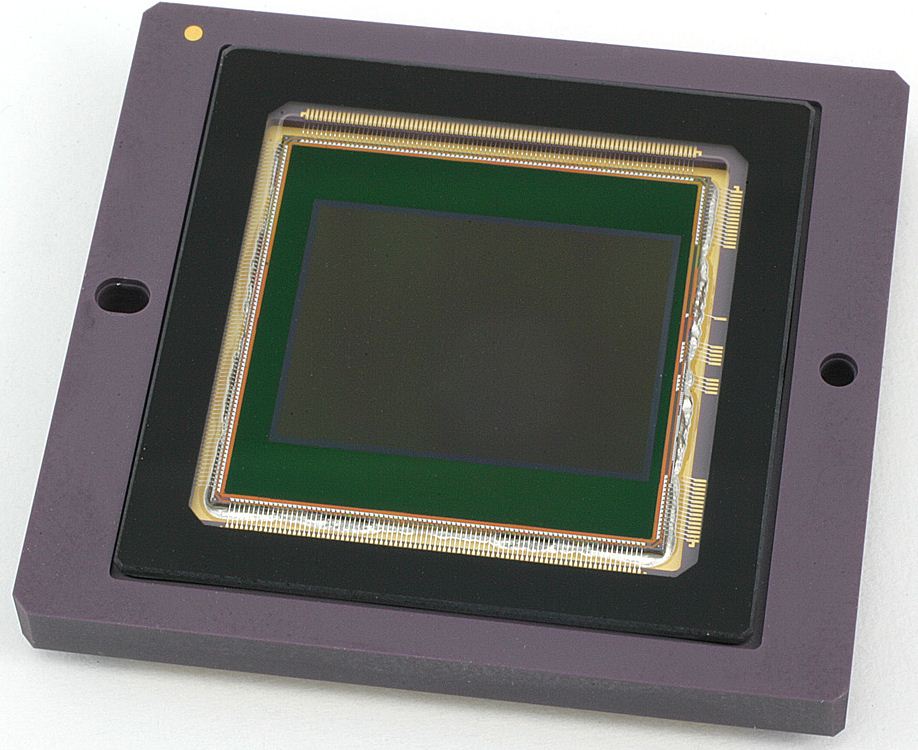
Not Panasonic and Olympus only but also TrueSense Imaging (ex-Kodak) is very busy on the Four Thirds sensor development front. EosHD reports that they just unveiled a new 4K Micro Four Thirds sized CMOS sensor.
These are the specs:
– 18.8mm x 14.1mm in size for a 4/3″ optical format
– global shutter for stills and a rolling shutter for video.
– 10bit 4K video at up to 120fps.
– Dynamic range is 72 db (11 stops) in rolling shutter mode but this drops to just 55 db in global shutter mode.
TrueSense imaging makes the sensor for Ikonoskop and Digital Bolex cameras. Don’t think Olympus or Panasonic will use the sensor. But I am pretty sure Panasonic will make a 4K FT sensor soon.
news found via EosHD.
68 Responses
details:
http://www.truesenseimaging.com/products/interline-transfer-ccd/71-KAI-04070
http://www.truesenseimaging.com/products/cmos/73-KAC-12040
There are 2 very interesting technical aspects to this sensor.
The first one is that at 8MP resolution, 4K is already biting the heels of entry level DSLRs and CSCs.
The second and the most interesting part, is how the technical abilities of this sensor might address the DR challenge. I don’t give a f**k about 11 stops in rolling shutter mode (which might still be a bit under performing when you compare to current DLSRs/CSCs), but if you get even 8 stops with the global shutter mode, what will keep you from taking 3 full resolution bracketed exposures in 1/40s, with a -4,0,+4 range? Or even better, why not forget the base exposure at all and just take a -4,+4 bracket? If the global shutter has 8 stops of DR, that would immediately give you 16 stops at 60fps at 4K resolution.
Do you know of any DSLR/CS that does that?
This is amazing!
Yes, this is the future of video. In time, 4k will develop like HD did, and RAW video will develop like RAW stills has. Consumer video in 5 years will look completely different from what we have today. Alas, the bottleneck will be a major increase to recordable storage. What format will be the one to step up?
with a built-in SSD drive that could work out just fine.
That’s too big to put into a photocamera – but not a problem for a camcorder.
Yes, very cool. I don’t do video, but this will add to the strength of the “family”.
Admin,
Any details on the Panasonic 4k sensor ?
Andrew over at EOSHD says Panasonic is cooking up something special for the next GH camera. Hopefully, he’s right about that and we’ll see something truly revolutionary in 2014!
Sheer curiosity, is Panasonic planing a new AG-AF ?
4k in a GH# would be awesome! Hopefully that gets implemented sooner rather than later. 4k is going to be the standard in less than 5 years, future proofing my video now in an affordable GH# package would be great.
I think of greater benefit would be for Panasonic to implement RAW encoding capabilities for their consumer GH line, a la BlackMagic Cinema Cameras. True RAW, or at least a high ProRes codec would be far more flexible and useful than a mere shoddy 4k codec that would look good on a spec sheet but looks like mud. That said, getting both RAW, 4k, global shutter, and 120 fps with the same sensor would be every videographer’s dream!
Admittingly, a Panasonic GH4 (or, better, GH5, as they never do “4” cameras) with 4K AND raw format for videos would be THE camera for videographers…
perhaps they’ll make an exception: Panasonic GH4K – that’s too good to let it slip.
lol
eheh, if I were a Panasonic manager… 😀
4 is an unlucky number in Japan.
Big LIKE.
You understand what video buffs demand. Let’s hope Panasonic does too.
Comment originally intended for @Sqweezy.
I don’t think RAW can be encoded without using an entire “window” of the sensor, i.e. you couldn’t have a 16 megapixel sensor and a 4K RAW video stream unless the 4K was coming off of a 4K sized window in the middle of the sensor.
I could be wrong, though.
this is the kind of news you want to hear for mFT in general. When the cine industry starts supporting FT sensors, the whole stupid, retail diatribe, “which brand is best whinge, is then moot.” Claims of the validity of the FT sensor being passe, irrelevant, are also simply opinionated hot air escaping from various orifices. (I’m sure that won’t stop the bleating from certain doomsayers.) When you start seeing Bolex, Arri and RED adapting FT; Digital Super16 and mFT 4K are no longer theory, but directional trends. FF dinosaurs, be sure and chime in …
apparently what I typed 4 hours ago, still requires moderation?
Why don’t you ring admin? I’m sure he doesn’t mind moderating the forum at 5 am. 😉
Possible disincentive for morons. If you use a registered nick instead of flipping nicks all the time you would get the post in straight away.
I only use the one alias, it did whine at me that I was posting too fast? One post until I later commented on my own post, which didn’t moderate! So, I have no idea what the deal is
fair enough
for flakey html clear your java cache and temp files
reboot the browser
register your nick
Im sure things will improve
“global shutter for stills and a rolling shutter for video”
Should it be the other way around?
Exactly. Video is one area where one could reap actual benefits with a global shutter. Perhaps it would be of some use with fast-moving subjects for stills, but video is where it is needed. If Sony can implement it in their high-end video camera, I expect the technology should trickle down to consumer devices soon.
I thought so too… weird
Olympus wouldn’t know what to do with this.
Surely, it will take them awhile. Their current video product pales in comparison to their peers, but as the landscape changes they will eventually throw bones to the crowd. If only their video processing was as strong as their stills. Olympus is missing a major opportunity by dismissing this ever growing market.
Actually I’m impressed with the resolution that the E-M5 churns out in video, it’s no GH2(3) but it’s better than anything I’ve seen from Sony! Yes there’s aliasing and moire but for a company that’s clearly not trying, it’s eminently usable in most conditions and is only really lacking in FPS choice. There’s a video doing the rounds on Vimeo shot on an E-M1 and I think most of the artefacts have been alleviated so… that’s a capable camera right there. Just pray for a firmware update with 24/25 FPS.
If only their video processing was as good as their compact cameras???? CRAZY OLY!
they have compacts with 1080 60p and higher fps reduced res video – yes please OLY…
My GH1 has already a 4K sensor (12Mpx -> 4000×3000 :p)
That is, in fact, more than 4K. Now you only have to make 120fps out of it and it could be considered a better-than-real videocamera…
Which reminds me of this article from 2009 where a Panavision employee explains the difference between “real” (discrete) pixels and “marketing” (Bayer interpolated) pixels. http://library.creativecow.net/galt_john/John_Galt_2K_4K_Truth_About_Pixels/1
Gold star for trying!
Perhaps this article should be focussed on their new 4/3 sized 2K CCD? TrueSense can only really be targeting the cinema market and a CCD is where the smart money should be… well it makes sense to me anyway :-). The only issue is speed; the new 2K CCD can shoot 2048 x 2048 at up to 28fps. For cinema the benefits of CCD are there though: an edge in colour and randomised noise, CMOS suffers from fixed pattern noise.
Decent specs actually, it has a pixel size of 7.4µm (Nikon D4 7.3µm) and a dynamic range of 82db ~13 stops. A 4/3 cinema camera making use of the entire sensor and a 2x anamorphic adapter would be the bees knees!
I’d guess that the CMOS doesn’t use global shutter for video because it can’t shuttle data quick enough but given that 4K is of limited use right now standard frame-rates would suffice (60/1080p should be doable for a CCD). Glad to see 2 new sensors in the 4/3 format above all else.
Less Panasonic or Olympus, I would imagine Blackmagic would be able to benefit from this more. Also, the 2048 x 1080 specs aren’t published, but they might be able to squeeze more fps in a windowed mode. Exciting times.
agree completely Tom, slow down the megapixel race, lets concentrate on cinema grade HD and 2K with bells and whistles.
I am keeping my fingers crossed that future Panasonic models also support RAW in addition any other code improvements for more run and gun interviews. If you have worked with RAW files you simply can’t see yourself going back.
I would buy a Panasonic GH with RAW in a heartbeat (actually I would buy at least two).
11 stops of dynamic range with (or if it’s linear, 8.4 stops without) jello action?
It seems like a good starting point. That Sweet16 sensor in the Blackmagic Pocket Cinema Camera was better.
Nice. Even nicer is to see no one complaining about sensor size yet
I hear 8k video will soon be replaced by 16k video. 😛
This sensor is clearly designed for scientific / industrial / surveillance applications where the resolution in video actually matters. For simple viewing purposes there is little difference between 2K and 4K. You would need a cinema screen to appreciate the extra detail (and sit too close to it).
4K is another example of consumer manipulation by manufacturers. When you buy a camera that can shoot it, it goes without saying you will also buy a TV set that can display it and ever larger hard drives that can store and play it. The sad thing is there will always be influential bloggers and then industry “leaders” eager to bite and dismiss the old standard. Think of the worker on the assembly line in a sweatshop in China or in Vietnam. Think of the millions of tons of hazardous electronic waste polluting the soil and water just about everywhere. Think of the unfortunate in our own societies who could use the money you are so happy to spend for nothing in much better ways.
> The sad thing is there will always be influential bloggers and then industry “leaders” eager to bite and dismiss the old standard.
Then go back to your gramophone.
> Think of the worker on the assembly line in a sweatshop in China or in Vietnam.
No! I work hard too!
> Think of the millions of tons of hazardous electronic waste polluting the soil and water just about everywhere.
“electronic waste” is a tiny part of that.
> Think of the unfortunate in our own societies who could use the money you are so happy to spend for nothing in much better ways.
They can go make their own money.
It seems you hate technology, so go back to your cave. I for one welcome technology that improves things.
No, I like technology when it’s useful and truly beneficial. Even 4K is (for film makers, machine vision applications and science that is; not for watching home videos and the usual crap on TV).
Well, paradoxally, by stopping buying these new techs, you would cut down the job market in the countries you mentioned, with the result of making people more poor and less happy, not vice versa. You may ask them what they think about you not buying the products they manufactured “just because they are manufactures by them”.
OTOH, 4K is an improvement over HD, and as such it is welcomed. It will require time before full adoption, and sooner or later it will be used by people who don’t know anything about video-making, but heck, this is the way modern technology works! Soccer mom taking a bad 4K movie of his child will not stop skilled people using the same technology in better ways…
I am so jealous of you video people here in the comments… not a single offensive reply yet! Thanks for simply appreciating what companies are doing to improve technology, and discussing implications and possible future directions – this is what a comments section is for and should look like.
That’s because it is: 1. not killing or surviving FT in relation to Micro FT, 2. no relation to pictures of FF/APS-C/whatever size vs micro FT. 3. Not Olympus vs. Panasonic.
Once the news is about those three, you can hear the swarm of Daleks coming: Exterminate. Exterminate.
Black magic will use this one for sure, and it seems a great sensor.
72 dB of Dynamic Range means 12 DR stops, not 11. One DR stop represents 6 dB.
This is funny. Some people say : “wow, that’s cool!”, but the don’t even know what 4k means. They just follow the trend : newer is automatically better 🙂
For those people, I suggest to look at the poll at EosHD, to see what video people really want 🙂
120fps is actually more interesting for casual video shooters.
4k at 120p – wow hope Oly uses this sensor…. imagine how nice the 1080 30p recording will be!
I can’t understand Kodak… they struggle for years to convert from chemical to digital, and break back into the film and photography industries, and yet they sell this division in 2011. They just don’t get it.
Kodak invented the DSLR and refined the technology and digital processing through 1990’s, but failed to make good reliable DSLR hardware to stay the lead due to lack of good manufacturing work force in the US. In the end DSLR from Japanese manufacturers hammered the traditional film market where Kodak was the king. kodak invented something killed Kodak 18 years later. That was the end of a great story.
>>Kodak invented the DSLR… but failed to make good reliable DSLR hardware … due to lack of good manufacturing work force in the US. <<
Couldn't have anything to do with short-sided management failing to understand that they were in image business and not the photographic film and chemistry business.
Blaming Kodak's demise on manufacturing workforce is facile, shallow and wrong-headed.
4K video is the next 3D. I don’t see what all the excitement is about. It is only really of benefit if you have an absolutely enormous TV larger than 80″ I would say. Most people’s homes are not big enough for 80″+ screens.
I have a 50″ HD Plasma. At my normal viewing distance, HD looks nicer than SD, but 4K wouldn’t look any nicer as the HD is already at the limit of the eyes ability to resolve detail.
An even bigger problem is bandwidth. What 4K program material is there and how is it going to get to people? There is almost no program material and there likely won’t be for a very long time because apart from fiber, there is almost no feasible way to get it to people. Sony announced they would make some 4K movies available on the PS4 via download. Each movie would be a 100 Gb downlaod. My internet connection is 4.5 Mbits per second in theory and my monthly limit is 300 Gb. Currently the speed is 4 mbps, and since bits aren’t bytes, it would take 2 days 7hrs+ – and that is assuming a max rate which is unlikely so closer to 3 days might be more likely.
Then there are distribution platforms like Satellite. They just don’t have the bandwidth. Likewise terrestrial transmission like UHF.
Anyway you cut it, 4K seems to me like a load of nonsense.
as it was back in the 80’s to have more than 512kb ram… total nonsens! 😉
512kb in the 80’s wasn’t even a dream 🙂 64kb was already a wonderful beast…
>>Anonymous5 days ago | Reply
512kb in the 80′s wasn’t even a dream 64kb was already a wonderful beast…<<
I wonder where those 512k Fat Macs came from that I sold in the 80's. Or PC-XTs with an AST 6 Pack card that added 384 Kbps of ram to the 256 of ram on the motherboard.
Well, you shoot 4K knowing that in few years this is going to be the standard (and the remaining hardware and distribution will get there, sooner or later). And also knowing that if you don’t have a 4K tv, you can watch it a 4K movie with a normal HD tv: you loose the superior definition, but you can still watch the movie. 3D is a different beast. It forces you to see the movie in a different way, a way that simply didn’t work for small TVs. A way that many people hate (me included): I can barely tollerate a 3D movie in theaters once per month, you can imagine if I want to permanently be forced to wear strange glasses or anyhow be forced to seat in front of the TV at a given angle otherwise it won’t work. 4K otoh is like having more megapixels in a photo: you enjoy them if you can. Otherwise you don’t notice the difference. And either way everybody is happy
regarding distribution, RedRay is the way to go. RED has figured out how to distribute 4K in a BluRay sized data stream.
Because RED isn’t true 4k. Panavision had a nice article on the subject of 4k a few years back.
I don’t know about your claim “HD is already at the limit of the eyes ability to resolve detail.”
1080HD is only 2mp/frame. Others put the number higher.
http://www.cambridgeincolour.com/tutorials/cameras-vs-human-eye.htm#resolution
You shoot in 4k now for future-proofing. Eventually the distribution would be there. Even today 4k is useful for grabbing stills from video, or cropping for teleconversion. You can also crop 4k for digital image stabilization. 4k screens are already useful now for displaying photographs, computer workstations, and video games which can be rendered at any resolution. 2560×1440 monitors are already selling like hotcakes, and 4k is the next step. Immediate methods for distribution are 50GB BDs, and I believe 100GB BDs are already available.
The maximum seating distance for an 2.134m (84″) 4K TV at which you will be able to notice a difference in resolution compared to a normal HD is 1.65m (5.5′) away.
Who in their right mind is going to sit 1.65m away from a 2.1m wide screen?
I sit more than double that distance away from a 1.27m (50″) screen.
You really would need screens 2.54m (100″) and larger to make 4K practical in a home, but screens of the sizes are not practical for most homes. Then there is the cost. LG’s 4K TV is about $20,000 and Sony’s is $25,000, but they are barely big enough to be worth it. Samsung has the right idea at 110″ – a bargain at $300,000.
4K in the home is not going to happen. It will fail just as badly as 3D has. I will bet that in 5 years time less than 1 percent of households will have a 4K TV.
It’s a solution looking for a nonexistent problem. It’s a gimmick to try and sell stuff.
It is actualy a better format for a PC work monitor than a video screen (bar cinimar viewing)… a 2m wide monitor no more duel screen bezel crap just one glorious screen, with resolution enough for all your apps… well the core few 🙂
It should also do 120p so it could do 3D as well… and be HDR, that way job done all imaging needs met! – untill then its probably not worth spending much $$$ on upgrades as they will all be partial, slightly unsupported and not enough of a jump untill they hit this kind of level.
…I just want 10-bit 4:2:2 1080p (60p). ._.