









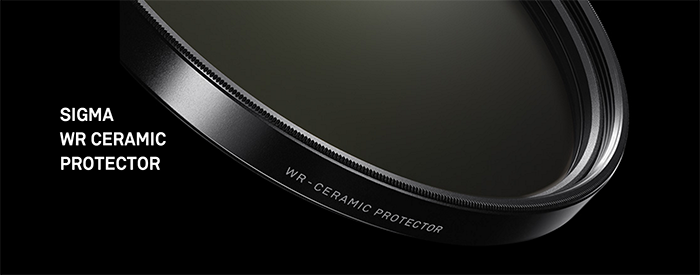
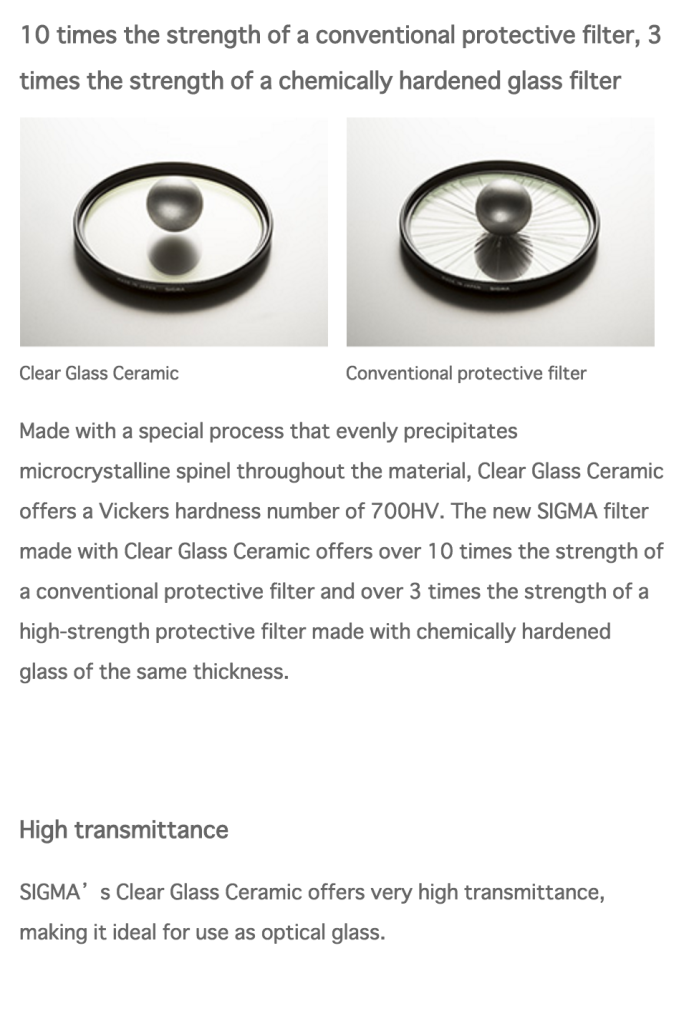
Sigma announced a new kind of protection filter. It’s made of Ceramic Glass and is water-repellent, scratch resistant and 10 times stronger than conventional filters:
Interchangeable lenses are the most important element of photographic expression, and to the photographer they are a valuable personal asset. To help photographers continue to use for many years the lens systems in which they have invested their time, knowledge, and budgets, SIGMA has developed original lens filters that meet the company’s high standards of excellence. In developing its new protective lens filter, SIGMA has leveraged an unprecedented cooperative relationship with a glass manufacturer, resulting in a completely new type of glass called Clear Glass Ceramic. Featuring this advanced material, the SIGMA WR CERAMIC PROTECTOR is a highly reliable filter with outstanding protective capability.
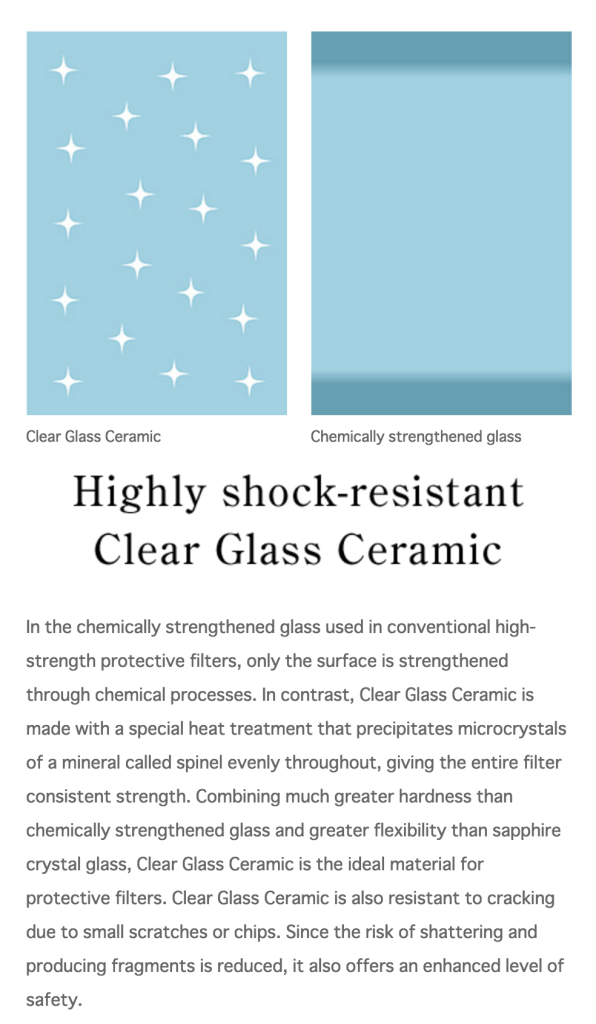
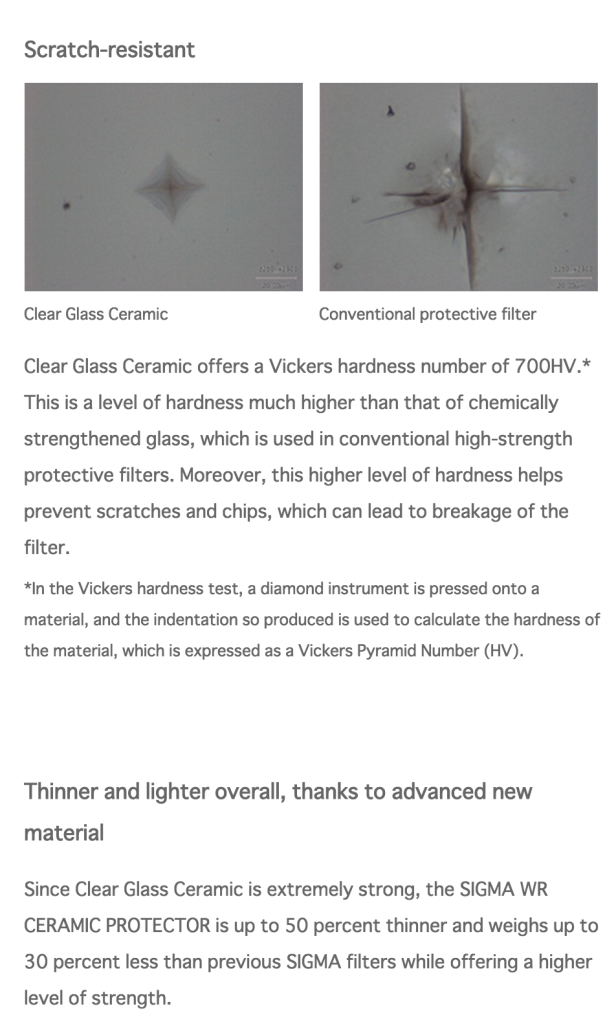
With many applications in aerospace and other industries, glass ceramic is an extremely tough type of crystallized glass that serves as the foundation for Clear Glass Ceramic. While featuring the high transmittance required of optical devices, this advanced new material combines greater hardness than chemically strengthened glass and greater flexibility than sapphire crystal glass. These qualities make Clear Glass Ceramic the ideal material for protective lens filters.
Source: Sigma Japan.

29 Responses
Is this a paid advertisement…or a post?…not sure. 🙂
I see that there are no increased benefits in the light transmission dept. or there would most definitely be a % betterment listed. Instead there is only one sentence stating high transmittance. That might be an area of improvement that would REALLY get my attention. The ceramic is thinner…so that is positive in the transmittance dept. I use B+W Clear MRC Nano filters with brass rings…. They are already expensive and I am sure that these ceramics will cost more (I do not see cost-savings listed LOL!)….so I am at this point interested in the tech but not compelled regarding the innovation. I do not have a problem with breakage with my current filters….and they seem to perform quite well. I am a fan of Sigma…I own three of their Art lenses…and the company has transformed into an innovator from its semi-good-less-expensive-lens identity, nicely. So this is a cool indicator of their new energy level…but ..just not compelling to me as something that I would add to my kits.
Yep, it’s just a press release.
All my lenses have B+W filters, some MRC, some MRC nano. Unless these new Sigma filter give a dramatic improvement in light transmittal… B+W nanos are at something like 99%… what’s the point?
I agree… I have a LOT of money tied up in filters. My attitude is buy the best lens, buy the best filter. I do not go “native” and I laugh at those who say you are ruining a good lens with a good filter… I have SAVED good lenses on numerous occasions with a filter…
I “may” have dropped a camera once in my life and broke a filter..actually I think I did…my tripod got knocked over onto a poured concrete floor..once in the last five years..The filter dented and saved the edge of a $2500 lens..the camera went back to Canon for a check out adjustment of the focus point indicator… can’t remember if the filter broke…but it was garbage…good garbage. 🙂
I see no difference in image quality when I put a filter on. Certainly not image ruining degradation. So if impact is bad enough to ruin the filter…I am chucking it broken glass/ceramic or not….I just do not see any “great” advantage to these filters if they do not increase light transmission.
I use b+w filters too, but I just ordered an Hoya Fusion antistatic UV filter for my Q: it should keep small dust away from the filter too.
The end of the lens caps? I sincerely hope so.
Sigma, make the filters slim!
I admit, that is a use case I didn’t think of. If the filter glass is strong enough, and scratch resistant enough, you really wouldn’t need a lens cap for any normal use.
There’s so much habit I’m skeptical most people would go for that workflow anyway, but it would be viable. The issue, of course, would be getting crap on the filter and having to wipe it regularly, which might be more hassle than taking a lens cap off and on.
How many MFT lenses have a filter size of 67mm or larger though?
The 42.5mm Nocticron, that’s one.
Olympus 40-150mm F2.8 takes 72mm, that’s two.
The 12-40mm F2.8 is at 62mm though, FAIL 🙂
Fail?
I have lenses with 43mm, 46mm, 52mm, 58mm, 62mm, 67mm and 72mm.
One filter for each lens, right?
The 100-300mm takes 67mm filters, BTW.
Meaning 5 out of 7 of those FAIL to make it on sigma’s ceramic filter worthy list.
Actually not. As it is stupid to buy a…. Oh, you are right, these ain’t like landscape filters or such but just protective!
As otherwise you buy the largest one and then step-up rings that you use to attach filter to smaller lenses.
Yea I think the LEE filters would be the best system to do that with. =)
But don’t try dropping metal balls on them.
(they’re well built though)
There’s a list?
Oh well, I wouldn’t buy them anyway.
Well..obviously over time…they will make them in varying sizes…but, you may have a point since Sigma caters “mostly” to APS-C and FF lenses…I am betting they will be making these filters in the larger sizes first….makes sense.
I know guys my face says otherwise, but am just having a laugh (and genuinely interested how many there would be). Didn’t ya see the emoticon?
You gotta admit this press release has been everywhere and now 3 days late 43rumors managed to copy paste it here too, which i guess is fitting because it’s literally the last place Sigma was aiming at with these huge and enormously expensive filters.
10 times the price too?
I actually get all my filters in at 77mm so I know it will fit everything in my arsenal. Get some magnetic adapters and stepping rings and you’re good to go. Gotta love me some good ND filterage from time to time or coping with reflections with a proper CPL.
I’ve never considered strength to be of concern in a protective filter. Best optical quality is most important. If it breaks its replaceable. Breakage is really rare.
I agree that it’s rare, but a protective filter should provide at least some protection….
Most filters degrade image quality. You might as well buy a cheaper lens and do without the filter. Many years ago I used to use them for protection until I realised I had never smashed or scratched one so the front element of my lenses were likely not at risk. That, and seeing test results done with numerous brands of filter – including B&W – convinced me I would rather do without the image degradation.
It’s quite obvious, isn’t it? Use them, if you need. If your subject allows you, sure. Degradation by filter is far lower, than cheap lens quality. Not to mention brightness, af speed and other qualities top lenses have.
If you use a B+W Clear Nano MRC filter And look at a shot with and without the filter, with the best lens you have, you will see no difference in image quality. None.
I probably don’t own any clear nano mrc filters, but the only times I see the difference is with ghosting / flaring.
So this did actually manage to make it through moderation after all.
Sorry, the remark was up as of 4 AM PT. I didn’t touch it, so either it got filtered and the Admin released it or it was another Disqus bug.
More than a few comments get blocked without any option of releasing. The bugs have been reported, but Disqus support to this point has been nonexistent.
OK, no problem. Thanks for the update!
My comment is awaiting moderation, sorry about that, didn’t know ‘flaring’ is a dirty word, but it makes sense….
The whole comment is now deleted, even. Gosh. I will carefully say it again: In case of flaring or ghosting, and I am really sorry if these words are offending to anyone, but only in these cases do I notice any difference.
That is possibly the case in most circumstances, but the person I know of who
used a colimiter and actual photos to test a whole range of filters including several apparently identical ones from the same manufacturers found even a significant variance between samples that otherwise appeared to be identical, so manufacturing variances appeared to play a part even with reputable brands.
A B&W UV filter was one of the ones that produced a measurable image degradation.
Have you ever scratched or smashed one of your B&W nano whatsits?
One of the things that persuaded me protection filters were nonsense for me was that my best lens takes 100mm filters – which cost as much as entire lenses. No way was I going to spend that much on my best lens so having them on my other lenses seemed rather silly.
Check out the protection filters:
http://dev.dellabella.ch/wp-content/uploads/2012/10/photographers.jpg
Given that I’ve never scratched a lens and I don’t even bother using protective glass, I don’t really care if this one is much stronger than a regular one–if I did something violent enough to my lens to break a regular filter, it’s likely I just dropped the camera and the front glass strength is the least of my worries.
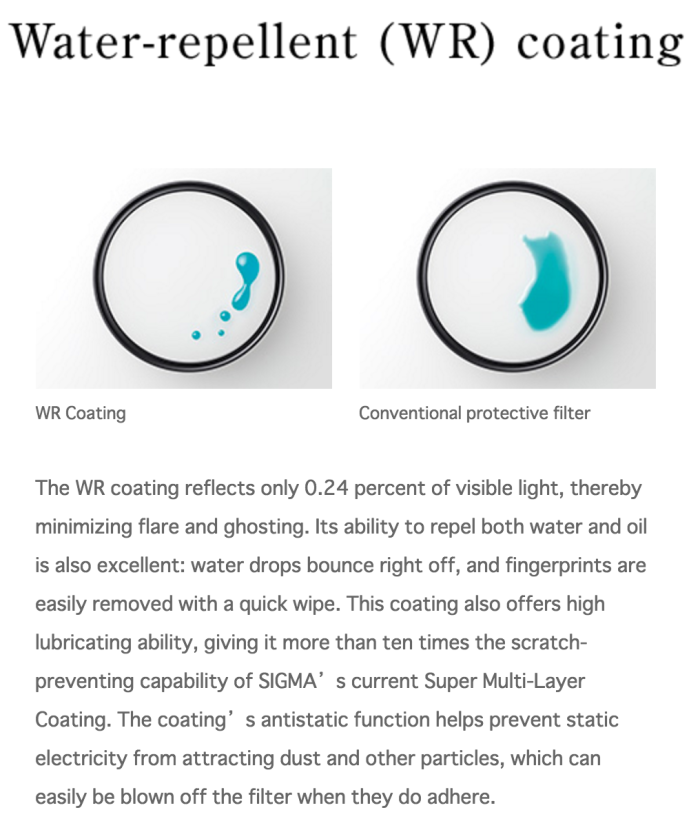
That said, the water repellant part is actually useful. If your’e shooting in bad weather in particular, having less water stick to the front element and it being easier to remove could be a huge plus.