









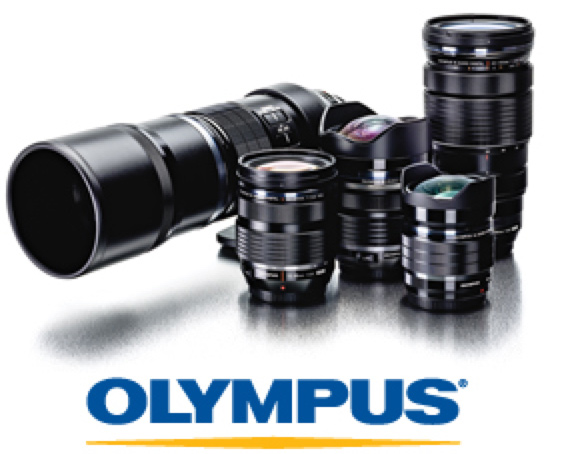
You may have noticed that Olympus is advertising their lenses on many photography sites. And if you happen to see that picture look more closely. It shows the 300mm PRO lens with IS switch. The announcement is really close to happen!
P.S.: The 300mm lens is listed at BHphoto which still shows the “older” non-IS picture version.
40 Responses
Interesting indeed.
I can’t wait to see the comparison in IQ between the Olympus 300mm Pro and the new Panasonic zoom. (That would be with and without the 1.4x on the Oly).
The price comparison should be interesting as well!!!
All teleconverters slow the lens and detract from IQ, inescapable law of physics thing.
The new Panny 50-400 is a Leica so the price will be excruciating. Otoh they’re invariably better glass than even Ollie-Pro.
Wrong. Only rear-teleconverters slows the speed because it crops the cone of light and spreads it back to full frame.
But front-teleconverters doesn’t slow down the speed, those just gathers light from larger area and refocus it to lens, keeping the speed same.
And you don’t really see the difference unless you pixel peep with 300-400% and look from the computer screen and so on.
Ok, semantics calling a “teleconvertor filter lens” a teleconvertor (a misnomer like “macro filter lens”), I have a couple, they do detract from IQ, they don’t add any stops but they do require additional stopping down to sharpen the image.
Well I’m certainly excited. But this lens is intended for wildlife photographers as I see it and all the image quality in the world and IS won’t mean much unless the continuous AF for the OMD line doesn’t improve and come to par with cropped sensor DSLR’s (with which this lens is in direct competition with). I for one would love to shoot birds in flight and fast action (sports and wildlife) with this 300 f/4 provided the price is reasonable, but I do worry about the AF limitations of the OMD line (and micro 43 in general)! So what I’m hoping is that along with potential high quality glass like this, Olympus really takes the C-AF on the E-M1 to the standard to which its price and professional designation obviously demands!
Won’t adding IS jack the price of the lens up? Great for sales to non-Olympus shooters but not necessary for Olympus shooters, unless I’m missing something. Don’t think I want to pay more for something I don’t need. As to AF I’m getting good results shooting action with the Pro lenses. Always room for improvement, though.
There’s very little evidence to suggest that OIS actually adds a significant price to any lens.
Compare any of the Panasonic’s OIS-equipped lenses with Olympus’ non-OIS offerings. They are all almost directly comparable, across the board – kit zooms, the 42.5 vs 45, the 35-100 vs the 40-150, the 12-35 vs the 12-40…
Now whether that means that Panasonic is willing to reduce their margins (or Olympus increases their margins!) in order to offer price parity, I don’t know.
But once the engineering has been done, the physical implementation of OIS shouldn’t really add any more cost than, say, the addition of the clutch-based manual-focus system with hard stops on the Olympus PRO lenses.
Dunno. Olympus makes endoscopes for a living but have they got over their money worries since Sony bought into them?
Panasonic otoh are over three times as big as Sony.
Who knows how they price camera gear?
The lens-IS uses the same technology as used to focus the lens or move the sensor; voice coil motors (VCM).
It’s a funny business. The Olympus Li-ION batteries are made by Panasonic. One wonders what other technology they share with their competitors.
I totally agree about the IS on the 40-150. That’s what I’ve been using along with the 1.4TC but you have to wonder if that will be sufficient for 300mm. Dunno. It could be to increase sales to Panasonic but then again that’s a pretty long reach for IBIS to deal with.
As for AF issues, my EM1 makes me really treasure my good action shots. 🙂 But I do occasionally feel like I could do better as in a Nikon D7200/7100 which is pretty much the same price range.
Imo the GH4 is marginally better than the Nikon D600 we also use.
The E-M1 is ballpark GH4 without the movie capability. Go figure.
Stick with the E-M1 🙂
The E-M5ii is none too shabby but with extra long lenses does prefer OIS/Lens-IS (it can handle Panny lenses), and Olympus have know this for a long time. The E-M5ii doesn’t call it “IBIS”, the manual refers to “VCM” which are used for lens focus, and lens-stabilisation.
Look at this from this POV: by attracting Panasonic customers, the market size, and hence production quantities would be much higher, thus reducing the cost per item – most probably by more than what the IS addition would have commanded in added cost.
Excellent point. I hope that’s true. I’m surprised by some comments regarding Cont Speed. Shooting Pro lenses at fast shutter speeds I get results as good as when I was shooting Nikon. I do turn off LED and playback and use Auto ISO in most cases (E-M1).
Have you actually used the C-AF on an Ollie or the AFC on a Panny lately?
The 4K Photo follow-focus 24fps burst on the G7 really works for this stuff and makes Canon look rather last year.
Hi jefrs,
Yes, of course. Used the E-M1 this past weekend. Practiced on slow moving Canada geese and a few ducks. I could barely keep up with the geese and a big slow great blue heron. But ducks were a poor showing. I can’t imagine trying this C-AF with faster moving hawks or something like a kingfisher.
As for the Panasonic, I don’t have access to the newer bodies short of renting them. I also can’t speak for Canon but I own a Nikon D300 and have shot a D7100 in the past year. Both outperform the E-M1 in this regard. It pains me to say that as I love my E-M1 otherwise and that’s the only body I shoot underwater due to smaller housing size (I’ve obviously made a massive investment in this system).
Bogdan
Here is what the E-M1 + 40-150 pro with TC (210mm f4) does for me. Iv’e only been shooting BIF for 4-5 months. The 300 f4 should even do it better and should be very useful with the 1.4x TC as most the time I rarely shoot less than f5.6.
BIF
http://www.flickr.com/photos/14869355@N07/albums/72157657875364191
Swallows in flight
http://www.flickr.com/photos/14869355@N07/albums/72157659475069818
I can barely see a kingfisher whizz past but have used it on stooping buzzards (buteo buteo) doing their family territory display flights. Given they were really showing off and the mere seconds they took to cross the sky, I reckon they were reaching peregrine 200mph speeds, rolling, looping, flying upside down, inverted-pair and screaming their heads off.
It helps if the bird stands out in contrast against a plain background like the sky, not flying across trees, and the subject must never be allowed to fall out of frame or it will lose the lock. That really applies to any camera system.
On the Ollie it’s C-AF(tr) but the Panny can have tracking with AFC or AFS. The burst speed determines whether it focusses every frame of guesses it. I generally use the slower burst to focus each frame; you don’t have to use tracking mode for that, the camera is generally intelligent enough to pick the right subject and AFS is more than fast enough.
Sorry to update you, but E-M1 has already proven to beat 7D Mk II at dpreview forums when shooting ultra fast action (greyhounds top speed 64km/h http://www.dpreview.com/forums/post/39447276 and about that with E-M5 http://www.dpreview.com/forums/post/41909146) or fast RC boats (top speeds 80-100km/h http://www.dpreview.com/forums/post/55950173) or fast birds (swallows in the flight http://www.dpreview.com/forums/post/56777430) or just some other action and sports (http://www.pattayadays.com/2015/03/shooting-action-with-the-e-m1-and-firmware-3-0/).
To beat example E-M1 C-AF you need cameras like Nikon D4 or Canon 1D X. But those are only offering like 10-15% better keeper rate.
I think you’ll find the GH4 will also give the D4 and 1D a good run for the money. Shooting stuff at 200mph is well within its grasp. Or just shoot the movie..
GH4, E-M5ii and G7 here, they all make Canikon look a bit last year, and a D600 available to play with. Had an E-M1 but a knob fell off so it got returned.
The G7 is instant-fast (just push the shutter, forget about focus speed) but the GH4 has more processing grunt which makes it quicker to shoot in use, both are fractionally quicker than the E-M5ii. D600 takes beautiful photos but don’t ask it to AF at dusk. All are blindingly fast to focus, horses for courses.
F4 is pretty dark. It certainly will limit the usability of the lens to very bright situations. And I wonder who will drop so much money to shoot with it on m4/3… I have been using the old 50-200 on Em1 which reach 3.5 at the widest. Results are interesting and reliable. But you need to be at mid-day. Early morning and later afternoon you start already going to 1600 ISO if you do not shoot dead bodies or architecture.
ISO1600 is pretty slow for m4/3 and the 50-200 f/3.5-5.6 is an old 4/3 lens.
You need to use high ISO on m4/3 so f/4 becomes a fast lens. Olympus will bug out around ISO6400 but Panny will keep going above 10,000 no problem. The only thing you need a really wide aperture for is shallow DoF.
Panny is limited to same 6400 as well. Actually both are limited to 3200 as that is the real ISO limit. After that the brightness change is only via digital adjustment and it will clip off.
The GX8 will give you just 0.5EV higher ISO value by look, but as well it is limited to 3200 but the software 5000 looks more like 3200 on those others.
Negatory, Olympus native ISO range is ISO 200-6400 and extended to ISO25600 but Panasonic native range is is ISO200-25600 and extended /down/ to ISO100. One should check facts.
For example the G7 at ISO25600 has 6.5EV which is well out of signal to noise and produces acceptable results way up there in low light.
If you look at the DXO ‘low light’ results you have to multiply all m4/3 results by 3.84 to get the true answer, basically because DXO do their calculations wrong, contrary to calibration laboratory guide line procedures.
“the 50-200 f/3.5-5.6 is an old 4/3 lens”
That 4/3’s lens is from f2.8 (50mm) to f3.5 (200mm). That ‘old’ lens came with the (or after) the E-1 & then later the SWD version came with similar optics (for the E-3). It’s pretty good, unless we’re talking about an old OM lens which I don’t think so.
Exactly. I am talking of the legacy 50-200 F2.8~3.5. You can get it used in pristine condition very cheaply and it perform greatly. The focusing of course is not as eye blink as on dedicated lenses, but you are not getting things in focus very quickly anyway at 400mm on those bulky lens at first shot. So, no issue at all with it… 😉
My bad, a typo on the aperture. The 4/3 fit lenses are well dated now, glass is still good but they don’t work well on m4/3 compared to the G-System and M.Zuiko fit, they take time to think.
One Panny lens I have issue with is the old (G) 45-200/f4-5.6 which appears to have been a early conversion from 4/3. Even so, f/5.6 may be considered ‘fast’ on the later cameras due to their much improved low light capability.
But my point really is all the long zooms are ‘slow’ compared to the primes. Yet the base ISO on these cameras is ISO200 and using ISO800 result is comparable to using slow 24ASA film.
Only a few years ago ISO3200 on an E-PL1 was too noisy and going over ISO6400 on the G5 was risky but now ISO 8,000-16,000 is acceptable on the Pannies, so shooting at ISO1600 is doable on an Ollie. Less emphasis on lens speed, more on camera low light capability.
“Panny will keep going above 10,000 no problem”
Yawn. Another ignorant panafanboy.
Really, I will happily shoot a badly lit dark stage at ISO16,000 and get publishable results.
The f/4 is the common fast on those field of views for portability. Of course there are ones like Olympus 300mm f/2.8 but it is for 4/3 mount. Or there is old Olympus 350mm f/2.8 as well. Or very portable and light 300mm f/4.5.
The f/4 is the limit for most use, but the hard limit is f/5.6. And this is exactly the case with the 300mm f/4 Pro + 1.4x TC to get 420mm f/5.6 that is still very usable for most of the day, even in deep forest. But with f/5.6 just forget to use in sunrise/sunset periods or forests where sun doesn’t shine through.
And sorry, but ISO 200-400 is still very often used on sunset/sunrise moments with f/4 but you are limited to around 1/250-500 shutter speeds that is not enough to freeze the fast flying bird or running gepard. For those you need to get that 1/1000 or 1/2000 shutter speed at least and it means ISO 1600-3200 range. And you will get excellent results with those.
Yes, you are right on your remarks. But I am still a bit skeptical on the 3200 ISO quality on em1, particularly when it comes to details (or if you need to crop). I have not been using it outdoor for sunset lit activities; mostly indoor (also with the 50-200). And have to say that the results where not much reliable as for quality and acceptability of the shadows (for noise) for my taste. Different story when you do landscape, of course. I have to admit, I really do not like OLY m4/3 low light behavior…
If you are cropping a 600mm equivalent image – you are doing it wrong. 🙂
Oh, right, my apologies… I always forget that everybody is Ansel Adams… in his head! Happy to know you get your images perfect at first shot and do not need to do anything to them after. I will book a course by your school next month that I have an opening. But for the moment, I will have to keep cropping/rotating/reframing where and when i have to, to the pleasure of my clients not mine. According or not to YOUR photographic standards… on 600mm (which I do not use) or less. 😉
I was mostly joking, hence the smilie.
I know, folks. But the problem with OLY is that you can’t shoot high ISO. It simply can’t handle it. You know it. And I am not criticizing, cause I love the camera and use it constantly. 1600~200 at most. You go higher only in some situation and results are acceptable only as horoscope. F4 on Nikon is piece of cake: 6400 Iso is just like 100 iso (not to mention 12800 ISO with noise just like photographic grain). For shooting sunset you do not need a 300 mm lens… and for landscape usually you hardly shoot F4 (so that aspect is completely irrelevant). But for shooting moving animals, that mostly do not go around in broad day light, you certainly need relatively high shutter or higher ISO do compensate. So, I am wondering, about show much successful will that lens be… considering you can get an awesome 50-200 used for 400$. To shoot dead bodies and standing rocks at dusk or broad light, it will suffice, I guess.
Actually I’d rather have a 300 f/4 on the E-M1 than a 300 f/4 + 2X TC on a Canon 1D. The IQ would be better and focusing faster. Don’t see your point. Hard to get reach and a large minimum aperture in FF without spending a lot of money and renting a shirpa to carry the lens.
Well, yes. When it comes to size, you are certainly right. Climbing to 600mm on FF will have you carry quite a bazooka in various configurations… In that sense the OLY 300 is certainly quite a welcome option. Yet I still have my doubts on that sort of investment for that system at a pro level…
After the purchase of a 90-250 this past summer the 300mm is off my list. Olympus is draggeing there feet on getting there PRO line to market. The 90-250 operates great on the M1 as well as the E-5. I would guess he build quality & optics on the 90-250 is better than the 300mm. Besides the f2.8 vs f4.0
I could be wrong, my wife always corrects me?
“After the purchase of a 90-250 this past summer the 300mm is off my list. ”
—
Heartfelt thanks for letting us all know.
To learn that lens’s aperture, i had to click the store link, because it isn’t mentioned in the article itself. Clever.