








DC.watch (google translated) posted a full interview with the Olympus team that developed the E-M1. There are many interesting insights about the single E-m1 features. And also two more curiosities:
– It has been decided in early 2013 only to use on sensor phase detection AF.
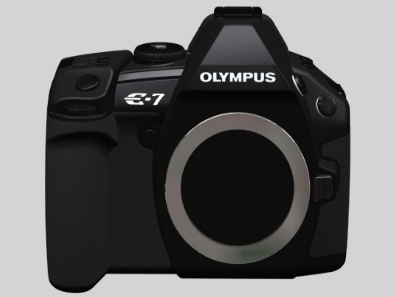
– the E-7 if finalized would have featured same sensor and same weather sealing.
Now let’s see what these smart guys will come up as next. What’s their hot thing for Photokina in ten months? You take your guess 🙂
85 Responses
Still waiting for premium compact.
Fast fixed lens, 4/3 sensor, full-flip screen, built-in flash. thanks.
Oly & Pana have to think quick what is next ?
Very soon we will have many compacts in FF sensors .
No doubt Leica’s move to Pana definitely strengthen m4/3 in optic arena but what about sensor performance ? The much anticipated Organic Elements is needed in m43’s sensor dept otherwise can’t see them can compete in 2 years time .
More mirrorless cameras from any one should not bother Olympus or Panasonic. I looked at the Sony a7r. Seemed a nice size but Lenses? What lenses. On top of that it has been shown that using lenses with adapters is not all good.
There are very few problem lenses/ adapter combinations with M43. But it would seem that some of the lenses expected to work well do not on the Sony. Each will need to be assessed individually. Ouch, that’s after purchase.
Canon and Nikon will have the same problems. What will work may be found out after purchase. But if using original long focus native lenses with adapters….. to big…. far to big.
Definitely the way to go is m43. There are great offerings in bodies from both Panasonic and Olympus. With great glass from both and lots of premier quality lenses from others as well.
I have had my Sony fantasy and its over, some lenses don’t work well and the native ones will require a whole new shelf full. No thanks.
I am going to Cambuy for the e-m1.
Well, that’s more ore less my conclusion. It is also Soundimage’s who is a terrific landscape photog, and who had a blog section to compare m4/3 and alpha.
It’s not really worth the trouble of building a FF 35 system, just for it to gather dust most of the time. Alpha won’t rival Leica, and if Leica goes m4/3 for good people will abandon their preventions from film times.
As resolutions increased, all formats have stepped up one notch.
“As resolutions increased, all formats have stepped up one notch.”
Yes. And its at the point of ‘why need a bigger sensor’? For the most of us that is.
I think we are at the point that size does NOT matter any more. Of course there are always a few “loose ones around” that need a bigger size to get anything out of it.
Yes, I agree, except the DOF-story is of course still different on 35mm or medium format or large format sized imaging devices. So those who specialize on heavy bokeh versus sharpness emphasis, still need to carry the weight.
They are very welcome to carry the weight. I seem to get bokeh from a poor little 14-150mm zoom. The zuiko 38mm also works well. If I need DOF to to shave I’ll buy a razor.
With the exception of very few portrait specialists, any pro photographer or photographer having learnt in the film era consider the shallow depth of field that goes with larger format as a drawback of fast lenses and a limitation rather than a net benefit, it’s only gearheads born in the digital era that have acquired a fetish for shallow depth of field in each and every situation, regardless of how appropriate it is to the subject at hand.
Yes, there seems to be a shallow depth of field wave happening these days, maybe inspired by reviews with test results like ‘sharp wide open’.
Sometimes I think even m4/3’s depth of field is too shallow (using a 20mm f1.7) – for instance, when taking pictures of a large group of people (at different distances) in dim light. In this case, it’s better getting the extra ISO stops provided by modern sensors than using maximum aperture. Sometimes I wish I had a smaller-sensor camera just for these moments.
Last week I had a fashion photoshoot in Venice, I mainly used Em5 + PanaLeica25mm. I have played with its shallow depth of field on some shots, but mostly I simply took advantage of the wide aperture to keep ISO low, despite the dim lights of the set (an old hotel).
My friend had to pay more attention at positioning the two models, when using its FX camera.
We both had fun and took nice shots.
I couldn’t have said it better.
Bokeh has become rapidly the cliche’ of the illiterate lower middle classes, who got it from the marriage beautifiers.
Bokeh has become at the same time the mark of fake artistry and real obfuscation, a perfect style for the years of the War On Terror, and on Photography.
I do agree that bokeh for bokeh is not telling of good photography, however that doesn’t warrant overreacting.
Yes of course there are mostly compositions where you should not want any bokeh at all, then there are many compositions where bokeh is not really damaging and then there are some compositions where it is actually desirable if not central.
Properly used, it is in no way fake artistry.
Sorry, but you are confusing the terms here, as do many others :/
Bokeh does not equal shallow DOF.
OOF caused by shallow DOF is not the same as bokeh.
Bokeh is the QUALITY of the blur, not the blur itself. Bokeh is the term for how the OOF areas in an image look. Some lenses gives a very “nervous” and busy blurlike double contours), IOW bad bokeh, whilst other lenses crates a creamy, soft and even blur, described as a nice bokeh. So, refer to shallow DOF as such, and don’t call it bokeh, which is something entirely different. FF crates shallower DOF than 4/3, but not necessarily better bokeh. The quality of latter always depends on the lens used, regardless of system.
I was using the same wording, but thanks for reminding.
That said, I don’t think I wasn’t clear.
Yes, You are right I suppose I should have said ‘Lovely Bokeh’, like people should say ‘FF 35mm’.
But it’s only a ‘Country of Despair’ (Susan Sontag) that raises bores to remark on such trifles.
Unless it was ‘fake artistry’ that made you nervous, Sir 🙂
It is true that improvements on the quality of out of focus rendition (bokeh) did in part change the position of photographers on the use and importance of shallow depth of field.
I still find it ironic that after being for a century the art of getting as much as possible in focus, we now have reached a point where, to some people, photography seems to be the art of having the least possible actually in focus.
“the illiterate lower middle classes”
Am, the classist blowhard.
“I couldn’t have said it better.
Bokeh has become rapidly the cliche’ of the illiterate lower middle classes, who got it from the marriage beautifiers.
Bokeh has become at the same time the mark of fake artistry and real obfuscation, a perfect style for the years of the War On Terror, and on Photography.”
Man, you are my HERO!
+1000
Yes, the whole DoF thing and the fixation on sharpness above all.
I learned in the film era and it seemed much of the goal was to get as much IN FOCUS as possible. AND to use the entire frame, not to rely on cropping to compose. But that’s a different issue… 😉
I just speak out of personal experience since i started with photography in 1984, and already then wanted a fast 50. I admit the fast lenses were mostly advertised for low light purpose, but as a cinema lover I always appreciated the selective focus/object isolation. I hated studio shots which were closed down just for the sake of getting better impression of sharpness. Nowadays the use shallow dof seems more in the picture, but i think thats mainly because digital made photography more interesting for everyone. I do notice the tendency here that many people here dont like it and say its just the effect for the effect only.I do agree that shallow focus can dominate the picture when you use it as part of your style. Some find it boring..thats too bad. Its almost like “ok we have choosen for MFT which has a limit in extreme DOF compared to the bigger formats, so lets not even try to accomplish such effect.”
The problem only concerns smaller RF lenses of focal ranges lower or equal to 28mm. For lenses of 35mm and up it is fantastic on the A7r. For shorter focals the A7 may be better, but you have to test it.
I find that tempting..
You are quite free to ‘test’ it. I would not spend 2k to ‘find out’.
If you already have five legacy lenses which you know will perform well, then it is easier to test whether the two wider angle you have left will also work well (and I my case it looks more like six against one).
As a bonus, you will be able to use these lenses at the focal range and angle of view they were first designed for.
exactly, some of us have a lot of legacy or new lenses can be useful on that camera already, I have plan to use my Canon EF lenses on that Sony 7R to replace my D800E,which I found a bit too heavy and a bit too limited in lowlight event type of shooting.
anyway, you do not have to use Leica glass but any of FF glass from any one.
Please have a look at 3D-kraft.com It seems that telecentric design lenses have no issues on a7r. Apart from this, I think there’s nothing wrong in using a different system: it’s photography.
If I get one of those two alphas, I’ll use it for fun, and I’ll stick with m4/3 for my work (looking for a 150mm f2 beast).
I don’t think Olympus has money to put into a new range of lenses to cover a 35mm sensor.
I think/hope they will show a m4/3 fixed lens camera, small, 25mm f1.8, EVF.
May be that they could team with Sony for the E-Mount like they did with Panasonic for MFT ?
When Sony invested in Olympus part of the agreement was that Olympus would would help Sony with lens design and AF knowledge and Sony would share sensors.. Or something like that.
@rrr_hhh Zuiko glass could only be another (great) option to Sony, along the already existing collaboration with (expensive) Zeiss brand. I’d like that idea. For the moment I think I’ll stick with a couple of manual M mount lenses, a 50mm and perhaps a 21mm Ultron.
I’ll leave the “heavy serious” work to m43 gear. 😉
It sounds strange, but I think it will work.
BROT! Telecentric means big, big like OTUS, big like a seal, negating the small size of the body.
Here we go: Sony again made a NEX, a travesty of a system. Good luck in your search for non symmetrical wides that give no colour shift.
I read that even Leica has problems below 35mm. And yet it has microlenses…
Meanwhile I’ll enjoy my high resolution 4/3 0-18…
21mm f1.8 Voigtländer Ultron. Not that bigger than the 17.5mm f0.95 I alteady use. It’s simply a different system, that people can use knowing its limits and still enjoying it.
I’ll use m43 gear for my serious work, and in the meanwhile if you find a 150mm f2 at an interesting price, let me know. That huge, heavy, beast is amazing on Em1.
Rotfl – 1200 $ to do the same of my 350 $ 9-18:
http://www.ebay.it/itm/Voigtlander-ULTRON-21mm-F1-8-Aspherical-Wide-Angle-by-EMS-Shipping-/251363743241?pt=Camera_Lenses&hash=item3a86725609
And perhaps feel the frisson of the colour shift?
Of course everybody should be free to pursue his hobby, even if the trollop is expensive 🙂
I own a Pana 7-14mm too for m43 gear. That won’t close my mind. Nor my wallet, if I can afford it. I bet you find M Monochrom a limited and expensive tool too, right? And PENs are for dentists. We know what’s your thought about prices, but please consider that people can have a different taste, different needs, different opinions than you: to me it’s not a problem if you use and how you use your 9-18mm.
Be happy! 🙂
Not much humour left about the proud Sony A, have we? From the lean of it, it’s a nice camera with the 35mm, and hopefully with some 85. The 55 is humongous.
Frankly this is no competitor of m4/3 ubiquity. If one adopts the larger view it seems as if Sony, Fuji and perhaps others are leaving ‘cropped’ mirrorless, simply because the can’t compete with m4/3. Best wishes.
Mmm I woudn’t call the 55 f1.8 humongous: I just watched Steve Huff’s video preview: the Zeiss 55 looks a little fatter than Oly 60mm. Maybe it’s even shorter, I’ll check the specs tomorrow.
Even the sound of 7 is not bad. A classic shutter sound, more quiet than that of a DSLR, but I can’t use it in a theater, on the stage or near the artist.
Truth is that Sony will have troubles in offering balanced size/quality/price lenses (Honestly I laughed hard at that Otus whale), but again, I think It will be a (quite expensive) gear to have fun with.
I hope Olympus will throw some know-how in the group, with Zuiko lenses, but physic limits can’t be avoided.
I believe m43 has nothing to fear from mirrorless FF. APS-C users are going to see their systems wandering in a no man’s land, caught between the bigger sized lenses similar to those of FF cameras, for an IQ more similar to that of last generation m43 cameras.
Ciao!
I think fuji, thanks to its sensor and intelligent building of an interesting lens family, has managed to carve itself a niche which promises a reasonable life expectancy. It’s the apc dslrs that will feel the heat : neither fish nor fowl and no high grade native glass. They will still do well in the us, though, where huge is beautiful – can you believe that even dpreview (see here: http://connect.dpreview.com/post/9705313773/sony-xperia-z1-camera-review?utm_campaign=internal-link&utm_source=news-list&utm_medium=text&ref=title_0_50) thought that “hefty” is a compliment even for a smartphone? I guess we will soon see plenty of cheap “full frame” dslrs, to keep suv owners and soccer moms happy and subsidize the continuing development of full frame pro cameras for sport photographers (and all other pros who simply cannot afford to throw away their canikon glass). I am pretty sure also that Sony marketing will keep the nex alive, until they figure out which way to go. I wish they dropped it altogether, in favour of an tiny 1″ ilc, to complement the r100/r10, but it will not happen any time soon.
well I’ve got a 150 f/2 but I haven’t got an E-M1. I would imagine by the time they’re available here the E-M2 will be announced….
@David Woah! That’s a big bunch of awesome glass I’d like to use in theaters!!! Just found you on Flickr! 🙂
well, they have the money but they are not interested in that expanding their camera systems.
in fact, Oly stock holders in Japan forcing them to quit it altogether.
but hey, at least Oly’s financial result is a bit better than that of Sony or Nikon(they have very profitable medical and audio division).
All the dilemma will be between getting the pores of your sweethart in focus, and spoiling the edges of one’s hedges.
It will feed a Revolution in the American suburbs. Perhaps in the Swiss ones, too, and on Lake Como 🙂
Good to hear you’re going to CamBuy. You’ll get great service & value there. Say hi to Gary for me. 🙂
The most competitive in mirrorless is Fujifilm with his X series. Not Sony, Canon, Nikon.
While I agree Fuji has some good gear they are not, at the moment, an issue for m43. As they get more cameras to focus other than one that may change.
Fuji and M43 = Mercedes and Kia = Superior image quality and gadget camera.
Good morning Shenkie. You like Fuji? That’s awesome – I found a cool site you should check out:
http://www.fujirumors.com/
“I can not say unconditionally AF performance varies by subject but also, and it may be said that it is equivalent to E-5. Moreover, there is no problem at all AF accuracy.”
Unfortunately the decision to have all PDAF sites in a horizontal orientation, with no cross-type sites, has compromised PDAF performance. Subject, and physical orientation, can make a big difference.
Just rotate your wrist for AF and reframe !
It’s amazing what kind of crap people will put up with.
The E-M1 is defective when it comes to focusing and it will destroy all 4/3 lenses through aperture rattling in a couple of years.
What will keep M43 in the game is to stick to it’s strengths. The GF1 essentially brought m43 alive. The 20mm was the icing on the cake. Since then, wtf happened? Cameras started getting bigger, lenses started getting bigger, and prices started getting bigger. The em5 was the 2nd camera to shine a big light on m43. Small but full of features, a little high in price for some, but it’s compactness and weather sealing and the best IBIS in the game are not in every camera out there. Gx7 and gm1 are moves back in the right direction to play the strengths for panny, especially with gm1 new kit and the leica 15mm. I would love to see more and more m43 primes. Especially, when they’re f1.8 or faster, compact, and semi affordable (NO 1k+ primes!) 200mm would be good place add a few more choices, especially for tele and taking advantage of the 2x crop. Even after that, doubling up on FLs wouldn’t hurt. 25f1.8, 12 f1.4, or even a 7-14f2.8 (this one would definitely be above a grand though, lol.
I disagree a bit. M43 has stuck to its strength, which is diversity. We have very few gaps left. And to close those will be +1k each.
Indeed, only making small cameras would not work for m43 either.
http://translate.google.com/translate?sl=auto&tl=en&js=n&prev=_t&hl=en&ie=UTF-8&u=http%3A%2F%2Fdc.watch.impress.co.jp%2Fdocs%2Fnews%2Finterview%2F20131101_620844.html
this is interview with olympus,
i feel something why panasonic do not talk to site and consumer in this year,remember last year talk about GH3.
This year they released many m4/3 camera begin GF6,G6,GX7 and new line GM1 ,GX7 in focus no sound from panasonic about identity.
If Olympus really want to go into the PRO market, they MUST pay attention to research the 14bit RAW.
Sounds logical and was part of my decision-making when I was thinking of selling out of Olympus due to my dissatisfaction with the noise in 43rds era. The reality is that it doesn’t make any noticeable difference. Although I am not concerned about the increase in photos memory size that 14 bit would give me, I am concerned about the buffer reduction 14 bit would give me for negligible difference in IQ. Comment has been made here previously that to get past 12DR you need 14bit. This is completely false in theory and in practice as m43rds camera’s in the last two years have exceeded a DR of 12, and we are expecting the E-M1 to be in the mid 13s.
See the link below for the theory on why 14 bit isn’t going to help.
http://theory.uchicago.edu/%7Eejm/pix/20d/tests/noise/noise-p3.html#bitdepth
a bit disagree ,today olympus JPG is great because many user was lazy(don’t want post-process)
MRL had good fast food (Out Of Camera) to present ,view ad print ,
14bit RAW in MRL like work hard pro-consumer is unnecessary for MRL photographer.(my privacy)
For Olympus in the future I would like to see:
Significant Sensor improvement. It’s time.
Pen with built in EVF…sweetly designed..and bulletproof.
It seems that Sony tentatively stretched to their limits, since the A7r sensor doesn’t perform better than the sonsors Sony produced two years ago, and the same goes for the E-M1 sensor compared to the E-M5 sensor. That gave Panasonic time to finally catch up with the GX7 sensor.
The focus going forward for all sensor development is improving sensor read-out speed. This will help greatly with on-sensor PDAF speed and unfortunately all manufacturer will want to promote 4k video which can only be done with faster sensor read-out.
I think we are done with high ISO improvements for at least the next 3 years.
I hope that is not true…we have all the great lenses and camera bodies now…more than any other thing I would like to see the specs stepped up in the sensor dept…that will be THE most important thing to make MFT ROCK and give it longevity that will not be affected by FF cameras…(mirrorless or not)…because MFT is that perfect size to keep everything small….especially the lenses!!!
+1
Agree on both counts.
http://visualsciencelab.blogspot.co.uk/2013/10/the-graying-of-traditional-photography.html
Are we deliberately ignoring the ISO hit the EM-1 sensor took to include PDAF? 20% worse high ISO performance than the E-PM2!
As the dust settles, is everyone still so smitten with the E-M1? How much better would it have been if we had got two cameras, an E-7 for the four thirds users, and and an E-M7 with an up-to-date no compromises 100 %-dedicated micro four thirds sensor and the same great body they delivered with the E-M1 (maybe with some better styling).
When the E-M1 was announced a few of us were asking straight away, what kind of compromise will the pure m43 user be making to accommodate the 4/3 users. Now we know. Higher ISO IQ has been compromised to allow for support of the 4/3 lenses. Tough choice if you don’t have any such lenses.
Olympus can’t wait ten months.
They should be releasing a PEN Pro. We all know what that means.
They should release cameras with up-to-date video standards. It’s not 2009 anymore.
A fixed lens m43 could be a big winner. Marry the 20mm 1.7 with a Tough version of the E-PM2 or G-M1. Or maybe a 20mm 1.4!
Oh, and an E-M7 with a no compromises m43 sensor please.
If I was being greedy, I’d be asking for a native m43 150mm 2.8.
Too much?
You’re absolutely right.
So where is your evidence about the 20% worse high iso performance and please do not say DxO.
I don’t know if it is 20%, but there is a definite penalty when using PDAF. The benefit of not using AA filter and the special diffraction and sharpness enhancement feature in the E-M1 should have provided a clear improvement over the E-M5, but that is not the case due to this penalty. So, I expect the next E-M6 and a new non-PDAF sensor to have clearly better IQ than this E-M1.
Almost every oly sensor has been used in more than one camera so I expect the Em-6 to use the EM-1 sensor. Or a model before will.
According to DXOMark, base ISO of the E-M1 is a tiny bit better than with the E-M5, as on the other side 20% less High ISO performance is just a tiny bit worse in real life. I would expect a semi-pro camera to not sacrifice image quality at base ISO for low light performance, other than an entry level camera.
The EM-1 is your compromise camera. They’re still releasing an EM-6/7. The EM-5 is still a great camera. I don’t understand why you think they should have rushed out an EM-5 replacement instead of the EM-1.
Aha, the EM-1 is compromise camera and is not flagship model of Olympus.
It’s great Olympus finally stopped sinking money into 43. If 20% high ISO were the cost of that, so be it.
I think you’re right that there is a PDAF penalty. And I mostly trust DxO on that measurement.
But leaving out the AA wouldn’t do anything for high ISO. It increases acuity but DxO does not take sensor MTF into account when downscaling to compare at the same resolution. The just go by pixel count.
Are you ignoring the nearly half a stop better DR and improved colour depth ?
That is going to be more significant for most people than a fifth of a stop poorer high ISO.
And neither will have anything to do with the one tenth of one percent reduction in pixels.
DXO themselves say that anything less than one third of a stop is down to sample variation and measurement error.
In other words they could take a different EPM2 and EM1 and the high ISO figures could be reversed.
I have the EPM2 and the EM1, and the idea that the EPM2 is 20% better at high iso is laughable. They are very close from what I can tell, with the edge going to the EM1 for color accuracy.
Good to hear though others in this forum have backed up DXO
Panasonic is currently leading Olympus when one looks at the logic of their line-up:
– GH3: premium body with class leading video
– GX7: a “complete” rangefinder body that includes an EVF and flash
– G6: an affordable full-featured body
– GM1: a PEN killer, incredibly small yet has the flash & full screen Olympus omits
Add the new sensor to the G6 and they have all the bases covered.
Olympus needs a major refresh across their line-up or risk being left behind. That they didn’t even bother to include GH3 quality video in the $1400 E-M1 is frankly sad, same goes for lack of a built-in EVF in the $1000 E-P5 (that’s also plagued by shutter shock), lack of built-in flash in all their bodies (what are they thinking?) and use of a silly 16:9 video optimized screen size in their E-PM/PL series.
Panasonic’s has laid bare Olympus’ excuses, having covered all these bases.
True I’m looking for a mid range m4/3 camera as P & S steup up: Panasonic GF6 and Olympus E-PL5 are roughly in the same leage:
Olympus PEN E-PL5 + 14-42mm II R € 599,00
Panasonic Lumix DMC-GF6 + 14-42mm II € 449,00
Size/weight + sensor size = equal
Olympus advantage:
– 2 axis IBIS
Panasonic advantages:
– price (!)
– built-in flash (instead of accessory)
– better kitlens (according to photozone.de)
– better video
– better LCD resolution (460K VS 1 million dots)
– Wifi + NFC
Yeah, no way I will buy the Olympus, really bad value for money compared to the Panasonic IMO
Epl5 sensor is very better than GF6 sensor. Don’t forget that..
I noticed one piece of information not previously mentioned.
EVF refresh rates
E-M5 35ms
VF4 32ms
E-M1 29ms
Looks like improvements over the past 2 years have been in small increments.
But EVF resolution also doubled.
M43 14-150 weathersealed
no problem if it is as big as a 12-60 especially if it can start at 12mm
i know coromise lens,
but if panaleica Made a relative good one for 43
Olympus should be able to make the ultimate tough travel lens for the omd….
Oky, so E-7 would be than joke anyway 😀
It’s in my hands again !!!!!!
No 24p?
Join the 21st century BEFORE the 22nd century.
m4/3 has been a lifesaver for Olympus, while 4/3 was a calvary. It was not only a matter of sensor, but size, which was nor fish nor fowl.
Allowing to use again 4/3 lenses on mirrorless was engineering genius.
As for sensitivity, if I am not mistaken, between the Ar and the A, Sony too could not avoid a loss because of PDAF on sensor.
So does it make sense to issue a future model without PDAF?
In any case I am pretty sure that these cameras are going to be used by Pros like before, they are simply too convenient and versatile.
I guess I’m left confused about which way Olympus are going. I don’t own 4/3 glass. Probably never will. The only thing missing for me in the m43 lineup is a fast telephoto, and I’m not likely to get the 4/3rds 150mm 2.0 anytime soon. Tempting though.
I never picked up the E-M5 because it felt too cramped for my hands. E-M1 feels better in that regard, but then the PDAF is a bit of a waste on the E-M1 for me, so I can’t say I feel that it is the camera for me either.
The E-P5 was the big disappointment of 2013, for a lot of us surely. Olympus are old school dinosaurs, purposely limiting supposedly top of the line products to protect another product line. Not prepared to cannibalise themselves.
As Apple says, if you don’t do it to yourself, someone else will do it to you. And along comes a similar sized camera with a price premium of 20% but a sensor advantage of 400%. If Sony ever get their lens lineup sorted, the E-M1 would be the next E-5. And Sony bought into Olympus for lens tech, so that could happen in the next few years.
When you think of what they could have released…..
I think they’ll do it in due time. With Oly I have learned to be patient as a snail, and it always paid v. well in the end 🙂
“but then the PDAF is a bit of a waste on the E-M1 for me, so I can’t say I feel that it is the camera for me either.”
Its a bit of a waste until the moment you start caring about continuous focus.