









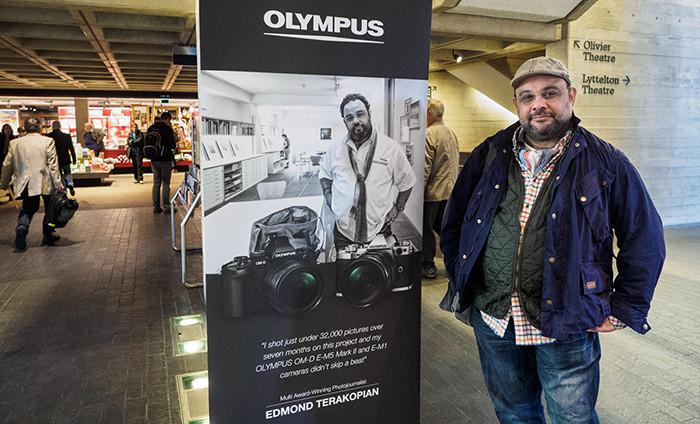
M43 shooter and Olympus Visionary Edmond Terakopian created this great project which has been featured also by BBC and Amateur Photographer. He spent seven months photographing this personal project at the Royal College of Music which culminated in an outdoor exhibition of 62 images on London’s South Bank. This is how he used the MFT gear to tell this story:
I shot the majority of the work on a pair of Olympus OM-D E-M5 Mark II cameras and the rest on the OM-D E-M1. My choice for the E-M5 Mark II was simply based on just how quite it is. I wasn’t shooting with the electronic shutter as these sometimes have issues with cycling lights (fluorescent tubes for example) but just it’s regular mechanical shutter. Whisper quite. I like to work in close and in these environments of rehearsals and performances, quite and unobtrusive cameras are an absolute necessity. One doesn’t want to put off the performers. What was wonderful was many of the performers and tutors saying just how unobtrusive I was and they hadn’t even noticed me working.
The top five lenses I used, in order of most used, were:
• Olympus Micro Zuiko 12mm f/2
• Olympus Micro Zuiko 40-150mm f/2.8 PRO
• Olympus Micro Zuiko 17mm f/1.8
• Olympus Micro Zuiko 25mm f/1.8
• Voigtländer Nokton 17.5mm f/0.95
• Voigtländer Nokton 25mm f/0.95
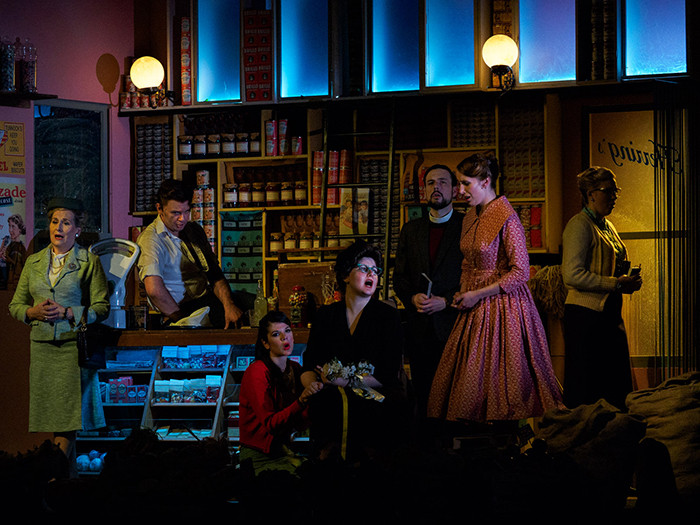
The M.Zuiko 40-150mm f2.8PRO (with and without the x1.4 teleconverter) was the perfect lens for the stage work. To keep things steady and help with muscle fatigue, I steadied this setup on an FLM carbon fibre monopod and locking FLM ball head.
Another piece of gear that was invaluable for the dress rehearsals and four performances was a pair of Think Tank Photo Skin Body Bag pouches on a belt. This let me carry all the lenses, spare batteries and memory cards I needed and let me work quickly and without fuss when moving around backstage, front of house and in the dressing rooms.
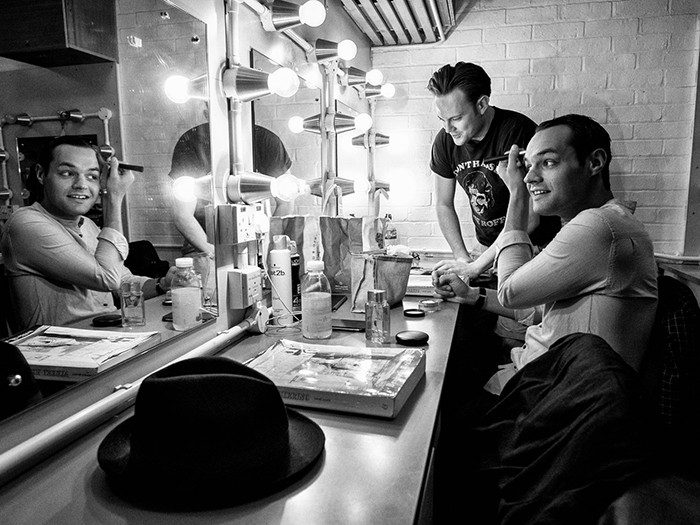
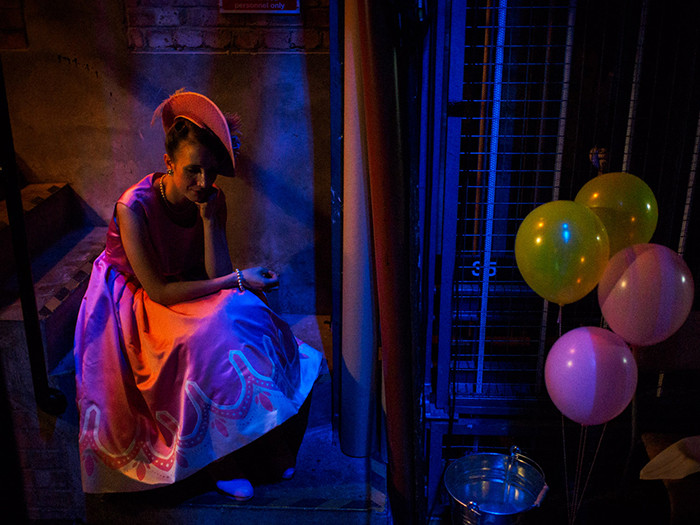
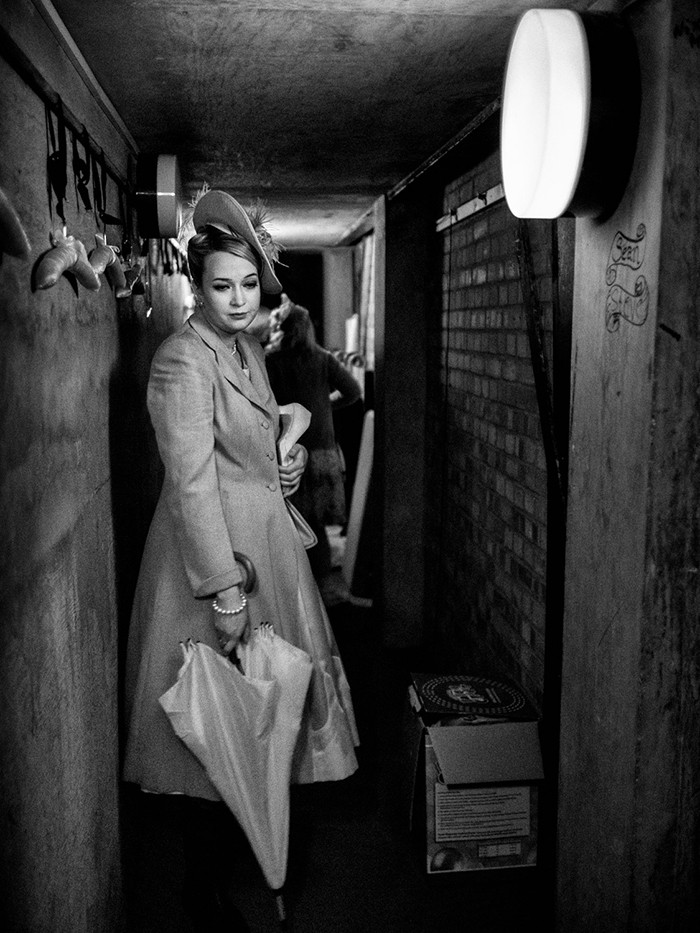
When backstage during the dress rehearsals, I realised the practically pitch black conditions needed faster lenses, so before the performances I got myself a pair of Voigtlander f0.95 Noktons; the 17.5mm and 25mm. These worked a treat and also illustrate nicely how versatile the m43 mount is.
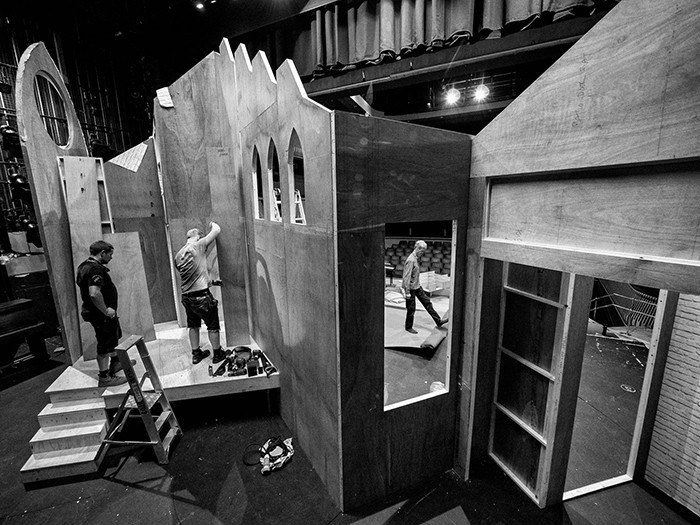
Another lens which came into it’s own during set construction was the new M.Zuiko 7-14mm f2.8PRO. The rotating set filled the stage and was also tall, but this lens really helped get pictures I wouldn’t have been able to get.
Edmond Terakopian
Website: terakopian.com
Blog: photothisandthat.co.uk
Video: teravision.eu
twitter.com/terakopian
instagram.com/terakopian/
flickr.com/photos/terakopian
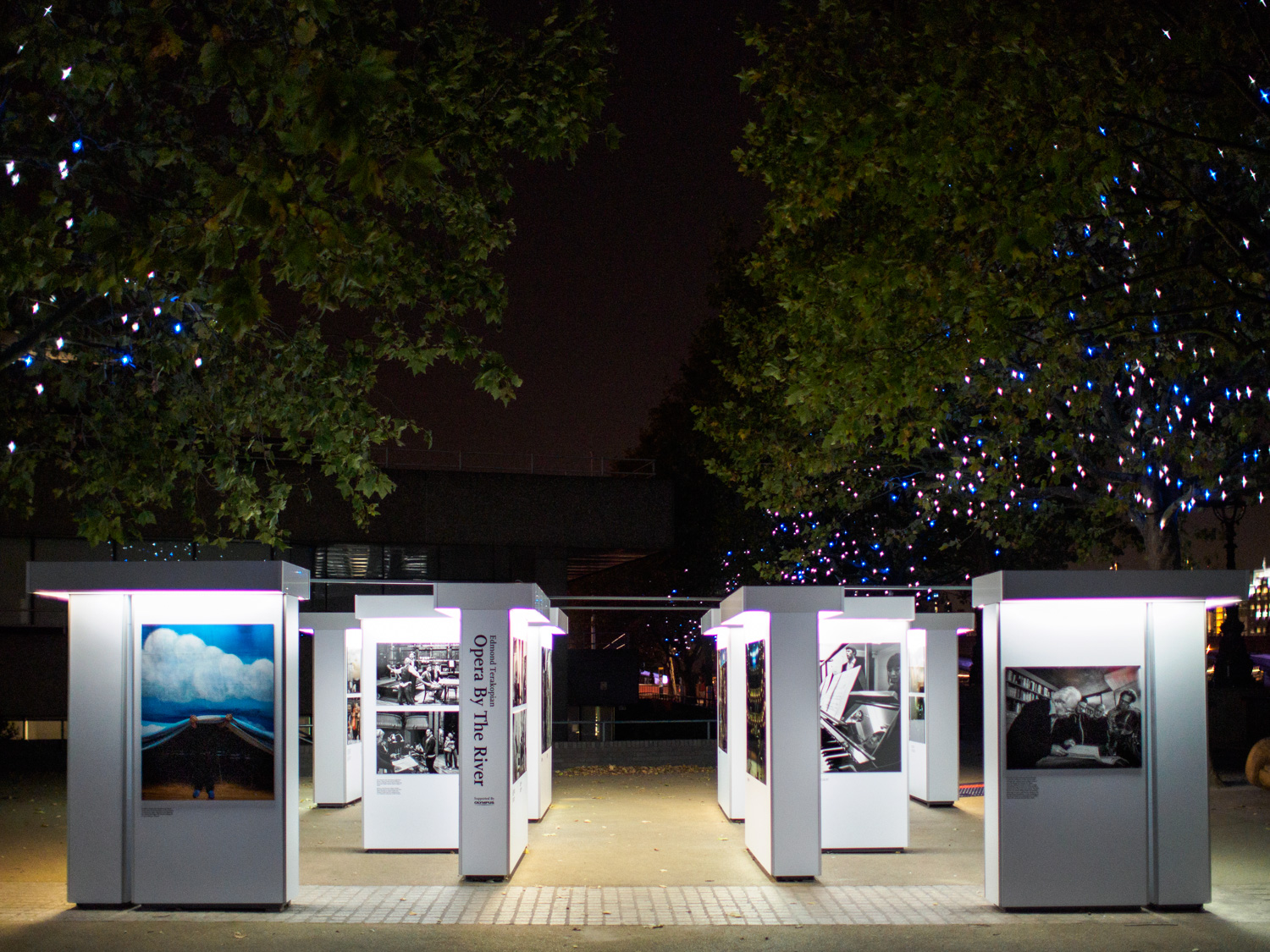
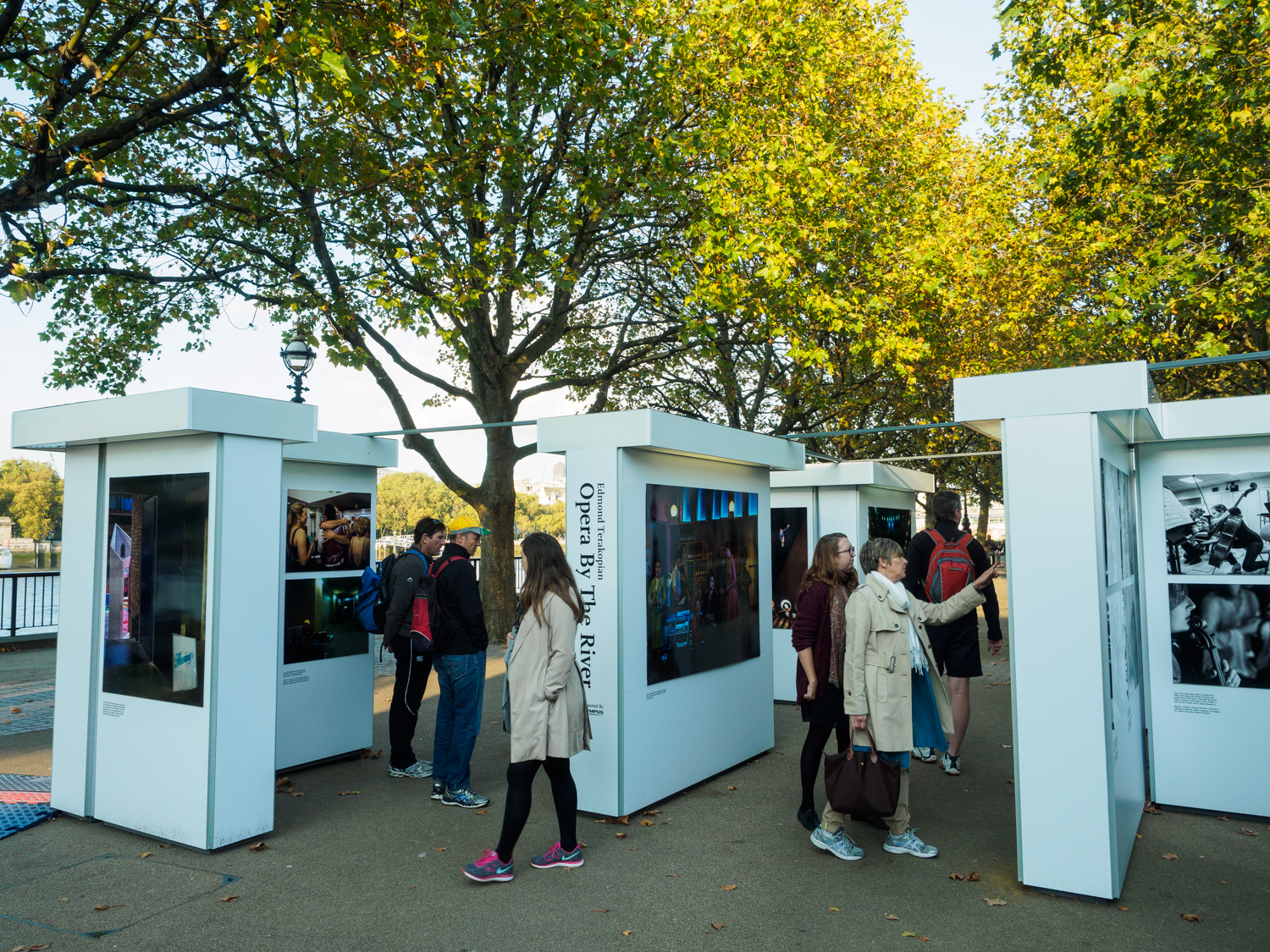
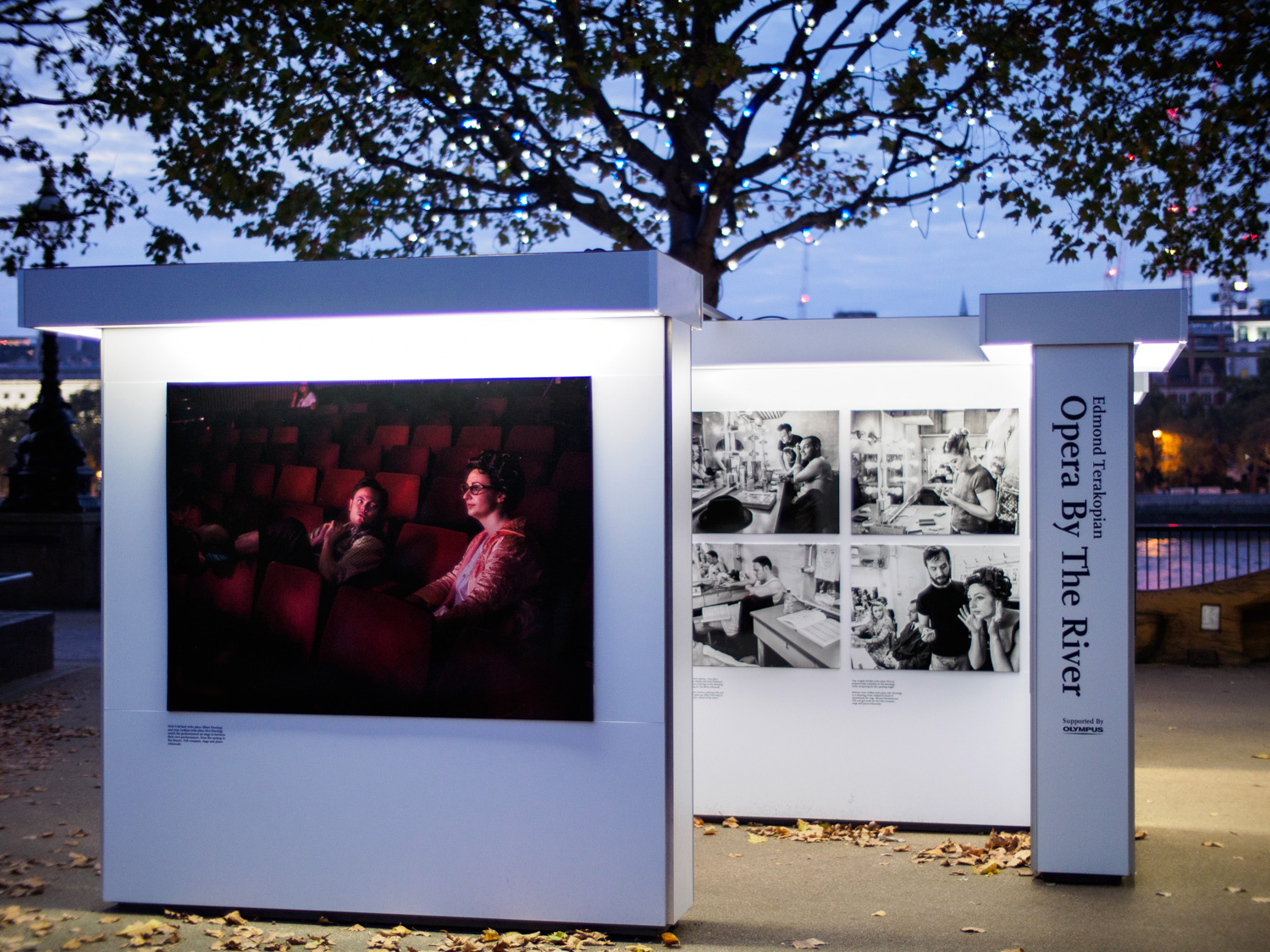
And here is the official Olympus press text about the exhibition (exhibition is now over).
Press information from Olympus
Photo reportage by Edmond Terakopian:
The Royal College of Music photo essay project.
Southend, Tuesday 15th September. Opera by the River is an outdoor photographic installation, exhibiting the work of Edmond Terakopian. Supported by Olympus, Terakopian spent over 7 months photographing the Royal College of Music (RCM), documenting the entire process of staging an opera from the initial auditions through to the final stage take down.
From January 2015 Terakopian worked closely with the RCM and they gave him unique access to their preparations for the production of the opera ‘Albert Herring’. The photo essay captured intimate and revealing images of the opera singers, members of the orchestra and production team as they developed and finally staged the historic opera by Benjamin Britten, a former pupil of the RCM himself.
The photo essay was shot primarily on the OM-D E-M5 Mark ll, the remainder on the OM-D E-M1 and has been edited to 62 images, giving a glimpse into the one of the world’s great conservatoires, The Royal College of Music. The photographs will be displayed at an outdoor exhibition entitled ‘Opera by the River’, on the SouthBank London and is free for the public to view, 24 hours a day.
Terakopian said “Rehearsals, performance and backstage. All very highly tense places for the performers. The OM-D E-M5 Mark II let me be quiet and unobtrusive, so I could get close and make images that would normally be impossible to shoot in these situations. Having such small and lightweight cameras and lenses meant the long days didn’t cause fatigue and the speed of the kit let me work quickly, reacting to moments as they occurred. Making these photographs was a pure joy”.
The exhibition is being staged at RiverSide West on the SouthBank. Overlooking the River Thames it is a 4 minute stroll from the National Theatre and is situated behind the IBM building. It will open from Wednesday 30th September to Sunday 11th October 2015.
Artist’s Statement
Opera By The River
A photo reportage by Edmond Terakopian
Albert Herring; an opera by Benjamin Britten
Performed by the Royal College of Music
I read a wonderful phrase recently; “What would the earth be without art? It would be eh!’. Such a true sentiment. Whilst my career has encompassed photographing hard news stories comprised of politics, bombings, murders, war and earthquakes, my passion has always been stirred when experiencing and photographing the arts. Talent and creative expression have always been a major interest and motivation for me.
With long term assignments sadly becoming a thing of the past, I began to crave shooting a long term project. I coincidentally met a keen photographer on one of my workshops and from there my idea started to move towards shooting an arts project on opera at the Royal College of Music, where he teaches.
My timing coincided with an upcoming staging of Benjamin Britten’s Albert Herring. With Britten being a former pupil of the Royal College of Music and the theatre at there being called the Britten Theatre, every thing was aligned and felt that it was meant to be. I must say that I’m extremely thankful to the Royal College of Music for seeing my vision and allowing me this unique access.
My idea was to document every aspect of this opera, especially the parts no one sees. Auditions, set building, costume fittings, rehearsals, lighting and the dressing rooms. My favourite imagery soon came from what was going on back stage during the dress rehearsals and performances, so I spent a fair amount of my time photographing these beautifully silent and introspective moments.
I started shooting the auditions in January 2015 and the photography aspect of the project took me through to July 2015. After which, around two months of editing, image processing and exhibition design has led me to this point, where I can share this reportage in the form of an exhibition.
The free exhibition is called Opera By The River and is on Riverside Walkway (behind the IBM and ITV buildings) on the South Bank in London. The show begins on Wednesday, September 30th and will go on until Sunday, October 11th 2015. I am forever thankful to Olympus for seeing my vision for this project and supporting it. Without them, this exhibition would never have been possible. I’m also thrilled to have collaborated with Stuart Smith from Smith Design who has curated the exhibition. The open air installation construction and printing has been done by the amazing team at Standard8.
For me there were three main challenges to this reportage; the first being able to find special moments and juxtapositions during the many, many rehearsals. On the face of it, a white room with fluorescent lights and singers in normal attire aren’t the most visually arresting scenes. Also, one rehearsal looks pretty much like another. The second challenge was to keep creatively motivated during this long term shoot.
I needn’t have worried as being surrounded with so much talent from the Opera School made this project an absolute joy to photograph. That creative energy kept me buzzing throughout the months and really motivated me to make these images sing. Later in the process when the orchestra joined in the rehearsals, the energy was kicked up a notch, just making the process even more magical.
The third challenge was to be unobtrusive. I like to work in close, but naturally didn’t want to put off the musicians. Working gently and with my small and quite OM-D cameras and M.Zuiko lenses made this a possibility and I was thrilled (and blushed) when the head of opera mentioned in his closing speech after the last performance, just how unobtrusive I had been; he even said “barely noticeable”.
One of the interesting parts to the project was a visit to Aldeburgh, Benjamin Britten’s home town. Visiting The Red House where Britten lived and worked, to see the original hand written musical score was fascinating, but it became an even more special moment when Michael Rosewell who as well as being head of the opera school was also conducting the piece, flipped through the pages as he wanted to double check one single note, which sounded like it maybe incorrectly printed in the modern reprints. The note was correct!
It took seven months to shoot, resulting in 31,794 images (and a head ache in the editing stage) with 62 of these photographs making it to the exhibition. It’s been a fascinating journey for me, being one of the highlights of my 26 year career, and I’m thankful to both the Royal College of Music and Olympus for their help and support, and very thrilled to be able to share this exhibition with all who can visit and hopefully enjoy it.
www.terakopian.com
Twitter: @terakopian
#operabytheriver
31 Responses
That is the exact duo that I have, black for the E-M1 and silver for the E-M5 II as well. (With an E-PL6 w/VF-4 lurking about,too). They are all great imaging devices for different reasons! Edward is correct about the shutter in the E-M5II…It is very quiet. The focus confirm beep (optional), is quite loud-sounding with that shutter…LOL!
Surprised to see that the Oly 75mm f1.8 is not on his short list…seems like a natural for that type of work.
Interesting post!
For that kind of assignment I use the same set up, except I have the 25mm PanaLeica instead of the 25mm Voigty, and I add the 75mm. Lately I’ve been using most the Q when the 28mm angle of view is enough.
So far, only Associated Press wants me to use FF cameras..
Interesting, Marco, why do they requested FF cams? It is just anachronism or matter of taste of some editors?
Not anachronism nor matter of taste: they work with jpeg files, straight out of the camera. No post production is allowed because of photojournalism ethic (they only straighten the photo if need), and they need “small” files. That’s why they prefer the use of a 1dx, for example.
JPEGs from mFT are even smaller, so that doesn’t explain it. I’ll bet they crop small sections from an original if a photographer couldn’t get close enough to the subject. Also, a 1dx is tops at high speed shooting.
Yes…this guy is all Oly…but if you have your act together…you get the strongest lenses from each manufacturer for a given focal length. I have the panaLeica 25mm and the voigty (two totally different lenses in my world..esp. when you are using the Voigty wide open…its magical…but when you need the goods ..you need the AF…). This format is great …so many choices an killer IS.
Funny….the Assoc. Press wants fullframe….but MFT is more than you will EVER need for the web. …and for it is still more than adequate for ANYTHING in a newpaper or magazine….so that is just silly…I have been around the block and that is just archaic thinking on their part. MFT files if recorded by a pro are just fine.
I can agree with a forceful limitation, but that is what pretty much is, IMO. The problem is not the resolution for the web… the problem is that mFT can’t stand serious low light situations or very fast shutter speeds in indoor situations with decent noise. Reliability. That is the limit (together with the stock of batteries you need to bring with you… I won’t enter the fragility of the case and of the lenses, not even to compare with previous E-5 4/3). There is still no comparison between the definition of a FF and mFT. And I am talking as a extreme fan of Olympus EM1. It just can’t take it. Just realize that with serious full frames you can shot 12800 iso and, according to occasions, barely need denoise treatment (grain is pretty acceptable) and you still have virtually all the detail. I constantly try to use OLY in concerts – where I work more often (and I mean fast action in not much lit up places… not orchestra, seated guitars or BB King style…): it is just unreliable, even with new PRO lenses. Perhaps you can shoot theater, yes, as he did… but that is as far as it goes. Forget climbing above 1/200-250 if there isn’t PLENTY of lights. You never gonna catch David Lee Roth spread leg jump with it without speed lights. Also the first two images he posted aren’t such a big deal: they are pleasant, but pretty dark and with little detail for my standards. He had to turn to Nocticron to recover what OLY sensor can’t deliver… and in manual. I do not even enter the issue of photojournalism on war-fields, typhoon beaten areas, and other ‘action/outdoor’ situation. The size would be very welcome, but you simply can’t take chances with it: you need something that delivers 24/24 and don’t run out of juice in 3 hours.
I agree on everything you wrote, this summarizes also my experience. I usually shoot jazz concerts, therefore I don’t need the fast shutter speeds you need, but as you say, high iso capabilities sometimes are mandatory. A collegue from AP (he has a Sony a7r2 and uses it only for portraits and still scenes) smiled looking at the metadata of my photos, and said: I was like you, but with this thing (1dx) just trust the camera and select higher speeds. Iso 6400 is clean.
Indeed. When I shoot low light, I am most impressed with the difference of results/quality. That is why when sun sets, if I do not have to take landscapes, I put way EM1 and I am forced to get out the other…
Olympus have some of the best sealed cameras there are.
Good points. I was myoptically thinking of the subject matter on this page…but everything you metion is valid…yes you are more limited with MFT…but with skill and a selection of lenses from all manufacturers a skilled photographer can definitely serve up work that is very acceptable for the press. There are definitely ISO, shutter speed and AF advantages with FF cameras.
Can David Lee Roth still do splits!?!? LOL!
lol Hope for him he can. I truly wish OLY could improve on sensor quality and consumption, because it is a great tool full of functions that when you start using, you can’t do without anymore.
It dependes on the situation: skill is mandatory, luck is more than welcome, but when in a “hurry” you can’t swap lenses and that’s why those heavy f2.8 zooms comes at hand and do the work.
Believe it or not, even photos aimed at web (just before being uploaded to the system each photo is “marked” so it can be used on newspapers or web) need to have a good resolution.
I don’t know how it really works (not yet at least), but I saw my photos being uploaded and they looked great. I saw them on yahoo news after 20 minutes and they looked low res.
They were not cropped. I can’t say if customers have the right to crop a photo, but I doubt it.
The last time I did theater photography was during the manual focus / film era, using High-Speed Ektachrome pushed-processed. Exposure was absolutely critical and metering was difficult under spotty lighting. The “batting average” was pretty low and it was disconcerting because many of those special moments didn’t “turn out.” Now, everything is so much better thanks to the technology developed by companies like Olympus, and mFT gives photographers a certain nimbleness that is gratifying. I still wouldn’t want to get stuck in that crossover tunnel with a big fat singer 🙂
Here is a question. In the original OM-D group, the principal E-M1 advantages were a sharper viewfinder and the phase-detect bits on the sensor to support the use of regular Four Thirds lenses with a mount adapter (my favorite of which was the 14-54mm-MkII); plus the camera was slightly bigger, had more buttons, and a nice grip. So, from those of you who have both an E-M1 and an E-M5-MkII, and seem to have drifted away or stopped using the Four Thirds lenses (because the CAF on the micros is fast and effective), and who pick up the E-M5-MkII first, I want to ask, What are the photographic situations when you put the new camera down and choose to shoot with the original model? Or is it simply, that the phase detect and the old favorite lens still has sufficient draw? (Secondarily, we may all wonder what Olympus may be contemplating for the E-M1-MkII. It does seem we are stills shooters by nature, without bated breath for 4K video.)
I would say it is AF-C which has limitations on the E-M5/M5II.
Anyone wishing to read more on this project, which was called Opera By The River, should check out these two links: http://www.bbc.co.uk/news/in-pictures-34389973 and AP Magazine which also includes pictures from the exhibition where the images were showcased: http://www.amateurphotographer.co.uk/technique/interviews/opera-by-the-river-photo-exhibition-61822
Images look very flat, like the two actors in the dressing room, there’s no separation. Also, very NOISY. To be honest, this just shows the limitations of M43. It reminds me of my L-1… Great in the daytime, but put it away once it hits the afternoon. The Dynamic Range is Horrible. If this what Olympus is using to promote their cameras, then their marketing department needs to step it up.
M43 needs fast glass, 1.2 at least. Just for situations like this.
Those actors are quite close to each other and the lens is clearly wide angle so… you ain’t gonna get much separation in a composition like that with really any format. Not to mention the fact that I don’t think the photo would actually benefit from only having one person in focus.
+1
Nobody said anyone had to be out of focus. You can have both in focus and still have separation. M43 gives off flat images. It just does. This is nothing new.
Shallow DOP is too easy and overrated ! Deep DOF is about composition and clearness !
Fast glass?
He used the fastest M4/3 lenses for some of the shots.
You missed that minor detail, eh?
I don’t quite get the black and white conversion, or B/W conversion in general, but that’s my thing.
Why does anyone respond to MrsAllCraps? It’s always the same negative BS?
I read the advertisement, I know he used fast glass in the Voiits, but he used those the least. Did you read that? What I see is Horrible Noise, and by that I mean not all noise are bad, but in these photos, they’re Bad.
For example, the Lady holding the shoe… It’s ruined by the Noise. And I’m viewing it from my phone. And if I view it from my Tablet, it gets worse. Even the outside photos with the neon lights… look at all that CA!
But hey, don’t let me stop y’all from drinking the Kool-Aid.
I’m only responding as younger photographers who may not know better, may be taken in by your negativity. I make my living as a photographer. I suggest you Google me and have a read. These images were exhibited in an exhibition with the largest prints being almost two meters across. The quality was more than good enough; in fact, it was stellar, and the feedback from the exhibition was phenomenal. If you see the images as flat, I suggest you invest in a proper monitor and get it calibrated. As for the lenses, I’ve listed the top five according to statistics in Lightroom; I used several other M.Zuiko lenses too. Lens choice is personal and I like to work in close, hence the most used lens was the 12mm. These lenses worked for me and I’ve produced a body of work which has been published and exhibited and speaks for itself; not sure what the point is about the lenses which is being made here. Lastly, if you think m43 isn’t for you, the internet is huge and there must be at least one site that caters for equipment to your liking. Life’s too short to spend constantly being negative; find a site and equipment you like and sing it’s praises instead. You’ll find your quality of life will definitely increase when you are positive about something 🙂
1. This was basically an advert for Olympus product.
2. There are pros and cons to every system. I simply called out M43 cons, that I even had and was displeased with.
3. Are you saying that the noise isn’t as noticeable in the larger prints? Or is it fine by you?
4. You’re an Olympus Visionary, so you have a bias for Olympus product. This post reads like an Olympus ad, so I would tell younger Photographers to shoot film first, then get a cheap DSLR, because you can get good, or even better image quality, bodies and lenses are cheaper. And even if they decide to get into a better sysyem, they’re not stuck with an expensive body, like a EM5.
5. I am positive. I’m just giving my opinion. I don’t know how calling a picture Noisy, When it really IS, -being negative.
I hope your exhibit was a positive one.
1. By that rational everything posted or published is an advert. Certainly not the case.
2. True that there are pros and cons to every system.
3. The noise is definitely not an issue and looks more like grain and not noise. Photography is about conveying stories and bringing about an emotional response. I make my living shooting pictures. Photographing charts and looking at pictures at 100% isn’t photography.
4. I started shooting with Olympus kit as I was drawn to it, starting with the PEN E-P1. The OM-D E-M1 really got me hooked and since getting it I practically stopped shooting with my Canon and Leica setups. A fair amount of which is now sold. I became an Olympus Visionary because I like the system and use it. Not the other way around!!
Film is a good discipline but of lower quality. Medium format is better than full frame. A 10″x8″ drum scanned transparency has the best quality. The issue is how one likes to work and what one shoots. To blindly compare gear is missing the most important factor and the reason for the gear existing; photography.
5. An opinion is fine. A thought through opinion is better. Just being negative or being a troll is a waste of the person’s time.
The exhibition was very well received, thank you. Non of the over 350,000 people who visited it made any comments resembling yours. They did comment on how amazing the prints looked though. Guess you should have been there!
Exactly. Too much negativity turns the fujiboy into a hater pervert with all kinds of lame excuses. We should feel sorry for him.
Do you go by the name of Yannick?
Your comments are all very flat, like an actor in a Nikon dressing room. You are noisy and biased. Would you please explain to the rest of us how stupid we are? Or just go away and play God with the Nikophants.