








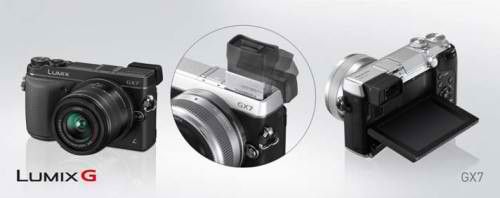
Announcement tomorrow: First of all, you are invited to follow live the GX7 announcement at 5-6am London time tomorrow morning (August 1). As usual I will continually give you links to previews, tests, preorder links and more!
Here is the German Press Text of the GX7. There very hot info translated in English:
Full‐HD 1920 x 1080/50p
The communication between lens and cameras is very fast, 240 B/s!
AVCHD‐progressive‐ oder MP4‐Format
ISO 25’600
Wlan and NFC support
Bigger fotodiodes and optimized Micro lenses.
25% better High ISO performance and 10% better resolution performance compared with the previous GX1.
It has a noiseless shooting function that allows you to shoot pictures without the use of the mechanical shutter.
And here is the press text:
Panasonic präsentiert anspruchsvollen und ambitio‐nierten Fotografen mit der LUMIX DMC‐GX7 eine neue spiegellose Micro‐Four‐Thirds‐Systemkamera im handlichen Kompaktformat. Die GX7 vereint eine kom‐pakte Bauweise, fototechnische Höchstleistung und aktuelle Kommunikationstechnik. Damit setzt sie einen neuen Massstab – nicht nur bei Micro‐Four‐Thirds‐Kameras. Dies gilt sowohl für die Aufnahmequalität als auch für die Handhabung und den Komfort.
Die Lumix GX7 garantiert eine rundum überzeugende Bildqualität dank ihrer hervorragenden Leistungen bei Auflösung, Bilderzeugung und Farb‐wiedergabe. Sie reizt das Potenzial des neuen Digital‐Live‐MOS‐Sensors mit 16 Megapixel Auflösung bei neuer Sensorarchitektur und des darauf abgestimmten neuen Venus Engine‐Bildprozessors optimal aus. So ermöglicht sie aussergewöhnlich sauber aufgelöste, scharfe Bilder selbst unter schlechten Lichtverhältnissen mit Empfindlichkeiten bis zu ISO 25’600. Als erste Lumix G Kamera verfügt sie über eine optische Bildstabilisierung per Sensor‐Shift.
Das Highlight der Lumix GX7‐Ausstattung ist der neue integrierte, um 90° nach oben schwenkbare Live‐View‐Sucher (LVF). Er hält mit einer Auflösung von 2,76 Mio Bildpunkten aktuell (August 2013) den Rekord bei Auflösung und Bildschärfe. Zugleich erleichtert er durch seine Schwenkmöglichkeit eine flexible Perspektiv‐wahl. Alternativ dazu steht für die Bildkontrolle‐ und ‐betrachtung ein nach oben oder unten klappbarer 7,5cm‐Touchscreen‐LCD‐Monitor mit 1,04 Millionen Bildpunkten zur Verfügung.
Dank der erstmals bei einer Lumix G zum Einsatz kommenden optischen Bildstabilisierung per Sensor‐Shift sind mit der Lumix GX7 unverwackelte Aufnahmen auch mit Objektiven ohne eigenen Bildstabilisator möglich, sei es mit lichtstarken Micro‐FourThirds‐Objektiven, Objektiven anderer Hersteller oder von Fremdobjektiven per Adapter, die keinen eigenen Bildstabilisator haben.
Mit einer kürzesten Verschlusszeit von nur 1/8000s erweitert die GX7 jetzt den fotografischen Gestaltungsspielraum vor allem beim Einsatz besonders lichtstarker Objektive. Zudem erleichtert die Focus‐Peaking‐Anzeige‐Funktion eine präzise Kontrolle der Fokussierung. Die Qualität der Videoaufzeichnung profitiert ebenfalls von den Verbesserungen des neuen Digital Live‐MOS‐Sensors. Dabei ist die Lumix GX7 mit Full‐HD 1920 x 1080/50p voll auf der Höhe der Zeit. Zudem stehen der Kino‐Look mit 24p‐Aufzeichnung und eine Bildaufzeichnungsrate von 24 Mb/s ebenso zur Verfügung wie die gestalterischen Möglichkeiten der P/A/S/M‐Modi sowie kontinuierlicher und Tracking‐AF. Aufgezeichnet wird im AVCHD‐progressive‐ oder MP4‐Format. Das Kontrast‐AF‐System der Lumix GX7 zeichnet sich aus durch erhöhte Schnelligkeit und Präzision dank eines schnellen digitalen Signalaustauschs zwischen Kamera und Objektiv entsprechend 240 B/s. Mit Funktionen wie Low‐Light‐AF, Pin‐Point‐AF, Mehrfeld‐ oder Spot‐AF wird das AF‐System den unter‐schiedlichsten Motiven gerecht.
Der wachsenden Bedeutung mobiler Kommuniktion wird die GX7 mit Wi-Fi‐ und NFC (Near Field Communication)‐Technologie gerecht. Benutzer können die Kamera mit ihrem Smartphone oder Tablet einfach über eine kurze Berührung der Geräte verbinden, und das nicht nur, um Bilder zu übertragen. Es ist vielmehr möglich, ein Smartphone oder Tablet als multifunktionellen Fernauslöser und Monitor zu verwenden. Die Instant Transfer Funktion erlaubt es, Fotos unmittelbar nach der Aufnahme automatisch direkt an ein Smartphone/Tablet zu senden. Zudem ist die Übertragung von Fotos und Videos über ein WLAN‐Heimnetzwerk (Router) direkt zum Sichern und Archivieren auf einen verbundenen Computer möglich.
Digital‐Live‐MOS‐Sensor mit 16 Mpx und neuer Architektur
Panasonic hat für die Lumix GX7 einen Digital‐Live‐MOS‐Sensor mit 16‐Megapixel Auflösung von Grund auf neu entwickelt. Er vereint praxisgerechtes Auflösungs‐vermögen mit hoher Empfindlichkeit und minimalem Rauschen. Erreicht wird dieser Fortschritt durch vergrösserte Fotodioden, wie sie durch neueste Technologie in der Halbleiterfertigung möglich werden. Hinzu kommt eine optimierte Gestaltung der Mikrolinsen vor den einzelnen Pixeln des Sensors. So können Farbsättigung und Empfindlichkeit jeweils um 10 Prozent gesteigert werden. Das Signal / Rauschverhältnis wird sowohl im Pixel‐Schaltkreis wie auch durch einen speziellen Schaltkreis direkt bei der Signalauslesung um 25 Prozent und die Detail‐Reproduktion um 10 Prozent im Vergleich zur GX1 verbessert. Das erweiterte Multi‐Prozess‐Rauschunterdrückungssystem des Venus Engine Bildprozessors eliminiert Bildrau‐schen noch wirkungsvoller durch das Erfassen grösserer Bereiche zur Rauscherkennung.
Das sorgt vor allem bei Nachtaufnahmen für deutlich verbesserte Bilder. Die Multi‐Prozess‐Rauschunterdrückung sorgt zudem in zwei getrennten Schritten für eine noch feinere Kontrolle des Rauschpegels. Die Struktur des Rauschens wird unab‐hängig von seiner Grösse mit dieser aktiven Steuerung verbessert – so wird zum Beispiel menschliche Haut selbst mit hohen ISO‐Werten sehr natürlich wiedergege‐ben. Für eine verbesserte Detailwiedergabe steigert ein neuer, optimierter Filter‐Prozess die Grenzauflösung um bis zu 3 Prozent und den Kontrast im mittleren bis hohen Bereich um bis zu 5 Prozent. Darüber hinaus sorgt die «Intelligent D‐Range‐Control» für einen grösseren Dynamikbereich mit gleichmässiger Abstufung. So werden alle Details von dunkel bis hell fein differenziert wiedergegeben, ohne zugelaufene Schatten oder ausgeblichene Lichter. Zusammen ermöglichen der Digital Live MOS‐Sensor und der Venus Engine Bildprozessor Empfindlichkeiten bis zu maximal ISO 25’600.
Überlegene Autofokus‐Leistung und Reaktionsgeschwindigkeit
Alle Lumix G‐Kameras arbeiten mit einem Sensor‐Kontrast‐AF‐System zur Ermittlung der optimalen Schärfe. Dies garantiert eine grössere Genauigkeit der Entfer‐nungseinstellung im Vergleich zum klassischen Phasendetektions‐System. Das gilt ganz besonders beim Fotografieren mit lichtstarken Objektiven bei grosser Blen‐denöffnung. Der blitzschnelle Kontrast‐Autofokus der Lumix GX7 wird auch schnell bewegten Motiven gerecht. In Genauigkeit und Geschwindigkeit übertrifft er selbst High‐End‐DSLRs mit Phasendetektionssystem. Um die AF‐Reaktionszeiten zu mini‐mieren, tauschen Kamera und Objektiv ihre digitalen Signale bis zu 240 Mal pro Sekunde aus. Das ermöglicht mit der Lumix GX7 die High‐Speed‐Bildserien mit 5 B/s bei voller 16‐Megapixel‐Auflösung. Mit AF‐Tracking erlaubt der schnelle Auto‐fokus der GX7 Serienbelichtungen mit bis zu 4,3 B/s (Im 1‐Feld‐AF‐Modus9 bei Schärfeverfolgung bewe‐ter Objekte. Maximal 40 B/s sind mit elektronischem Verschluss möglich.
Der schon aus Lumix G6 und GF6 bekannte Low‐Light‐AF‐Modus verbessert ausserdem die AF‐Leistung unter schlechten Lichtverhältnissen auch ohne Hilfslicht. Er erlaubt die automatische Fokussierung in bis zu ‐4 EV dunklerer Umgebung, was der Helligkeit einer Landschaft bei klarem Sternenhimmel, ohne weitere Lichtquelle, entspricht. ie Funktionalität des Pin‐Point‐AF wird mit der GX7 weiter verbessert. So kann die Vergrösserung auf dem Monitor von 3x bis 10x in 1/10‐Stufen variiert werden. Bild‐im‐Bild‐Darstellung ist mit 3x‐ bis 6x‐Vergösserung möglich, wobei die Rahmen‐grösse stufenlos von 1/80 bis 1/24 gewählt werden kann. Der One‐Shot‐AF‐Modus erlaubt es, im MF‐Modus den Autofokus schnell durch einen Druck auf die AF‐Speichertaste zu aktivieren um eine schnelle Vorfokussierung vorzunehmen und dann manuell fein zu fokussieren. Aussergewöhnlich reaktionsschnell ist die Lumix GX7 auch mit ihrer Einschaltzeit von nur 0,5 s (Mit H‐FS1442A‐Zoom gemäss CIPA‐Standard); bei Verwendung von UHS‐I (Ultra High Speed I) SDXC/SDHC werden die Dateien selbst im RAW‐Modus schnell ge‐speichert.
Neigbarer Sucher und Touchscreen‐Monitor
Die Lumix GX7 ist mit einem integrierten, um 90° nach oben klappbaren LVF (Live View Finder) im 16:9‐Format ausgestattet. Er bietet eine ungewöhnlich hohe Auflö‐sung von 2.764.800 Bildpunkten und bildet fast den gesamten Adobe‐RGB‐Farbraum ab. Die visuell angenehme Suchervergrösserung von effektiv 0.7x (ent‐sprechend 35mm KB) und circa 17,5mm Austrittspupille erlauben eine entspannte Betrachtung des 100%‐Bildes. Der kippbare LVF erlaubt den Einblick von oben für unauffällige Aufnahmen aus Brust‐Perspektive. Ein Augensensor sorgt für automa‐tische Umschaltung zwischen Sucher‐ und Monitorbild. Bei Blick in den Sucher wird automatisch der Autofokus aktiviert, damit die GX7 sofort aufnahmebereit ist. Die Empfindlichkeit des Augensensors ist in zwei Stufen regelbar. Um unbeabsichtigtes Umschalten bei Bedienung die Kamera über den Touchscreen‐Monitor zu vermei‐den, lässt sich der Sensor auch abschalten. Der 7,5cm grosse, elektrostatische Touchscreen‐LCD‐Monitor mit 1,04 Millionen Bildpunkten zeigt circa 100 Prozent des Motivs und ist um bis zu 80 Grad nach oben und 45 Grad nach unten klappbar. Seine Frontscheibe ist direkt, ohne eine Luftschicht dazwischen, auf dem neuen LCD‐Panel mit integrierter Touch‐Sensorik befestigt. Das verringert Reflexe deut‐lich. Zusammen mit der um etwa 13 Prozent erhöhten Auflösung und um 20 Pro‐zent verbesserten Farbwiedergabe liefert der LCD‐Monitor der GX7 ein besser er‐kennbares Bild als ältere Monitor‐Generationen. Eine verbesserte Hintergrundbeleuchtung sorgt für einen vergrösserten Blickwinkel und einen um 25 Prozent ge‐ringeren Energieverbrauch. Beim Autofokus per Touchscreen kann für eine präzisere Scharfstellung der Zielpunkt für die Fokussierung einfach mit einer Fingerbewe‐gung vergrössert dargestellt werden. Die Empfindlichkeit des Touch‐Pad‐AF wurde bei der GX7 erhöht, so dass er noch schneller reagiert.
Detailverbesserungen– Optischer Bildstabilisator im Kameragehäuse
Die Lumix GX7 ist die erste Lumix G mit integriertem Bildstabilisator im Gehäuse. Er schützt beim Fotografieren mit Objektiven ohne eigenen Bildstabilisator sicher vor verwackelten Bildern. Das funktioniert nicht nur mit Micro‐Four‐Thirds‐Objektiven ohne Bildstabilisierung, sondern auch mit Objektiven von Fremdherstellern, unab‐hängig davon, ob diese über ein Micro‐Four‐Thirds‐Bajonett verfügen oder über Adapter angeschlossen werden. Werden Lumix G‐Objektive mit O.I.S. an der GX7 verwendet, erhält die objektivspezifische Bildstabilisierung automatisch Vorrang.
Kürzeste Verschlusszeit 1/8000 s
Die Lumix GX7 bietet jetzt 1/8000 s als kürzeste Verschlusszeit. Sie gestattet das »Einfrieren« schnell bewegter Motive, lässt aber auch mehr Spielraum bei der Blendenwahl mit lichtstarken Objektiven, etwa um auch in hellerer Umgebung mit geringer Tiefenschärfe bei offener Blende zu fotografieren.
Focus‐Peaking‐Anzeige – Die Schärfe im Blick
Für eine präzise Kontrolle der Scharfstellung ist die Focus‐Peaking‐Anzeige der Lumix GX7 äusserst praktisch. Sie funktioniert sowohl im AF‐MF wie im MF‐Modus und zeigt die Motivkanten, auf denen die Schärfe liegt, farbig an. Die Anzeige lässt sich in zwei Stufen regeln, abschalten und in der Farbe zwischen blau oder orange variieren, damit sie vor unterschiedlichen Hintergründen immer gut erkennbar bleibt.
Stummschaltung
Um lautlose Aufnahmen bei besonderen Anlässen zu ermöglichen, wechselt diese Einstellung auf Knopfdruck vom mechanischen auf den elektronischen Auslöser, schaltet alle Töne aus (AF, Bedienung) und unterdrückt das Blitz‐ sowie AF‐Hilfslicht.
Full‐HD‐Videos mit 50p und reaktionsschnellem Autofokus
Die Lumix GX7 filmt Full‐HD‐Videos mit 1.920 x 1.080 Pixeln und 50p im AVCHD‐progressive‐Modus (MPEG‐4 / H.264). Sie unterstützt auch Aufnahmen im Kino‐Look mit 1.080/24p im AVCHD‐Format. Darüber hinaus können Videofilmer in den Modi P/A / S/M nach Bedarf individuelle Einstellungen vornehmen. Für die direkte Wiedergabe auf einem PC oder anderen tragbaren elektronischen Geräten kann die GX7 Full‐HD‐Videos – ohne vorherige Dateikonvertierung – auch im MP4‐Format aufzeichnen.
Dank einer optimierten Ausnutzung im Pixel‐Mix profitieren auch Videoaufnahmen von den Verbesserungen des Sensors in puncto Empfindlichkeit, Schärfe und Klar‐heit des Bildes. Ergänzend zum kontinuierlichen AF erlaubt die Touch‐AF‐Funktion die gezielte Schärfeverlagerung von einem Motivdetail zum anderen, wie man es aus Kinofilmen kennt. Dazu reicht ein Antippen des Zielmotivs auf dem Monitor, damit der AF dem Detail selbst dann mit der Schärfe folgt, wenn es sich anschlies‐send bewegt. Für guten Stereo‐Klang zu den GX7‐Videos sorgt Dolby Digital‐Tonaufzeichnung. Ein Windschutzfilter unterdrückt störende Nebengeräusche. Die Extra‐Tele‐Konverter‐Funktion erweitert den Zoombereich maximal 4,8x, und das dank der geringeren Videoauflösung ohne eine Verschlechterung der Bildqualität Die Zeitraffer‐Funktion startet die Aufnahme von Fotosequenzen automatisch, sobald die Startzeit, Intervall und die Anzahl der Bilder vorgewählt sind. Die Stop‐Motion‐Animation‐Funktion ermöglicht die Herstellung von Trick‐Videos durch automatisches Zusammenfügen der nacheinander aufgenommenen Einzel‐Fotos mit unterschiedlichen Bewegungs‐ oder Entwicklungsstadien eines Objektes.
- Maximale Aufnahmedauer mit AVCHD 29 Minuten 59 Sekunden
- Maximale Aufnahmedauer mit MP4 29 Minuten 59 Sekunden oder bis zu 4 GB
Einfache Bedienung / Umfangreiche Serienausstattung inkl. WLAN/NFC
Das Gussgehäuse der DMC‐GX7 aus einer Magnesium‐Legierung ist höchst stabil und kompromisslos auf Zweckmässigkeit und Zuverlässigkeit ausgelegt. Die intuiti‐ve Bedienung der Lumix GX7 ist das Ergebnis langjähriger Panasonic Erfahrung. Zwei Einstellräder vorne und hinten an der Kamera dienen der schnellen und siche‐ren Einstellung – etwa von Zeit und Blende bei manueller Vorwahl. Die Live‐View‐Funktion erlaubt die Kontrolle von Spitzlichtern und Schatten schon vor der Auf‐nahme, um bei Bedarf eine Belichtungsanpassung getrennt für helle und dunkle Bereiche vornehmen zu können. Dafür bietet die GX7 drei Voreinstellungen, zu den weitere drei individuelle Benutzer‐Einstellungen extra gespeichert werden können. Darüber hinaus ist eine neue Fn(Funktions)‐Registerkarte im Menü integriert, mit der insgesamt ausgewählte 9 Funktionen (5 im Register und 4 per Taste) aus insge‐samt 40 möglichen Optionen schnell aufgerufen werden können.
Einfache Verbindung, Bildübertragung und Fernbedienung via Wi-Fi/NFC
Die GX7 ist mit Wi-Fi‐Modul (IEEE 802.11b/g/n) und NFC (Near Field Communication)‐Technologie ausgestattet. Damit ergeben sich bei Aufnahme und Wiedergabe neue Möglichkeiten. Um diese Foto‐, Betrachtungs‐ und Austausch‐Funktionen mit der Lumix GX7 nutzen zu können, muss nur die Panasonic eigene Anwendungs‐software Panasonic «Image App für iOS‐ oder Android Smartphones‐ oder Tablets auf dem jeweiligen Mobilgerät installiert sein. Benutzer können die Kamera ganz einfach mit einem Smartphone oder Tablet‐PC verbinden, indem sie die Geräte nahe zusammenführen. Dann kommunizieren die Geräte nach wenigen Sekunden ohne lästige Verbindungsprozedur oder manuelle Autorisierung. Mit einem Smartphone oder Tablet‐PC ist bei Foto‐ und Videoaufnahmen auch die Kamera‐fernbedienung und die Bildkontrolle über das Geräte‐Display möglich. (Bei Videoaufnahmen ist die Fernsteuerung von Aufnahme‐Start/‐Stopp über Smartphone/Tablet möglich) So kann die Einstellung von Blende, Verschlusszeit, Fokussierung, Belichtungskorrektur, Zoom‐Brennweite (Mit Lumix G Power‐Zoom‐Objektiven.) und anderen Vorgaben per Smartphone/Tablet vorgenommen werden. Mit der Instant‐Transfer‐Funktion kann die Kamera die Bilddaten nach dem Auslösen auf dafür ausgewählte elektronische Geräte übertragen. Im Wiedergabe‐Modus reicht das Antippen eines in der Kamera gespeicherten Bildes, um dieses auf dem Display von Smartphone/Tablet anzuzeigen. Zusätzlich ist es möglich, die Standortinformationen des GPS (Global Positioning System)‐Protokolls eines Smartphones/Tablets mit installierter App den Fotos zuzuordnen. Die GX7 verein‐facht auch das Archivieren von Bildern, indem sie die Bilddaten über einen WLAN‐Router an einen PC oder andere kompatible elektronische Geräte überträgt. Lumix-Fotografen können auch Speicherplatz in der exklusiven Cloud des Panasonic Services «Lumix Club» nutzen. In diesem Cloud‐Service erhalten sie einen persönlichen Ordner, in den sie ihre Bilddaten zum Speichern hochladen können. Von dort können diese Dateien auch zu Diensten wie Facebook, Flickr, Picasa, Twitter oder YouTube übertragen werden. Eine WiFi‐Direct‐Funktion erlaubt zudem die Bildwiedergabe auf entsprechend ausgestatteten, DLNA (Digital Living Network Alliance)‐kompatiblen Viere‐HDTV‐Geräten.
Digital‐Effekte und Foto‐Stile erweitern die Bildgestaltungsmöglichkeiten
Bei der automatischen Motivprogrammwahl im Intelligent‐Auto‐Modus ist als ne‐untes Motiv die Speisen‐Erkennung hinzugekommen. Der Creative‐Control‐Modus wird bei der GX7 auf 22 Filter‐Optionen erweitert. Ganz neu sind Monochrom, Monochrom grob und Monochrom seidig. Sie ergänzen die bekannten Effekte Ex‐pressiv, Retro, High Key, Sepia, Hohe Dynamik, Soft Focus (nur bei Fotos), Monochrom dyna‐misch, Impressiv, SW mit einer Farbe, Cross Prozess, Low Key, Spielzeugkamera, Stern‐Filter (nur Fotos) Miniatur‐Effekt, Historisch (Old Days), Sonnenschein (nur Fotos), Bleach Bypass, Spielzeugkamera Pop und Fantasie. Die einzelnen Effekte sind zudem noch variier‐bar. Die Creative‐Panorama‐Funktion erzeugt horizontale oder vertikale Panora‐men mit bis zu 360° Bildwinkel mit einem Kameraschwenk. Auf diese Panorama‐Bilder können 18 der Filter‐Effekte des Creative‐Control‐Modus angewandt wer‐den. Die Foto‐Stile werden bei der Lumix GX7 noch um die Monochrom‐Farbfilter (Gelb, Orange, Rot, Grün) für differenzierte Schwarzweiss‐Aufnahmen erweitert.
153 Responses
25% better High ISO performance? What should this exactly mean?
Indeed. A quarter-stop improvement would just fall into the range of error tolerances.
25% better than GX1. Won’t that be similar to the new Sony sensors used in Gh3/Em5 etc? No breakthrough here. Just meh
GX1 has DxOMark high ISO score of 703, add 25%, it will be 879. E-PM2 for comparison has 932 – within measurement error. So either Panasonic reached the performance of Sony but kept resolution the same against marketing judgment, or just used their sensor.
People should REALLY learn how to read DXO scores. Low-Light ISO score is calculated from noise, dynamic range, and color depth! If ANY of these go below a certain threshold, the Low-Light ISO score is fixed at that point. So better SNR doesn’t mean better Low-Light ISO score if – for example – dynamic range is bad.
Why is %-calculation so terrible weak nowadays?? Don’t they teach basics anymore in school??? 🙁
dxo ratings are purely invented to keep forum discussions simple… too simple.
Yup that 25% better than the GX1 seems to be the “Gotcha” here. I would guess it’s the G6 sensor then, so, nothing worth over a grand, for the same old sensor. I’m glad the truth came out, before I pre ordered.
if we assume that iso200 to 1600(about 4 stops) are all acceptable.
25% means 1 stop. lol
#cross fingers
Panasonic says that the signal/noise ratio has been improved by 25 percent. This translates into a significantly higher usable ISO value.
The Sony RX100 II claimed a “40% improvement in low-light sensitivity” over the original RX100
If you head over to dxolabs.com you can comparethem (hope the link works).
Summary: orginal RX100 a low-light score of 390 ISO and the updated RX100 II has a score of 483 ISO.
If 40% means 1/3 of a stop then the 25% improvement is only interesting for marketeers…
So it should be ISO 878 in DxO’s metering, which is by 17 less to EP5, but better than GH3/EM5.
Unfortunately it’s a lot more complicated than that. Noise comes not only from the sensor but the light as “shot noise”. Shot noise dominates until very, very low light (i.e. shadows at high ISO) unless the sensor is awful like the old Oly sensors (and unlike the GX1). For some perspective, GX1’s sensor noise is only 25% less than ideal when collecting ~8 photons. At that point the statistics start to fall apart and the signal is worthlessly low meaning bad SNR anyways.
In actuality, 25% read noise reduction (which is what the article seems to be saying) is unimportant at high ISO and still worse than the Sony at low ISO (where it impacts deep shadow noise and dynamic range). They seem to be indicating a 10% sensitivity improvement, but the Sony is 20% better than the GX1.
All in all, casts some doubt on this being actually better than the Sony. It’s a non-technical writeup in a language I (and apparently Google) am not very good at so I’d not call it definitive, but still…
25% better signal to noise ratio than GX1.
That would mean it is better than E-P5 or even Nikon D7100!!
Look at this chart. At ISO 6400 the D7100 hat about 24 dB and GX7 would reach 25 dB.
http://www.dxomark.com/index.php/Cameras/Compare-Camera-Sensors/Compare-cameras-side-by-side/%28appareil1%29/883|0/%28brand%29/Olympus/%28appareil2%29/865|0/%28brand2%29/Nikon/%28appareil3%29/754|0/%28brand3%29/Panasonic
It probably means GX7 has GH3 sensor. Which is good enough.
Nice camera. I didn’t know it had the tilt screen.
With a certain dose of cynicism, I’d say that spec-wise this is the newest Panasonic G, albeit with an off-centered tiltable EVF and with that alone it makes a big splash.
ok fine, whatever it takes 😉
My senses are overloading….HELP,
So it’s a Panasonic sensor, not a Sony.
Frome the text :
“Panasonic has developed a Digital Live MOS sensor with 16-megapixel resolution from the ground up for the Lumix GX7.”
One less mystery 🙂
“from the ground up…” Does that mean BSI or back side up!!!??? 🙂
“Af and Flash will be off!”
Not quite: it says that the AF *sound* and assist light will be off, not that you will need to focus manually…
But it doesn’t say anything about the implementation of that kind of electronic shutter: speed, image resolution, possible scan effects are unknown.
But the grip is too large! Damn it made the whole camera look ugly!
Some find the GX1’s too small for a secure grip, and the GX7’s, while bigger, doesn’t seem to protrude much more. They might actually have found a very good balance here.
The GX1 has one of the BEST Grips in MFT!! I have one and it’s better than the one on the L-1! It has a slight indent for your index finger, something the L-1 doesn’t. There’s NO olympus camera grip even close to it. You can comfortably hold in with one hand.
Looks like there’s even MORE of a improvement with the GX7.
Stop slinging Fud.
How dare they? Go to Japan now and personally ask, no, demand, Panasonic to make the grip just to your liking. Because we all here know the world revolves around you! Go!
When I wrote “some find”, I meant it exactly like it, and from first-hand experience: I have had a GX1 for a year and a half, and find the grip just fine. But at the same time I have to admit that it is slightly cramped for average to large hands when you hold it for a while, and it could be a bit better at securing a stable hold when shooting one-handed. And among all the people around me who have taken pictures with it, my better half (among “some” others) always complains that it is hard to hold securely because the grip is too small. The fact that Olympus’s offering is worse in this respect isn’t reason enough to believe the GX1 is perfect, and I’m just glad that the GX7 brings some improvement over it.
Grip is good, more like finally an option of still quite compact body with decent grip. E-M5 was horrible, pens better, but still soso, lets see how gx7 actually sits in hands. Only after some tests and playing with gx7 in real can make any decent judgement
E-M5 is great, but you don’t grip it like you would a DSLR, you rest it on the base of you palm and just use your fingers to keep it from tipping forward – like you would any other flattish compact.
That was fast ! at least for me 😀
Doesn’t have it Sony sensor?
improving Panasonic sensor 25% << changing from Panasonic to Sony sensor
if this is 25% for current (GX1) Panasonic sensor, that's a great drawback! I won't buy it , if so.
The signal/ noise Ratio gets improved by 25% , not sure if this is the same though
Panasonic claims that the senor output SNR has been inproved by 25%, this is about 1 db and I would expect GH3 level.
Yay! They’ve got an all black version too!
I hope I’ll be proven wrong, but if it indeed features a Panasonic sensor, I think the IQ won’t match the Sony sensor found in the E-P5, OM-D and GH3 🙁
The Sony sensor offers 2 stops better DR than the sensor in the GX1 while offering 27% better low light performance.
If Panasonic didn’t address their DR issue with this new sensor I won’t buy the camera. A real shame, because if it had a Sony sensor, I’d not even hesitate…
GET OVER IT.
No one has claimed it to be, It’s not confirmed by anyone. It’s only “Rumored”. It can even be a Fuji sensor for all we know.
I’m sure the Sensor in the GX7 is up to snuff and can’t wait to reserve one. I need this Day One.
Relax.
From DXOMark’s very detailed and accurate measurements it seems extremely likely the GH3 sensor is indeed of the same crop as the Sony ones in the latest Oly cameras.
Pretending it’s not from Sony is not any more right than saying it is. However, its performance being so close to the Sony sensor suggests their technologies are very similar, suggesting it’s likely a Sony design.
Personally, I don’t care whether it’s a Sony sensor or not: all I want is a sensor providing at least the same IQ in both DR and noise.
So far, except for Toshiba, no other company managed to design a sensor with such low readout noise. Panasonic is far behind and we will see if they caught up or not with the GX7. I highly doubt they did.
The best actual APS-C sensor is not a Sony one but but according to different review, it is the last Xtrans-CMOS from Fuji.
According to what? Because techradar places it behind E-PM2 and NEX-3n:
in noise:
http://cdn3.mos.techradar.futurecdn.net//art/cameras/LabCharts/Fuji/XM1/Fuji_XM1_TIFF_SNR-580-100.JPG
and behind e-PM2 in dynamic range:
http://cdn4.mos.techradar.futurecdn.net//art/cameras/LabCharts/Fuji/XM1/Fuji_XM1_TIFF_DR-580-100.JPG
Then TechRadar’s measurements are bogus. I own the X-E1 and the OM-D (and I have the E-P5 right now in my hands for review for the next week) and the X-E1 is at least a full stop better in noise control over the latest Oly cams. DR is pretty even (Oly has more highlight headroom, Fuji has more shadow room)…both can render scenes pretty much the same in the DR department.
I also can confirm that the Fuji X-E1 has slightly better noise performance than the OM-D (which is quite good already).
The authority in terms of sensor measurement is dxomark.com.
Until they actually test Fuji’s X-Trans sensor, the jury is out.
And for the record: as of today the best APS-C sensor (from dxomark’s ranking) is not made by Sony, but Toshiba. This is the sensor used by the Nikon D5200 (source: http://en.wikipedia.org/wiki/Nikon_D5200).
http://www.lesnumeriques.com/appareil-photo-numerique/fujifilm-x-m1-p16635/test.html#test-complet
“Fujifilm offers there a real Visual slap and literally a spanking at any competition, even at the most prestigious reflex 24 x 36! Nothing less.”
“As ISO 25600, it is probably one of the only devices of the market that will provide a yet honourable image draw 20 x 30, his only rivals on the subject called 5d MkIII, D3s and D4. Not bad.”
“Lesnumerique” use a certified DxOMark labs for testing.
“Personally, I don’t care whether it’s a Sony sensor or not:”
You made a comment on it.
There’s no link with a Panasonic official stating so. People just want to believe that.
Panasonic makes it’s own sensors, If they were to get sensors from someone else, it defiantly wouldn’t be sony, that’s the last company they would go to.
Sony is a direct Rival to Panasonic, I don’t see them doing anything like that.
You conveniently ONLY quoted the first half of what I wrote. Here is the entire sentence: “Personally, I don’t care whether it’s a Sony sensor or not: all I want is a sensor providing at least the same IQ in both DR and noise.”
The part after the colon is precisely what matters:
I do not care if it’s a Sony sensor or not AS LONG AS IT PROVIDES THE SAME IQ.
Please don’t put things out of context.
Technically, Sony is a rival of just about any other camera manufacturer. This is why they keep the very best sensors for themselves (RX) and sell the rest to the others.
Gh3 has a sony sensor. Believe it
“Alternativ dazu steht für die Bildkontrolle‐ und ‐betrachtung ein nach oben oder unten klappbarer 7,5cm‐Touchscreen‐LCD‐Monitor mit 1,04 Millionen Bildpunkten zur Verfügung.”
you can tilt the screen up or down – yes! selfies! 😀
What would be nice, is if the screen can be placed in a “closed” position towards the camera (for protection when not needed).
You can apply a smartphone transparent screen cover. I have one on my OMD Em5 since more than a year and it works.
Yep. I did the same on my GX1. Works great. I even put one on my GH2’s screen, even though it’s in the closed to body position the majority of the time.
You cannot flip the screen upwards as much as the one in the GF6 so no selfies possible.
yeh but if you can tilt it down far enough you can do a selfie with the screen at the bottom of the camera?
You can have either built in EVF or 180° rotation of the LCD, both are not possible ( unless the camera is very wide or the LCD is very narrow ).
Guys place the camera on something facing you, frame it with your wifi connceted smartphone, and do a 2 second timer. Bam! =p
Sensor improvements sound nice, but I have no idea if it will hold up to EM-5 standards.
Other than that, I’m sure this camera TRUMPS the OMD.
You already heard it here… People are selling their OMD’s already for this.
Without even reading a review about the camera? Pretty stupid!
Selling OM-Ds? 🙂 🙂 🙂 Must be a few sick people with a bad case of GAS, very useful weather sealing and 5-axis IBIS trumps useless gimmicks like WiFi (can be had with EyeFi or FlashAir, but why?) and tilt-up EVF (for shooting skies in bright sunlight with a neck in a gypsum collar?) any day.
Now, if it had much better tracking (with OSPDAF probably), that would be another matter.
Last time I checked, OM-D still is a pretty darn capable camera by latest standards. Unless the ergonomics just doesn’t make the cut, one has to wonder how good is good enough.
Compare yourself at DXO and take a calculator for %-algebra if needed.
It will be better if these improvements in the text are true.
What the ….. ????
Der blitzschnelle Kontrast‐Autofokus der Lumix GX7 wird auch schnell bewegten Motiven gerecht. In Genauigkeit und Geschwindigkeit übertrifft er selbst High‐End‐DSLRs mit Phasendetektionssystem.
-> Contrast AF that’s faster than high-end DSLR phase AF ???
Das ermöglicht mit der Lumix GX7 die High‐Speed‐Bildserien mit 5 B/s bei voller 16‐Megapixel‐Auflösung. Mit AF‐Tracking erlaubt der schnelle Auto‐fokus der GX7 Serienbelichtungen mit bis zu 4,3 B/s (Im 1‐Feld‐AF‐Modus9 bei Schärfeverfolgung bewe‐ter Objekte.
-> Non-tracking-AF : 5 photos/s , with AF-tracking 4.3
Maximal 40 B/s sind mit elektronischem Verschluss möglich.
-> With electronic shutter up to 40 photos/s ??????
Why is this hard to believe? The GH3 and E-P5 already have AF that is as fast or faster than pro DSLRs in single shot. Now, continuous AF is another story, but I’m sure they’re talking about single shot, and Panny’s AF has been in line with top tier DSLRs in single shot for quite some time.
That is true. Even E-P5 is faster than D800 or 5D MK III in S-AF mode!!!
Up to 40 pics/s is believable, although you can expect caveats: on the GX1 you have up to 20 pics/s in “electronic shutter” (or shutterless) mode, but that comes with a maximum resolution of 4MP. I expect/fear that the same kind of restriction will come with the GX7…
GH2 already has 40 fps. I don’t use it much, but there’s no mechanical shutter noise at all. It’s JPG only and resolution is lower.
Wow is beautiful. But 1000 euro for body alone is way to much. It still has a tiny sensor and for this kind of money i can buy small kits and good lenses from Sony, Fuji etc…….. with APSC. 43 bodies should be priced under 200 euro. That would be a reasonable price for small files and no DOF control.
43 is digging their own grave.
Watch out – TROLLALERT!
200 EUR?! Too much! Even panasonic or Olympus should pay us for using their cameras… 😀
That would be the best right. 😉 …. I don’t understand those people, do you?
So m43 is tiny and APS is huge….. hahaha… adriaantiue f***ing idiot!
show us examples of your ridiculous theory….
btw, do you also troll on aps-c/ff sites? like “why get a bigger sensor with limited lenses selection when you can get a micro 4/3 camera with fantastic small lenses and same level of IQ” ? ? ?
The problem is that you cannot get the same IQ not if you compare like for like , ie best mFT against best APS the OMD does not even match the last gen Sony 16mp models such as K5 /D5100 etc. Considering the sensor size diffence the mFT should be .75 of a stop behind ,when in reality the D5200/D7100 is actually 1.4 stops ahead in both DR and colour depth.
http://www.dxomark.com/index.php/Cameras/Compare-Camera-Sensors/Compare-cameras-side-by-side/(appareil1)/865|0/(brand)/Nikon/(appareil2)/793|0/(brand2)/Olympus/(appareil3)/698|0/(brand3)/Nikon
Adriantie, you really have a problem with size…you know if you want to speak about your problems,there are some good psychologists. It’s better than 43rumors !
lol = lacks of lens
yeah he come from others site mirrorless that lacks of lens is not mean less lens but lens is average grade,
like compact ticked lens
and unbelievable AWB ,may you know what i mean
Your joke make my day, LOL 🙂 🙂 🙂
We told you before to come up with better arguments; yours have been bashed to bits on a weekly basis. If I were to troll around here, I’d be much better at it than you.
Mmmmh…
knowing that the gx1 is the best bang for the buck period (200$ body) i dont see why someone would spend 800$ for 25% better high iso and 10% lol….
trolls gonna troll
id reply you the list of things, but obviously you cant read
The last mystery about this camera is actual sensor performance, which can only be done with real image quality tests. Panasonic is making bold claims that this is the best Micro Four Thirds sensor in history, and it needs to be right on this. All said, if the image tests hold up, this will be their new flagship camera.
The camera looks like a real winner. On paper the specs. are spectacular! If the press release is correct, it should also have significantly improved sensor. 10 % more light sensitivity and a 25 % improvement of s/n should add up to something. I guess nobody can say without trying the real camera.
I think the sensor-quality is not the main aspekt! They are all very good in recent MFT kameras, the in body ‘ois’, the great viewfinder, focus peaking,1/8000, WiFi – there are so many things to love. But maybe there is no second dial?
I will be a great kamera with a great appeal…..
The second dial is around the shutter button.
Their marketing department know how the hell it ends up there
Wow man, that black version reeeally looks like a NEX-7 😀 Kinda speaks to how useful that configuration is to mirrorless systems now that Fuji, Samsung, Sony and Panasonic all have cameras with similar layouts.
I was totally thinking the same and since there is no Panasonic on the front: “Ah, look. There is the Sony Lumix GX7!” 😀 I’m intereseted whether it feels as good in the hand as the NEX-7.
It never says Panasonic on the front…
I know, that’s why I was joking. 😉 We know which camera is which, but the regular customer might just make a mistake. 😉
IF it would not be to expensive for me, I would rather go for this than the OM-D. But it is already more expensive and I hope for some nice prices after the Olympus presentation. 😀
I’ve had people who saw my camera and looked puzzled at what a LUMIX was? Maybe they thought it was a Chinese knock-off? 🙂
NEX-7 is ugly… this one is beautiful!!!
“now that Fuji, Samsung, Sony and Panasonic all have cameras with similar layouts.”
Samsung? NX20 and Galaxy NX are DSLR-style, others do not have a VF, like PENs.
No word on AA filter.
I guess m43 has not matured enough yet (in terms of sensor) to remove low-pass filter.
OMD-Em5 has a thin/weak AA filter. If not at all. Moiree can happen
So Nikon D800 is inmature and D800E..yes, that is the mature cam!! Linking this to maturity or not is just naother way of searching for a means to put a cam or sensor down…
How else to call it? Manufacturers are afraid of moiré, so they didn’t matured enough yet 🙂 Let’s take D800E as a first sign of maturity.
I would remove AA, since I shot raw and LR4 is able to reduce it.
They’re not afraid; Sony and Nikon try to make money selling us two variations simultaneously (Nikon D800) or consecutively (Sony RX1). Fuji never liked Bayer anyway. Don’t know about Canon; I’d expect a moderate approach.
it doesnt have one
All black model – thats the one I want!!!
Very cool that it’s really all black (even the ring around the lens mount this time) – aside from that one silver strip under the top plate, I guess.
The Silent Mode doesn’t turn AF aff, it just turns off the AF indicator beeping.
*off o.o
looks like a dream camera!
But:
– will the JPGs be on par with Olympus or Nikon?
– will the stabilisation be as good as Olympus e-p5?
– will the AF in Videos be as good as in a Canaon 70D?
– Could you touch the screen to set focus, while looking through the vf?
Just my dreams …
Answers:
– Yes
– No. But it switches off automatical if IOS-lenses are used 🙂
– Better
– Yes
Is that last one for sure? I know the G5, G6 and GH3 have it, but they have also a swivel screen. I know that technically that has nothing to mean, but I kind of doubt it to be useful since your right hand is holding the camera and the left one has to reach the screen from below your head. Seems awkward to me… :S
It’s not awkward. To move the focus field in the Viewfinder with your finger would be fun. 🙂
I know. I tried and liked it on a G6. But the G6 has a swivel screen.
I meant that on a non-swivel screen where you can’t fold it to the left of your head it seems kind of awkward: When you look through the VF and your are left dominant, then your face is covering the screen or most of it, which makes it hard for touching. If you are right dominant then the screen should be free, but since your right arm is occupied with the shutter button, gri and so, you still have to use your left hand, but the screen is to the right of your face. That’s why I think, it is awkward to hold/use with this “fixed” screen position…. :S
so it is not recomended to buy an Olympus lens for the gx7? I prefer them because they are smaller.
It is! If IBIS is as good as on my EPL5 it is really usable. This means all Oly lemnses work just as fine as on my EPL5 BUTTTT…all my Panny lenses no longer have PF etc in JPGs. Like they do sometimes on my EPL5. This GX7 and its specs is really an obvious step forward in competing with Oly.
If you can live without IBIS or only shoot in fast shutter speed (such as using flash extensively), the IS doesn’t really matter
How do you imagine setting focus while using evf? With your nose?
thankfully to the position of the viewfinder the nose is not touching the display!
“The communication between lens and cameras is very fast, 240 B/s!”
🙂 🙂 🙂
What, did they manage to integrate 2400 bod modem from 1990, and shove a bunch of phone lines in there? 🙂
Probably mistranslation or misunderstanding.
Bilder pro Sekunde. It is german or switzerdütsch
means pictures per second or FPS
No, no, no. It’s all wireless now.
It’s fast.
Can you type 30 characters in a second ? 😀
APS-C Sensor at least and I would consider this little companion XD
It’s m43 sensor, you’re in the wrong site!
Actually, an APS-C sensor would be like a fantastic multi-aspect-ratio on a m43 camera, natively covering all aspects from 1:1 to as wide as you want. And APS-C sensor is a commodity now, you can buy very good units from Sony, Toshiba, Samsung… the only question is do they support fast (240fps+) crop readouts for fast CDAF or not.
Yes, it supports 240 FPS readout! It is written in the press text.
Yup. And then Pany wouldd have to explain all the vignetting and soft corners when shooting 3:2 (“Oh, this is normal: it’s only slightly worse compared to other APS-C cameras – just enjoy the shallow DoF, ok?”).
grrrr. put the olympus sensor in this body.
OMG. Olympus makes sensors? LOL
I never knew Olympus were still making sensors for consumer devices.
25% improvement in ISO & 10% in Resolution over GX1 , what about DR ? Someone need to translate the specs in English . By the way , I would pick up one for a try .
Thanks for the news .
SNR has been improved by 25% and reproduction of details by 10%, all values refer to the sensor output. The multi-process noise reduction of the Venus engine processor was enhanced, which should cover larger areas for noise reduction. The result is a finer contol of the noice level, a new filter process improved the limiting resolution up to 3% and the contrast in the mid and high range up to 5%.
“A better detail-resolution is achieved by a new and optimized Filtering-process that enhances limiting resolution up to 3% and contrast in mid-to-high region up to 5%. On top of this an “inteligent d-range control” enables a larger dynamic range with smooth nuances. This reflects all details from dark to bright with fine differentiation, with no sunken (?) shadows or blown highlights. Together, Digital Live MOS‐sensor and Venus Engine deliver sensitivity (wrong word?) up to ISO 25,600.”
So no advertisment numbers for DR, but that would be better judged after some test-data?
By the way->
Another part of the specs mentions PRE-SHOT control for highligts and shadows in contrast to the “old” highlight control only in review:
“Die Live‐View‐Funktion erlaubt die Kontrolle von Spitzlichtern und Schatten schon vor der Auf‐nahme, um bei Bedarf eine Belichtungsanpassung getrennt für helle und dunkle Bereiche vornehmen zu können.”
In total, I like very much what i read here. Damn. Had promised myself to wait for a serous price drop bevor updating. Oh my patience…and my piggybank!
“Another part of the specs mentions PRE-SHOT control for highligts and shadows”
Fantastic! I love that feature in the OM-D!
“The lightning-fast contrast autofocus on the Lumix GX7 is also fast-moving subjects justice. In accuracy and speed, it surpasses even high-end DSLRs with phase detection system.”
Sweet.
Still no word on release date?
It was written that the Black Version will be available end of September in switzerland
I also prefer the black version !
what about the continious focus ???????
The sensor is a double edged sword currently. on one hand, as it is built from the ground up, it is definately not a GH2 rehash. So we have soemthing very new and to me it is something to look forward too. Second interesting thing is: how well will it perform. LIttle doubt it will be better than all other panny 4/3 sensors. But how much.
Downside: suppose in the end it does not work out too well and it scores still below Sony’s 43 version…That will make it difficult to sell to me I am afraid…But of course it depends on what that exactly means.
Still..something to look forward to.
Wow… this cam looks stunning in black!
25% better than the GX1 DxoMark low light ISO (which was a pretty respectable GH2 beating 703) maybe? That would take it to 878 ISO – higher than the GH3 / OMD but under the newer PENs. I think that would be pretty good.
Panasonic sensors didn’t fair as well with dynamic range though which is why the GH3 scored so well.
NOise is not a real problem since GH2. DR is a different story. Hope tjhis si not going to be repeated.
Ah – still nothing about the flash… Hope it can be bounced like on the GX1
Impressive list of features. I’d also like:
-flash that can bounce
-at least ISO 100 as minimum value
-at least 1/500s flash sync speed
Can’t wait ’till tomorrow morning :).
Forgot to comment on one thing .
Raw performance .
This is extremely important !
The measurement of 25% & 10% improvement are included in RAW format ?
Yes. They refer to sensor output.
In Panasonic GH3 press release and product page, it mentioned about “Wide Dynamic Range”.
http://panasonic.net/avc/lumix/pressrelease/gh3_hs35100/index.html#gh3
But in this GX1 press release, it didn’t mention about dynamic range at all.
Previous Panasonic sensors are “good enough” on noise performance but lacking far behind on dynamic range. GH3 is confirmed using the same Sony sensor found in OM-D and the new PENs.
“Panasonic has developed a Digital Live MOS sensor with 16-megapixel resolution from the ground up for the Lumix GX7”
This make me very worried.
But it is also the best news concerning a Panasonic made sensor. What news could be better if it has to be a Panny sensor? Also: why would it be impossible for panny to make a sensor as good as Sony’s. Samsung did it. I understand the worry, with all these fantastic specs we want peace of mind and know it is that Sony sensor so we can happily buy it without worry. But let’s hope that this new sensor will deliver and, who knows, outperform all current 4/3 sensors. Because that is a possibility too.
I really prefer Panasonic ergonomics over Olympus and we are so near to “perfection” and I hope they don’t mess up the sensor. This is really a big gamble for them. Let’s pray hard.
Can’t help thinking that EVF looks very fragile on the corner, especially as it is hinged.
Swedish cameradealer cyberphoto.se has posted a hands-on-text but with a lot of **** instead of cameraname, model and so on.. Tomorrow they will remove the ****..
He changed the numbers to xxxx yesterday, when i first saw the post he had all the numbers written and only left out the name of the camera, but I guess Pansonic told him to remove them. The numbers where the same as the rumours.
Im not seeing on sensor image stabilization…..
Im positive this would be in the text since it would be the first to have it…
What a fail.
oops…..its there….LOL….thats what I get for sleep reading…..
“… and the contrast in the medium to high range by up to 5 percent.”
The closest wording about dynamic range. 5%?
GX1 DXOMark Dynamic Ranger = 10.6 EVs
http://www.dxomark.com/index.php/Cameras/Camera-Sensor-Database/Panasonic/Lumix-DMC-GX1
5% = 11.1 EVs? “^_^
How to sleep?
Most of the early rumors were saying 13.8 stops of DR which would be pretty rad all in all
Fantastic BMPCC news!
https://twitter.com/Blackmagic_News/status/362341282279985152
“New Camera Utility 1.4 Software Update! Features support for now shipping Blackmagic Pocket Cinema Camera. Download now!”
If this is the case , DR less than 12 EVs , how to claim this is the best m4/3 camera as up to date . I believe GX7 should edged GH3 but not that significant .
Otherwise this would be another disappointment in Pana Camera history creation .
24p!
24Mbit video doesn’t sound like GH3 quality.
And no word about how good the OIS is.
Other than that I am sold 🙂
Out of curiosity I checked how much the gx1 is now in Germany and it is still more than twice the us price.
What is strange too is the fact that the gx1 started at 600 Euros while the gx7 will be 1.000 initially. It is certainly a more complete camera but that is progress, it seems to me that prices of these new retro gems are really bloated, look at the EP5, the Fujis and so on.