









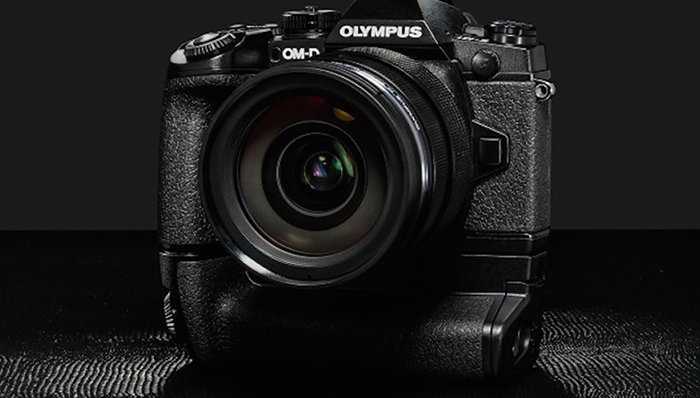
Source “Simon” added some info to his previous “geomembrane” rumor (43rumors post here):
I asked again to explain me what ment “Geomembrane”. He said, that this is a shortcut for “Gyro Electodes Organic Membran”. That means for non engineers like me, that you can upgrade the “view angle”for the sensor from (EM-1)today 36 ° to the new sensor 58°. This leads to an increasing absorption capability. BUT again, this for the future System expecting announced in September 2016 !!
As fare as i understood it right, that means the Sensor will make 10 photos to one high resolution picture. With the [shoplink 53188 ebay]em-5 mkII[/shoplink] You Need a tripod, with the new em-1 you Can Do it freehand.
—
For sources: Sources can send me anonymous info at 43rumors@gmail.com (create a fake gmail account) or via contact form you see on the right sidebar. Thanks!
To get notified on all upcoming news and rumors be sure to subscribe on 43rumors here:
RSS feed: http://www.43rumors.com/feed/
Facebook: https://www.facebook.com/43rumors
Twitter: https://twitter.com/43rumors
GooglePlus: https://plus.google.com/+43rumors/posts
Rumors classification explained (FT= FourThirds):
FT1=1-20% chance the rumor is correct
FT2=21-40% chance the rumor is correct
FT3=41-60% chance the rumor is correct
FT4=61-80% chance the rumor is correct
FT5=81-99% chance the rumor is correct
27 Responses
I get the ‘organic membrane’ part. That’s a thin layer of bacon that runs through the sensor to make everything better (as bacon does). But those ‘gyro electrodes’ have me stumped.
The gyro electrodes sense whether a body of water appears in the image and will deliver guiding shocks to the user until the camera is held perfectly level such that the body of water does not appear tilted.
Gyro electrodes detect how layer of bacon is “shaking” on the sensor while user is tossing the camera around, and counteracts this shaking with IS.
LOL! What happens if you press the bacon?
You would have a hell of a job attempting to clean the sensor. Personally, I would say it would be completely fried.
I don’t get how the first paragraph means the second paragraph. Either the admin is making shit up or he forgot to write down a missing paragraph/sensentence that ties it all together.
Perhaps the title of the thread should be changed to “more bacon bits about the geomembrane”?
I don’t think the first and second paragraph are related, at least there’s nothing in there suggesting this. Upgrade to the “view angle” sounds like the per-pixel quality should be better for on the edges.
How many images can be merged together in what time is mostly a function of the image processor.
Exactly what I thought, two different rumors.
The amount of merged photos isn’t CPU dependent but cache. And then it is about shutter speed how many you can take handheld. 1/400 shutter speed gives 4 frames as 1/100 each, if you need 1/400 shutter speed then you need 1/100 or 1/80 period to capture four frames and that is handheldable.
Good news. I guess those f0.95 lens will show their full potential…
1 question answered 2 questions raised situation…
1. future System expecting announced in September 2016 ??
Hopefully not a NEW system, rather a new model system camera…
2. view angle”for the sensor from (EM-1)today 36 ° to the new sensor 58°
Meansw what? Movement of the sensor will be greater?
Means finally an ultra wide prime.
The angle for light reception is much bigger at each photosite.
I seee! 🙂
It’s called ANGULAR RESPONSE.
Like that: http://www.quaketronics.com/angular_photo_response.png
Better = allows for smaller lenses.
only 58° ,i want 98°
that perform to sharp-edge on m43 lens.
Actually, you can do superresolution with any camera and proper software. When it’s handheld, it doesn’t matter if it’s done via IBIS or not.
Instant Body Initiated Superposition?
No you can’t. You are talking about stacking.
I’m not. Try PhotoActute.
I think that autumn 2016 is to far away, it should be much sooner, the answer to that could be if the sensor is home made or if it will be a Sony sensor ?? there are some new 20MP MFT Sony sensor already available within months from now, but I don’t think those has a geomembrane, which one will it be ?
The #microlens# in front of every pixel is something #equivalent# to the 75mm f/1.4 135-film-format lens. This telephoto nature causes edge pixels to get less light.
To negate this “telephoto” effect .. you need the “telecentric” lens design .. all those the legandary ZD lenses, or offset microlens (per leica), or light pipe (canon), or curved sensor (sony). Each has each own problems.
This new Oly development is, simply, 38mm f/1.4 microlens. Wider light collecting curvature. Nice ?
The “organic” sensor is not your bacon but hot climate tomato
Well .. technical speaking .. “ORGANIC” refers to every CARBON-based molecule. Be it bacteria or rubber or fish.
The carbon atom has two “strange” properties, depended on the molecular structure.
In one end – you have diamond. Yes, this little precious is very-highly-refractive index, translucent, and worst electrical conductivity, on par with good electrical insulator.
Other end – you have graphite — black, light-absorbing, plus – good electrical conductivity.
Nowaday sensor, all, in front of every pixels .. there’s lot of metallic electrical path .. to power, to channel the signal, etc, etc. This metallic path obstruct light up to 50% !!! Yes. FIFTY PERCENT.
The BSI technology flips the sensor surface, so that HALF of this obstuctive metallic paths are out of the way.
Ain’t it better if there is NONE light-obstructive conductor in front of the pixel?
That the new “organic sensor” : carbon-base molecule that marries very-highly-refractive index, translucent property (per diamond) with good electrical conductivity (graphite).
Clear?
BTW, if you get the idea, please dedicate your bacon to me 🙂
Carbon-based (organic) conductor not only excels in its transparentness. Unlike high temperature annealing processes of metallic conductor, organic conductor is formed by low-temperature chemical processes. In term of mass production, that means very low cost + high yield.
That’s why almost every big players .. fuji, sony, olympus, cakon .. put a lot of money in to organic-based, light sensor technology.
That’s all, folk. 😀
Carbon-based (organic) conductor not only excels in its transparentness. Unlike high temperature annealing processes of metallic conductor, organic conductor is formed by low-temperature chemical processes. In term of mass production, that means very low cost + high yield.
That’s why almost every big players .. fuji, sony, olympus, cakon .. put a lot of money in to organic-based, light sensor technology.
That’s all, folk.