









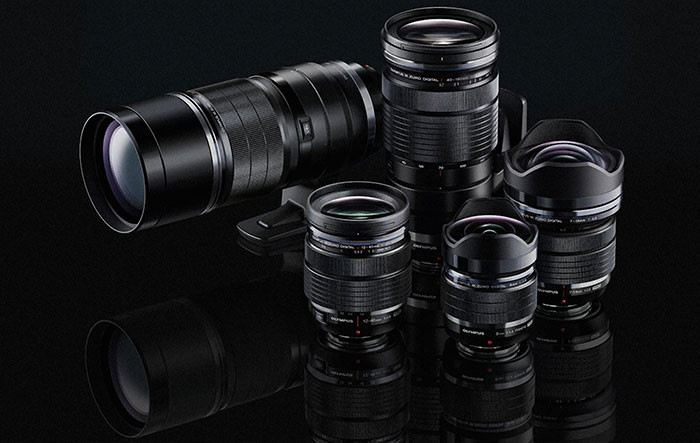
I just got this from an anonymous source:
Olympus considers to make the new 300mm f/4 PRO lens with OIS, to complement IBIS in Olympus bodies (which is less effective at really long focal lengths) and also be attractive for Panasonic users.
I know, it is the first for Olympus, but then it is going to be very specialized, and they have decided than without Panasonic user market it would not have enough sales to pay to its development, and that was the cause of its delay.
Lens construction is 17 elements in 10 groups, 2 SuperED elements, internal focusing.
Well, I guess that this makes a lot of sense. In lens IBIS for a telephoto lens is a must have feature. And indeed Egami spotted the official 300mm f/4.0 PRO IS lens design patent:
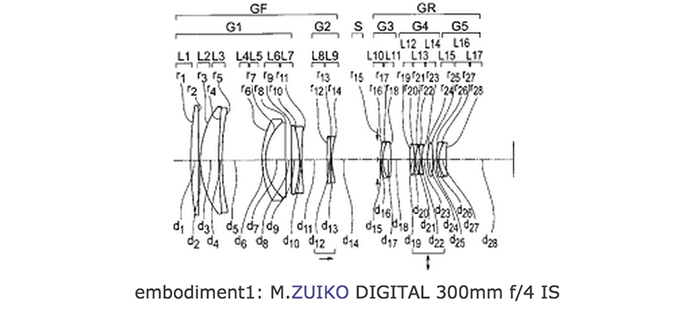
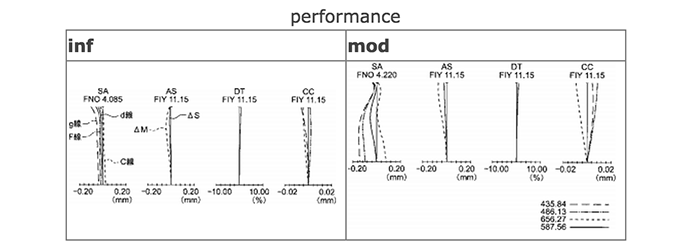

Thanks source for sharing this!
P.S.: The lens is still listed at BHphoto.
—
For sources: Sources can send me anonymous info at 43rumors@gmail.com (create a fake gmail account) or via contact form you see on the right sidebar. Thanks!
For readers: Don’t miss any news. Join our group on facebook and follow our tweets. Subscribe our newsletter: [wysija_form id=”1″]
Rumors classification explained (FT= FourThirds):
FT1=1-20% chance the rumor is correct
FT2=21-40% chance the rumor is correct
FT3=41-60% chance the rumor is correct
FT4=61-80% chance the rumor is correct
FT5=81-99% chance the rumor is correct
74 Responses
Very good news for all m4/3 users in search for a bright super tele lens. 🙂
o.k. ….if that what causes the delay !
No problem at all !
It can’t cause any delay: the request for patent is dated November 27th, 2013, plenty of time to finalise the lens’s development and industrialisation.
This is cool. I still think the two of them should collaborate more on the lens lineup.
Agreed, however adding OIS bumps the price up for any lens, and if you own an Olympus with IBIS you may find yourself asking why you should pay for OIS. Also, OIS requires more power and internal space in the lens housing, which affects weight and size. Would be good though 🙂
Guess it makes more sense for this type of “premium” product because not many will buy it however they cut the cost. Apparently there are also ways to make OIS good and cheap, judging by the price of cheap DSLR lenses with OIS.
“…if you own an Olympus with IBIS you may find yourself asking why you should pay for OIS”
Then maybe if you are sensible you will realise it is because the customer base expands which makes it more affordable. And if you know anything about the technology you will also realise (as the article says) inlens IS is superior to IBIS at such long focal lengths.
But then, there are some people who just love complaining.
Yes, you too can speculate on the outcome.
If you are sensible and know anything about technology. *cough* … and marketing and projected sales and development budgets and ROI…
Just remember the target consumers for this type of lens are a very narrow group, so narrow that adding OIS might not even double potential sales and might therefore not justify the R&D costs while higher price might actually damage potential sales. I’m no expert I’m just saying neither you or I have the correct answer.
But then again there are people who just think they know it all.
I am one of those who much prefer Panasonic interface but find at the moment it is Olympus who has all the lenses – and if a 300mm f4 is usable on my Panasonic it might yet tempt me to ditch my Canon gear for wildlife. And I am far from alone. So while I agree this will be a niche in terms of total market it is one thing that will probably tempt many to take that final jump to give themselves a single system instead of parallel ones.
“If you are sensible and know anything about technology. *cough* … and
marketing and projected sales and development budgets and ROI…”
It is far from marketing. Canon wrote a white paper several years ago describing the benefits of in-lens IS over IBIS and there are very good reasons for it. So although the benefits may be slight why potentially ruin what will be pretty much a flagship lens for a bit of additional development costs? That would be foolish
“might therefore not justify the R&D costs”
Maybe adding IBIS is minimal in relation to R&D costs….but I am sure Olympus woul dnot do it if there were not a sound reason. But heck, who cares if it maximises availability of this lens? Roll on…
” In lens IBIS” don’t make a lot of sense.
IBIS = In Body Image Stabilization
Immediatly increased my attention in this lens. Though I am even more excited about the lens hinted at by daniel from naturalexposures…
Finally choice for super tele lenses in m43? I am in!
“Lens construction is 17 elements in 10 groups, 2 SuperED elements, internal focusing.”
And OIS to top it off.
Olympus pulled all stops.
Oh, wait, no. After the 43’s 14-35, 35-100, 90-250, I gather it is rather a primitive lens – by Olympus standards.
A zoom lens is always going to have a more complex construction than a single focal length. 17 elements is a lot for a telephoto lens which are simpler to make than even fixed focal length wide angle lenses.
The Canon 300mm F4 L lens has 8 elements and the IS version has 15 elements for example.
What makes telephoto lenses expensive is the size of the lens elements.
To add an OIS at that stage is no small feat… I’d expect a major mechanical/electronic (and some optical) re-design that I would guess adds additional 6 months to release time.
I doubt this is actually a thing… It would be great… I just commented a couple of days ago on the need for an updated 100-300mm lens with OIS since the current LUMIX version sucks at the 270-300mm range and has no tripod collar. However, I would (personally) prefer a zoom that goes to 300 even if it means a slightly slower F-stop and a slightly lower image quality. I just prefer the ability to zoom when working at telephoto range, as it’s hard to frame a subject well at those distances, hard to judge.
don’t the new Sony A7’s use both IBIS and lens-OIS simultaneously? If so, then its possible and useful too I’d guess.
I just heard Hubertus claim that Sony’s work like that, an that’s actually a great idea.
“In lens IBIS” is a little bit confusing typo 🙂
Will this OIS work in conjunction with IBIS? or selective? it’s curious for me.
I don’t think it’s ever worked in combination, but if it’s Olympus OIS, it just might.
I don’t think you’d want to do both, but maybe someone with better math skills than I can figure out a way to combine the two usefully. You’d also need some pretty precise parts, because the two systems would have to move absolutely in conjunction with one another: even slight mistiming would deteriorate edges.
Isn’t Sony using both simultaneously in their mk2 FE cams?
exactly. As far as I’ve understood, OIS and IBIS also work on movement at different ends of the axis. OIS is concerned with the movement of the front of the lens, correcting those rather large shifts, while IBIS naturally has to be concerned with the shift/rotation of the camera body, a totally different level of movement. The 2 systems could work together really well if anybody figured it out, like Sony has according to (Hubertus Bigend)
In the Sony A7II and A7RII it does, if it works as advertised.
OK Hubertus thanks, I didn’t know that, that’s pretty cool. As you know, Lumix OIS has never worked on Olympus with IBIS simultaneously, it’s always been one or the other.
Sony made their IBIS work together with OIS in A7II and A7rII. I guess Olympus can too if they want (but they will not want it unless they have OIS lenses of their own – why improve chances of competitor products?).
But as far as I understand Sony system, they do not add effects of both, they just disable yaw and pitch stabilization in their IBIS if OSS lens is used. Even if they have yaw and pitch in IBIS to begin with, which is doubtful from the Sony IBIS analysis I have seen (there is no space to move sensors in these axis).
A sensor in the tip of the lens would add sensitivity to IBIS, without necessitating OIS. They could implement this in all long lenses.
The issue isn’t knowing what moved and how much. They could simply use higher end sensors than they currently use to get that same information. But the problem with long telephotos is the restricted movement the sensor can perform.
Have seen 840mm so equivalent to 1680mm being used handheld on E-M1 without problems. Even a 1200mm is perfectly stabilized with E-M1 IBIS.
The IBIS means “In Body Image Stabilization” and cant be made in lens!
And IBIS problems are not in telephoto but at wide. Just used Oly new 7-14mm PRO and IBIS doesnt work well in video as it jumps around like when panning horizontally or vertically. And the problem is as well with Olympus 60mm Macro that suddenly gets jitter too if not shaking camera by user strongly.
“And IBIS problems are not in telephoto but at wide.”
Wrong. The article is right – it is a problem that has been recognised for many years and why Canon continued to put IS in the lens not the body
And let’s face it, even one of your own examples is on a 60mm lens which defintiely not wide angle!). Your complaints are about IBIS+pan+video not IBIS+wide angle.
Yes indeed. OIS in lenses is particularly perfomant when it comes to panning.
Agreed. And it depends upon optical design, too. With the long telephotos stabilization is best placed at the optical center of the lens, not at the sensor. I’ve used enough telephotos on m4/3 to see the issue pretty regularly: yes, you get some form of stabilization from the sensor IS, but you’re losing edge acuity with IS turned on. Every now and again, you’ll get “not savable by sensor IS” results, especially if you’re on active platforms.
Likewise, the problem with panning in video is similar: the sensor-based IS has a limited range of movement and has a tendency to get to the edge of that in pans (and again on active platforms). This is actually one of Nikon’s patents with VR: they let the optical element not only correct, but roam, which gives it a bigger correction capability. In still photography, they re-center the optical element in the lag between shutter release and shutter opening. In video, they have a similar problem to the in-sensor IS, but they have more range they can move over, so jitter doesn’t tend to appear on reasonable pans.
Panning is a totally different problem – you have to detect it and
not stabilize in that axis at all. Olympus does that starting with E-P5
(E-M5 did not have it yet, you’d have to disable the axis manually).
PFFITTT!
And y’all belive this??
Another lie from Olympus. As much talk and visual adverts like the one above, there was no mention of OIS. And if it was the reason of delay, why is there still no comment from Olympus themselves?
And they need Panasonic users to help purchase this lens? Wow, that’s a first. Then again, this is just info from a source, right?
Usual Crap from MrALLCRAP. Nothing to see hear. Move on away from this worthless troll.
AllCrap….you is junksource.
Well, I really don’t want any moving parts in the optical path but if they really do this – what I don’t hope and believe – they hopefully go all the way and also provide the DFD data for the Panny cameras.
You already have moving parts in the optical path.
i.e. the subject, hehe
He was probably refering to the focussing group(s) though.
Quite likely
The irony is, lenses with floating groups came as a significant breakthrough and improvement in optical design and is happily used by Leica, as just one example…
This makes sense. It made sense from the very beginning, actually. And I guess MFT market has shrunk so much lately that the added bonus of more potential buyers convinced Olympus to change their plans.
So this one, I’m willing to believe. Seems plausible. But if it’s true, we’ll probably not gonna see that lens this year.
And it would be funny if Panasonic announced similar high-grade long telephoto themselves that covers 300mm as well 🙂
Sounds good. Nothing wrong with a better product from the start.
Can’t wait for this lens…it’s a beauty, no doubt!
@Admin:
please check your source. I checked my source and guess what he did, LOL !!! He asked me who told this nonsens. He said, the parts for 300 f4 are already in production by the suppliers from Olympus. The final assambly starts in september 2015. He said , someone is make a so called “Channel Test”.
greets
Simon
Welcome to 43 Rumours! Be sure to check out the disclaimer in the side bar.
and suspend your disbelief at the door
This rumor is someone’s pure speculation based on the 300mm f4 patent with OIS. Olympus likely designed it for Sony as it is not necessarily for 43. Also, Olympus is still showing the non-OIS design on their web site.
http://zuikopro.olympus-imaging.com/en-ca/
The patent is certantly for 4:3-sized sensor, it says 4.31 degrees AoV and 294mm FL, which Sony is 4:3 diagonal?
Angle of View has got nothing to do with the aspect ratio.
Not aspect ratio, but sensor size. a 300mm lens on M43rds provides roughly a 4 degree AOV, while a 300mm on a FF camera like the Sony A7 series provides roughly 8 degrees. Thus, this lens is a M43rds design.
Not according to this Canon patent which shows a 4 degree AOV for a 300mm f4 FF lens.
http://www.canonrumors.com/2015/02/patent-canon-ef-300mm-f4l-is-others/
Canon 300/4, AOV: 8 degrees. http://www.bhphotovideo.com/c/product/129188-USA/Canon_2530A004_Telephoto_EF_300mm_f_4_0L.html not from rumors but official product specs.
Sony 300/2.8, ~8 degrees: http://www.bhphotovideo.com/c/product/892394-REG/Sony_sal300f28g2_300mm_F_2_8_G_Super.html
Nikon 300/4: 8 degrees: http://www.bhphotovideo.com/c/product/1111442-REG/nikon_2223_af_s_nikkor_300mm_f_4e.html
Olympus 300/2.8 (43rds): ~4 degrees: http://www.bhphotovideo.com/c/product/301933-REG/Olympus_261004_300mm_f_2_8_ED_Lens.html
It is not about ratio.
Steve, you better go back to the specs & notice “Image height 11.15mm”
Interesting. If they’ll enable IBIS + OIS for Olympus cameras, like Sony already does it with their A7II and A7RII cameras, this could be a real benefit. As great as Olympus’ IBIS already is for most focal lengths, my impression is that it still could be better at around 300mm and above (ZD 50-200/2.8-3.5 with EC-14 or EC-20). I wonder whether it will come true, and if it will, whether it may come as a firmware update.
Before you get too excited you better read Simon’s comment above.
It seems highly unlikely, in lens IS has to be considered from scratch
I saw Simon call this nonsense which is a shame. As a panasonic shooter I would have loved the lens OS solution.
I am still wondering what this lens is going to weigh when they finally get it assembled.
Niels
I carry my OIS with me wherever I go.
It’s called a ‘tripod’.
600mm please.
The only way I can see this being real is if the OIS element was an electronic sensor at the front of the lens that gave a signal to the IBIS mechanism inside the body to adjust more accurately. But this infers that movement at the body can’t be accurately predicted 300 mm out, which I don’t buy, but who knows.
Note “considers”, does not mean they will do it.
Olympus- it’s time. Time to go big- do a FF mirror less camera. You have all the technology and the best bodies in the industry. You could have more than just a niche market- you could own the market. If anyone can produce a Sony FE mount competitor it’s you. It would perfectly complement your M43 gear. You’re wasting the opportunity of a lifetime.
Insert insult here: > <.
Trying to compete with Nikon and Canon is not possible. Sure you can bang out a body in a matter of months, but a full suite of lenses to make a system a viable option takes many years. They would be digging themselves a grave. You seem to have no idea of how pervasive and entrenched the Canikon brands are. It wouldn't matter if Olympus' bodies were objectively 4 times better than those two's best, the other two would still sell 20 times more gear. Most DSLRs sold are the low end models that consumers buy for something better than their phone, which sits on a shelf in a cupboard for 357 days of the year, gets pulled out for the annual holiday and likely gets left behind at home or in the hotel room because it's too big an bulky.
When Olympus had the OM 35mm system, they were still only niche compared with Canon and Nikon, despite having bodies and lenses arguably more suitable to consumers and amateur than the hulking great 'Pro' equipment offered by the big two.
“Trying to compete with Nikon and Canon is not possible.”- They’re already competing and you provided not support for your statement.
“You seem to have no idea of how pervasive and entrenched the Canikon brands are.”- Didn’t add anything to your argument. I made no mention concerning what I do or do not know about Canon and Nikon.
“It wouldn’t matter if Olympus’ bodies were objectively 4 times better than those two’s best, the other two would still sell 20 times more gear” – Pure speculation with no supporting facts= weak argument.
“When Olympus had the OM 35mm system, they were still only niche compared with Canon and Nikon,”- They also had much less to drive product differentiation. Mirror less has proven successful in penetrating the DSLR market for multiple manufacturers. OM 35mm is not a valid comparison.
If you define making losses year after year as being successful, they you are right. Essentially all mirrorless lines have been making losses from the start and still do.
This is sounding like a $2000 lens, don’t think Oly is going to move very many. Its good for the system, but something like a 150-300 would have been more useful.
Ive just came back from South Africa and Namibia …..I did not see one tourist with an m4/3 camera . !
A lot of people looked surprised when showing my “little” E-M5 and the 40-150 F/4 !
There is so much to gain for m4/3 in this Canikon “huge lenses” country !
Because every photographer out there is fat up with this heavy equipment .
The 300mm would be the best one for all the animal photographers .
After coming out of the 300mm F4 they should put together OLY/PANA ..effort for advertising in Z.A. …not by paper but by “hands on” in the National Parks like Etosha or Kruger !
Most of the tourists have bought a last moment DSLR just before going ….to have a proper camera …also on that on that side is a lot to gain by Oly/Pana ..!
So Advise to Pana/Oly is to go for hands on advertising ….. or make special days with m4/3 users and public !
With lower prices for lenses for the users with help the public to go to the m4/3 side !
I call bs on this rumor
What about now?
http://www.43rumors.com/digicameinfo-confirms-olympus-addes-in-lens-stabilziation-on-the-300mm-zuiko/
http://www.43rumors.com/wp-content/uploads/2015/10/300mm_PRO_olympus-700×206.jpg
There is no such thing as “In lens IBIS”. There is “in lens IS” or “in body IS(IBIS)”
There’s now this photo evidence: a version of the upcoming 300 f4 PRO with IS switch, and another, possibly a focus limiter? http://www.personal-view.com/talks/discussion/9597/300mm-f4-olympus-lens/p1