









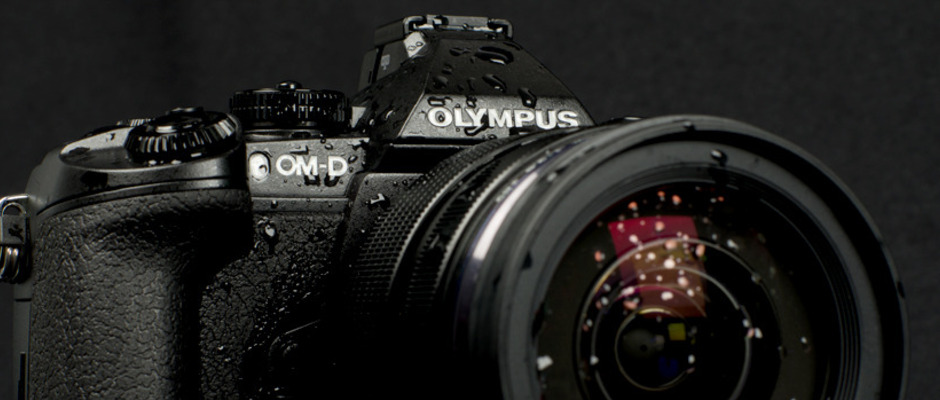
Image courtesy: Reviewed.com.
Following a rumors I posted many months ago a source told me Olympus has the tech for an impressive 1/32,000 electronic shutter. And that it should get featured inside the next E-m1 successor. The source didn’t share info about when the E-M1II may be announced…
—
For sources: Sources can send me anonymous info at 43rumors@gmail.com (create a fake gmail account) or via contact form you see on the right sidebar. Thanks!
For readers: Don’t miss any news. Join our group on facebook and follow our tweets.
Rumors classification explained (FT= FourThirds):
FT1=1-20% chance the rumor is correct
FT2=21-40% chance the rumor is correct
FT3=41-60% chance the rumor is correct
FT4=61-80% chance the rumor is correct
FT5=81-99% chance the rumor is correct
112 Responses
Well.. it is highly possible.
I would also like manual tilting and shifting of a sensor… for purely artistic reasons. That would be awesome 🙂
AGREE !!!
Oh .. what a darn good idea. The new oly’s IS works by moving the sensor in every directions (5 axis). Why not this TS ??
GREAT.
Seriously? This is an already feature in the e-M1 currently?! It works quite well and if the improve on the feature, even better.
firmware upgrade: http://www.dpreview.com/forums/post/54403195
‘Digital Shift’ or ‘Keystone Compensation’
What is the main advantage of getting such shutter speed?
Shooting with fast primes, like the Voigtländer Nokton f0.95 lenses, wide open in bright light without needing to use a 10x ND filter.
Have you ever used an incident lightmeter under sunshine? At ISO100, you get 1/8000s @ f1.4 which means 1/16000s @ f1 (0.95). A ND2 filter (darkening 1 stop) is enough if your max shutter speed is 1/8000s on your camera, even shooting with a fully open Voigtlander f0.95. In higher altitude or purer atmospher than average, you might need a ND4 filter, not a ND10, which does not exist anyway ( ND8 instead).
no overexposure with f / 0.95 lens (day light), “clean” very fast motion capture, Silent shoot (electronic shutter) etc.
Isn’t motion capture hindered by the relatively slow readout time of current sensors? That’s why even slow mechanical shutters are better in that regard since there’s no (less) distortion/rolling shutter. But how do superslowmo video cameras that olympus manufactures work then?
Main advantage?
Allow REAL photographer who has knowledge about high SS to use it.
Newbie excluded, of course, naturally.
like what? you can’t capture motion any better than with mechanical shutter (worse actually) because of rolling shutter effect. IF the sensor had global shutter than that would change everything, but then the rumor would be about that.
I’m genuinely confused by your statement. What moves fast enough to give a rolling shutter effect at 1/32,000? Given that 1/15,000 will freeze a Bumblebee’s wing….
Never mind, did some reading. Thanks Google.
I will be able to take cross country skiing photos wide open (with kit lenses, not talking about Nightron lenses :-p ) for smoother background. Currently, typical values are: ISO 200. f/11.0. 1/2000 s.
I would rather have ISO 50 (extended) and 100 (native)
I agree, I would rather have very clean iso 100-6400 than current 200-25600 range.
I wouldn’t as I do considerably more shots were I need better high iso instead of better low iso.
I would rather have very clean ISO 25-25600..
Edge detection: Do we know if they are dropping FourThirds legacy lens support? We’re still far from the 12-60+E30 A/F precision and speed on mFT, with any lens offered I feel. mFT still often misses focus even with one point narrow focus choice.
Good news. Would like to hear more about a new sensor for I can dump my bloody FF.
Sensor first !!!
No point come up such ultra fast SS if no significant improvements in sensor tech .
What is next suppose for EM1 to deliver is 15++ ELV DR imaging otherwise everything is consider a failure .
So, you’ll disregard a 13+ DR stops and 3/2 better ISO performance sensor. 🙂
goodluck that Olympus doesn’t have no-brainer as its CEO
fortunately Olympus CEO won’t pay attention to insignificant newbies in the site.
Oh boy, give it up…
Failure Yun, really? Who made you the one to decide the order in which camera technology should advance? Vote with your own wallet, but don’t presume to tell us what matters to us.
maybe less jello at this speed
I would count on exactly the same jello.
Jello depends on readout speed (the time it takes between reading the first line and the last one) and we haven’t any clues if they improved it.
Hopefully 4K is on the roadmap too, EM5 II video is simply unusable. Aliasing, DR and resolution are eclipsed by a GoPro, which is just ridiculous.
“Simply unusable”!!! I’ve been a professional TV producer and director for over 20 years and, seriously, there are people out there still shooting on Sony Z1s, nevermind Canon 7Ds and other cameras without 4k, to which the EM5 II will make a small-but-beautiful addition.
Way not start making movies with cell phones if you have such low standards. 🙂
Video quality in Olympus, most Canon cameras, Fuji and Pentax is simply very bad, full of moire, aliasing and under 720p resolution wise. Way not shoot SD, who needs good HD (FHD) in the 4K era…
Most pros don’t care. Unlike tech fanboys who need 4K to shoot 30 seconds of their girlfriend walking down a highstreet or a pigeon flying overhead, we’re busy getting ideas onscreen. It’s important to enjoy your hobby. Don’t let it stand in the way of real work.
I live from video production and my clients demand quality. I know exactly what I’m saying when I say EM5II doesn’t deliver in video front. I might get one though for the ability to make high resolution landscapes and products photographs.
In TV broadcast & cinematic terms you’re wrong. And if you’re serious about the Canon 7D setting a “low standard”, you’re very very wrong. Darren Aronofsky shot ‘Black Swan’ on a 7D for goodness sake. I’d love to know what kind of “clients” demand “quality” better than him.
“Of course I’m wrong”, keep promoting a dinosaur. I recommend you use it in the next 10 years or so. Happy shooting :).
https://www.youtube.com/watch?v=KBlfBelTLwU
Yes, unusable, just terrible. Beats GH4 with OIS + post process stabilization just with M-IS2 mode. Just bad thing is that camera is on P mode that gives disadvantage to oly as it clips highlights easily because that (slow shutter speed and low ISO). But it is sharper for distance but gets motion blur because low shutter speed. Whine pana keeps high shutter speed and high iso to avoid clipping highlights and keep frames sharp.
But still olympus wins as it is more natural and film look like and sharper.
The sharp frames from Panosonic have nothing to do with shutter speed or ISO. They are sharp because Panasonic sensors don’t skip lines likes there is no tomorrow, unlike Olympus.
IBIS is astounding indeed and its clearly the new benchmark, however, IQ is still dismall as it was in 2010… 🙁
Gh1 had in 2009 better video quality than E5II, so this has more like 2008 DSLR video quality.
Stabilization is nice but not crucial, there are a lot of ways to stabilize the camera, when it’s shot or afterwards in post production.
“there are a lot of ways to stabilize the camera, when it’s shot or afterwards in post production.”
No commercial pro would ever “stabilize… in post production” because $$$$ and image degradation.
“No commercial pro” that you know is correctly written.
There is 0 degradation in quality for stabilization in post production if you shot in 4K for FHD delivering.
If you have so much knowledge you should know this, although I doubt you have, if you call EM5II video quality OK.
My knowledge is as a producer & director of commercial film & television, not as a tech fanboy. I find it mindblowing that you consider cameras used by top Hollywood and arthouse cinematographers inadequate for what – filming weddings and pets? It’s great that technology keeps changing the possibilities around how images are recorded, but there comes a point where this obsession with ‘technological progress’ becomes nothing but a tool for money men to exploit gullible consumers with. It’s going to take a very long time for the entire pro industry to convert to using 4K. Be sure to avoid watching anything until it does.
So we should all shot SD, isn’t it? LOL
People are starting to shift from Canon to much better options. With your arguments you are only convincing yourself to stay with a bad video quality camera, everybody else knows what they and their clients need.
What clients “need” are beautiful images that do the job. What nobody needs is to keep buying junk forever because a few greedy people are obsessed with creating “want”. Sometimes a technology works fine as it is. If something better comes along, great, but there’s nothing wrong or “bad quality” about the 7D, the old Super 8s or the classic Polaroid. I hope the desire to find fault with everything a couple of years old doesn’t ruin your popcorn.
If a client has the option to choose, he will always choose the better image, if the content is the same.
Clients are indeed interested in emotional content but all of them posess at leat a big FHD TV, some already updated to 4K televisions. Delivering them a crappy under 720p image (resolution wise) full of moire and aliasing in 2015 just doesn’t cut it. It it works for you, very well, keep using it.
I’d love to know who your mythical (and seemingly all male) clients are. Mine are Channel 4 and the BBC.
You make me laughs, BBC and Chanel 4 dos not accept crappy video from Canon 7D or any other low quality DSLR video. The minimum requested broadcast quality is FHD 50 mb/sec 4:2:2.
If you are who you say you are, you’d know those thing very well, I have a feeling you are just pretending, probably payed by Canon to pollute tragic on the internet and advertise dinosaurs.
Does not matter, people are moving away from Canon video every day now. They made sure of this in the last couple of years by perpetuing sub par video quality in all DSLR’s (except the under-featured and overpriced 1Dc).
I’m afraid he is right and you are wrong regarding the shutter speed. Pause the video in any number of places and you’ll see there’s much more motion blur in the Olympus image, indicating the use of a slower shutter speed. Also out of interest, you may note what appears to be moire/aliasing present in the GH4 footage in the windows of the far buildings that doesn’t appear on the Olympus side – although I must say the compression of the footage is appalling, making it hard to say too much. I do own a GH4 and think it’s a wonderful camera but for some things it is so sharp it can sometimes look a little ‘clinical’. And I must say some of the good footage I’ve seen from the EM5 II looks quite filmic.
I’m not questioning shutter speeds or ISO. I always set shutter speed and ISO before hand in my GH2 (and usually as low as possible according to available light). You can raise ISO and shutter speed as much as you want on the new Olympus, but you will never get frames as sharp as on a ~5 year old GH2 to begin with… The real limiting factor on the Oly is the sensor readout and line skipping.
I’m afraid again I have to disagree. You seem to forget the image quality wasn’t all that great on the GH2 before people retro-engineered firmware hacks for it. I’ve shot with the GH2 extensively using the Flow Motion hack. I have footage on my 4K monitor in front of me from both my GH2 using this hack and the EM5 II. I’ve got to say playing the footage down I’m not seeing much of a resolution difference, but what I am noticing is a big difference in the way the cameras record colour with the GH2 having a distinct yellow/green colour cast. Do you actually own a EM5 II?
I do not own an Olympus at the moment, my gh2 is my current and only camera body. The gh2 was indeed limited in bitrate but unless you stressed the codec with unlinear motion it was still pretty much ahead of anything else as far as DR, resolution or low light IQ.
Otoh your opinion is valuable and when you say you don’t notice that resolution advantage it makes me wonder whether I should get the Oly. Low light handheld it’s much of what shoot and the Oly is ticking too many boxes (except for video) to be ignored…
I own a GH4, an A7s and the EM5 II because they’re all good at different things. If it’s a documentary shoot having to follow action I’d tend to be turning to my GH4. If it’s a set piece drama or commercial shoot I’d probably be turning to the A7s for it’s low light and shallower depth-of-field capabilities. Within these projects though, if camera motion is required and I don’t have a steadicam rig then I’ll be turning to the EM5 II on a portable small dual-axis gimbal. Sure I’d love all these capabilities in a single camera but I suspect it’s not possible. I just think ‘horses-for-courses’. While I’d potentially use the E-M5 II for tracking and movement shots within sequences of material shot by other cameras, I probably wouldn’t mix static shots with those from another camera like the A7s within the same scene. But having said this, that’s generally standard good practise anyway because different cameras produce different colour responses (especially to skin tones that we really notice), making the footage extremely difficult to grade.
What I’m trying to say here is that even if the footage had been taken with a proper shutter speed on the Olympus, it would still be a lot sharper on the Panasonic.
That has to dó with the way they read out the sensor.
I don’t see much difference in FHD quality but holysh*t, I can’t bear with the shaking when the GH4 was moving up/down on stairs.
What bollocks saying the EM5 II video is eclipsed by a GoPro! I’ve had a good look at clips from the camera and sure I’ve noticed some aliasing but then what camera doesn’t exhibit some aliasing at certain frequency patterns. I work as a professional DP and I’ve seen aliasing in the footage of very high-end cameras I’ve used.
I actually downloaded the ungraded sample footage that DP John Brawley shot and cut this material into a timeline of shots I’d recently filmed for a commercial on my A7s. While the scenes were obviously completely different, I thought the material actually cut very well – it wasn’t like I was noticing a big resolution hit every time I cut to the Olympus footage and that was viewing on a 4K monitor. The EM5 II’s image stabilisation is amazing, it’s motion cadence is very good, the colours look lovely (especially skin tones) and it’s dynamic range seemed good if the camera’s image profiles are set correctly. I actually found myself thinking these images John shot had a somewhat organic filmic feel. To compare these to the over-sharpened, blocky, contrasty, jello-ridden images from a GoPro is a joke!
Video is good except for the resolution….want better 1080. Definitely should be addressed in firmware. Otherwise improvements and frame rate options are much appreciated.
What would be the max flash sync speed?
If it can sync with flash at 1/500s or faster, then it would be really interesting.
Hopefully they include the global shutter feature~ and man, HSS has been my problem lately~
Releasing a “game changer” 18 months from now will be just another M4/3 camera, trying to do “catch up”.
I don’t know, but the max sync speed is related to the mechanical shutter. You should not use flash and electronic shutter, because the readout speed is typically much much slower, which leads to ilumination stripes.
I wonder what else they have in store for the E-M1 MkII. Assuming it’ll be announced two years after the first, this means not much time has elapsed after the E-M5 MkII. So what could they bring to the table? New sensor tech? Better tracking AF?
Yes, better AF c-af definately, hopefully a new sensor and maybe an even bigger evf. There was some rumor about a new epson evf unit with oly mentioned. Also the newest IS and improved high rez mode.
I suspect it won’t be released before the next Photokina (September 2016). No point in replacing the E-M1 after two years. The next OM-D camera due for replacement is probably the E-M10.
Olympus cameras have more or less a 3 year life cycle, so E-M1 successor will come next year, unless they rush it to market, which I think would be a mistake.
And if history is any indication, it’ll have a new sensor, as the sensor generation cycle for Olympus matches that of most DSLR world, and is 4 years.
And since E-M1 is a continuation of 4/3 system, it pretty much must have phase detect AF. Hopefully, it’ll be improved over original E-M1.
Cosstype autofocus points for on sensor PDAF would be nice.
Faster electronic shutter is a prerequisite for handheld high-res shooting. Otherwise I do not see an advantage to such speed.
Congrats on your new photography hobby, lots of practice and you’ll get there. ^.^
Thanks mate 😉
Faster electronic shutter won’t help you one bit with handheld shooting.
For that what is needed is faster readout speed, which is an entirely different matter.
I think that the focus speed with 4/3 lenses on my E-M1 is atleast as good as it was on my E-3. With m4/3 lenses the E-M1 is much faster and with higher precision.
They need to when they move primes to 1.0
Global Shutter?
No. Electronic.
Maybe the EM1mii with 1/32.000 electronic shutter will facilitate handheld, motion subjects and Oly’s high resolution imaging trick. That would be pretty sweet.
It won’t. Unless they dramatically improve readout speed, you won’t notice any evolution on any of those matters you mentioned.
Why would they drop support if they just made the first major improvement with the E-M1? Since glass doesn’t really get worse, they would really alienate people with older lenses.
For what need you 1/16’000 or 1/32’000??
make Highres shoot (faster than e-m5 MK2) with raw….
…or/and 4k video…. Full HD with RAW recording …. 😉
Capturing pictures of the sun with the lens wide open 😉
Nah. Won’t be enough even at f/22
https://www.youtube.com/watch?v=nlm7vnWSq8I
curious about geomembrane image sensor ,who creator ?
Joint Fuji/Panasonic.
http://www.fujifilm.com/news/n130611.html
I think all the pointers, including Olympus execs mentioning a specific figure for the next multishot feature i.e. upto 1/60s making handheld shooting possible, damping down expectations of 4k, not updating the video options on the E-M1 – all point to an E-M1 replacement appearing in the near future i.e. the end of the year. It’s very unusual for camera manufacturer execs, to talk about specifics, unless there is an actual imminent model with those features planned.
It doesn’t mean that it will happen, even if they are building up to it. I think often planned models get shelved, if for instance new tech becomes available, or it’s not thought to be the right time. But I definitely believe they are leading up to a new model possibly late this year.
It seems likely Panasonic will have a new sensor soon. They have been using a similar sensor for some time now, and must have one planned, because video is a big part of their business model. I think the rumours of an 18mp sensors for the Panasonic pro camcorder and an E-M1 replacement were credible, although they could have been made up.
Later this year seems an ideal date for Olympus to update the E-M1. Essentially by then they’ll have a full range of PRO lenses that will cover super wide angle to super telephoto in a compact package. This would be the point that Olympus could first claim to have a pro system for m4/3. The EM-1 is in terms of a few features below the E-M5 II and the E-M1 street price has slipped below the E-M5 II in some instances. It would make business sense for Olympus to release an E-M1 replacement by the end of the year, even if it was just an incremental update.
Yes, there is some evidence pointing to a 2015 release. Nevertheless, it seems just too soon. Perhaps the timing and specs will depend on the E-M1 street price, as you implied. Olympus cannot afford to lag too much behind the competition (which is mainly Fuji and Panasonic these days). With the new E-M5II technologies and Epson EVF alone they already have quite an upgrade.
Handheld/movement multi shot high res is an aspiration.
There is absolutely no possibility of this in the near (or far) future. The readout speed required is way beyond anything Oly could produce.
It is possible, just not likely.
They could do this by reading the data out in parallel. Instead of 1 D/A they could have 2 or more, each writing to a dedicated buffer in or attached to the ASIC. It would increase the cost but no new technology would be required. The biggest downside besides cost would be that instead of the rolling shutter causing a constant tilt “/” it would have a zig-zag effect “<". The upside would be much faster readout. Faster readout means reduced rolling shutter effects, more data for better autofocus, faster flash sync speed and better slow motion video.
This would be a pretty obvious solution to to a lot of problems so there could very well be some technical problem preventing its implementation. The D/As would have to be exactly matched to avoid color and exposure bands in the final image. I would think having all of them on the same chip would be good enough but I am not a D/A designer. If it is a matter of cost ASICs and RAM for buffers keeps getting cheaper. And we are talking about a $1000++ camera.
This is another debacle for Olympus. Actually the current E-M1 is capable of 1/32k but the E-M1 doesn’t have an electronic shutter but again the sensor is capable of I believe up to 1/64k electronic shutter. I speculate the current sensor will be used and not the new 18mp.
Unfortunately they are stuck likely not getting access to the new Fuji/Panasonic sensor maybe until next year. Fuji and Panasonic are not going to let Olympus have the sensor right out of the gate, why would they? They (Panasonic) also c*ck-blocked OLY on video through its contract and the GH4 outperforms and so would be the same the next time.
If there is a release this year, it means that OLY is going to do like the E-M5 Mark II and simply rehash the E-M1 existing sensor with new firmware features improved 5-Axis servos. They probably can do handheld because the E-M1 has two processors and I’m not sure there is anything special about the sensor for this trick since the E-M5 Mark II uses a Sony sensor still (wonder if it is the same E-M5 or revised?).
If OLY turns on 4k after September for the current E-M1 since this was in beta testing from previous rumors but pulled due to Panasonic contract issues it could be too late. The latest rumor says after September which is not good enough. The problem in doing this is that the user base will keep losing value on the current E-M1, the E-M1 Mark II will be technologically behind in sensor tech if released with current hardware. New buyers will be woo’d by 4k and GX8 and entire Panasonic line will be 4k. The DSLR players are starting to re-take market share and their prices are dropping also. This also goes against OLY who said they wanted to keep prices higher by weakening the supply pipeline. With fewer buyers, this keeps their price high, while GH4, NX1 and others keep dropping.
At the end of the day OLY will continue to hang their hat on 5 Axis but everyone is starting to notice photo and video IQ is not on par. OLY has a good marketing engine and a bunch of hired reviewers to tell us to buy OLY gear. The problem is these reviewers are not going to stake their reputation on OLY as we see with Andrew Reid.
OLY needs to drop a 1080p 24/25/50/60p and high bit rates and or 4k improved video firmware over the next few months ON THE CURRENT E-M1, enable 5 Axis for video or improve the current 3 Axis if possible and resolve focus hunt issues and generally fine tune the photo IQ.
Otherwise, current owners lose faith as the E-M1 as its price drops like a rock then starts to look like a B camera. The argument over video is much like people said when the iPhone came out, you don’t address video, you are then playing catch-up and OLY is still behind. The new GH5 could run circles around the E-M1 Mark II and all we would have is a bunch of paid reviewers claiming how wonderful OLY steadicam is.
A very credible rumour has an E-M1 video related firmware update possibly scheduled for September with the E-M1 II likely to come on market in Sep. 2016.
If Olympus is trying to cater to pro’s they need to bring higher spec EVF. less lag and higher resolution. I would not mind bit larger bulge on top of the camera if it provides 1080p oled EVF. Naturally it has to has this improved IS and highres shot as well.
-improved EVF (to make movement from DSLR’s easier and to match NX1)
-the better IS system from omd-5 mkII
-improved af
-small bump to fps and buffer size
-high ress shot
-UHS II card slot to help with image buffering.
-USB3 (not that essential) USB2 is not very pro like.
-plenty improved video over 5MKII
that would be suffiecient for a MKII.. anything less would be too little.
E-M1 already has better viewfinder than any other DSLR than Canon 1D C and X, that by size, otherwise better than any DSLR has.
The IS system is similar to E-M5 MK2 but there is small difference but not huge.
The autofocus is already best in the class, beating any other camera out there (even Fuji etc).
Small bumb isn’t enough for as now E-M1 has 10fps with C-AF and 10 > 12 would be nothing, it would need to be 10 > 15 and that is HUGE bumb.
And buffer is biggest that is there, over 45 RAW files and if you have fast card, you can shoot about 70 frames before cache is full. That is 7 seconds worth of shooting, no one needs that!
UHS-I isn’t there the limit, UHS-II is not going to be benefitical at all.
USB 3 is useless, 2 is enough, unless they could very dramatically improve tethering. But I take more likely a WiFi tethering so I can operate camera and connect ANY computer to WiFi hotspot and get my camera connected to same hotspot as well and I can control camera from laptop, tablet or smartphone no matter what device I plan to use, like use smartphone as remote trigger and each photo gets transferred to computer for large screen.
There is coming 4.4Mpix EVF for E-M1 Mk II and it will be about 0.84x by size! It will beat EVERY OTHER EVF/OVF OUT THERE so many times that other brands fans will be so frustrated that they get claiming that no one cares about Olympus.
Didn’t Fuji just add this feature 32,000 e-shutter to the X-T1 via a firmware update a few months ago? I’m surprised Olympus couldn’t do the same.
Does X-T1 and E-M1 share same sensor?
Does X-T1 and E-M1 share same CPU?
Does X-T1 and E-M1 share same ADC?
Does X-T1 and E-M1 share same ____?
Makes sense, with the f/1.0 lenses on the horizon.
Highres in 1/60 s? If the picture consists of 8 sequential “lowres” shots, then the shutter speed in each of these 8 shots must be less than ca 1/500 s, thus it only works in good lighting conditions.
—
What would it take for someone like me to upgrade to OM-D E-M1ii?
* slight improvement in build-quality (sd card cover is slightly flimsy; locking mechanism on flash shoe — current covers keep falling off; use screen technology as for E-M5ii)
* improved IS as in E-M5ii
* Spot AF — speed is ok, but the E-M1 is much inferior to e.g D800 in picking out the intended subject… If I want to focus on a rose bud, the E-M1 struggles to hit the bud over the background.
* CAF w/tracking? Is it as good as e.g Canon cameras?
* Eliminate any problem with shutter shock
* improved EVF… Was it Epson that presented a 4k EVF? Reduced lag, etc
* Built-in LED lights to control a set of flashes (or radio-controlled flashes, as Canon offers); reduces the need of a built-in flash
* reduced noise in long exposure pictures
* improved sensor — at least one stop better ISO, improved DR.
* 16Mpx sensor is ok for me, especially with highres mode. What about other highres modes/improved ISO modes by combining 2 or 4 pictures? (To e.g get 24 Mpx)
* I’m not a video guy, but should improve on the video quality of the E-M5ii. How important is 4k?
* stick with sd cards. Current sd cards can deliver up to 240 Mb/s.
* double the battery life. Use larger battery if needed.
—
Most of these wishes are minor tweaks on current technology in E-M1 and E-M5ii. The ones requiring work are improved spot AF, better AF w tracking, improved sensor (ok… Depends on the available sensor technology…), improved battery capacity.
What about video quality?
“The E-M5 II is a great camera. Let’s see how they’ve ruined it.”
http://www.eoshd.com/2015/03/olympus-e-m5-mark-ii-love-and-hate-at-first-sight/
Wouldn’t you expect video samples in a video review?
This was noted as a news “blog post” and not a review. Andrew stated in his blog that full review coming. “It’s obvious to me, by shooting the E-M1 and E-M5 II side by side though which has the better quality 1080p. The difference is pretty big.”
Either way the dpreview video comparison tool shows the E-M5 Mark II video that is no better than an E-M10 I assume both were at 30p.
I’ve seen several videos and there appears to be video IQ problems with 24/25 but 50/60p looks like butter but doesn’t mean its better video.
New and improved sensor — that is THE most important thing the EM1 Mark II will need.
I bought an EM5 II and love it, but its sensor is basically the same thing as the original OMD. Very good, but could be better. To stay competitive with the great competition from Fuji and Sony, I think the next EM1 desperately needs that rumored new sensor with high dynamic range and decreased noise at high ISO. If they use the same old 16 MP sensor again, I think a lot of MFT users will migrate to other formats.
If Olympus does introduce the EM1 Mark II with that new sensor, as well as those fast primes at reasonable prices ($1000 – $1200 each), then MFT will remain viable and at least maintain or even grow its user base. If not, then they will continue to lose customers (i.e. see the recent numbers where Sony has overtaken Olympus in the mirrorless market).
As if migration to other formats, is such an easy thing. Many m4/3 users have heavily invested in lenses, so do you really believe, they would migrate to Fuji (which isn’t really much ahead in IQ) or Sony (here only A7 is attractive, but then you pay with large and heavy lenses). Even if a new sensor as slightly more dynamic range or better noise performance, it won’t have a real impact on doing better photography. I actually prefer improvements in performance, ergonomics, view finder, and build quality, because image quality of the current OM-Ds is already so good that not so much is left to be desired.
I think every manufacturer has rumors of a magical new sensor the fans hope will be intro’ed on the next model.
Great. 1/32,000 “electronic shutter” – that doesn’t mean it can take an entire image at 1/32,000 second – that’s just the time to expose a single row of pixels. The total image sensor readout is likely way way slower and we don’t know what that is yet. My GX7 can do 1/4,000 or 1/8,000, but the total sensor readout time is 1/10 second. Hopefully that means that the EM1-II can readout the entire sensor in far less time than that – like 1/100 sec or so.
Actually the GX-7 has a 1/16000 electronic shutter at the readout time of 1/15 sec. The mechanical shutter goes to 1/8000 thus we get the 1/320 flash sync speed.
Well, at least on my GX7 the electronic shutter only goes to 1/8000 sec.
GM1 goes the 1/16000, GX7 was only 1/8000
Please Olympus …………. Let it have a good clean iso noise level at 3200 ( ff clean ) and above average at 6400 iso , I’m just about ready to ditch my Nikon gear . The em1 and glass have been a wonderful experience and has made me actually think more while shooting ( after 15 years of photography )
The only thing that keeps me vested with Nikon is the possibilities of them going ff mirrioless.
I really don’t think I have enjoyed shooting this much in a long while ………. Just abit more iso and dynamic range and I’m all yours.
Forget it, it’s done. m43 users are paying more for less quality. With much better and less costly Nikon, Sony and Fuji systems, who would invest in this system now?
I shoot the Sony system and Olympus. You have no idea what your talking about.
I have no idea why ppl are complaining about m4/3’s price? EM1 and EM5II have some of the best build quality and just little a grand. Not to mention most of m4/3’s lens are below $500 and probably the cheapest among all systems. Even the pro series lens’s price are a steal compare to other system. A Canon L lens can easily go all the way up to $2000. Sony’s FE 55mm f1.8 is priced at $800 while you can get Oly 25mm f1.8 for $350。Honestly, for those who think m4/3 is expensive, they should really considering switch to another hobby. Instead of street photography, they can do street running which probably fits well with their financial state!
I have been shooting with a GX-7 at 3200 and 6400 with excellent results. It all depends on your final use. If you are going for 16×20 prints you will see some grain. If you are going to the web or prints 8×10 and smaller you should be happy.
Shooting wedding where I need high ISO the clients rarely make prints large than 5×7 and often just want discs and share on FB or phones. Albums look great even with double page spreads. Make some large prints and see. You will be surprised.
GH3 or better video. Better than Sony A6000 focus performance, especially in video. EM5 II or better stabilization. If the EM1 II is this, I will be a buyer and sell both my EM5 and Sony A55 cameras.
Put the shutter speed ring around the lens mount like the original OM series please.
Heh… not on digital era. The E-M1 body is best that you can get to any format.
If Olympus would make a digital version of the OM-1 (SLT), a exact copy but just with the EVF, OM mount but with custom 35mm sensor inside. And yes, the leveler to reload the camera.
Make it sync a flash at 1/500 or faster and then we’ll talk. IMO Ultra-fast shutter speeds are not really that useful, but anyone who’s ever had a Nikon D70/D50/D40 back in the day can say how useful a fast flash sync speed really is. This is pretty much the best feature on Fuji X100 series cameras, they can sync up to 1/2000th (depending on aperture)!
Coming to think of it, just imagine a fast leaf-shuttered M43 lens! Hmmm!