









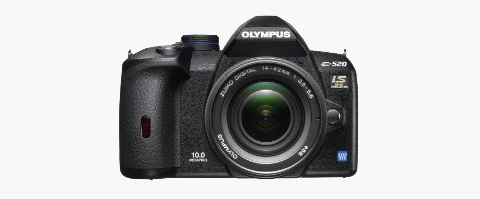
According to photorumors the EP-3 and the E-520 replacement should be announced in Q1-Q2: “I got some Olympus rumors: in the first half of 2010 Olympus will announce the EP-3 with new lenses. The Olympus E520 will be replaced in the first quarter of 2010.”
I don’t know his sources but we already told you that Olympus will launch new FourThirds cameras soon. Our sources told us that many FourThirds cameras are going to be “updated”. Also the E-3 or/and E-30 could be “updated”.
P.S.: Currently amazon do have only three E-3 in Stock
18 Responses
…then comes decision time. I really hope the new flagship is on par with other pro offerings from canikon. Otherwise I’ll have to look in to Nikon & the D700. 🙁
If your comparison is going to be the D700, go get it now and save yourself the worry. The only way 4/3 could compete with that is by going the 3CCD route, and as much as I’d like to see that I can’t see it actually happening any time soon.
Got a look at Photorumors: they mention a new EP-3 – presumably the Olympus version of a m43 camera with built-in electronic viewfinder – and a replacement for the E-520. What does this have to do with a flagship semi-pro camera as the Olympus E-3 that you refer to in the title?
Maybe the reference to the EP-3 is a typo for an E-3… Olympus just announced the EP-2 on 05 Nov 2009. Whereas the E-3 was announced on the 16 October 2007 and more likely due for an upgrade.
So many updates?
Would a Fuji sensor be implemented in our lovely 4/3 cameras?
Or a revolutionary Panasonic one?
I hope no m4/3! Please… Panasonic made a better job in in m4/3 and Olympus won’t make it better and even if they will, panasonic will release a better model after a month or a week so why even bother? Just wait for Panasonic to create something and after that do your best job that is possible. If Olympus is going to ugdate E-520 it’s not worth it because everybody is waiting for E-3 succesor or new pro model with a new Fuji sensor. Why not doing the right thing and listen? It looks like Olympus knows what is better for you and doesn’t mind that customers are saying different things.
E-P1 has been the rumored name for E-3 quite a while ago (see http://www.dpreview.com/news/0709/07090401olympuse1successor.asp).
Hopefully, Olympus will release the E-520 successor, the E-3 successor and of course a non-retro mFT camera with weathersealing. The latter combined with a FT-adapter may be a nice replacement for my beloved E-1.
I agree with Patrick.
I think a classic 4/3 line would be completely useless for Olympus. They have a far better line with the µ4/3.
Please Olympus, abandon the 4/3 line, concentrate on µ4/3 and work on a REAL adapter for classic 4/3 lens.
They would better do this, it would be far more economical for them!
I’m still stunned in front of the attitude of Olympus and Panasonic : they have the Leica of the 21st century but they are unable to create a revolutionary camera. Just imagine what could happen if the Panasonic GF1 would have the same EVF as the EP2 and the same video capabilities and sensor as the GH1…
And I would just add, so as not be considered as an horrible Canikonist that I’m a convinced µ4/3 user (Pana G1) and that I still believe that the Zuiko 12-60 and Lumix 20/1.7 are the best lenses of the last decade 😉
Hi Yeah Yeah.
I doubt that Olympus would drop it’s efforts on improving the Panasonic Live MOS sensors in favour of adopting a Fuji EXR CCD.
How about all that marketing about Live MOS sensors having the best features of both CCD and CMOS sensors.
The Panasonic Live MOS sensors are at least one generation (if not two) better than what was implemented in the E-3.
I like to think that Olympus would have also developed some additonal innovations to implement into the E-3 replacement.
As they will then be used as the foundation for building future semi-pro models.
There is at least one distinct advantage of using MOS over CCD.
Lower energy consumption and heat generation which equates to better high ISO performance.
And allows for Live View and Video functions.
The other thing to remember is the Fuji EXR Sensor is just a CCD that has been tweaked to work in three modes of operation.
1/ High resolution mode.
The sensor uses all its pixels to render the finest details of the scene.
2/ High sensitivity mode.
It uses pixel coupling technology to produce images with lower noise levels.
3/ High dynamic range mode.
Combines two exposures to deal with high contrast scenes
These are all innovations that can be implemented into a Panasonic Live MOS sensor.
So there is no real benefit in chosing Fuji.
My guess would be that if they were going to try a different sensor design.
Then they would be likely to stick with MOS Image Sensors and attempt an effective 12MP RGB layer design.
This would eliminate the need for using an anti-alias filter and produce much sharper images.
And also maintain the Olympus tradition of delivering accurate colour.
BTW, a 12MP RGB MOS Image Sensor would have a total photosite / pixel count of 36MP!
Well, your 12MP RGB sensor would effectively be the best solution but I doubt that Pana could provide it.
Yet you might be right (or at least more realistic) and we will probably see new Olympus cameras with a new Panasonic sensors generation. But the E5 will have to bring something more so as not to be only an E3mkII…
I really hope they will be smart enough to merge both the 4/3 and µ4/3 lines to create a high end µ4/3 line (weather sealing, fast AF, video capabilities, HG lenses and so on) and a cheapest µ4/3 line (basically Pens cameras).
“they have the Leica of the 21st century but they are unable to create a revolutionary camera”
Yes, they are missing the one killer street body (basically they should just copy the Leica M9 or Zeiss Ikon), but the biggest thing holding m4/3’s back is not the bodies, it’s the lenses. I bought an E-P1 the first week it came out and sold it a few months later. They camera was fine, but the glass wasn’t. There just isn’t enough fast glass for the system yet. They need an this lens line up before I’ll consider switching back to m4/3’s:
12mm/2.8
25mm/1.4
45mm/1.4
70mm/2.0
Once they get that then I will consider it a street system. Cheap, wobbly, plastic f/3.5-5.6 lenses don’t cut it for me.
Hi Yeah, Yeah.
Thanks for the reply.
I think that both 4/3rds and µ4/3rds will continue to co-exist for at least another generation.
There are simply types of photography that require faster Auto Focus and Shutter Speeds which u4/3rds currently doesn’t provide.
There have also been advancements in Contrast Auto Focus that will find its way into an E-3 replacement.
Possibly offering Live View to what we currently see in the E-P2.
For my hands the E-3 is a perfect size so I hope they don’t revise the body structure too much.
And the coverage and image quality I get from the Zuiko 12-60mm f/2.8-f/4.0 and 50-200mm f/2.8-f/3.5 is remarkable.
Although I would welcome an affordable super zoom or prime such as a 200-400mm f/4 or 300mm f/4.
I also agree the E-3 replacement will have to bring something more so as not to be only an E-3 Mark II.
But the E-3 raised the bar for Olympus D-SLRs (much in the same way the D3 / D300 did for Nikon).
So we are more likely to see a revision rather than a revolution.
My prediction is for an E-3 replacement in Q1 or Q2 of 2010 with:
01. Build Quality and Environmental Sealing that equals or exceeds the E-3.
02. Higher Resolution MOS Image Sensor (At least 12MP with 14-bit A/D processing and 12 or 14-bit RAW images).
03. Improved High ISO performance (Between 1 to 2 stops better than E-3 and no visible banding noise).
04. At least 6-8 fps continuous shooting.
05. Larger Pentaprism Viewer Finder (with at least 1.0x magnification)
06. Improved AF system (15 bi-axial points, AF assist Lamp, 3D tracking option)
07. Improved Light Metering system (Larger than 49 zone segment pattern)
08. 3-inch higher resolution articulating LCD (I.e. 920K).
09. Multiple in-camera Image Ratio options 4:3, 3:2, 16:9, 6:6, 7:6…
10. Improved Live View with Contrast AF options.
11. Video Mode (With at least 720p 24fps, H.264 codec)
12. Improved battery performance and real time indicator.
13. HDR in-camera function 3 or 5 image overlays for high contrast scenes.
14. HDMI output.
15. Art Filters
In additional there could also be some minor tweaks to existing functions such as:
01. Multiple Card Slot with CF and SD as opposed to XD. With image transfer options.
02. AEB with the option of 2 stop increments.
03. Improved Indoor White Balance performance
04. Option to control SSWF Dust Removal on start-up or shut-down.
05. Real Time Diagnostics for Contrast AF such as Exposure clipping overlays
06. More Custom Function buttons / options.
07. Improved PC Remote Control Software
I think a high end µ4/3 with the features you specified is also possible for 2010.
It will be interesting to see which high end camera Olympus chooses to release next.
BTW, I agree with Eric that the success of µ4/3rds also relies on the availability of higher quality fast, prime lenses.
YeahYeah wrote:
“I really hope they will be smart enough to merge both the 4/3 and µ4/3 lines to create a high end µ4/3 line (weather sealing, fast AF, video capabilities, HG lenses and so on) and a cheapest µ4/3 line (basically Pens cameras).”
EVF at this time cannot compete with TTL optical viewfinder in high frame rate (for professional photojournalism or sports). It will always lose out because of the video processing overhead in addition to the shutter blank outs.
Therefore a high end µ4/3 will always lose out and never be chosen by professionals for this task as I don’t think any EVF in the next 5 years is capable of doing anywhere near the 9 to 11 frames per second (like the D3s).
Wow! Many answers!
I agree with a large part of what you said, especially concerning the lenses (even if I mainly use manual focus ones).
I’m also pretty sure that 4/3 and µ4/3 will co-exist for one to two generation (maybe three for high end cameras).
Yet we have to recognize that an E3 cannot compete with a D3. Where as an EP2, for a specific use such as street photo, might be an interesting option, maybe the best if we don’t consider the overpriced leica M. That’s why I say Olympus should concentrate so as to develop a very specific but very competitive camera. If they don’t, Canikon will always burst them…
Hi Yeah, Yeah.
Although the Olympus E-3 is a camera built for professional applications.
I don’t think it’s fair to compare it to Nikon D3 or D3s.
As they are clearly not in the same price point and built for different purposes.
Probably a Nikon D300 with DX lenses is a fairer comparison.
Although I never really liked the colour rendition from the JPEGs produced by Nikon D-SLRs.
I.e. Reds look like Orange.
It appears from the advertising the Olympus E-3 was designed for nature and wildlife photography.
Hence it’s smaller and robust design…
Less weight is important when bush walking for hours or hiking up a mountain, or canoeing down a river.
For magazine size prints and internet based media it’s definitively capable of producing professional quality images as Mitsuaki Iwago demonstrated.
I used my E-3 for travel and nature photography.
When I factored the cost of covering a focal range between 24mm to 400mm with a maximum aperture of between f/2.8-f/4.
No Nikon DX or Canon EF-S system came close.
I also rarely shoot above ISO 400 as I tend to shoot static subjects. And so I have become accustom to using a monopod or tripod in low light. Therefore the noise at higher ISO is not as much a problem for me.
Plus there is something unique and appealing about those natural, deep colour tones that Olympus cameras produce.
I believe they have one of best JPEG engines too. As I find myself not having to tweak many images to achieve the look I’m after.
And when I do, I prefer to use the Olympus Studio software to convert ORF to TIFF instead of Adobe Camera RAW. It’s more optimized for ORF and doesn’t mess up the colour tones.
I’ll consider adding a second body to my Olympus collection after the E-3 replacement is announced.
Well I use my fill flash all the time and I also can’t live without a viewfinder so I guess I’m not buying the EP-1 or 2, maybe they will fix it.
Oh, please, don’t ask Olympus to abandon the 4/3rds line! A good old mirror reflex is necessary for a fast and accurate autofocus system, especially for tele. Mathematically spoken, contrast autofocus (in life-view) does a minimum search, whereas phase detection uses a root search algorithm. Therefore, you cannot expect a break-through in contrast autofocus technology which comes close to the speed of phase detection.
I think the current E-30 performs absolutely fantastic. Fortunately I am not so keen on the next flagship because I am so satisfied with my E-30. BTW, if noise is your problem, try NoiseNinja.