







UPDATE: You can now pre-order the new X-T1 IR at BHphoto here for $1,699 and at Adorama here.
We got a new Fuji camera! Ok, not really new 🙂
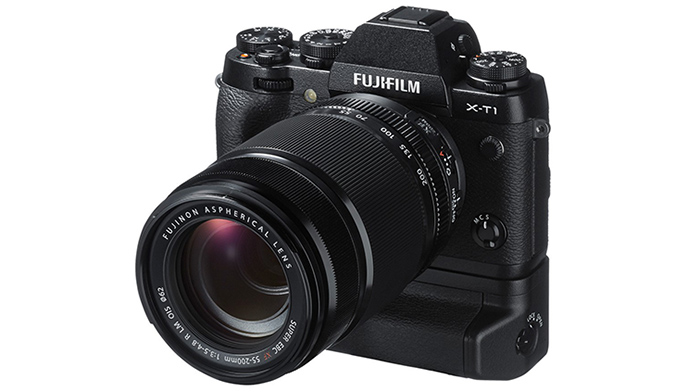
Fuji US just announced the “X-T1 IR” which is an infrared version of the classic X-T1. theVerge & Dpreview. write: “The camera captures light from UV, visible and infrared portions of the spectrum, from approximately 380-1000nm. While Fujifilm cites crime scene investigation and healthcare as applications, there are plenty of ‘regular photographers’ who will find the X-T1 IR intriguing as well.”
The new X-T1 IR costs $1699 and will ship from October.
And pay attention… according to wired, This new camera might be able to see through your clothes!
FUJIFILM ANNOUNCES PROFESSIONAL-GRADE X-T1 IR (INFRARED) MIRRORLESS CAMERA
X-T1 IR delivers high performance and unyielding results for experts in technical fields from law enforcement to healthcare and beyond
Valhalla, N.Y., August 3, 2015 – FUJIFILM North America Corporation is excited to announce the new FUJIFILM X-T1 IR (Infrared), the first advanced infrared X-Series mirrorless camera that delivers high performance in demanding fields for technical experts, law enforcement, medical research and scientific communities. Sharing nearly identical specifications as the award-winning FUJIFILM X-T1, the FUJIFILM X-T1 IR adds advanced infrared technology to see light from the ultraviolet (UV), visible and infrared (IR) portions of the light spectrum (approximately 380nm – 1,000nm). The X-T1 IR is a premium mirrorless camera specifically designed for professionals, and pairs seamlessly with each high quality FUJINON XF lens for reliable and outstanding results.
FUJIFILM X-T1 IR (Infrared)
The FUJIFILM X-T1 IR builds on the performance and capabilities of the original X-T1, and with its new infrared technology, delivers dependable results to experts who have a wide range of work requirements, including: crime scene investigation, fine art photography, healthcare diagnostics and observation, and other scientific and technical applications. Infrared imaging is critically important in these fields because it allows users to see information that is not visible to the human eye.
X-Series performance for special applications
Experts, professionals, and practitioners can use the new FUJIFILM X-T1 IR in their everyday work, and immediately benefit from its X-Trans CMOS II Sensor, its ultra wide “Real Time” EVF, and its large, high resolution tilting screen. The X-T1 IR maintains the 100% silent electronic shutter of the X-T1, and its electronic viewfinder allows perfect night vision with an infrared light source, normally invisible to the human eye. The exterior of the X-T1 IR is constructed of 100% magnesium alloy, and is built to be weather-resistant, perfect for use in hot or cold, wet or dusty, and other challenging weather conditions. The X-T1 IR has approximately 80 points of weather sealing for outdoor dependability, and can withstand freeze temperatures down to 14°F (-10°C).
The X-T1 IR focuses on both excellent image quality as well as delivering incredible speed. It uses an extremely fast and accurate autofocus system, and is compatible with Ultra High Speed UHS-II SD memory cards. At up to 8 frames per second, the X-T1 IR is fit for any specialized workplace in need of first-rate photo quality, durability and performance.
FUJIFILM X-T1 IR (Infrared) key features:
- Professional-grade infrared technology from the ultraviolet (UV), visible and infrared (IR) portions of the spectrum (approximately 380nm – 1,000nm)
- 16.3 Megapixels APS-C X-Trans CMOS II Sensor
- Dust and water-resistant body with approximately 80 weather sealed points. Freeze resistance to 14°F (-10°C).
- EXR Processor II
- Startup time of 0.5 seconds
- Shutter time lag of 0.05 seconds
- Shooting interval of 0.5 seconds
- High-precision 2.36 million dot OLED viewfinder
- Highest viewfinder magnification for digital cameras of 0.77x
- Wide viewing angle (diagonal 38° and horizontal 31°)
- Ultra-fast Real Time Viewfinder with a lag-time of 0.005sec (less than 1/10 of existing models)
- Four different display modes: Full, Normal, Dual and Vertical.
- Tempered glass 1.04 million dot high-precision 3” tilting LCD monitor
- Digital Split Image and Focus Highlight Peaking
- Completely electronic shutter up to 1/32000 seconds
- ISO200 – 6400, extended ISO 100, 12800, 25600, Auto (maximum ISO setting from ISO 400 – ISO6400 available)
- Die-cast magnesium body provides a sturdy and durable, while compact and lightweight design
- Interval timer shooting for Time Lapse photography is available with intervals of 1 second to 24 hours and up to 999 frames
- Full HD video 1080p at 60fps; bit rate of 36Mbps for clear capture of delicate movements; frame rates of 50fps, 30fps, 25fps and 24fps, supporting worldwide motion picture formats
The FUJIFILM X-T1 IR (Infrared) will be available in October 2015 for USD $1,699.95 USD \ CAD $2,099.99.
50 Responses
Unless FUJIFILM also develops matching lenses, this camera is just a novelty. IMO, the resources would have been better spent if they had instead developed a monochrome camera.
Why would they need to develop ‘matching lenses’? I don’t believe the lens plays any significant role in blocking IR or UV light, that’s down to the filter on the sensor. It would be nice if there was a monochrome X100 series model though!
errrrr….. they do need appropriate lenses for IR
http://www.lifepixel.com/lens-considerations
http://kolarivision.com/articles/lens-hotspot-list/
The second article you link to says quite a few of Fuji’s lenses are already fine for IR and others are useable depending on the aperture set. How any of these lenses interact with the X-T1R of course remains to be seen, but lets assume Fuji will likely publish a list of lenses compatible for this camera.
The coatings on the lens elements absorb UV light.
I am not sure what you mean by matching lenses. The current lenses have filter threads to mount the required filters
I think they’ll just do an in-camera correction for the hotspot.
Question: What does the AF system focus on? Visible light, UV light or IR light?
Question: Does the EVF “translate” UV and/or IR light to visible light for the photographer?
1. CDAF just doesn’t care. Whatever we’re interpreting into visible picture at the moment will be focused on.
2. The whole point of “invisible” light photography is in translating the result into humanly perceivable pseudo colors. I bet that we’ll see these pseudo colors as a preview in EVF, just like now we can see a preview of whatever “advanced mode” effect we chose.
RE #2: This’ll be great for observing vampires in the deep, dark woods!
…and posting them straight to Instagram. I’m sure we’ll see combo deals like “Infrared X-T1 and an EMF meter” soon enough.
Not every lens produces a hotspot, I think this camera is intended for the lenses that are UV / IR capable. Fixing hotspots often affects IQ and I doubt it can be done in camera. Some hotspots are big, some are small, some are more gradual, some more abrupt, I mean, yes, they are frustrating, and yes, I’d love it if they could be fixed in camera, but I’ll believe it when I see it.
The only lenses they would need to develop is the UV capable – if they create a cost-effective UV capable lens, they’ll win the lottery. Right now they’re on the high end of $5000.
I disagree with the “cost-effective” part. If this camera is used for scientific and forensic work, then the lenses must be the best possible lenses and nothing less.
Yep, totally agree. That’s the “effective” part of cost effective. Right now your only real options are a Coastal Optics 60mm or 105mm, or try to hunt down a Nikon UV 105mm. All of those run in the $5000 range. And are all Nikon mount. So Fuji creates a top-of-the-line x-mount UV capable lens and keep it around $2500. Still pricey, but within the budgets of the departments that might need it.
Let’s face it – if you need a UV capable camera and you’re choosing a Fuji (or modded DSLR) that barely stretches into the UV spectrum, you’re on a budget. If you have money to burn, then there are other, more capable, options in the tens to hundreds of thousands.
I think trying the existing lenses will show some already work fine for UV or IR.
How about a monochrome IR camera? I’d be very interested.
No surprise since Fuji had IR models in the old line of dSLRs.
Yes they did. I think they had a niche market in the forensic use of their extended range cameras. I would love to get this camera.
(And we all say) didn’t see that coming.
Except that Fuji has a long history of creating IR capable cameras – IS Pro and so on. My only problem is that you can buy a used XT1 and have it converted into full spectrum for less money than this. I guess you’re paying to avoid the hassle and keep the warranty.
But you cannot simply rent that used converted X-T1 when you need one, whereas the rental houses that offer Fuji X equipment will probably start carrying the dedicated model.
IR is kind of a specialty thing and a bit of a one trick pony, so unless you do a lot of IR work and it’s sort of your “style”, actually owning one of these is probably not going to make much sense.
I also imagine the firmware will have specialty features for IR, like being able to live-preview different renditions that you would otherwise only be able to see after extensive white-balance and channel mixing adjustments in post.
Moreover, I’m kind of curious to see what will happen once a firmware update or at least the next camera generation will bring a proper Blackmagic/Magic Lantern-style movie mode to the X series. There are some pretty interesting videos shot with IR converted Red cinema cameras on the internet.
The firmware features would be cool. This camera is not just an IR camera, but rather full-spectrum, meaning with the right filters you can get IR, visible, or UV. Forensic photographers would own this, as would anyone interested in doing near-IR, UV inspection of artworks.
True, but on the other hand, it’s also convenient if a camera is already specified to a certain wave length use, so you don’t need to use filters all the time (on all your lenses).
You can actually buy a new one and have it converted for less. I know. I’ve done it. In fact, I had B&H send a new camera directly to Kolari Vision and within a week from the purchase I had my IR camera … and love it.
Which means it’s not a yearned-for item and thus will be an economic dud.
Would there be software available to make NDVI images?
Did any of your rumors even hint at this?
Don’t think so. But I’m certain that these are the same sources that didn’t hint at 56mm APD.
So it’s defo a source who was correct in the past 🙂
56APD was rumored, including the price
actually I rumored the 56 APD a few weeks ahead of the release… and get plenty of shitstorm because of this rumor 😉
http://www.fujirumors.com/build-bokeh-new-xf-lens-new-tech-super-smooth-bokeh-coming-new-source/
http://www.fujirumors.com/fujinon-xf-56mm-f1-2-r-apd/
no… i didn’t publish anything about the X-T1 IR camera ahead of its release. So finally Fuji scores a point in the battle against FujiRumors 😉 .
The existing X-Trans I sensor’s IR shielding is not particularly strong. If you put an IR filter on your existing lens, you get lots of IR to create an image. Here’s one of mine from my (unmodified) X-Pro1 https://instagram.com/p/5GY_ecxDBs/
I noticed this too with my “old” Fujifilm X100. Combined with the good high ISO performance, I could fairly easily shoot IR in daylight, even handheld. I think I got something like 1/30 secs for good images. Obviously, indoors or dusk was a different topic.
I don’t recall the wavelenghts it let through right now, may have been slightly “pseudo-IR” but sometimes this is even preferred at least if you shoot IR for the visual effect and not crime investigations…
Yes this is probably “pseudo IR” .. definitely not a substitute for a dedicated IR cam. But it’s fun
http://fujixsystem.blogspot.com/p/fuji-infrared-lens-tests.html so does this mean these will be good lenses?
This is odd choice. Not the route I would have went. But I guess thats why I don’t work for a camera company.
Huh. Heard they were going to launch something left-field, no clue it would be an IR camera. Well, sure, why not. Canon’s doing a specialty camera for surveillance and has a couple others for astrology, why shouldn’t someone produce an IR body as a stock body.
I think you mean astronomy, but if you really do mean astrology, that would have some interesting implications indeed!
An astrological camera would be a serious game-changer!
Good catch.
I have an X-T1 that I had converted to IR by Kolari Vision and love it. It is actually cheaper to buy and X-T1 and have it converted than to pay the asking price for this new IR version!
Does anyone know if the IR announced capabilities would be enough to do a heat loss analysis for a building or a house ?
No: https://en.wikipedia.org/wiki/Thermography#Difference_between_infrared_film_and_thermography
Darn! that’s what I was afraid of; Will have to find another angle to convince the Finance Minister 🙂
Thanks Konrad
Have you looked into Seek Thermal?
I was after a good excuse to buy the XT-1IR 🙂
That said for thermal imaging Seek Thermal seems very interesting; thanks for the pointer
Good luck! 😀
Next up, Monochrome please. 🙂
I wonder if we now will also see IR-optimized versions of some of the lenses. I’m thinking different coatings mainly. More would need a complete redesign, but coatings should not be too difficult.
UV is a different story. But this is limited by the sensor anyway. The big improvement in UV sensitivity will come when and if BSI sensors get UV-AR coatings. I’d think we can get QE as good as in the visible with such a sensor (w/o color filter of course).