






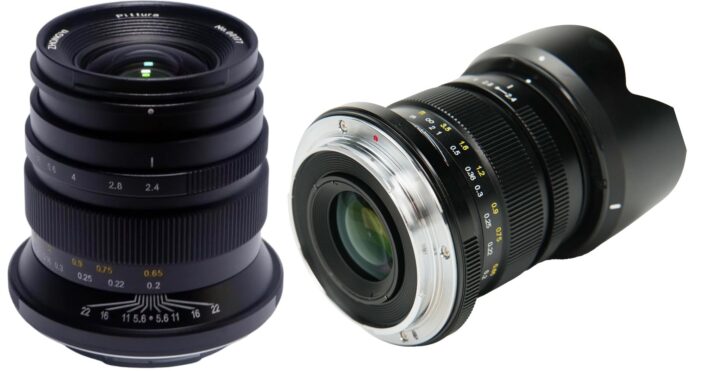


Some more XF 90mm specs from a top trusted source: it will weight 540g and have 13 elements 8 groups with 3 extra low dispersion elements. It will have a minimum focus distance of 0.6m. The size: 75mm x105mm. Also digicame-info leaked some informatinon. Here are theirs specs: Total length 105mm, Maximum diameter of 75, Weight 540 g, – Estimated retail price of XF90mm is 118,000 yen ($949)
About the Fuji X-T10: The size is of 118.4mm x 82.8mm x 40.8mm and the Weight 381g.
Announcement is scheduled for May 18… I’m ready for a hot live blogging session early in the morning here in Europe, around midnight in New York.
100% Fair Trade Chartiy X- Shirt here
it’s happening soon…. stay tuned 🙂
 facebook, google+, RSS-feed and twitter
74 Responses
Price is too close to X-T1 IMO
Extremely – the Fujifilm X-T1 body in Japan retails for 115,000. Something’s not right.
it’s the lens, that will cost 118,000 Yen
“About the Fuji X-T10: The size is of 118.4mm x 82.8mm x 40.8mm and the Weight 381g. Price: 118,000 yen ($989)”
I see that 118,000 is listed under both items, typo?
**EDIT: Ah, I see you did remove that. Thanks :3
yes, I realized the error a few minutes after posting and edited it…. sorry, wrote this article at 5 AM here in EU.
My soul is still sleeping 😉
Also, I’m a little sad re: the pricing of the 90/2, I picked up my Canon 135/2L for about ¥73,000 used in great condition and that’s a bit of a price bump.
the price should be between 700 and 800 dollar for the X-T10 body.
And it seems a fine camera for the price.
$700 is the upper limit for X-T10.
I hoped 90/2 to be far cheaper. It’s ridiculous 35/1.4 to be half the price of 90/2.
The 35/1.4 is a much, much simpler design than the 90/2 and uses probably a quater of the glass. Not to mention the WR and the rumored two linear motors of the 90.
If anything the 35/1.4 should be less than half the price of the 90/2. 😉
the 90mm should be the price of the 35mm and the 35mm should be half of that 😛 (Guess Fuji wouldn’t make any money out of that, but those things would sell like crazy!)
If it was 35/1.8 ok, but Fuji 35 is f1.4 and also very compact. 90/2 is an overpriced elephant. 56/1.2 is the same price, but is unique glass. Canon 135/2 is 1000 euro new…
What is so unique about the 56/1.2?
Overpriced or not, I don’t think they can price the 90/2 any lower, if they want to make some money with it.
I would expect there is more tolerance on the 35/1.4.
Show me another aps-c lens like 56/1.2? Only 42.5/1.2 PanaLeica is similar. They can make more money if 90/2 is 700-750$ 😉
Nikon 85 /i.8 is 400 euros in Cyprus.Fiji 90/2 must be 600euros .
Not really, the Fuji most likely has better optics. I do hope it’s an APO lens since it utilizes 3 ED elements.
Nikon covers FF and is one of those sharper lenses ever according to DXO. Fuji price is ridiculous, only for fanboys 😉
See my reply to another poster above.
you mention: “..which is almost impossible to manually focus with any degree of accuracy”
Why on earth would you need MF when Nikon has the most accurate&fast AF dedicated module in the market? This is not a MF lens! It’s not a Zeiss 😉
Plastic properties is great when used appropriately.
And certainly no photographer would call Nikon lenses “plastic junk”. Probably you have no idea whatsoever..
sorry thats pure bollocks.
The Nikon 85 f1.8 is, compared not only to my Fuji lenses but my Nikon 85 f1.4 D as well, a load of plastic junk which is almost impossible to manually focus with any degree of accuracy.
The 85/1,4D is a poor MF lens, but then, so are Fujifilm lenses, which lack any hardware coupling. Besides, today’s most apt comparison is the 85/1,8AFS.
Looking at 85mm lenses from Canon, (Nikon), Zeiss (the new Batis) and the Olympus 75mm this thing really has to deliver!
It will. Fujifilm lenses are very good optically, just large/expensive and not expressly part of a premium system. If Fujifilm can fully convince people they are a premium company, their pricing/size may make sense. We’ll see.
I am pretty sure it will deliver optically and build quality wise.
But I am not sure it will convince me with it’s price
What do you mean by ‘build quality wise’?
metal construction like most Fujis, WR, a joy in the Hand
I would also be really surprised if this lens is not a flawless performer at all apertures. Telephoto primes are some of the easiest lenses to design and well behaved since the 80s. Nevertheless I would have gladly sacrificed some (wide open) optical performance for it to include IS and be slightly more compact.
The 35mm f2 seems to be pointing in the right direction, and I hope more lenses like it are to follow.
Still I must say that fuji is really successful in building a complete system with all classic focal lengths covered. A modern 135mm f2.8 lens is something I would love to see for my main nikon FF system.
I was hoping the 90 would be below 500g.
Guess I have to touch that thing to see how heavy it feels and how it may balance on an E2
I’ve just checked the dimensions and weight against my 55-200 when at minimum focal length, it’s a bit shorter, about 5mm and a bit lighter, 40 g, with virtually the same diameter. I find the 55-200 very comfortable to hold when using it between 55 and 100 mm for portraits, so with the focusing ring on the 90 mm where the zoom ring is on the 55-200, manual focusing it is going to be a pleasure.
That’s still a HUGE 90/2 lens.
0.6m close focus is fantastic. Portrait lenses usually suck with this parameter. A way shorter 56/1.2 has even longer close focus – 0.7m. If this lens would feature great bokeh as expected I’ll get it as soon as possible.
If true, that is very good. My Summicron 90 close focuses to 0,9m. We’ll see.
they should price this around 600$ and a professional version with 1.4/90 around 1.300$ (equivalent to 2/135 on FF). Then it would be still more expensive than the comparable lenses from nikon and canon, but that would be still ok. Now Fuji makes APS-C lenses and sells them sometimes for the double price of a comparable FF-Lens.
1.4 90 will be equivalent to 2.2 135 on full frame to be accurate. I am sure this will come at $899 in usa and will be about $749 with rebate within 2 months like fuji usually does
Considering the size/weight of the 2,0/90, a 1,4/90 would be a monster.
I guess f2 was the fastest fuji could do it and still keep the weight reasonable. On the other hand it is true that both Nikon 85 1.8g and canon ef 85 1.8 weigh less, are razor sharp wide open and have to cover a full frame circle. Interestingly even the new Zeiss Batis that is coming for fe mount weighs less, covers full frame circle, buld like a tank and includes in lens stabilization all with a lesser weight than this fuji 90/2. What is the explanation that fuji lens is not as bright excludes stabilization and still weighs more?
No explanation needed. We love Fujifilm, heavy/big or not.
My only possible explanation is need for somewhat closer focusing distance
When you give up critical thought is when things start getting weird and you become a fan boy.
Exactly.
I can’t really be bothered to look up the weights to check to see if they are actually at all similar, but I’d like to point out that the 90mm f/2 is not comparable with the 85mm f/1.8 lenses of other manufacturers. A Fuji 90mm f/2 is actually the equivalent of a 135mm f/3 lens. Again, I can’t be arsed to look it up, but off the top of my head I’m pretty sure the old Canon 135mm f/2.8 is heavier than this 90mm f/2.
There’s also the point that, comparative use aside, those 85 1.8s are made to a cheaper build standard than the Fuji XF primes released so far. (And so, presumably, this 90mm f/2.) Sturdier lenses are always going to be heavier. If you look at Fuji’s track record with their other primes, they’re not going to tolerate the fimsy shell and soft-focusing glass of those 85 1.8s. (Disclaimer: in case you can’t tell, I really don’t like 85mm f/1.8 lenses. 100mm f/2 is more useful, to me, at any price point.)
I’m not a fan of 135mm, so I’ve no interest in defending this lens, least of all before it’s actually released, but yeah, your comment is misguided.
I’d also say that the spec of this lens isn’t heavy in the slightest, but that may just be because I’m used to medium format and Canon wildlife lenses, so anything under 2.5kg seems like peanuts.
i lost u early in your comment. Are u saying that if I attach the new WEATHERPROOF Covering full frame stabilized Zeiss 85 1.8 on my fuji xt1 (assume it is possible for the sake of this argument) my angle of view and focal length will be massively different from when I attach fuji 90mm 2.0 lens to the same xt1?
No, that’s not what I’m saying. The 85s you cited are lenses made for 35mm sensors and optically they completely fall apart when you mount them on crop sensor bodies. The 90mm f/2 is made for a crop sensor. Its equivalent is a 135mm lens; the actual Fuji equivalent of those 85s is the 56mm. For the 85s to actually be equivalents of the 90mm f/2, they would have to be optically sound enough to not degrade when matched with a crop sensor.
To put it another way:
– When comparing lenses, you have to take into account what they are actually designed for, not just a couple of numbers.
– There is a huge difference in construction between lenses made for 35mm sensors and used on a crop body and lenses specifically made for crop sensor bodies.
I could, technically, mount my medium format lenses on a 35mm sensor body or even a crop sensor body; it’s a bit of a faff, but the right adapters do exist. That does not mean my Mamiya 110mm lens is comparable to a Nikon 105mm lens.
You do have a point, but the others do as well. Both sides are right in a way.
When comparing FF lenses to crop lenses concerning weight and size many people forget that crop lenses can be a bit smaller because of the smaller sensor but need to be bigger (more complex) because of the lower pixel pitch if you want a similar result (in sharpness). That really does lower the benefit of smaller sensors though some benefit is still there.
Remember, a Fuji lens will be designed to resolve at least the 24 MP that are coming in the X-Pro2. The same pixel size would result in a ~56 MP FF sensor. Not many current FF lenses resolve that type of resolution, especially not wide open. Since most Fuji lenses are tack sharp wide open (many even in the corners) it’s not completely fair to compare the size/weight directly to an 85 f1.8 from Nikon or Canon without taking the lens’ sharpness and aberration into account.
Comparing to a 135 f2.8 on the other hand isn’t the correct way to do it either. You should just compare it to the 85mm but take image quality into account.
Anyway, I do wish Fuji would start making cheaper and smaller lenses for budget-minded people like me who can do without the last bit of sharpness but would still appreciate native lenses with AF instead of adapted ones.
I can mount the 85mm f/1.8 Canon L on any Canon APS-C body and it behaves like the 90mm Fuji so YES, they are comparable!
There are physical parameters like focal length and aperture that don’t change, just the photographic parameters they imply
And if this lens doesn’t perform well compared to the 85mm’s (doesn’t matter if Canon, Nikon or Zeiss), in terms of optical quality, build quality and price, people (me included) will not buy it
You only have to loook at every other Fuji prime lens to know this lens is going to completely out-perform those 85s. Again, I’m not a fan of the 135mm (actual or equivalent) focal length myself, and I’m one of the most vocal people around here when it comes to Fuji’s ridiculous prices, but you have to be pretty dense to not notice the gargantuan difference in optical quality between the Fuji primes and the common lenses of a similar focal length and speed from other manufacturers.
That said, I just wrote another reply on here which answers the rest of your comment, so go read that. Short version: no, those 85 1.8s will not work like the 90mm f/2 does, because those lenses are not made for crop sensors and absolutely fall apart when you put one on a crop body, unlike the 90mm which is made for that specific purpose.
the size benefit of mirrorless only goes to a certain point. Since some distance in DSLRs is covered by the body, lenses end up the same size or even smaller than the mirrorless ones for longer focal length.
So the comparison should not be: 90mm vs 85mm but 90mm on the Fuji Body vs the 85mm on the Nikon or Canon body.
The Batis is said to have some huge distortion for this type of lens, they probably made some sacrifices to keep the size down.
Guess no sacrifices on Fujis side on the 90mm. WR, LM, nice minimum focus distance. Let’s see how it will do optically!
The really “bad” thing is, that the older Nikon and Canon designs can be had for very little money. Guess Fuji will not be competitive on this one :/ Kinda sucks.
We will never know about distortion since fuji automatically fixes it in both raw and JPEG files to remind u. I have not heard that Batis Zeiss has this terrible distortion all I hear that it is spectacular optically. Since I shoot both Sony E and Fuji (I own fuji xt1 and Sony a7r plus a6000) I have to make a decision do I buy the Zeiss Batis or fuji 90/2. I want to have both lol. I do want to know what Fuji means by linear motor on 90/2 first
that is 100% incorrect. RAW files are uncorrected, just use the right RAW Converter. Same goes for Sharpening and Noise Reduction.
Only because Lightroom can’t do it, it doesn’t mean it is that way.
If Fuji puts a linear motor into this prime it would/will be a first for Fuji. Silent, fast AF – good for Tracking.
afaik the Batis uses LM too
edit: the Batis and 90mm Fuji may have the same physical focal length but their field of view are different (a lot!)
Of corse you could crop the A7rs picture, but that would loose any advantage that Full Frame has.
First think about what focal length would suit you better – 85mm or 135mm on Full Frame. Then you have your Answer where to go 😉
In any case let’s wait til first samples. Specs are not everythjng. Sometimes certain lenses have special rendering which has to be seen to believe and that can only be seen with your own eyes. Maybe 90/2 would be one of these special lenses with unique look to its photographs who knows
it has to be. If not, I won’t buy it 😉 (I’d probably go for a manual focus lens like a rokinon or even the Zeiss planar [not APO aka Otus] then)
I used to own rokinon 85/1.4 in canon mount and used it on fuji xt1 and it was great even wide open but focusing ring on rokinon is very stiff I hate it. It is your Zeiss buttery focusing ring that u can control with one finger
‘lose any advantage that full frame has’, ‘first think about what focal length would suit you better’ – err what? The ‘advantage’ on FF would be the Batis gives you basically 56mm f1.2 AND this lens but in one package that weighs less, has IS (which neither the Fuji’s have) and means not swapping lenses and gives FL’s in between and gives much more resolution when used as an equivalent to the 56mm. So smaller, lighter, cheaper, easier and IS.
the batis has 15 times the distortion of the Zeiss planar, so let’s see how it does against the fujis.
Croping to 16MP means you loose any advantage the Full Frame sensor ever had – noise, shallow depth of field, DR.
What is left, is a crop out of a 11bit RAW, that was probably shot with a wrong shutter time – thus is unsharp.
11bit RAW? You mean 11 + 7 cRAW vs Fuji cooked 12bit. ‘that was probably shot with a wrong shutter time’ Uhm what? Really clutching at straws here.
14bit for Fuji 😉
and PLEASE tell us something more about what “cooking” Fuji does (and other manufacturers don’t) – with technical quotes!
about shutter speed: when cropping your hand hold rule of thumb no longer applies
Still makes no sense re: shutter speed. You know you can choose your shutter speed right? Besides SS blurring has far more to do with pixel pitch which is the same. Lastly, Batis has IS, Fuji doesn’t.
Not going near the RAW thing with a fanboy sorry.
fanboy lol? your name is @sonyalphasauce and you dare calling anyone fanboy? But that’s the easiest way to stop an argument when you just don’t have any idea or facts
Yep, fanboy. Your ‘facts’ have been refuted yet you continue to believe you are ‘right’ because, because… Fuji. If you want to lug around a Fuji with four expensive lenses to be able to do what you can with two because of some made up advantage, be my guest. I’m sure it will serve you very well. I will stick to just the X100S for now.
My facts…
14bit RAWs (you said 12bit)
no (more) RAW cooking (than other manufacturers)
FF looses DOF and noise advantage when cropped
Your arguments:
I am a Fanboy
Way to go – that’s what I call an argument …
umad?! 100%.
it’s hilarious, when you state or pose a question, yet you get name-called instead.
Hilarious.
I explained very clearly what the advantage was, which you chose to ignore over and over because you can’t comprehend that there might be an advantage. But yes, in certain instances they would be equal, no advantage either way (which you clearly seem to think means the Fuji is better for some unknown when there is ‘no FF advantage), the advantages are: smaller, cheaper, less gear, less lens swaps, IS and half the time has a big DR, noise and colour advantage.
But you’ll come back with ‘but, but loses FF advantage, so Fuji better’ = Fanboy. Come up with something better and we’ll call it a discussion.
There is never a distortion correction to the Raw files and in case of the recent primes not even in jpgs:
http://www.lenstip.com/387.6-Lens_review-Fujifilm_Fujinon_XF_14_mm_f_2.8_R_Distortion.html
http://www.lenstip.com/398.6-Lens_review-Fujifilm_Fujinon_XF_23_mm_f_1.4_R_Distortion.html
http://www.lenstip.com/420.6-Lens_review-Fujifilm_Fujinon_XF_56_mm_f_1.2_R_Distortion.html
I stand corrected. Fuji raw files contain info that Lightroom and capture one use to correct raw files automatically. For Lightroom u can’t even see the uncorrected raw file for fuji.
Yep. Lightroom’s problem. 😉
Nikon and canon lenses are totally plastic and are not weather sealed. I belive this new XF 90 is all metal as usual. So does Batis. It also has two elements less but covers full frame so it’s kind of a tie. It seems we have to wait the production samples to see why a stabilized lens is 60g lighter and 13mm shorter.
The Nikon 85 1.8g has tons of purple/magenta and green fringing until around 2.8. I was actually glad to get rid of the thing. I haven’t seen that kind of issue with any Fuji lenses I’ve used.
Kind of lazy. You should have quoted what you said. This is bound to be a long thread.
“The Nikon 85 f1.8 is, compared not only to my Fuji lenses but my Nikon 85 f1.4 D as well, a load of plastic junk which is almost impossible to manually focus with any degree of accuracy.” I think that’s the post Tankerman is referring to
I know this is the most unimportant aspect of a lens, but as much as I live the specs if it, but this lens looks ugly. The more I look at it, the more I feel that way. I don’t know why.
Personally I like this lens’ appearance. It features nice grip. I hate 56 for lack of grip. I always move the aperture ring when I mount or unmount it. But here there is a large zone between aperture and focusing rings one can grab the lens by.
+1 honestly it looks almost exactly like the 50-230mm which is a FANSTASTIC lens for it’s price and light as a feather for what it does but not exactly a fashion model.
Not a big deal of course, with long lenses like this subtlety is a huge value and this lens looks effective and not-too-threateneing.
Now the lack of IS on the other hand…