







IN STOCK: A limited number of XF 55-200 is now in stock at AmazonUK here (shipped and sold by AmazonUK) and also three at AmazonUS, but via third party reseller here (you have to pay $100 more to purchase it).
Fuji XF 55-200mm [shopcountry 12892]
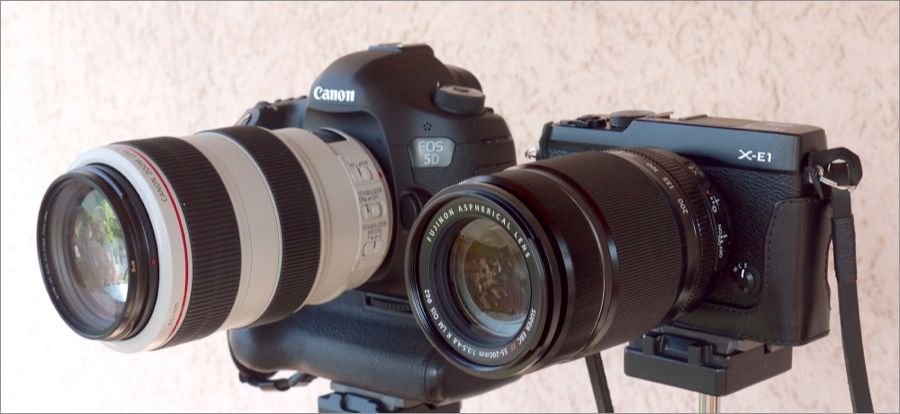
image courtesy: martin-doppelbauer
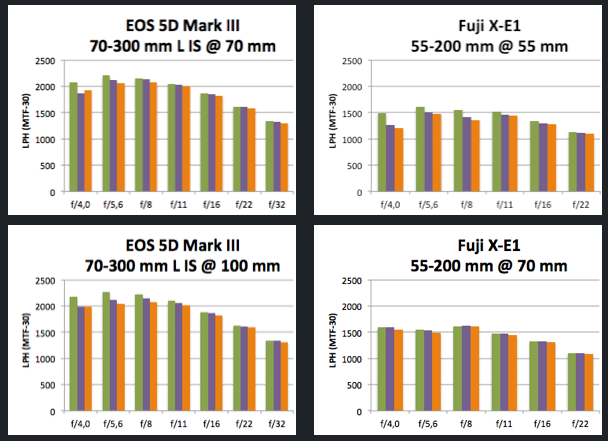
Martin made a quite unfair comparison between the [shoplink 12881]X-E1[/shoplink] with [shoplink 12892 ebay]XF 55-200[/shoplink] and the [shoplink 13457]Canon EOS 5D Mark III[/shoplink] with [shoplink 13458]Canon 70-300 IS L[/shoplink]. “But yet, Fuji claims itself to achieve the image quality of a full-frame camera. So let’s see“. You can read the whole comparison here (available in English and German). Some extracts:
“In direct comparison, I could not detect any significant drawback in the focus speed compared to the Canon 70-300 IS L at least in static, high contrast scenes. To run the focus from infinity to close range takes similar time on both optics. I already have noted the limitations of the X-E1 when recording fast-moving objects (birds in the air, or motor cycling, but also: Crawling babies head from the front) elsewhere. Because both the focus point and the viewfinder image freeze after the first shot in continuous shooting mode, there are little to no chances to get a good picture in such situations. Here, the DSLR is still unbeatable (and the EOS 5D Mark III shines in particular with its uber-autofocus anyway).
Somewhat disappointing is the vignetting of the XF 55-200 at maximum aperture. At least you can correct this well by software.
For a comparison of system resolution, I have run the X-E1 and the XF 55-200 against the EOS 5D Mark III with the excellent 70-300 f/4-5.6 L IS USM. Not quite a fair comparison, as I admit frankly, because the Canon lens costs easily twice as much as the Fuji zoom. And we don’t even talk of the camera body […] Compared with the EOS 5D Mark III, however, Fuji’s zoom has a significantly lower resolution. The Canon 70-300 L resolves about a third more lines across the board, occasionally even 50% more. An equivalence to the Canon full-frame system is beyond question.
The XF 55-200 […] convinces with a very solid overall performance. Across all focal lengths and apertures it has a good sharpness with minimal chromatic aberrations without significant weaknesses. Sure, it can not keep up with a very good full-frame camera and lens. But this is outweighed by price, weight and size.
Fuji XF 55-200mm [shopcountry 12892]
image courtesy: martin-doppelbauer
34 Responses
good, but not exceptional. IMHO big telephoto lens is not the nature of mirrorless
I don’t like 70-300 IS L but I like (the cheap but 5 stars photozone.de lens) EF 70-200 f4 is L (less chromatic aberration, no heavy, small, and + sharp)
IMHO it’s not good to compare 55-200 fuji with 70-300 is L…(different size and price)..the right choice was 70-200 f4 is. no?
Well, it’s Fuji’s fault for making those claims. It’s only fair that we check it for them. 😉
Not the nature of mirrorless? The nature of mirrorless is that it’s not bigger than it NEEDS to be. And well, a telephoto on apsc with above average aperture needs decent size, no way around it unless you compromise on quality. And we don’t want that ..! No reason to not have one at all. It doesn’t hurt the system, it’s still as efficient as can be with large sensor, and that’s all there is to it. Some day there will be a nice short tele prime on the roadmap don’t worry. If it doesn’t work for you then there’s M4/3, but can’t complain about Fuji taking away one less reason for people to stay with SLR every time. 😀
Let see: The new 55-200 is definitly nothing for people who are serching for a phallus symbol 🙂 (For some people buying a canon lens which looks like a “sink pipe” at least in Germany… is this their only reason).
Coming up: Fujifilm XP200 vs. Hasselblad Lunar.
Let’s see who wins the diving contest.
Oh no, that would be “so unfair”… 🙂
in the words of Fuji itself (X-E1):
“Fujifilm launches the second X Series interchangeable-lens camera, with image quality comparable to 35mm full frame D-SLR sensors
The FUJIFILM X-E1 Premium interchangeable-lens camera”
http://www.fujifilm.com/news/n120906.html
so, why not, let’s compare them, not unfair according to Fuji
So compare the cameras, not lenses. Oh wait, they already did that until it got boring, and then they did it again and again, and again. And again.
By the way: Fuji never said comparable to ALL FF sensors, but I certainly agree it was and it is a ridiculous marketing statement. Actually, everybody with a little knowledge seems to agree about that, but strangely that doesn’t keep folks from making such comparisons, again and again, and again. And again. So boring. A XP200 vs. Lunar swimming contest would be at least as valuable and certainly more fun.
let’s compare image quality. and one needs camera and lenses to do it.
“everybody with a little knowledge” would not compare APS-C and FF, agree! But maybe Fuji should stop claiming to mach FF image quality. they did it again with the X100S.
“Sensor performance comparable to full-frame output”
http://www.fujifilm.eu/uk/products/digital-cameras/pro-enthusiast/model/x100s/features/sensor-performance-comparable-to-full-frame-output/
Oh yeah, so why in the world is (almost) nobody comparing the image quality of camera/lens combos that actually compete with each other? You know, like NEX, Samsung, Ricoh and Fuji. You could also throw some MFT cameras (Olympus, Panasonic) and lenses into the mix, as those products certainly compete with Fujifilm’s X-Mount cameras on price, performance, form factor and intended application / target audience.
By the way, you say it yourself: “SENSOR performance comparable to full-frame output”. When this strange claim came up, the most current FF cameras from Canikon were the D700 and the 5MK2. Since then, Fuji didn’t change or improve the sensor, it’s still the same 16 MP Sony-based APS-C sensor. However, Canikon have since improved their sensors with the 5Mk3 and D800, so the claim (which may at one time have been not entirely far-fetched, as it compared a then latest-generation APS-C sensor with former-generation FF sensors) has become even more ridiculous. It simply CAN’T be true, because the sensor in the D800(E) is basically the same Sony sensor as in the X-E1, just bigger. So if you really want to make a comparison, take a D800(E) and set it to crop mode, then attach lenses with the same focal lengths to both cameras.
Of course, spending serious time and effort in repeated Fuji vs. FF tests (that all came and come to the same conclusion, they obviously have to), is just as lame. It’s like a car magazine that keeps comparing minivans to convertibles, again and again. And again.
I’m sorry, I didn’t know that Fuji compared it with older dslrs sensor performance. but I hope all the other photographers knew that, when the company told them a few months ago, that the X100S second generation X-Trans sensor can compete with FF (*).
by the way, I love my x-e1. the X-stuff is all I need. but Fuji should be careful (or precise) before stating certain things. As you said before “it was and it is a ridiculous marketing statement”. What about “the best APS-C sensor performance to date?” I’d agree with this 🙂
“What about “the best APS-C sensor performance to date?”
Yep, that’s pretty much the claim I suggested to a bunch of Japanese Fuji managers several months ago when the topic came up. Why promote the weakest pseudo FF camera in the market when you could just as well promote the strongest APS-C camera? Customers like strong, not weak. They like leaders, not those who are constantly catching up.
But Fuji can be pretty stubborn (just remember the X10 sensor fiasco). Once they come up with a FF camera, they will probably equal the sensor IQ with medium format cameras. 😉
So you never know, their marketing may be a lost cause with this regard. But that doesn’t mean that we should match this stupidity with our own. We should know better and we DO know better, so why do some of us pretend they don’t? Just to prove the obvious over and over again?
Whatever it is, I don’t want to be a part of it, that’s for sure, I’d rather see more valuable comparisons between mirrorless cameras and lenses from different manufacturers that actually compete with each other.
FF sensors are more than twice as large as APS-C. That will always produce better resolution all else equal. X trans sensors are on the best APS sensor level, that is great. Fuji marketing…… Well, i never trust marketing.
Fuji X cameras and lenses have carved out their own niche: Styling, form factor,weight, cost – and not least that image Fuji-look! (as Leica has the Leice- look images).
Rumors say Fuji will present a FF during 2014, they will be able to match Canon 5D Mk III. That camera will have different size and weight and not least price compared to Xpro and XE.
you need to go check most of your “facts” way off.
I have mentioned this to martin doppelbauer recently. To compare lens resolution in terms of lines per image height is only valid if the sensor is of the same size. For sure does a large sensor detect more lines. This graph shoes the overall information transfer density. to compare the two lenses one has to take the same sensor. or at least sensor size. if you correct the values by 1.6 (APSC) the lenses are on par.
I think these comparisons keep getting made because there is a vocal group of Fuji users on the Internet that keep saying it’s as good or very nearly as good as a full frame, but then when it’s done we call it an unfair comparison(the writer did as well). The comparisons are happening because some comments are inviting it. I mean I still grab my x-e1 and my x100s before my full frame many many other times and I love them, but my full frame and “gold ring” nikon lenses surpass the IQ. It’s not a bad thing, in a lot of situations the still very good fuji IQ and very importantly the size trumps the benefits of choosing the nikon.
Sorry Fuji, not my cup of tea for a zoom lens! It’s a good lens but I would not call it impressive. Sigma was able to pull out a 18-35mm f1.8, now that’s impressive. If you can put out a 24-105mm f3.5 that’ll be great.
If you know how to read the charts than you can see that 5Dm3 has rougholy the effective same resolution as X-E1.
Explanation: 24mp is about 22% higher resolution than 16mp (not 50% higher as some of you might think, mp is unit of area not resolution, to compare resolutions you need to compare roots of mp counts). If you multiply X-E1 numbers by 1.22 you’ll get roughly the same numbers as 5Dm3. X-E1 is only limited by the bound of 16mp not by poor lens. Higher resolution sensor (e.g. in next generation camera) will likely to perform just as good as 5Dm3.
Thank you peter for clarification, there could be an explanation for these differences
Hoooorah! To compare a lend cross system we really need some image samples rather than a res test.
When talking about comparison between sensors, there are qualities beyond clinical resolution that so many seem to get trapped by. Instead of staring at a 200% crop on your computer, try printing your images, or looking at them in a real-world application. Fuji’s claim to compete with a full frame sensor is not that ridiculous when comparing real world factors like color depth & high ISO performance for unfavorable lighting situations. Let’s not forget what makes an image great -unmeasurable qualities that can only be judged by personal tastes and bias.
IDK about the rest of you, but THANK GOD FOR FUJI COLORS.
I agree entirely with this.
The colour depth, and basic feel, is stunning in Fuji’s pro line.
The curious question for me is how we are aligned as pro users, who apparently don’t want Fuji to invest in feature we don’t see as Pro, against the need for Fuji to attract buyers.
Fair enough the slow autofocus might be an unfair perception with latest firmware.
But is it enough to please a novice user?
Another example is movie mode. Readily dismissed by folks in this discussion, but obviously a sought after feature.
Well, it was and is Fuji who keep presenting self-made charts that compare the resolution of their X-Trans cameras with that of others cameras that feature larger sensors. They did the same with the X20, by the way. So my statement that they would probably compare a Fuji with an X-Trans FF sensor with medium format cameras, was only half-ironic. 😉
Of course, you can come to any desired “objective” test result if you just choose the “right” setup and the “right” parameters. That’s why the same cameras and lenses fare differently in different “lab tests”. Heck, I have seen different tests results between an X-Pro1 and an X-E1 from the SAME lab that nobody can (or wants to) possibly explain.
I’m glad I use my camera instead of just comparing it to other brands I’ll never use. I can never understand this concept. What ever happened to taking a photo and just enjoying it? If it looks good, it looks good. It you think you could have shot it better with another camera then buy it. But by that time you would have missed the shot.
Well it’s a battle for the buyer, in a very tight field.
Most resolution tests are performed using same field of view, meaning under the same focal length APS-C camera is placed further away from target. Assume both camera us the same lens, it’s like compare one shot taken 1m away to another shot taken 1.5m away, it’s simply impossible for APS-C to match full frame resolution.
The best fuji can do is catch up in color depth, noise performance, and dynamic range, not resolution, not depth of field control.
I don’t want to bag out Fuji too much, because I love the manual nature of their cameras, and the quality build and optics are highly prized.
I can see myself buying an X-Pro2.
However, for the moment, a Canon 6D + Sigma 28-300mm is a very cost effective setup. And it’s not bulky. You can get a 6D for around $1500 if you look.
GPS, Wifi, Fully Frame, splendid Movie Mode, plus the zoom. Although I wouldn’t trust it without a tripod at 300mm.
I’m hoping Fuji can add extra value to X-Pro2. A movie mode please 🙂
Why on earth would you buy a superzoom if you care about image quality and portability? Those 6Ds are wasted by people like you.
You comments are a waste.
Have you actually read the article this thread is in response to?
Duh.
In any case, the Sigma is as portable as many primes.
And using the zoom could be kept as a handy option. It works perfectly well wide.
Although, if you feel the zoom range is too large, thus lowering the quality, then maybe that’s a point.
A lower range might be a more suitable comparison for the lenses in the article, even if the Sigma is highly rated.
Buying a cheap superzoom is the worst thing to do, as those lenses are made with terrible sacrifices in image and build quality to be “cost effective”. And, there is little resale value to those budget 3rd party lenses.
Check out Kai’s comparison on youtub:
“Pro DSLR + Cheapo Lens vs “Cheapo” DSLR + Pro Lens”
Nothing’s changed in all these years–back in film you had yoyos buying Nikon and Canon film SLR bodies and cutting corners with lenses, which is and remains backwards. With budget third party lenses, you pay up front with degraded image quality, and pay later with a paper weight.
I just bought the long awaited 55-200 lens and I have had a busy weekend taking around 800-900 pictures. I must say the the it’s a very sharp lens and I’m very pleased with the image quality. I’m less happy with the autofocus speed, but then I knew that going in.
Comparing a 16MPix to a 22MPix sensor I would expect the latter to resolve about 30% more. Or has the resolution been taken out of this equasion???
This is a resolution test of the MP count not the lens quality… Everyone misinterprets this!!!!
—- and RAW watercolor effect YAY!