









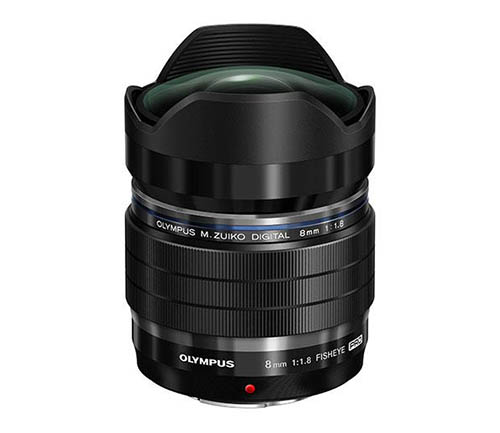
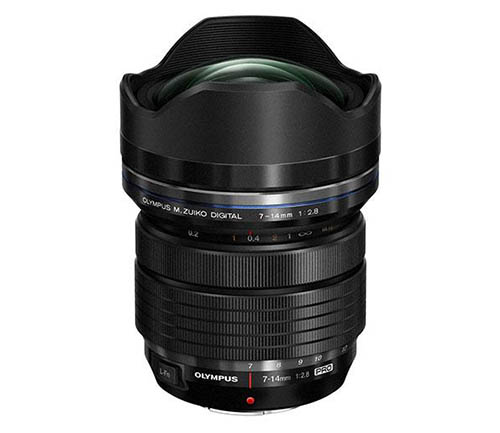
Thos are the official images of the new 7-14mm and 8mm PRO lenses. And here are also their specs via Digicameinfo. The lenses and camera will be announced at 6am London time of May 12 (tomorrow at the time of posting this). You can follow the live bloggin here on 43rumors.
- M.ZUIKO DIGITAL ED 7-14mm F2.8 PRO
– Will be released in Japan in late June 2015
– Dust-proof drop-proof (11 places sealing)
– Total length: 105.8mm
– Maximum diameter: 78.9mm
– Weight: 534g - M.ZUIKO DIGITAL ED 8mm F1.8 Fisheye PRO
– Maximum magnification 0.2 times
– Total length: 80mm
– Maximum diameter: 62mm
– Weight: 315g - OM-D E-M5 Mark II Limited Edition Kit
– OM-D E-M5 Mark II (titanium color)
– Comes with M.ZUIKO DIGITAL ED 14-150mm F4.0-5.6 II as kit lens
– Premium leather strap
– Owner’s card
– Premium leather card case
– Japan release in late June 2015
Get notified via email when the new lenses and camera get announced by subscribing our newsletter here:
[wysija_form id=”1″]
Reminder: To get notified on all upcoming news and rumors be sure to subscribe on 43rumors here:
RSS feed: http://www.43rumors.com/feed/
Facebook: https://www.facebook.com/43rumors
Twitter: https://twitter.com/43rumors
GooglePlus: https://plus.google.com/+43rumors/posts
Email: [wysija_form id=”1″]
Rumors classification explained (FT= FourThirds):
FT1=1-20% chance the rumor is correct
FT2=21-40% chance the rumor is correct
FT3=41-60% chance the rumor is correct
FT4=61-80% chance the rumor is correct
FT5=81-99% chance the rumor is correct
236 Responses
6mm lens come on! Would be perfect for interior shoot
Show me the money!
really need that extra mm?
extra 2…
It was plural….
Why not, Canon have 11mm lens now
No water sealing?
It must be splash proof.
That would be logical, but it doesn’t say so.
This is SO BIZZARE! Why the weight of the 7-14mm is as high as a good full frame lens?! Please tell me again what is the point of the m43 system?
Compare the specs of this lens against the:
Sony Carl Zeiss Vario-Tessar T* FE 16-35mm F/4 ZA OSS … and tell me HONESTLY which would you be rather shooting with, one of the Sony full frame cameras and the Zeiss 16-35mm? Or the 7-14mm on an Olympus m43?
I picked the Sony lens as an example as it offers a very similar equivalent focal length and can be used on a full frame camera. There is LOT more combinations like the above for APSC!
16-35 isn’t exactly 14-28, is it?
Not exactly. So what? I cannot think of a situation where I would either want or need the 14-15mm so much I would give up the advantage of a full frame.
That’s fine for you. Just be happy with your full frame then?
Sure, with the size increase for good m43 lenses I do give up on this system. I will stick with what I have for now as it works, but no more. I am sure others will also notice and wonder whether they want a m43 or full frame for the same size, weight and price.
And there’s the 14-28 for full frame mirrorless systems? And those who want to go more compact with m43 can still buy the pretty good Panasonic 7-14 f4?
… as I said, the 2mm on the wide end makes NO practical difference at least to me… and I actually prefer the extra reach on the long end.
Plus an F4 on a full frame DOES NOT compare in any way to an F4 on a m43… I thought this one was OBVIOUS.
For you, yes. For others f4 with m43 might just be more than enough for such a wide angle lens.
That m43 vs. aps-c vs. ff aperture comparsion stuff is boring as hell…
Hard to say – weight and size was never the MAIN reason for MFT. Simply removing the mirror to make camera bodies smaller, removing a dated mechanical mechanism, was the idea to start with. Smaller lenes was more a side-effect of the resulting physics. The amount of glass needed to get the right picture affects the weight in the end, and if the glass is heavy enough plastic just won’t do. Well, that’s what I think anyway 🙂
Really? Then probably the biggest argument for m43’s vs other mirrorless just evaporated no?
Sorry I meant making the lenses smaller was never the main reason – making camera bodies smaller was – and the option to do so with lenses is a result. But as we’ve seen with the GH4 and the latest lenses from Olympus, size is not as important as performance or ergonomics.
True, but again there are full frame bodies that aren’t any bigger.
so basically, technology marches on eh?
Yeah indeed. One of the ‘problems’ with this as a ‘system’ is that it gets ‘stuck’ and can’t progress due to needing to remain compatible. This was one of the issues with four thirds in lots of ways.
MFT users enjoy the flexibility of small, compact and lightweight when needed and the option to go big too. Can’t see that as a disadvantage.
So can FF users? What about this vs something like the Sony 10-18mm? The Sony is a 15-28mm f6 FF equiv vs this 14-28mm f5.6 FF equiv. That Sony lens weighs 225g, has IS and can take filters and costs $750.
I raise you a Lumix GM1 + any other lens. Saved some weight there 🙂
That’s a fair point, however that lens above + A5100 is considerably smaller and lighter (and has IS) than this lens plus GM1.
Still quite a lot bigger than lets say GM1 and olympus 9-18, you can obviously get a smaller package with mFT in almost all situations. At the expense of a smaller sensor size.
Arent any bigger than what? The smallest fullframe-bodies are obviously bigger than the smallest m43-bodies.
And yet the m43’s bodies that most seem to care about are the same size or bigger.
I don’t know what FF-bodies of M43-bodies “most care about”; but sthe smallest m43 is smaller than the smallest FF, and the biggest m43 is smaller than the biggest FF:
… I thought like you as well… but then this explanation does not quite make sense because a very similar lens exists for full frame… and it is not exactly a kit lens.
WOW! The constant argument ALWAYS was “but but but the full frame lenses are so heavy!” Now it suddenly doesn’t matter?
You’ve never heard that argument from me. I like the option to go tiny like the GM1 or big like the GH4, but still have a great selection of lenses that can deliver at many levels. Even the GH4 is smaller than a full frame DSLR, and the lenses are still, by a large majority, smaller and lighter than DSLR, so I don’t see a problem at all. The argument still stands very well. Many MFT users have no issue using adaptors with large full-frame lenses, and why should we? We can go small or not, we have that extra option.
Of course weight and size is the main reason. If that’s not the main reason, you get a bigger sensor.
Not to mention the Zeiss has IS and can actually take filters…
Yep, stabilization and full weather sealing… not sure about quality comparison of the two… yet… but still…
I think m43’s was a great little system, but these ‘pro’ lenses and absurd prices and weight quite defeat the purpose.
Yes, 100% my thinking. I am sticking to my E-P5 with 3 or 4 primes and that is it.
On this I agree. 4/3 lenses are not cheep, but many are definitely formidable regarding sharpness, especially center to corner sharpness at maximum aperture openings.
Obviously ‘absurd’ to an amateur happy to use kit lenses! Thankfully there are the smaller options, so stick with it if that makes you happy, but your opinion on what others like to use is only your opinion & thankfully Olympus doesn’t limit itself to your opinion but also serves (or tries to) the Pro community as well.
Please, got get the Sony FF + Zeiss lens.
People interested in m4/3 know very well why they bought into it. I for instance am very interested in the Panasonic very good 4K video etc.
That’s all very well and good, but with the slightly compromised nature of m43’s not being truly compatible across the two main brands makes this point a bit pointless. This lens offers no IS, no DFD, no CA correction with the GH4, plus with the 2.3x crop factor is no longer as wide as it should be.
Do you really thinkk the GH4 will be the only option for 4K for long?
No, I bet Gh5 will be astonishing, much better, etc. I can’t wait to preorder 4 pieces when available ;).
Well enjoy.
I will definitely will, thank you.
2.3x crop !?!?!?!? Are you on carck ??
Gh4 has 2.3x crop in 4K… Abusive fanboys don’t even know their own system it seems.
Crop 2.3?
Yes, in 4K gh4 is 2.3x crop
4K is coming to full frame too.
What exactly are the reasons CURRENTLY/NOW for choosing m43? Full frame can be had for the same or lower size and weight and for about the same price. Do any good reasons remain for sticking with m43?
I am not looking for a new camera right now… so I will not be buying one. However, I look at it from the point of whether I will be able to stick with m43… and currently I do not see any good reasons.
I personalty am not interested in FF, period!
APS-C size is ideal for my kind of work but until any company will provide very good video quality (ala Panasonic) in that format, I stick with Panasonic + speed booster.
… then you should be shooting Sigma Merrills if the usability limitations are not a problem 🙂
I think you should stop trolling here and go to your Sony Alpha rumor site for debating about A mount death, a much enlightening subject. 🙂
LOL I do not own a Sony yet… and you doge arguments by attacking the person and not answering the points… I assume that you CANNOT counter the points then 🙂
Well I’m glad you said it yourself. If you have own any Sony you wold have known it’s strengths and weakness already.
LOL again… no Canon yet either, just Fuji, Pentax, Panasonic, Sigmas and Olympus in that order, over time and not all at once. I’d take a lobotomy over Canon.
Good for you, enjoy shooting you favorite system, I’m definitively enjoying m4/3 for video.
Oh that would have to be one of the sillier things I have read on the internetz, considering the abandonment of Four Thirds by both Olympus and Panasonic…
Don’t Samsung already? Why is APS-C ‘ideal for your kind of work’? What work is that?
Unfortunately NX 1 is a sad joke, if you were into video you who’d have known that.
Genuine question, but how so? I haven’t paid any real attention to the Samsung, but hear it getting a lot of praise. Been perfectly happy with my A7S and Blackmagic pocket so haven’t been ‘looking’ or hoping for anything else.
Very good for you, I’m also very happy with my Gh4’s (for the moment, until Gh5 arrives LOL).
So… can’t answer the question? It’s a ‘joke’ but only because you are a m43’s fanboy or something that actually exists?
Well, a very simple, yet complicated answer.
I’m no system fan boy. For the moment I use Nikon and m4/3 gear (sold all my EOS lenses and cameras because Canon abandoned it’s DSLR video users).
In NX 1 the processing engine (JPEG engine) is absolutely terrible. If you are shooting pictures you have the raw option. If you are shooting video you are screwed. The noise reduction is a total mess, blurring all fine detail at any ISO (they call it adaptive noise reduction or whatever). To make things worse, you can not disable the NR. Then there is the h.265 codec, unsupported by any big editing software, you need to transcode the files in pro res first before editing, a time consuming and content degrading process. Then there are the lens options, or the lack of them more precise. Should I continue?
Yes their jpeg engine sucks, hadn’t heard about it affecting video but might get around to looking into it. Lens lineup is no worse than Panasonic’s other than maybe long telephoto…
The processing engine affects both the jpeg pictures and video, it does the same processes: demosaicing (debayering), tonal curve, WB, NR etc. On the video side you have also the encoder but this is another story.
I really wished Samsung would have made NX a good super 35mm 4K camera, unfortunately they screw it up. 🙁
Doesn’t really surprise me, 4 years of making mirror less and this is only their first at making a remotely interesting product. I wouldn’t buy it based on that alone personally.
Every person with it’s needs. On the photo side now there are so many great options that are hard to count, but good video DSLR with 4K are very few, actually only 4: GH4, NX1, A7s (you need external recorder for 4K) and 1Dc (which costs an arm and a leg).
And NX500 I guess, though that is the worst of the lot (but also the cheapest).
You are right but NX500 does not cont, it’s unusable as a 4K camera. They put 4K there only for the name. 🙂
Yeah… You couch-potato expert seem to forget the NX1 is not a camcorder… It is not meant to compete against GH4 on video features.
Still it offers better continuous AF than GH4 for both stills and video.
DFD compared with NX1’s AF system seems a joke…
Then the NX1 offer much better DR and noise, and also competes with the Canon 7D Mark II performance.
It isn’t exactly a toy…
Not when light gets a little bit low or when using anything but one of the ‘S’ zooms. NX1 is hugely overrated, but certainly pushes the establishment.
On still mode agree, on the vieo side paradoxaly GH4 high ISO looks better than NX1’s, DR seems wider (on GH4) etc. No comment on the video AF, you are right; but I mostly use adapted lenses so I don’t really care so much about AF in video front (focus peeking is a joy to use on Gh4).
>>>What exactly are the reasons CURRENTLY/NOW for choosing m43?
– Very sharp internal 4K video recording
– Useable video DOF at a higher F-stop
( f/2 – f/4 on a m4/3 camera vs f/4 – f/8 on a FF camera )
– Unlimited video shooting time ( shoot continuously for hours )
– Long battery life ( more than 3 hours of video shot on ONE battery )
– Very good audio preamps ( 70+ dB dynamic range )
– Proper video image controls
– Can use pretty much any lens on the market with the right adapter
– More compact system overall ( bodies + lenses take up less space )
Some of those cancel each other out. Such as using adapted lenses. Usable DoF is irrelevant as they are equal.
Sigh…. because
F4 isn’t F2.8,
Oly’s zoom lenses are better optically,
Better weather sealing,
Less AF quirks
And m43’s ALSO has the Panasonic 7-14 F4 which is almost half the weight of that Sony.
Sigh… the 7-14mm isn’t f1.8 either.
And you know this from extensive use of both?.
No but the 7-14mm is F4 like the Sony listed above.
Huh? Sorry confused. Are you comparing the Sony 10-18mm and Panasonic 7-14mm?
Enkiu was comparing the Sony 16-35 F4 to the new Oly 7-14 f2.8. I pointed out that the Sony is more comparable to the Panasonic 7-14 being that they are both F4.
The context of all this is m43’s versus Sony Full-frame. You brought up the 10-18mm APS-C lens.
And I compared the Panasonic to the more comparable 10-18mm APS-C lens.
Actually the guy at the top of this mentioned Aps-c.
Sony 10-18mm f4 has IS and is around 25% lighter, can take filters…
Is it weather sealed and “drop proof”?
Sorry is the Panasonic?
Oops…
Its a 15-27mm lens. Its not made for the FF Sonys that were discussed above. Sure you can use it on an A7, but the vignetting is pretty bad.
Oh I see, so I guess the Olympus can’t be compared as it also doesn’t work on FF? I ‘thought’ the discussion was around size of the systems. Someone mentioned the Panasonicnif someone must have a smaller alternative, I mentioned the rather similar Sony which you rightly point out is for an APS-C camera, which is what I meant it would be attached to, which is still a larger format yet isn’t a bigger lens nor lens-camera combo.
OK… you got me! You found one lens for an APS-C camera that is pretty equivalent to one lens on an m43’s system that is lighter. Have a cookie.
Want some more? There are quite a number of examples actually. But that’s getting a bit off track, again not dissing m43’s just having some logic issues with this particular lens. If it were smaller, or cheaper or both, but that is a fair whack of cash (it is probably optically very good, though heavily digitally corrected) for what is not smaller yet will be used with an inferior sensor. M43’s makes sense because it is small and nimble, this attached to an E-M1 or that Sony attached to an A7R, no difference in size / weight or even price, yet a pretty big difference in image quality.
Size of systems = what actually works on the system. Being that Panasonic is also a part of the m43’s system, those lenses should be mentioned as well. I see the Sony fanboys do it all the time… compare the Oly 12-40 f2.8 with the meh 24-70 F4 Sony all while forgetting the fact that there is also a Panasonic 12-35 f2.8 which is lighter and smaller still.
Let’s see how ‘meh’ the ‘excellent’ Olympus and Panasonic lenses are when they are trying to resolve 36MP?
Heck, most of Sony’s zooms can’t even resolve half the resolution that the Sigma 60mm can on the 24MP APS-C A6000.
Erm ok? Yet they still pretty much all out resolve anything on m43’s as a ‘system’. Go figure.
Nope. Even with a 24MP A6000, that 10-18 resolves the same detail (8MP) that the Panasonic 7-14 does.
‘Meh’ 24-70 = 15MP, ‘super-mega-amazeballs’ Oly and Panasonic… 9MP.
There is a big difference between 14mm and 16mm, one is 2.8 and srarts at 7mm the other f4 and starts at 16mm which have very different design challenges.
Having said that, judging by the 12-40 and 40-150 i know which one i would prefer in my bag.
Why not compare the compact 7-14 f4 to the sony? Or compare the sony that starts at 14mm… oh wait… we can look at what 14mm and f2.8 does on FF with the sosuperb nikon 14-24 f2.8, it is much larger as one would expect.
14mm f2.8 Samyang.
Meh… it is 14mm on 4:3 aspect ratio and 16mm on 3:2. On the long edge the 7mm is closer to a 15mm on full frame.
Why is it bizarre? The same absolute light gathering ability and the same fov shouldn’t need any less glass just because the sensor is smaller. The point of m43 is that it is smaller because you can get by with smaller amount of absolute light for the same amount of light per sensor area, and the sensor itself is smaller. M43 is a smaller system, and you know it, you pay some quality for a smaller size.
That literally makes no sense.
Speak for yourself…
I’ve understood perfectly his point.
I’ll bet you did, m43’s fanatics have come up with many ways to convince themselves that their system is infallible.
The system is not “infallible” its a system that trades some light-gathering ability (read, quality) for size (compared to FF or APS-C), different people have a different sweet spot. To gather the same amount of light, the lenses has to be about the same size. That just physics. But due to sensor size most m43 lenses gather less light than most FF-lenses.
Exactly, but this lens is not small compared to the full frame lens in the example. Not knocking m43’s, it is a great ‘little’ system, but have to agree that this lens doesn’t make a heck of a lot of sense.
To be honest I am considering it, since I like wide angle. But I would prefer a smaller variant. I don’t need extreme build quality and sharpness.I do like a large aperture though
“different people have a different sweet spot.”
Lol, especially woman.
+1
So it is ‘smaller’ because it gets less light? But it isn’t smaller. Great.
Yes, that is exactly why lenses for smaller sensor-size system are smaller, they have to gather less light, if you make a pro lens that gather a similar amount of light (lower aperture number) the size will also be more similar.
It makes sense, just not very eloquent.
… but I just pointed out that a FF is smaller than the Olympus kit.
I think the point is that equivalent lenses have equivalent sizes across different sensor sizes.
In the end they are gathering the same light and producing the same picture, so no micracles, it requires the same amount of glass.
SIMPLY: NO. Even for lenses with equivalent F, a smaller sensor means the need for smaller exit circle, and this should allow for a smaller overall lens.
PLUS, with a full frame sensor you get better ISO/noise performance… the difference between m43 and FF should be worth at least 1 stop. You also get more control over depth of field with FF.
This is why I say that an F4 lens on a FF outguns an F2.8 on m43… or at least matches it and can be compared.
The post by Atle is confused and makes NO sense on several counts.
The difference in iso and dof is more or less handled by comparing f4 to f2.8,so both lenses has to gather the same amount of light from the same name external area. So the sizes should be more or less similar. (other design considerations like sharpness also counts of course) should not be confusing. Whether such a design with a relatively large lens on a system made for small size is reasonable is a matter of preference. I would have preferred it to be lighter and smaller and with less extreme quality and build quality, personally.
Actually this is closer to f5.6 in those terms, but there isn’t a comparable lens, so this is the closest ‘similar’ lens. I am sure the extra build does indeed play a part though. Not that the Zeiss is a badly built item.
On the tele end where lens size is almost completely controlled by the size of the inlet pupil this is true, but there are some advantages to be had on the wide end where the size of the lens is related to the size of the projection circle.
A better comparison would be the Nikon 14-24mm f/2.8 lens which has the same F-stop ( in terms of exposure ) and weighs twice as much as this new Olympus lens.
It is a nonsense comparison because the Nikon exposes that amount of light over 4x the sensor area.
Nobody cares how much exposure area a FF camera has, the ONLY thing that matters is correct exposure.
f/2.8 is ONLY equivalent to f/2.8.
And ISO 100 is NOT equivalent to ISO 100.
ONLY true if the sensor requires the same exposure for the same result… does a FF sensor have the same ISO/noise performance as a m43?
“Nobody cares how much exposure area a FF camera has, the ONLY thing that matters is correct exposure.’
And SNR.
No… I found a comparison against mirrorless. Point2 = I choose the smallest available alternative for full frame.
But you chose an f/4.0 lens which is NOT equivalent to f/2.8 in terms of correct exposure.
Yes, but on FF sensor you get back that 1 stop difference through better sensor ISO/noise performance and GAIN more depth control.
THIS IS why I compare F4 on FF against F2.8 on m43.
Except to get the same DOF for a landscape photo as on a M4/3 camera, you would have to stop the FF lens down more, thus negating any sensor ISO/noise performance, which would effect exposure……
Two can play this silly game………
“Except to get the same DOF for a landscape photo as on a M4/3 camera, you would have to stop the FF lens down more, thus negating any sensor ISO/noise performance, which would effect exposure……”
Only for the same shutter speed, if you let the shutter speed vary then you are able to capitalize on the higher SNR. You’re basically trading size for flexibility. Also, it’s a two stop difference between FF and m43, not one.
Nonsense… this is only true in a limited number of situations… in landscape you will only run into trouble with FF if you have a very close foreground THAT you want to keep sharp AND you cannot reposition and reframe.
Or if, for some reason, you want extra depth of field in close ups.
Yes. But if shooting landscape you probably are not upping ISO but instead using a longer exposure time instead.
You don’t gain any benefits for ISO in FF. What you gain is MAGNIFICATION. There is big difference between those two.
The ISO is exactly same between m4/3 and FF but magnification difference is 2x.
I’m not sure if it’s cost effective to buy a Sony camera for one lens that might be marginally preferable to its M43 counterpart.
I can think of at least 4 off the top of my head.
I am watching Batis lenses to see what price they settle on.
Oh dear, forgot about those… That makes 6. Then if I add the 35mm f1.4 makes 7. Loxia makes a couple more.
You can only think of 4 E-mount lenses that are marginally preferable to their M43 counterparts?
I always thought the “there’s no native lenses on Sony” thing was a joke, but apparently it’s one based in fact…
So having better lenses means they don’t have any? Right.
A LOT more combinations like that for APS-C? Care to elaborate? I only found two similar lenses for APS-C mirrorless, and one for APS-C DSLRs. So I obviously missed something.
Sony 10-18mm f4 OSS @ 225g (not weather sealed but also nearly half the price and less than half the weight). Fuji have a similar lens as well, but theirs has a bigger range and is heavier than the Sony.
I think this says it all.
– Olympus E-M5 + Panasonic 7-14mm f/4 = 10MP Sharpness
– Sony A6000 + 10-18mm f/4 = 8MP (of 24!)
http://www.dxomark.com/Lenses/Compare/Side-by-side/Panasonic-LUMIX-G-Vario-7-14mm-F4-ASPH-on-Olympus-OM-D-E-M5-versus-Sony-E-10-18mm-F4-on-Sony-A6000___536_793_1084_942
Dat Sony quality: High-MP sensors and native optics smeared in Vaseline.
I’d rather be shooting with the Zuiko 7-14 than the FE 16-35 f4: Faster, smaller and wider.
The current holy grail in the super wide category is the Canon 11-24 f4. Slow, pricey but oh so wide.
Eh, Zuiko 7-14 is FF-equivalent f5.6 in terms of DOF and light intensity. There is one stop difference compared to f4 FF-lenses. Zuiko is also marginally longer and heavier than Sony FE 16-35 f4. There goes any “size-advantage” of 4/3-lenses.
“Eh, Zuiko 7-14 is FF-equivalent f5.6 in terms of DOF and light intensity.”
Light intensity is only controlled by f-number. It’s the total light gathered, or total signal, that you’re referring to which is equivalent to f/5.6 on full frame.
No. The total light or total signal has nothing to do with the aperture in these “equivalent” things. The total light gathering is the image circle area that is rendered back of the sensor box, the amount of photos is exactly same per pixel between sensor sizes with same aperture value.
The amount of photons per pixel is the light intensity, not the total light collected. The light intensity is indeed only controlled by the f-number, but the total signal is related to both the light intensity and the total sensor area.
It is no where near equivalent focal length. 7mm vs 16mm is huge difference, over 9mm!
And for equivalent field of view, the ten degree is huge difference in wide end. And one stop faster is huge difference as well when going to ultra wide angle lenses range situations (landscapes in sunset/sunrise etc).
Using a m4/3 you always have 2 stops more light compared to full frame cameras, so you really suck the light and get 2 stops faster shutter speeds. Now with one stop benefit for that, it is three stops lower ISO benefit for m4/3!
No Canonrumors?
http://thenewcamera.com/breaking-news-canon-12-35mm-lens-patent-for-43-sensor/
Can’t wait to see the reviews and comparissons with Panasonic 7-14mm
This better be noticeably better to justify the double price even if it f2.8!
f/2.8 + Weather sealing + amazing autofocus, stronger UV filter and very sturdy build. Those are the key things WHY you are buying this instead the Panasonic even if the quality would be just same.
I did not expect 7-14 to be lightweight, but wow, it sure is heavy. I thought it would be closer to 400g, like 12-40. I expect that it’s build like a tank at least.
But I guess it’s not that bad considering that 7-14 f/4 for 4/3 was 50% heavier. And Nikkor 14-24 f/2.8 is 1000g.
Any info if any of those lenses have a rear mount filter holder?
I very much doubt they do. Because weather sealing. It although would be great if there would be a 37mm filter droplet in back of those…
WOW…. lots of envious morons externalizing their fears today. Top notch glass comes at a cost, didn’t you know that?
You can say that again. I had no idea super wides could generate such interest… and such fear.
So, it says “Titanium Color” – does that mean it’s just a color change and there’s no real titanium in the camera . . . .
From the specs above:
– OM-D E-M5 Mark II (titanium color)
I guess titanium COLOR is the keyword..
A lot will depend on how good optically these lenses are. The current fisheyes for m43 are just OK and the 7-14/4 Pany is pretty good, but not very rugged and has some areas it could improve upon (like f/2.8, flare/ghosts, CA). Hopefully both of these lenses will be excellent for us landscape-type folks and have:
– Excellent sharpness wide open (as my FX fisheye does)
– Excellent sun stars (please put 7 straight blades in them (NOT 5), please!)
– Excellent flare/ghosting control – the sun or something bright is almost always in the frame
Weather-proofing is a bonus in dusty/wet conditions, but not a must. Bought an EM1, though I really don’t like the Oly ergonimics or menus, partially for these two lenses so I could have a weather-resistant kit.
Bring on the reviews!
The Samyang 7.5/3.5 FE is pretty superb…
The Panasonic 8mm is no slouch either.
Some people say that those are (check the JohnH) but they just don’t know the truth that the Samyang 7.5mm f/3.5 is THE best fisheye out there on the market for ANY format, THE BEST. The Panasonic is not bad but not exactly on the Samyang level. There is as well the Olympus 4/3 fisheye that is better than Panasonic but as well behind the Samyang little bit. So now with this PRO one, there are high demands what it needs to meet by Samyang. What is already clear is that it will win every FE that is out there for any other format and will win even that Panasonic one. But all those mentioned are better than anything on any other format, so we can be happy m4/3 users for that as well!
Both the Samyang and Panasonic FEs are pretty good, but I have FX fisheyes that are clearly better in all aspects except size and weight. I’ve not seen any reviews comparing the Samy and Pany FEs that showed one to be clearly significantly better than the other. Each has their own strengths and weaknesses.
I own the Pany 8/3.5.
Well, there’s this:
http://m43photo.blogspot.ca/2012/02/samyang-75mm-f35-fisheye-lens-review.html
But I haven’t seen any reviews comparing the Rokfish to a FF fisheye, either. So I’ll have to take your word for it, I guess.
None of you have used FX fisheyes then, because if you did you’d know about the deficiencies of the currently available fisheye’s for m43. I’m not saying they are bad, but they could, and should, be so much better.
For what it’s worth, I’ve never seen corner quality as bad out of my Samyang 7.5mm/3.5 at 100% as the corner crops from the Nikon 16mm/2.8 in this SLRLounge review. But perhaps you have better direct comparisons to share.
http://www.slrlounge.com/rokinon-12mm-f2-8-full-frame-fisheye-lens-review-urbex-extreme-adventure-photography-lens/
Just a curiosity. Is it safe to exopse front element? As I know, 7-14 PRO lens doesn’t have filter thread, thus front element would be always exposed. And, since the lens is weather sealed, it would be exposed to somewhat harsh environment.(e.g. in the rain/snow/dusty wind etc.) I’m not doubious about weather sealing of lens itself, but not sure for the front element….
That is the thing why you should be careful to use it on close of seawater, sandstorm or even snow when traveling fast (like take a ride on snow mobile and you quickly learn that even a hardened plastic/glass takes rough beating from falling snow when driving 80-120km/h on snow mobile as each snow fluke is like a small knife).
The good thing is that the front element goes in when zooming in, so keep lens in 14mm position and it is pretty well deep in built in hood.
This must be the most boring leak ever, because these two lenses have been announced three times already. Or announced to be announced, really. Are we even sure this isn’t another announcement of intention to release?
You too are becoming boring… It is at least the third time you say this….
I’ll just be thankful when these get released so that the rumors can start focusing on the 300mm F4 release.
YES!…the elves had better be working on that next..full time!!!!!!!
Silly question maybe, but what is drop-proof? That if you drop it, it won’t break, or do they mean like water drops from rain proof?? or the texture on it make your grip to it stronger and less prone to slipping?
I was assuming that was intended to be drip proof rather than drop proof.
Yeah I don’t think I have ever heard that one before.. I’m only familiar with dust proof and weather sealed or water proof …Would be cool if you could drop it though and it would stay in one piece 🙂
yeah, but then i want that in a camera as well 🙂 oh, and while they are at it, make a drop proof tablet, phone,…. would probably sell extremely well….
Splash-proof…. that is what is lost in translation.
Splash-proof.
So the lens is same weather sealing as Olympus top line weather sealing (best in industry) and can even withstand unofficially short submerge to fresh water. But otherwise just for rain and water pouring over it like in shower/waterwalls etc where there is no pressure change to force water trough sealing like in 1m depth.
The equivalent trolls have come out of hiding, I see, and are frothing at the mouth in fear.
“equivalent trolls” ???
“equivalent trolls” ???
Equivalences like 7-14mm f2,8 in m4/3 is 14-28 mm f/5,6 (focal length and dof) in FF terms.
But they forget, there are not 2 ISO stops differences between FF and m4/3 regarding noise ratio and heck not everybody is seeking ultra think dept of field. Also omitted are factors like: very small, light and ultra sharp from center to corner lenses; things unseen in FF territory especially at maximum apertures.
It is true: crop factor does apply to both focal length (fov) and aperture (dof).
What is not true is what Tony Northrup says about ISO.
My thoughts exactly.
He made some absurd calculations studying dxomark low-light/high ISO scores….
He got it all wrong…
Tony can now say what ever He wants as He doesn’t have the facts, he use math to lie to people about “equivalence” in ISO etc.
Oh and the comments like “There is no good glass for m4/3” or such are just nice to hear now and then to pop-up by people who have heard them to say so.
Well, generally speaking, total equivalence is a fool’s errand. Once you accept the differences between formats, it’s of little use.
I mean, for a full equivalence, you should also include ISO in every statement. So, a proper full-frame equivalent to 7-14/2.8 on MFT, would be a 14-28/5.6 shot at ISO 2 stops higher than MFT (so ISO 800 becomes your base ISO). This will result in identical photo in every regard, small variations in sensor performance notwithstanding.
And this tells you nothing that we don’t already know. That you generally get better DOF control and/or better high ISO performance on larger formats. And you pay for that. Something for something, there’s no such thing as free lunch.
All this talk of total equivalence is pretty absurd once you look at it from practical point of view. And equivalence won’t tell you if the lens is usable wide open. It says nothing about the ability of the lens to deliver enough performance for high resolution sensors of today. And so on and so on. It only compares theoretical performance of theoretical lenses, which is pretty silly.
In the end, you should choose your system to match your needs. I’m actually surprised in the prelevance of FF users using equivalence to justify their system choice, as if they needed to validate it or cure some kind of inferiority complex.
Oh well, just ranting, don’t mind me.
Here it is, one of Tony Northrup’s apprentices…
Reading comprehension problems?
“I mean, for a full equivalence, you should also include ISO in every statement.”
“2 stops higher than MFT”
That’s what total equivalence means. Total in this sense means that absolutely everything is equal. Same DOF, same FOV, same exposure time. Or do you think that shooting a galloping horse at 1/100s will result in the same photo as shot at 1/400s?
Anyway, if you read past that sentence you’d know my argument why this is BS. But I won’t repeat myself. Play your equivalence games by yourself.
You are right about “equivalent exposure” and the rest, I just don’t agree on the fact that all FF cameras deliver 2 stops ISO noise advantage compared to m43 or 4 stops over 1″ sensors .
I don’t believe you can get the same exact result with different format cameras.
That’s all.
Mistake: the difference between FF and 1″ was said to be 3 stops, not 4…
That’s one of the reasons I wrote it’s impractical in real life. The 2 stops ISO difference is a consequence of this equivalence theory, and is not wrong if you assume everything else is equal (again, those assumptions).
And you can always pick such MFT and FF cameras that will make this assumption true. I remember looking at DXO measurments and the rule was generally true, with a few twists here and there (like Canon’s poor DR at low iso). Generally, the differences where within 0.3-0.5 EV range (mostly in favor of smaller sensor). But than again, there’s the argument of what DXO measures and what you actually get in photos, because the way ISO is defined. So again, another rabbit hole to go down to (the whole “iso cheating” argument).
Anyway, my whole argument was that equivalence tells you so little when comparing the systems, that it’s not really worth the effort. And it probably makes things more confusing than they need to be.
Are you Tony in incognito?
Amen, couldn’t have said it better myself.
I still don’t get WHY there are so many FF loving MFT hating people here in the first place. If you’re all for FF and hate MFT, why would you waste time trolling the MFT page? Either you have no life, or you are secretly jealous because somehow, people are spending less money, carrying less weight, and getting better photographs than you are. Go take photos with your gear and enjoy what you have. People that go into forums with no other purpose than to troll are just pathetic and don’t even deserve a response from those of us that are actually interested in discussing the content in an intelligent fashion.
rear mounted filter capability?
Why on earth some comments magically disappear !?!
Stupidity cancels itself out.
Then why I can see your comment?
Maybe too much stupidity can delete itself…
There is plenty of idiotic comments published…
*can’t*
Apparently too much stupidity doesn’t delete itself….
Perfect minus price.
The price is perfect for that, not too expensive and not too cheap either (what? How can you say so? Well, if you know anything at all about market forces and photography, prices should never be too low. Consumer will always benefit from higher prices too!).
I’d love to see the 7-14 as a non-pro for ~$600. I don’t need weather sealing, and already have the 12-40 for times when I do.
A few years ago I talked to a Sigma Lens Tech with a weather sealing question about dust. His response was that all the electronics that are built into the lens acts like a vacume sucking in dust and particles. He suggested to keep my 50mm 1.4 wrapped in a static free cloth when not in use. Sold at your local pro shop.
I haven’t done much research on non Zuiko lens but maybe there is something there in 7-14 range.
Take care
Either you misunderstood that sigma lens tech or he was talking crap. The voltage this circuitry runs at does not cause particle attraction by static build-up. The worst thing for dust ingress is the change in internal volume for zoom lenses – for most lenses zooming out increases the internal volume which creates a vacuum and so air is sucked in (if it was totally sealed you’d not have the strength to overcome the vacuum). That’s one of the great things about the 40-150mm/2.8 – zooming is internal – there’s no change in volume.
So, you actually want a 7-14mm f8-22 that has heaps of ugly flare, purply fringing around the purple fringing, is soft in the centre and – well – best not to mention the corners while the children are still awake… And leaks like a siev?
What price?
You don’t know the price?
So not so perfect after all…
really curious about the price on that fisheye lens.
It will cost more than you can afford, dear Mrs Mall Caps…
Of cource not, her husband MrALLCAPS barely earns enough to live.
Wow, Canon just announced a newer nifty fifty. I’m sure that lens overshadows these new Olympus ones… probably on top of the Amazon lists already…
Ya pretty good for an 720p (resolution wise) video recording don’t you say?
So it took Canon 25 years to fix the god awfully slow focus motor, upgrade from an archaic 5 bladed aperture to 7 blades and add a metal mount plate. Still no I.S…. well I guess you can wait another 25 years for that………if you live that long
New pro lenses, now we need a new pro camera. EM-1 mkII with dual-pixel like AF, 4k video and the new 20mp Sony m43 sensor please.
Build it and I’ll buy two.
New Olympus 7-14mm -534g.
Panasonic 7-14mm 300g.
Please….
Olympus f/2.8 + sealing
Panasonic f/4
LOL!..um…Milt…the weight certainly does not tell the story. I own the Panny…very good lens…but has issues on Oly bodies…and you just know that this new lens is going to kick its butt in all ways except size and weight..which is still very reasonable for a f/2.8.
Doubt that I will sell my Panny…but ..c’mon buddy?
Why even compare this? If all things were equal and the difference was 2.8 v 4.0, it’s logical to assume 2.8 will add weight…
The diameter of a F2.8 lens is more than 2 times that of a F4 max lens ((1/2.8)^2/(1/4)^2=2.04). Have twice the diameter means having 4 times the volume. That means that just the glass itself of a f2.8 lens should weight approximately 4 times as much as the same f4.0 lens.
It’s already pretty impressive that they were able to keep the new 7-14mm lens at under 600g. It’s the lightest ultra wide angle f2.8 zoom lens available for any system.
The diameter differs by a factor of sqrt (2) between an f/2.8 and f/4 lens.
Samyang fisheye 197g
Please someone can build a Lee filters holder?
It’s allready out.
No filters holder for Lee Seven5 system.
Damn, that Olympus 7-14mm F2.8 is my next lens. Have put the 9-18mm to great use over the years, but its time for an upgrade and the 7-14mm F2.8 answers all my expectations=) The extra 2mm in particular!
Admin needs to start putting full frame links up on this site whenever envious m43 products (like these lenses) are about to be released. This is when the full frame die hards come to express themselves on this site. Sony is compelling as a full frame system and Canon will be too once they lose the mirror and catch up with mirrorless technology. I’ll stick with m43 as it suits my needs and excels in terms of usability, technology, design, and in many cases build quality.
Previous rumour post regarding 7-14 states:
“-no flare issues”
I find this really hard to believe. Maybe oly found a way to correct with in camera software displayed in realtime.
The Olympus 7-14mm was released in 2005, ten years ago. Testers noted at the time that “the 7-14mm exhibits virtually no geometric distortion,
impressively low vignetting considering its extreme coverage, and is
sharp in
the corners throughout its focal range… There’s admittedly some coloured
fringing in the extreme corners at wide angle, but otherwise no other
technical aspect we can fault
it on.” [1]
And that was ten years ago. I’d think that the lens engineers would have figured out how to finally nail any “flare” or “color fringing” issues. I’ve used the 7-14mm on an E-3 at the time, and it was a superb lens. I can hardly wait to try out the newest 7-14mm. And I don’t believe it’ll be corrected in software.
Link: [1] http://www.cameralabs.com/reviews/OlympusE714mm/page6.shtml
I must say, I’m always puzzled by the discussions that end up happening here.
People essentially say “now that M4/3 has lenses that are equivalent to FF lenses, I’m leaving the system.” Well yes, equivalent lenses usually ends up meaning that they will be equivalent not just in aperture and field of view, but also size, weight, and price. There are some exceptions, but not a whole lot.
The main issue with that is, M4/3 is the only system that lets you have your cake and eat it, too. It’s not like the cheap, sharp, tiny lenses have disappeared. Yes, lenses like the Nocticron 42.5/1.2, 7-14/2.8, and 40-150/2.8 make your system big, heavy, and cost $1000-2000 just like an FE camera – but you’re not giving up much anything optically, and the resolution difference only truly matters if you’re printing bigger than 20×30 inches. You can put your Nocticron on your E-M1 one day, and then put the 20mm/1.7 on your GM1 and shove it in your pocket the next day, all in the same system.
Why aren’t people, instead, asking where the FF equivalent is for the 9-18mm, the 12-32mm, the 20mm/1.7, the 45/1.8, the 75/1.8, the 7.5mm/3.5 fisheye? Sure, these lenses end up being “slow” by full-frame standards…but who cares? Do you shoot every single shot at f2.8 or less on your FF camera? Don’t you wish you had immaculately sharp lenses that could fit in your pocket – and just and importantly – all cost between $250-800?
Canon 40mm 2.8 and 6D ain’t a bad combo 🙂
http://j.mp/1Fhclr0
Still much larger than gm1 and Pana 20mm f1.7
Nope, it’s quite nice, indeed! But let me know when there’s a GM1-sized FF DSLR. 😉
Woot! 7-14 pre-ordered via B&H. It’s definitely going to be a better performer than my old canon EF 16-35mm f/2.8.