









(Click to enlarge the image)
VLSsymposium (PDF file here) unveiled some more info about the new 16MP 3D stacked Olympus sensor:
A 3D stacked CMOS Image Sensor with Global-shutter mode and high speed capturing mode:
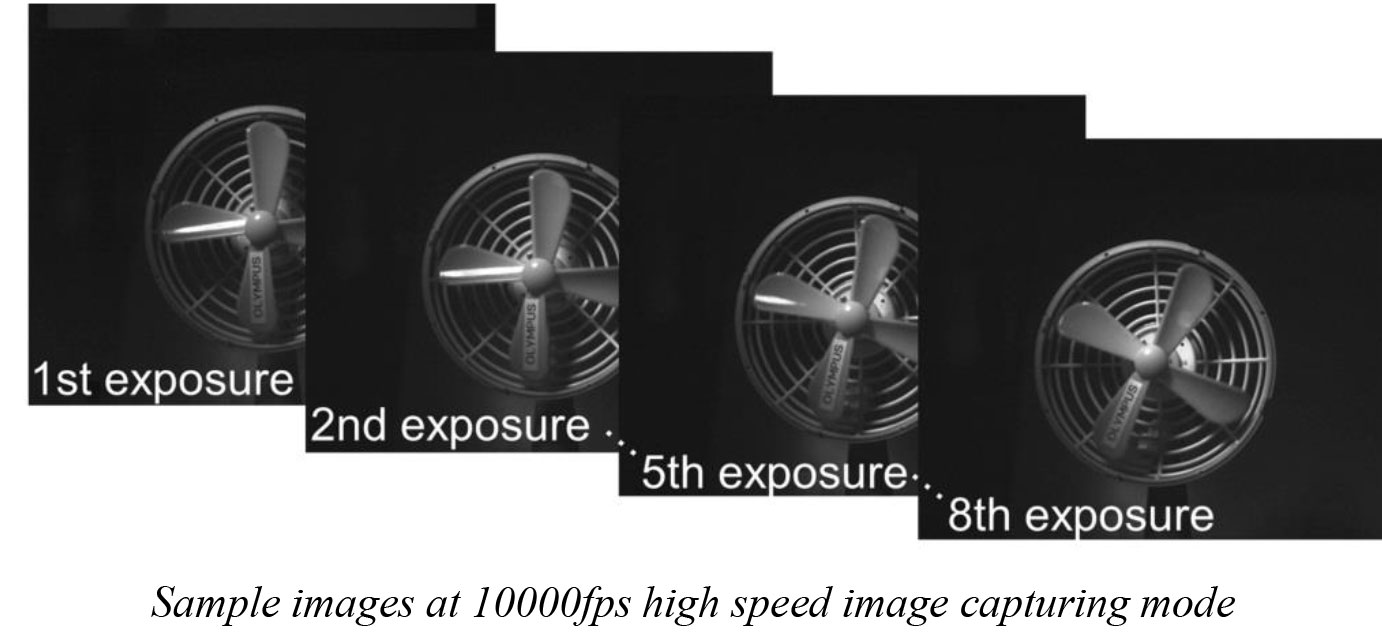
The paper by Toru Kondo et al. from Olympus Corp. will describe a 16Mpixel 3D stacked CMOS image sensor with pixel level interconnections using 4 million micro bumps.The two semiconductor substrates are bonded by a 7.6um pitch micro-bump array, and the storage node array is comprised on the bottom substrate to improve parasitic light sensitivity (PLS). Both a 16Mpixel global-shutter mode with a -180dB PLS and 2Mpixel 10000fps high speed image capturing are achieved. (Paper C4-5, “A 3D stacked CMOS image sensor with 16Mpixel global-shutter mode and 2Mpixel 10000fps mode using 4 million interconnections,” Toru Kondo et al., Olympus Corp.)
–
found via Image Sensor World.
52 Responses
What is the size of the sensor?
…..
Should be around one square mile.
8″x10″
In Hubble equivalency?
Come on , Olympus .
Again another 16MP sensor in 2016 & 2017 ?
No way I’m going for such sensor considering compact cameras likely to hit 18MP in the coming years .
Still the “In working” 88 dbs sensor is the only m43 hope as real breakthrough & much promising than this multi layer old sensor that rely on processor to do the tricks .
Relax buddy, this is not a sensor for consumer cameras. It’s for industrial or medical use. Also, it’s not a multi-layer sensor (as in Foveon), but a stacked sensor (as in Exmor RS). The photo receptors are arranged in one layer, like a regular Bayer sensor, and it doesn’t rely on processor ‘tricks’ any more than a regular sensor does.
Btw, there are already compact cameras from several manufacturers with 20 MP, so 18 MP is already old news.
OK , good explanation .
Now please write to Oly , Yun don’t want to see another 16 MP sensor in the future .
A 18 MP to 24 MP sensor is a must to cope with the current market standard .
If can’t make a 88 dbs sensor , a 66 dbs sensor is acceptable .
No more that stupid multiple captures as well !
Woohoo! The Iraqi Information Minister is back! Welcome to photography… you’ll love it! What do you think about sensor size? battery life? What about the autofocus sensors? We await your wisdom!
I never went away!
16 MP is not enough but 18 MP is acceptable?
you are a funny person
That is to point out m4/3 tech is still progressing if a 20 / 22 / 24 MP still too hard to achieve at the moment .
A 18 MP at least as consolation & definitely will better than a 16 MP sensor .
Wrong. Since M4/3 sensor raised the resolution to 16mp, MP competition maniacs became the minority. It’s totally unnecessary for Olympus to alter their sensor development plan only to satisfy a few self-twisted whiners online.
Request denied.
Up the MP or out of the competition .
That is the rule of the game !
Of course , the choice is yours , Olympus .
Did you keep telling Olympus and Pansonic they will be out of game for the past 3 years? That would be so funny…
The rule of the game is how much revenue a company can make, nothing more. Higher MP will come at the time Olympus decides, but MP competition is fading out, as most camera companies no longer prioritize higher resolution over other camera features. Fewer buyers put resolution in their wish lists. Too bad you don’t want to face the reality.
Hey Yun!
What is the resolution gain (in % please) of a 18MP sensor vs a 16MP one?
You can also go wild and enlighten us on how much bigger will you print, if you dont mind.
I agree there is no much differ in 16MP & 18MP outputs .
We can’t afford to stop at 16MP for another year .
In m4/3 , more MP the much better the photos can be .
Look / compare previous m4/3 12 MP photos to 16 MP photos .
Hopefully you get what I trying to mean .
The biggest advance from the 12MP to the 16MP was the fact that they retired a very old Panasonic sensor that was already 3 years old and started using much better ones (both Panasonic manufactured and Sony).
It had nothing to do with resolution.
Eh? Why do others have to do the letter work for you? Didn’t know you are such a wimp to confront the mighty Olympus… lmao!
Mate, I think you need help.
Is this an elaborate joke?
Oh, you silly person. How cute.
Keep up the good work 🙂
I’m perfectly happy with my camera (and the one after that, and the one after that….) having “just” 16megapixels, *if* dynamic range and high ISO is improved. As that is what really matters! (fast read out speed too would be nice! Global shutter ideally)
Yun just got more
Interestingly that is also the fan they will be using to cool off this sensor.
jojojo yeap !!!
I look forward to this
If this is the only sensor tech that is making out real life, image stacking.. Sales will continue to drop. Who cares about stacking, we want more dynamic range, a ISO 50 clean image and better pixel to pixel fall off and more resolution! Not image stacking for cleaner ISO. Phish.
We want? Or you want?
As far as I understand a stacked sensor separates light harvesting from charge storage. It offers a potential to simultaneously increase the light sensitivity of the upper layer and the quantum efficiency of the lower by – for example – using different materials. The concept is similar to the one portrayed in the “organic” sensor blueprint. So yes, such a sensor is likely to have more dynamic range and better high ISO performance than existing ones. And it has nothing to do with overlaying images.
It will be cheaper for them to produce and represents the next 5-10 years of sensor manufacturing.
Another useless function to sell more camera bodies. Come on people, let’s work on more important features like dynamic range and low light performance.
Yes, I’m looking forward to your inventions that make this possible.
In the meantime we have to make do with the Sony sensor that is is as good as the one in the Nikon D5300 (adjusted for the smaller size) according to DPReview.
The technology has matured and given the physical limitations there’s not a lot of improvement possible anymore.
I believe there will be big improvements a few years from now. A few years later we’ll find new sensor tech in consumer cameras. So those who feel they can’t take pictures without any ground breaking improvements will just need to take a 5 year break.
There are limitations due to the laws of physics. Sensors are approaching 90% efficiency though the colour array loses some of that which brings it down closer to 50%. So one stop more DR and a small increase in high ISO efficiency is possible.
Olympus multi shot mode and similar techologies will also improve IQ but that has limitations when you need to take 8 shots simultaneously.
The reality is that the days of big leaps forward are over and like film technology, digital has matured.
This mindset of expecting things to improve continuously will change over time and new cameras will introduce refinements and interesting new features rather than improved IQ.
The E-M5 mk2 and Sony A7 mk2 are good examples of this where the IQ has barely changed but the cameras are much improved over their predecessors.
Another clueless comment. It’s designed for industrial and scientific cameras, not consumer cameras. Olympus is a major manufacturer of high-speed cameras.
You are right .
DR & ISO are departments m43 need to work hard especially Olympus .
Stop cheating around with that multiple capture tech !
Yun just got another
Dynamic rang ans ISO performance improvements are exactly what this stacked sensor are about.
I have a reason to believe some of this technology will find its way into m4/3. The statements regarding hand-held sensor shift imply very short exposures and high dynamic range (i.e. low noise floor). This sensor seems like it could possibly provide the super clean signal required.
amazing the put big gray fans in every sensor? 🙂
Maybe the fans are there to cool the sensor for 4K video
then they should consider ice-boxes for 8K video and my beer
And the Global Shutter must be good for video!
I find this exciting, both the technology and that Olympus is showing expertize in the design of sensors for their devices. Excellent!
Olympus- don’t take this the wrong way but…I’m in love with you.
This is all great but the track record so far is to under deliver. The E-M1 and E-M5 sensor can do slo-mo but never seen the light of day.
Really who would use 10k, one of those weird science shows or more hot nickel ball videos.
Show us stabilized handheld photo highres at 24-30fps and normal res at 60fps with audio synch and then we’ll get excited.
You do realize that this is for scientific and industrial applications, right? It’s not for consumer cameras.
Yes I do but commenting for the consumer segment. You do realize 10k has been around for quite a while now and science labs are pushing higher in the 1.4 million fps and higher, to the degree they have captured light bouncing off walls.
I believe this is to show off the technical capability of the sensor and certainly may have scientific application but this will become a consumer sensor in some watered-down form. The sensor technology is not new either but Olympus figured out a few improvements in their implementation of a 3d stacked sensor.
You were talking out of ass now it’s too hard to cover it lol. If you do realize science labs use that many fps, you won’t say dumb things like really who would use 10k. Of course, commenting for consumer segment on an industrial sensor, is even dumber.
You dont know that olympus has cameras to record over 2 million frames per second…. Olympus is one of the leading videocamera developing companies on industry side.
I don’t understand but I like the numbers