








[shoplink 33626]
[/shoplink]
Image courtesy: Photozone.
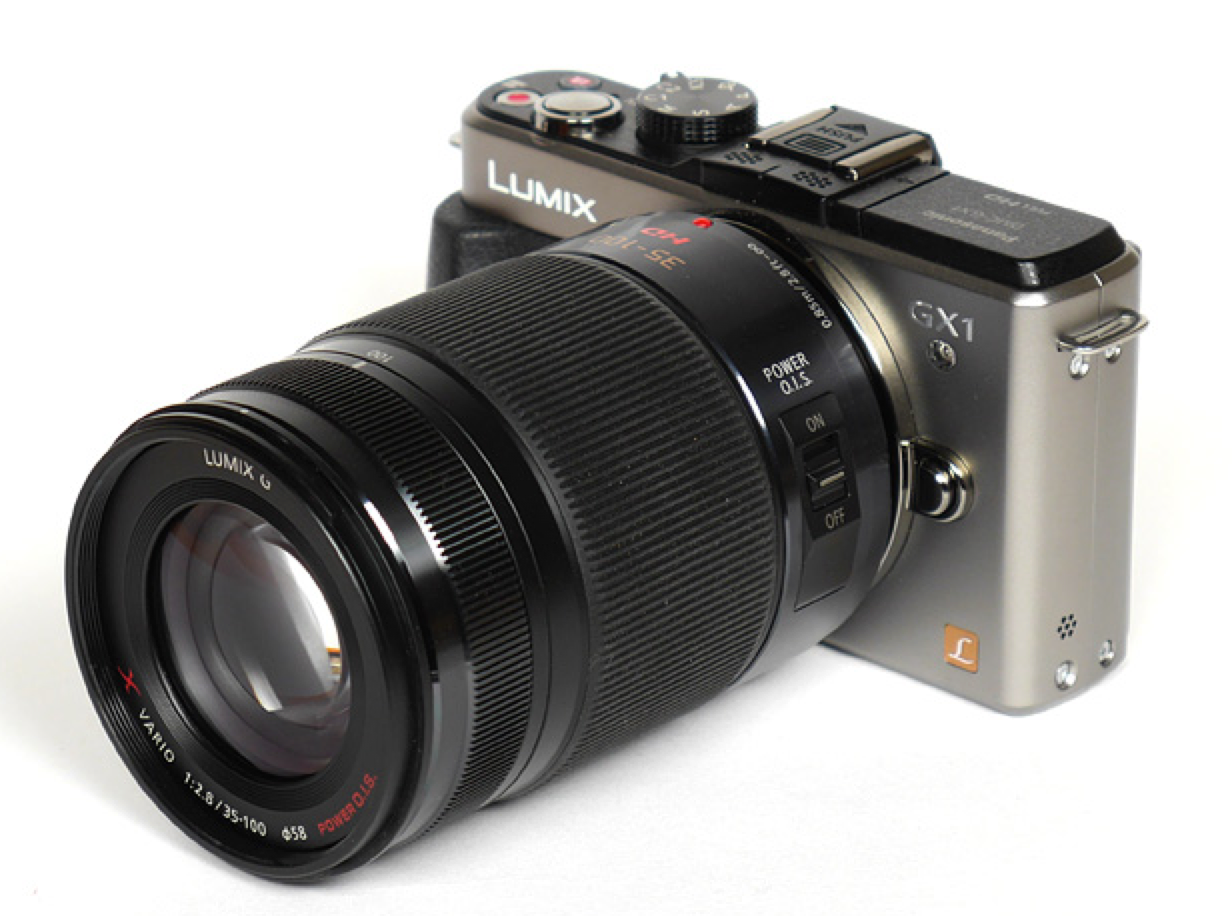
Photozone (Click here) tested the [shoplink 33626]Panasonic 35-100mm X zoom[/shoplink] and this is one of the very few lenses that gets the “Highly Recommended” mark! They write:
It is dead sharp in the image center and pretty good in the border region. Since distortions are auto-corrected, there is nothing to worry about here. You may spot some light falloff in the corners at f/2.8 but it’s not overly disturbing and gone from f/4 onward. Lateral CAs are quite low. The quality of the bokeh – a major aspect of a fast lens – is very good. The background blur is beautifully rendered and there’s almost no bokeh fringing.
Panasonic X zoom store search links: [shopcountry 33626].
22 Responses
I love this lens. My plan was to get the 12-35 and after trying that and the 35-100 for a day I changed my mind. It really is a fantastic zoom and I use it along with my 7-14 and 25 1.4 as my three lens kit.
If I read one more article about how someone prefers to shoot with fewer pixels, because the file size is too large, I will find that person and replace his brain with that of a mouse, and it will be an upgrade.
What moron shoots with a 5D Mark III and deliberately chooses lower resolution? In-truckin-credible.
I don’t think that would be fair to the mouse.
Perhaps you could just replace it with cat litter, or Silly Putty.
Maybe there is an issue of quality for viewing size that you don’t understand?
Do you take thousands of photos with the 5DMkIII several times a week?
I could definitely be tempted to shoot a 5DIII with a lower than full resolution RAW. For me the 12MP of original 5D is more than enough for 99% of my shooting. If I buy a 5DIII, it would not at all be for extra resolution, instead it would be for vastly superior AF, lower high-ISO noise, better dynamic range, and many other improved features. The higher resolution is just a side-effect that comes along. In practice I may not bother with using the lower resolution RAW, but considering that the lower sized RAW files would be much easier on your system and also save space, there is actually a fairly compelling argument for using that.
Try coming back from a wedding and processing 1000 images through Lightroom on a deadline. Then you may gain some perspective on working with file sizes.
As so many people have said before me, choosing the right camera, the right resolution etc. is about weighing the advantages and deciding what’s best for you.
I guess they’re not getting the huge lens flare from the out-of-scene sun as I am.
Maybe they use a lens hood. 😉
That’s with the lens hood.
How about the 150mm F2.8 lens ?
What happen to the lens ?
I think Panasonic killed it.
It supposed to be out in Q1 of 2014
That’s why I always insist the 150mm lens should in F2.0 & not F2.8 . Maybe it’s too expensive when come to production , Pana hold the plan .
maybe it’s because Olympus is going to lunch 40-150mm/F2.8 next year.
I hope Panasonic will make 100-300mm/F2.8 instead (or 100-250mm/F2.8).
It’s a bad sign to have a reviewer pass off distortion because of software autocorrect, which is NOT the same as having no distortion. For one, you are stuck in the JPEG process or using the camera manufacturer’s raw engine. Second, software correction distorts in order to correct distortion! It degrades image quality! You can’t have your cake and eat it too.
The comment “Since distortions are auto-corrected, there is nothing to worry about here.” is a pure sign of someone that is unqualified to review a lens.
My understanding is that at least some raw converters apply the corrections as well (e.g. ACR). So when I work in Lightroom, for example, the raws are corrected as if I were using Panasonic’s software.
Optically correcting distortion comes with its own set of problems, especially with a zoom lens:
– more glass surfaces resulting in more internal reflections and lower transmission
– residue distortion is typically very complex and near impossible to correct in pp
Software correction does not have either issue, and additionally it makes use of extra pixels outside the normal imaging area with the result that it doesn’t stretch pixels but somewhat squeezes them. That squeezing does come at a cost, but that is partially made up for by more information.
And as others already pointed out, the correction is also performed by other ‘official’ raw converters, not just by the camera itself or the software from the manufacturer.
Here is a video that I filmed using nothing but the 35-100mm on the GH3,the lens is super great. http://aronjanderson.com/alaska-canada/
wonderfull….handheld…..
@ Mark James. The 12-35 f2.8 is highly reviewed. For traveling with a GX7 the 12-35 and 35-100 X lenses cover most of your bases. I like the 7-14 a lot, but adds a lot to your kit when you are trying to travel light.
just for video, the 12-35mm in tele converter mode can fill in as a 35-100mm. still, these are both sweet lenses.